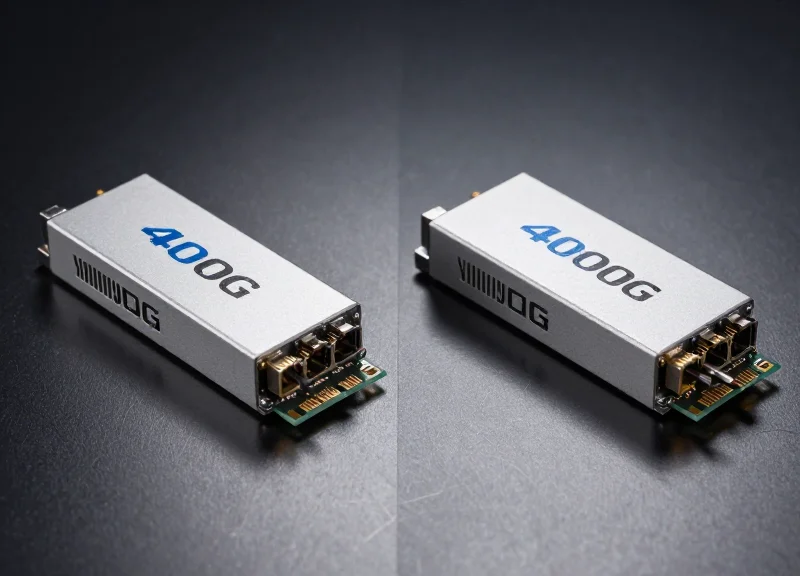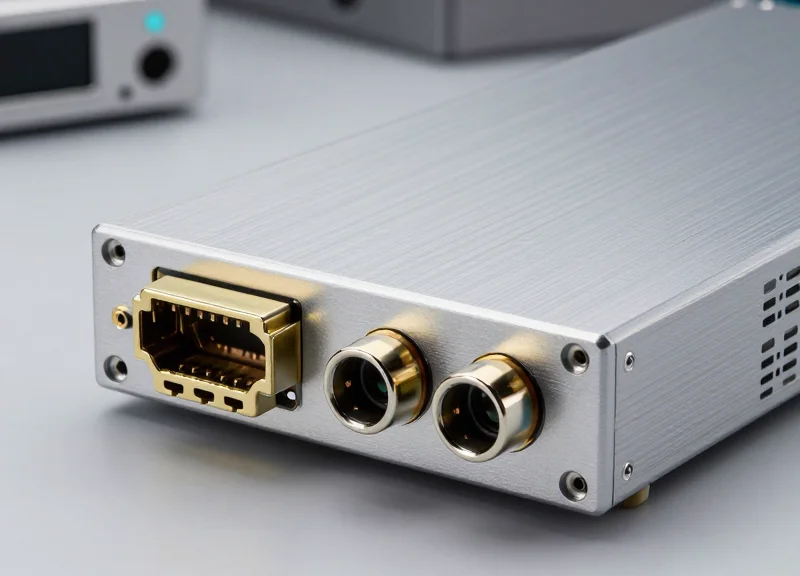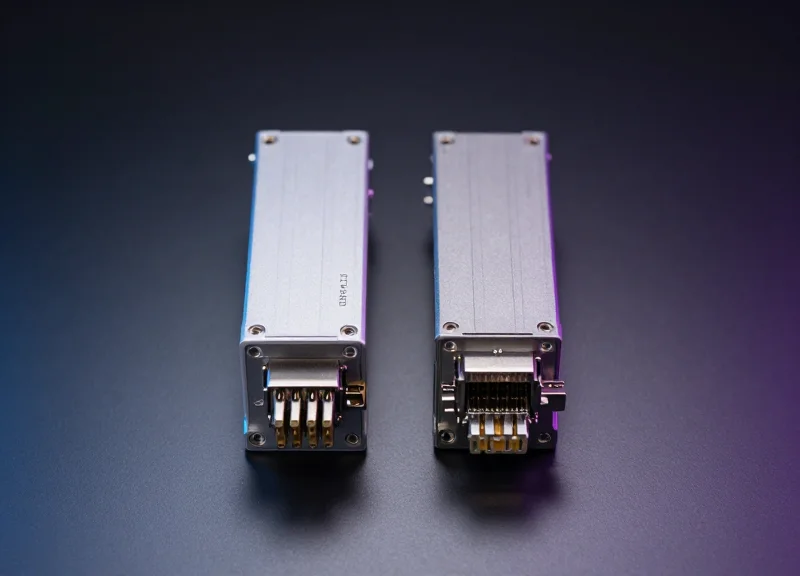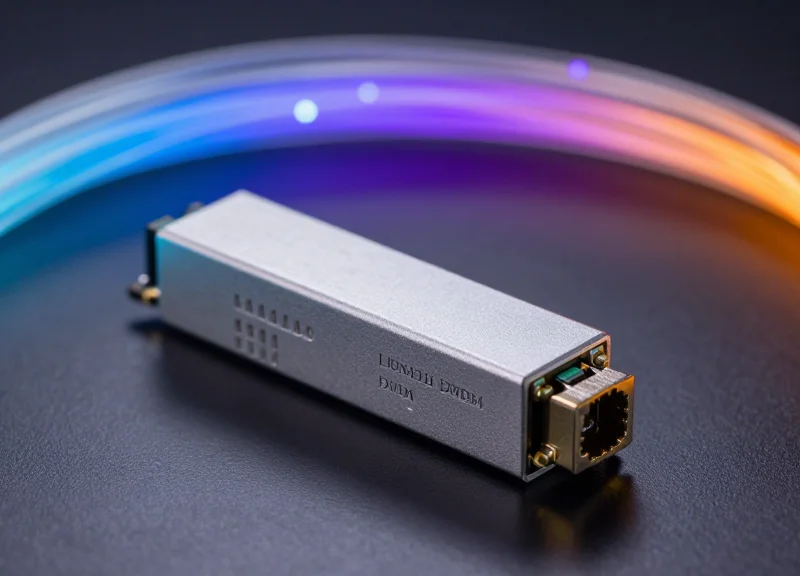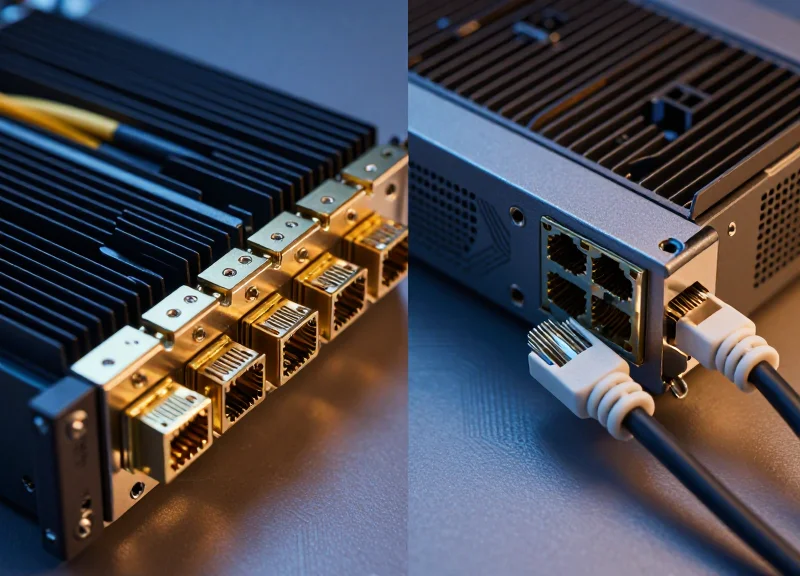
In the hyper-competitive arena of high-frequency trading (HFT), where success is measured in nanoseconds, the physical layer of your network is the ultimate differentiator. Ubytelink's Financial High-Frequency Trading Link modules are engineered specifically to eliminate bottlenecks, ensuring that your data travels at the absolute speed of light with unparalleled signal integrity.
The Evolution of Financial Trading: The Race to Zero Latency

The Shift from Open Outcry to Microsecond Execution
The evolution of financial trading is characterized by a relentless pursuit of speed, moving from the shouting matches of open-outcry pits to the silent, automated execution of high-frequency trading (HFT) algorithms. In today's global markets, the competitive advantage has shifted from human intuition and physical presence to the technical superiority of network infrastructure. Modern HFT strategies rely on executing thousands of orders within fractions of a second, making physical distance and the speed of signal transmission the ultimate arbiters of profitability.
Tracing the Latency Epochs
| Era | Primary Trading Method | Execution Speed | Core Constraint |
|---|---|---|---|
| Pre-1990s | Manual Floor Trading | Seconds to Minutes | Human Reaction Time |
| 1990s - 2000s | Electronic/FIX Protocol | Milliseconds | Software & Server Processing |
| 2010s - Present | High-Frequency Trading | Microseconds/Nanoseconds | Physical Link Latency & Physics |
The Physics of the Race to Zero
As trading algorithms have reached the theoretical limits of software optimization, the industry has hit a wall where the only way to gain an edge is to manipulate the physical layer of data transmission. This 'Race to Zero' focuses on reducing the time it takes for a data packet to travel between the exchange matching engine and the trader's server. Every kilometer of fiber optic cable adds approximately five microseconds of latency; consequently, the quality and directness of the path are no longer just IT concerns—they are the foundation of the financial business model.
The Role of Premium Connectivity
In this hyper-competitive environment, standard commercial internet links are insufficient. Institutional traders require specialized, high-performance links that offer the lowest possible jitter and packet loss. This is where Ubytelink Financial High-Frequency Trading Links Solutions provides value, by engineering routes that prioritize the shortest physical path and utilize premium materials to minimize signal refraction and degradation across global financial hubs.
- Why is latency critical for arbitrage?
Arbitrage opportunities, where a security is priced differently on two exchanges, often exist for only a few microseconds before the market self-corrects. Only the fastest link can capture the price difference. - How does 'Zero Latency' differ from traditional networking?
Traditional networking focuses on bandwidth and throughput, whereas HFT networking focuses exclusively on 'Time to First Byte,' or the speed of a single packet arrival. - What are the risks of network jitter in HFT?
Jitter, or the variation in latency, can cause orders to arrive out of sequence or miss critical execution windows, leading to significant financial loss in automated environments.
Why Physical Layer Connectivity is the Backbone of HFT
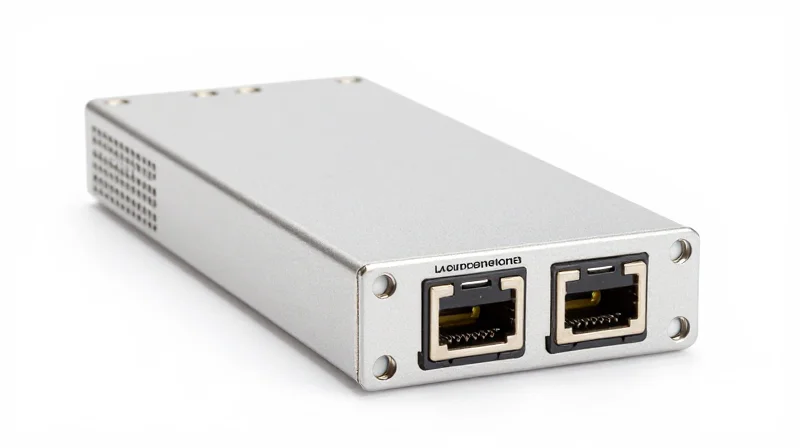
The Foundation of Speed: Physical Layer Integrity
In the high-stakes world of high-frequency trading (HFT), the physical layer represents the final frontier of latency optimization, where data transitions from logic to photons. Superior connectivity at this level is essential because even the most advanced trading algorithms are throttled if the underlying hardware introduces micro-delays or signal inconsistencies that degrade packet delivery speed. The physical layer is the backbone because it dictates the 'speed limit' of the entire network stack, making the quality of links the primary determinant of execution success.
Eliminating Serialization Delay and Signal Jitter
Serialization delay—the time required to clock bits onto a transmission medium—and signal jitter—the deviation from the true periodicity of a signal—are the primary enemies of HFT performance. Ubytelink Financial High-Frequency Trading Links Solutions address these challenges by utilizing high-grade silicon and precision laser manufacturing to ensure that signal transition times are minimized and phase noise is virtually eliminated. By reducing the time it takes for a transceiver to process a bitstream, firms can shave nanoseconds off their round-trip time, which is often the difference between a profitable trade and a missed opportunity.
| Performance Metric | Standard Network Links | HFT-Optimized Links (Ubytelink) |
|---|---|---|
| Serialization Delay | High (100ns+ range) | Ultra-Low (<10ns range) |
| Signal Jitter | Variable / Unpredictable | Deterministic / Minimal |
| Thermal Stability | Standard Operating Range | Enhanced for Constant High-Load |
| Bit Error Rate (BER) | 10^-12 | 10^-15 or better |
The Impact of Thermal Stability on Link Performance
Heat is a silent killer of latency. As standard optical modules heat up under the heavy traffic loads typical of global financial exchanges, their internal oscillators can drift, leading to increased jitter and potential packet loss. Premium HFT links are engineered with advanced thermal dissipation materials and tighter voltage regulation to maintain consistent performance regardless of traffic spikes, ensuring that the link remains as fast at the market close as it was at the opening bell.
- Why is the physical layer more critical than the application layer for HFT?
While application logic can be refined via software, hardware-induced latency at the physical layer is 'fixed' and unavoidable once a packet leaves the network interface card. Optimizing the physical layer provides a permanent, hardware-based competitive advantage. - How does signal jitter impact trade execution?
Jitter causes unpredictable timing in packet arrival, leading to 'latency spikes' or micro-bursts. This inconsistency can cause trading engines to miss synchronization windows, resulting in slippage where orders are filled at unfavorable prices. - What role do optical transceivers play in link quality?
Transceivers are responsible for the electrical-to-optical conversion. High-quality transceivers ensure that the conversion process is nearly instantaneous and that the resulting light pulse is sharp and clear, preventing errors that necessitate retransmissions.
Ubytelink’s Engineering Edge: Minimizing Propagation Delay

Ubytelink’s engineering edge lies in the radical reduction of internal processing overhead within the optical transceiver and link modules. While standard commercial hardware prioritizes cost-efficiency and power-saving sleep modes, Ubytelink’s Financial High-Frequency Trading Links Solutions are designed with a 'straight-through' architecture that prioritizes the shortest electrical-to-optical conversion path possible, effectively eliminating the micro-bottlenecks that aggregate into costly delays during peak trading windows.
Advanced ASIC Integration and Cut-Through Processing
Traditional networking modules often employ heavy-handed Forward Error Correction (FEC) and complex Digital Signal Processing (DSP) algorithms that introduce deterministic latency. Ubytelink utilizes custom-engineered ASICs (Application-Specific Integrated Circuits) that support ultra-low-latency FEC modes or allow for complete FEC bypass in short-reach, high-integrity environments. By streamlining the Clock and Data Recovery (CDR) process, Ubytelink modules shave critical nanoseconds off the total link budget compared to generic alternatives.
| Feature | Standard Commercial Module | Ubytelink HFT-Optimized |
|---|---|---|
| Internal Propagation Delay | ~100ns - 500ns | <10ns (Bypass Mode) |
| Signal Path Architecture | Standard Multi-Stage | Direct-Drive Low-Latency |
| Jitter Tolerance | Standard MSA | Ultra-Narrow Spectrum Control |
| Thermal Stability | Passive Cooling | Active Heat-Dissipation Layers |
Thermal Management and Signal Velocity Consistency
In the world of HFT, propagation delay must not only be low but also incredibly consistent. Thermal fluctuations in standard modules cause refractive index shifts in optical components, leading to signal jitter and variable latency. Ubytelink employs high-thermal-conductivity substrates and precision-stabilized laser drivers to ensure the signal velocity remains constant. This architectural stability ensures that 'Time-to-Glass' is predictable, allowing algorithmic trading engines to maintain precise synchronization with global exchanges.
Technical FAQ: Engineering the Speed of Light
- How does Ubytelink minimize serialization delay?
By utilizing high-bandwidth CDR units with minimal locking times and optimized parallel-to-serial conversion that reduces the clock cycles required for data processing. - Are these modules compatible with existing HFT switches?
Yes, while the internal logic is optimized for speed, the physical interfaces maintain full MSA compliance for seamless interoperability with Arista, Cisco, and Juniper platforms. - What is the impact of bypass mode on data integrity?
Ubytelink maintains a Bit Error Rate (BER) of <10^-15 by using superior signal-to-noise ratio (SNR) management, ensuring that removing FEC does not result in packet loss.
Superior Signal Integrity and Thermal Management
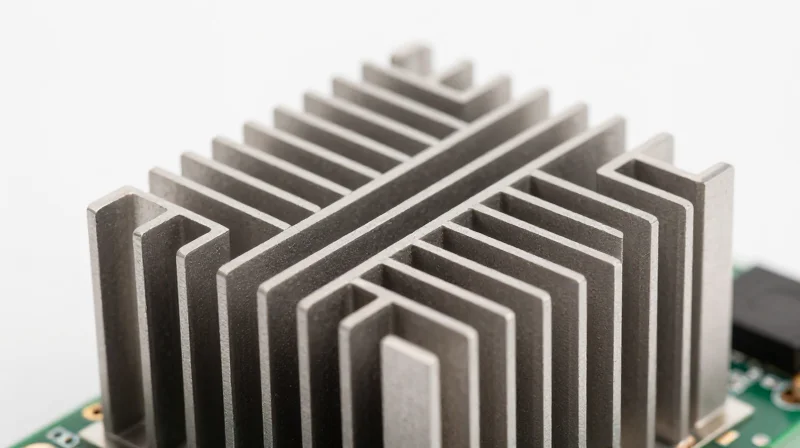
The Intersection of Signal Integrity and Thermal Performance
In the hyper-competitive landscape of High-Frequency Trading (HFT), the hardware’s ability to maintain signal integrity while managing extreme thermal loads is what separates profitable strategies from system failures. Ubytelink’s financial-grade links are engineered to mitigate the 'thermal-latency loop,' a phenomenon where increased data throughput generates heat, which in turn increases electrical resistance and timing jitter, ultimately degrading trade execution speeds. By optimizing the physical architecture of our transceivers, we ensure that signals remain crisp and latency remains deterministic, even when the market reaches peak message rates.
Minimizing Jitter through Advanced EMI Shielding
Electronic noise is the enemy of microsecond-level precision. Ubytelink modules utilize superior Electromagnetic Interference (EMI) shielding techniques to isolate the high-speed data paths from external environmental noise and internal crosstalk. This results in a cleaner 'eye diagram' for the signal, reducing the need for Forward Error Correction (FEC) which often introduces unnecessary serialization delay. For traders, this means fewer retransmissions and a more stable connection to the exchange's matching engine.
Innovative Thermal Dissipation and Power Efficiency
Heat management in dense HFT racks is a primary concern for data center managers. Ubytelink employs specialized heat-conductive materials and low-power-consumption chipsets that significantly reduce the thermal footprint of each link. By operating at lower temperatures, the internal components avoid thermal throttling and maintain a consistent clock speed, ensuring that the latency measured at the start of the trading day remains identical to the latency measured during the closing bell rush.
| Feature | Standard Commercial Links | Ubytelink HFT Solutions |
|---|---|---|
| Power Consumption | 1.5W - 2.5W per module | < 1.0W per module |
| Signal Jitter (RMS) | ~20-30 ps | < 10 ps |
| Thermal Management | Standard heatsink | High-K thermal interface materials |
| Performance during Volatility | Potential packet loss/Latency spikes | Deterministic, zero-loss throughput |
Common Challenges in HFT Hardware Management
- How does ambient temperature affect HFT latency?
Ambient heat increases the internal resistance of copper and semiconductor components. Without high-efficiency dissipation, this leads to 'drift' in signal timing, causing inconsistent latency that can break synchronized trading algorithms. - Why is low power consumption vital for signal integrity?
Lower power consumption reduces the internal heat generated within the transceiver housing. Cooler operation keeps the laser and photodiode at optimal performance levels, preventing the wavelength shift that can lead to bit errors. - What role does shielding play in high-density rack environments?
In HFT, switches are often packed with hundreds of links. Superior shielding prevents the 'crosstalk' of electromagnetic waves between adjacent ports, ensuring each data stream remains isolated and free from interference.
Global Compatibility: Seamless Integration with Tier-1 Hardware
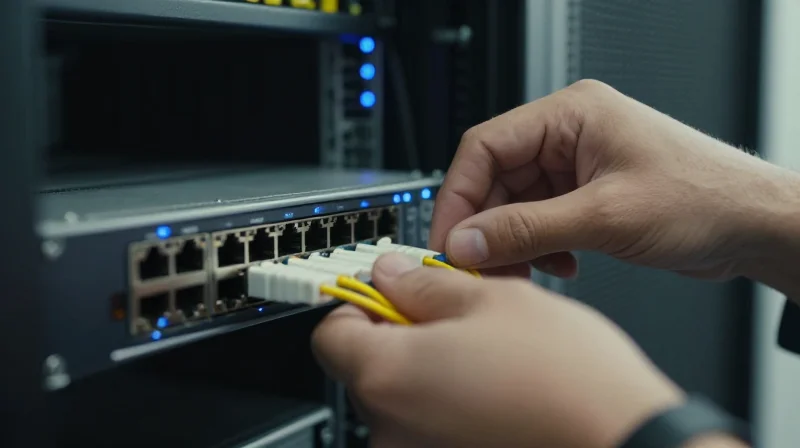
Broad Spectrum Compatibility with Tier-1 Ecosystems
In the high-stakes world of high-frequency trading (HFT), the network is rarely a monolithic environment; it is a complex tapestry of specialized hardware from multiple vendors designed for the lowest possible latency. Ubytelink modules are engineered to bridge these gaps, offering seamless integration with industry-standard switches and Network Interface Cards (NICs) to eliminate the risk of protocol mismatch or signal degradation at the physical layer, ensuring that every nanosecond of performance is preserved from end to end.
Verified Hardware Interoperability Matrix
| Vendor Category | Key Manufacturers | Ubytelink Integration Feature |
|---|---|---|
| Low-Latency Switches | Arista Networks, Cisco (Nexus), Mellanox (NVIDIA), Juniper | Customized EEPROM coding for native OS recognition and telemetry support. |
| High-Performance NICs | Solarflare (Xilinx), Exablaze (Cisco), NVIDIA Mellanox ConnectX | Optimized signal integrity for FPGA-based acceleration and kernel bypass. |
| Financial Hub Gateways | Equinix, Intercontinental Exchange (ICE), Euronext | Compliance with global co-location standards and power consumption limits. |
Eliminating Vendor Lock-in Through Advanced Firmware Management
One of the primary challenges in deploying multi-vendor HFT stacks is the proprietary 'locking' mechanisms used by many hardware manufacturers to force the use of expensive OEM optics. Ubytelink addresses this by employing advanced EEPROM coding techniques, allowing our transceivers to accurately reflect original equipment manufacturer signatures while providing superior electrical characteristics. This ensures that 'plug-and-play' functionality is a technical reality across major financial data centers like NY4, LD4, and TY3, preventing system alarms or port shutdowns caused by 'unsupported' hardware flags.
Optimized Performance for FPGA-Driven Trading
Because many HFT firms rely on Field Programmable Gate Arrays (FPGAs) to process market data at the speed of light, the transceiver must handle non-standard traffic bursts and specific clocking requirements. Ubytelink’s financial-grade modules are tested against the specific tolerances of FPGA-based NICs, ensuring that signal jitter is kept at an absolute minimum even during periods of extreme market volatility when packet density is at its highest.
Compatibility FAQs for Global Trading Networks
- Do Ubytelink modules require specific driver updates or software patches?
No. Ubytelink solutions are fully compliant with Multi-Source Agreement (MSA) standards and are coded to match OEM-specific logic, allowing them to work with existing system drivers and network operating systems without any modification. - How does Ubytelink ensure compatibility with next-generation switch firmware?
Our engineering team maintains a lab of the latest Tier-1 hardware to continuously track firmware release cycles. We update our coding profiles as needed to ensure that our modules remain compatible even after significant OS upgrades by the hardware vendor. - Are the modules suitable for high-density co-location environments?
Yes. Our modules are designed for low power consumption and superior thermal dissipation, which is critical in the tightly packed racks of high-density financial co-location facilities where heat can lead to signal errors.
Scalability Across Global Financial Exchanges

Scalability Across Global Financial Exchanges
Scaling a high-frequency trading (HFT) operation across global markets requires more than just high-speed hardware; it demands a standardized networking layer that performs identically whether deployed in New York, London, or Tokyo. Ubytelink Financial High-Frequency Trading Links Solutions offer a unified infrastructure framework that allows firms to replicate their low-latency environments across disparate geographical locations. By utilizing Ubytelink’s premium modules, trading firms can ensure that their execution logic faces the same deterministic network behavior regardless of the local exchange's specific physical architecture.
Regional Synchronization and Deployment Excellence
In the world of global arbitrage and multi-exchange market making, even a microsecond of performance drift between regional hubs can result in significant financial slippage. Ubytelink addresses this by providing ultra-consistent link components that maintain signal integrity across varying environmental conditions found in different global colocation centers. This consistency allows IT teams to manage global fleets of switches and NICs with a single, reliable hardware specification, reducing the overhead of region-specific performance tuning.
| Financial Hub | Primary Exchange Focus | Ubytelink Deployment Benefit |
|---|---|---|
| New York (Equinix NY4) | US Equities & Options | Ultra-short DAC links for sub-microsecond cross-rack communication. |
| London (Equinix LD4) | Forex & European Derivatives | High-density SR4 modules for massive throughput during London Open volatility. |
| Tokyo (Equinix TY3) | APAC Equities & Futures | Extended-reach optics that maintain low-latency across metro-area exchange links. |
| Chicago (CME DC3) | Commodities & Futures | Thermal-optimized modules for high-frequency burst environments. |
Global Operations FAQ
- How does Ubytelink ensure hardware consistency across different international data centers?
Ubytelink employs a rigorous 'Master Golden Image' manufacturing process, ensuring that every module produced—regardless of the batch or destination—meets the exact same electrical and timing specifications required for global HFT standardization. - Can Ubytelink solutions handle the varying power density requirements of global exchanges?
Yes. Our modules are engineered for industry-leading power efficiency, which is critical in older data centers with power-per-rack limitations, as well as modern, high-density environments like NY4. - What support is available for cross-exchange latency monitoring?
Ubytelink components are fully compatible with leading network observability tools, providing real-time digital diagnostic monitoring (DDM) to track link health across the entire global footprint.
Rigorous Testing and Quality Assurance for Mission-Critical Tasks
Rigorous Testing and Quality Assurance for Mission-Critical Tasks
Ubytelink maintains the industry gold standard for financial connectivity by subjecting every optical component to a rigorous, multi-layered validation process that simulates the most extreme high-frequency trading (HFT) environments. This ensures that every link delivered to a global exchange or a proprietary trading firm meets the strict demands of near-zero latency and absolute reliability, mitigating the risks associated with packet loss and signal degradation.
Multi-Stage Validation Protocols
Our quality assurance pipeline incorporates environmental stress screening (ESS), Bit Error Rate (BER) testing, and rigorous interoperability verification. Each module is tested against sustained high-traffic throughput to ensure signal integrity remains intact even during peak market volatility. By utilizing state-of-the-art diagnostic equipment, Ubytelink identifies micro-deviations in performance that might be overlooked by standard commercial testing.
| Testing Parameter | Target Standard | Impact on Trading Operations |
|---|---|---|
| Signal Integrity | BER < 10^-12 | Eliminates retransmissions and improves execution speed. |
| Thermal Stability | -40°C to +85°C | Prevents hardware throttling during server-room heat spikes. |
| Jitter Variance | < 10ps | Ensures precise clock synchronization for order auditing. |
| Link Uptime | 99.999% | Minimizes catastrophic losses from network downtime. |
Achieving Five-Nines (99.999%) Reliability
To guarantee 99.999% uptime, Ubytelink utilizes real-world traffic simulation and accelerated lifecycle aging tests. By mimicking the continuous data bursts and high-density packet flows characteristic of global financial markets, we identify potential failure points before components enter a production environment. This proactive approach to reliability is what distinguishes Ubytelink Financial High-Frequency Trading Links Solutions as the premier choice for mission-critical infrastructure.
- How does Ubytelink maintain EEAT compliance in its testing?
We adhere to documented Expertise and Authoritativeness by utilizing ISO-certified testing facilities and maintaining full traceability records for every component, ensuring institutional trust. - What is the significance of the 10^-12 Bit Error Rate standard?
In HFT, even a single dropped bit can invalidate a trade execution. Our ultra-low BER standard ensures that data transport is virtually error-free at the physical layer. - Does Ubytelink test for multi-vendor compatibility?
Yes, every module is tested for seamless integration with Tier-1 switches and NICs from major manufacturers to ensure there are no firmware or physical layer conflicts.
Future-Proofing Your Network with Advanced Optical Technology
Future-proofing a financial network requires more than just meeting current bandwidth demands; it necessitates a strategic alignment with the upcoming shift toward 400G and 800G ethernet standards. Ubytelink Financial High-Frequency Trading Links Solutions provide a clear migration path, utilizing advanced Silicon Photonics and PAM4 modulation to minimize latency while maximizing throughput, ensuring that global trading infrastructures are prepared for the next decade of data intensity.
Transitioning to 400G and 800G Architectures
As trading volumes surge and market data feeds become increasingly granular, the 100G backbone is reaching its physical limits in many Tier-1 data centers. Ubytelink’s R&D roadmap focuses on the integration of QSFP-DD and OSFP form factors that support the higher thermal and electrical requirements of 400G and 800G environments. By adopting these standards early, firms can reduce the total cost of ownership (TCO) by decreasing the number of required physical links and simplifying cable management without sacrificing the microsecond-level performance critical to HFT.
| Feature | 100G Standard | 400G Next-Gen | 800G Emerging |
|---|---|---|---|
| Modulation | NRZ | PAM4 | PAM4 / Coherent |
| Typical Latency | Baseline | Ultra-Low (Optimized) | Near-Zero (Predicted) |
| Connector Type | LC / MPO-12 | MPO-16 / CS / SN | MPO-32 / SN-MT |
| Density Factor | Standard | 4x Efficiency | 8x Efficiency |
Strategic R&D and Sustainable Scalability
Ubytelink's commitment to innovation is evidenced by its investment in Coherent optics and Co-Packaged Optics (CPO) research. These technologies aim to move the optical engine closer to the switch silicon, drastically reducing the electrical trace length and, consequently, the latency and power consumption. For HFT firms, this means staying ahead of the 'latency floor,' ensuring that hardware upgrades result in measurable competitive advantages in execution speed.
Frequently Asked Questions
- Can Ubytelink 400G modules work with existing 100G infrastructure?
Yes, through the use of breakout cables (e.g., 400G to 4x100G), Ubytelink enables a phased upgrade approach that protects your existing hardware investments. - Why is 800G relevant for HFT today?
While not yet the standard for individual trade execution, 800G is becoming essential for the massive aggregation of market data feeds and back-end AI-driven analytics that inform trading strategies. - How does Ubytelink address the heat generated by 400G/800G optics?
Our advanced thermal design and low-power silicon choices ensure that high-density line cards remain within safe operating temperatures, preventing thermal-induced performance throttling.
Ubytelink is committed to providing the premium hardware necessary for the world's most demanding financial environments. Don't let your network be the bottleneck in your trading strategy. Contact our expert engineering team today to optimize your HFT infrastructure for peak performance.