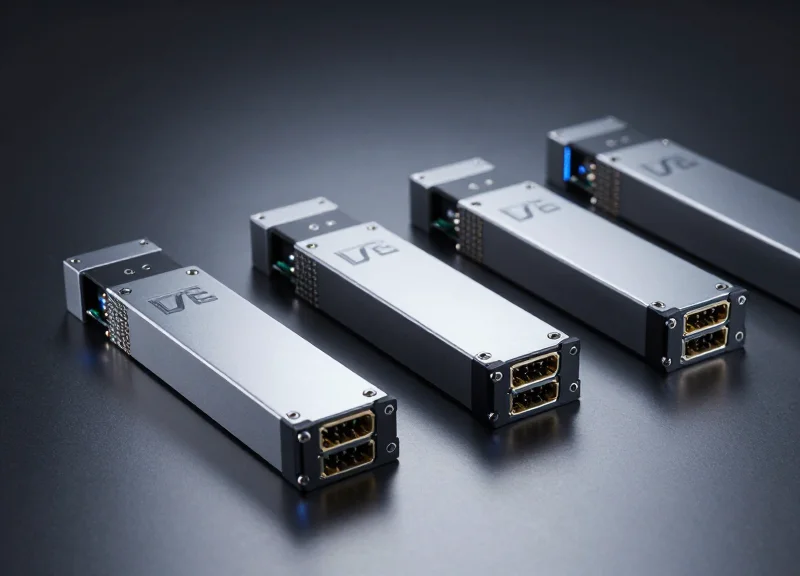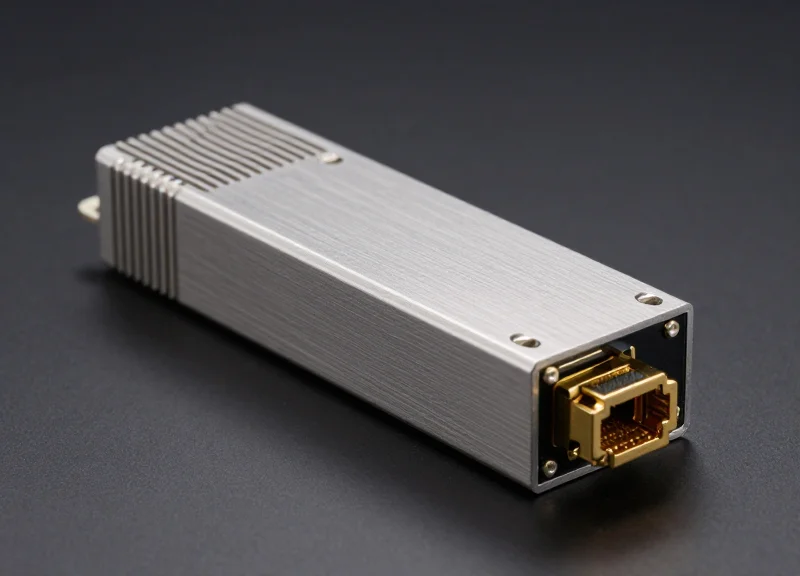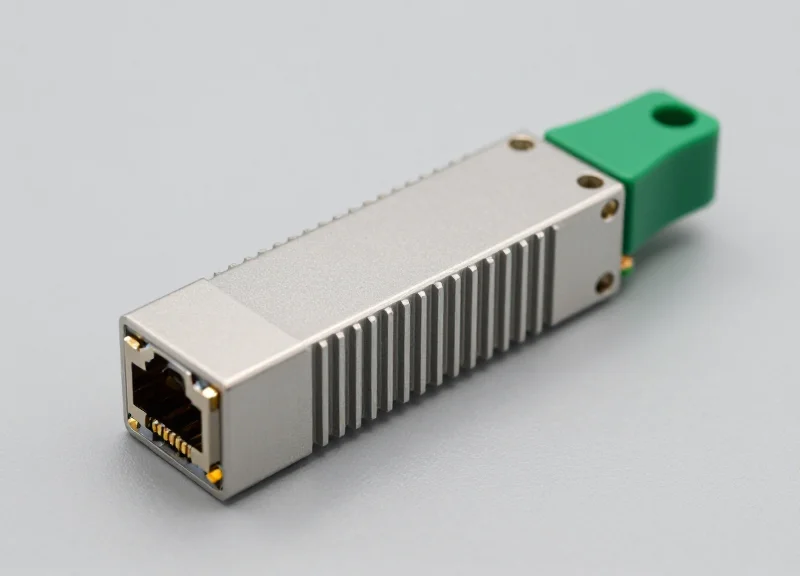
In the rapidly evolving world of telecommunications, precision is the difference between seamless connectivity and catastrophic signal loss. As data demands surge, network engineers must master the optical power budget to ensure every decibel is accounted for. This guide explores how sourcing calculation modules through wholesale and custom channels can provide the technical edge and cost-efficiency needed for 2026's infrastructure challenges.
Understanding the Fundamentals of Optical Power Budgeting

Defining the Optical Power Budget
An optical power budget is the maximum amount of signal loss—measured in decibels (dB)—that a fiber optic link can tolerate while still delivering sufficient light to the receiver for error-free data transmission. It is calculated by subtracting the receiver's sensitivity from the transmitter's minimum output power. For wholesale purchasers and large-scale installers, mastering this fundamental calculation is the first step in ensuring that high-volume hardware acquisitions meet the specific distance and performance requirements of the project site.
Primary Components of Signal Attenuation
Every component in a fiber link introduces a degree of loss. To avoid network failure, these variables must be meticulously aggregated during the design phase. The following table outlines the standard loss values used in professional power budget modeling for single-mode and multi-mode systems.
| Component Type | Typical Loss (dB) | Impact on Budget |
|---|---|---|
| Fiber Cable (Singlemode) | 0.3 - 0.4 per km | Cumulative loss based on distance |
| Fiber Cable (Multimode) | 2.5 - 3.5 per km | Higher attenuation at 850nm |
| Fusion Splice | 0.05 - 0.1 | Permanent, low-loss connections |
| Mechanical Connector Pair | 0.5 - 0.75 | Loss at patch panels and wall outlets |
| Passive Splitters (1:2) | 3.0 - 3.5 | Significant loss in PON architectures |
The Necessity of the System Operating Margin
No optical power budget calculation is complete without the inclusion of a safety buffer, known as the System Operating Margin. Typically set between 3dB and 6dB, this margin accounts for the gradual degradation of the light source, potential future repairs (which add new splices), and environmental factors like temperature swings. Procurement officers should verify that their wholesale hardware specifications allow for this margin to prevent intermittent link drops as the infrastructure ages.
- How does receiver sensitivity affect the budget?
Receiver sensitivity is the 'floor' of your budget; it defines the lowest power level the device can reliably interpret. If the signal falls below this threshold due to excessive loss, the link will fail. - Can you have too much power in a fiber link?
Yes. If the link is too short and the transmitter is too powerful, the receiver can saturate, leading to high bit-error rates or hardware damage. In such cases, optical attenuators are required. - Why is wavelength relevant to the power budget?
Attenuation varies by wavelength. For example, fiber typically exhibits lower loss at 1550nm compared to 1310nm, meaning the budget must be calculated for the specific operating frequency of the transceivers.
The Strategic Advantage of Wholesale Procurement

The Strategic Logic of Bulk Optical Procurement
Wholesale procurement serves as the financial and technical backbone for modern data center expansions and long-haul fiber deployments. By securing custom quotes for bulk orders, organizations transition from reactive purchasing to a proactive infrastructure strategy that ensures every module meets the rigorous demands of a pre-calculated optical power budget while significantly reducing the per-port expenditure.
Maximizing ROI Through Volume Discounts
The primary driver for wholesale acquisition in 2026 remains the substantial reduction in unit costs. When purchasing optical transceivers, attenuators, and power meters in bulk, the margin for price negotiation increases. This is particularly critical when planning for high-density environments where the cumulative cost of thousands of optical links can deviate by millions of dollars based on the procurement model chosen.
| Metric | Retail Procurement | Wholesale Procurement |
|---|---|---|
| Per-Unit Cost | Standard Premium | Volume-Based Discounts |
| Supply Consistency | Variable Batches | Single-Batch Uniformity |
| Lead Times | Stock Dependent | Prioritized Scheduled Rollouts |
| Customization | Off-the-shelf | Tailored Technical Specs |
Technical Uniformity and Power Budget Reliability
Calculating an optical power budget requires precise knowledge of transmitter power and receiver sensitivity. Wholesale batches typically originate from the same manufacturing run, ensuring tighter tolerance levels across all units. This uniformity simplifies the calculation process, as network engineers can rely on consistent performance metrics, reducing the risk of unexpected link failures due to component variance often found in mixed-batch retail purchases.
Frequently Asked Procurement Questions
- How does bulk pricing impact long-term Total Cost of Ownership (TCO)?
Wholesale agreements often include extended warranties and dedicated technical support, which lowers the TCO by reducing maintenance overhead and ensuring long-term hardware compatibility. - Why are custom quotes necessary for optical modules?
Custom quotes allow for specific engineering requirements, such as specialized wavelength tolerances or specific reach distances, ensuring the hardware perfectly aligns with the project's calculated power budget. - Does wholesale procurement protect against supply chain shocks?
Yes, forward-buying through bulk contracts secures inventory in advance, shielding the enterprise from the price spikes and lead-time delays common in the global semiconductor and optics markets.
Technical Criteria for Selecting Budget Calculation Modules
Essential Technical Specifications for Wholesale Selection
To ensure peak performance in enterprise-grade fiber networks, selecting optical modules goes beyond simple cost-per-unit metrics; it demands a rigorous evaluation of receiver sensitivity, saturation thresholds, and wavelength stability. When procuring in bulk, technical decision-makers must prioritize modules that offer a wide dynamic range, allowing for flexibility across varying link lengths and connector losses without risking signal clipping or excessive bit error rates (BER).
Receiver Sensitivity and Dynamic Range
The receiver sensitivity (the minimum power level at which the receiver can reliably decode data) is the most critical variable in the power budget equation. For 2026 deployments, look for modules that provide at least a 3dB safety margin above the calculated link loss. Conversely, the saturation threshold—the maximum power the receiver can handle—must be high enough to prevent damage when using short-range patch cables or high-power transmitters.
| Module Type | Typical Sensitivity (dBm) | Max Link Distance | Common Application |
|---|---|---|---|
| 10G SFP+ SR | -11 to -13 | 300m (OM3) | Intra-rack connectivity |
| 100G QSFP28 LR4 | -10 to -12 | 10km (SMF) | Campus Backbones |
| 400G DR4 | -5 to -7 | 500m (SMF) | Hyperscale Data Centers |
Digital Diagnostic Monitoring (DDM) Integration
Modern wholesale procurement should focus exclusively on modules supporting Digital Diagnostic Monitoring (DDM) or Digital Optical Monitoring (DOM). These features allow network administrators to monitor real-time metrics such as optical output power, received optical power, temperature, and transceiver supply voltage. Integrating these metrics into a centralized management platform is vital for predictive maintenance and identifying budget drift before it leads to a total link failure.
Compatibility and Connector Infrastructure
When ordering custom quotes for bulk quantities, specify the connector type (LC, SC, or MPO/MTP) and ensure the polish type (UPC vs. APC) aligns with your existing fiber plant. Mismatched connectors are a primary source of unexpected insertion loss, which can instantly invalidate a carefully calculated power budget.
- How does wavelength impact the power budget?
Fiber attenuation is wavelength-dependent. For instance, signal loss is generally higher at 850nm (multimode) compared to 1310nm or 1550nm (singlemode), requiring more precise budget calculations for short-reach applications. - What is a standard 'Safety Margin' for enterprise links?
A standard safety margin is typically 2dB to 3dB. This accounts for component aging, environmental fluctuations, and potential future splices or repairs that may increase link loss. - Are wholesale modules compatible with third-party switches?
Most wholesale vendors provide 'coded' modules that emulate the firmware of major OEMs (like Cisco, Juniper, or Arista) to ensure seamless compatibility and prevent 'unsupported transceiver' errors.
Custom OEM/ODM Options: Tailoring Tech to Your Architecture

Wholesale procurement in 2026 has evolved beyond off-the-shelf components; it now centers on the ability to integrate bespoke optical power budget calculation modules directly into proprietary hardware environments. For enterprises managing complex subsea, hyperscale, or legacy industrial fiber plants, custom OEM/ODM options provide the surgical precision required to mitigate signal loss and ensure 99.999% uptime. By tailoring the physical form factor, firmware sensitivity, and connector specifications, businesses can eliminate the compatibility risks inherent in generic networking hardware.
The Competitive Edge of Customized Optical Hardware
Custom manufacturing allows for the optimization of transceiver sensitivity and transmitter output levels to match specific fiber types, such as G.652.D or G.657.A2. This level of granular control is essential when the optical power budget is tight, as in long-haul DWDM applications. Ubytelink’s ODM process ensures that every wholesale unit is stress-tested against the client's specific architectural parameters before mass production begins.
| Feature Category | Standard Wholesale Modules | Custom OEM/ODM Solutions |
|---|---|---|
| Link Sensitivity | Fixed/Standard ranges | Tunable to specific decibel (dB) thresholds |
| Environmental Tolerance | Standard Operating (0°C to 70°C) | Industrial/Hardened (-40°C to 85°C) |
| Branding & Firmware | Generic or Generic-coded | Full White-Label & Custom EEPROM Coding |
| Connector Types | LC/SC Standard | Specialized/Ruggedized (MPO-24, IP67-rated) |
Streamlining the ODM Workflow for Bulk Orders
The path from conceptual architecture to a deployed wholesale shipment involves several critical validation phases. Our engineering team works alongside your network architects to define the 'Golden Link' parameters. This ensures that the resulting hardware doesn't just meet industry standards, but exceeds the specific performance requirements of your proprietary software-defined networking (SDN) stack.
- Can Ubytelink provide custom branding for wholesale orders?
Yes, our OEM services include full private labeling, including custom casing colors, logo engraving, and bespoke packaging for bulk distribution. - What is the typical lead time for custom ODM prototypes?
Design and prototyping typically take 4-6 weeks, followed by rigorous testing before moving into the high-volume manufacturing phase. - Are custom firmware configurations supported for third-party switches?
Absolutely. We specialize in custom EEPROM coding to ensure seamless compatibility with major and niche network equipment manufacturers.
Maximizing ROI through Bulk Pricing and Efficient Scaling
Wholesale procurement of optical power budget calculation tools and modules allows enterprises to bridge the gap between technical precision and financial sustainability by leveraging economies of scale. By securing custom quotes for bulk orders in 2026, organizations can reduce their initial capital expenditure (CAPEX) while ensuring that every node in their network operates within optimal performance parameters, thereby preventing costly downtime and premature hardware replacement.
Economic Advantages of Wholesale Scaling
The shift from ad-hoc retail purchasing to a centralized wholesale strategy offers more than just lower per-unit pricing. It provides a standardized baseline for network performance across multiple data centers or geographical locations. When every module is sourced from a single batch through a wholesale partner, the variance in sensitivity and attenuation performance is minimized, leading to more predictable link margins and streamlined troubleshooting workflows.
| Investment Factor | Retail Procurement | Wholesale Strategy (2026) |
|---|---|---|
| Unit Cost Analysis | Standard market rates with high variance | Volume-based discounts (up to 30% savings) |
| Supply Chain Reliability | Subject to immediate stock availability | Prioritized allocation and scheduled delivery |
| Customization Options | Off-the-shelf specifications only | OEM/ODM tailoring for specific architectures |
| ROI Timeline | Longer due to higher initial CAPEX | Accelerated through reduced TCO and efficiency |
Long-term ROI through Technical Consistency
Efficient scaling is not merely about quantity; it is about the longevity of the infrastructure. Utilizing high-precision optical power budget tools at scale ensures that fiber links are not over-engineered (wasting money on unnecessary high-power transceivers) or under-engineered (leading to packet loss and signal degradation). This precision engineering, facilitated by bulk-purchased specialized modules, ensures that the network can handle future bandwidth upgrades without a complete overhaul of the physical layer.
- How does bulk pricing improve the ROI of network deployments?
Bulk pricing significantly reduces the initial cost per link, allowing for a faster break-even point. Additionally, standardized components reduce the training costs for technicians and lower the inventory overhead for spare parts. - What should be included in a custom quote for 2026?
A comprehensive custom quote should include volume-tiered pricing, technical specifications for environmental tolerances, lead times for phased rollouts, and extended warranty or support packages tailored to the enterprise scale. - Does efficient scaling impact signal integrity?
Yes, by using uniform, high-quality modules sourced through a trusted wholesale partner, you reduce the 'noise' of hardware variability, making it easier to maintain signal integrity across long-haul and metro-ethernet spans.
By integrating these fiscal and technical efficiencies, businesses can transform their optical power budget management from a necessary expense into a strategic asset that supports rapid, reliable growth.
Quality Assurance: EEAT Standards in Optical Manufacturing
Quality Assurance (QA) in optical manufacturing is the fundamental safeguard that ensures theoretical power budget calculations translate into real-world network reliability. For wholesale purchasers, verifying a manufacturer's adherence to Experience, Expertise, Authoritativeness, and Trustworthiness (EEAT) standards is essential; it guarantees that components like transceivers and attenuators operate strictly within their rated decibel tolerances, preventing costly link failures and unplanned downtime.
International Standards and Regulatory Compliance
Reliable wholesale partners must operate under a rigorous Quality Management System (QMS). In 2026, the benchmark for optical manufacturing remains ISO 9001:2015, which dictates the consistency of production cycles. Furthermore, high-performance components should comply with Telcordia GR-468-CORE standards, which define the reliability assurance requirements for optoelectronic devices used in telecommunications. These certifications ensure that every batch of hardware—whether for a local enterprise or a massive data center—meets the same high-performance metrics.
Comparative Testing: Standard vs. Premium Wholesale QA
| QA Parameter | Standard Industry Specs | Premium Wholesale Standards |
|---|---|---|
| Insertion Loss (IL) | < 0.50 dB | < 0.20 dB (Strict Tolerance) |
| Return Loss (RL) | > 35 dB | > 55 dB (Ultra-Polished Connectors) |
| Thermal Stress Testing | Sample testing only | 100% batch testing (-40°C to +85°C) |
| Documentation | General CoC | Serialized Test Reports per unit |
The Role of Documentation in Trustworthiness
Authoritativeness in the optical market is proven through transparent documentation. When requesting custom quotes for bulk orders, it is imperative to demand serialized test data. This level of transparency allows engineers to refine power budget calculations based on the actual performance data of the specific units being installed, rather than relying on generic 'worst-case' datasheet values. This precision often allows for longer link distances or the use of more cost-effective passive components without compromising the safety margin.
FAQ: Quality Assurance & Wholesale Sourcing
- How does ISO certification affect my optical power budget?
ISO-certified manufacturing ensures consistency across thousands of units, meaning the attenuation and gain variables used in your calculations will remain accurate across the entire deployment. - What is the importance of a Certificate of Conformance (CoC)?
A CoC is a formal document attesting that the product meets the required technical specifications and standards, providing a legal and technical layer of trust for bulk purchases. - Does premium QA testing increase the bulk price significantly?
While premium QA may have a slightly higher upfront cost per unit, it significantly increases ROI by reducing the Mean Time Between Failures (MTBF) and eliminating the need for expensive troubleshooting and replacements.
Avoiding Common Pitfalls in Optical Link Planning
Avoiding Common Pitfalls in Optical Link Planning
Efficient optical link planning requires more than just adding up decibels; it demands a strategic foresight that accounts for physical degradation, environmental shifts, and hardware variances. When businesses buy optical power budget calculation wholesale components, the most common pitfall is failing to reconcile theoretical laboratory performance with real-world deployment conditions, which can lead to expensive over-provisioning or signal loss.
The Risk of Neglecting Safety Margins
A frequent error in link design is neglecting the 'system aging margin.' Laser diodes lose efficiency over time, and optical fibers can suffer from micro-bends or increased attenuation due to environmental stress. Without a 2dB to 3dB safety buffer in your power budget, a link that works perfectly on day one may fail within eighteen months. Wholesale buyers should specify components that support these margins without saturating the receiver.
| Common Pitfall | Technical Impact | Wholesale Strategy |
|---|---|---|
| Underestimating Splice Loss | Excessive signal attenuation (dB) | Procure high-precision fusion splicers and quality bulk connectors. |
| Ignoring Receiver Saturation | Bit error rate (BER) spikes; hardware damage | Request custom quotes for fixed or variable attenuators. |
| Over-specifying Distance | Unnecessary expenditure on long-reach optics | Consult with manufacturers for exact link-length optimized modules. |
| Inconsistent Patching | High reflectance and return loss | Standardize on specific connector types across bulk orders. |
Environmental and Thermal Considerations
Temperature fluctuations can significantly impact the wavelength stability and output power of SFP/QSFP modules. Many planners fail to distinguish between commercial-grade and industrial-grade temperature specs during bulk purchasing. For outdoor cabinets or unconditioned data centers, failing to account for thermal-induced loss can invalidate even the most meticulous power budget calculations.
Link Planning FAQs
- Why should I avoid over-specifying my optical power budget?
Over-specifying often leads to using high-power transmitters for short distances, which can overwhelm the receiver (saturation). This requires additional expenditure on attenuators and increases the total cost of ownership unnecessarily. - How do bulk pricing models help in mitigating link failure?
Bulk pricing allows for the standardization of high-quality, low-loss components across the entire network architecture. This consistency reduces the variables that lead to budget errors and simplifies the troubleshooting process. - What is the most overlooked factor in custom power budget quotes?
Connector cleanliness and mating cycles are often overlooked. Even the best calculated budget will fail if the bulk-purchased patch cords have a high insertion loss due to poor manufacturing tolerances.
By addressing these pitfalls during the procurement phase, organizations can leverage 2026 bulk pricing to build resilient networks. Working closely with wholesale partners to provide accurate link-path data ensures that the custom quotes you receive are optimized for both performance and long-term reliability.
Future-Proofing Your Network for 2026 and Beyond

Future-Proofing Your Network for 2026 and Beyond
Future-proofing an optical network in 2026 necessitates a shift toward high-headroom architectures that can accommodate the transition to 800G and 1.6T throughput without requiring a complete fiber overhaul. By securing wholesale contracts for advanced transceivers and low-loss passive components, network operators can implement 'over-provisioned' optical power budgets today that absorb the tighter signal-to-noise ratio (SNR) requirements of tomorrow's PAM4 and Coherent modulation schemes.
Technological Shifts: Preparing for 800G and Beyond
The evolution of optical networking is moving rapidly toward Silicon Photonics and Coherent optics at the edge. These technologies provide the density required for massive bandwidth increases but often operate within much stricter power tolerances. When calculating budgets for future-ready links, it is essential to account for the increased insertion loss of high-density MPO connectors and the thermal challenges of higher-wattage modules. Wholesale sourcing of 'industrial grade' optics ensures that your hardware can withstand the higher operating temperatures associated with these increased speeds.
| Network Parameter | Standard 100G/200G Links | Next-Gen 800G/1.6T Links |
|---|---|---|
| Modulation Format | NRZ / Early PAM4 | Advanced PAM4 / Coherent |
| Power Margin Sensitivity | High Tolerance | Ultra-Low Tolerance |
| Connector Standard | LC / Dual Fiber | MPO-16 / SN / CS Connectors |
| Scalability Path | Linear Upgrades | Breakout-Focused / Fabric Shuffling |
Future-Proofing Through Strategic Procurement
- How does wholesale pricing aid in long-term network scalability?
Wholesale pricing allows operators to standardize on high-specification components across the entire infrastructure at a lower per-unit cost, ensuring that even legacy spans have the optical budget headroom to support future hardware refreshes. - What role do flexible module designs play in future-proofing?
Modules such as QSFP-DD and OSFP are designed for backwards compatibility and thermal efficiency. Bulk-buying these form factors ensures that current switches can interface with future high-speed modules without replacing the entire chassis. - Should I plan for a larger power budget margin for 2026 installations?
Yes. It is recommended to add an additional 2dB to 3dB of 'future-proofing margin' to account for fiber degradation over time and the eventual addition of high-density patch panels as the network expands.
Ultimately, the key to surviving the bandwidth explosion of the mid-2020s lies in the physical layer. Organizations that invest in high-quality, wholesale-sourced optical components with documented performance metrics will be best positioned to pivot as AI and machine learning workloads demand unprecedented levels of data throughput. Custom quotes for bulk quantities of low-attenuation fiber and high-sensitivity receivers are the most cost-effective way to build a foundation that will last for the next decade.
Streamlining the Quote Process for Enterprise Projects
Optimizing the Custom Quote Process for Wholesale Procurement
Streamlining the quote process for enterprise-level optical networking requires a shift from transactional purchasing to a technical partnership. To secure the most competitive bulk pricing in 2026, procurement teams must provide granular link specifications that allow manufacturers to validate precise optical power budgets before an order is placed. This proactive collaboration reduces the risk of over-provisioning—which inflates capital expenditure—and under-provisioning, which leads to signal degradation. By centralizing technical requirements and volume forecasts, organizations can unlock significant economies of scale and ensure long-term supply chain stability for mission-critical infrastructure.
Critical Data Points for Accurate Wholesale Quotes
When requesting a custom quote from Ubytelink, providing the following technical parameters ensures that our engineers can accurately assess your power budget calculations and recommend the most cost-effective modules.
- Link Distance & Fiber Type
Provide the exact span distance and the fiber standard (e.g., G.652.D or G.657.A1) to account for specific attenuation and bend-loss variables. - Data Rate & Transmission Wavelength
Specify if the project requires 10G, 100G, or 400G modules, alongside the preferred wavelength (e.g., 1310nm, 1550nm, or DWDM channels) to match existing mux/demux equipment. - Connector Interfaces
Clarify requirements for LC/UPC, LC/APC, or MPO/MTP connectors to ensure seamless integration with high-density patch panels. - Annual Volume Forecast
Include a multi-quarter projection to qualify for deeper discount structures and specialized buffer stock arrangements.
| Procurement Feature | Standard RFQ | Enterprise Strategic Quote |
|---|---|---|
| Pricing Structure | Fixed Unit Cost | Tiered Bulk Discounts |
| Technical Validation | Self-Service Selection | Engineer-Led Link Review |
| Lead Time | Standard Stock Availability | Prioritized Production & Buffer |
| Customization | Off-the-shelf Only | Custom EPROM/Firmware Encoding |
The Ubytelink Enterprise Workflow
- 1. Inquiry Submission
Submit your network topology and estimated power budget targets via our dedicated enterprise procurement portal. - 2. Technical Feasibility Review
Ubytelink engineers verify transceiver sensitivities and launch powers against your specific fiber loss estimates to ensure a 3dB safety margin. - 3. Tiered Proposal Issuance
Receive a comprehensive quote featuring multi-tier pricing based on immediate volume and scheduled rollouts. - 4. Proof of Concept (POC)
Sample units are dispatched for interoperability testing in your specific hardware environment (e.g., Cisco, Juniper, Arista) before mass fulfillment. - 5. Fulfillment & Account Management
Orders are processed with dedicated support, providing real-time tracking and serialized test reports for every module delivered.
Precision, scalability, and cost-control are the pillars of a successful modern network. By leveraging wholesale pricing and bespoke OEM/ODM solutions, you can ensure your infrastructure is built to last. Ready to optimize your network's performance? Contact Ubytelink today for a custom quote and discover the best bulk pricing for your 2026 projects.