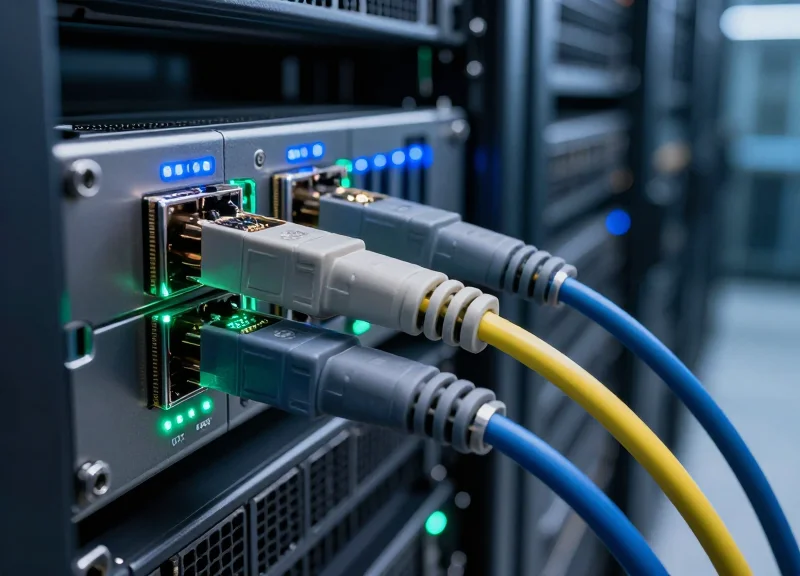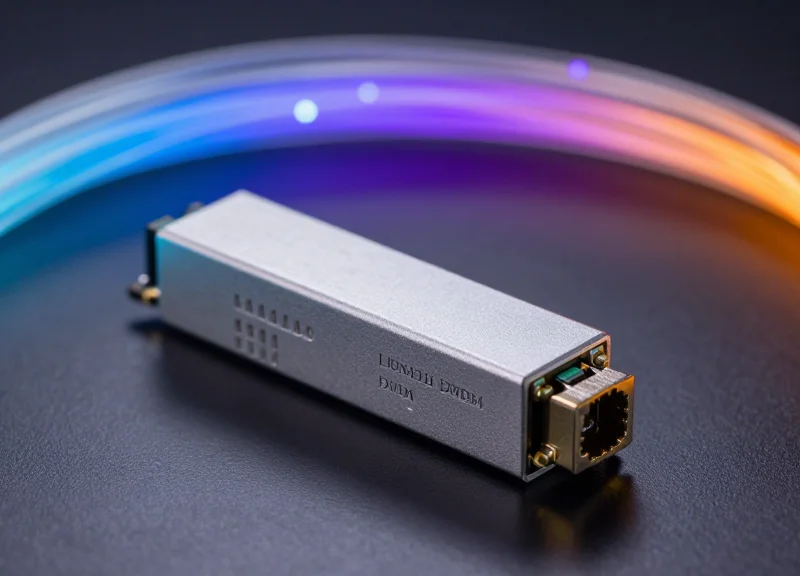
In the rapidly evolving landscape of telecommunications, the move toward flexible and scalable optical networks has made Tunable DWDM modules indispensable. Traditionally, network engineers had to manage dozens of fixed-wavelength transceivers, leading to complex inventory issues and high operational costs. This guide dives into the technical core of tunable technology, explaining how a single module can replace an entire fleet of fixed-wavelength alternatives while providing superior performance in modern high-capacity backbones.
Understanding Tunable DWDM Technology

A Tunable DWDM module is a sophisticated optical transceiver capable of being programmed to any specific channel within the Dense Wavelength Division Multiplexing (DWDM) grid, typically covering the entire C-band. Unlike standard fixed-wavelength optics that are hardcoded to a single frequency during manufacturing, tunable modules leverage internal micro-electromechanical systems (MEMS) or thermal tuning to shift their laser's emission frequency on demand. This flexibility simplifies network inventory management and enables software-defined networking (SDN) capabilities in modern optical transport systems.
Key Differences: Tunable vs. Fixed DWDM Modules
| Feature | Fixed DWDM Transceiver | Tunable DWDM Transceiver |
|---|---|---|
| Wavelength Support | Single pre-set channel | Full C-Band (typically 80-96 channels) |
| Inventory Complexity | High (requires spares for every channel) | Low (one module covers all channels) |
| Provisioning | Manual physical swap | Remote software-defined tuning |
| Initial Cost | Lower per unit | Higher per unit |
| Operational Expense | Higher (logistics and sparing) | Lower (simplified maintenance) |
Technical Mechanics of Wavelength Adjustment
The core of a tunable module is its specialized laser source, such as a Distributed Bragg Reflector (DBR) or an External Cavity Laser (ECL). In a DBR laser, tuning is achieved by injecting current into different sections of the laser to change the refractive index, which shifts the output wavelength. In ECL designs, a movable grating or micro-mirror (MEMS) physically adjusts the cavity length to select the desired frequency. These modules are designed to adhere to the ITU-T grid, ensuring they can lock onto specific channels with 50GHz or 100GHz spacing with high stability and minimal spectral drift.
The Role of the C-Band
Tunable modules primarily operate within the C-band (1530nm to 1565nm). This range is preferred because it offers the lowest attenuation in standard single-mode fiber (G.652), allowing for long-haul transmission. By utilizing the full breadth of the C-band, a single tunable module can effectively replace dozens of different fixed-wavelength parts, streamlining the deployment of high-capacity fiber links.
Common Questions about Tunable DWDM
- Can a tunable module replace any fixed DWDM module?
Yes, as long as the form factor (such as SFP+ or QSFP28) and the protocol/data rate match the host equipment requirements. - Does tuning affect optical performance?
Modern tunable modules offer performance metrics—such as Optical Signal-to-Noise Ratio (OSNR) and reach—that are comparable to their fixed-wavelength counterparts. - Is special software required to tune the modules?
Most modern switches and routers support tuning via the command-line interface (CLI) or SNMP, utilizing the standard I2C management interface on the module.
The Physics of Tuning: Laser Mechanisms

The Physics of Tuning: Laser Mechanisms
At the heart of a tunable DWDM module is a laser diode designed to modify its emission frequency across a continuous or discrete spectrum. Unlike fixed-wavelength lasers that rely on a static grating, tunable mechanisms leverage the ability to change the 'effective' optical path length or the resonance conditions within the laser cavity, typically by adjusting temperature, refractive index, or physical geometry. This agility allows a single hardware component to support any of the 80 to 96 channels in the C-band grid.
Distributed Bragg Reflector (DBR) Lasers
DBR lasers achieve tuning by segmenting the laser into active, phase, and Bragg sections. By injecting electrical current into the Bragg section, the carrier density changes the refractive index of the semiconductor material. This shift in index alters the optical pitch of the grating, forcing the laser to oscillate at a different wavelength. Advanced variants, such as the Sampled Grating DBR (SG-DBR), utilize two different gratings with slightly different periodicities. By applying the Vernier effect, these modules can achieve a much wider tuning range than standard DBR designs.
External Cavity Lasers (ECL)
External Cavity Lasers utilize a separate gain medium coupled with an external optical feedback element, often a diffraction grating or a Micro-Electro-Mechanical Systems (MEMS) based mirror. Tuning is achieved by physically adjusting the angle of the grating or the MEMS structure to select the desired wavelength. ECLs are highly regarded in coherent networking because the longer cavity length results in a significantly narrower linewidth and higher spectral purity compared to monolithic semiconductor lasers.
| Feature | DBR/SG-DBR Lasers | External Cavity Lasers (ECL) |
|---|---|---|
| Tuning Speed | Nanoseconds to Microseconds | Milliseconds |
| Spectral Linewidth | Moderate (MHz range) | Very Narrow (kHz range) |
| Output Power | Moderate | High |
| Form Factor | Compact / Monolithic | Larger / Integrated Assemblies |
| Primary Use | Direct Detection / Cost-Sensitive | High-Baud-Rate Coherent Links |
Wavelength Locking and Stability
Because laser properties fluctuate with temperature and age, tunable modules incorporate an internal Fabry-Pérot Etalon, known as a 'wavelength locker.' This component acts as a frequency reference, providing a feedback loop to the laser controller. If the laser drifts from its assigned ITU-T grid frequency, the locker detects the deviation and the module automatically adjusts the tuning current or temperature to re-center the wavelength.
- How long does it take for a tunable module to switch channels?
It depends on the architecture; DBR-based modules can switch in microseconds, whereas mechanical or thermal-based ECL modules may take several milliseconds to stabilize on a new frequency. - Does tuning affect the lifespan of the laser?
Modern tunable lasers are designed for longevity. While high current injection can accelerate aging, internal control systems manage power levels to ensure reliability comparable to fixed-wavelength transceivers. - Why is narrow linewidth important for tunable modules?
Narrow linewidth reduces phase noise, which is essential for advanced modulation formats like 16QAM or 64QAM used in high-speed coherent DWDM systems.
Technical Specifications and Form Factors
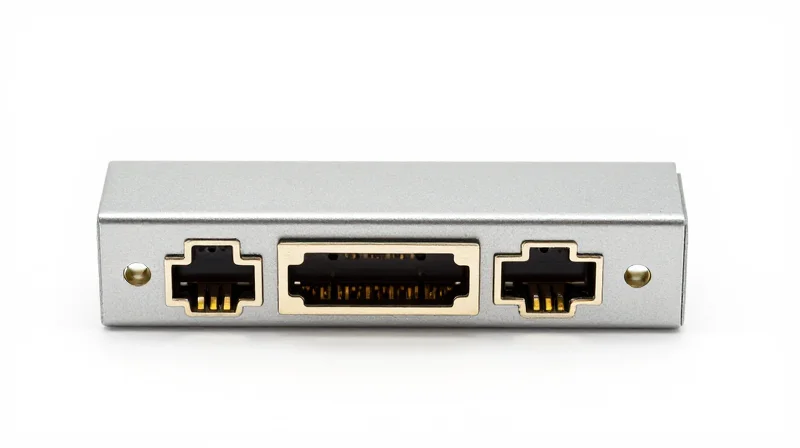
Technical Specifications and Form Factors
The evolution of tunable DWDM modules is inextricably linked to the physical constraints and electrical interfaces defined by Multi-Source Agreements (MSAs). Unlike fixed-wavelength modules, tunable transceivers must accommodate internal micro-controllers and Thermoelectric Coolers (TECs) while maintaining compatibility with standard networking hardware. The primary technical challenge lies in balancing the increased power requirements of the tuning laser with the limited thermal dissipation capabilities of smaller form factors like SFP+.
Comparative Analysis of Industry Form Factors
| Form Factor | Typical Data Rate | Typical Power Consumption | Primary Application |
|---|---|---|---|
| XFP | 10 Gbps | 3.5W - 4.5W | Legacy 10G Metro/Core |
| SFP+ | 10 Gbps | 1.5W - 2.5W | Enterprise & High-Density 10G |
| QSFP28 | 100 Gbps | 4.5W - 6.0W | Data Center Interconnect (DCI) |
| QSFP-DD | 400 Gbps+ | 15W - 25W | Next-Gen Coherent DWDM |
Thermal Management and Power Profiles
Thermal management is the critical engineering hurdle for tunable modules. Because wavelength stability is highly temperature-dependent, tunable lasers require an integrated TEC to keep the laser diode at a constant operating temperature, regardless of the ambient environment. This results in a higher power 'pedestal' compared to fixed modules. For instance, while a standard 10G SFP+ might consume less than 1W, its tunable counterpart often requires 1.5W to 2W to maintain lock on a 50GHz ITU grid channel.
Emerging High-Density Standards
The industry is currently shifting toward Coherent Tunable modules in the QSFP-DD (Quad Small Form-factor Pluggable Double Density) format. These modules integrate advanced Digital Signal Processors (DSPs) to compensate for chromatic dispersion, allowing for 400G and 800G transmission over long distances. The technical specification for these modules includes sophisticated software APIs (such as CMIS) that allow the host system to command the module to specific frequencies and monitor laser aging in real-time.
- Why is SFP+ the most common tunable form factor?
SFP+ provides the ideal balance of port density and power for 10G networks, making it the standard for upgrading existing fixed-wavelength infrastructure to tunable solutions. - How does power consumption affect port density?
Higher power consumption leads to increased heat; if a switch cannot dissipate the thermal load of 48 tunable modules, operators may have to leave adjacent ports empty, effectively reducing density. - What is the role of the I2C interface in these modules?
The I2C serial interface allows the host device to communicate with the module's internal EEPROM to set the wavelength and read diagnostic data like optical power and temperature.
Fixed vs. Tunable DWDM: A Cost-Benefit Analysis
Fixed vs. Tunable DWDM: A Cost-Benefit Analysis
Choosing between fixed and tunable DWDM modules is rarely a simple comparison of price-per-port; rather, it is a strategic decision involving the balance of immediate Capital Expenditure (CapEx) against long-term Operational Expenditure (OpEx) and supply chain agility. While fixed-wavelength modules offer a lower entry price for static links, tunable modules provide a vastly superior Total Cost of Ownership (TCO) for growing and complex optical networks.
Capital Expenditure (CapEx) and the Sparing Strategy
Fixed-wavelength modules have historically dominated the market due to their lower individual unit cost. However, a hidden CapEx trap exists for service providers: the 'sparing' requirement. To ensure high availability, a provider must stock a backup for every unique wavelength in use. In an 80-channel system, this means maintaining 80 different SKUs. A single tunable module can serve as a universal spare for any of those 80 channels, effectively reducing the capital tied up in dormant inventory by up to 90%.
| Financial/Metric | Fixed DWDM Optics | Tunable DWDM Optics |
|---|---|---|
| Unit Purchase Price | Lower (Economical) | Higher (Premium) |
| Inventory Management | Complex (80+ SKUs) | Simplified (1 SKU) |
| Sparing Overhead | Extremely High | Minimal |
| Deployment Flexibility | Rigid / Manual | Agile / Software-Defined |
Operational Expenditure (OpEx) and Logistical Simplification
Beyond the hardware cost, tunable modules simplify the logistical lifecycle of a network. When a technician is dispatched to a remote site for repair (a 'truck roll'), they only need to carry one type of transceiver. This eliminates the risk of arriving with the wrong wavelength part, which would necessitate a second, costly trip. Furthermore, wavelength-agnostic planning allows for remote reconfiguration, reducing the need for physical intervention as traffic patterns shift.
- How does tunability impact supply chain management?
It consolidates procurement into a single SKU, which reduces forecasting errors, simplifies vendor management, and decreases the warehouse footprint required for spare parts. - Are tunable modules cost-effective for small networks?
For static networks with very few channels (e.g., under 8), fixed optics may be more economical. However, once scalability and uptime are factored in, tunables become the standard choice for most modern deployments. - What is the impact on Mean Time to Repair (MTTR)?
MTTR is significantly improved because the 'correct' part is always available in the technician's kit, and wavelength assignments can often be performed via software from a central office.
Ultimately, the higher upfront cost of tunable DWDM modules is offset by the dramatic reduction in operational friction. By minimizing the logistical burden of multiple SKUs and enabling a software-defined approach to optical networking, tunable technology provides the flexibility necessary for 5G backhaul, data center interconnects (DCI), and metro-core expansion.
ITU-T Grid Compatibility and Channel Spacing
Adherence to ITU-T standards is the bedrock of interoperability for tunable DWDM modules, ensuring that the light signals they generate align perfectly with the optical filters found in Multiplexers (MUX), Demultiplexers (DEMUX), and Reconfigurable Optical Add-Drop Multiplexers (ROADMs). By following the ITU-T G.694.1 spectral grid, tunable modules can precisely navigate the C-Band (1528.77nm to 1563.86nm), allowing network operators to switch between dozens of channels without risking signal overlap or crosstalk.
Standardized Channel Spacing: 50GHz vs. 100GHz
The ITU-T G.694.1 standard defines specific 'slots' for data transmission. Tunable modules are engineered to support either 100GHz spacing, which is the traditional standard for metro and core networks, or 50GHz spacing, which doubles the capacity of a single fiber pair. Understanding these grids is essential for optimizing spectral efficiency and ensuring the transceiver matches the physical infrastructure of the link.
| Feature | 100GHz Grid | 50GHz Grid |
|---|---|---|
| Spectral Spacing | ~0.8 nm | ~0.4 nm |
| Max Channels (C-Band) | 40 to 48 Channels | 80 to 96 Channels |
| Typical Application | Standard Metro/Long-Haul | High-Density DCI & Core |
| Filter Precision | Moderate | High (Requires tight locking) |
Wavelength Locking and Spectral Stability
Because tunable modules can shift their frequency, they require a mechanism called a 'Wavelength Locker' or 'Etalon.' This internal hardware component continuously monitors the output frequency and provides real-time feedback to the laser's thermal controller. This ensures the module remains centered on the ITU-T grid despite temperature fluctuations or aging. Without this stability, a module might 'drift' into an adjacent 50GHz channel, causing catastrophic bit-error rate (BER) spikes in high-density DWDM environments.
The Role of Flex-Grid Technology
As data rates push toward 400G and 800G, the industry is moving beyond fixed grids toward 'Flex-Grid' (or Gridless) ROADM architectures. Modern tunable modules often support granular tuning increments, such as 6.25GHz or 12.5GHz. This allows the network to allocate wider spectral 'super-channels' for high-bandwidth signals while still utilizing standard ITU-T channels for lower-speed traffic, maximizing the total throughput of the fiber strand.
- Can a tunable module work on a fixed-channel MUX?
Yes, as long as the module is tuned to the specific ITU-T frequency that corresponds to the physical port on the fixed MUX. - What is the 'C-Band' specifically?
The Conventional Band (C-Band) spans from approximately 1530nm to 1565nm, where fiber attenuation is at its lowest, making it the primary target for tunable DWDM optics. - Why is 50GHz spacing more difficult than 100GHz?
The narrower 0.4nm spacing requires much higher precision in the laser's frequency locker to prevent inter-channel interference.
Integration with ROADM Architectures

The Synergy Between Tunable Modules and ROADM Architectures
Tunable DWDM modules serve as the critical 'tuning knobs' for Reconfigurable Optical Add-Drop Multiplexer (ROADM) architectures. While the ROADM provides the switching fabric to route optical signals across various fiber paths without converting them to electrical signals, the tunable transceiver provides the necessary flexibility at the endpoint. Together, they allow network operators to remotely reconfigure optical wavelengths, enabling a truly dynamic optical layer that can adapt to changing traffic patterns without the need for manual site visits or hardware replacements.
Enabling Colorless, Directionless, and Contentionless (CDC) Networking
The evolution of ROADMs toward CDC architectures is heavily dependent on tunable technology. In a 'Colorless' ROADM configuration, any transceiver can be connected to any port on the add/drop multiplexer, and its wavelength can be assigned via software. Tunable modules are the primary enablers of this feature, as a fixed-wavelength module would be restricted to a specific physical port tuned to its frequency. This flexibility allows for automated wavelength restoration; if a path is obstructed, the SDN controller can retune the transceiver to a different frequency and route it through an alternative ROADM path.
| Network Capability | Fixed DWDM + ROADM | Tunable DWDM + ROADM |
|---|---|---|
| Wavelength Assignment | Static / Hard-wired | Dynamic / Software-Defined |
| Operational Flexibility | Manual intervention required | Fully automated remote tuning |
| Service Restoration | Slow (Manual path change) | Rapid (Automated retuning) |
| Path Optimization | Constrained by hardware | Algorithmic via SDN controller |
Software-Defined Control and Automated Provisioning
Integration with ROADMs allows tunable modules to be managed by a centralized Software-Defined Networking (SDN) controller. Through standard management interfaces, the controller can monitor the performance of the link and adjust the module's wavelength to optimize spectral efficiency or avoid interference. This level of integration is essential for 'Bandwidth on Demand' services, where network capacity can be scaled up or down and rerouted across the optical backbone in real-time based on live telemetry data.
- How do tunable modules simplify ROADM upgrades?
They allow for capacity expansion without adding new fiber or specialized fixed-wavelength hardware, as the same module can occupy any available slot in the C-band or L-band spectrum. - Can tunable modules support 50GHz spacing in ROADMs?
Yes, high-precision tunable modules are designed to align with 50GHz and 100GHz ITU-T grids, ensuring they remain compatible with the narrow filtering requirements of multi-degree ROADMs. - What role do they play in network survivability?
In the event of a fiber cut, tunable modules work with the ROADM to find an available 'spectral gap' on a backup route, retuning the signal to fit the new path's available bandwidth.
Deployment Scenarios: From Metro to Long-Haul

Deployment Scenarios: From Metro to Long-Haul
Tunable DWDM modules serve as the operational backbone of modern optical networks, providing the essential flexibility needed to scale bandwidth across metropolitan, regional, and long-haul distances without the logistical burden of fixed-wavelength inventory. By enabling software-defined frequency adjustments, these modules allow network architects to optimize spectral efficiency and respond dynamically to changing traffic demands in real-time.
Data Center Interconnect (DCI) and Edge Computing
In the realm of Data Center Interconnect (DCI), particularly for hyperscale and edge facilities, tunable modules are indispensable. As data centers expand, the ability to quickly provision new links between geographically dispersed sites is critical. Tunable optics allow operators to use a single hardware SKU to connect various points in a leaf-and-spine architecture, reducing the time-to-service for new high-speed connections. At the edge, where space and power are constrained, the high density and low power consumption of modern tunable form factors like QSFP28 and QSFP-DD provide the necessary capacity for 100G and 400G applications.
Metro and Regional Telecommunications
Metropolitan and regional networks often feature complex topologies with frequent Add-Drop points. Here, tunable modules integrate seamlessly with Reconfigurable Optical Add-Drop Multiplexers (ROADMs) to create an agile, software-defined network. Because metro traffic is highly variable, the ability to tune a transceiver to any channel on the C-band allows ISPs to balance loads and reroute traffic around fiber cuts or congestion without manual intervention at the site. This automation reduces operational expenditure and improves network uptime across the metro core.
Long-Haul Core Backbones
For long-haul spans exceeding 800km, tunable coherent modules are used to manage the physical challenges of long-distance transmission. These modules often include advanced Digital Signal Processing (DSP) to compensate for chromatic dispersion and polarization mode dispersion. Tunability in long-haul scenarios is less about frequent switching and more about optimizing the spectral path to ensure maximum reach and signal integrity across the national or international fiber infrastructure.
| Scenario | Typical Distance | Primary Driver | Common Module Types |
|---|---|---|---|
| Metro Access | < 80km | Inventory Consolidation | 10G SFP+, 25G SFP28 |
| Metro Core / DCI | 80km - 120km | High Density & Low Power | 100G PAM4, 400G ZR |
| Regional / Long-Haul | > 120km | Spectral Efficiency / Reach | 100G/200G/400G Coherent |
Common Deployment Questions
- Are tunable modules suitable for unamplified links?
Yes, tunable modules can be used in unamplified (passive) links, provided the power budget is carefully calculated. However, they are most commonly deployed in amplified systems where the DWDM mux/demux loss is compensated. - How do tunable modules handle traffic during a wavelength switch?
Typically, changing the wavelength requires the laser to be briefly disabled and re-tuned, resulting in a momentary traffic disruption. In hitless systems, traffic is often rerouted through a protection path before the tuning process begins. - Can tunable modules be used in existing legacy 10G networks?
Yes, 10G SFP+ tunable modules are specifically designed to drop into existing 10G infrastructure, providing an immediate upgrade path for capacity and inventory management without requiring a full hardware overhaul.
Operational Best Practices: Programming and Monitoring
Operational Control and Software-Defined Tuning
Programming tunable DWDM modules involves a software-defined handshake between the host equipment (switch or router) and the transceiver's internal Integrated Tunable Laser Assembly (ITLA). Unlike fixed-wavelength modules that function immediately upon insertion, tunable optics require the host to specify a target ITU-T channel through the Command Line Interface (CLI) or a Network Management System (NMS). This process utilizes standardized I2C register maps, such as those defined in SFF-8690, to command the laser to lock onto a specific frequency within the C-band or L-band.
Tuning Mechanisms and Protocols
Most enterprise-grade hardware facilitates tuning via the Simple Network Management Protocol (SNMP) or modern APIs like NETCONF/YANG. Operators can typically choose between manual tuning, where a specific wavelength is hard-coded, and 'Auto-Tuning' protocols. Auto-tuning is particularly prevalent in DWDM-enabled SFP+ modules used in passive remote nodes, where the module automatically scans the available spectrum until it establishes a handshake with the head-end equipment.
| Feature | Manual Programming | Auto-Tuning (Self-Configuring) |
|---|---|---|
| Operator Intervention | High (Required for every link) | Low (Automated handshake) |
| Speed of Deployment | Moderate | High |
| Typical Use Case | Core/ROADM Networks | Access/Remote PHY |
| Error Risk | Manual entry errors possible | Mis-wiring detection issues |
The Importance of Digital Optical Monitoring (DOM)
Digital Optical Monitoring (DOM) is the cornerstone of proactive maintenance for tunable DWDM infrastructure. Because tunable modules operate with high-precision lasers that are sensitive to temperature and age, real-time telemetry is essential. DOM allows engineers to monitor TX/RX power levels, laser bias current, and module temperature. In tunable modules, DOM also reports 'Lock Status,' which confirms whether the laser has successfully stabilized on the assigned ITU channel or if it is experiencing 'wavelength drift' that could interfere with adjacent channels.
Operational FAQs: Monitoring and Programming
- How long does it take for a tunable module to switch channels?
Typical tuning times range from 15 to 30 seconds, during which the laser is temporarily disabled (muted) to prevent interference with other channels while it scans for the correct frequency. - Can a tunable module be programmed while live traffic is running?
No. Changing the wavelength requires the laser to re-tune, which results in a momentary loss of link. Tuning must be performed during maintenance windows or on redundant paths. - What happens if a module fails to lock onto a channel?
The module will trigger a 'Loss of Lock' alarm via DOM, and the host software should automatically disable the TX output to protect the integrity of the rest of the DWDM multiplexer. - Is special firmware required for the host switch?
Yes. The host equipment must have a firmware version that recognizes the tunable MSA registers. Without this, the switch may see the module as a generic SFP+ and fail to provide tuning options.
show hw-module subslot 0/0 transceiver 1 id
# Example CLI command to check tuning status
# Output: Current Wavelength: 1550.12nm (Channel 34)
The Future: Coherent Tunable Modules and 400G

As data consumption continues its exponential climb, the industry is transitioning away from simple direct-detect tunable modules toward sophisticated coherent tunable architectures. While 10G and 25G tunable optics served the industry well for a decade, the shift to 400G and 800G requires coherent technology to overcome physical impairments like chromatic dispersion and polarization mode dispersion. Modern coherent tunable modules, particularly in QSFP-DD and OSFP form factors, integrate high-speed Digital Signal Processors (DSPs) with ultra-narrow linewidth lasers, allowing for software-defined wavelength agility across the entire C-band and L-band at unprecedented speeds.
The Rise of 400G ZR and ZR+ Standards
The most significant development in the future of tunable optics is the standardization of 400G ZR and ZR+ by bodies like the OIF and Open ROADM. These standards define how coherent tunable modules can achieve interoperability across different vendors. 400G ZR is optimized for short-reach Data Center Interconnects (DCI) up to 120km, while ZR+ offers higher transmit power and enhanced Forward Error Correction (FEC) for regional and long-haul distances. By combining tunability with coherent modulation (such as 16QAM), these modules allow network operators to replace bulky transponder shelves with pluggable optics that fit directly into standard routers and switches.
| Feature | Legacy Tunable (10G/25G) | Next-Gen Coherent Tunable (400G/800G) |
|---|---|---|
| Modulation Method | Direct Detect (NRZ/PAM4) | Coherent (QPSK/16QAM) |
| Dispersion Tolerance | Low (Requires DCM) | High (Electronic Compensation) |
| Tuning Range | Full C-Band (96 channels) | Full C-Band + L-Band Expansion |
| Typical Form Factor | SFP+/SFP28 | QSFP-DD/OSFP |
| Primary Use Case | Metro Access / Fronthaul | DCI / Core Backbone / Cloud Infrastructure |
Path to 800G and Autonomous Optical Networking
Looking beyond 400G, the development of 800G coherent tunable modules is already underway. These modules utilize even higher baud rates and advanced probabilistic constellation shaping to maximize spectral efficiency. Furthermore, the future of these modules is inextricably linked to Software-Defined Networking (SDN). Future tunable optics will not just change wavelengths on command but will autonomously scan the fiber plant, identify available spectrum, and tune themselves to the optimal frequency and modulation format without human intervention, effectively creating a self-healing optical layer.
- Will 400G coherent tunable modules work in existing 10G infrastructure?
No, coherent 400G modules require specific host ports (QSFP-DD) and coherent-compatible line systems that can handle the wider channel widths (e.g., 75GHz or 100GHz spacing) compared to legacy 50GHz systems. - What is the benefit of coherent tunability for long-haul routes?
Coherent tunability allows for electronic compensation of fiber impairments, eliminating the need for optical dispersion compensation modules (DCMs) and significantly reducing latency and signal loss over hundreds of kilometers. - Are 400G tunable modules power-efficient?
Yes, the latest 7nm and 5nm DSP technologies have significantly reduced the power-per-bit, making it possible to fit high-performance coherent tunable optics into the strict thermal envelopes of pluggable form factors.
As optical networks continue to densify, the flexibility offered by Tunable DWDM modules is no longer optional—it is a strategic requirement for competitive infrastructure. By streamlining inventory and enabling rapid service provisioning, these modules represent the future of high-speed connectivity. Explore our range of carrier-grade tunable solutions today to future-proof your fiber network and reduce total cost of ownership.