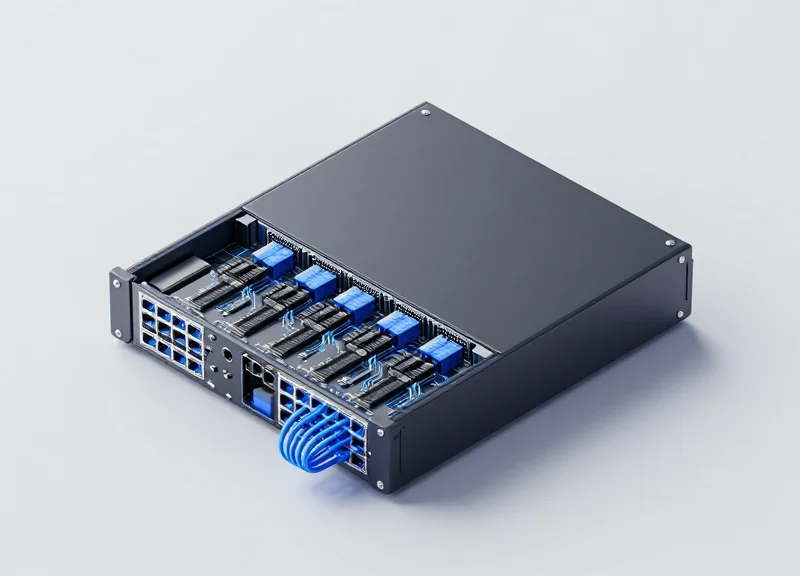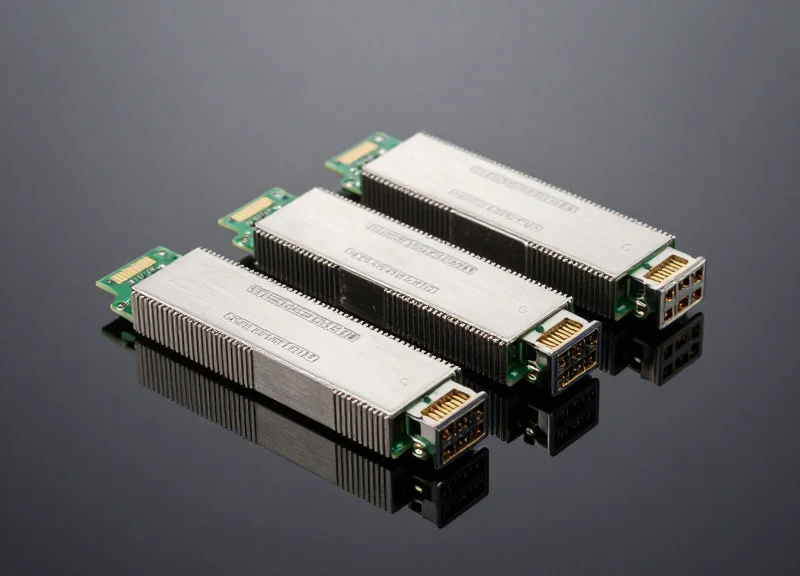
As data centers transition to 400G and beyond, the demand for cost-effective, high-density optical solutions has never been higher. Silicon Photonics (SiPh) represents the frontier of this evolution, offering superior integration and power efficiency. For enterprises and service providers looking to scale, securing wholesale pricing and custom OEM/ODM options is no longer just a luxury—it is a strategic necessity to maintain a competitive edge in 2026.
The Evolution of 400G: Why Silicon Photonics is the Industry Standard

The evolution of 400G technology marks a departure from traditional discrete optics toward Silicon Photonics (SiPh), a technology that leverages standard CMOS manufacturing to integrate complex optical functions onto a single silicon substrate. Unlike traditional transceivers that rely on the manual assembly of separate lasers, modulators, and detectors, Silicon Photonics consolidates these elements, significantly reducing the physical footprint and power consumption while increasing data throughput. This integration is the primary reason why SiPh has become the benchmark for hyperscale data centers and high-performance computing environments looking to scale efficiently in 2026.
Breaking the Bottleneck: From Discrete to Integrated Optics
Historically, optical transceivers were built using 'discrete' components, where each part of the optical engine was manufactured separately and then aligned with sub-micron precision. As speeds reached 400G, this manual approach became a bottleneck due to high labor costs and lower yields. Silicon Photonics solves this by treating light the same way we treat electricity in a microprocessor—guiding photons through silicon waveguides. This shift allows for wafer-scale testing and automated packaging, which are essential for fulfilling large-scale wholesale orders and maintaining consistent performance across thousands of units.
| Feature | Traditional Discrete Optics | Silicon Photonics (SiPh) |
|---|---|---|
| Manufacturing | Labor-intensive manual assembly | Automated wafer-scale CMOS process |
| Component Count | Multiple individual parts | High level of chip integration |
| Reliability | Higher risk of mechanical misalignment | High stability due to monolithic design |
| Scalability | Limited by physical space/assembly | High scalability for 800G and beyond |
| Cost per Bit | Higher at high volumes | Significantly lower for bulk production |
Why Wholesale Buyers Prioritize Silicon Photonics
For enterprise and service provider procurement, the transition to Silicon Photonics is driven by the total cost of ownership (TCO). Because SiPh chips are manufactured in the same foundries as high-end CPUs, the yield rates are substantially higher than traditional Indium Phosphide (InP) or other exotic material approaches. This predictability in manufacturing translates to more stable bulk pricing and shorter lead times for custom quotes. Furthermore, the inherent reliability of an integrated optical circuit means fewer field failures and lower maintenance costs over the lifecycle of the data center hardware.
Frequently Asked Questions
- How does Silicon Photonics reduce power consumption in 400G modules?
By integrating modulators and waveguides directly into the silicon, the electrical-to-optical conversion is more efficient, requiring less voltage to drive signals across the chip compared to discrete electrical traces. - Is Silicon Photonics compatible with existing fiber infrastructure?
Yes, 400G SiPh transceivers use standard LC or MPO connectors and are fully compliant with IEEE and MSA standards, ensuring they work seamlessly with existing single-mode fiber (SMF) networks. - Why is Silicon Photonics considered 'future-proof' for 800G and 1.6T?
The architecture allows for more channels and higher modulation rates to be added to the same silicon footprint, making it the most viable platform for the next generation of high-speed interconnects.
Economic Advantages of Wholesale 400G Procurement
The Financial Logic of Wholesale 400G Procurement
Procuring 400G Silicon Photonics at scale allows enterprises and service providers to transition from tactical purchasing to strategic infrastructure planning, effectively lowering the barrier to entry for high-speed optical networking. By securing bulk volumes, organizations can achieve a per-port cost reduction of up to 30% while simultaneously insulating themselves against market volatility and component shortages. This economic shift is driven by the unique manufacturing profile of Silicon Photonics, where the integration of optical components onto silicon wafers rewards high-volume production runs with lower marginal costs.
Comparative Analysis: Unit Pricing and Logistics
| Procurement Metric | Single-Unit Purchase | Wholesale/Bulk Purchase (100+ Units) |
|---|---|---|
| Average Unit Discount | 0% (MSRP) | 15% to 35% Dependent on Volume |
| Shipping & Customs | High per-unit cost | Consolidated bulk shipping rates |
| Lead Time Predictability | Subject to market availability | Contractually guaranteed buffer stock |
| Integration Support | Basic documentation | Dedicated engineering & custom testing |
Lowering Total Cost of Ownership (TCO)
The TCO of 400G infrastructure extends beyond the initial invoice. Wholesale procurement addresses several hidden costs that typically plague smaller deployments. Firstly, batch-level consistency ensures that all modules in a single shipment share identical performance characteristics, reducing the time spent on troubleshooting and signal calibration during deployment. Secondly, consolidated shipping minimizes the administrative and customs overhead associated with importing sensitive high-tech components. Finally, the ability to secure custom quotes for bulk orders often includes extended warranties or advance replacement programs that are not available to individual buyers.
Frequently Asked Questions: Bulk 400G Procurement
- What is the typical minimum order quantity (MOQ) for wholesale pricing?
While it varies by manufacturer, wholesale tiers usually begin at 50 to 100 units, with the most aggressive pricing unlocked at 500+ units. - How does bulk procurement impact supply chain stability?
Wholesale contracts often include 'rolling forecasts' and reserved capacity at the foundry level, ensuring your project isn't stalled by industry-wide component shortages. - Are custom configurations available for bulk orders?
Yes, wholesale purchasers can often request custom cable lengths, specific EPROM coding for hardware compatibility, or specialized labeling to streamline asset management.
Technical Deep Dive: QSFP-DD and OSFP SiPh Modules
Technical Deep Dive: QSFP-DD and OSFP SiPh Modules
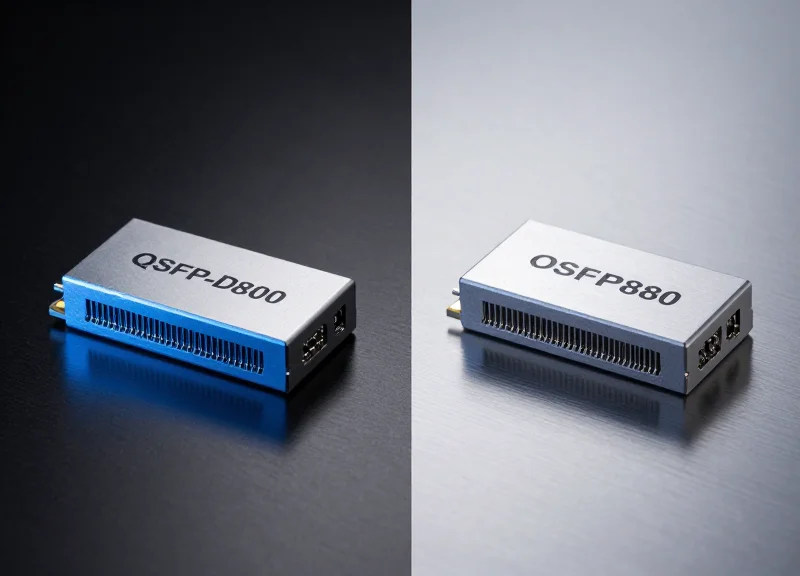
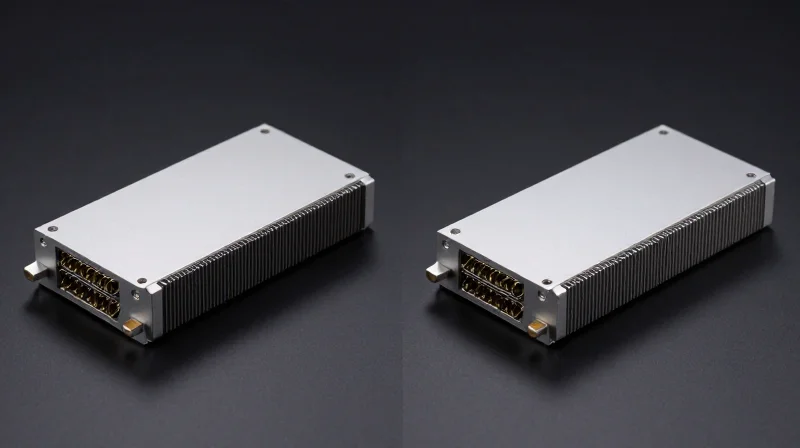
The transition to 400G networking relies on two dominant form factors: the Quad Small Form-factor Pluggable Double Density (QSFP-DD) and the Octal Small Form-factor Pluggable (OSFP). While both utilize Silicon Photonics (SiPh) to integrate optical components onto a single chip, they differ fundamentally in their mechanical design, thermal dissipation capacities, and long-term scalability for hyper-scale environments.
Thermal Management and Integrated Heatsinks
Thermal efficiency is the primary differentiator in wholesale 400G procurement. OSFP modules are physically larger and include an integrated heatsink directly on the module, which allows them to handle power loads exceeding 15W. This makes OSFP ideal for high-power Silicon Photonics circuits and future 800G transitions. Conversely, QSFP-DD modules lack an integrated heatsink, relying instead on the equipment's cage and external airflow. While more compact, QSFP-DD requires highly optimized SiPh chips with lower power consumption to maintain reliability in high-density switches.
| Feature | QSFP-DD (SiPh) | OSFP (SiPh) |
|---|---|---|
| Max Power Dissipation | Approx. 12W - 14W | 15W - 20W+ |
| Backward Compatibility | Native (QSFP28/QSFP+) | Requires Adapter |
| Physical Size | Smaller (Standard Density) | Larger (Integrated Heatsink) |
| Connector Type | 8-lane Electrical Interface | 8-lane Electrical Interface |
| Ideal Use Case | Enterprise & Cloud Edge | Hyper-scale & AI Backbones |
Port Density and Backward Compatibility
For data center operators, backward compatibility is often the deciding factor for bulk orders. QSFP-DD is designed to be backward compatible with existing QSFP cages, allowing operators to plug older 100G (QSFP28) modules into new 400G ports. This protects existing hardware investments. OSFP, however, was designed from the ground up for maximum signal integrity. While it requires an adapter for 100G compatibility, its superior thermal headroom makes it the preferred choice for massive AI training clusters and core routing where 24/7 uptime at maximum load is mandatory.
- Why is Silicon Photonics critical for QSFP-DD?
SiPh allows for higher integration of components, reducing the overall heat signature, which is essential for the tighter thermal constraints of the QSFP-DD form factor. - Can OSFP modules be used in QSFP-DD ports?
No, they are mechanically incompatible. Wholesale buyers must ensure their switch hardware supports the specific cage design (OSFP vs QSFP-DD) before ordering. - Which form factor offers better long-term ROI?
OSFP is often viewed as the 'future-proof' option for 800G and 1.6T, while QSFP-DD offers the best immediate value for legacy-heavy environments.
Customizing Your Network: The Power of OEM and ODM Services
Customization in the 400G ecosystem is a strategic necessity for data centers operating within heterogeneous environments where off-the-shelf components may not align with proprietary switch architectures or specific thermal management requirements. By leveraging Original Equipment Manufacturer (OEM) and Original Design Manufacturer (ODM) services, enterprises can bypass the limitations of generic hardware, ensuring that every Silicon Photonics module is precision-engineered for their specific network fabric, from firmware handshakes to physical labeling.
Engineering for Compatibility: Firmware and EEPROM Customization
One of the primary hurdles in 400G deployment is ensuring interoperability across diverse switching platforms such as Arista, Cisco, Juniper, and NVIDIA (Mellanox). Ubytelink provides comprehensive firmware customization that involves writing specific code to the module’s EEPROM. This allows the 400G SiPh transceivers to be recognized as native components by the host system, unlocking advanced diagnostic features and preventing 'unsupported transceiver' errors that can disrupt network stability.
ODM vs. OEM: Selecting the Right Customization Path
Choosing between OEM and ODM services depends on the depth of technical modification required. OEM services generally focus on external branding and software alignment, whereas ODM services involve deeper collaboration on the physical design and electronic characteristics of the Silicon Photonics module.
| Feature | OEM (Original Equipment Manufacturer) | ODM (Original Design Manufacturer) |
|---|---|---|
| Scope | Private labeling, custom packaging, and firmware coding. | Hardware circuit design, ASIC selection, and heat sink modification. |
| Lead Time | Short (typically 2-4 weeks). | Longer (8-16 weeks including prototyping). |
| Ideal For | Resellers and standard data center expansions. | Specialized hyper-scale architectures and unique hardware builds. |
| Minimum Order | Low to Moderate (100+ units). | High (1000+ units due to R&D costs). |
Hardware Modifications for Hyper-Scale Environments
For clients with unique environmental or mechanical constraints, ODM services allow for modifications to the physical properties of the QSFP-DD or OSFP modules. This includes optimizing heat sink fins for specific airflow directions or customizing the pull-tab length and color for high-density cable management. In the context of Silicon Photonics, this also extends to fine-tuning the laser driver settings to balance power consumption against reach, ensuring the modules meet the strict TCO (Total Cost of Ownership) targets of modern AI-driven clusters.
Frequently Asked Questions Regarding Customization
- Can you provide multi-vendor firmware in a single batch?
Yes. Wholesale orders can be split to include different firmware profiles (e.g., 50% Cisco-compatible, 50% Generic) to support multi-vendor network fabrics. - Is white-labeling available for 400G transceivers?
Absolutely. We offer neutral labeling or custom-branded labels and packaging for MSPs and distributors who wish to integrate our hardware into their own product lines. - Does custom firmware affect the warranty?
When firmware is customized through our official OEM/ODM channels, the full factory warranty remains intact, as the code is validated by our engineering team before deployment.
Key Use Cases: From Cloud Computing to AI Workloads

The adoption of 400G Silicon Photonics (SiPh) marks a pivotal shift in how data centers handle the explosion of global data traffic. Unlike traditional discrete components, SiPh integrates multiple optical functions onto a single silicon substrate, offering a scalable solution for high-density interconnects. This integration is essential for modern architectures that require massive throughput with reduced power consumption and improved reliability.
Accelerating AI and Machine Learning Clusters
The rise of Large Language Models (LLMs) and generative AI has placed unprecedented strain on internal data center networks. Training these models requires thousands of GPUs to work in parallel, creating massive 'East-West' traffic. 400G SiPh modules, particularly in DR4 and FR4 configurations, enable the low-latency, high-bandwidth pipelines necessary to prevent networking bottlenecks during intensive compute cycles, ensuring that hardware utilization remains optimized.
Optimizing Hyperscale Cloud Infrastructure
| Performance Metric | Traditional EML/VSCEL | Silicon Photonics (SiPh) |
|---|---|---|
| Power Consumption | Higher per-gigabit | Significantly lower per-bit |
| Thermal Stability | Sensitive to heat fluctuations | Highly stable across temperatures |
| Manufacturing Scalability | Complex assembly | CMOS-compatible high-volume production |
| Reliability (FIT Rate) | Moderate | Superior due to fewer discrete parts |
High-Performance Computing (HPC) and Scientific Research
In the realm of HPC, where researchers run complex climate simulations and genomic sequencing, the precision of data transmission is non-negotiable. Silicon Photonics provides the high signal integrity required for long-reach transmissions within massive clusters. By leveraging wholesale 400G SiPh solutions, research institutions can scale their fabric bandwidth to meet the needs of exascale computing while managing the total cost of ownership through energy savings.
Edge Data Centers and 5G Integration
- Why is 400G SiPh ideal for edge computing?
Edge nodes often operate in space-constrained and thermally challenging environments. The compact nature and heat resistance of SiPh modules allow for 400G speeds at the network edge without the need for specialized cooling infrastructure. - How does it support 5G backhaul?
As 5G deployments increase data density, 400G SiPh provides the high-capacity backhaul needed to transport data from cell sites to core networks with minimal latency and maximum reliability. - Is it compatible with legacy 100G systems?
Many 400G SiPh modules are designed for backward compatibility or can be used in breakout configurations (e.g., 4x100G), allowing for a phased upgrade path in mixed-speed environments.
Whether you are scaling an AI training lab or upgrading a global cloud footprint, choosing 400G Silicon Photonics wholesale ensures your network is prepared for the 2026 demand surge. Custom quotes for bulk orders allow enterprises to secure these critical components at pricing that aligns with long-term infrastructure budgets.
Quality Assurance: Testing Protocols for Bulk Optical Transceivers
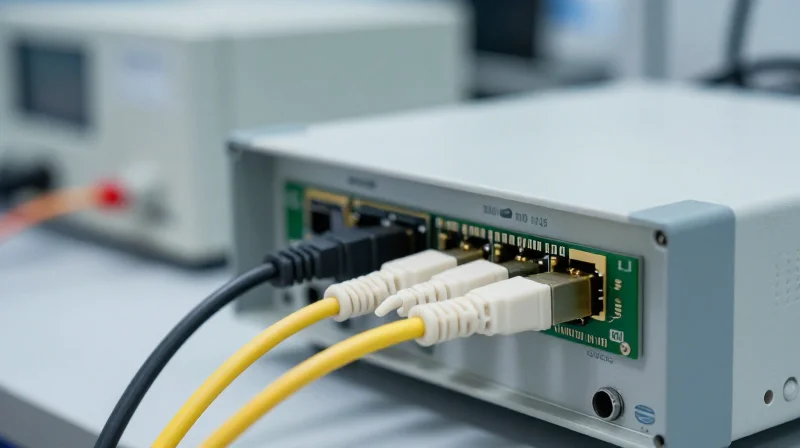
Securing 400G Silicon Photonics transceivers at wholesale scale requires more than just competitive pricing; it necessitates a comprehensive quality assurance (QA) framework that guarantees 100% reliability across thousands of units. Because 400G links operate with extremely tight margins, any minor variance in signal integrity or thermal management can lead to cascading network failures. Professional-grade QA ensures that every module—not just a sample from the batch—meets the IEEE 802.3bs and MSA (Multi-Source Agreement) standards required for hyper-scale AI and cloud workloads.
Core Testing Protocols for Bulk 400G Modules
Reliability at the 400G tier is achieved through a multi-stage validation process that simulates the harshest data center environments while monitoring signal performance in real-time.
- Bit-Error Rate (BER) Verification
We conduct pre-FEC (Forward Error Correction) and post-FEC BER testing to ensure that data transmission remains within the acceptable thresholds required for PAM4 modulation, typically targeting a pre-FEC BER of better than 2.4E-4. - Automated Eye Diagram Analysis
Using high-bandwidth oscilloscopes, we analyze eye diagrams to verify jitter, crossing levels, and extinction ratios, ensuring the optical signal is clean and easily interpretable by the receiving hardware. - Thermal Stress and Endurance
Modules are placed in climatic chambers for 'burn-in' testing, cycling through temperatures from 0°C to 70°C (commercial) or -40°C to 85°C (industrial) to identify early-life failures and ensure long-term MTBF.
Performance Comparison: Standard vs. Premium Bulk Testing
| Testing Parameter | Standard Industry QA | Ubytelink Premium QA |
|---|---|---|
| Sampling Rate | Batch Sampling (10-20%) | 100% Individual Unit Testing |
| Interoperability | Generic Compliance | Multi-Vendor Switch Validation (Cisco, Arista, etc.) |
| Burn-in Duration | 4 to 12 Hours | 24 to 48 Hours Continuous |
| Reporting | Bulk Pass/Fail Certification | Unique Serial-Based Performance Data |
Interoperability and Ecosystem Validation
A critical component of quality assurance for bulk orders is ensuring the 400G SiPh transceivers are fully compatible with the diverse ecosystem of host platforms. This involves rigorous testing with various switch silicons, such as Broadcom Tomahawk 4, and validating EEPROM/DOM (Digital Optical Monitoring) reporting across different Network Operating Systems (NOS) like SONiC, Cisco IOS-XE, and Arista EOS.
Quality Assurance FAQ
- Why is Silicon Photonics more reliable for bulk 400G deployment?
SiPh integrates multiple optical functions onto a single silicon chip, reducing the component count and minimizing potential points of failure compared to traditional discrete TOSA/ROSA designs. - Do you provide test reports for wholesale orders?
Yes, every bulk order includes a comprehensive test report detailing optical power, sensitivity, and BER performance for every serialized module. - How do you handle RMAs for bulk shipments?
While our failure rate is below 0.1%, we offer a streamlined replacement program and advanced replacement options to ensure network uptime is never compromised.
Navigating the 2026 Market: Trends and Pricing Forecasts
The 2026 market for 400G Silicon Photonics (SiPh) is defined by a shift from niche high-end application to broad-scale commoditization, driven largely by the insatiable bandwidth requirements of Generative AI and Large Language Models (LLMs). As hyperscalers transition their primary spend toward 800G and 1.6T architectures, the 400G segment has reached a critical maturity phase where manufacturing yields are at an all-time high and unit costs are descending into a range that offers unprecedented ROI for enterprise and tier-2 service providers. Navigating this landscape requires a sophisticated understanding of the interplay between raw material availability and the cyclical nature of semiconductor fabrication.
Market Dynamics: The 2026 Pricing Outlook
Pricing for 400G SiPh transceivers in 2026 is experiencing a projected year-over-year decline of approximately 15-20% for wholesale volumes. This is not due to a lack of demand, but rather the entry of more specialized foundries and the optimization of the CMOS-compatible manufacturing process. Buyers should anticipate price stabilization in Q3 as AI-driven cluster build-outs consume global inventory, making Q1 and Q2 the optimal windows for securing long-term custom quotes.
| Market Metric | 2023 Performance | 2026 Forecast |
|---|---|---|
| Avg. Wholesale Price (USD) | $650 - $800 | $450 - $600 |
| Standard Lead Times | 12-16 Weeks | 6-10 Weeks |
| Manufacturing Yield | 75-80% | 88-93% |
| Primary Demand Driver | Cloud Migration | AI Interconnects |
Material Availability and Fabrication Capacity
Unlike traditional Indium Phosphide (InP) based optics, Silicon Photonics leverages the existing global silicon infrastructure, which provides a more stable supply chain. However, the bottleneck in 2026 remains the advanced packaging phase—specifically the integration of the laser source (on-chip or external) and the fiber attachment. Wholesale buyers should look for vendors with diversified assembly and test (OSAT) partnerships to mitigate potential regional logistics disruptions.
Strategic Timing for Bulk Procurement
To maximize ROI in the current semiconductor climate, enterprises should move away from 'just-in-time' purchasing. Locking in a 'blanket purchase order' for 2026 allows wholesale buyers to benefit from current price floors while ensuring a guaranteed delivery schedule. This is particularly vital for projects involving 400G DR4 and FR4 modules, where global demand is highest.
Wholesale Market FAQ
- How does 400G SiPh pricing compare to legacy EML solutions in 2026?
SiPh is currently 10-15% more cost-effective at scale compared to Electro-absorption Modulated Laser (EML) solutions, primarily due to higher integration levels and lower testing costs. - Is now the right time to buy 400G or should I wait for 800G price drops?
For most data center applications, 400G remains the 'sweet spot' for power-to-performance. 800G will remain at a price premium until late 2025, making 400G the more efficient wholesale investment today. - Do custom quotes include interoperability guarantees?
Reputable wholesale vendors now include multi-vendor interoperability (MVI) testing as a standard part of custom quotes to ensure SiPh modules work across Cisco, Arista, and NVIDIA platforms.
Partnering with Ubytelink for Scalable Infrastructure
Partnering with Ubytelink for Scalable Infrastructure
Ubytelink bridges the gap between high-volume manufacturing and localized technical excellence, providing a robust procurement framework for 400G silicon photonics that minimizes lead times and maximizes network reliability. By aligning tier-1 production quality with a customer-centric support model, we empower organizations to scale their AI clusters and cloud environments without the traditional risks associated with international bulk sourcing.
The Ubytelink Advantage: Quality and Logistics
In the 2026 market, infrastructure scalability is often hindered by supply chain volatility. Ubytelink mitigates this by maintaining strategic inventory levels and direct-from-factory partnerships, ensuring that 400G DR4, FR4, and LR4 modules are available for rapid dispatch. Our quality assurance process is not just a final check; it is integrated into the procurement lifecycle, featuring comprehensive interoperability testing against major switch and router vendors like Cisco, Arista, and NVIDIA.
| Feature | Ubytelink Wholesale | Standard Wholesalers |
|---|---|---|
| Technical Support | 24/7 Localized Engineering Support | Limited Email/Ticket Response |
| Lead Times | 2-4 Weeks for Bulk Orders | 8-12+ Weeks (Variable) |
| Customization | OEM/ODM Tailored Solutions | Off-the-shelf Only |
| Testing Standards | Zero-Failure Tier-1 Benchmarking | Standard Batch Sampling |
Streamlining Your 2026 Procurement Strategy
Scalability requires more than just hardware; it requires a logistics partner that understands the nuances of international trade and regional compliance. Ubytelink provides end-to-end management of the shipping and customs process, offering DDP (Delivered Duty Paid) options to simplify the financial overhead for our global wholesale clients.
- How does Ubytelink handle custom firmware requests?
We offer in-house EEPROM coding and firmware customization to ensure total compatibility with proprietary network operating systems (NOS) used by hyperscalers and specialized AI labs. - What are the payment terms for wholesale partners?
We provide flexible credit facilities and staged payment plans for long-term partners, allowing for better capital management during large-scale infrastructure build-outs. - Can Ubytelink support multi-region deployments?
Yes, our global logistics network is designed to support simultaneous rollouts across North America, Europe, and Asia-Pacific with synchronized delivery schedules.
In conclusion, 400G Silicon Photonics is the cornerstone of future-proof network infrastructure. By leveraging wholesale pricing and specialized OEM/ODM services, your organization can achieve unprecedented scale without compromising on performance or budget. Ready to optimize your network? Contact Ubytelink today for a personalized wholesale quote and discover how our Silicon Photonics expertise can transform your data center operations.