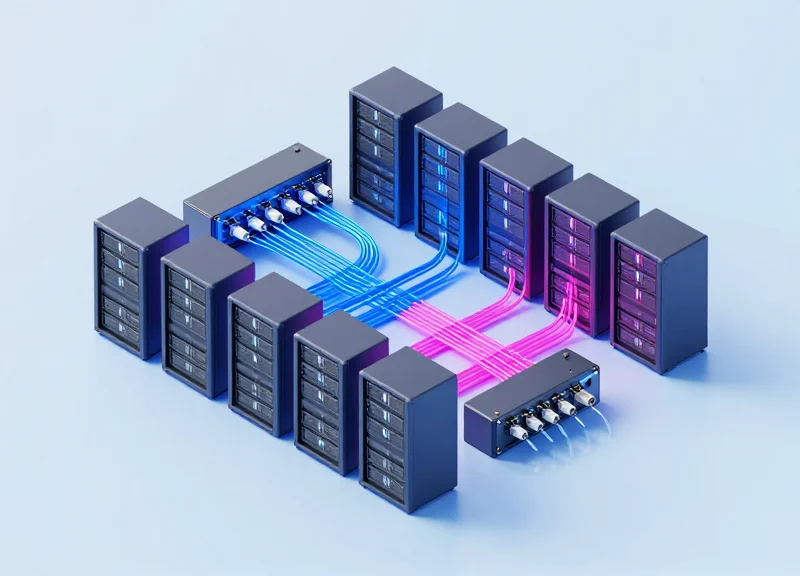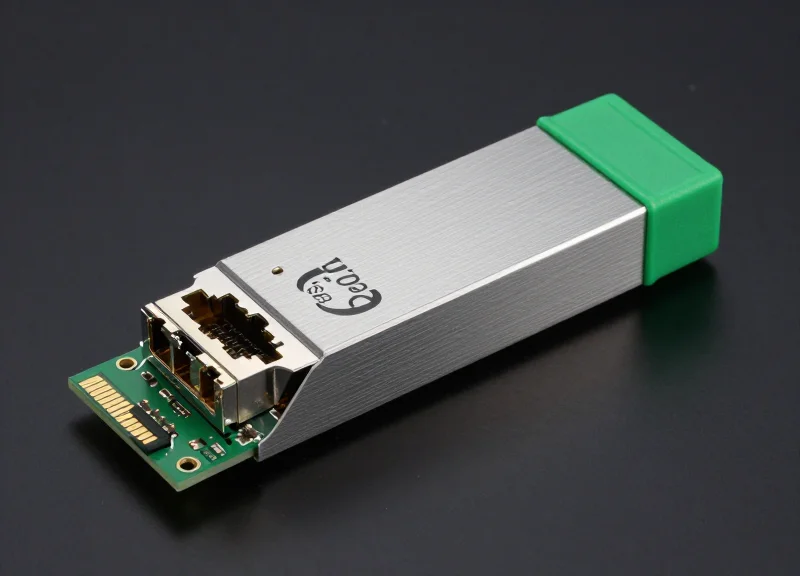
As data centers transition to 800G speeds, traditional air cooling has reached a physical breaking point. The massive heat density generated by next-generation optical modules requires a paradigm shift in thermal management. Immersion cooling is no longer a niche luxury; it is a fundamental requirement for maintaining signal integrity and hardware longevity. At Ubytelink, we provide the wholesale infrastructure and custom OEM/ODM solutions to help you scale efficiently and sustainably.
The Thermal Challenge of 800G Networking

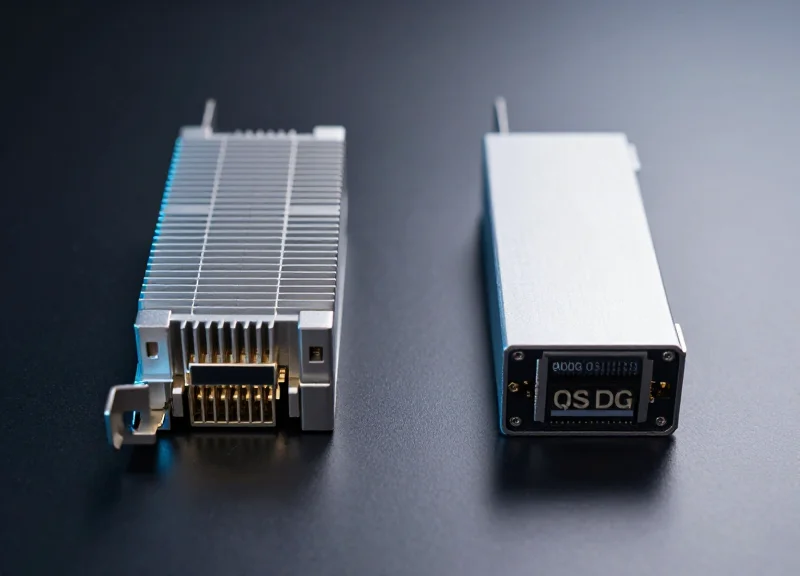
The leap to 800G networking represents more than just a doubling of throughput; it is a thermal tipping point for the modern data center. As transceivers migrate to 800G (using QSFP-DD and OSFP form factors), the power consumption per module has surged to between 18W and 25W. When 32 or 64 of these modules are packed into a single 1RU switch, the resulting heat density creates a 'thermal wall' that legacy forced-air systems cannot penetrate without extreme energy expenditure and hardware risk.
The Physics of the 800G Thermal Wall
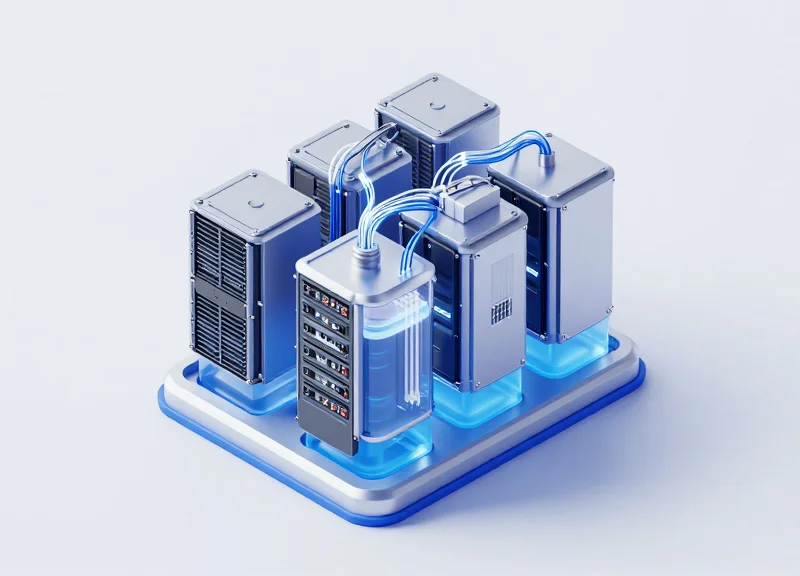
The fundamental challenge lies in the heat transfer coefficient of air versus liquid. In a wholesale 800G environment, air-cooling requires massive fan arrays operating at maximum RPMs to move enough volume to dissipate heat from the small surface area of an OSFP module. This leads to significantly higher Power Usage Effectiveness (PUE) and increased vibration, which can negatively impact the alignment of sensitive optical components. Immersion cooling solves this by surrounding the entire switch fabric and optics in a thermally conductive, dielectric fluid that absorbs heat 1,000 times more effectively than air.
| Metric | Air Cooling (Legacy) | Single-Phase Immersion |
|---|---|---|
| Average Module Power Limit | 15W - 20W | 30W+ |
| Maximum Rack Density | 15kW - 30kW | 100kW - 200kW |
| Heat Transfer Efficiency | Low (Insulator) | High (Conductor) |
| Energy Overhead (Fans) | 15% - 25% | < 3% |
Operational Risks of Air-Cooling 800G Hardware
Relying on air-cooling for wholesale 800G deployments introduces several long-term financial and operational risks. Thermal throttling occurs when modules cannot shed heat fast enough, leading to increased latency and packet loss. Furthermore, the constant 'thermal cycling'—the rapid heating and cooling of components—accelerates the degradation of the Digital Signal Processors (DSP) and lasers within the 800G optics, leading to higher replacement costs and shorter hardware lifecycles.
- Why is 800G heat more difficult to manage than 400G?
800G modules utilize advanced 112G SerDes and higher-performance DSPs that draw significantly more power per square millimeter, creating localized hot spots that air cannot effectively reach. - How does immersion cooling impact wholesale 800G pricing?
While initial CapEx for immersion systems is higher, the total cost of ownership (TCO) is lower due to the removal of fan power costs, reduced hardware failure rates, and the ability to pack more 800G switches into a smaller footprint. - Is immersion cooling compatible with all 800G transceivers?
Most 800G OSFP and QSFP-DD modules can be utilized in immersion environments, though 'immersion-ready' variants are often preferred to prevent fluid ingress into sensitive optical paths.
Why Immersion Cooling is the Standard for 800G
The Physical Necessity of Liquid Immersion for 800G
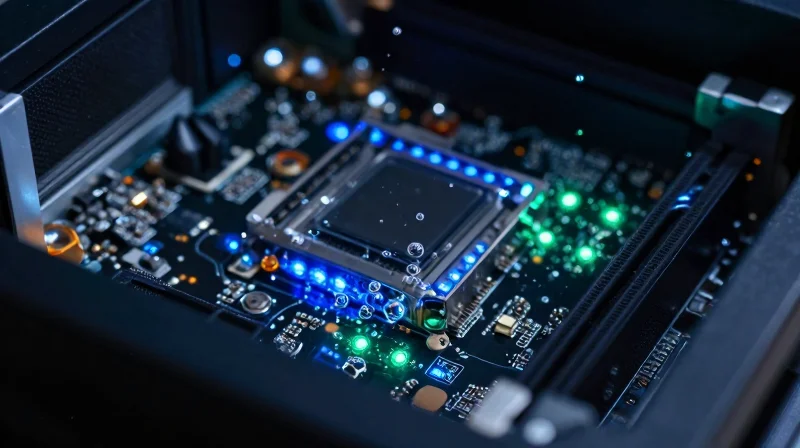
As 800G networking components push power envelopes toward 30 watts per transceiver and switch ASICs exceed 500 watts, traditional air-cooling has reached its thermodynamic limit. Immersion cooling is now the standard because it utilizes dielectric fluids with heat transfer capacities over 1,000 times greater than air. By submerging hardware directly, data centers can achieve 100% heat capture, ensuring that the extreme thermal output of 800G modules does not bleed into the surrounding environment, thereby maintaining component longevity and operational stability.
Eliminating the 'Fan Power' Tax
One of the most significant advantages of wholesale immersion systems is the total removal of internal server and rack fans. In an 800G environment, fans must spin at maximum RPMs to move enough air, consuming up to 20% of the total rack power and creating significant vibration and noise. Immersion cooling eliminates this 'power tax,' allowing that energy to be redirected toward compute and networking performance while simultaneously reducing mechanical failure points and acoustic pollution.
| Feature | Legacy Air Cooling | Liquid Immersion Cooling |
|---|---|---|
| Heat Capture Efficiency | 30-50% (Requires CRAC) | 95-100% (Direct to Fluid) |
| Cooling Power Overhead | High (Fans + Chillers) | Ultra-Low (PUE < 1.05) |
| Max Rack Density | 15-30 kW | 100+ kW |
| Maintenance Level | High (Dust/Fan Failures) | Low (Hermetic Environment) |
Scalability for Wholesale Deployments
For wholesale buyers, the transition to immersion cooling represents a massive reduction in Total Cost of Ownership (TCO). Because the systems are more compact and do not require raised floors or complex aisle containment, the physical footprint of an 800G data center can be reduced by up to 50%. This spatial efficiency, combined with lower utility costs, makes custom-quoted immersion tanks the most financially viable path for scaling 800G networks in 2026.
- Can immersion cooling prevent 800G transceiver burnout?
Yes. By maintaining a constant, low-temperature fluid environment, immersion cooling prevents the thermal throttling and rapid temperature fluctuations that lead to optical transceiver degradation. - Does wholesale immersion cooling require specialized 800G switches?
Most high-end 800G switches can be optimized for immersion by removing fans and applying dielectric-compatible thermal interface materials. Wholesale providers often offer pre-modified kits. - What is the impact on PUE for 800G clusters?
Data centers switching to immersion for 800G typically see their Power Usage Effectiveness (PUE) drop to 1.03 or lower, compared to the industry average of 1.58 for air-cooled facilities.
Wholesale Pricing Models for Large-Scale Deployment
The Economic Shift: From MSRP to Wholesale Leverage
Wholesale pricing models for immersion cooling represent a fundamental shift in data center economics, particularly as operators move toward 800G infrastructure. Unlike standard retail purchases, bulk procurement allows operators to leverage economies of scale to mitigate the higher initial CAPEX of specialized tanks, dielectric fluids, and heat exchangers. By securing custom quotes, organizations can typically achieve a 15% to 30% reduction in per-unit costs compared to small-scale pilot deployments, accelerating the break-even point through both lower hardware costs and immediate gains in energy efficiency.
Tiered Pricing Structures for Large-Scale Deployment
Most leading immersion cooling manufacturers utilize a tiered pricing structure that rewards volume. For 800G networking, where high-density racks require robust thermal management, these tiers are often defined by the total thermal load (kW) or the number of immersion tanks required.
| Deployment Tier | Scale (Rack/Tank Units) | Pricing Model | Key Financial Benefit |
|---|---|---|---|
| Pilot/Edge | 1 - 5 Units | Standard List Price | Fast implementation for small labs |
| Mid-Range Data Center | 10 - 40 Units | Volume Discount (12-18%) | Reduced CAPEX for regional hubs |
| Hyperscale Wholesale | 100+ Units | Custom Quote / Contractual | Maximum ROI & OEM Engineering Support |
Custom Quotes: Tailoring Costs to Infrastructure
Wholesale procurement is rarely a 'one-size-fits-all' transaction. Custom quotes for 2026 deployments take into account specific environmental factors such as local ambient temperatures, available power density, and existing facility water loops. For 800G applications, a custom quote often includes specialized fluid chemistries optimized for signal integrity at high frequencies, which can be bundled into the wholesale price to further reduce the Total Cost of Ownership (TCO).
Wholesale Procurement FAQ
- How does bulk purchasing affect lead times for 800G cooling?
While larger orders require more production time, wholesale agreements often include 'staged delivery' options and reserved manufacturing capacity, ensuring that hardware arrives in alignment with your data center construction milestones. - Are fluids included in the wholesale hardware quote?
Typically, yes. Bulk pricing often bundles the initial fill of dielectric fluid at a significant discount, which is a major factor in reducing the initial investment for 800G immersion setups. - Can I negotiate maintenance costs within a wholesale agreement?
Most wholesale contracts include tiered Service Level Agreements (SLAs). As the deployment scale increases, the per-unit cost of maintenance and technical support generally decreases.
By moving beyond individual unit pricing and into the realm of wholesale custom quotes, data center operators can effectively subsidize the transition to 800G. The immediate reduction in CAPEX, combined with the 95%+ reduction in cooling energy costs, ensures that large-scale immersion cooling is not just a technical necessity, but a superior financial strategy for the 2026 fiscal year.
OEM/ODM Customization: Tailoring Cooling to Your Infrastructure
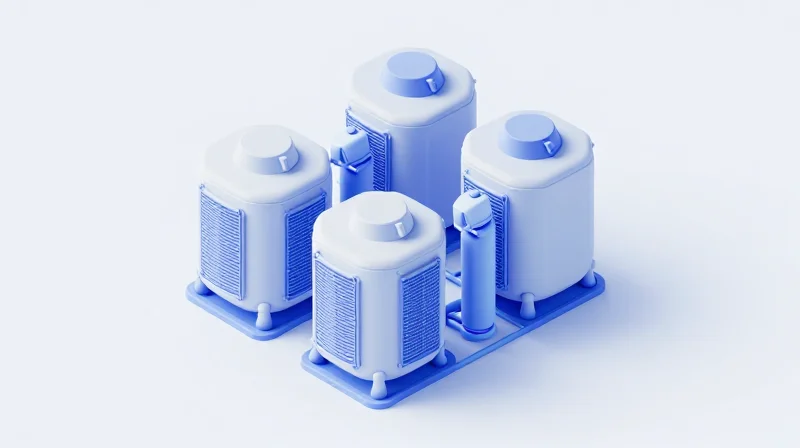
OEM/ODM Customization: Tailoring Cooling to Your Infrastructure
The transition to 800G networking is not a one-size-fits-all migration; it requires a bespoke thermal management strategy where the cooling hardware is engineered around the specific heat profile and physical dimensions of high-speed optical transceivers and advanced switching silicon. Customization ensures that cooling tanks are not merely containers of fluid, but precision-engineered components of a high-performance compute environment that maximize PUE and hardware longevity.
Engineering for Specific Power Densities and Form Factors
When deploying 800G infrastructure at scale, standard immersion tanks may fail to accommodate specialized rack configurations or the extreme heat flux of specific ASIC chipsets. Ubytelink’s ODM workflow allows enterprises to modify internal manifolds, secondary heat exchanger capacities, and dielectric fluid flow paths. This level of granular control allows for power densities exceeding 100kW per rack while maintaining a minimal footprint.
| Feature | Off-the-Shelf Solutions | Ubytelink OEM/ODM Customization |
|---|---|---|
| Rack Compatibility | Fixed dimensions; limited to standard EIA-310 | Custom height, depth, and structural reinforcement |
| Heat Exchange Capacity | Preset for general server workloads | Tuned for 800G transceiver heat flux (up to 30W/module) |
| Fluid Dynamics | Generic flow distribution | Optimized jet-plate cooling for high-TDP components |
| I/O & Power Routing | Rigid cable management options | Tailored busbar and fiber optic cable pathways |
Material Science and Enclosure Integrity
Ubytelink utilizes high-grade materials that are chemically compatible with advanced dielectric fluids, preventing the leaching of plasticizers that can contaminate 800G optical components. Our custom enclosures can be designed for single-phase or two-phase systems, with specific attention paid to hermetic sealing and modularity for easy hardware maintenance.
Customization & Wholesale Deployment FAQ
- What is the typical lead time for custom tank designs?
Depending on the complexity of the internal manifolds and power delivery systems, initial prototypes are usually delivered within 8 to 12 weeks, with bulk production scaling thereafter. - Is there a Minimum Order Quantity (MOQ) for ODM services?
For wholesale pricing on custom designs, we typically require an MOQ starting at 5 units, though this can vary based on the extent of the engineering changes required. - Can you design enclosures for specific 800G switch brands?
Yes, we provide specialized module enclosures compatible with leading manufacturers like Cisco, Arista, and NVIDIA, ensuring the form factor fits perfectly within our immersion tanks. - Do you offer localized integration support?
As part of our wholesale custom package, we provide on-site engineering consultations to ensure the custom hardware integrates perfectly with your facility's existing CDU and water loop.
Improving PUE and ESG Metrics with Liquid Cooling

Improving PUE and ESG Metrics with Liquid Cooling
Transitioning to immersion cooling is the most effective strategy for data centers deploying 800G hardware to achieve a Power Usage Effectiveness (PUE) below 1.05. By submerging high-density compute nodes in dielectric fluid, operators eliminate the parasitic power load of server fans and massive CRAC units, which typically account for 35% to 50% of total energy consumption in air-cooled facilities. This radical reduction in overhead not only lowers operational costs but directly aligns with Environmental, Social, and Governance (ESG) frameworks by minimizing the carbon footprint per terabit of data processed.
Quantifying the Efficiency Gains
When scaling to 800G, the thermal design power (TDP) of switches and optics increases significantly, often exceeding the capabilities of traditional air-cooling without massive, inefficient airflow. Immersion cooling provides a superior thermal path, allowing for higher set-point temperatures for facility water and often enabling chiller-less operation even in warm climates.
| Metric | Traditional Air Cooling | Single-Phase Immersion | Two-Phase Immersion |
|---|---|---|---|
| Average PUE | 1.50 - 1.70 | 1.03 - 1.05 | 1.01 - 1.02 |
| Cooling Energy Reduction | Baseline | 90% - 95% | 95% - 98% |
| Water Usage (WUE) | High | Near Zero | Near Zero |
| Hardware Lifespan | Standard | 20-30% Improvement | 30%+ Improvement |
The Impact on Sustainability and ESG Reporting
Institutional investors and regulatory bodies are increasingly demanding transparent ESG reporting. Immersion cooling directly improves Scope 2 emissions by reducing the total electricity required from the grid. Furthermore, because the heat is captured in a liquid medium, it is far easier to repurpose for district heating or industrial use, significantly improving the Energy Reuse Factor (ERF) of the data center. By removing the need for evaporative cooling towers, facilities also dramatically reduce their Water Usage Effectiveness (WUE) metrics, a critical factor in drought-prone regions.
- How does immersion cooling affect the Carbon Usage Effectiveness (CUE) of an 800G data center?
It lowers CUE by reducing the total kilowatt-hours (kWh) required for cooling, which directly correlates to the carbon intensity of the local power grid. - Can immersion cooling help meet Net Zero targets?
Yes, by eliminating mechanical chillers and fans, it minimizes the energy overhead, making it easier for facilities to reach Net Zero through smaller investments in renewable energy offsets. - What is the impact on electronic waste (e-waste)?
The stable thermal environment and protection from dust and humidity provided by dielectric fluid extend the life of 800G hardware, reducing the frequency of server replacements and the resulting e-waste.
For wholesale operators, purchasing immersion systems at scale is no longer just a technical upgrade; it is a strategic move to future-proof infrastructure against tightening environmental regulations. As 800G becomes the standard, the ability to maintain a low PUE will be the primary differentiator for high-density colocation providers and hyperscalers alike.
Single-Phase vs. Two-Phase Immersion: Choosing the Right Path
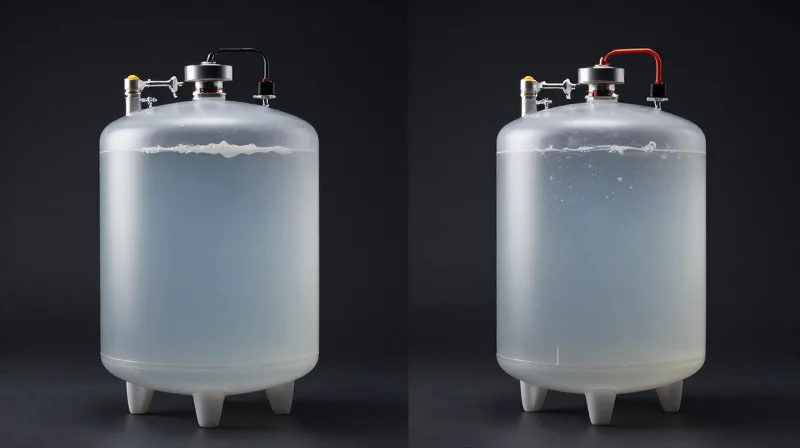
The choice between single-phase and two-phase immersion cooling for 800G infrastructure is a strategic decision that balances thermodynamic efficiency against operational complexity and long-term maintenance costs. While both technologies offer a quantum leap over traditional air cooling, their suitability depends on the specific power density of your 800G ASICs and the desired ROI timeframe for your data center facility.
Single-Phase Immersion: Reliability and Simplicity
In a single-phase system, the dielectric fluid—typically a synthetic hydrocarbon or silicone-based oil—remains in a constant liquid state. A pump circulates the fluid through the server chassis and then to a heat exchanger. This method is highly favored for wholesale deployments due to its lower initial CAPEX and the familiarity of the maintenance procedures. Because the fluid does not evaporate, the system does not require hermetic sealing, allowing for easier hot-swapping of 800G modules and line cards.
Two-Phase Immersion: Maximum Thermal Density
Two-phase immersion leverages the latent heat of vaporization. The dielectric fluid boils upon contact with high-heat components, such as 800G network processors, turning into vapor. This vapor then rises to a condenser coil, releases its heat, and returns to liquid form. This cycle is significantly more efficient at removing heat than single-phase systems, supporting rack densities well beyond 100kW. However, the requirement for a sealed environment to prevent fluid loss via evaporation increases both the complexity of the tank design and the cost of the specialized fluids.
Comparative Analysis for Procurement Officers
| Feature | Single-Phase Immersion | Two-Phase Immersion |
|---|---|---|
| Primary Heat Transfer | Convection (Liquid) | Latent Heat (Boiling/Condensing) |
| Fluid Cost | Moderate ($15-$30/gal) | High ($150-$300/gal) |
| Maintenance Complexity | Low (Open tank access) | High (Vapor containment required) |
| Max Rack Density | Up to 100 kW | 250 kW+ |
| Infrastructure PUE | ~1.03 | ~1.01 |
Critical Decision Factors for 800G Wholesale
- What is the expected power density per rack?
If your 800G deployment stays under 100kW per rack, single-phase immersion offers the best balance of cost and performance. For ultra-dense AI and HPC clusters exceeding 100kW, two-phase is often the only viable path. - How frequent is hardware maintenance?
Single-phase systems allow for immediate access to hardware. Two-phase systems require careful management of the vapor zone and fluid recovery during maintenance, which can increase downtime if not handled by specialized technicians. - What are the fluid loss tolerances?
Two-phase systems can experience 'evaporative drag' where expensive fluid is lost during tank opening. Single-phase systems have near-zero fluid loss, making them more predictable for long-term OPEX budgeting.
Hardware Reliability and Extended Lifespan
Maximizing Hardware Longevity through Thermal Uniformity
In the realm of 800G networking, thermal management is not merely about preventing immediate shutdowns; it is about protecting the structural integrity of silicon and optical sub-assemblies. Immersion cooling achieves this by providing a high-heat-capacity dielectric fluid that maintains a near-constant temperature across the entire component. By eliminating the rapid temperature fluctuations—or thermal cycling—common in air-cooled environments, immersion cooling prevents the micro-fractures and solder joint failures that typically plague high-performance hardware over time. This stability is critical for the delicate laser diodes and modulators found in 800G optics, which are highly sensitive to thermal drift.
Protecting Sensitive 800G Optics from Environmental Degradation
High-speed 800G transceivers are particularly sensitive to contaminants such as dust, humidity, and atmospheric pollutants. Traditional air cooling inherently pulls these particles into the chassis, leading to buildup on heatsinks and potential short-circuits via moisture absorption. In contrast, immersion baths seal the hardware within a chemically inert fluid. This exclusion of oxygen and moisture prevents oxidation and corrosion, ensuring that the precision-aligned optics and delicate circuit traces remain pristine throughout their operational life, even in harsh industrial environments.
| Reliability Factor | Air Cooling Impact | Immersion Cooling Benefit |
|---|---|---|
| Thermal Cycling | High stress on solder joints | Near-zero fluctuations |
| Contaminant Entry | Dust and debris accumulation | Hermetically sealed environment |
| Oxidation | Accelerated by heat and moisture | Non-existent in inert fluid |
| Mechanical Stress | Fan-induced vibration | Zero mechanical vibration |
Long-term ROI and Maintenance Benefits
For wholesale buyers and data center operators, the extension of a hardware lifecycle from the typical three years to five or even seven years dramatically alters Total Cost of Ownership (TCO) calculations. When 800G infrastructure is protected from the primary causes of hardware failure—heat, vibration, and contamination—procurement cycles can be stretched, and the frequency of 'truck rolls' for component replacement is drastically reduced. This makes bulk investment in immersion-ready 800G hardware a more sustainable and profitable strategy for 2026 and beyond.
Reliability and Lifecycle FAQ
- How much can immersion cooling extend the life of 800G optics?
Research indicates that by maintaining stable temperatures and preventing oxidation, the functional lifespan of high-density optical components can be extended by 25% to 50% compared to air-cooled equivalents. - Does the dielectric fluid cause degradation of the hardware over time?
No, high-quality dielectric fluids are specifically engineered to be chemically inert and compatible with the plastics, metals, and adhesives used in 800G components, ensuring no material degradation. - Is special cleaning required if an 800G module needs to be replaced?
While components must be rinsed or 'degreased' using a simple solvent bath or air-drying process when removed from the fluid, this does not affect the hardware's internal reliability or warranty status.
Future-Proofing for 1.6T and Beyond
Future-Proofing for 1.6T and Beyond
Investing in immersion cooling for 800G deployments today is a strategic prerequisite for 1.6T readiness, as it establishes a high-density thermal management foundation capable of dissipating the 500W+ heat loads projected for next-generation optical engines and switch ASICs. By bypassing the limitations of traditional air cooling now, procurement officers ensure that their 2026 hardware investments can seamlessly integrate with the even higher thermal envelopes of the 2026-2027 roadmap without requiring expensive facility retrofits.
Comparative Thermal Requirements: 800G vs. 1.6T
| Metric | 800G Standards | 1.6T Projections |
|---|---|---|
| Typical Module Power | 15W - 25W | 30W - 45W |
| Switch ASIC Power | 500W - 700W | 800W - 1000W+ |
| Cooling Method Efficiency | Air: High Risk / Immersion: Optimal | Air: Impossible / Immersion: Required |
| Rack Density (kW) | 40kW - 60kW | 100kW+ |
Leveraging Wholesale Quotes for Long-Term Infrastructure
When requesting custom quotes for immersion systems in 2026, it is critical to specify tanks and coolants designed for 1.6T overhead. Bulk pricing for dielectric fluids and modular tanks often provides a lower Total Cost of Ownership (TCO) when amortized over two hardware generations. Immersion tanks are typically 'silicon agnostic,' meaning the same physical infrastructure used for 800G wholesale deployments today will support 1.6T line cards with minimal adjustment, providing a significant hedge against future capital expenditure.
- Will 800G immersion tanks support 1.6T hardware?
Yes, high-quality immersion tanks are designed to handle heat densities far exceeding current 800G requirements, making them compatible with the physical and thermal footprints of future 1.6T switches. - How does bulk pricing help with future upgrades?
Securing bulk pricing for immersion infrastructure now locks in lower rates for the most durable part of the data center, allowing budget to be reallocated toward 1.6T silicon when it becomes available. - Is the dielectric fluid compatible with next-gen optics?
Most advanced single-phase fluids are chemically stable for 10-15 years and are designed to be compatible with the materials used in both 800G and 1.6T optical transceivers.
Navigating the Wholesale Procurement Process with Ubytelink
The Professional Pathway to High-Density Cooling Procurement
The procurement of immersion cooling for 800G infrastructure is a specialized process that bridges the gap between mechanical engineering and IT strategy. At Ubytelink, we facilitate this by providing a direct line to custom quoting and bulk pricing models specifically optimized for the 2026 hardware cycle, ensuring that your data center can handle the thermal loads of next-generation transceivers and high-wattage networking equipment.
Consultative Technical Evaluation
Before a quote is finalized, our technical team evaluates your specific 800G switch configurations and optical module densities. This ensures the dielectric fluid and tank heat exchangers are rated for the high-wattage demands of 800G environments, preventing thermal throttling and hardware degradation. We work closely with your infrastructure architects to align tank dimensions with existing rack floor plans.
Custom Quotes and Bulk Pricing Structure
| Procurement Tier | Order Volume | Pricing Incentive | Logistical Support |
|---|---|---|---|
| Pilot Program | 1-2 Units | Standard MSRP | Standard Documentation |
| Data Center Expansion | 5-15 Units | Tiered Discount | Dedicated Project Manager |
| Enterprise Wholesale | 20+ Units | Custom Contract Pricing | On-site Integration Support |
Logistics and Global Fulfillment
Managing the delivery of industrial-scale immersion tanks and specialized dielectric fluids requires precision and regulatory compliance. Ubytelink coordinates the entire logistical chain, from manufacturing and compliance testing to international freight and final delivery. This includes managing the dangerous goods documentation for specific fluid chemistries and ensuring on-site delivery aligns with your facility's power and water commissioning schedules.
Frequently Asked Questions: 800G Wholesale Cooling
- How can I request a custom quote for 800G immersion systems?
You can request a custom quote by submitting your hardware specifications, total heat load requirements, and desired unit count through our wholesale portal to receive a 2026 pricing proposal within 48 hours. - What are the typical lead times for bulk immersion cooling orders?
Standard lead times for bulk orders typically range from 8 to 12 weeks, depending on the customization required for the internal cooling manifolds and fluid volume availability. - Does Ubytelink provide on-site installation support?
Yes, for enterprise-level wholesale orders, we provide on-site engineering support to oversee the filling process, fluid testing, and initial hardware immersion to ensure peak performance.
Optimizing your thermal strategy is the key to unlocking the full potential of 800G networking. Ubytelink stands at the forefront of this cooling revolution, offering the best wholesale pricing and comprehensive OEM/ODM support to ensure your infrastructure is cool, quiet, and highly efficient. Ready to scale? Contact Ubytelink today for a custom quote and take the first step toward a more sustainable high-performance network.