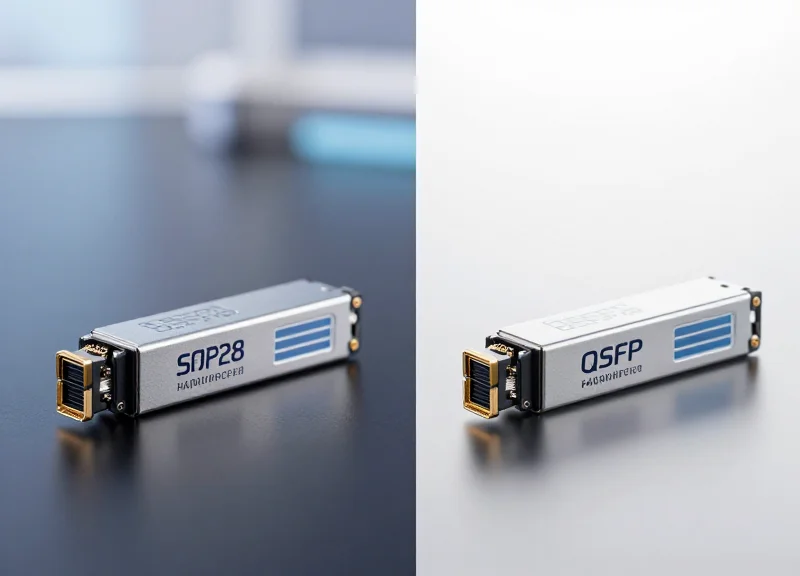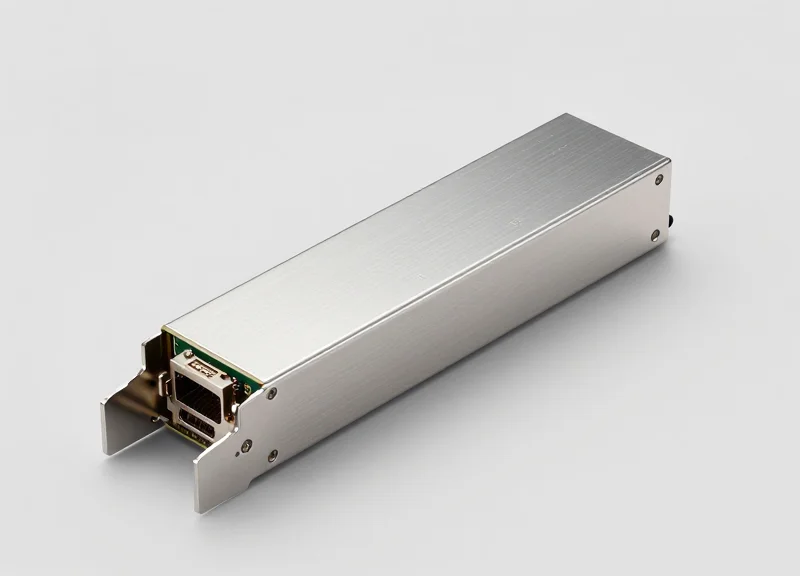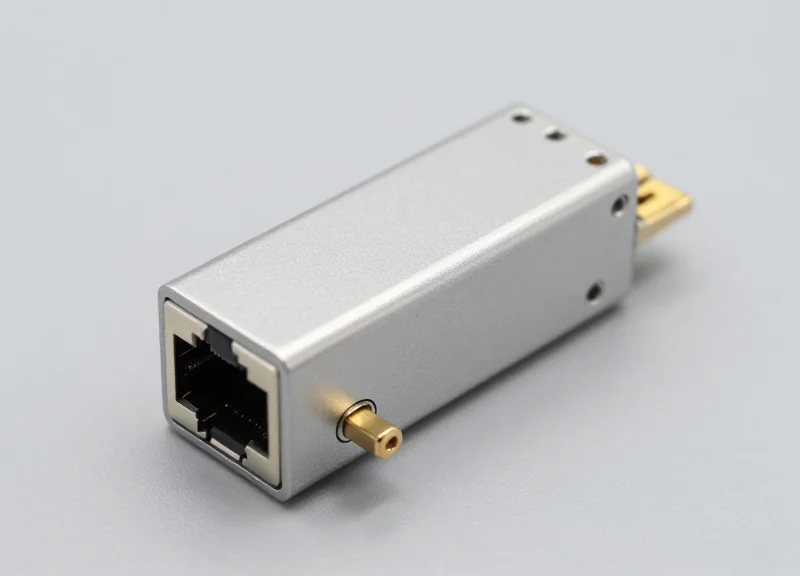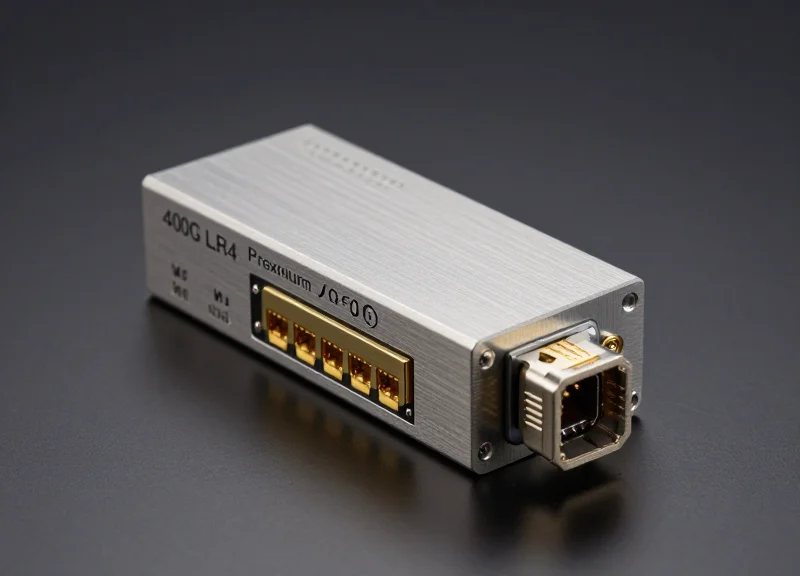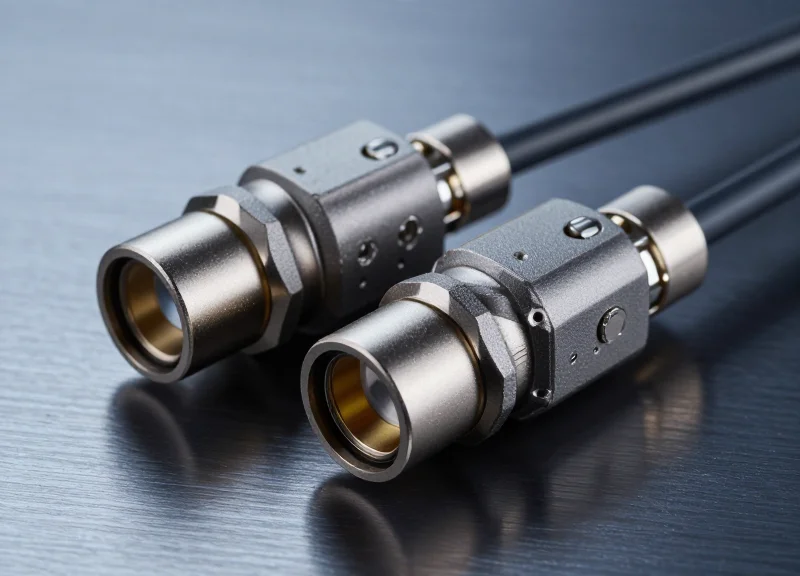
Connectivity is the lifeblood of modern global operations, but standard consumer-grade hardware often fails under the pressure of extreme temperatures, vibrations, and electromagnetic interference. This article explores how Ubytelink's Military Grade Optical Interconnects bridge the gap between fragile infrastructure and mission-critical resilience, providing a blueprint for the future of robust network architecture.
The Evolution of Military-Grade Optical Standards
The Evolution of Military-Grade Optical Standards
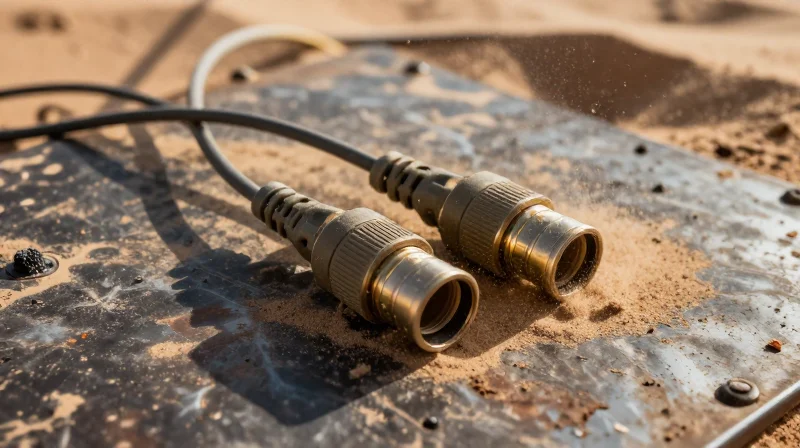
Military-grade optical interconnects represent the pinnacle of fiber optic engineering, defined by their capacity to sustain zero-fail performance in environments where standard commercial hardware would immediately succumb to physical or thermal stress. Unlike civilian infrastructure, these solutions must adhere to rigorous Department of Defense (DoD) benchmarks, ensuring that mission-critical data remains secure and uninterrupted during high-intensity operations, from sub-zero arctic deployments to high-heat desert combat zones.
The Shift from COTS to Specialized Ruggedization
Historically, military communications relied heavily on Commercial Off-The-Shelf (COTS) components to reduce costs and speed up deployment. However, the increasing complexity of modern electronic warfare and the need for massive data throughput necessitated a shift. Today, Ubytelink and other industry leaders focus on specialized ruggedization, which involves re-engineering the internal architecture of optical transceivers and connectors to withstand shock, vibration, and electromagnetic interference (EMI) that are absent in standard data centers.
| Feature | Commercial Grade | Military Grade (MIL-SPEC) |
|---|---|---|
| Operating Temp | 0°C to 70°C | -40°C to +85°C (or wider) |
| Shock Resistance | Standard handling | High-impact (MIL-STD-810G) |
| Housing Material | Plastic/Standard Alloy | Hard-Anodized Aluminum/Stainless Steel |
| Vibration | Minimal (Server Rack) | Random/Sinusoidal (Aircraft/Vehicle) |
Defining MIL-STD-810 in Optical Interconnects
The benchmark for military durability is MIL-STD-810, a series of performance tests established by the US Military. For optical interconnects, this standard dictates how hardware must behave when exposed to salt fog, sand, dust, and rapid decompression. Ubytelink’s military-grade solutions integrate hermetic sealing and reinforced ferrules to prevent ingress of contaminants, ensuring that the fragile glass fiber cores remain pristine regardless of external atmospheric conditions.
- Why is MIL-STD-810 critical for fiber optics?
Fiber optics are highly sensitive to microscopic debris and physical misalignment. MIL-STD-810 testing ensures that connectors maintain precise alignment and cleanliness even under the intense vibration of a jet engine or the corrosive spray of maritime environments. - Does 'Military Grade' only apply to the outer casing?
No. While the ruggedized shell is visible, military-grade standards also apply to the internal optoelectronics, including specialized lasers and photodiodes designed for high-reliability cycles and wider thermal windows. - How does EMI shielding factor into these standards?
Military environments are often saturated with high-power radio and radar signals. Military-grade interconnects utilize advanced shielding techniques to prevent electromagnetic interference from degrading the signal-to-noise ratio within the optical-to-electrical conversion process.
Engineering for Resilience: Ubytelink's Hardware Architecture
Engineering for Resilience: Ubytelink's Hardware Architecture
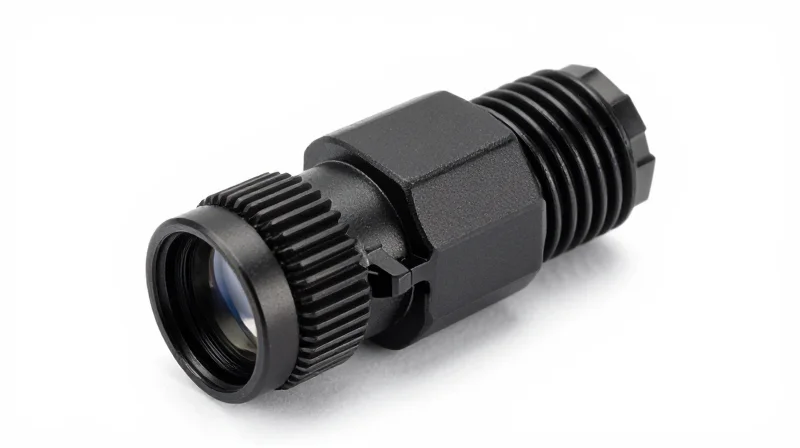
Ubytelink's hardware architecture is defined by a 'resilience-first' philosophy, where every component is engineered to maintain signal integrity under extreme mechanical stress and thermal fluctuations that would cause standard commercial optics to fail. By integrating aerospace-grade materials with proprietary internal structural reinforcements, Ubytelink ensures that its military-grade optical interconnects function as the reliable backbone of global defense and high-stakes industrial networks.
Material Selection: The Foundation of Ruggedness
The primary defense against environmental degradation begins with the housing. Unlike standard transceivers that utilize plastic-heavy or thin-walled aluminum casings, Ubytelink employs high-density zinc alloys and specialized nickel plating. These materials provide superior Electromagnetic Interference (EMI) shielding and corrosion resistance, particularly in saline or high-humidity environments. Internally, gold-plated contact pins and high-reliability ceramic ferrules ensure that the physical connection remains stable over thousands of mating cycles.
| Feature | Commercial Standard | Ubytelink Military-Grade |
|---|---|---|
| Housing Material | Standard Aluminum / Plastic | Hardened Zinc Alloy with Nickel Plating |
| EMI Shielding | Basic / Minimal | Full-Body Shielding (MIL-STD-461 compliant) |
| Thermal Management | Passive / Ambient reliant | Integrated Heat Sinks & Thermal Vias |
| Connector Durability | ~500 Mating Cycles | Up to 2,000+ Mating Cycles |
Structural Integrity and Mechanical Reinforcement
To combat physical stress, Ubytelink utilizes an internal 'cage-within-a-cage' structural design. This architecture isolates the sensitive Laser Diode (LD) and Photo Diode (PD) from external mechanical vibrations and sudden shocks. The use of specialized potting compounds—advanced epoxy resins—surrounds critical internal circuitry to dampen kinetic energy and prevent component detachment during high-G maneuvers or heavy artillery proximity. This ensures that the optical path remains perfectly aligned even in the most volatile kinetic environments.
Thermal Dissipation and Environmental Sealing
Heat is the primary enemy of optical longevity. Ubytelink’s architecture incorporates advanced thermal vias and high-conductivity internal pads that draw heat away from the TOSA/ROSA components toward the external shell, which acts as a secondary heat sink. Furthermore, Ubytelink hardware is sealed to IP67 or IP68 standards, utilizing hermetic sealing techniques that prevent the ingress of dust, moisture, and chemical contaminants, ensuring performance in desert, maritime, and arctic theaters.
Frequently Asked Questions: Hardware Resilience
- How does Ubytelink handle extreme vibration in military vehicles?
We utilize vibration-dampening mounting brackets and internal epoxy potting that secures all surface-mount components, meeting the rigorous demands of MIL-STD-810H for vibration and shock. - Can these interconnects survive exposure to corrosive saltwater?
Yes, our hardware features marine-grade nickel plating and hermetic seals designed specifically to withstand salt-fog and high-salinity maritime environments without material degradation. - What prevents thermal throttling in high-temperature deployments?
The architecture includes high-efficiency thermal pads and an optimized surface area for convection, allowing the modules to operate at full capacity even at industrial temperatures reaching +85°C.
Performance Under Pressure: Temperature and Vibration Resistance

Maintaining Signal Integrity Across Thermal Extremes
Ubytelink's optical solutions solve the problem of signal volatility in harsh environments by employing a combination of active thermal compensation and precision-matched materials that prevent physical expansion/contraction cycles. In scenarios where temperatures fluctuate from -55°C to +125°C, standard commercial optics often suffer from 'wavelength drift' or micro-bending losses. Ubytelink mitigates these risks by utilizing Thermally Stable Expansion (TSE) housings and advanced laser drivers that automatically adjust bias currents to maintain a stable optical output, ensuring zero bit-error-rate (BER) during rapid thermal cycling.
Mechanical Resilience: Vibration and Shock Mitigation
In aerospace and defense applications, mechanical vibration is a constant threat to optical alignment. Ubytelink addresses this through a proprietary 'Floating Ferrule' architecture and high-retention force locking mechanisms. These design elements decouple the internal optical fibers from external mechanical stress, allowing the interconnects to exceed MIL-STD-810G requirements. By absorbing high-frequency vibrations and low-frequency shocks, Ubytelink ensures that the optical path remains perfectly aligned, preventing the signal 'jitter' and momentary link drops that are catastrophic for mission-critical data transmission.
| Performance Parameter | Commercial/Industrial Standard | Ubytelink Military Grade |
|---|---|---|
| Operating Temperature | -40°C to +85°C | -55°C to +125°C |
| Vibration Resistance | 5G (Random) | 40G+ (MIL-STD-810G Method 514.6) |
| Mechanical Shock | 50G / 11ms | 500G / 1ms (Half-Sine) |
| Thermal Shock Rate | 2°C / minute | Up to 20°C / minute |
Environmental Performance FAQ
- How does Ubytelink prevent connector decoupling under high vibration?
Our interconnects feature a triple-start threaded coupling mechanism with internal ratcheting and anti-vibration springs that physically lock the connector in place, preventing any movement even under severe G-loads. - Are these components tested for vacuum environments found in space?
Yes, Ubytelink modules are designed with low-outgassing materials and hermetically sealed housings that maintain internal pressure and prevent contamination of optical surfaces in aerospace and space-based deployments. - What is the impact of thermal cycling on the life span of the optic?
By using materials with matched coefficients of thermal expansion (CTE), Ubytelink minimizes internal mechanical stress during temperature changes, resulting in a MTBF (Mean Time Between Failures) that is 300% higher than industrial-grade equivalents.
Signal Integrity and Electromagnetic Interference (EMI) Shielding

In the theater of modern electronic warfare and mission-critical communications, signal integrity is often compromised by intense electromagnetic interference (EMI) from radar, jamming equipment, and high-power radio systems. Ubytelink addresses these challenges by integrating sophisticated shielding architectures and noise-suppression materials directly into their optical interconnect solutions, ensuring that high-speed data streams remain pristine even when surrounded by extreme electrical noise.
Advanced Shielding Architectures for Harsh Environments
While optical fiber itself is inherently immune to electromagnetic interference because it transmits photons rather than electrons, the active components within an interconnect—specifically the transceivers and electrical interfaces—are highly vulnerable. Ubytelink mitigates this risk through a multi-layered defense strategy. This includes the use of 360-degree metallized housings and specialized conductive gaskets that create a continuous Faraday cage around sensitive internal circuitry. By providing a low-impedance path to ground, these shields prevent external radiated emissions from coupling into the internal electrical signal path.
| Shielding Feature | Commercial Standard | Ubytelink Military Grade |
|---|---|---|
| Housing Material | Standard alloy or polymer | Die-cast nickel-plated zinc or aircraft-grade aluminum |
| EMI Compliance | FCC/CE Standard | Exceeds MIL-STD-461G Requirements |
| Gasket Type | Non-conductive rubber | Silver-plated conductive elastomers |
| Signal Trace Design | Standard FR4 Layout | Impedance-matched differential routing with high-density decoupling |
Maintaining Signal Fidelity and Jitter Control
True signal integrity in a military context requires more than just blocking noise; it requires the absolute preservation of timing and amplitude. Ubytelink utilizes high-performance Clock and Data Recovery (CDR) circuits and precision-matched differential traces to minimize jitter. In high-density installations where crosstalk is a primary concern, Ubytelink interconnects employ localized shielding at the pin-out level, ensuring that adjacent data lanes do not interfere with one another even at speeds exceeding 100Gbps.
- Why is EMI shielding necessary if optical fiber is immune to interference?
While the fiber cable is immune, the transceiver components convert electrical signals to light. These conversion points and the electrical interface to the host board are highly susceptible to noise and require rigorous shielding to prevent data corruption. - How does Ubytelink verify its shielding effectiveness?
All military-grade modules undergo rigorous testing protocols in anechoic chambers to ensure compliance with MIL-STD-461G, measuring both radiated emissions and radiated susceptibility. - Do these shielding techniques add significant weight to the modules?
Ubytelink uses advanced lightweight alloys and thin-film metallization to provide maximum shielding effectiveness without compromising the strict weight requirements of aerospace and portable defense systems.
Applications in Critical Global Infrastructure

The deployment of Ubytelink Military Grade Optical Interconnects Solutions: Premium Quality for Global Networks is essential for maintaining operational continuity across the world's most demanding sectors. By integrating ruggedized materials with precision optics, these solutions bridge the gap between commercial efficiency and the uncompromising reliability required for national security and global utility networks, ensuring that high-speed data remains accessible even in environments that would cause standard networking hardware to fail.
Naval and Maritime Communication Systems
In the maritime domain, optical interconnects are subjected to constant salt-spray corrosion and the rhythmic mechanical stress of shipboard vibrations. Ubytelink modules are engineered to support real-time sonar data processing, high-definition radar imaging, and secure internal communications. Their hermetically sealed designs prevent ingress and ensure that signal integrity is maintained during deep-sea operations or high-speed naval maneuvers where precision timing is a tactical necessity.
Aerospace and Satellite Ground Stations
As global satellite constellations expand, ground stations require massive data throughput to manage orbital telemetry and telecommunications traffic. Ubytelink’s solutions provide the ultra-low latency required for real-time satellite tracking and high-bandwidth data offloading. These interconnects are optimized to handle the extreme thermal cycles of outdoor antenna arrays, ensuring that the link between the earth and space remains unbroken regardless of weather conditions.
Industrial Automation and Smart Power Grids
The modernization of the global power grid and the rise of Industry 4.0 place optical components in the vicinity of high-voltage transformers and heavy machinery. Ubytelink interconnects leverage advanced EMI shielding to eliminate signal interference from electromagnetic noise, which is prevalent in these settings. This ensures that automated manufacturing lines and energy distribution systems operate with microsecond precision, preventing costly downtime and equipment damage.
| Infrastructure Sector | Primary Environmental Challenge | Ubytelink Solution Feature |
|---|---|---|
| Naval Defense | Corrosive Salt Air & Vibration | Hardened Shells & Shock-Resistant Optics |
| Satellite Ground Stations | Thermal Fluctuations | Wide-Temperature Grade Components |
| Industrial Power Grids | Electromagnetic Interference (EMI) | Advanced Shielding & Galvanic Isolation |
| Oil & Gas Exploration | High Pressure & Chemical Exposure | Ruggedized Chemical-Resistant Jacketing |
Deployment FAQ
- Can Ubytelink interconnects be used in underwater applications?
Yes, their ruggedized casings are designed to meet IP-rated standards for moisture and pressure resistance, making them suitable for subsea enclosures and maritime sensors. - How do these modules perform in high-EMI environments like power plants?
Because they use optical fiber rather than copper, they are inherently immune to electromagnetic interference, and our specialized shielding further protects the active components. - Are these solutions compatible with existing commercial global networks?
Absolutely. Ubytelink maintains strict adherence to MSA (Multi-Source Agreement) standards, ensuring that military-grade reliability can be seamlessly integrated into standard enterprise architectures.
Rigorous Testing Protocols and Quality Assurance

Rigorous Testing Protocols and Quality Assurance
To maintain the uncompromising standards required by global defense and aerospace sectors, Ubytelink implements a 100% inspection policy. Unlike standard commercial production where batch sampling is common, military-grade optical interconnects undergo individual validation across physical, optical, and environmental parameters to ensure absolute reliability in the field. This commitment to 'zero-defect' manufacturing ensures that every component can withstand the rigors of combat environments and critical mission-critical infrastructure.
The Multi-Stage Validation Process
Every module progresses through four primary phases of verification: Component-Level Screening, Automated Optical Inspection (AOI), Performance Benchmark Verification (including BERT and Eye-Diagram analysis), and Final Reliability Stress Testing. This end-to-end approach is designed to eliminate latent defects that could lead to catastrophic failure in high-vibration or extreme-temperature scenarios.
| Test Category | Standard Commercial Grade | Ubytelink Military Grade |
|---|---|---|
| Temperature Validation | 0°C to 70°C (Sampled) | -40°C to +85°C (100% Unit Tested) |
| Vibration/Shock Resistance | Basic Mechanical Check | MIL-STD-810G Compliant |
| Quality Assurance Logic | Acceptable Quality Level (AQL) | Zero-Defect Individual Certification |
| Burn-in Testing | 4-12 Hours | 24-72 Hours Accelerated Aging |
Environmental Stress Screening (ESS)
Environmental Stress Screening is the cornerstone of Ubytelink’s quality assurance. Modules are subjected to rapid thermal cycling and mechanical shocks that exceed typical operational loads. This process intentionally stresses the components to force 'infant mortality' failures to occur within the controlled laboratory environment rather than in the field. By the time a Ubytelink module is deployed in a naval communication system or a satellite ground station, it has already proven its resilience against the harshest possible conditions.
- How does Ubytelink ensure signal integrity under extreme vibration?
We utilize active monitoring during high-G vibration sweeps, ensuring that optical power levels remain stable and that no micro-interruptions occur during mechanical stress. - Are test reports available for each individual shipment?
Yes, every military-grade interconnect is accompanied by a comprehensive Test Result Report (TRR) that details its specific performance metrics and compliance with MIL-STD benchmarks. - What standards govern the Ubytelink QA process?
Our protocols are aligned with MIL-STD-810G for environmental testing, MIL-STD-883 for microelectronics, and GR-468-CORE for generic reliability assurance.
Scalability and Compatibility with Modern Data Rates
Scalability and Compatibility with Modern Data Rates
Ubytelink Military Grade Optical Interconnects Solutions provide the essential bridge between field-hardened reliability and the massive bandwidth requirements of next-generation global networks. While traditional ruggedized systems often lag behind commercial speed cycles, Ubytelink leverages advanced silicon photonics and high-performance Digital Signal Processing (DSP) to deliver 400G and 800G capabilities within modules that meet strict MIL-SPEC standards. This allows defense, aerospace, and critical infrastructure operators to scale their data throughput exponentially without compromising the physical integrity or lifespan of their interconnect hardware in extreme environments.
Future-Proofing for 400G and 800G Architectures
The transition to 400G and 800G data rates introduces significant challenges regarding signal integrity and thermal management, particularly when utilizing PAM4 (Pulse Amplitude Modulation 4-level) signaling. Ubytelink addresses these hurdles by implementing proprietary electromagnetic interference (EMI) shielding and enhanced thermal dissipation paths. These features ensure that even at 800G, the bit-error rate (BER) remains within acceptable limits for mission-critical applications, resisting the signal degradation that typically occurs in high-vibration or electromagnetically noisy settings.
| Specification Metric | Standard High-Speed Modules | Ubytelink Military-Grade |
|---|---|---|
| Data Rate Range | 10G to 400G | 10G up to 800G+ |
| Thermal Management | Active Airflow Required | Advanced Heat-Sink & Passive Cooling Support |
| Environmental Resilience | Commercial/Indoor Only | MIL-STD-810H Shock & Vibration |
| Reliability (MTBF) | Standard Lifecycle | Extended Life Cycle (100k+ Hours) |
Backward Compatibility and Modular Infrastructure
To ensure maximum ROI for global network deployments, Ubytelink designs its high-speed interconnects with a focus on modularity. By utilizing industry-standard Multi-Source Agreement (MSA) form factors such as QSFP-DD and OSFP, these modules maintain backward compatibility with legacy 100G and 200G ports. This interoperability allows network administrators to perform phased upgrades, inserting 400G-ready military-grade modules into existing infrastructure as needed, thereby future-proofing the network without requiring a complete hardware replacement.
Scalability and Compatibility FAQ
- How does Ubytelink maintain 800G performance in high temperatures?
We use high-grade ceramic substrates and customized heat-spreader designs to efficiently pull heat away from the internal DSP, preventing the thermal throttling common in high-density 800G deployments. - Are these modules compatible with standard commercial switches?
Yes, while the internals are ruggedized for military use, the external interfaces are fully MSA-compliant, ensuring compatibility with top-tier commercial switches and routers. - What is the benefit of PAM4 in a military-grade module?
PAM4 allows for doubling the data rate within the same bandwidth, enabling the 400G and 800G speeds required for modern sensor fusion and real-time high-definition surveillance data.
The Economic Advantage of Long-Term Reliability
The Economic Advantage of Long-Term Reliability
In the landscape of global network infrastructure, the true cost of an optical interconnect is not determined by its purchase price, but by its performance over a decade of service. Ubytelink Military Grade Optical Interconnects Solutions provide a strategic financial edge by minimizing the frequency of component failures and the subsequent labor costs associated with manual intervention in remote or high-density environments. By shifting the focus from initial Capital Expenditure (CAPEX) to the Total Cost of Ownership (TCO), organizations can achieve higher profitability and stability.
Comparative Financial Impact: Commercial vs. Military Grade
| Metric | Standard Commercial Modules | Ubytelink Military Grade |
|---|---|---|
| Expected Lifespan | 2-4 Years | 10+ Years |
| Annual Failure Rate | 1.5% - 3% | < 0.05% |
| Maintenance Frequency | High (Reactive) | Low (Proactive) |
| Environmental Resilience | Limited to Controlled Environments | Extreme Temperature & Vibration |
| Direct Replacement Costs | Cumulative & Recurrent | One-time Investment |
The table above illustrates the stark contrast between standard hardware and Ubytelink's premium offerings. The primary driver of expense in modern data centers is not the hardware itself, but the Operational Expenditure (OPEX) linked to downtime. For global networks, a single hour of downtime can result in millions of dollars in lost revenue. Ubytelink mitigates this risk by utilizing higher-grade alloys and superior laser components that withstand the rigors of continuous high-speed data transmission.
Maximizing ROI and Minimizing Maintenance Overhead
- How does military-grade quality translate to lower OPEX?
By significantly reducing the need for hardware replacements and decreasing the workload on network engineering teams who would otherwise spend time troubleshooting physical layer issues in harsh environments. - Is the higher initial price justified for standard enterprise data centers?
Yes, especially in high-density environments where a single transceiver failure can disrupt critical 400G or 800G links, leading to massive financial losses and reputational damage. - What is the typical payback period for Ubytelink interconnects?
While initial CAPEX is higher, the ROI is usually realized within 18 to 24 months due to the elimination of secondary replacement cycles and emergency maintenance fees.
Ultimately, premium interconnects function as insurance for the network's uptime. For global enterprises, telecommunication providers, and defense contractors, the stability provided by Ubytelink is a core component of fiscal responsibility. By investing in interconnects that are designed to exceed standard lifecycles, organizations ensure that their backbone remains robust as they scale from 100G to 800G and beyond.
Ubytelink stands at the forefront of optical technology, delivering the durability and performance required for the world's most demanding environments. By choosing military-grade solutions, organizations can secure their data flow against the unpredictable. Contact the Ubytelink engineering team today to learn how our premium interconnects can fortify your global network infrastructure.