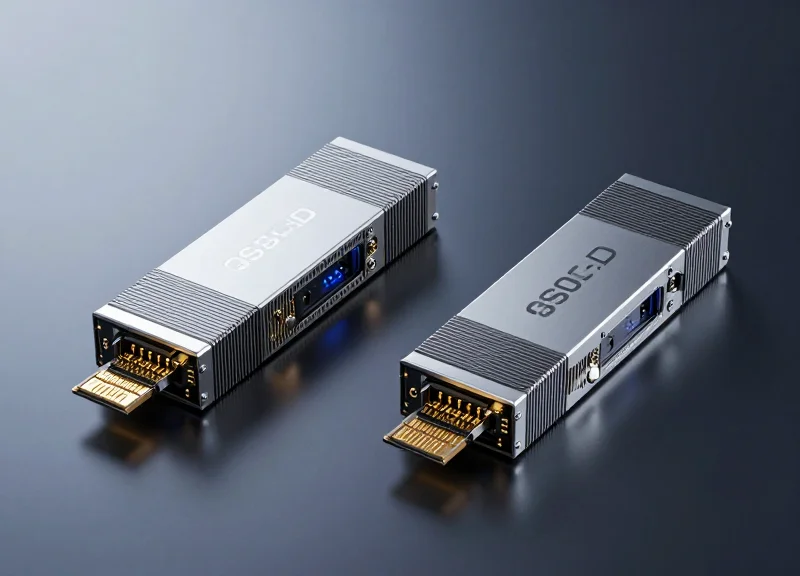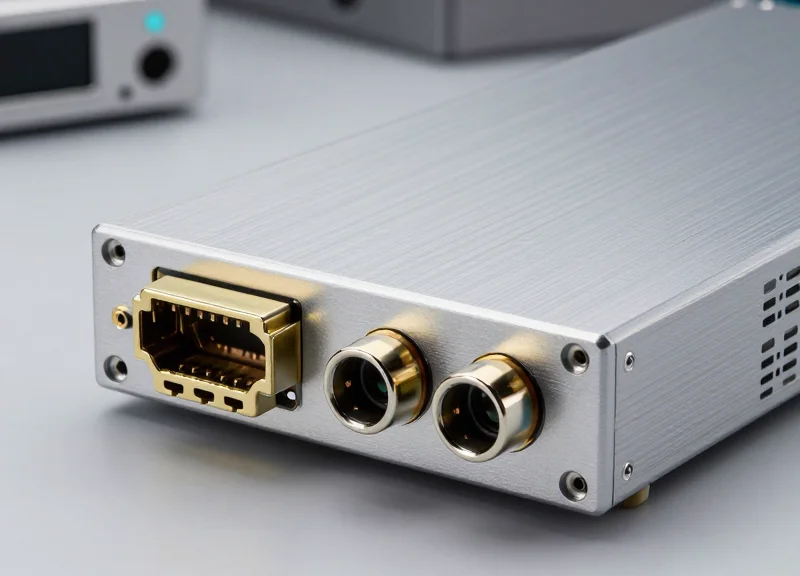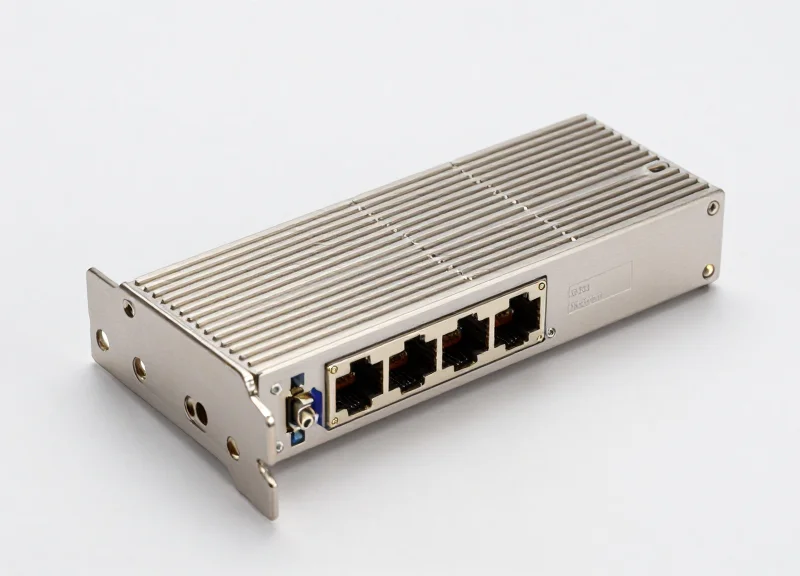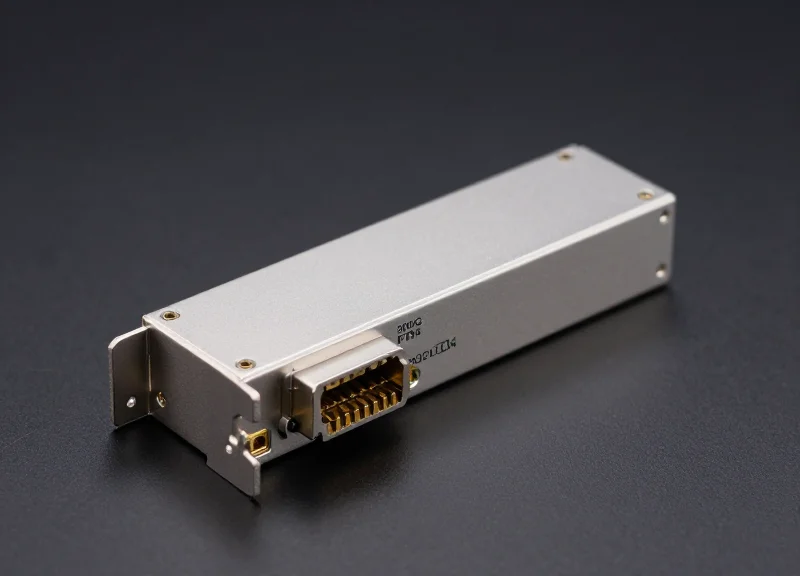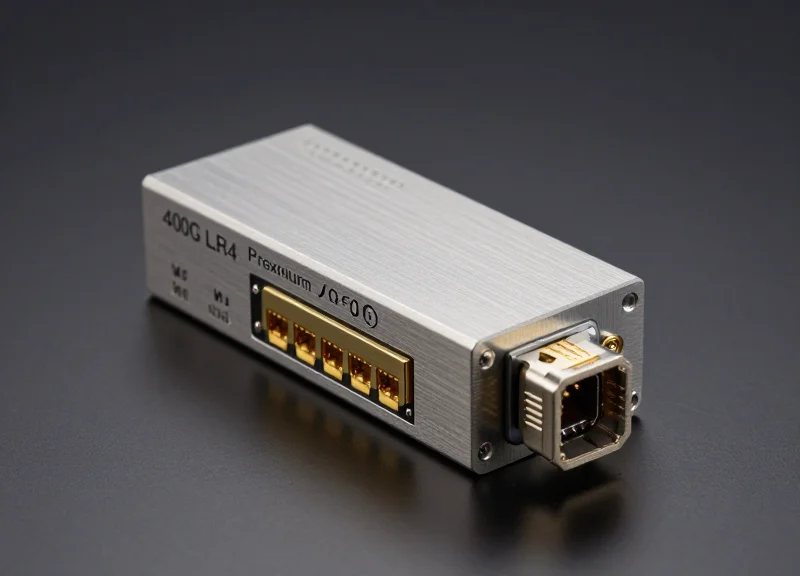
As global data traffic reaches unprecedented levels, the demand for reliable long-distance high-speed connectivity has never been higher. Ubytelink addresses this challenge with its premium 400G LR4 solutions, designed to bridge the gap between massive bandwidth and geographic distance without compromising on stability or performance.
Understanding 400G LR4: The New Standard for Distance

The 400G LR4 specification, primarily implemented in the QSFP-DD form factor, is the industry's answer to the growing demand for high-bandwidth connectivity over significant physical distances. Designed to transmit data up to 10 kilometers over single-mode fiber (SMF), 400G LR4 utilizes four distinct wavelengths (CWDM or LAN-WDM) to carry 100Gbps signals each, multiplexed into a single fiber pair. This technology is essential for connecting hyperscale data centers, metropolitan area networks (MANs), and regional hubs where short-reach copper or multi-mode fiber solutions fall short in both distance and signal integrity.
Technical Specifications of the 400G LR4 Standard
| Feature | Requirement |
|---|---|
| Max Distance | 10km over SMF |
| Form Factor | QSFP-DD (Double Density) |
| Optical Lanes | 4 x 100Gbps |
| Modulation | PAM4 (Pulse Amplitude Modulation 4-level) |
| Connector Type | Duplex LC |
| Power Consumption | Typically 10W to 12W |
Why 400G LR4 is Critical for Network Expansion
As enterprises and service providers migrate to 400G ecosystems, the LR4 standard serves as the 'gold standard' for long-haul reliability. Unlike parallel-fiber solutions (such as DR4) that require eight or more fibers for a single link, the LR4's use of Wavelength Division Multiplexing allows it to operate on a standard duplex LC fiber pair. This efficiency drastically reduces the cost of fiber cabling infrastructure while maximizing the utilization of existing single-mode fiber plants. By employing PAM4 modulation and KP4 Forward Error Correction (FEC), Ubytelink 400G LR4 solutions ensure that data remains intact over the full 10km span, even in the presence of signal dispersion.
Key Questions Regarding 400G LR4 Implementation
- What is the primary difference between 400G LR4 and 400G FR4?
The primary difference is reach; 400G FR4 is designed for distances up to 2km, whereas 400G LR4 is engineered for long-distance spans up to 10km. - Is FEC mandatory for 400G LR4 modules?
Yes, 400G LR4 requires the host system to support KP4 Forward Error Correction (FEC) to ensure reliable data recovery and meet BER standards over long distances. - Can 400G LR4 be used for short-reach applications?
While technically possible, it is often not cost-effective. However, using LR4 for shorter spans allows for greater link budget headroom, which can be beneficial in environments with high optical patch panel loss.
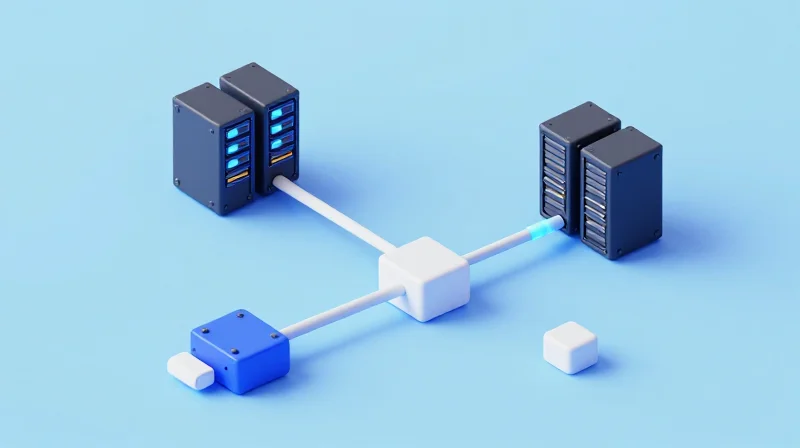
The Engineering Behind Ubytelink’s 10km Reach
The Engineering Behind Ubytelink’s 10km Reach
Ubytelink’s 400G LR4 modules achieve a reliable 10km reach by integrating four high-precision LAN-WDM lanes, each operating at 100Gbps using PAM4 modulation, which ensures minimal chromatic dispersion compared to standard CWDM alternatives. This performance is anchored by the use of cooled EML (Electro-absorption Modulated Laser) technology, which maintains wavelength stability across varying thermal environments, a critical requirement for long-distance optical transmission.
Precision LAN-WDM Grid for O-Band Transmission
The choice of LAN-WDM (Local Area Network Wavelength Division Multiplexing) is pivotal for the 10km specification. By utilizing the O-band spectrum, specifically near the zero-dispersion point of G.652 single-mode fiber, Ubytelink minimizes signal distortion. The channels are spaced at 800GHz, allowing for four distinct 100G signals to be multiplexed onto a single fiber pair with extreme precision.
| Lane | Center Wavelength (nm) | Frequency (THz) |
|---|---|---|
| L0 | 1295.56 | 231.4 |
| L1 | 1300.05 | 230.6 |
| L2 | 1304.58 | 229.8 |
| L3 | 1309.14 | 229.0 |
Advanced DSP and Signal Integrity
To mitigate the inherent challenges of PAM4 signaling over 10km, Ubytelink incorporates a high-performance Digital Signal Processing (DSP) engine. This chip performs real-time equalization to compensate for optical impairments and noise. When combined with Host-side Forward Error Correction (FEC), the system achieves a robust link budget that compensates for the approximately 6.3dB of link loss typical in 10km spans, including connectors and patches.
- Why does Ubytelink use EML instead of DML for LR4?
EML lasers provide a narrower spectral width and lower chirp compared to Directly Modulated Lasers (DML), which is essential for maintaining signal clarity over the 10km distance required by the LR4 standard. - Is the 10km reach guaranteed on all SMF types?
The 10km reach is optimized for G.652 single-mode fiber. While it may work on other SMF types, performance is most consistent on standard G.652 due to its specific chromatic dispersion characteristics in the 1310nm window. - What role does the TOSA/ROSA play in this engineering?
The Transmitter and Receiver Optical Sub-Assemblies (TOSA/ROSA) are hermetically sealed to prevent environmental degradation, ensuring that the 10km reach remains stable over the full 0-70°C operating temperature range.
Mission-Critical Reliability: Zero-Downtime Architecture

Ubytelink 400G LR4 solutions achieve mission-critical reliability through a combination of high-stability LAN-WDM EML lasers, advanced thermal dissipation designs, and rigorous component-level stress testing. By prioritizing a zero-downtime architecture, these modules minimize the risk of signal degradation and hardware failure, ensuring that global backbone networks remain operational 24/7 without the need for frequent manual intervention.
Hardened Hardware Architecture for 24/7 Stability
The core of Ubytelink’s reliability lies in its internal component selection. Unlike standard transceivers that may succumb to thermal drift over time, the LR4 series utilizes hermetically sealed Electro-absorption Modulated Lasers (EML). These are specifically chosen for their narrow linewidth and high tolerance to the heat generated by 400G digital signal processing (DSP) chips, ensuring the 10km link remains stable even in densely packed data center switches where ambient temperatures can fluctuate.
Reliability Benchmarks and Performance Standards
| Feature | Ubytelink 400G LR4 Standard | Network Impact |
|---|---|---|
| MTBF (Mean Time Between Failure) | >1,000,000 Hours | Reduced replacement cycles and lower OpEx. |
| Digital Diagnostic Monitoring (DDM) | Real-time I2C Interface | Proactive identification of power or temp issues. |
| Power Consumption | <10W (Optimized) | Prevents localized hotspots in high-density racks. |
| Operating Temperature Range | 0°C to 70°C (Commercial) | Consistent performance in varied climate-controlled rooms. |
Proactive Health Monitoring with DDM
To prevent sudden network outages, Ubytelink integrates comprehensive Digital Diagnostic Monitoring (DDM). This allows network engineers to monitor parameters such as laser bias current, optical output power, and internal temperature in real-time. By setting threshold alarms, administrators can identify a degrading fiber link or a failing component before it results in a total loss of traffic, enabling scheduled maintenance instead of emergency repairs.
Reliability and Maintenance FAQ
- How does Ubytelink handle heat dissipation in QSFP-DD form factors?
The modules feature an optimized internal layout and high-conductivity thermal pads that efficiently transfer heat from the DSP and laser drivers to the module housing, preventing thermal-induced bit errors. - Can these modules be swapped without powering down the switch?
Yes, Ubytelink 400G LR4 modules are fully hot-pluggable, allowing for seamless upgrades or replacements without impacting other ports or system uptime. - Are these modules compliant with industry reliability standards?
They are strictly compliant with QSFP-DD MSA and IEEE 802.3bs standards, and undergo 48-hour burn-in testing before shipment to ensure zero-day reliability.
Power Efficiency and Thermal Optimization
Power Efficiency and Thermal Optimization
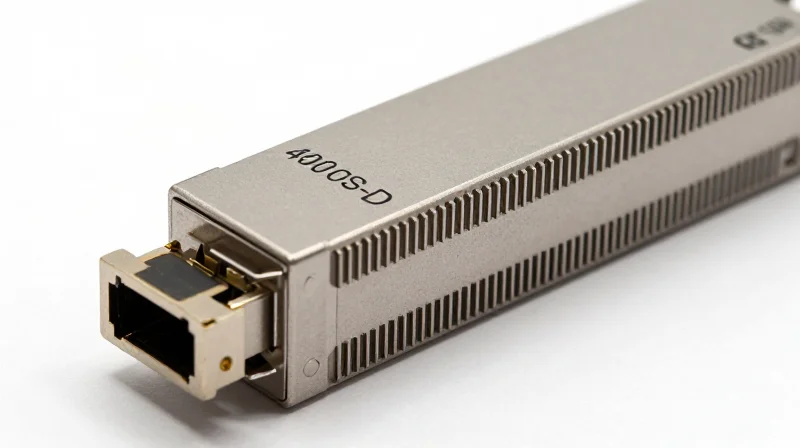
The primary challenge of 400G optical networking lies in balancing massive data throughput with the restrictive thermal envelopes of QSFP-DD form factors. Ubytelink 400G LR4 solutions address this through a low-power design philosophy that minimizes heat generation at the source, ensuring that modules operate well below their thermal thresholds even during peak traffic loads. By optimizing the power consumption of the Digital Signal Processor (DSP) and utilizing high-efficiency laser drivers, Ubytelink prevents the thermal throttling that often plagues standard long-distance modules in crowded rack environments.
Engineering for Low-Power Consumption
Energy efficiency is not merely an environmental consideration; it is a prerequisite for long-term hardware reliability. Ubytelink modules utilize 7nm DSP technology, which significantly reduces the power draw per gigabit of data transmitted. This efficiency ensures that the total power consumption typically remains under 10W per module. Reducing the electrical-to-optical conversion loss allows for higher port density in switches and routers without exceeding the cooling capacity of the chassis.
| Metric | Standard 400G LR4 | Ubytelink 400G LR4 |
|---|---|---|
| Typical Power Consumption | 12W - 14W | 9.5W - 10.5W |
| Max Operating Case Temp | 70°C | 75°C (Enhanced) |
| Thermal Management | Passive Passive | Integrated Heat Spreaders |
| Efficiency Optimization | Standard DSP | Ultra-low Power 7nm DSP |
Advanced Heat Dissipation Strategies
Ubytelink employs a multi-layered approach to thermal management. The internal architecture features high-conductivity thermal interface materials (TIM) that bridge the gap between the heat-generating components and the module's outer shell. The casing itself is precision-engineered with surface textures designed to maximize airflow contact. This ensures that heat is moved away from the sensitive LAN-WDM lasers, preventing wavelength drift and maintaining 10km signal integrity without requiring aggressive fan speeds that increase operational noise and power costs.
Thermal Performance FAQ
- How does lower power consumption impact the lifespan of the transceiver?
Reduced power draw leads to lower internal operating temperatures, which directly slows the aging process of the laser diodes and electronic components, significantly increasing the Mean Time Between Failures (MTBF). - Can these modules be used in uncooled environments?
While designed for data center environments with standard airflow, the optimized thermal design provides a wider safety margin against ambient temperature spikes compared to generic 400G optics. - Does the 10km reach require additional power boost?
No, Ubytelink’s LR4 solution achieves the full 10km reach using highly sensitive receivers and efficient WDM lasers, maintaining its low-power profile without the need for external amplification or excessive power input.
Rigorous Quality Assurance: Beyond Industry Standards
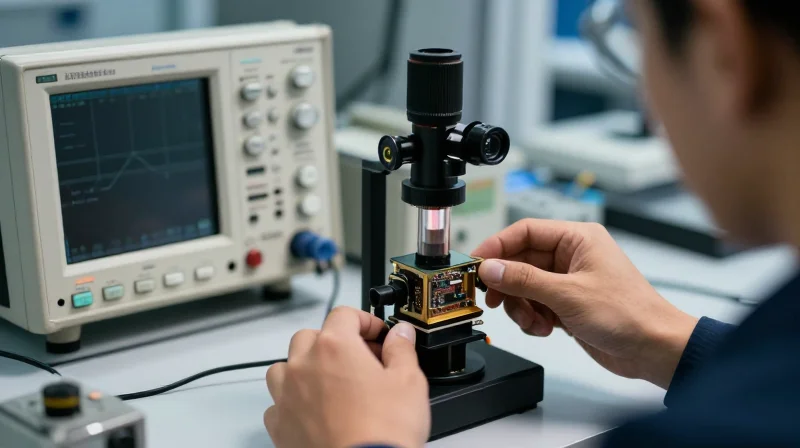
At Ubytelink, quality assurance is not a final checkpoint but a foundational engineering philosophy. Every 400G LR4 transceiver is subjected to a rigorous, multi-stage validation process that far exceeds standard IEEE 802.3bs requirements, ensuring that each unit delivers optimal Bit Error Rate (BER) and signal integrity under the most demanding global network conditions. This proactive approach minimizes field failures and guarantees that our long-distance solutions meet the strict performance benchmarks required for mission-critical infrastructure.
The Multi-Layered Testing Lifecycle
Our QA pipeline begins at the component level, where every Transmitter Optical Sub-Assembly (TOSA) and Receiver Optical Sub-Assembly (ROSA) is screened for spectral accuracy and stability. This is followed by automated in-line testing during the assembly process to identify any manufacturing anomalies before the module reaches final verification. By catching potential issues early in the production cycle, Ubytelink maintains a significantly lower RMA rate compared to standard market offerings.
Environmental Stress Screening (ESS) and Performance Benchmarks
To guarantee stability in high-density data centers, we perform extended burn-in tests and environmental stress screening. Modules are cycled through extreme temperature fluctuations while under full traffic load, ensuring that the LAN-WDM laser grid remains locked and power consumption remains within the defined thermal envelope. The following table illustrates how Ubytelink benchmarks compare against basic industry expectations.
| Testing Parameter | Industry Standard (IEEE) | Ubytelink Quality Benchmark |
|---|---|---|
| Bit Error Rate (BER) | Pre-FEC < 2.4e-4 | Pre-FEC < 1.0e-12 (Typical) |
| Temperature Resilience | Standard 0°C to 70°C | Extended Stress Ramp 0°C to 75°C |
| Wavelength Stability | ±6.5nm (CWDM) | High-Precision LAN-WDM Grid Locking |
| Compatibility Testing | Generic Compliance | Multi-Vendor Switch Matrix Verification |
Interoperability and Compatibility Assurance
Reliability in the field depends on how well a module interacts with diverse hardware environments. Ubytelink maintains a comprehensive lab featuring the latest platforms from Cisco, Arista, Juniper, and NVIDIA. Every firmware revision is validated against these specific systems to eliminate CRC errors, ensure seamless Digital Optical Monitoring (DOM) reporting, and provide 'plug-and-play' simplicity for network engineers globally.
Quality Assurance FAQ
- Does Ubytelink test every individual module or just batch samples?
Every single 400G LR4 module undergoes 100% full-functionality testing and high-temperature burn-in; we do not rely on statistical sampling for our mission-critical optics. - What measures are taken to ensure signal integrity over the full 10km reach?
We utilize high-precision sampling oscilloscopes and error analyzers to measure TDECQ (Transmitter and Dispersion Eye Closure Quaternary) at the maximum fiber distance, ensuring substantial performance headroom. - Are these modules compliant with international environmental standards?
Yes, all Ubytelink modules are fully compliant with RoHS, CE, and FCC standards, ensuring they meet global safety and environmental regulations.
Seamless Integration and OEM Compatibility
Seamless Integration and OEM Compatibility
True network resilience in 400G architectures depends on the ability of optical modules to communicate flawlessly with host hardware, regardless of the manufacturer. Ubytelink 400G LR4 Long Distance Solutions are engineered with a sophisticated software-defined compatibility layer that allows them to bypass restrictive OEM vendor locks and operate with the same telemetry and performance metrics as original equipment. By adhering to rigorous MSA (Multi-Source Agreement) standards while incorporating platform-specific coding, Ubytelink ensures that 'plug-and-play' is a reality, not just a marketing claim.
The Science of Multi-Vendor Interoperability
Every Ubytelink 400G LR4 module undergoes a precise EEPROM/MCU programming process. This ensures that the host switch or router recognizes the transceiver with the correct identification strings, power profiles, and diagnostic monitoring capabilities (DOM). This level of granular customization prevents 'unrecognized transceiver' errors and ensures that system fans and thermal management protocols react correctly to the module's presence.
| Feature | Ubytelink 400G LR4 | Generic White-Box | Original OEM |
|---|---|---|---|
| Compatibility | Multi-platform (Cisco, Juniper, Arista, etc.) | Basic MSA Only | Single-Vendor Locked |
| Telemetry Support | Full DOM/DDM Integration | Limited or Inaccurate | Full Native Integration |
| Software Integrity | Bypasses Vendor Lock-ins | Often Triggers Warnings | Native Authorization |
| Cost-to-Performance | High Efficiency / Low Cost | Variable Reliability | High Premium Cost |
Platform-Specific Validation
To guarantee performance across global networks, Ubytelink maintains an extensive laboratory of current-generation hardware. Our 400G LR4 modules are tested for bit-error rate (BER) and signal integrity on specific high-density platforms, including Cisco Nexus 9000 series, Juniper PTX routers, and Arista 7000 series switches. This eliminates the risk of intermittent link flaps or packet loss that can plague lower-tier third-party optics.
FAQ: Integration and Deployment
- Will using Ubytelink modules void my host equipment warranty?
No. Under laws such as the Magnuson-Moss Warranty Act in the US and similar global regulations, manufacturers cannot void a hardware warranty simply for using third-party components unless the component is proven to have caused damage. - How does Ubytelink handle firmware updates for new OS versions?
We continuously monitor OS releases (like Cisco NX-OS or Juniper Junos) and update our coding recipes to ensure ongoing compatibility even after significant software upgrades on the host device. - Are these modules hot-swappable in high-density environments?
Yes, all Ubytelink 400G LR4 modules are fully hot-pluggable, allowing for maintenance and scaling without powering down critical network infrastructure.
The ROI of Premium Long-Distance Optics
The ROI of Premium Long-Distance Optics
Choosing high-quality 400G LR4 optics is not merely a technical decision but a strategic financial one; the initial acquisition cost represents only a fraction of the total lifetime expenditure of a network component. Premium modules like those from Ubytelink significantly lower the Total Cost of Ownership (TCO) by ensuring high reliability, lower power consumption, and extended service life, which collectively mitigate the risks of expensive emergency replacements and SLA penalties. By prioritizing quality over the lowest sticker price, global network operators ensure that their infrastructure remains robust against the hidden costs of failure.
Analyzing the Total Cost of Ownership (TCO)
A comprehensive TCO analysis reveals that generic or budget-grade optics often carry 'hidden taxes' in the form of higher failure rates and power inefficiencies. The following table compares the long-term impact of choosing Ubytelink Premium LR4 modules versus standard generic alternatives.
| Cost Factor | Generic/Budget Optics Impact | Ubytelink Premium LR4 Impact |
|---|---|---|
| Failure Rate (MTBF) | Higher risk of early-life failure; frequent truck rolls. | Industry-leading MTBF; maximum service life. |
| Power Efficiency | Inefficient thermal management; higher cooling costs. | Optimized power profiles; reduced energy overhead. |
| Integration Support | Limited compatibility; firmware troubleshooting required. | Zero-touch OEM compatibility; seamless integration. |
| Downtime Risk | Frequent outages; potential for severe SLA penalties. | High reliability; protects revenue and reputation. |
Efficiency as a Catalyst for Savings
Operational efficiency is the cornerstone of ROI in 400G environments. Because Ubytelink 400G LR4 modules are engineered for superior thermal dissipation and lower power consumption, they directly reduce the workload on data center HVAC systems. Over a 5-to-7-year deployment cycle, these energy savings can offset the initial price difference between premium and generic modules several times over. Furthermore, the longevity of premium optics means fewer upgrade cycles, allowing IT budgets to be redirected toward innovation rather than repetitive maintenance.
Investment FAQ: Maximizing Optical Value
- How does power consumption impact the ROI of 400G modules?
Lower power consumption reduces the heat load per rack. At scale, saving even 1-2 Watts per module results in significant annual savings on electricity and cooling infrastructure. - Why is the Mean Time Between Failures (MTBF) critical for ROI?
A high MTBF means fewer service interruptions. Replacing a single failed module in a remote site often costs more in labor and travel than the module itself. - Can premium optics extend the life of existing fiber infrastructure?
Yes. High-quality LR4 modules provide better link margins, allowing them to perform reliably even as older fiber plants develop minor signal degradation over time. - What is the typical payback period for Ubytelink premium optics?
Most enterprises achieve a full return on the 'quality premium' within 18 to 24 months through reduced maintenance labor and zero-downtime performance.
Future-Proofing Global Networks with 400G

Future-proofing global networks requires a strategic shift toward high-density, low-latency infrastructure capable of handling massive throughput without compromising on transmission distance. Ubytelink’s 400G LR4 solutions serve as the critical foundation for this transition, offering a fourfold increase in bandwidth over traditional 100G links while maintaining the 10km reach necessary for campus and metro-area interconnects. As AI-driven traffic patterns become more volatile, these modules provide the scalability required to ensure network longevity.
Strategic Migration: From 100G to 400G Architectures
The transition to 400G is not merely about speed; it is about efficiency and density. For global network operators, the 400G LR4 standard represents a sweet spot for long-distance connectivity. By utilizing four WDM lanes, it maximizes fiber utilization, allowing data centers to scale their capacity without laying new fiber-optic cables, which remains one of the most significant capital expenses in network expansion.
| Metric | 100G LR4 Legacy | Ubytelink 400G LR4 | Improvement |
|---|---|---|---|
| Throughput | 100 Gbps | 400 Gbps | 400% Increase |
| Power Efficiency | ~4W per 100G | ~12W per 400G | 25% Reduction per bit |
| Port Density | High | Ultra-High | 4x Capacity in same footprint |
| Reach | 10km | 10km | Optimized Signal Integrity |
Empowering AI and Hyperscale Cloud Demands
Artificial Intelligence (AI) and Machine Learning (ML) workloads demand ultra-low latency and consistent data delivery between geographically distributed clusters. Ubytelink 400G LR4 modules are engineered with advanced Digital Signal Processing (DSP) and high-quality TOSA/ROSA components to ensure that signal degradation is minimized over long distances. This reliability is paramount for hyperscale providers who cannot afford downtime or packet loss in their backbone links.
Sustainability and Energy Efficiency
As global regulations around data center energy consumption tighten, 400G optics offer a more sustainable path forward. By consolidating traffic into fewer, higher-speed ports, operators reduce the total number of active components in the network. This leads to lower cooling requirements and a smaller carbon footprint, aligning technical growth with corporate sustainability goals.
- How does 400G LR4 facilitate long-term network growth?
It provides the headroom needed for the surge in 5G, IoT, and AI traffic, ensuring that the physical layer does not become a bottleneck for at least the next decade. - Is the transition from 100G to 400G cost-effective?
Yes, because the cost-per-bit is significantly lower at 400G, and the reduced power and rack space requirements lower the Total Cost of Ownership (TCO). - Can Ubytelink 400G LR4 modules handle multi-vendor environments?
Absolutely. Ubytelink ensures full compatibility across diverse hardware ecosystems, allowing for seamless integration into existing global backbones.
In a world where data is the most valuable currency, your network infrastructure cannot afford weak links. Ubytelink’s 400G LR4 modules provide the speed, distance, and reliability required for the most demanding global applications. Contact our technical team today to optimize your network's long-distance capabilities.