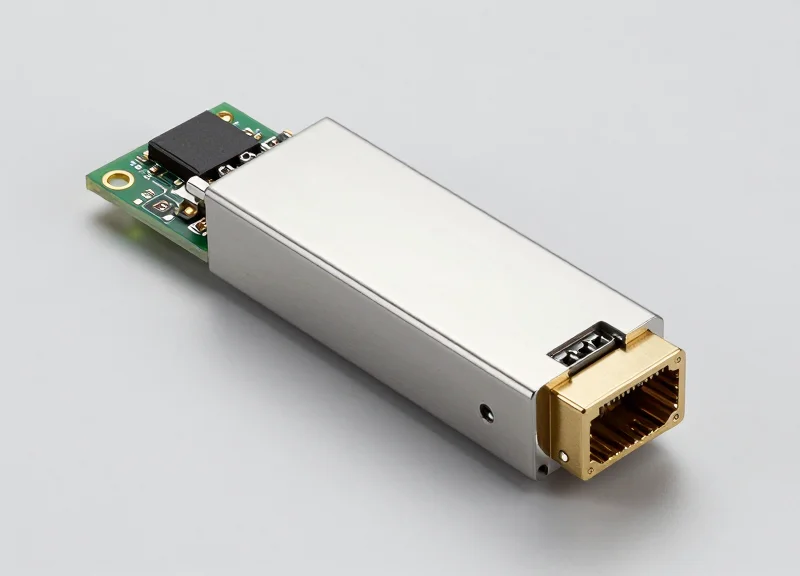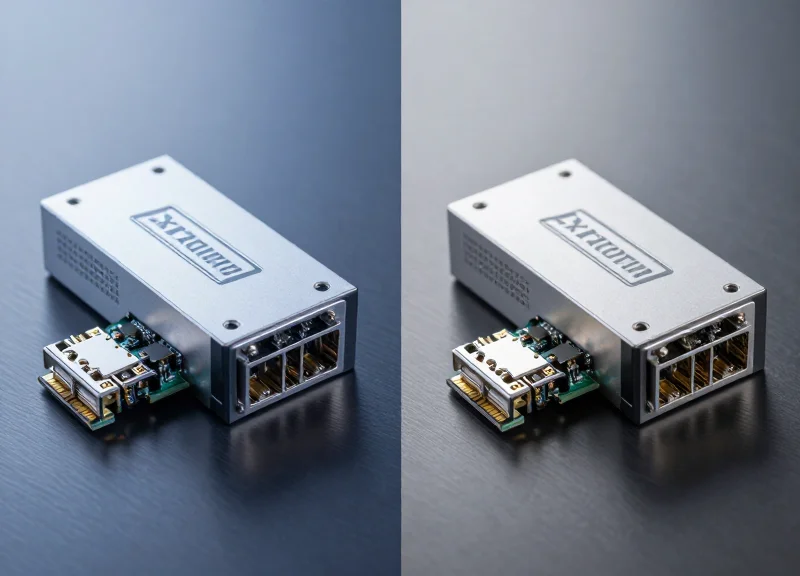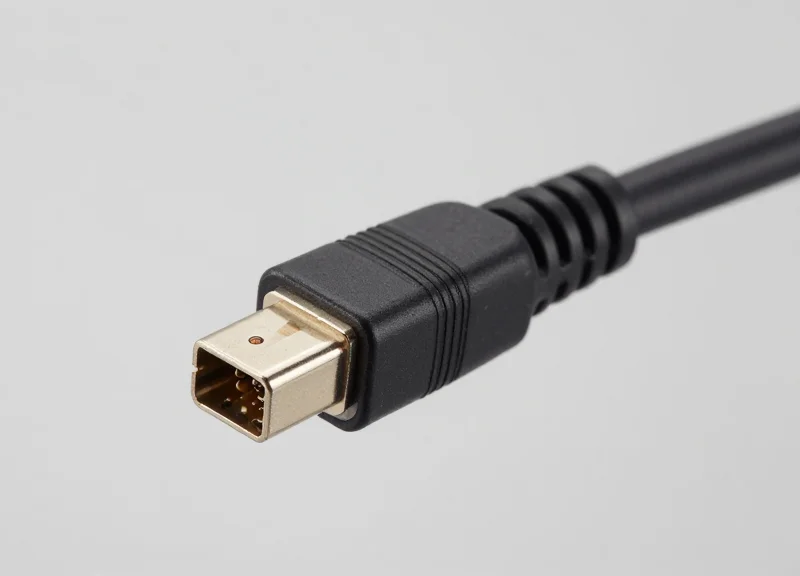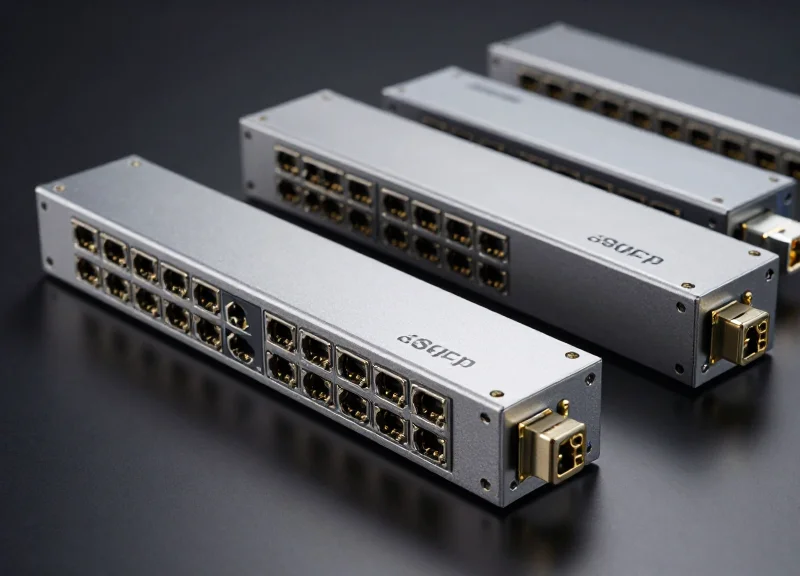
As global data demands skyrocket, the shift toward high-capacity optical networks is non-negotiable. This guide explores why China has become the global powerhouse for wholesale optical modules, blending technical innovation with unmatched scalability for modern enterprises and service providers.
The Evolution of the Chinese Optical Module Ecosystem
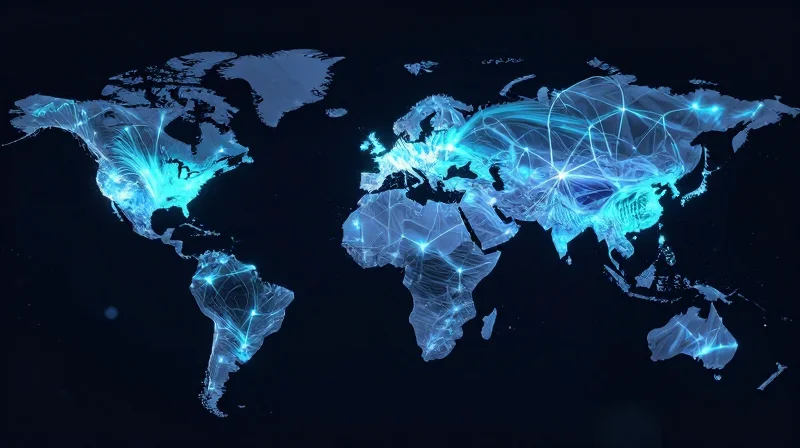
From Assembly Lines to Innovation Hubs
The evolution of the Chinese optical module ecosystem is a testament to the transition from 'Made in China' to 'Designed in China.' Initially, the market was dominated by Western and Japanese incumbents who utilized Chinese facilities primarily for low-cost labor and basic assembly. However, over the last two decades, a combination of massive domestic infrastructure investment and a concentrated cluster of engineering talent in regions like Wuhan's 'Optics Valley' and Suzhou has propelled local firms to the forefront of the global supply chain. Today, wholesale procurement from China represents access to the world's most advanced 800G and 1.6T transceiver architectures.
The Three Eras of Chinese Optical Development
| Era | Dominant Technology | Market Characterization |
|---|---|---|
| 2000 - 2010 | 10G / 40G SFP | Labor-intensive assembly and subcontracting for global OEMs. |
| 2011 - 2019 | 100G QSFP28 / 400G | Vertical integration and the rise of domestic III-V semiconductor fabrication. |
| 2020 - Present | 800G / 1.6T / LPO | Global leadership in AI-driven hyperscale R&D and Silicon Photonics innovation. |
The current landscape is defined by 'vertical integration.' Leading Chinese manufacturers no longer simply buy chips to put in boxes; they are increasingly involved in the design of TOSA/ROSA components, Digital Signal Processors (DSPs), and specialized Silicon Photonics engines. This mastery over the entire bill of materials (BOM) allows wholesale providers to maintain aggressive pricing while leading the market in power-efficiency metrics, such as the adoption of Linear Drive Pluggable Optics (LPO) which reduces latency and power consumption for AI workloads.
Ecosystem Dynamics and Wholesale Advantages
- Why is China the global hub for wholesale optical procurement?
The concentration of the entire supply chain within a small geographic radius—from fiber drawing to PCB assembly—minimizes lead times and allows for rapid prototyping that Western competitors struggle to match. - How has quality control evolved in the Chinese ecosystem?
Modern Chinese facilities utilize fully automated high-precision packaging and robotic testing environments, shifting the industry perception from 'low-cost alternative' to 'performance benchmark' for high-reliability data centers. - What role does AI play in current Chinese module design?
Current R&D focuses heavily on the 800G and 1.6T modules required for AI back-end networks, with Chinese vendors often being the first to pass interoperability testing at global industry events like OFC.
As we look toward the future, the Chinese ecosystem is moving beyond traditional pluggables into the realm of Co-Packaged Optics (CPO). By integrating optical engines directly with switch ASICs, these companies are addressing the thermal and density challenges of next-generation networking. For wholesale buyers, this means the Chinese market is no longer just a source of components, but a source of architectural innovation that dictates the roadmap for global telecommunications.
Core Technical Specifications and Form Factors
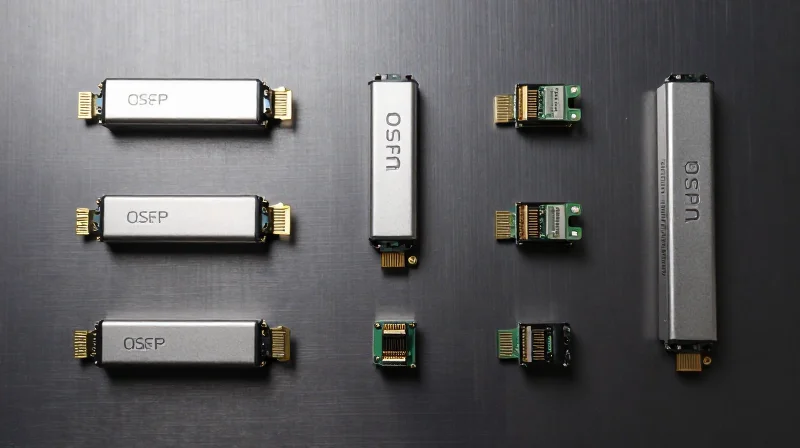
Dominant Form Factors in Modern Optical Networking
The technical architecture of wholesale optical modules is dictated by standardized form factors that ensure physical and electrical interoperability across global networking hardware. In the Chinese manufacturing landscape, the shift from 10G and 40G legacy systems to 400G and 800G infrastructures has necessitated a rapid evolution in transceiver design, focusing on increased density, lower power consumption, and superior thermal dissipation.
From SFP+ to QSFP28: The Mid-Range Workhorses
SFP+ (Small Form-factor Pluggable) remains a staple for 10G and 25G Ethernet applications, favored for its compact size and efficiency in enterprise environments. However, the industry standard for 100G connectivity is the QSFP28 (Quad Small Form-factor Pluggable 28). By utilizing four lanes of 25Gbps each, QSFP28 modules provide high-density solutions that significantly reduce the cost-per-bit for wholesale buyers in the data center sector.
The Next Frontier: OSFP and QSFP-DD
As hyperscale data centers migrate toward 400G and 800G, the focus has shifted to OSFP (Octal Small Form-factor Pluggable) and QSFP-DD (Double Density). OSFP modules are slightly larger and designed with integrated heat sinks, making them ideal for high-power AI and machine learning clusters. Conversely, QSFP-DD maintains backward compatibility with legacy QSFP slots, offering a flexible path for incremental network upgrades.
| Form Factor | Max Data Rate | Typical Lanes | Primary Application |
|---|---|---|---|
| SFP+ | 10G / 25G | 1 Lane | Enterprise Switching & Storage |
| QSFP28 | 100G | 4 Lanes x 25G | Data Center Spine-Leaf Fabric |
| QSFP56 | 200G | 4 Lanes x 50G (PAM4) | High-Performance Computing |
| QSFP-DD | 400G / 800G | 8 Lanes x 50G/100G | Hyperscale Cloud & AI Clusters |
| OSFP | 800G+ | 8 Lanes x 100G | Next-Gen 1.6T Development |
Key Technical Performance Metrics
- What is the importance of MSA compliance?
Multi-Source Agreements (MSAs) define the mechanical and electrical specifications of transceivers. Wholesale modules must adhere to MSAs to ensure they function seamlessly in switches from different vendors like Cisco, Arista, or Huawei. - How does PAM4 modulation impact 400G modules?
Pulse Amplitude Modulation 4-level (PAM4) doubles the data rate by transmitting two bits per symbol compared to traditional NRZ, allowing 400G and 800G speeds without requiring massive increases in optical bandwidth. - Why is power consumption a critical specification?
In high-density environments, optical modules can account for significant data center energy use. Modern modules aim for lower Watts per Gigabit (W/G) to reduce cooling costs and improve overall system reliability. - What role does DDM/DOM play in technical monitoring?
Digital Diagnostics Monitoring (DDM) allows network administrators to monitor real-time parameters such as optical output power, input power, temperature, and supply voltage, enabling predictive maintenance.
Understanding MSA and IEEE Standards Compliance
The Foundation of Interoperability: MSA and IEEE Compliance
For wholesale optical modules from China to function reliably within global data centers, they must adhere to rigorous international frameworks that ensure a 'third-party' module is technically identical to a 'brand-name' equivalent. This interoperability is governed by two primary pillars: Multi-Source Agreements (MSA) and IEEE 802.3 standards. Without these, the hardware ecosystem would be fragmented, forcing operators into vendor lock-in; instead, standardized compliance allows Chinese manufacturers to produce transceivers that are electrically and mechanically compatible with major switch brands like Cisco, Arista, and Juniper.
Defining the Standards: IEEE vs. MSA
While often discussed together, IEEE standards and MSAs serve different technical purposes. The IEEE (Institute of Electrical and Electronics Engineers) focuses on the physical layer (PHY) and the transmission of data over the medium, while MSAs focus on the mechanical and management aspects of the hardware.
| Feature | IEEE 802.3 Standards | Multi-Source Agreements (MSA) |
|---|---|---|
| Primary Focus | Data link and physical layer (OSI Layers 1 & 2). | Mechanical dimensions and electrical interfaces. |
| Examples | 802.3ba (40G/100G), 802.3bs (200G/400G). | SFF-8472, QSFP-DD, OSFP MSA. |
| Key Specifications | Wavelength, modulation (NRZ/PAM4), and BER. | Connector type, pin mapping, and EEPROM maps. |
| Interoperability | Ensures the signal can be read by the receiver. | Ensures the module fits and communicates with the host. |
The Importance of Digital Optical Monitoring (DOM)
A critical aspect of MSA compliance, specifically under the SFF-8472 standard, is Digital Optical Monitoring (DOM) or Digital Diagnostics Monitoring (DDM). High-quality wholesale modules from China implement these registers to provide real-time data on temperature, supply voltage, laser bias current, and transmit/receive power. This allows network administrators to troubleshoot fiber links remotely, ensuring that wholesale modules offer the same level of telemetry as their more expensive counterparts.
Common Compatibility Concerns and Technical FAQs
- Will a compliant Chinese module work in a locked switch?
While a module may be MSA compliant, some switch vendors implement 'vendor locks' via encrypted firmware. Leading Chinese wholesalers overcome this by offering custom coding services that emulate the specific vendor's EEPROM signature. - Why is IEEE compliance vital for long-reach applications?
For distances over 10km (ER/ZR), IEEE compliance ensures the laser's spectral width and center wavelength are precise enough to prevent dispersion-related errors that could lead to packet loss. - What happens if a module is not MSA compliant?
Non-compliant modules may suffer from poor physical fit (causing damage to the switch cage), excessive heat generation due to improper power consumption, or failure to be recognized by the host software.
Critical Performance Metrics: Latency, Power, and Heat

The Triad of High-Speed Performance: Latency, Power, and Thermal Stability
When sourcing wholesale optical modules from China, performance evaluation must extend beyond simple data rates to include the critical metrics of latency, power consumption, and heat management. As data centers migrate from 100G to 400G and 800G, the physical limitations of semiconductor materials and optical components make these three factors the primary determinants of total cost of ownership (TCO) and system uptime. A high-quality module must balance the demands of signal processing—often involving complex Forward Error Correction (FEC) algorithms—against the need to operate within strict power and temperature envelopes.
Latency and the Role of FEC
In modern high-density networking, latency is largely driven by the Digital Signal Processing (DSP) and the specific Forward Error Correction (FEC) implemented to maintain signal integrity over distance. While traditional 'direct-detect' modules offered sub-nanosecond latency, 400G and 800G modules using PAM4 modulation require intensive error correction. This can introduce 100ns to 250ns of latency. Top-tier Chinese manufacturers optimize their internal ASIC and DSP architectures to shave off critical nanoseconds, which is vital for high-frequency trading and AI training clusters where micro-delays aggregate into significant performance bottlenecks.
Power Consumption Targets by Form Factor
Power efficiency is a major differentiator in the wholesale market. Lower power consumption not only reduces electricity costs but also minimizes the heat generated per port, allowing for higher switch density. Modern QSFP-DD modules are designed to operate under 12W to 14W, while legacy designs might exceed 15W, potentially triggering thermal shutdowns in fully populated chassis.
| Module Type | Typical Power (W) | Max Power (W) | Operating Temp Range |
|---|---|---|---|
| 100G QSFP28 SR4 | 2.5W | 3.5W | 0°C to 70°C |
| 400G QSFP-DD DR4 | 8.5W | 10.0W | 0°C to 70°C |
| 800G OSFP 2xDR4 | 14.0W | 16.5W | 0°C to 70°C |
| 10G SFP+ Industrial | 1.0W | 1.5W | -40°C to 85°C |
Advanced Thermal Management Strategies
Thermal management in Chinese-manufactured modules has evolved from passive heat sinks to sophisticated materials science. High-performance modules now utilize high-conductivity thermal pads, vapor chambers, and optimized shell ribbing to increase surface area. These strategies ensure that the laser diode stays within its optimal wavelength window (typically around 1310nm or 1550nm); excessive heat causes 'wavelength drift,' which significantly increases the Bit Error Rate (BER) and can eventually lead to permanent component failure.
- How does power consumption affect link stability?
Higher power consumption leads to increased junction temperatures within the module's DSP and laser. If the heat is not dissipated, it causes thermal noise and signal degradation, leading to intermittent link drops. - What is the difference between Commercial and Industrial temperature modules?
Commercial Grade (C-Temp) is rated for 0°C to 70°C, suitable for climate-controlled data centers. Industrial Grade (I-Temp) is rated for -40°C to 85°C, designed for outdoor cabinets and harsh environments with specialized components that resist thermal expansion fatigue. - Does low latency always mean lower quality?
No. In fact, achieving low latency while maintaining a low BER at 400G+ speeds requires superior ASIC design and cleaner optical paths, which are hallmarks of high-end manufacturing processes.
The Economic Advantage of Wholesale Procurement
The Economic Advantage of Wholesale Procurement
Procuring optical modules through wholesale channels in China fundamentally shifts the financial landscape of network deployment by slashing the per-port cost of high-speed connectivity. By eliminating multiple layers of distribution markups and sourcing directly from Tier 1 manufacturers, network architects can redirect up to 40-70% of traditional CAPEX towards other critical infrastructure upgrades without compromising on the IEEE or MSA compliance required for carrier-grade reliability.
Analyzing Cost-Performance Ratios
| Metric | Standard Retail / OEM | Wholesale China (Direct) |
|---|---|---|
| Per-Unit Price (100G QSFP28) | $150 - $400 | $35 - $65 |
| Price Variation with Volume | Minimal | Significant Tiered Discounts |
| Lead Time (Avg) | 4-12 Weeks | 1-3 Weeks (Stocked) |
| Technical Customization | Limited/Fixed | Available for Batch Orders |
The primary driver behind these savings is the concentration of the global optoelectronics supply chain within regions like Shenzhen and Wuhan. Wholesale procurement leverages this proximity to raw materials and semiconductor packaging facilities, reducing logistics overhead and ensuring that the economic benefits of high-yield manufacturing are passed directly to the enterprise or service provider.
Technical FAQ: Economic Viability
- Does lower cost imply higher failure rates?
No. When sourcing from reputable wholesale partners that adhere to MSA standards, the internal components such as lasers and ICs are often identical to those found in expensive OEM modules. The cost difference is primarily attributed to brand premiums and distribution overhead rather than a reduction in component quality. - How does wholesale procurement impact the total cost of ownership (TCO)?
TCO is improved through lower initial acquisition costs and reduced spares inventory costs. Because wholesale prices are significantly lower, operators can afford a robust on-site spare pool, which minimizes expensive downtime costs compared to waiting for OEM replacements. - What are the hidden costs of international wholesale?
Potential hidden costs include import duties, VAT, and international shipping. However, even when these factors are calculated, the landed cost of Chinese optical modules typically remains 50% lower than domestic retail alternatives, making the model highly sustainable for large-scale operations.
Diverse Application Scenarios: From 5G to Hyperscale Data Centers

Wholesale optical modules from China serve as the essential backbone for two of the most bandwidth-intensive sectors in modern technology: 5G telecommunications and hyperscale cloud computing. These components are strategically deployed to handle the explosive growth in data traffic, providing the necessary link density and throughput to support everything from ultra-reliable low-latency communication (URLLC) in cellular networks to the high-radix leaf-spine architectures found in global data centers.
5G Infrastructure: Fronthaul, Midhaul, and Backhaul
The transition to 5G New Radio (NR) has necessitated a complete overhaul of the Radio Access Network (RAN). Unlike previous generations, 5G demands significantly higher port density and specialized wavelength management to optimize existing fiber plants. Chinese manufacturers have become the primary source for the 25G SFP28 modules that dominate the fronthaul, where massive MIMO (Multiple Input Multiple Output) technology requires high-speed connections between Active Antenna Units (AAU) and Distributed Units (DU).
| Network Segment | Common Module Types | Typical Reach | Primary Requirement |
|---|---|---|---|
| 5G Fronthaul | 25G SFP28 (BiDi, CWDM/DWDM) | 10km - 20km | Industrial Temperature Range |
| 5G Midhaul | 50G PAM4 / 100G QSFP28 | 10km - 40km | Bandwidth Aggregation |
| 5G Backhaul | 100G/200G/400G Coherent | 40km - 80km+ | Long-haul Spectral Efficiency |
Hyperscale Data Center Interconnects (DCI)
In the realm of hyperscale data centers—operated by giants like AWS, Azure, and Alibaba Cloud—the focus shifts from geographic reach to internal fabric density. The predominant traffic pattern is 'East-West,' meaning data moves between servers within the data center. To support this, wholesale Chinese modules provide the 400G QSFP-DD and 800G OSFP form factors required for high-bandwidth switch-to-switch interconnects. These modules utilize advanced Silicon Photonics and 7nm/5nm DSPs to minimize power consumption while maximizing data throughput per rack unit.
Deployment Specifics and Environmental Factors
- How do wholesale modules handle harsh 5G environments?
Many 5G modules are produced in Industrial Temperature (I-Temp) versions, designed to operate reliably between -40°C and +85°C, which is critical for non-climate-controlled outdoor cabinets. - Why is 400G DR4 preferred in Hyperscale environments?
The 400G DR4 standard allows for breakout configurations into 4x100G, providing immense flexibility for connecting high-speed switches to lower-speed server NICs efficiently. - What role does power efficiency play in these scenarios?
In data centers, every watt saved per module translates to massive OPEX reductions. Modern Chinese 400G modules target power envelopes below 10-12W to maintain thermal stability.
By aligning manufacturing output with the specific technical requirements of 5G RAN and Cloud DCI, Chinese wholesale providers ensure that global network operators can scale their infrastructure without facing the prohibitive costs traditionally associated with high-speed optical hardware.
Rigorous Quality Control: Verification and Testing Protocols

The integrity of a wholesale optical module is defined by its ability to perform consistently under varying network loads and environmental conditions. In China’s manufacturing hubs, quality control is not a final step but a continuous lifecycle that spans from incoming component inspection (IQC) to final automated testing (FQC). These protocols are designed to eliminate 'infant mortality' in electronics and guarantee that high-density shipments meet the stringent requirements of 400G and 800G Ethernet standards.
Optical Signal Integrity: Eye-Diagram and BER Analysis
At the core of optical verification are two critical metrics: Eye-Diagram analysis and Bit Error Rate (BER) testing. An eye-diagram is generated by overlapping digital waveforms to visualize signal timing jitter, noise, and amplitude. A 'wide-open eye' indicates superior signal quality and low distortion. BER testing, conversely, quantifies the precision of data transmission over time; high-quality Chinese wholesale modules typically achieve a pre-FEC (Forward Error Correction) BER better than 1E-12, ensuring that the network backbone remains stable even under maximum throughput.
| Test Parameter | Target Metric | Technical Significance |
|---|---|---|
| Extinction Ratio (ER) | ≥ 3.5 dB (varies by type) | Ensures clear distinction between logical '0' and '1'. |
| Optical Output Power | Within MSA Range | Prevents receiver saturation or signal loss. |
| Receiver Sensitivity | Below -10 dBm (for LR4) | Determines the maximum reach and link budget. |
| Jitter Analysis | TDECQ < 3.4 dB | Measures temporal stability in PAM4 modulation. |
Environmental Stress Screening (ESS) and Reliability
Wholesale modules destined for global markets must endure diverse climates. Environmental Stress Screening involves placing modules in specialized chambers to undergo rapid thermal cycling—often ranging from -40°C to +85°C for industrial-grade units. This process identifies weak solder joints or coefficient of thermal expansion (CTE) mismatches. Additionally, 'Burn-in' testing is conducted, where modules are powered at high temperatures for 24 to 72 hours to ensure the laser diode (TOSA) and receiver (ROSA) do not fail during their early operational life.
Interoperability and EEPROM Verification
One of the primary concerns with wholesale procurement is compatibility. Manufacturers utilize automated test beds equipped with switches from major vendors (e.g., Cisco, Arista, Juniper) to verify that the module's EEPROM is correctly coded and that the Digital Diagnostics Monitoring (DDM) interface reports real-time data accurately. This ensures that the 'Plug-and-Play' expectation of bulk-purchased modules is met across heterogeneous network environments.
- Why is the Eye-Diagram important in wholesale quality checks?
It provides a visual representation of the overall health of the optical signal, showing potential issues with noise, jitter, and rise/fall times that could lead to packet loss. - What is 'Golden Module' testing?
It is a process where production units are compared against a master 'Golden Module' that has been calibrated to perfect industry standards to ensure consistency across batches. - How does DDM/DOM assist in quality control?
Digital Diagnostics Monitoring allows network admins to monitor temperature, voltage, and bias current in real-time, serving as an early-warning system for potential hardware degradation.
Overcoming Compatibility Challenges and Vendor Lock-in
Strategies for Navigating Multi-Vendor Compatibility
Overcoming compatibility challenges requires a deep understanding of the host-to-module communication protocol, primarily through the I2C interface and the memory mapping defined by MSA standards like SFF-8472 and SFF-8636. Wholesale optical modules from China are designed to be hardware-agnostic, but their software identification must be precisely tuned to emulate the 'fingerprint' expected by major network equipment manufacturers (NEMs). By utilizing sophisticated coding platforms and firmware emulation, network engineers can deploy these modules across disparate hardware stacks without triggering 'unsupported transceiver' errors or port shutdowns.
The Mechanics of EEPROM Emulation
The primary barrier to third-party integration is the vendor-specific data stored in the module's Electrically Erasable Programmable Read-Only Memory (EEPROM). This data contains serial numbers, vendor IDs, and checksums that the host device verifies upon insertion. Leading Chinese manufacturers now offer customized coding services where the EEPROM is flashed with specific hex codes to ensure 100% compatibility with legacy systems from Cisco, Juniper, Arista, and others. This allows for a 'plug-and-play' experience that mirrors the performance of OEM-branded optics at a fraction of the cost.
| Feature | OEM-Branded Modules | Third-Party Wholesale Modules |
|---|---|---|
| Cost Basis | High premium (brand tax) | Production-cost focused (CAPEX efficiency) |
| Interoperability | Locked to specific hardware | Programmable for multi-vendor support |
| Firmware Control | Proprietary and closed | Flexible and updateable via specialized tools |
| Supply Chain | Single-source dependency | Diverse, high-volume availability |
Technical Best Practices for Deployment
- Will using third-party modules void my switch warranty?
Legally, in many jurisdictions like the US under the Magnuson-Moss Warranty Act, manufacturers cannot void a hardware warranty simply for using third-party components unless they can prove the component caused the damage. - How do I handle firmware updates on the host device?
Always verify with your module supplier that their EEPROM coding is 'firmware-proof.' Reputable wholesale partners provide recoding tools that allow you to update the module's identification if a network OS update introduces new validation checks. - Can I mix OEM and third-party modules in the same stack?
Yes, provided the optical specifications (wavelength, power budget, and fiber type) are matched. The host OS treats them as individual ports, and they can coexist seamlessly within the same fabric.
To effectively mitigate vendor lock-in, organizations should invest in onsite coding boxes. These handheld or USB-connected devices allow network admins to re-flash the EEPROM of a module in the field. This technical autonomy ensures that a single SKU of a 100G QSFP28 module can be repurposed for multiple hardware platforms, drastically reducing the complexity of spare parts inventory and future-proofing the infrastructure against vendor policy shifts.
Future Roadmap: Transitioning to 400G and 800G Architectures

The transition to 400G and 800G architectures represents a paradigm shift in data center networking, driven by the insatiable appetite for bandwidth from Artificial Intelligence (AI) training clusters and High-Performance Computing (HPC). Chinese wholesale suppliers are currently at the forefront of this shift, leveraging massive economies of scale to move 400G QSFP-DD and 800G OSFP modules from boutique, high-end components into mainstream, cost-effective deployments. By optimizing silicon photonics and streamlining mass production, these manufacturers are enabling global enterprises to bypass the traditional cost barriers associated with next-generation throughput.
Key Drivers: The AI-Induced Data Explosion
Traditional cloud workloads are being eclipsed by the requirements of Large Language Models (LLMs) and generative AI, which necessitate ultra-low-latency, high-throughput fabrics. While 100G served as the industry workhorse for a decade, it is no longer sufficient for the East-West traffic demands of modern GPU clusters. Chinese manufacturers have responded by standardizing 400G for leaf-spine architectures and rapidly iterating on 800G for super-spine and Data Center Interconnect (DCI) layers, ensuring that the 'price-per-gigabit' continues to fall as speeds double.
| Generation | Form Factor | Modulation | Power Consumption (Typical) | Key Application |
|---|---|---|---|---|
| 100G | QSFP28 | NRZ / PAM4 | 3.5W - 4.5W | General Cloud Computing |
| 400G | QSFP-DD / OSFP | PAM4 | 10W - 12W | AI Leaf-Spine Fabrics |
| 800G | OSFP / QSFP-DD800 | PAM4 / Coherent | 14W - 16W | AI Training & DCI |
Technological Frontiers: LPO and CPO
To combat the rising heat and power issues inherent in 800G and beyond, the roadmap includes Linear Drive Pluggable Optics (LPO). LPO removes the power-hungry Digital Signal Processor (DSP) from the module, relying on the host ASIC for signal integrity. This significantly reduces latency and power consumption—factors that are critical for massive AI training runs. Furthermore, Co-Packaged Optics (CPO) remains the long-term destination, where the optical engine is integrated directly onto the switch silicon, a field where Chinese R&D centers are making significant strides to maintain their wholesale competitive edge.
Implementation Roadmap FAQ
- When is the optimal time to transition to 800G?
The shift is most beneficial when AI cluster GPU-to-GPU communication becomes a bottleneck, typically when moving to 51.2T or 102.4T switching silicon. - Are 400G and 800G modules backward compatible?
Most 400G/800G ports support breakout configurations (e.g., 2x400G or 4x100G), allowing for phased upgrades without replacing the entire legacy fabric. - How does the Chinese wholesale market influence 800G adoption?
By aggressively scaling production, Chinese vendors are driving down the initial 'early adopter' tax, making the cost-per-bit for 800G competitive with 400G much faster than previous cycles.
In summary, sourcing wholesale optical modules from China provides a strategic edge through high-quality engineering and optimized cost structures. Ready to upgrade your network capacity? Contact our engineering experts today for a customized quote and technical consultation.