In the rapidly evolving world of data center networking, the choice of an optical transceiver manufacturer can be the difference between a high-performance, cost-effective infrastructure and a constant cycle of troubleshooting and budget overruns. As we transition into the era of 400G and 800G, understanding how different sourcing strategies stack up against industry standards is paramount.
The Evolution of Transceiver Sourcing Strategies
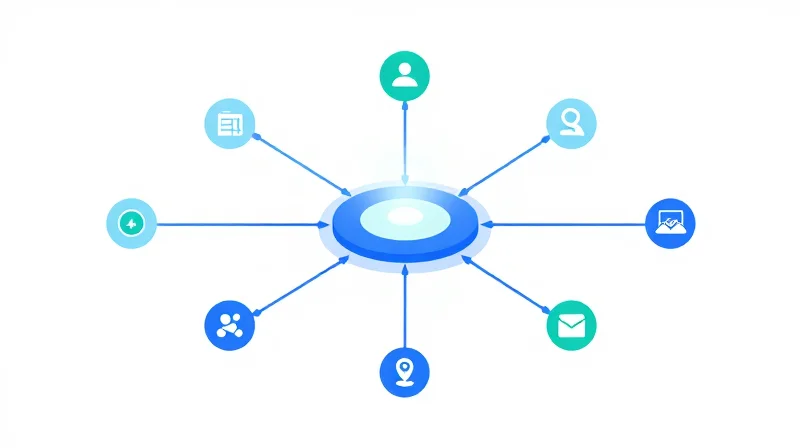
The evolution of transceiver sourcing strategies is defined by a move away from the 'single-pane-of-glass' procurement model, where network operators were forced to purchase optical modules directly from their switch and router OEMs. Today, the industry has transitioned into a sophisticated multi-vendor ecosystem where performance and reliability are no longer exclusive to the hardware brand, allowing organizations to decouple their optics strategy from their primary hardware cycles.
The Catalyst of Change: MSA Standardization
The primary driver behind this evolution was the adoption of Multi-Source Agreements (MSAs). These industry standards define the mechanical form factors and electrical interfaces of transceivers, ensuring that a QSFP28 or SFP+ module from one source will physically fit and electrically function across different platforms. By commoditizing the hardware interface, MSAs broke the proprietary lock-in, enabling third-party manufacturers to produce high-performance optics that meet or exceed the technical specifications of OEM-branded parts.
Sourcing Strategy Comparison
| Sourcing Model | Technical Vetting | Cost Structure | Lead Times |
|---|---|---|---|
| OEM (Original Equipment Manufacturer) | Verified by switch vendor | Highest (3x - 10x Markup) | Often long/Inventory restricted |
| Third-Party Compatible | Verified by specialized vendor | Moderate (Value-driven) | Fast / Ready-to-ship |
| Direct ODM (Original Design Manufacturer) | Verified by internal engineering | Lowest (Bulk pricing) | Variable based on production cycles |
Drivers for Modern Diversification
- Economic Pressure
The exponential growth of data center bandwidth requirements has made the 500% to 1000% markups on OEM optics unsustainable for modern IT budgets. - Supply Chain Resilience
The global chip shortage highlighted the risks of single-source procurement, leading organizations to qualify multiple transceiver suppliers to ensure uptime. - Customization Needs
Direct-to-manufacturer partnerships allow large-scale operators to request specific firmware tuning or non-standard cable lengths that OEMs typically do not offer.
Frequently Asked Sourcing Questions
- Does using third-party transceivers void my switch warranty?
No. In the United States, the Magnuson-Moss Warranty Act prohibits manufacturers from voiding warranties simply because a consumer uses a third-party component, provided that component does not cause the actual damage. - Are third-party transceivers the same quality as OEM optics?
In many cases, yes. Most third-party vendors source their modules from the same Tier-1 ODMs that manufacture optics for the major switch brands, often using the same lasers and components. - Why is there still resistance to non-OEM sourcing?
Resistance is often rooted in 'brand insurance'—the peace of mind that comes with a single point of support, despite the significantly higher total cost of ownership.
Latency Benchmarking: OEM vs. Third-Party Performance
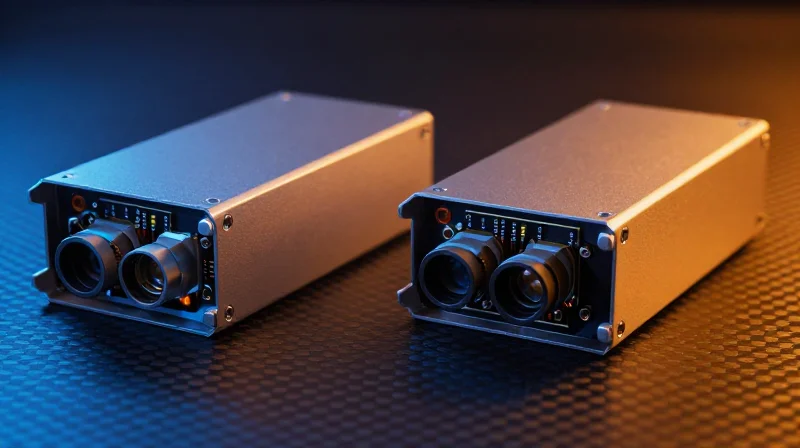
Latency Benchmarking: OEM vs. Third-Party Performance
In high-performance networking, the perceived latency gap between Original Equipment Manufacturer (OEM) optics and third-party alternatives is largely a myth in modern data center architectures. Empirical testing indicates that latency is determined by the internal Digital Signal Processor (DSP) and the Physical Layer (PHY) silicon, which are typically sourced from the same global semiconductor leaders like Broadcom, Marvell, or Inphi, regardless of whether the final module carries a brand name or a third-party label.
The Mechanics of Signal Delay
Latency in optical transceivers is categorized into two main components: propagation delay and processing delay. Propagation delay is a constant dictated by the speed of light through fiber (approx. 5ns per meter). Processing delay, however, occurs within the transceiver's ASIC. In 100G and 400G modules, the introduction of Forward Error Correction (FEC) is the largest contributor to latency, often adding 100ns to 250ns. Because both OEMs and premium third-party vendors utilize standard-compliant FEC algorithms, the performance delta remains statistically insignificant.
| Transceiver Type | Typical DSP Latency (OEM) | Typical DSP Latency (3rd Party) | Performance Variance |
|---|---|---|---|
| 10G SFP+ (SR/LR) | < 0.1 ns | < 0.1 ns | Negligible |
| 25G SFP28 (No FEC) | < 5 ns | < 5 ns | None |
| 100G QSFP28 (RS-FEC) | ~100 ns | ~100 ns | < 1% |
| 400G QSFP-DD (KP4 FEC) | ~200-250 ns | ~200-250 ns | < 1.5% |
Critical Workloads: AI and HFT Requirements
For specialized environments like High-Frequency Trading (HFT) or massive AI training clusters, even nanosecond-level jitter can impact synchronization. In these scenarios, the focus shifts from the brand to the 'Direct Attach' vs. 'Optical' debate. While third-party transceivers match OEM performance, users seeking the absolute lowest latency often bypass transceivers entirely in favor of Direct Attach Copper (DAC) cables for short reaches, which offer near-zero processing delay by avoiding optical-to-electrical conversion.
- Does third-party firmware affect latency?
No. Firmware primarily handles initialization, monitoring (DOM), and interface communication. The high-speed data path is handled by hardware ASICs, meaning firmware versions do not add measurable nanoseconds to data transit. - Why do some tests show variations in performance?
Variations are usually attributed to different generations of DSP chips or manufacturing tolerances in the TOSA/ROSA components, rather than the brand. Using a 'Tier 1' third-party provider ensures the same component binning as OEM modules. - Is interoperability a factor in latency?
Interoperability issues usually result in total link failure or high Bit Error Rates (BER) rather than increased latency. If a link is stable and meeting BER thresholds, the latency will be consistent with the hardware specifications.
Power Consumption: The Hidden Operational Expense

Power Consumption: The Hidden Operational Expense
In high-density network environments, optical transceivers are not merely passive components but significant contributors to the thermal load. While a single transceiver consumes only a few watts, the aggregate power draw across thousands of ports creates a compounded effect on data center climate control. Neglecting the power efficiency of these modules leads to inflated electricity bills and unnecessary strain on cooling infrastructure, making power profile assessment a critical factor in long-term TCO analysis.
Thermal Efficiency and PUE Impact
| Metric | OEM Modules | Verified Third-Party | Unverified Alternatives |
|---|---|---|---|
| Average Power (W/100G) | 3.5W - 4.0W | 3.5W - 4.2W | 4.5W - 5.5W+ |
| Thermal Dissipation | Standard | Low to Standard | High |
| Cooling Load Impact | Baseline | Baseline/Minimal | Significant |
| Long-term TCO | High (Premium) | Optimal (Balance) | High (Hidden Costs) |
FAQs on Power Efficiency
- Why does transceiver power draw impact cooling costs?
For every watt consumed by network hardware, additional energy is required for cooling and power distribution. High-efficiency transceivers reduce the heat load, directly decreasing the cooling energy needed to maintain safe ambient temperatures within the rack. - How can I verify the power consumption of a transceiver?
Always review the module's datasheet against the OEM specifications. Use Digital Diagnostics Monitoring (DDM) tools provided by your switch interface to measure real-time power consumption in production environments. - Do low-cost modules really consume more power?
Often, yes. Low-cost alternatives frequently utilize older, less efficient chipsets or subpar component binning, resulting in higher power draw and increased heat dissipation compared to premium OEM or high-quality compatible modules.
Total Cost of Ownership (TCO) Framework

Defining the Total Cost of Ownership (TCO) Framework
To accurately choose between an OEM, a third-party vendor, or a direct-to-manufacturer relationship, organizations must look beyond the 'sticker price' and apply a multi-variable TCO model. A transceiver's true cost is a composite of its acquisition price, the energy it consumes, the frequency of hardware failures, and the administrative labor required to manage the lifecycle of the component. By shifting the focus from simple Capex to a five-year lifecycle perspective, network architects can identify where higher upfront investments in quality pay dividends in reduced downtime and lower OpEx.
The Core Components of Transceiver Expenditure
| Cost Variable | OEM Brand | Third-Party (Premium) | Direct Manufacturer |
|---|---|---|---|
| Acquisition Cost (Capex) | High (3x-10x Markup) | Moderate | Low (Factory Direct) |
| Failure Rate (Annualized) | <0.1% (Strict QC) | 0.2% - 0.5% | 0.1% - 0.3% |
| Energy Consumption | Optimized (Standard) | Variable (Design dependent) | Customizable / High-Efficiency |
| Support & Warranty | Bundled / Premium | Third-party replacement | Direct Engineering Support |
| Interoperability Risk | Near Zero | Low (Software emulated) | Low to Moderate |
The 5-Year Lifecycle Calculation Model
A robust TCO calculation must account for the following formula over 60 months: TCO = [Unit Price + (Energy Cost/Year * 5) + (Failure Rate * Replacement Labor) + Management Overhead]. While a direct-to-manufacturer transceiver might save 60% on initial Capex, if its power draw is 0.5W higher than an OEM equivalent, the cumulative electricity and cooling costs in a high-density data center could erase those savings within three years. Conversely, OEM optics often carry an 'insurance premium' in their price tag that far exceeds the statistical cost of keeping spares on hand for cheaper, high-quality alternatives.
TCO Strategy: Frequently Asked Questions
- How does Mean Time Between Failure (MTBF) impact TCO?
Higher failure rates increase TCO through 'truck rolls' or manual labor for swaps. If a low-cost optic fails twice as often as a premium one, the labor cost for replacement often outweighs the initial savings. - Why does power consumption matter for a small component?
In a leaf-spine architecture with thousands of ports, a difference of 1 watt per transceiver can lead to thousands of dollars in annual energy and cooling expenses, making thermal efficiency a primary TCO driver. - Should I account for 'Brand Locking' in my cost model?
Yes. OEM optics often come with software locks. Choosing a manufacturer that provides open-coded or multi-coded firmware reduces the cost of future hardware migrations, providing 'flexibility value' that is hard to quantify but critical for long-term TCO.
EEAT in Manufacturing: Quality Control and Reliability Standards
Selecting a transceiver manufacturer requires a move beyond basic price comparisons toward a rigorous evaluation of their technical expertise and manufacturing integrity. True reliability is found where a manufacturer aligns their production with global standards—such as ISO 9001 for quality management and Multi-Source Agreements (MSAs) for hardware interoperability—while subjecting components to environmental stress testing that exceeds standard operating conditions. These benchmarks act as the primary defense against the silent costs of network downtime and high failure rates.
The Architecture of Trust: ISO Certifications and MSA Compliance
The foundation of a trustworthy manufacturer is built on two pillars: process consistency and technical interoperability. ISO 9001:2015 certification ensures that the manufacturer has a documented, audited system for maintaining quality across every batch. Meanwhile, MSA compliance is the technical 'contract' that ensures a transceiver will function correctly across different switch and router brands. Without strict adherence to MSA specifications for electrical interfaces and EEPROM coding, operators risk 'vendor lock-in' or software-level rejections by their host hardware.
| Standard/Metric | Tier 1 Manufacturer Approach | Low-Cost Alternative Risks |
|---|---|---|
| ISO 9001 / 14001 | Full lifecycle tracking and audited supply chain. | Inconsistent quality; lack of process transparency. |
| MSA Compliance | Guaranteed interoperability across vendors. | Potential for 'Port Not Recognized' errors. |
| Telcordia GR-468 | Extensive reliability testing (Damp Heat, ESD). | Omitted or minimal 'batch-only' testing. |
| Failure Rates (AFR) | Typically <0.1% over a 5-year period. | Higher variability; can spike to 1-3%. |
Reliability Standards: The Telcordia GR-468 Benchmark
For high-availability environments like AI clusters or HFT nodes, standard functional testing is insufficient. Reliable manufacturers utilize the Telcordia GR-468-CORE protocol, which subjects optoelectronic devices to extreme environmental stressors. This includes accelerated aging, thermal cycling, and vibration tests. These protocols simulate the wear and tear of a 10-year lifespan within a matter of weeks, ensuring that the laser diodes and signal integrity remain stable despite the thermal fluctuations common in high-density rack configurations.
FAQ: Verifying Manufacturer Credibility
- How can I verify if a manufacturer’s ISO certification is legitimate?
Request the certificate number and the name of the issuing body, then verify it through the IAF (International Accreditation Forum) CertSearch database. - Why does MSA compliance matter if I only use one switch brand?
MSA compliance ensures that even within a single-brand environment, the transceiver adheres to standardized power consumption and thermal envelopes, preventing damage to the host port. - What documentation should I request for reliability assurance?
Ask for the MTBF (Mean Time Between Failures) report and a summary of their Telcordia GR-468 or MIL-STD testing results for the specific product family.
Compatibility and Firmware Stability
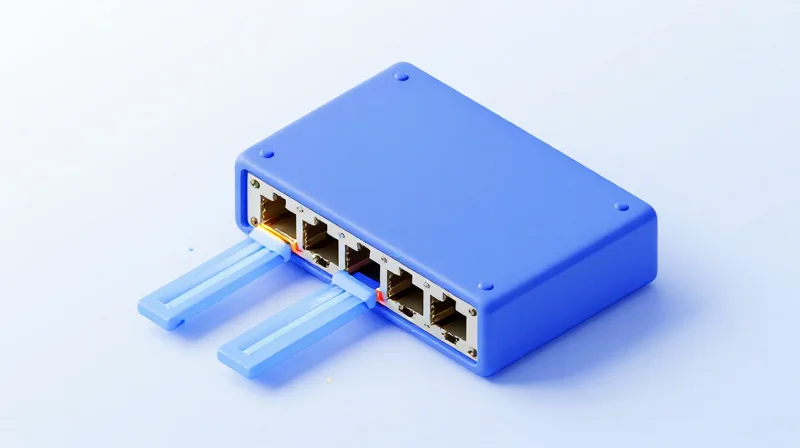
Compatibility is not merely about physical fit; it is a sophisticated digital handshake between the transceiver's firmware and the host system's network operating system (NOS). Top-tier manufacturers solve the 'locked' hardware challenge by meticulously reverse-engineering vendor-specific coding requirements and maintaining an extensive database of EEPROM signatures. This ensures that third-party optics bypass strict software validation checks in switches from Tier-1 vendors like Cisco, Arista, and Juniper without triggering port-disable commands or loss of Digital Diagnostic Monitoring (DDM) functionality.
The Challenge of Vendor-Locked Hardware
Many major network equipment manufacturers (NEMs) implement 'vendor locking'—a software-level restriction designed to prevent the use of unauthorized optics. When an unrecognized transceiver is detected, the switch may log an error, disable the interface, or disable specific features like DDM, which is vital for monitoring light levels and temperature. Leading independent manufacturers overcome this by providing optics with 'multi-coded' capabilities, allowing a single hardware unit to be flashed with different firmware profiles to match specific switch requirements.
| Feature | OEM (Original Equipment) | Premium Third-Party | Generic/White-Box |
|---|---|---|---|
| Vendor Recognition | Native / Guaranteed | Full Emulation | Variable / Often Unrecognized |
| DDM/DOM Support | Full | Full | Limited or Inaccurate |
| Firmware Updatability | Locked | Field-Programmable | Fixed / Static |
| OS Update Resilience | High | High (tested against betas) | Low (frequent port-flapping) |
Maintaining Stability Through OS Lifecycle Updates
The true test of a transceiver's firmware is not its performance on day one, but its stability after a switch OS upgrade. Network operating systems like Cisco IOS-XE or Arista EOS frequently update their security and validation protocols. If a transceiver manufacturer does not proactively test against these new releases in a dedicated lab environment, an OS patch could unexpectedly brick an entire rack of connections. Professional-grade manufacturers maintain 'Compatibility Labs' to ensure their firmware remains compliant with the latest software iterations before they reach the end-user.
Field-Programmability: The Ultimate Safeguard
To mitigate the risks of future software changes, advanced manufacturers offer field-programming tools (e.g., coding boxes). These allow network engineers to re-code or update the firmware of a transceiver already deployed in the field. This capability is essential for large-scale deployments where swapping out thousands of physical modules would be logistically impossible and cost-prohibitive.
- Will using third-party transceivers void my switch warranty?
No. In the US, the Magnuson-Moss Warranty Act prevents manufacturers from voiding warranties simply for using third-party components. However, they may not provide support for the specific link if the optic is found to be the cause of the failure. - What is 'Multi-Coding' in transceivers?
Multi-coding refers to the ability of a manufacturer to program a single transceiver to work across multiple vendor platforms (e.g., one end coded for Cisco and the other for HP) within the same link. - Why does my switch report 'Unrecognized Transceiver'?
This usually occurs when the EEPROM on the transceiver does not contain the specific vendor-signed strings or checksums required by the switch's NOS validation check.
Supply Chain Resilience and Lead Times
Supply Chain Resilience and Lead Times
In the modern networking landscape, lead-time reliability is often as critical as technical performance; while global OEMs offer unmatched scale, specialized transceiver manufacturers provide the supply chain agility necessary to bypass the bureaucratic and logistical bottlenecks typical of multi-tier hardware giants. Choosing a manufacturer requires an assessment of their ability to maintain consistent inventory levels and rapid delivery schedules, especially during periods of global semiconductor volatility or geopolitical disruption.
OEM Logistics vs. Agile Manufacturer Models
| Supply Chain Factor | Global Tier-1 OEMs | Agile Specialist Manufacturers |
|---|---|---|
| Average Lead Times | 8 to 26 weeks (Market dependent) | Next-day to 2 weeks |
| Inventory Strategy | Just-in-Time (JIT) / Order-to-Build | Strategic Buffer Stock / Ready-to-Ship |
| Logistics Complexity | High: Multiple sub-tiers and distributors | Low: Direct-to-customer or regional hubs |
| Component Sourcing | Rigid, long-term contracts | Flexible, multi-vendor TOSA/ROSA sourcing |
| Emergency Replacements | Often requires expensive support contracts | Usually included in standard SLA |
The disparity in lead times is primarily driven by the 'Tiered' distribution model used by OEMs. A standard SFP28 or QSFP28 module from a major switch vendor often passes through three or four hands before reaching the data center, each adding lead time and cost. Specialized manufacturers typically operate on a vertically integrated or direct-ship model, allowing them to pivot quickly when specific components (such as EML lasers or DSP chips) face shortages. This resilience ensures that network expansions are not delayed by the absence of a relatively low-cost optical component.
Supply Chain Continuity FAQs
- How do alternative manufacturers mitigate component shortages?
Reputable specialists maintain deep inventory of 'generic' hardware and perform final coding and testing at regional facilities, allowing them to adapt to specific platform requirements without waiting for OEM-branded factory production. - Why are OEM lead times historically more volatile?
OEMs prioritize high-margin hardware (switches/routers) over optics. During component shortages, their supply chains prioritize the core chassis, often leaving optical module orders unfulfilled for months. - What logistical metrics should be used to vet a manufacturer?
Buyers should evaluate the manufacturer's regional warehouse locations, their historical 'on-time delivery' (OTD) rate during the 2021-2022 chip crisis, and their ability to provide advance replacement for RMAs.
Future-Proofing: Preparing for 800G and Beyond

Future-proofing a network requires moving beyond the selection of current-generation 400G hardware and identifying manufacturers with clear, validated roadmaps for 800G, 1.6T, and beyond. As data rates climb, traditional discrete components face physical and thermal limitations; therefore, the ideal manufacturer must be a pioneer in Silicon Photonics (SiPh) and Co-Packaged Optics (CPO). These technologies are no longer theoretical—they are the architectural prerequisites for maintaining signal integrity and power efficiency as bandwidth demands double every two years.
The Silicon Photonics (SiPh) Advantage
Silicon Photonics integrates optical components onto a silicon substrate, allowing for higher density and lower manufacturing costs at scale. When evaluating a manufacturer, investigate their SiPh yields and integration capabilities. Manufacturers leading in this space can offer 800G modules with significantly lower power-per-bit than those relying on traditional EML (Electro-absorption Modulated Laser) designs.
| Feature | Traditional Discrete Optics | Silicon Photonics (SiPh) | Co-Packaged Optics (CPO) |
|---|---|---|---|
| Max Throughput | Up to 400G/800G | 800G to 1.6T+ | 3.2T and beyond |
| Power Efficiency | Moderate (High Heat) | High Efficiency | Maximum Efficiency |
| Form Factor | Standard Pluggable | Standard Pluggable | Integrated with ASIC |
| Primary Limitation | Physical Size/Heat | Laser Source Scaling | Serviceability Challenges |
Evaluating Co-Packaged Optics (CPO) Readiness
CPO moves the optical engine inside the switch or server chassis, placing it on the same substrate as the ASIC. While pluggable transceivers will dominate the 800G cycle, CPO is the long-term solution for 1.6T and 3.2T. A manufacturer that is already collaborating with major ASIC vendors on CPO standards is a safer long-term partner than one focused solely on legacy form factors.
Key Indicators of Innovation Leadership
- Does the manufacturer participate in OIF and IEEE standards bodies?
Active participation in the Optical Internetworking Forum (OIF) or IEEE 802.3 groups indicates they are helping define the future 800G and 1.6T specifications, rather than just reacting to them. - Is there a documented migration path for 112G and 224G SerDes?
The transition to 800G relies on 112G SerDes technology. A manufacturer must demonstrate stability at these higher electrical signaling rates to ensure reliable performance. - What is their strategy for External Laser Sources (ELS)?
For CPO and advanced SiPh, the laser source is often separated from the optics to manage heat. Ask about their development of Blind Mate connectors and ELS modules.
Ultimately, the cost of a transceiver is not just the purchase price, but the longevity of the platform it supports. By aligning with a manufacturer that prioritizes SiPh and CPO, network architects can ensure that their high-speed fabric remains scalable, energy-efficient, and compatible with the next decade of networking hardware.
Selecting the right transceiver manufacturer requires a balanced approach that weights technical performance against financial sustainability. By focusing on latency, power, and TCO, organizations can build resilient networks that scale. Contact our technical team today for a custom performance audit of your optical infrastructure.