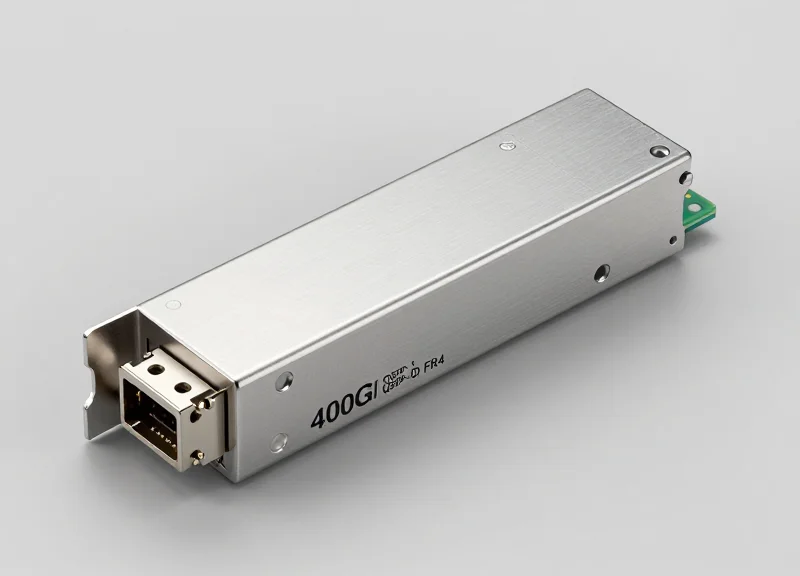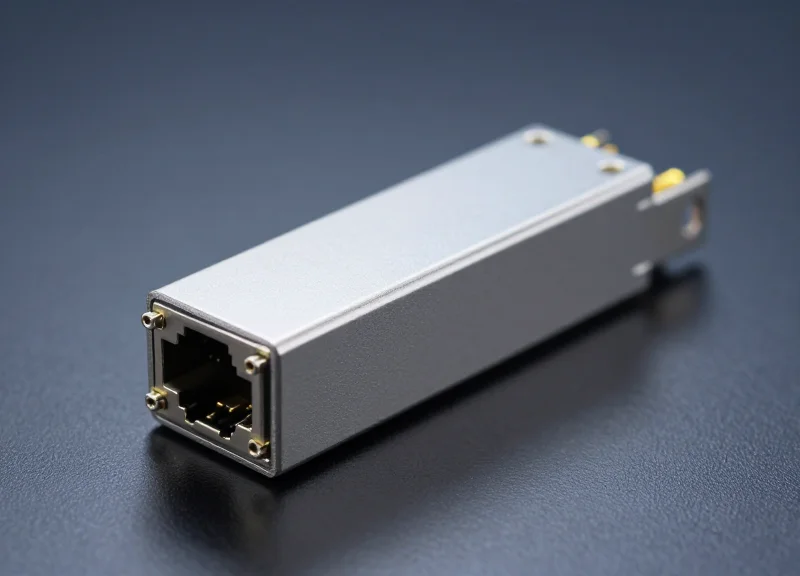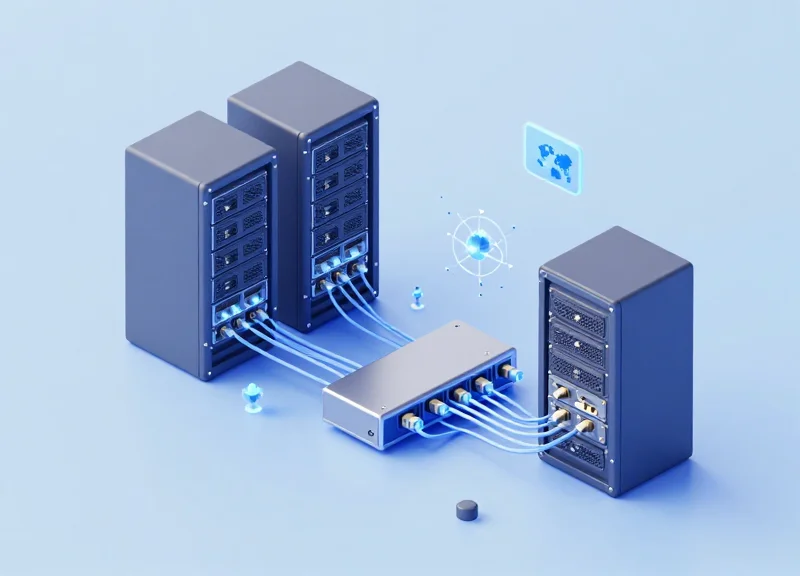
In an era where downtime can cost millions, the visibility into your fiber optic network's health is paramount. Ubytelink’s DDM/DOM monitoring technology provides a window into the physical layer of your infrastructure, offering the data-driven insights necessary to maintain premium performance across global networks.
The Fundamentals of DDM and DOM in Optical Networking
The Fundamentals of DDM and DOM in Optical Networking
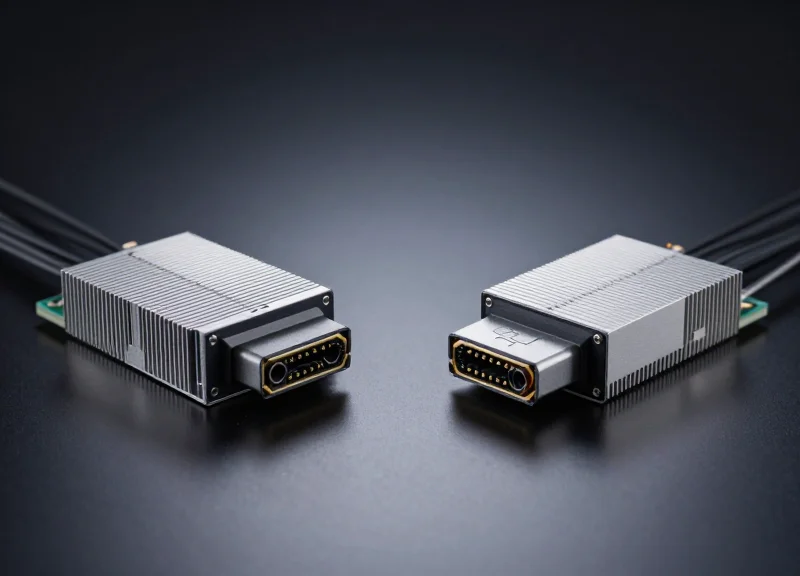
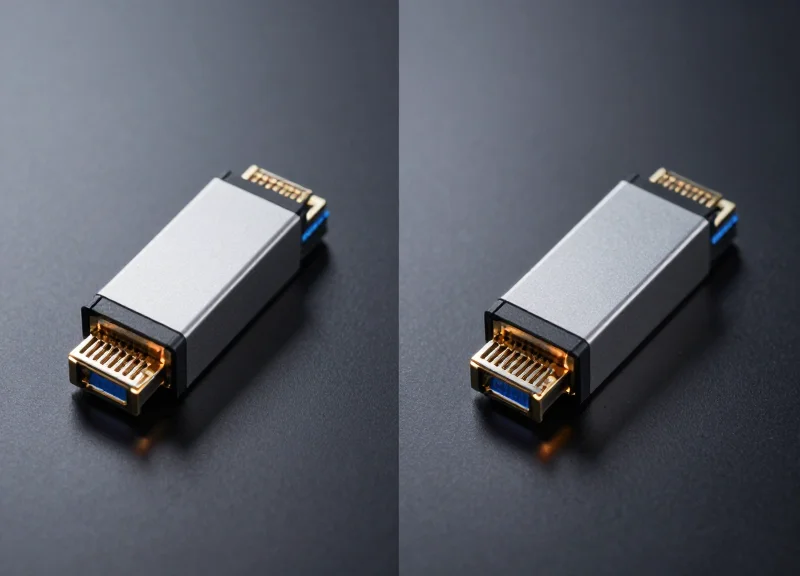
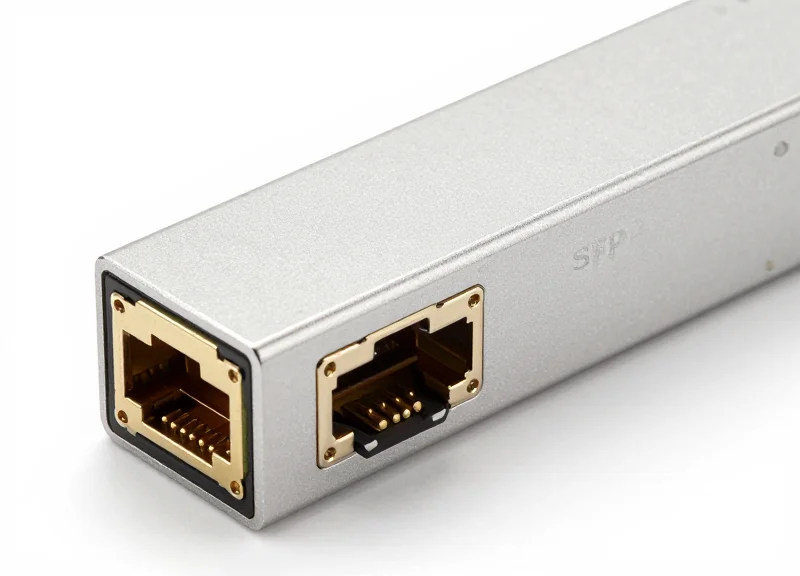
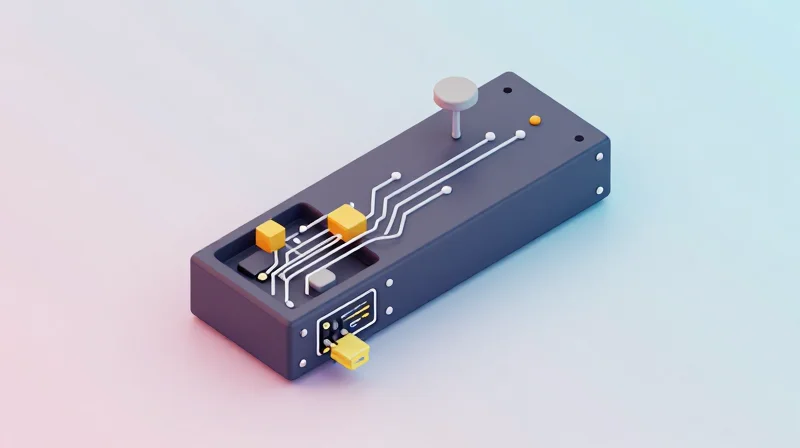
Digital Diagnostic Monitoring (DDM), often utilized interchangeably with the term Digital Optical Monitoring (DOM), is a sophisticated technology integrated into modern optical transceivers that facilitates the real-time tracking of critical operating parameters. By providing a standardized digital interface to access internal hardware conditions, these features empower network administrators to diagnose potential hardware failures, monitor optical signal integrity, and predict the end-of-life for components before a service-disrupting outage occurs. In premium quality networking environments, such as those supported by Ubytelink solutions, DDM/DOM serves as the primary data source for proactive health monitoring and automated fault detection.
The SFF-8472 Standard and Diagnostic Architecture
The industry standard governing these diagnostic functions is SFF-8472. This Multi-Source Agreement (MSA) defines a specific memory map and a two-wire serial interface (I2C) that allows host equipment—such as switches and routers—to retrieve diagnostic information from the transceiver's internal EEPROM. This standardization ensures that Ubytelink transceivers provide consistent, high-accuracy telemetry across diverse global networking platforms. Through the SFF-8472 interface, the module reports real-time values alongside factory-set warning and alarm thresholds, enabling the host system to trigger alerts when parameters deviate from safe operating ranges.
| Parameter | Function | Significance for Network Health |
|---|---|---|
| Temperature | Monitors internal module heat | Prevents thermal damage and identifies cooling failures in the rack. |
| Supply Voltage | Tracks the input voltage to the module | Detects power surges or fluctuations that can lead to erratic transceiver behavior. |
| TX Bias Current | Measures the current driving the laser diode | A primary indicator of laser aging; high bias current often precedes laser failure. |
| TX Output Power | Measures the strength of the transmitted signal | Ensures the transmitter is operating within the specified power budget. |
| RX Received Power | Measures the strength of the incoming signal | Critical for identifying fiber bends, dirty connectors, or cable degradation over long distances. |
Frequently Asked Questions about DDM and DOM
- Are DDM and DOM different technologies?
In practical application, no. While DOM specifically refers to the optical power monitoring (TX/RX), DDM is the broader umbrella term defined by the SFF-8472 standard which includes voltage and temperature. Most industry professionals use the terms interchangeably. - Is DDM support mandatory for all fiber modules?
No, it is an optional feature defined by the MSA. However, for enterprise-grade and carrier-class networks, DDM-enabled modules like those from Ubytelink are considered essential for visibility and remote troubleshooting. - How does DDM reduce operational expenses (OPEX)?
By providing remote access to signal levels and laser health, DDM allows technicians to pinpoint whether a problem exists in the transceiver, the fiber patch cord, or the external cable plant without needing to dispatch personnel to the site with a power meter.
Real-Time Data: The Five Critical Monitoring Parameters

Real-Time Data: The Five Critical Monitoring Parameters
By integrating high-precision sensors within our premium transceivers, Ubytelink enables network administrators to monitor the internal health and environmental conditions of the optical link without disrupting traffic. These five parameters—temperature, supply voltage, laser bias current, transmitted power, and received power—form the backbone of predictive analytics in high-density global networks.
Thermal and Electrical Stability
The first two parameters, Internal Temperature and Supply Voltage, focus on the physical environment of the transceiver. Operating temperature is a primary indicator of thermal efficiency within the rack; excessive heat can degrade the laser diode and accelerate component aging. Monitoring supply voltage ensures the module is receiving consistent power from the host switch, helping to identify power supply unit (PSU) issues before they cause localized hardware failures.
Optical Performance and Laser Health
The remaining three metrics focus on the optical signal path. Laser Bias Current measures the drive current required to activate the laser; a steady increase over time is a classic indicator of an aging transmitter. Transmitted Power (Tx) and Received Power (Rx) measure the actual strength of the light signal. Significant deviations in these values typically point to fiber attenuation, dirty connectors, or transmitter failure.
| Parameter | Functional Significance | Typical Failure Symptom |
|---|---|---|
| Temperature | Tracks thermal load and airflow efficiency | Automatic shutdown or rapid laser degradation |
| Supply Voltage | Monitors power stability from the host device | Intermittent signal loss or bit error rate (BER) spikes |
| Laser Bias | Indicates efficiency of the laser diode | End-of-life transmitter failure |
| Tx Power | Measures the output strength of the laser | Low signal-to-noise ratio at the remote end |
| Rx Power | Measures the incoming signal strength | Indicates fiber breaks or contaminated interfaces |
Parameter Diagnostic FAQ
- Why is monitoring Rx power more frequent than Tx power?
Rx power is the most dynamic metric because it reflects the health of the entire fiber span. It is the first indicator of physical layer issues like micro-bends, patch cord failures, or dust contamination. - How does Ubytelink signal a parameter violation?
The DDM interface generates Alarm and Warning flags. Alarms indicate a critical failure that requires immediate intervention, while Warnings suggest the parameter is approaching unsafe thresholds. - Can DDM assist in troubleshooting 'Flapping' ports?
Yes. By reviewing the Supply Voltage and Laser Bias history, engineers can determine if port flapping is caused by an unstable power supply or a failing laser diode within the module.
Proactive Maintenance: Preventing Outages Before They Occur

Proactive Maintenance: Preventing Outages Before They Occur
Ubytelink’s DDM/DOM solutions enable proactive maintenance by continuously analyzing internal transceiver telemetry, allowing network administrators to pinpoint failing optical components before they trigger critical system outages. By providing a transparent view into the physical layer, these diagnostics turn passive hardware into intelligent sensors capable of flagging performance drift in real-time.
The Shift to Predictive Network Management
Traditional network maintenance often relies on a break-fix model, which results in unpredictable downtime and expensive emergency repairs. By leveraging Ubytelink’s high-precision DDM/DOM transceivers, organizations adopt a predictive model. The system monitors parameters like laser bias current and received power against pre-defined safety thresholds. When a value drifts toward the edge of its operational envelope, the network management system triggers an alert, allowing for scheduled maintenance during low-traffic windows rather than emergency response during peak hours.
Early Warning Signs and Proactive Responses
| Parameter | Typical Degradation Sign | Proactive Response |
|---|---|---|
| Laser Bias Current | Gradual Increase Over Time | Replace aging laser diode before total output failure. |
| Received Power (Rx) | Persistent Decrease | Inspect and clean fiber connectors or check for cable micro-bends. |
| Internal Temperature | Rising above baseline | Verify rack airflow or investigate cooling system health. |
| Supply Voltage | Unstable Fluctuations | Inspect power supply units or line card stability. |
Optimizing Global Network Lifecycle
Beyond preventing immediate outages, Ubytelink’s DDM/DOM capabilities extend the lifecycle of the entire network infrastructure. By identifying modules or ports experiencing excessive voltage stress or thermal saturation, operators can rebalance traffic loads and optimize environmental controls. This data-driven approach reduces the Total Cost of Ownership (TCO) by minimizing premature hardware failures and ensuring that every component in the global network operates within its premium performance range.
- How does DDM help in fiber plant troubleshooting?
DDM identifies whether a signal drop is due to the transceiver's aging laser or external factors like dirty fiber or macro-bends by comparing Tx and Rx power levels simultaneously. - Can DDM predict the end-of-life for transceivers?
Yes, by tracking the steady climb of the laser bias current required to maintain output, engineers can forecast when a laser will no longer be able to meet operational standards.
Accelerated Troubleshooting and Rapid Fault Isolation

Accelerated Troubleshooting and Rapid Fault Isolation
DDM/DOM technology transforms network troubleshooting from a reactive guessing game into a precise, data-driven process. By accessing real-time diagnostics from Ubytelink transceivers, network administrators can immediately differentiate between a malfunctioning optical module, a damaged fiber patch cord, or excessive signal attenuation across the link. This clarity drastically reduces the Mean Time to Repair (MTTR) by eliminating the trial-and-error approach typically associated with physical layer failures.
Distinguishing Between Fiber Plant and Hardware Faults
A primary challenge in managing global networks is identifying whether a link failure is physical (the cable) or electronic (the transceiver). Ubytelink's premium DDM parameters provide the necessary insight to make this distinction remotely. For example, if the Transmit (TX) power is within normal operating range but the Receive (RX) power is critically low, the issue is almost certainly located within the fiber plant or a dirty connector, rather than the local hardware.
| Symptom | DDM Indicator | Probable Root Cause |
|---|---|---|
| Link Down / Loss of Signal | Low RX Power / Normal TX Power | Fiber break, macro-bend, or disconnected patch cord. |
| Link Flapping / High Error Rate | Fluctuating Laser Bias Current | Transceiver laser degradation or internal hardware fault. |
| CRC Errors / Intermittent Loss | RX Power below threshold | Dirty optical connectors or excessive attenuation. |
| Module Unresponsive | Abnormal Supply Voltage | Host switch power supply issue or port failure. |
Optimizing Global Operational Efficiency
In large-scale data centers and carrier networks, dispatching a technician with the wrong equipment is a costly mistake. Ubytelink’s DDM/DOM solutions allow for 'surgical' maintenance. By analyzing diagnostic logs, network operations centers (NOCs) can determine if a technician needs to bring a replacement transceiver, a fiber cleaning kit, or an OTDR for cable repair. This targeted response minimizes downtime and optimizes human resource allocation across vast geographic regions.
- How does DDM help identify dirty connectors?
A dirty connector typically results in high insertion loss. If DDM shows that the transmitted power is strong but received power at the far end is weak, and cleaning the connector restores the RX power to nominal levels, the fault is isolated. - Can DDM detect issues with the host switch power?
Yes, the Supply Voltage monitoring parameter tracks the voltage provided by the host device. If the voltage falls outside the standard 3.3V range, it indicates a problem with the switch's power delivery system rather than the optical link. - Does fault isolation require taking the link offline?
No, Ubytelink's DDM/DOM monitoring is non-intrusive. It gathers diagnostic data in real-time while the transceiver continues to process live data traffic, allowing for 'in-flight' troubleshooting.
Optimizing Signal Integrity Across Long-Haul Networks
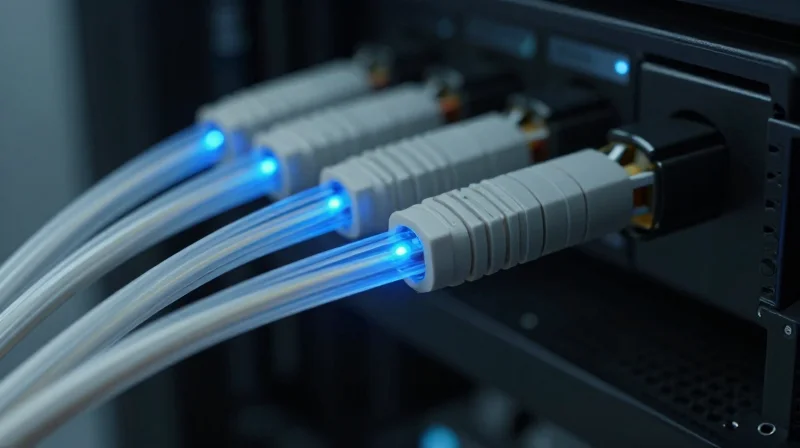
Optimizing signal integrity across long-haul networks requires the continuous calibration of optical power levels to counteract the cumulative effects of attenuation, chromatic dispersion, and noise over hundreds of kilometers. Ubytelink’s DDM/DOM solutions provide the granular visibility required to ensure that both transmitted (TX) and received (RX) power remain within strict operational windows, preserving the Bit Error Rate (BER) and ensuring high-speed data transmission remains consistent across global infrastructures.
Precision Power Budgeting in Multi-Span Links
In long-haul fiber optic systems, maintaining the optical power budget is a delicate balancing act. If the signal is too weak, the receiver cannot distinguish data from noise; if it is too strong, it can saturate the photodiode or cause non-linear effects. Ubytelink DDM monitoring allows network administrators to track the exact power budget available between nodes in real-time, providing the data necessary to adjust optical amplifiers (EDFAs) or attenuators dynamically.
| Monitoring Parameter | Impact on Long-Haul Integrity | DDM/DOM Optimization Benefit |
|---|---|---|
| RX Optical Power | Determines signal readability at the distant end. | Identifies fiber aging or patch cord issues before signal loss. |
| TX Optical Power | Sets the initial signal strength for the link span. | Ensures the transmitter is operating at peak efficiency. |
| Laser Bias Current | Indicates the health of the internal laser diode. | Predicts end-of-life for transceivers in remote locations. |
| Temperature | Affects wavelength stability and laser longevity. | Prevents frequency drift in DWDM long-haul systems. |
Mitigating Signal Degradation and OSNR
As networks transition to 400G and 800G, the Optical Signal-to-Noise Ratio (OSNR) becomes more sensitive to environmental factors. DDM/DOM data acts as a diagnostic heartbeat, allowing operators to distinguish between a physical cable fault and transceiver-side degradation. By maintaining RX power within optimal thresholds, Ubytelink solutions help maximize the reach of long-haul spans without the need for excessive regeneration nodes, significantly lowering capital expenditure.
Long-Haul Signal Integrity FAQs
- How does DDM assist in troubleshooting multi-vendor long-haul paths?
DDM provides standardized metrics across hardware, allowing engineers to pinpoint exactly which span or transceiver is underperforming by comparing power levels across different network segments. - Can DDM monitoring reduce the need for field testing in remote areas?
Yes. By providing remote access to RX and TX power levels, DDM allows for 'virtual' inspections, confirming if a signal drop is due to hardware failure or external fiber damage without sending a technician to a remote site. - What is the relationship between DDM data and Bit Error Rate (BER)?
Fluctuations in DDM-reported RX power often precede an increase in BER. Monitoring these trends allows for proactive adjustments before data packets are corrupted or lost.
Compliance and Interoperability with Global Standards
Ubytelink ensures its optical modules maintain premium quality for global networks by strictly adhering to the SFF-8472 industry standard, which provides a unified digital diagnostic monitoring interface for real-time telemetry across disparate hardware platforms. This compliance is the foundation of Ubytelink's interoperability, allowing network administrators to deploy advanced monitoring tools without the constraints of proprietary vendor lock-in.
The Critical Role of SFF-8472 Compliance
The SFF-8472 standard defines the memory map and data structures required for a transceiver to report its internal operating conditions to the host system. By rigorously following these specifications, Ubytelink modules guarantee that parameters such as laser bias current, supply voltage, and internal temperature are reported in a format that any MSA-compliant switch or router can interpret. This standardization is vital for global networks where hardware from multiple generations and manufacturers must coexist peacefully.
Standardized vs. Proprietary Monitoring Comparison
| Feature | SFF-8472 Compliant (Ubytelink) | Proprietary/Non-Standard Systems |
|---|---|---|
| Hardware Compatibility | Universal (Multi-vendor support) | Vendor-locked / Limited |
| Data Accuracy | High (Calibrated per MSA) | Varies significantly by manufacturer |
| Management Integration | Native support in most OS/CLI | Requires specific third-party drivers |
| Scalability | Seamless across diverse networks | Complex and prone to errors |
Seamless Interoperability in Multi-Vendor Environments
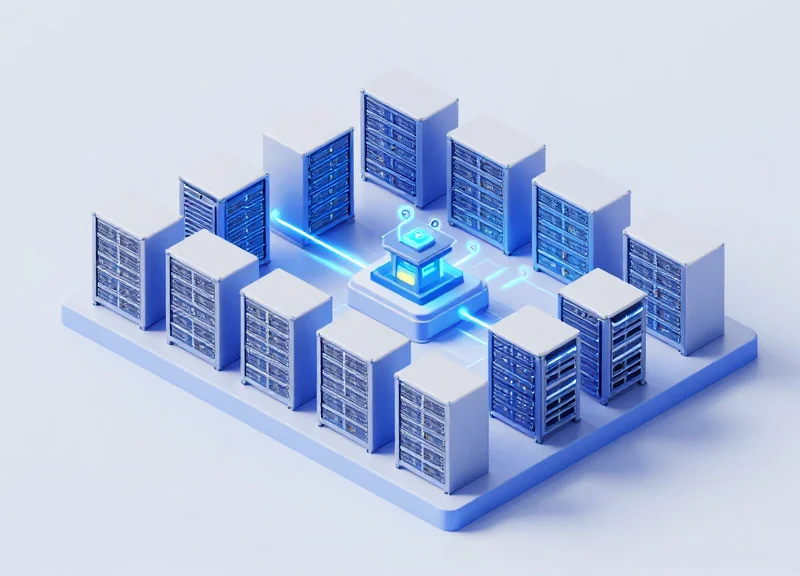
In modern data centers and telecommunications hubs, the ability to mix and match components is essential for cost-efficiency and supply chain resilience. Ubytelink’s adherence to global standards ensures that its DDM/DOM data is not just present, but actionable. Whether integrated into a Cisco, Juniper, Arista, or generic white-box environment, the diagnostic data remains consistent. This consistency allows for centralized network management systems to aggregate health data from thousands of nodes simultaneously, regardless of the underlying hardware brand.
Interoperability and Standards FAQ
- Does SFF-8472 compliance impact the actual data transmission speed?
No, the diagnostic interface operates on an independent I2C management channel. This ensures that the monitoring of optical health does not interfere with the high-speed data payload or latency. - How does Ubytelink verify interoperability with different brands?
Ubytelink conducts extensive compatibility testing in a comprehensive lab environment featuring dozens of popular network operating systems and hardware platforms to ensure 100% MSA compliance. - Can Ubytelink DDM data be exported to external monitoring software?
Yes, because Ubytelink follows industry-standard data structures, the telemetry is easily mapped to standard SNMP MIBs, making it compatible with tools like Zabbix, Nagios, and PRTG.
The Economic Impact: Enhancing ROI in Data Centers

The Economic Impact: Enhancing ROI in Data Centers
The adoption of Ubytelink DDM/DOM monitoring solutions fundamentally transforms data center economics by shifting the maintenance model from reactive to proactive, thereby maximizing the lifespan of optical infrastructure and minimizing the Total Cost of Ownership (TCO). In high-density global networks, the ability to identify a degrading laser before it fails prevents service-level agreement (SLA) breaches that can cost organizations thousands of dollars per minute. By providing granular visibility into transceiver health, Ubytelink enables operators to extract maximum value from every hardware asset.
Quantitative TCO Reduction through Automated Monitoring
Manual fiber inspection and troubleshooting represent a massive operational expense for data centers. Without DDM/DOM, technicians must physically test ports and cables to isolate faults. Ubytelink's premium monitoring features eliminate this 'guesswork' by pinpointing the exact location of signal attenuation or power surges remotely. This reduction in Mean Time to Repair (MTTR) translates directly into lower labor costs and higher network availability.
| Metric | Traditional Infrastructure | Ubytelink DDM/DOM Solution |
|---|---|---|
| Troubleshooting Labor | High (Manual physical testing required) | Low (Remote software-based diagnostics) |
| Hardware Replacement | Reactive (Replace after failure) | Predictive (Replace before failure) |
| Network Downtime Risk | High (Unplanned outages) | Minimal (Scheduled maintenance) |
| Asset Lifecycle | Standard | Extended (Optimized operating conditions) |
Maximizing Resource Allocation and Efficiency
- How does Ubytelink DDM/DOM reduce CapEx?
By providing real-time data on power levels and temperature, Ubytelink modules prevent hardware from operating under sub-optimal conditions that cause premature burnout. This extends the replacement cycle for expensive transceiver modules and reduces initial Capital Expenditure over time. - Does automated monitoring lower OpEx?
Yes. Automated alerts significantly reduce the need for specialized on-site engineers to perform routine health checks. Labor resources can be redirected toward strategic projects rather than manual maintenance, lowering overall Operational Expenditure. - What is the impact on long-term scalability?
As networks grow, manual monitoring becomes impossible. Ubytelink's compliant DDM solutions allow for centralized management of thousands of nodes, ensuring that scalability does not lead to an exponential increase in maintenance costs.
Ubytelink’s Quality Assurance: Beyond the Industry Standard
Ubytelink sets a new paradigm in optical networking by treating standard SFF-8472 compliance as the absolute minimum requirement, building upon it with proprietary multi-stage validation processes that guarantee every DDM/DOM sensor provides laboratory-grade precision in live production environments. While many manufacturers rely on batch-level sampling, Ubytelink implements a 100% individual unit testing policy to ensure that the monitoring benefits of their solutions are fully realized by global network operators who cannot afford downtime or telemetry errors.
The Multi-Phase Validation Ecosystem
The Ubytelink quality journey begins with stringent component selection, where only Grade-A lasers and chipsets are utilized. This is followed by automated optical assembly and a series of electrical and optical characterization tests. The goal is to eliminate 'infant mortality' failures and ensure that the digital telemetry reported by the module—such as bias current and transceiver temperature—matches the physical reality within a negligible margin of error.
Environmental Stress Screening (ESS)
Unlike standard modules that may only be tested at room temperature, Ubytelink transceivers undergo rigorous thermal cycling and burn-in processes. By simulating extreme data center heat and high-humidity environments, Ubytelink ensures that the DDM/DOM sensors remain calibrated over the entire lifespan of the product, preventing the 'sensor drift' that often plagues lower-quality alternatives.
| Quality Metric | Industry Standard (Generic) | Ubytelink Premium Standard |
|---|---|---|
| Testing Scope | Randomized Batch Testing | 100% Individual Unit Validation |
| Temperature Range | Limited Operating Range | Extended Thermal Cycling (-40°C to +85°C) |
| DDM Accuracy | +/- 3.0 dB for Rx Power | Precision Calibrated < +/- 1.0 dB |
| Compatibility Lab | Software Simulation | Physical Verification on 200+ Vendor Platforms |
Ensuring Interoperability Across Global Platforms
A critical component of Ubytelink’s QA is the compatibility testing performed in a multi-vendor lab environment. Because DDM implementation can vary slightly between switch vendors, Ubytelink customizes firmware to ensure that monitoring data is correctly interpreted by the host OS, whether it is Cisco, Arista, Juniper, or white-box hardware. This eliminates the 'blind spots' often encountered when generic modules fail to report DDM data to specific network management systems.
Quality Assurance FAQ
- How does Ubytelink prevent false DDM alarms?
We use precision-calibrated thresholds and signal integrity filtering in our firmware to ensure that only genuine network anomalies trigger alerts, reducing the burden on NOC teams. - Are Ubytelink modules tested in real-world traffic scenarios?
Yes, every module is subjected to full-rate traffic stress tests to ensure that BER (Bit Error Rate) performance remains optimal even while DDM monitoring is active. - Does Ubytelink provide traceability for its QA results?
Every transceiver is assigned a unique serial number that links to a comprehensive database of its factory test results, providing full transparency for audit-intensive industries.
Ubytelink’s advanced DDM/DOM monitoring solutions empower network administrators with the visibility needed to scale and maintain global networks with confidence. Take the first step toward a more resilient infrastructure by exploring our premium optical module catalog or contacting our technical consultants for a custom solution today.