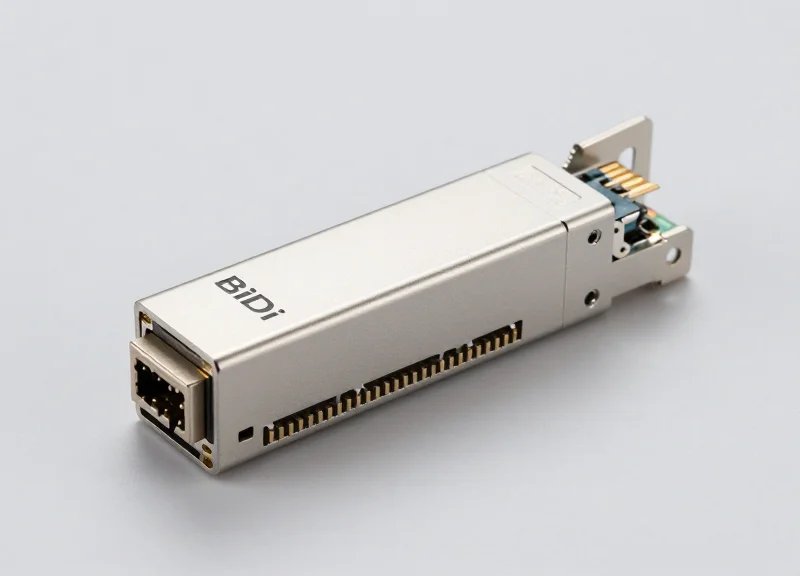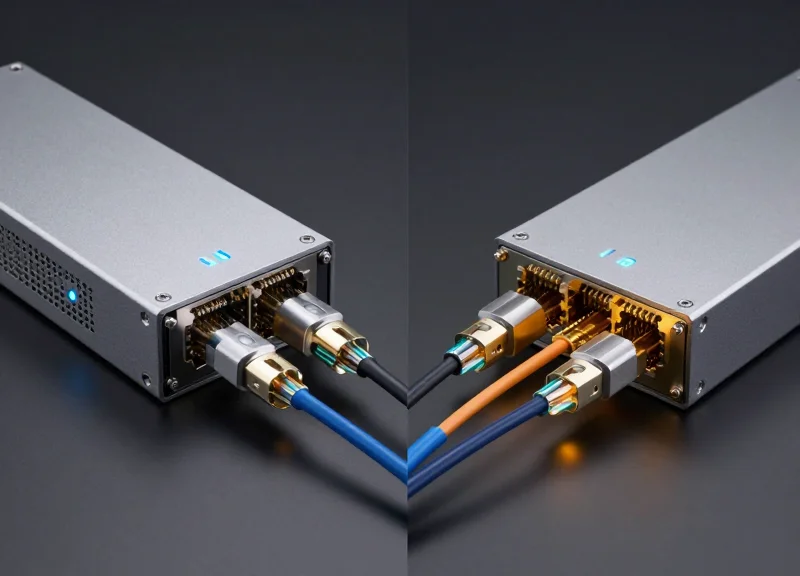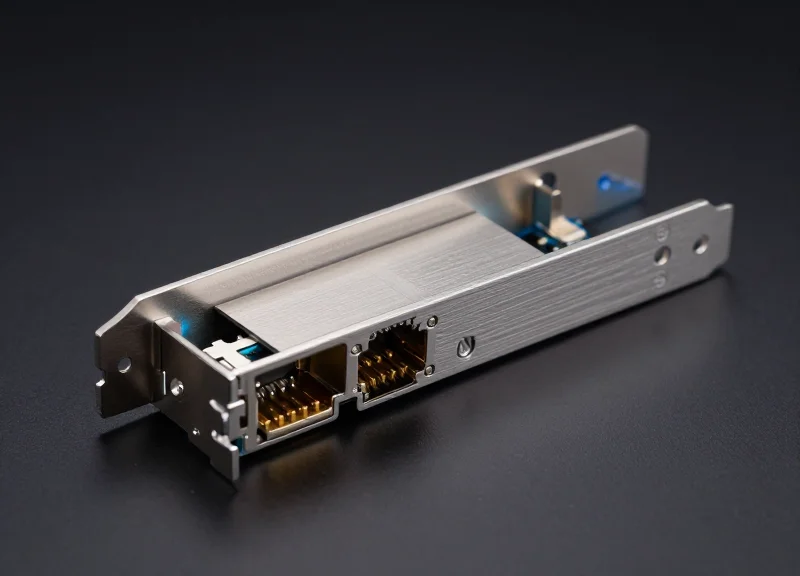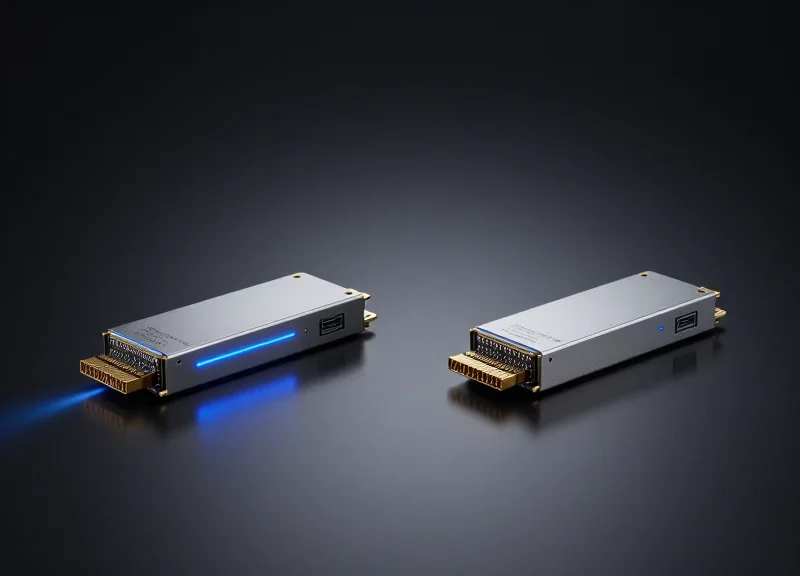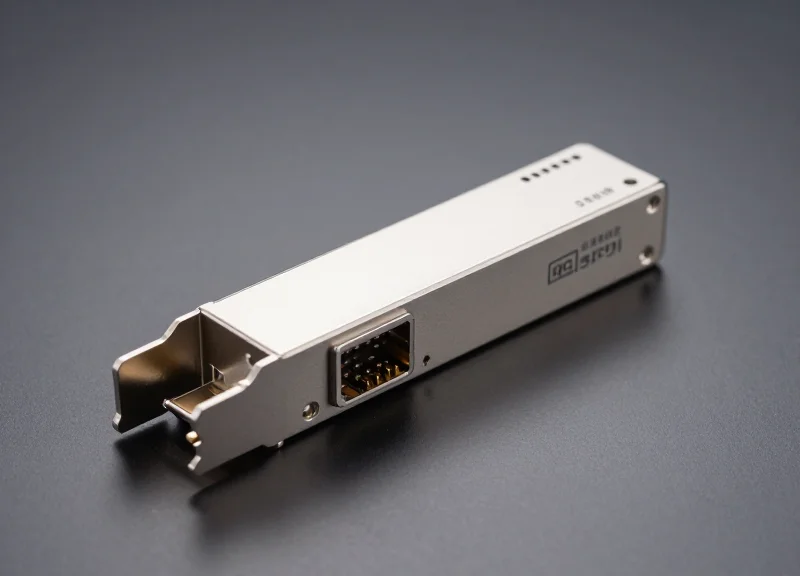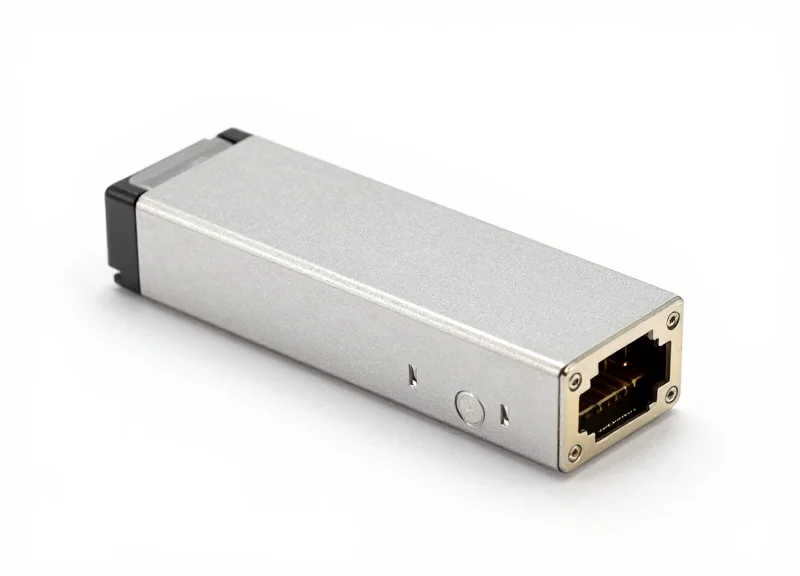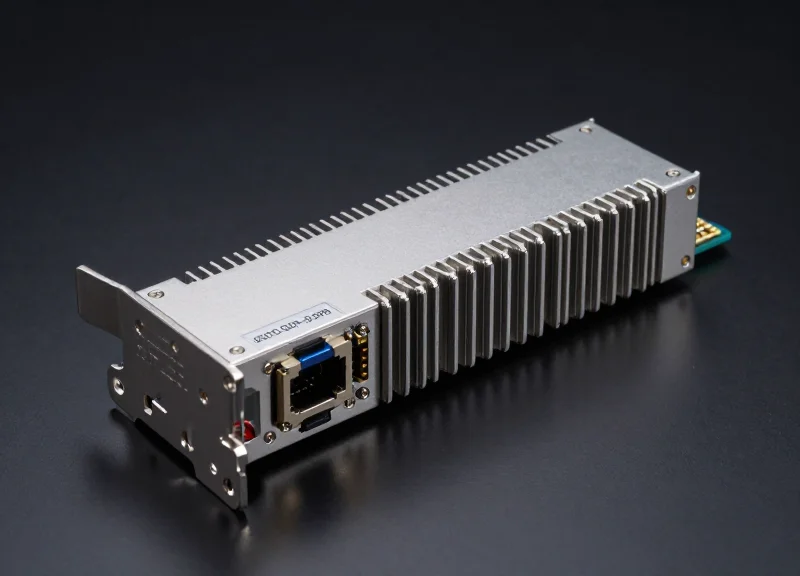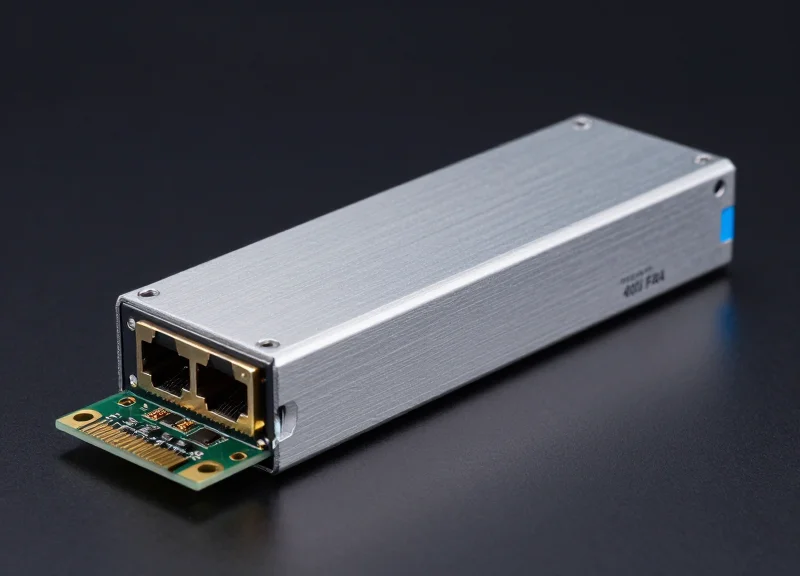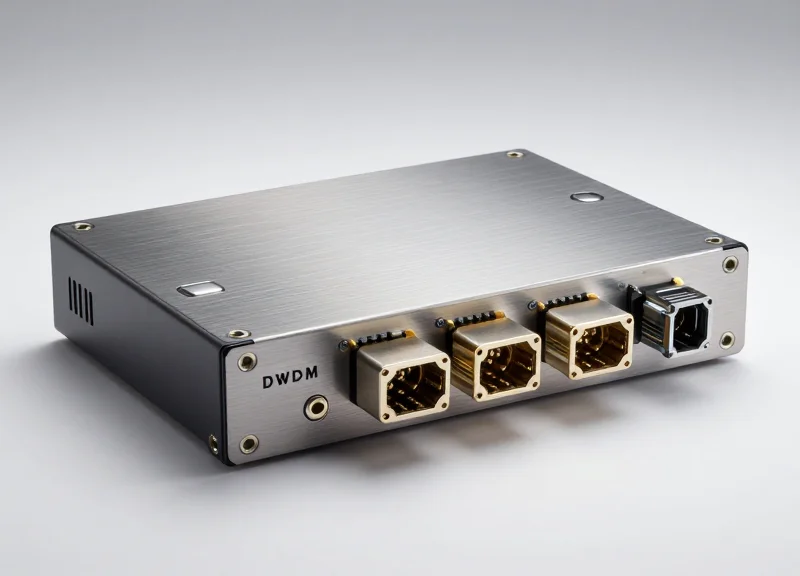
As global data traffic surges, network operators face the dual challenge of increasing capacity while maintaining absolute reliability. Ubytelink’s Tunable DWDM modules address these needs by replacing dozens of fixed-wavelength transceivers with a single, high-performance solution designed for mission-critical environments.
Understanding the Evolution of DWDM Technology

Understanding the Evolution of DWDM Technology
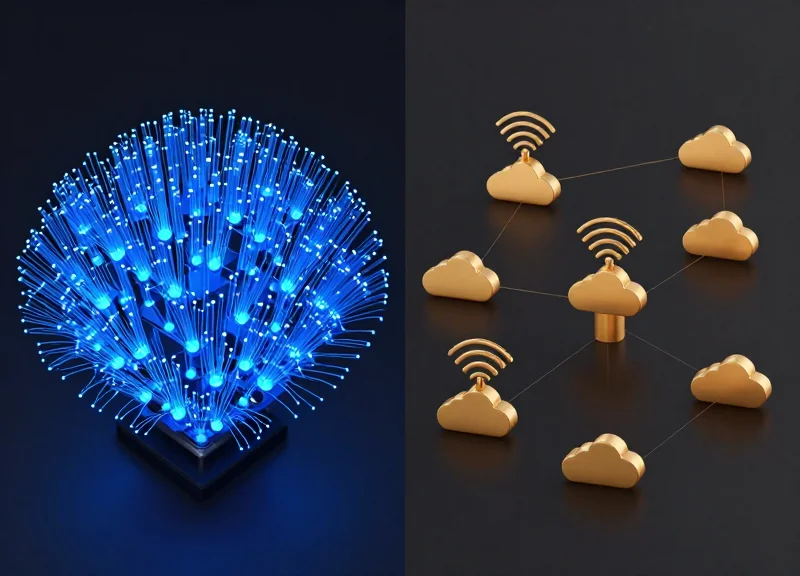
The evolution of Dense Wavelength Division Multiplexing (DWDM) technology represents a fundamental transformation from rigid, hardware-constrained optical layers to agile, software-defined architectures. This shift is primarily defined by the transition from fixed-wavelength transceivers, which are locked into a single frequency, to tunable modules that can access the entire C-band spectrum on demand. As global data demands escalate, this technological maturation has become essential for operators seeking to maximize fiber capacity while minimizing logistical complexity.
The Constraint of Fixed-Wavelength Systems
In traditional DWDM deployments, network engineers were required to manage individual Stock Keeping Units (SKUs) for every specific wavelength on the ITU-T grid. If a network utilized 40 channels, the operator needed to maintain 40 different types of spare transceivers to ensure rapid recovery from failures. This 'fixed' approach created significant overhead in inventory management, increased the risk of manual configuration errors, and limited the ability of the network to respond to real-time traffic fluctuations or service re-routing requirements.
| Feature | Fixed-Wavelength DWDM | Tunable DWDM Solutions |
|---|---|---|
| Wavelength Flexibility | Hard-coded to one ITU channel | Adjustable across the full C-Band |
| Inventory Complexity | High (one SKU per channel) | Low (one SKU for all channels) |
| Provisioning Speed | Manual hardware replacement | Remote software-defined tuning |
| Operational Focus | Reactive maintenance | Proactive, agile scaling |
The Breakthrough of Tunable Laser Technology
Modern tunable modules leverage Integrated Tunable Laser Assembly (ITLA) technology to provide high-performance spectral stability across 50GHz or 100GHz channel spacing. By utilizing thermal or mechanical tuning mechanisms, these modules allow a single transceiver to be programmed to any channel within the C-band. This capability is the engine behind modern ROADM (Reconfigurable Optical Add-Drop Multiplexer) networks, enabling traffic to be redirected at the optical layer without expensive O-E-O (Optical-Electrical-Optical) conversions.
- Why is the industry moving away from fixed DWDM?
The move is driven by the need for 'Colorless' networking, where any port can support any wavelength, drastically reducing operational expenses and improving time-to-market for new services. - How does tunability support global network resilience?
Tunable modules allow for automated restoration paths; if a specific fiber path is compromised, the system can dynamically tune to an available wavelength on an alternate route. - What role does Ubytelink play in this evolution?
Ubytelink provides premium tunable solutions that bridge the gap between high-end performance and cost-effectiveness, ensuring compatibility across diverse vendor platforms.
The Ubytelink Advantage: Engineering for Mission-Critical Loads

The Ubytelink Advantage: Engineering for Mission-Critical Loads
Ubytelink Tunable DWDM modules are engineered to transcend the limitations of commodity optics by prioritizing thermal stability and signal integrity. Designed for mission-critical loads, these modules utilize high-performance Indium Phosphide (InP) based lasers and advanced Mach-Zehnder Modulators to maintain precise wavelength locking even under fluctuating environmental conditions. By integrating sophisticated Digital Signal Processing (DSP), Ubytelink ensures that global networks experience minimal bit-error rates (BER) and maximum uptime, meeting the stringent demands of financial trading floors and government data centers where every millisecond of downtime translates to significant loss.
Superior Thermal Management and EMI Shielding
Mission-critical applications often operate in high-density environments where heat dissipation and electromagnetic interference (EMI) can degrade performance. Ubytelink modules feature optimized gold-plated housings and high-efficiency thermal pads that facilitate rapid heat transfer away from sensitive laser components. This specialized engineering prevents 'wavelength drift'—a common failure point in lower-tier tunable modules—ensuring that the module remains locked on the 50GHz or 100GHz ITU grid for years of continuous operation. Furthermore, enhanced EMI shielding protects the data stream from crosstalk in environments crowded with high-power server equipment.
| Engineering Feature | Generic Market Alternatives | Ubytelink Premium Series |
|---|---|---|
| Laser Component | Standard DFB Laser | Ultra-Low Linewidth Micro-ITLA |
| Temperature Range | 0°C to 70°C (Commercial) | -40°C to 85°C (Industrial Grade) |
| Mean Time Between Failure | Approx. 500,000 Hours | Over 2,500,000 Hours |
| Quality Assurance | Sample-based Batch Testing | 100% Individual Unit Stress Testing |
Deployment Resilience FAQ
- How does Ubytelink ensure compatibility across multi-vendor environments?
Every module undergoes a rigorous MSA (Multi-Source Agreement) compliance check and is programmed with custom EEPROM code to ensure seamless handshake protocols with major switch and router vendors, eliminating proprietary lock-in. - What measures are taken to prevent data loss in high-frequency trading?
Ubytelink utilizes hardware-level Forward Error Correction (FEC) and high-speed wavelength tuning (typically under 10ms) to ensure that network re-routing and signal recovery happen faster than the application layer's timeout threshold. - Are these modules suitable for harsh remote environments?
Yes, our modules are tested against Telcordia GR-468 standards, which include rigorous vibration, humidity, and thermal shock cycles, making them ideal for unconditioned remote edge sites.
Operational Efficiency: Eliminating Spare Part Complexity
Operational Efficiency: Eliminating Spare Part Complexity
The primary obstacle in scaling traditional DWDM networks is the logistical burden of maintaining a massive inventory of fixed-wavelength optics. Ubytelink Tunable DWDM Modules eliminate this complexity by providing a universal transceiver that can be programmatically assigned to any channel within the C-Band. This shift from physical hardware diversity to software-defined agility allows network operators to drastically reduce capital expenditure (CAPEX) while ensuring that the correct wavelength is always available on-site for immediate deployment or restoration.
Consolidation of the C-Band Spectrum
In a standard 50GHz or 100GHz ITU grid, a network may require over 80 distinct wavelengths to maximize fiber capacity. With fixed optics, an engineer must carry 80 different spare parts to guarantee coverage for every potential link failure. Ubytelink’s tunable solutions consolidate this entire spectrum into a single part number. By utilizing integrated micro-electromechanical systems (MEMS) or thermally tuned lasers, these modules allow for precise frequency selection across the entire C-band range without compromising signal integrity or transmission distance.
| Operational Metric | Fixed-Wavelength Optics | Ubytelink Tunable Solutions |
|---|---|---|
| SKU Count | 80+ individual part numbers | 1 universal SKU |
| Sparing Strategy | Full set required for total redundancy | Single module covers all ports |
| On-site Error Risk | High (Risk of wrong wavelength insertion) | Zero (Software-controlled alignment) |
| Inventory Management | Complex and costly | Simplified and lean |
Streamlining Field Operations and Maintenance
Beyond warehouse logistics, the operational benefits extend directly to the field. Technicians no longer need to verify specific wavelength labels or search for niche components before heading to a remote site; a single Ubytelink tunable module serves as a 'universal spare.' This simplicity reduces the risk of human error—such as inserting a 1550.12nm module into a port designed for 1550.92nm—and significantly lowers the Mean Time to Repair (MTTR) during critical link outages.
- How is the wavelength set on a Ubytelink Tunable module?
The wavelength can be configured via the host equipment's Command Line Interface (CLI), Simple Network Management Protocol (SNMP), or through an external Ubytelink tuning tool for legacy systems. - Are tunable modules compatible with existing fixed-wavelength Mux/Demux?
Yes, Ubytelink modules are designed to be fully compliant with standard ITU-T channel grids, making them drop-in replacements for fixed optics in any passive or active multiplexing environment. - Do tunable modules consume significantly more power?
While older tunable technology had higher power requirements, Ubytelink’s modern engineering ensures that power consumption is optimized, remaining well within the thermal envelopes of standard SFP+ and XFP ports.
Technical Deep Dive: C-Band Tunability and Performance
Technical Deep Dive: C-Band Tunability and Performance
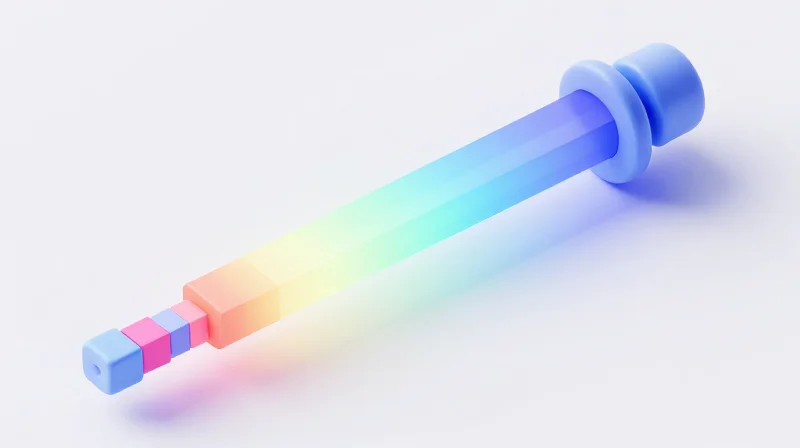
Ubytelink's tunable DWDM modules are engineered to deliver high-density wavelength management across the C-band, utilizing sophisticated Tunable Laser Assembly (TLA) technology to achieve unmatched spectral efficiency and signal integrity.
Precision Laser Control and ITU-T Grid Compliance
The core of the Ubytelink solution is an Integrated Tunable Laser Assembly (ITLA) that provides stable, narrow-linewidth output across the full C-band spectrum. These modules support both 50GHz and 100GHz channel spacing, conforming strictly to the ITU-T G.694.1 standard. By employing an internal wavelength locker, Ubytelink ensures that the laser remains centered on the target frequency even under varying thermal conditions, preventing cross-talk in high-density 50GHz deployments.
| Parameter | 50GHz Grid Support | 100GHz Grid Support |
|---|---|---|
| Channel Spacing | ~0.4 nm | ~0.8 nm |
| Total Channels | Up to 96 Channels | Up to 48 Channels |
| Frequency Stability | +/- 1.5 GHz | +/- 2.5 GHz |
| Application | Ultra-High Capacity Core | Standard Metro/Enterprise |
Enhanced Digital Optical Monitoring (DOM)
Monitoring the health of a tunable link requires more than basic telemetry. Ubytelink integrates enhanced Digital Optical Monitoring (DOM) capabilities that track wavelength accuracy and stability in real-time. This diagnostic layer allows network administrators to view TX/RX power levels, laser bias current, and module temperature. For tunable modules specifically, Ubytelink’s firmware provides wavelength deviation alerts, enabling proactive maintenance before frequency drift can impact adjacent channels.
Technical Specifications and Performance FAQ
- What is the typical tuning speed for Ubytelink modules?
The modules feature rapid-tuning algorithms, typically achieving wavelength stabilization and locking in under 30 seconds, ensuring minimal downtime during reconfiguration. - Does Ubytelink support both C-Band and L-Band?
Our current premium tunable line is optimized for the Full C-Band (1528nm to 1568nm), which is the industry standard for high-performance DWDM networking. - How is spectral purity maintained?
Ubytelink modules maintain a Side-Mode Suppression Ratio (SMSR) of over 35dB, ensuring that the primary signal carries maximum power with minimal noise leakage into neighboring frequencies.
Seamless Compatibility Across Multi-Vendor Environments
Seamless Compatibility Across Multi-Vendor Environments
The primary challenge in modernizing optical networks is the complexity of multi-vendor environments where proprietary coding often restricts hardware choices. Ubytelink Tunable DWDM Modules address this by utilizing advanced EEPROM customization and rigorous protocol testing, enabling them to function as native components within chassis from Cisco, Juniper, Arista, Nokia, and others. This universal compatibility ensures that network architects can deploy high-performance DWDM solutions without being tethered to a single hardware ecosystem, facilitating a truly agile and cost-effective infrastructure.
The Ubytelink Interoperability Advantage
To achieve plug-and-play functionality, Ubytelink subjects every module to a comprehensive compatibility suite. This includes verification of Digital Optical Monitoring (DOM) reporting, wavelength tuning via CLI/SNMP, and power consumption thresholds. By matching the specific diagnostic signatures required by different Operating Systems (such as Cisco IOS-XR, Juniper Junos, or Arista EOS), Ubytelink ensures that the modules are recognized instantly, preventing 'unsupported transceiver' errors that often plague generic third-party optics.
| Feature | Generic Tunables | Ubytelink Tunable Solutions |
|---|---|---|
| Vendor Recognition | Limited / Often flagged as 'Unsupported' | Full OEM-compliant coding for 50+ vendors |
| DOM Support | Basic or non-functional | Real-time monitoring of power, temp, and bias |
| Tuning Interface | Manual / External tool required | Native host-chassis tuning support |
| System Stability | Unpredictable link flaps | Carrier-grade stability with MTBF > 500k hours |
Implementation & Support FAQ
- Can Ubytelink modules be used in a mixed-vendor chassis setup?
Yes. Ubytelink modules can be individually coded for different ports within the same network or even the same switch, allowing a single link to bridge disparate hardware brands flawlessly. - How is the wavelength tuned in different OS environments?
Our modules support standard SFF-8636 and SFF-8472 management interfaces, allowing network administrators to change channels directly through the host device's Command Line Interface (CLI) or via an external Ubytelink tuning tool for legacy hardware. - Will using Ubytelink optics void my original equipment manufacturer warranty?
No. Under the Magnuson-Moss Warranty Act and similar international fair-trade regulations, using third-party compatible optics does not void the hardware warranty of the switch or router.
By prioritizing cross-platform reliability, Ubytelink empowers global enterprises to scale their optical capacity without the overhead of maintaining vendor-specific inventories. This commitment to open-standards compatibility is what defines Ubytelink as a premium partner for global network operators.
Thermal Stability and Longevity in Harsh Environments
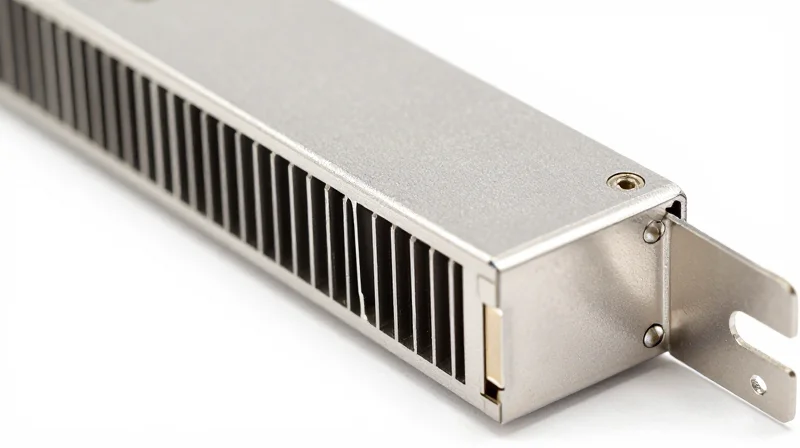
Engineering for Thermal Resilience and Signal Integrity
The longevity and performance of tunable DWDM modules are intrinsically linked to their ability to manage heat within high-density network environments. Ubytelink modules are designed with a sophisticated thermal architecture that mitigates the risks of wavelength drift and component degradation. By utilizing high-efficiency Thermoelectric Coolers (TEC) and optimized heat-sink interfaces, these modules maintain precise laser frequency locking even when ambient temperatures fluctuate significantly. This thermal stability is critical for global networks where equipment may be deployed in non-controlled environments or densely packed racks with limited airflow.
Industrial-Grade Specifications for Harsh Deployments
Unlike standard optical transceivers, Ubytelink's tunable solutions are built to exceed the thermal demands of modern edge computing and outdoor telecommunications cabinets. The following table highlights the operational parameters that define our modules' reliability.
| Parameter | Commercial Grade (C-Temp) | Industrial Grade (I-Temp) |
|---|---|---|
| Operating Temperature Range | 0°C to 70°C (32°F to 158°F) | -40°C to 85°C (-40°F to 185°F) |
| Typical Power Consumption | 1.5W to 2.0W | 1.8W to 2.5W |
| Wavelength Stability Tolerance | +/- 1.5 GHz | +/- 2.5 GHz |
| MTBF (Mean Time Between Failures) | > 1,000,000 Hours | > 800,000 Hours |
Advanced Wavelength Locking and Lifespan Extension
A key differentiator in Ubytelink's technology is the integration of an internal wavelength locker that works in tandem with the thermal management system. This ensures that the tunable laser remains centered on the ITU grid despite thermal stress. Furthermore, by reducing the overall power dissipation of the internal circuitry, Ubytelink minimizes the internal heat build-up that typically accelerates the aging of semiconductor lasers. This focus on low power consumption not only lowers the Total Cost of Ownership (TCO) but also significantly extends the operational lifespan of the hardware in the field.
- How does Ubytelink prevent wavelength drift during sudden temperature spikes?
Ubytelink utilizes a high-speed feedback loop between the internal wavelength locker and the Thermoelectric Cooler (TEC), allowing the module to adjust laser cavity temperature in milliseconds to compensate for external environmental changes. - Are these modules suitable for uncooled outdoor cabinet deployments?
Yes, the Industrial Temperature (I-Temp) variants are specifically tested and validated for use in rugged outdoor environments where temperatures can drop well below freezing or rise above 80°C. - How does thermal management impact signal-to-noise ratio (OSNR)?
By maintaining a stable operating temperature, the module reduces thermal noise and prevents the spectral broadening of the laser source, thereby maintaining a high OSNR required for long-haul and high-bitrate transmissions.
Cost-Benefit Analysis: ROI of Tunable vs. Fixed Modules
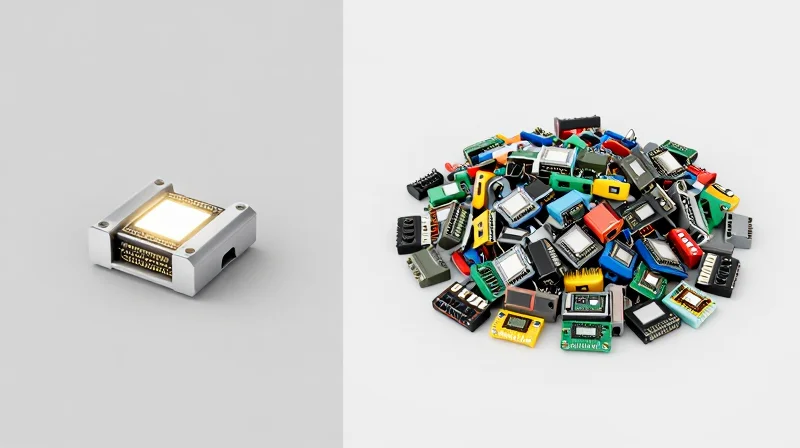
Cost-Benefit Analysis: ROI of Tunable vs. Fixed Modules
Investing in Ubytelink Tunable DWDM Modules yields a superior Return on Investment (ROI) by drastically reducing inventory overhead and simplifying network maintenance, ultimately offsetting higher initial unit costs within the first year of deployment. While the per-unit price of a tunable module is higher than a single fixed-channel module, the cumulative savings in logistics, emergency sparing, and technician hours create a compelling financial case for premium tunable technology.
CAPEX Optimization and Inventory Rationalization
The most immediate impact on CAPEX is the elimination of the 'channel-matching' requirement. In a standard 40-channel DWDM system, a network operator using fixed modules must stock 40 different SKUs to ensure coverage for any potential failure. With Ubytelink's tunable solutions, a single SKU covers the entire C-band, allowing for a 90% reduction in physical inventory volume while maintaining 100% network readiness.
| Financial Metric | Fixed-Wavelength Modules | Ubytelink Tunable Modules |
|---|---|---|
| Inventory Management | High (40-80 SKUs per network) | Minimal (1 SKU per network) |
| Sparing Strategy | Channel-specific (Risk of stock-out) | Universal (Zero-risk sparing) |
| Procurement Complexity | High (Forecasting individual channels) | Simplified (Bulk purchasing) |
| Warehouse Footprint | Significant | Optimized/Compact |
OPEX Reductions and Long-Term Lifecycle Value
Operational expenditures are often the hidden cost of network management. Ubytelink modules utilize advanced Digital Diagnostic Monitoring (DOM) and software-defined tuning, which allows remote configuration without physical intervention. This reduces the frequency of 'truck rolls' and minimizes the downtime associated with manual channel re-assignment. Furthermore, the high Mean Time Between Failures (MTBF) of Ubytelink's premium laser components ensures that the hardware outlasts cheaper alternatives, amortizing the initial cost over a longer, more stable lifecycle.
- How quickly is the ROI realized with Ubytelink tunable modules?
Most network operators achieve a break-even point within 6 to 12 months when factoring in the reduction of emergency shipping costs, storage overhead, and the labor hours saved during deployment. - Does the higher power efficiency impact the ROI?
Yes. Ubytelink's modules are engineered for low power consumption. Over a 5-year deployment in a high-density data center, the energy savings per rack can contribute significantly to a lower Total Cost of Ownership (TCO). - Are there hidden costs in switching to tunable technology?
The primary shift is an upfront CAPEX increase per unit, but this is balanced by the elimination of 'stranded' fixed-channel assets that often go unused in inventory for years.
The Road to 400G and Beyond: Future-Proofing with Ubytelink
The Road to 400G and Beyond: Future-Proofing with Ubytelink
Transitioning to 400G and 800G requires an infrastructure capable of handling significantly higher data rates while maintaining extreme spectral efficiency; Ubytelink’s tunable DWDM modules serve as the critical bridge by offering the precision and stability needed for coherent optical networking. By providing high Signal-to-Noise Ratios (OSNR) and tight wavelength control, these solutions ensure that current fiber investments remain viable as networks shift from 10G/25G to next-generation high-speed standards.
Technical Evolution: 10G to 400G Requirements
| Feature | Current Tunable 10G/25G | Next-Gen 400G ZR/ZR+ |
|---|---|---|
| Modulation Scheme | NRZ / PAM4 | 16QAM / Coherent |
| Channel Spacing | 50GHz / 100GHz Fixed | 75GHz - 125GHz Flexible Grid |
| Power Management | <2.0W Average | 15W - 20W (QSFP-DD/OSFP) |
| Typical Reach | 80km (Standard) | 120km+ (Coherent Amplified) |
Ensuring Scalability via Flexible Grid Compatibility
As the industry moves toward 400G ZR and ZR+, the standard 50GHz and 100GHz ITU grids are being replaced by 'flexible-grid' architectures. Ubytelink’s tunable modules are engineered to be compatible with these software-defined optical networks (SDON). This compatibility allows network operators to maximize their fiber utilization by packing channels more densely or expanding channel widths to accommodate the massive spectral footprints of 400G signals without replacing the existing optical line system.
Strategic Advantages for Next-Gen Deployment
Future-proofing with Ubytelink is not just about speed; it is about the reliability of the optical layer. Ubytelink modules utilize industrial-grade TOSA/ROSA components that provide the thermal headroom necessary for high-density 400G environments. This ensures that as line cards become more populated and heat generation increases, the optical signal remains locked to its assigned frequency, preventing data loss and expensive downtime.
Infrastructure Migration FAQ
- Will current Ubytelink tunable modules work in 400G-capable switches?
Yes, Ubytelink SFP+ and XFP tunable modules are designed for broad interoperability, allowing them to function in the high-density SFP/QSFP ports of modern 400G switches for lower-speed legacy links. - How does Ubytelink address the higher power demands of future optics?
While 400G optics require more power, Ubytelink optimizes the power efficiency of its current tunable line, helping operators preserve the total power and cooling budget of their chassis for future upgrades. - Is the transition to coherent 400G technology cost-prohibitive?
By using Ubytelink's premium tunable modules today, operators can reduce OPEX through simplified sparing and inventory, creating the budget flexibility needed to invest in coherent 400G technology as it matures.
Choosing Ubytelink means investing in a future-proof network that balances cost-efficiency with uncompromising performance. Ready to optimize your infrastructure? Contact our technical team today for a custom consultation and see how our Tunable DWDM modules can transform your global connectivity.