In an era where data breaches can cost millions, securing the physical layer of your network is no longer optional. As enterprises and data centers scale to meet unprecedented bandwidth demands, the challenge lies in balancing robust security with cost-effective procurement. This article breaks down the strategic advantages of wholesale optical network security modules and how custom OEM/ODM partnerships can future-proof your infrastructure.
The Critical Role of Optical Network Security in 2026

The Critical Role of Optical Network Security in 2026
In 2026, optical network security has transitioned from a niche requirement for government sectors to a foundational pillar for any enterprise managing high-capacity data centers. As data rates climb toward 800G and beyond, the physical layer (Layer 1) has become the most critical point of vulnerability; optical security modules serve as the first line of defense, providing wire-speed encryption that ensures data remains undecipherable even if the fiber infrastructure is physically compromised.
Addressing Physical Layer Vulnerabilities
Modern cyber threats are no longer confined to software-based attacks. Fiber tapping—the practice of extracting light from a fiber optic cable to intercept data—has become more sophisticated and accessible to malicious actors. By implementing optical layer security, organizations can detect microscopic changes in light signal attenuation, providing an early warning system against unauthorized physical access. This hardware-based approach offers a level of protection that software-level encryption cannot match, particularly regarding latency and throughput.
| Security Metric | Traditional Software Encryption | Hardware-Based Optical Security |
|---|---|---|
| Latency | Significant (ms) | Ultra-low (μs) |
| Data Throughput | Variable/Degraded | Consistent Wire-speed |
| Protection Level | Application/Protocol Layer | Physical Layer (L1) |
| Vulnerability | OS/Software exploits | Physical fiber tampering |
The Business Case for Wholesale Security Procurement
Procuring optical security modules via wholesale channels is no longer just about cost savings; it is about infrastructure uniformity. When enterprises scale their networks, deploying identical security hardware across all nodes ensures that there are no 'weak links' in the encryption chain. Bulk pricing allows organizations to implement AES-256 encryption across their entire fiber plant, moving away from fragmented security models that leave secondary paths unprotected.
- Why is Layer 1 encryption preferred over Layer 3 for data centers?
Layer 1 encryption provides near-zero latency and is protocol-agnostic, meaning it encrypts all traffic (Ethernet, Fibre Channel, OTN) without requiring individual configuration for every application. - Can optical security modules detect physical fiber cuts?
Yes, modern optical security platforms often include integrated Optical Time-Domain Reflectometry (OTDR) to pinpoint the exact location of a fiber break or tap within meters. - What is the benefit of bulk-buying security transceivers?
Wholesale purchasing ensures consistent firmware versions and hardware revisions across the network, which simplifies lifecycle management and reduces the risk of interoperability issues during a security event.
As we move further into 2026, the integration of Quantum-Safe Cryptography (QSC) into optical modules is becoming a priority for wholesale buyers. These next-generation security modules are designed to resist potential threats from future quantum computing, making current bulk investments future-proof for the next decade of network evolution.
Maximizing ROI Through Wholesale Procurement

Maximizing Return on Investment (ROI) through wholesale procurement of optical network security hardware is achieved by leveraging economies of scale to lower the total cost of ownership (TCO). For enterprises and service providers, shifting from ad-hoc retail purchases to strategic bulk acquisition reduces per-port costs and ensures that capital expenditure (CAPEX) is deployed with maximum efficiency. This approach not only secures lower price points but also provides a predictable framework for long-term network scaling and infrastructure resilience.
Financial Efficiency and CAPEX Reduction
The primary driver for wholesale procurement is the immediate reduction in initial capital outlay. Wholesale tiers for optical transceivers, physical layer encryption modules, and secure optical switches often provide discounts ranging from 20% to 50% over individual unit MSRPs. This significant delta allows procurement teams to secure more robust hardware within the same budget or reallocate savings toward advanced network monitoring software and specialized security personnel.
| Procurement Metric | Retail/Transactional | Wholesale/Bulk |
|---|---|---|
| Average Unit Cost | High (MSRP) | Low (Tiered Discounting) |
| Budget Predictability | Variable (Market Fluctuations) | Fixed (Contractual Pricing) |
| Lead Time Priority | Standard/Standard Plus | Priority/Dedicated Allocations |
| Technical Support | Standard Online/Phone | Dedicated Account Engineer |
Inventory Stability and Risk Mitigation
Beyond direct cost savings, wholesale procurement addresses the operational risk of supply chain volatility. By securing bulk quantities of mission-critical optical components, organizations eliminate the threat of 'project stalling' due to lead-time delays or hardware shortages. This inventory stability is crucial for maintaining 99.999% uptime in data center interconnects (DCI) and metro-area networks, where waiting months for a secure optical module could result in multi-million dollar service disruptions.
- How does bulk purchasing affect hardware lifecycle management?
Wholesale agreements often include standardized hardware revisions, ensuring that all security modules across a network are uniform, which simplifies firmware patching and lowers administrative overhead. - What is the typical threshold for wholesale pricing in 2026?
While it varies by manufacturer, wholesale tiers generally begin at orders exceeding 50 units for specialized security modules or 500+ units for standard secure optical transceivers. - Can custom quotes include value-added services?
Yes, high-volume wholesale quotes frequently bundle pre-configuration services, custom encryption key injection, and extended hardware replacement (NBD) as part of the package.
OEM vs. ODM: Which Customization Path is Right for You?
OEM vs. ODM: Which Customization Path is Right for You?
Choosing the right customization path for optical network security hardware depends on whether your organization prioritizes rapid market entry or proprietary architectural control. In the wholesale landscape of 2026, Original Equipment Manufacturing (OEM) serves as the most efficient route for branding proven security modules, while Original Design Manufacturing (ODM) provides the depth of engineering required for bespoke, high-security physical layer encryption and unique hardware form factors.
The OEM Approach: Branding Reliable Security Standards
OEM is the ideal model for buyers who require high-performance optical security components—such as optical taps or bypass switches—that are already field-tested and compliant with international standards. In this model, the manufacturer has already completed the R&D, and the buyer applies their own branding, firmware presets, and packaging. This path significantly reduces lead times and lowers the barrier to entry for bulk procurement, as the Minimum Order Quantities (MOQs) for OEM are typically more accessible than full-scale custom builds.
The ODM Approach: Custom-Engineered Security Architectures
For government contractors, financial institutions, or critical infrastructure providers, the ODM path is often necessary. This involves a collaborative design process where the manufacturer builds the optical hardware from the ground up based on the buyer's unique specifications. This is particularly relevant for 2026's emerging threats, as it allows for the integration of proprietary quantum-resistant encryption chips or specialized tamper-proof chassis that are not available in standard catalog products.
| Feature | OEM (Original Equipment Mfg) | ODM (Original Design Mfg) |
|---|---|---|
| Design Ownership | Manufacturer-owned designs | Joint or Client-owned IP |
| Development Speed | Fast (4–12 weeks) | Slow (6–18 months) |
| Unit Cost (Wholesale) | Lower per-unit cost | Higher initial NRE costs |
| Customization Depth | Branding and Software UI | Hardware Circuitry and Chassis |
| Risk Profile | Low (Proven technology) | Higher (New product development) |
Strategic FAQ for Custom Hardware Procurement
- What are NRE costs in the context of ODM?
Non-Recurring Engineering (NRE) fees cover the one-time cost of research, development, and tooling for a custom product. These must be factored into your initial wholesale budget for ODM projects. - Can I switch from OEM to ODM later?
Yes, many enterprises start with OEM to test market viability and scale into ODM once they identify specific hardware limitations that require bespoke engineering. - How does customization affect 2026 lead times?
OEM orders typically follow standard production cycles, whereas ODM lead times are subject to component sourcing for unique parts, which can be affected by global semiconductor fluctuations. - Which path offers better long-term ROI?
OEM offers faster ROI due to lower upfront costs. However, ODM can provide higher long-term margins if the proprietary hardware provides a unique security advantage that competitors cannot replicate.
Technical Specifications That Define Secure Optical Modules
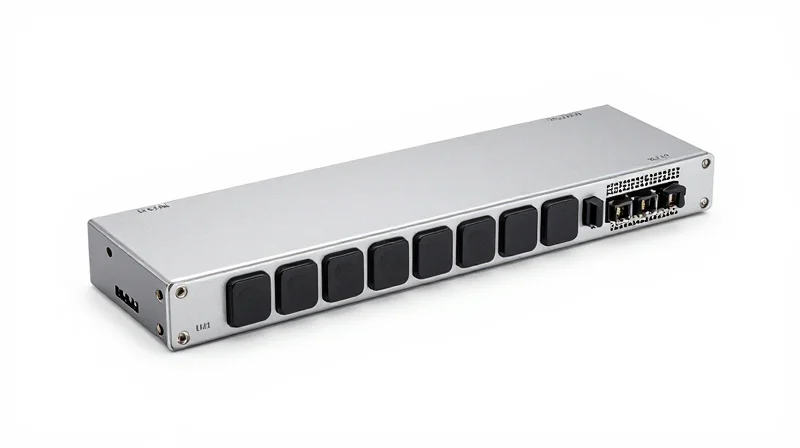
Technical specifications for secure optical modules are defined by their ability to provide wire-speed encryption and data integrity at the physical layer without introducing significant throughput degradation. High-security transceivers integrate hardware-based cryptographic engines, such as MACsec (IEEE 802.1AE), ensuring that every frame is encrypted before it leaves the port. For wholesale buyers, understanding the trade-offs between power consumption, heat dissipation, and encryption overhead is essential for maintaining a stable, long-term network infrastructure.
Hardware-Based Encryption: AES-256 and MACsec Support
The hallmark of a secure optical module is the offloading of encryption tasks from the CPU to the hardware itself. By utilizing AES-256 GCM algorithms within the module's internal circuitry, these devices provide point-to-point protection that is virtually impossible to intercept via fiber tapping. Unlike software-defined security, hardware-level encryption maintains the full line rate of the connection, whether it is 10G, 40G, or 100G, making it the preferred choice for government and financial sectors.
Cross-Protocol Compatibility and Performance
Enterprises often operate heterogeneous environments that require more than just standard Ethernet support. Secure modules must demonstrate high fidelity across various protocols, including Fibre Channel for storage area networks (SAN) and SONET/SDH for legacy telecommunications backbone integration. Wholesale procurement should focus on modules that offer 'Protocol Agnostic' security features to ensure future-proofing.
| Feature | Ethernet Modules | Fibre Channel Modules | SONET/SDH Modules |
|---|---|---|---|
| Primary Security | MACsec (802.1AE) | Buffer-to-Buffer Credit | Payload Scrambling |
| Encryption Level | AES-128/256 | Hardware-specific | Circuit-level |
| Typical Latency | < 2 Microseconds | < 1 Microsecond | Ultra-low/Deterministic |
| Best Use Case | Data Center Interconnect | Secure Storage/SAN | Core Telco Backbone |
The Critical Role of Low Latency in Secure Links
One of the most scrutinized specifications in a secure optical module is the 'latency penalty.' Traditional encryption methods can add milliseconds of delay, which is unacceptable for high-frequency trading or real-time synchronization. Modern secure transceivers are engineered for 'near-zero' overhead, typically adding less than 100 nanoseconds to the total round-trip time. When requesting a custom quote for bulk orders, verifying the deterministic latency of the encryption engine is a top priority for network architects.
Technical FAQ: Navigating Security Specifications
- Does the encryption in these modules require special software?
No, most secure wholesale modules are 'plug-and-play' at the hardware level, provided the host switch or router supports the specific MSA (Multi-Source Agreement) standards and MACsec protocols. - How does DDM/DOM impact security monitoring?
Digital Diagnostics Monitoring (DDM) allows administrators to track optical power, temperature, and voltage. Sudden fluctuations in these specs can indicate a physical security breach, such as a fiber tap or signal splitter insertion. - Can custom-coded modules support third-party encryption keys?
Yes, high-end custom orders can be programmed to integrate with specific Key Management Systems (KMS), allowing enterprises to maintain control over their cryptographic assets independently of the hardware vendor.
Navigating the Global Supply Chain for Fiber Optics

Navigating the global supply chain for optical network security hardware requires a transition from traditional procurement to a proactive 'resilience-first' model. For wholesale buyers in 2026, success hinges on balancing the cost-efficiencies of global manufacturing with the necessity of localized inventory buffers. As geopolitical tensions and raw material fluctuations continue to impact lead times, securing consistent bulk pricing requires a deep understanding of manufacturing hubs, maritime logistics, and the rigorous compliance frameworks that govern international fiber optic production.
Strategic Lead Time Management and Logistics
Lead times for high-end optical transceivers and secure switches can fluctuate significantly based on semiconductor availability and global shipping lane stability. To maintain network expansion schedules, wholesale purchasers should adopt a 'rolling forecast' strategy, typically looking 12 to 18 months ahead. By establishing long-term contracts with tiered delivery schedules, businesses can lock in lower bulk rates while insulating themselves from sudden price spikes in the spot market.
| Manufacturing Region | Primary Strengths | Typical Wholesale Lead Time |
|---|---|---|
| Southeast Asia (Vietnam/Thailand) | Cost efficiency, expanding infrastructure | 10–14 Weeks |
| East Asia (China/Taiwan) | High-volume capacity, advanced R&D | 6–10 Weeks |
| North America/EU | Compliance-heavy, secure 'Clean Network' options | 12–16 Weeks |
| India | Emerging hub, competitive labor, favorable trade | 12–18 Weeks |
Global Manufacturing Standards and Compliance
Ensuring quality when scaling globally means verifying that your wholesale partners adhere to universal technical and environmental standards. Discrepancies in manufacturing can lead to high failure rates and security vulnerabilities within the optical layer. Buyers must prioritize vendors who provide documented proof of compliance across multiple international jurisdictions.
- ITU-T G.652/G.657 Standards
The global benchmark for single-mode fiber characteristics, ensuring compatibility and performance levels across different manufacturers. - RoHS and REACH Compliance
Essential for environmental and chemical safety, particularly for hardware being deployed or resold in the European Union and North America. - ISO 9001:2015 Certification
A non-negotiable requirement for wholesale vendors to demonstrate consistent quality management systems and rigorous testing protocols. - TAA Compliance
Critical for government contractors and security-conscious enterprises requiring products sourced from designated 'trusted' countries.
Supply Chain FAQs for Bulk Buyers
- How can I verify the quality of a wholesale batch from a new international vendor?
Request a Small Batch Sample (SBS) for rigorous lab testing before full payment. Use third-party auditing firms to conduct on-site factory inspections and 'First Article Inspections' (FAI) to ensure the hardware matches your custom technical specifications. - What is the impact of the 'China Plus One' strategy on optical network pricing?
Diversifying production outside of China may slightly increase initial unit costs due to setup overhead, but it significantly reduces risk premiums and potential tariff impacts, leading to more stable long-term bulk pricing. - How do shipping costs affect the overall ROI of wholesale fiber optics?
Shipping can account for 5-15% of total cost. To maximize ROI, prioritize high-density shipping configurations and consolidate orders into full containers. Utilizing Incoterms like DAP (Delivered at Place) can often provide more predictable total landing costs compared to EXW (Ex Works).
Compliance and Standards: Ensuring Your Modules Meet Global Specs
Compliance and Standards: Ensuring Your Modules Meet Global Specs
When sourcing optical network security hardware at a wholesale scale, compliance with international standards like IEEE and MSA is the primary safeguard against interoperability failures and hardware-level vulnerabilities. Adhering to these specifications ensures that your custom-quoted modules integrate seamlessly into diverse infrastructure environments, maintaining high-speed data integrity while meeting the stringent safety and environmental regulations required for global trade in 2026.
The Role of Multi-Source Agreements (MSA)
Multi-Source Agreements (MSA) act as the backbone of the fiber optics industry by defining the form factors, electrical interfaces, and mechanical dimensions of transceivers. For wholesale buyers, MSA compliance is non-negotiable because it eliminates vendor lock-in, allowing hardware from different manufacturers to function within the same switch or router. Without MSA adherence, even the most secure optical module risks being physically or electrically incompatible with standard networking equipment.
| Standard Body | Primary Focus | Benefit for Wholesale Buyers |
|---|---|---|
| IEEE 802.3 | Ethernet Protocols | Ensures reliable data transmission rates and protocol consistency across networks. |
| MSA (Multi-Source Agreement) | Form Factor & Interface | Guarantees hardware interoperability between different brands and chassis types. |
| RoHS / WEEE | Environmental Safety | Necessary for legal distribution in the EU and meeting global ESG compliance. |
| FCC / CE | Electromagnetic Interference | Prevents signal degradation and ensures hardware does not interfere with other devices. |
Safety and Environmental Responsibility
Global supply chains are increasingly sensitive to environmental impact. RoHS (Restriction of Hazardous Substances) compliance ensures that optical modules are free from lead, mercury, and other toxic materials. For organizations purchasing in bulk, verifying RoHS and WEEE compliance is essential not only for environmental stewardship but also to avoid costly customs delays and legal penalties when moving hardware across international borders.
- How do IEEE standards affect optical security?
IEEE standards define the physical and data link layers, ensuring that encryption protocols and low-latency requirements are met consistently across all compliant hardware. - Is 'Vendor Compatible' the same as MSA Compliant?
Not necessarily. MSA defines the physical build, while vendor compatibility often refers to the EEPROM coding. A secure module should ideally be both to ensure full functionality. - What are the risks of ignoring RoHS in bulk orders?
Non-compliant hardware can be seized at customs, and companies may face heavy fines, especially when exporting to the European Union or North American markets.
Why Partner with Ubytelink for Your Security Infrastructure?

Partnering with Ubytelink for your security infrastructure transforms procurement from a transactional process into a strategic advantage. By offering direct access to wholesale pricing and custom quotes, we eliminate the unnecessary markups associated with middleman distributors while providing the technical depth required to secure modern fiber-optic networks. Our focus on 'Buy Optical Network Security Wholesale: Custom Quotes & Bulk Pricing 2026' ensures that large-scale deployments are both economically viable and technically superior, backed by a global supply chain designed for high-availability environments.
Bespoke Engineering and Rigorous Quality Standards
Ubytelink distinguishes itself through a commitment to engineering excellence. We do not simply ship hardware; we provide custom-coded solutions designed for seamless multi-vendor interoperability. Our dedicated labs perform 100% testing on every unit, ensuring that wholesale modules meet or exceed the performance of OEM equivalents. This rigorous quality control is essential for security infrastructure, where a single component failure can compromise the integrity of an entire encrypted data stream.
| Service Metric | Generic Wholesale | Ubytelink Partnership |
|---|---|---|
| Pricing Model | Fixed Tiers | Custom Project-Based Quotes |
| Technical Support | Post-Sales Ticket System | Pre-Sales Engineering Design |
| Product Customization | None (Off-the-shelf) | Firmware & EEPROM Coding |
| Quality Assurance | Batch Sample Testing | 100% Individual Unit Verification |
Streamlined Bulk Procurement for 2026
As network architectures evolve toward 400G and 800G, the cost of securing these links can escalate rapidly. Ubytelink’s wholesale model is designed to mitigate these costs. Our custom quotes take into account the unique lifecycle of your project, offering price protection and scheduled delivery to ensure your security rollout stays on track and under budget. By choosing Ubytelink, you are choosing a partner that understands the nuances of global logistics and the critical nature of network security.
Wholesale & Custom Quote FAQ
- How do I request a custom wholesale quote?
Organizations can submit their technical specifications and volume requirements through our online portal or via a dedicated account manager. We provide comprehensive quotes within 24 hours that include volume-based discounts. - Can Ubytelink provide custom firmware for security modules?
Yes. We offer bespoke EEPROM coding and firmware customization to ensure total compatibility with specific firewall, router, or switch configurations, supporting advanced encryption and monitoring protocols. - What is the typical lead time for large wholesale orders?
Due to our robust inventory and strategic manufacturing partnerships, standard high-volume orders typically ship within 3-5 business days, while custom-engineered solutions follow an expedited development timeline. - Does Ubytelink support multi-vendor network environments?
Absolutely. Our hardware is engineered to be platform-agnostic and is verified for interoperability across more than 100 leading network equipment manufacturers.
Future-Proofing Your Network: Preparing for 400G and 800G

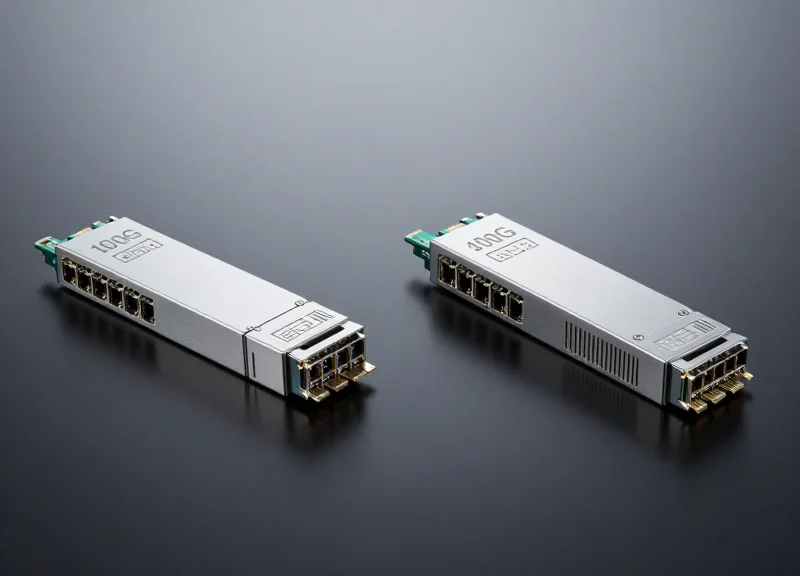
Future-proofing your network infrastructure involves more than just buying for today's capacity; it requires a strategic investment in optical modules that support the transition from 100G to 400G and 800G while maintaining rigorous security protocols. When purchasing wholesale, selecting hardware that utilizes QSFP-DD or OSFP form factors ensures that your security layer can scale alongside your bandwidth demands without requiring a complete hardware overhaul or redundant capital expenditure.
Evaluating Form Factor Longevity: QSFP-DD and OSFP
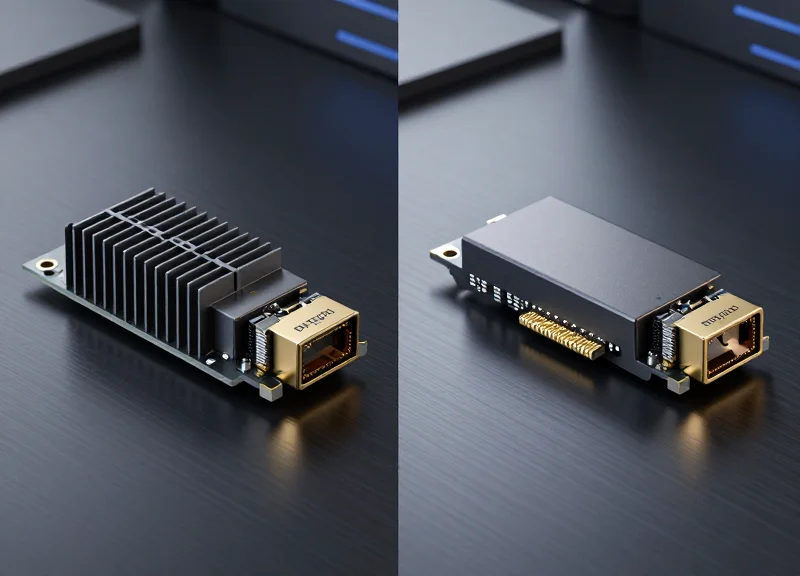
The move to 400G and 800G introduces new form factors designed to handle increased heat dissipation and electrical density. For wholesale buyers, the choice between QSFP-DD (Quad Small Form-factor Pluggable Double Density) and OSFP (Octal Small Form-factor Pluggable) is critical. QSFP-DD offers backwards compatibility with QSFP28, which is vital for staged migrations, while OSFP is often preferred for 800G and beyond due to its superior thermal management capabilities. Ensuring your security modules are compatible with these evolving MSA (Multi-Source Agreement) standards prevents premature obsolescence in high-density data center environments.
| Feature | 100G Standard | 400G Advanced | 800G Emerging |
|---|---|---|---|
| Typical Form Factor | QSFP28 | QSFP-DD / OSFP | OSFP / OSFP-XD |
| Encryption Method | Software/Hardware MACsec | Line-rate Hardware MACsec | Integrated Coherent Security |
| Power Consumption | ~3.5W - 5W | ~12W - 15W | ~18W - 25W |
| Primary Use Case | Enterprise LAN/Core | Cloud Data Centers | Hyperscale/AI Clusters |
Technical Requirements for High-Speed Optical Security
As speeds exceed 400G, traditional encryption methods can introduce unacceptable latency. Future-proof security modules must utilize hardware-based AES-256 encryption that operates at line rate to ensure that security processing does not become a bottleneck. Furthermore, look for modules that support Coherent Optics. Coherent technology is becoming the standard for long-haul 400G/800G links, providing both the reach and the integrated digital signal processing (DSP) necessary to secure data across vast distances without performance degradation.
The Role of Interoperability in Bulk Procurement
When ordering wholesale, prioritize vendors that guarantee interoperability across different switch and router platforms. As you transition to 800G, your network will likely feature a mix of legacy and next-gen hardware. Security modules that adhere to strict IEEE standards ensure that your encrypted links remain stable regardless of the underlying vendor ecosystem, protecting your long-term investment.
- Will my current 100G security infrastructure work with 400G upgrades?
Most 100G QSFP28 modules are not directly compatible with 400G ports unless using breakout cables or specific backward-compatible QSFP-DD slots; however, the security throughput must be re-evaluated to prevent data bottlenecks. - Why is thermal management a security concern at 800G?
At 800G, modules generate significant heat. If a security module throttles due to temperature, it can cause packet drops or link instability, making OSFP a more resilient choice for high-density, high-security environments. - How does MACsec scale to 800G?
Next-generation silicon allows MACsec to operate at 800G by distributing processing across multiple lanes, ensuring that encryption occurs at the physical layer with sub-microsecond latency.
Step-by-Step Guide to Requesting a Custom Wholesale Quote

[生成失败] PermissionDeniedError: Error code: 403 - {'error': {'message': 'user quota is not enough (request id: 20260514101332488311594XhIBk9xf)', 'type': 'new_api_error', 'param': '', 'code': 'local:insufficient_quota'}}
Securing your network at scale requires more than just off-the-shelf hardware; it requires a strategic partnership with a provider that understands the nuances of optical security. By leveraging wholesale pricing and OEM/ODM flexibility, you can build a resilient infrastructure that meets both your technical and budgetary goals. Ready to scale your network? Contact Ubytelink today for the best wholesale pricing and custom optical network security options.