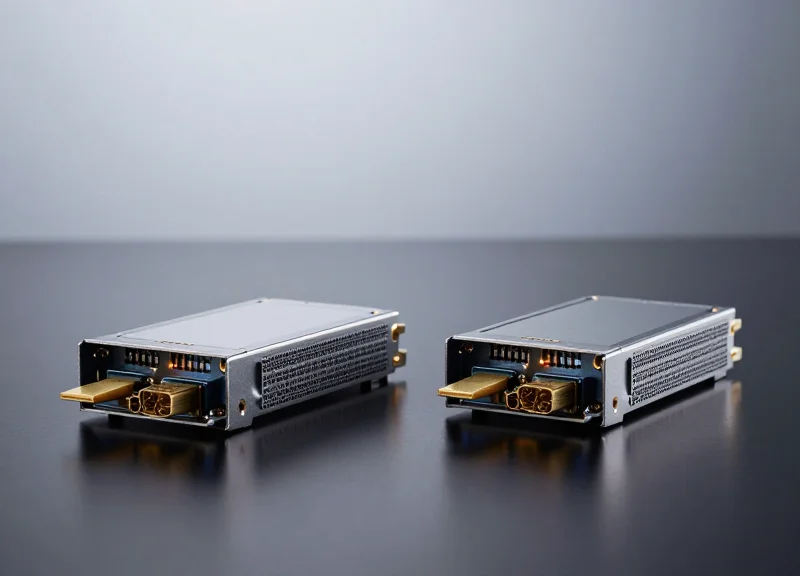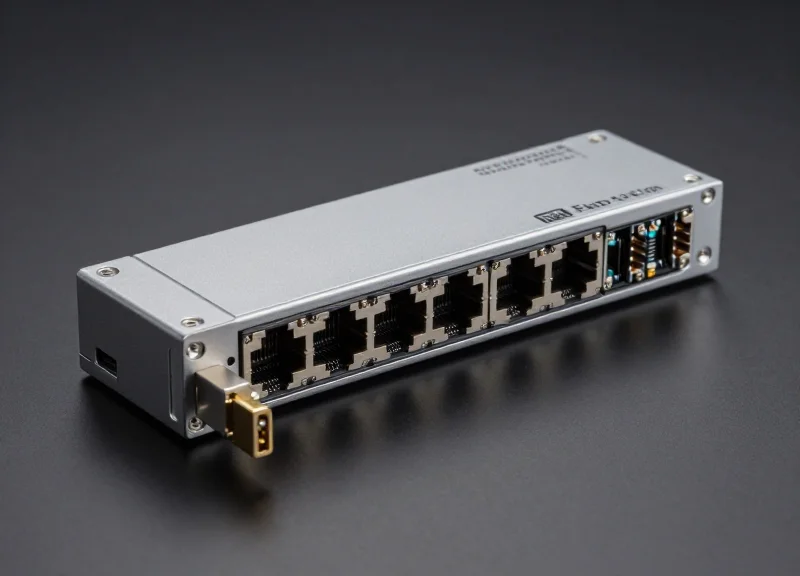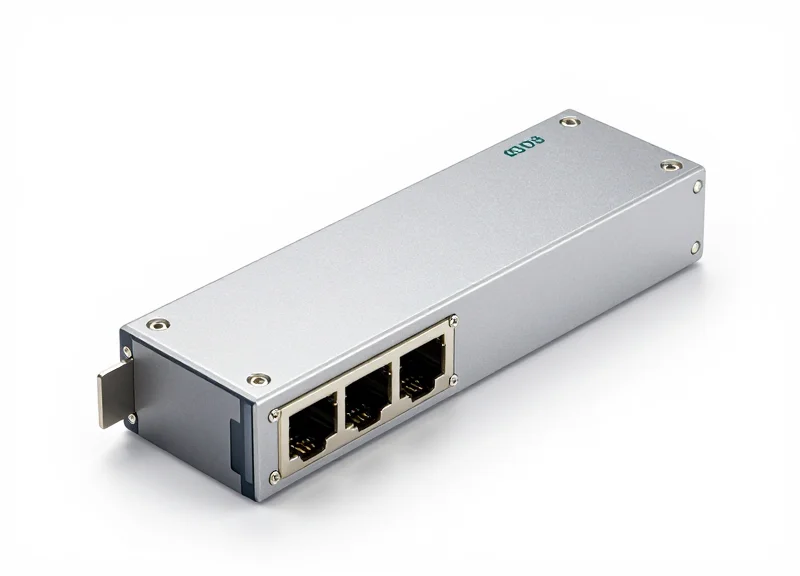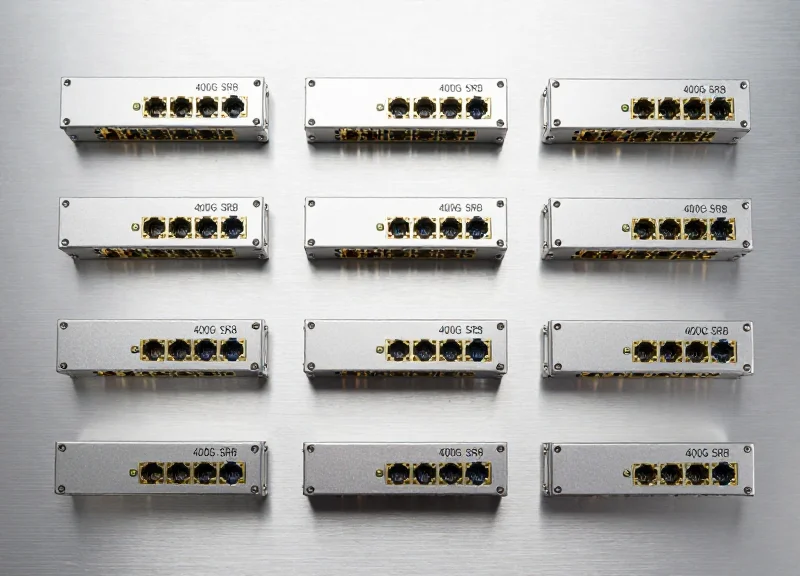
As hyperscale data centers and cloud providers transition to 400G architectures, the pressure to balance high performance with cost-efficiency has never been greater. The 400G SR8 module has emerged as a critical component for short-reach connectivity, but sourcing these units at scale requires more than just a vendor—it requires a strategic partner. This guide explores how to navigate the 400G SR8 market and leverage wholesale opportunities for your infrastructure.
The Evolution of 400G SR8 in Modern Cloud Architectures

The 400G SR8 (Short Range 8-channel) interface represents a pivotal shift in cloud networking, moving beyond the limitations of legacy 100G and 200G systems to provide a high-throughput, low-latency foundation for hyperscale workloads. By utilizing eight lanes of 50G PAM4 modulation over multimode fiber, SR8 offers a balanced architecture that maximizes port density while maintaining the cost-efficiencies required for wholesale cloud scaling. As AI and machine learning workloads drive traffic exponentially higher, the SR8 standard has emerged as the preferred short-reach interconnect for high-density 'Leaf-Spine' fabrics.
Architectural Comparison: SR8 vs. Legacy and Long-Reach Standards
| Standard | Fiber Type | Max Reach | Modulation | Primary Application |
|---|---|---|---|---|
| 100G SR4 | OM4 MMF | 100m | NRZ | Legacy Cloud Access |
| 400G SR8 | OM4/OM5 MMF | 100m | PAM4 | High-Density Wholesale |
| 400G DR4 | SMF | 500m | PAM4 | Mid-Reach Distribution |
| 400G FR4 | SMF | 2km | PAM4 | Inter-Rack / Data Center Interconnect |
The Evolution of Parallel Optics in Wholesale Environments
The transition to 400G SR8 is primarily driven by the need for vertical scaling within the data center pod. Unlike 400G DR4, which uses four lanes of 100G, the SR8 standard utilizes eight lanes of 50G. This parallel approach is highly effective for wholesale providers who require granular breakout options. For instance, a single 400G SR8 port can be seamlessly broken out into eight 50G links or two 200G links, allowing cloud operators to support a diverse range of hardware generations within the same rack infrastructure without requiring expensive signal conversion.
Common Implementation Questions for Cloud Wholesale
- Why choose SR8 over DR4 for short-reach applications?
SR8 utilizes multimode fiber (MMF), which is significantly less expensive than the single-mode fiber (SMF) required for DR4. Additionally, the optical components in SR8 transceivers are generally more cost-effective to manufacture at scale, leading to lower bulk pricing for wholesale buyers. - What cabling infrastructure is required for 400G SR8?
SR8 typically employs MPO-16 or MPO-24 connectors. While this requires a higher fiber count than SR4, the ability to leverage existing OM3 or OM4 multimode plants makes it a logical upgrade path for facilities already optimized for short-range parallel optics. - How does PAM4 modulation affect SR8 performance?
PAM4 (Pulse Amplitude Modulation 4-level) allows twice the data per clock cycle compared to older NRZ tech. In SR8, this enables the 400G throughput across eight lanes, though it requires Forward Error Correction (FEC) to manage potential signal degradation over the 100m reach.
In 2026, the wholesale market for 400G SR8 is maturing, with improved yields leading to more competitive custom quotes for bulk purchasers. As cloud providers move toward 800G and 1.6T in the future, the SR8 architecture serves as the critical bridge, establishing the high-lane-count density required for the next generation of networking.
Key Technical Specifications of 400G SR8 Transceivers
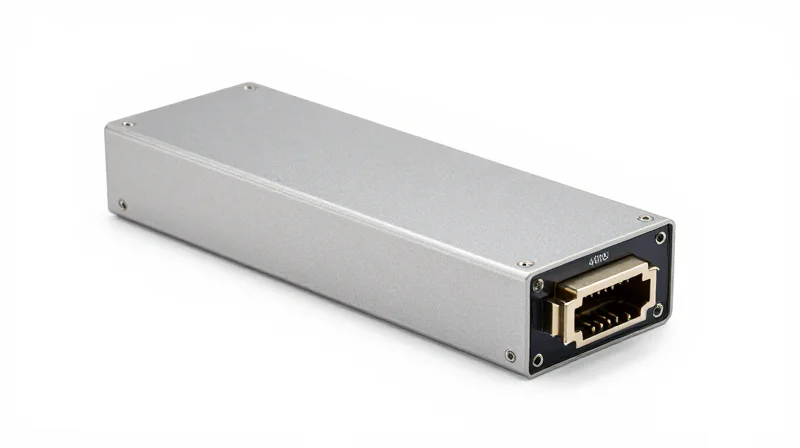
400G SR8 transceivers represent the pinnacle of short-reach optical interconnects, utilizing an 8-channel parallel architecture to deliver 400Gbps aggregate bandwidth. Unlike single-lane or four-lane solutions, the SR8 standard splits data across eight 50Gbps lanes, providing a cost-effective and low-latency path for intra-rack and leaf-spine links in hyperscale data centers. For wholesale buyers, understanding the interplay between the MPO-16 interface and PAM4 signaling is essential for ensuring network compatibility and long-term reliability.
The MPO-16 Connector: Enabling Parallel Transmission
The 400G SR8 interface is distinguished by its use of the MPO-16 (Multi-Fiber Push-On) connector. This interface utilizes 16 fibers—8 for transmitting (Tx) and 8 for receiving (Rx)—to facilitate parallel data streams over Multimode Fiber (MMF). While some legacy systems used MPO-12, the transition to MPO-16 ensures dedicated paths for each of the eight 50G lanes without the complexity of wavelength division multiplexing (WDM), significantly reducing the cost per bit for short-range applications.
PAM4 Modulation and Signaling Efficiency
At the heart of 400G SR8 technology is 4-level Pulse Amplitude Modulation (PAM4). By transmitting two bits per symbol period, PAM4 effectively doubles the data rate compared to traditional Non-Return-to-Zero (NRZ) signaling at the same baud rate. This allows each of the eight optical lanes to operate at 26.5625 GBaud, resulting in a 53.125 Gbps bit rate per lane. This efficiency is critical for maintaining high throughput while keeping the optical components within manageable thermal and electrical limits.
| Parameter | Standard Specification | Technical Note |
|---|---|---|
| Form Factor | QSFP-DD or OSFP | QSFP-DD is most common for high-density cloud |
| Optical Wavelength | 850 nm | Standard for Vertical-Cavity Surface-Emitting Lasers (VCSEL) |
| Max Reach (OM4) | 100 Meters | Optimized for Top-of-Rack to Spine connections |
| Max Power Consumption | 8W to 12W | Varies by manufacturer and DSP efficiency |
| BER (Bit Error Rate) | Pre-FEC < 2.4E-4 | Requires Host Forward Error Correction (KP4 FEC) |
Power Consumption and Heat Dissipation
For cloud wholesale purchasers, power efficiency is a primary concern for Total Cost of Ownership (TCO). Modern 400G SR8 modules are engineered to consume between 8W and 10W per port. Lower power consumption not only reduces direct electricity costs but also minimizes the heat load on data center cooling systems. Advanced Digital Signal Processors (DSPs) in newer SR8 iterations continue to push these boundaries, offering 'Green' modes that reduce power during lower traffic periods without sacrificing link integrity.
- Can 400G SR8 be broken down into 50G or 100G links?
Yes, through the use of breakout cables (MPO-16 to 8x LC or 4x MPO-12), a single 400G SR8 port can support 8x 50G or be channeled into multiple 100G endpoints, providing massive flexibility for legacy hardware integration. - Is FEC (Forward Error Correction) mandatory for 400G SR8?
Yes, because PAM4 signaling is more sensitive to noise than NRZ, KP4 FEC is required on the host platform to ensure error-free transmission over the 100m distance limit. - What is the difference between SR8 and DR4 for bulk buying?
SR8 uses multimode fiber (MMF) for reaches up to 100m, whereas DR4 uses single-mode fiber (SMF) for reaches up to 500m. SR8 is generally more cost-effective for short-range, high-volume intra-rack cabling.
Why Bulk Procurement is Essential for Scaling Data Centers
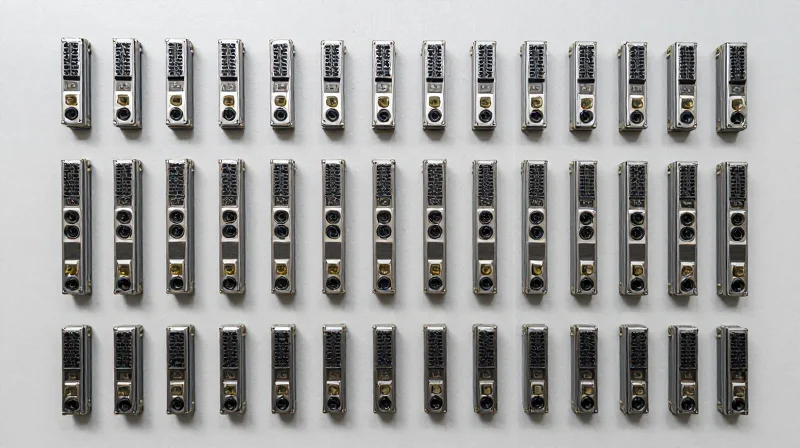
For cloud service providers and hyperscale operators, procurement is a strategic lever rather than a mere transaction. Buying 400G SR8 modules in bulk allows organizations to lock in significantly lower unit prices, minimize the impact of global market price fluctuations, and ensure that critical hardware is available on-site to meet aggressive scaling timelines without the risk of project delays.
The Economics of Wholesale Volume Discounts
The transition to 400G infrastructure involves substantial capital expenditure. Wholesale purchasing shifts the economic model by drastically reducing the 'cost-per-gigabit.' When ordering at scale, manufacturers can optimize production runs and pass those savings directly to the enterprise, often resulting in discounts that exceed 30% compared to retail or small-batch pricing.
| Order Tier | Typical Discount % | Operational Impact |
|---|---|---|
| Retail (1-49 units) | 0% | High overhead, standard retail pricing |
| Volume (50-499 units) | 15% - 25% | Reduced TCO, better logistical planning |
| Wholesale (500+ units) | 35% - 50%+ | Maximum ROI, dedicated account support |
Ensuring Supply Chain Stability and Predictability
In an era defined by semiconductor volatility, ad-hoc purchasing exposes data centers to unpredictable lead times and stock-outs. Bulk procurement agreements often include 'bonded stock' options, where a supplier reserves inventory specifically for a client. This ensures that as new racks are deployed, the necessary 400G SR8 modules are already in the pipeline, maintaining the pace of infrastructure growth.
Wholesale Procurement Strategy FAQ
- Why is a custom quote better than a standard price list?
Custom quotes for 400G SR8 modules take into account specific logistical needs, custom firmware requirements, and multi-year rollout schedules to provide a more competitive price than static lists. - How does bulk buying impact testing and validation?
Wholesale orders typically allow for batch-specific testing reports, ensuring all modules in a single shipment share consistent performance metrics, which simplifies large-scale troubleshooting. - Can wholesale pricing include shipping and warranty benefits?
Yes, high-volume contracts often include consolidated shipping rates and extended hardware replacement warranties (RMA) as part of the negotiated package.
Custom OEM/ODM Solutions: Beyond the Off-the-Shelf Module
Custom 400G SR8 Solutions for Specialized Network Fabrics
While standard 400G SR8 transceivers meet general IEEE requirements, hyperscale environments often demand more than a generic off-the-shelf component. Large-scale cloud deployments frequently utilize proprietary Network Operating Systems (NOS) or customized white-box switches that require specific firmware handshakes and EEPROM configurations to ensure 100% interoperability. Ubytelink’s OEM/ODM services bridge this gap by providing tailored engineering solutions that optimize the 400G SR8 for specific hardware ecosystems, ensuring that bulk purchases integrate seamlessly without the risk of vendor lock-in or compatibility-related downtime.
Firmware Engineering and Interoperability
Our engineering team specializes in deep-level firmware customization. This involves programming the module's EEPROM to match the identification requirements of major network vendors like Cisco, Arista, and Juniper, as well as emerging white-box platforms. By customizing the Digital Optical Monitoring (DOM) parameters, we can provide more granular data on temperature, voltage, and laser bias, which is critical for the predictive maintenance algorithms used in modern cloud management planes.
| Feature | Off-the-Shelf SR8 | Ubytelink OEM/ODM Custom |
|---|---|---|
| Firmware Compatibility | Generic IEEE 802.3bs | Vendor-specific (Cisco, Arista, etc.) |
| EEPROM Coding | Standard MSA | Fully Customizable / Proprietary |
| Branding | Generic Labeling | Private Label & Serial Tracking |
| Power Optimization | Fixed Consumption | Tuned for Thermal Efficiency |
Hardware Tuning and Branding Services
Beyond the code, Ubytelink provides hardware-level modifications for specific environmental needs. This includes tuning the VCSEL (Vertical-Cavity Surface-Emitting Laser) for lower power consumption in high-density racks or modifying the heat sink design for better thermal dissipation. Additionally, for wholesale clients and VARs, we offer comprehensive private labeling services—including custom pull-tab colors, laser-etched serial numbers, and retail-ready packaging—to maintain brand consistency across their product offerings.
- What is the typical lead time for custom OEM 400G SR8 orders?
Depending on the complexity of firmware tuning and hardware modifications, custom lead times generally range from 2 to 4 weeks for initial prototyping and 4 to 6 weeks for volume production. - Is there a Minimum Order Quantity (MOQ) for custom firmware?
Yes, to offset the engineering and validation costs, we typically require an MOQ of 50 to 100 units for custom firmware coding, though this is negotiable for long-term wholesale contracts. - Can Ubytelink provide specialized testing reports for custom modules?
Absolutely. Every custom 400G SR8 module undergoes rigorous BER (Bit Error Rate) testing and interoperability verification on the client's specified target hardware, with full reports provided upon delivery.
Compatibility and Interoperability Testing

For cloud wholesale purchasers, compatibility is the primary technical hurdle when deploying high-density 400G infrastructure. Interoperability testing ensures that 400G SR8 transceivers, which utilize MPO-16 connectors and complex PAM4 modulation, are fully recognized by the host hardware and maintain stable signal integrity across the entire network fabric. Without strict adherence to multi-vendor validation, data centers risk 'unsupported transceiver' errors, link flapping, and unpredictable latency spikes that can compromise service level agreements (SLAs).
Multi-Vendor Compatibility Standards
Modern leaf-and-spine architectures frequently mix hardware from different manufacturers. Our testing process involves verifying the internal EEPROM and Digital Optical Monitoring (DOM) capabilities against the specific firmware requirements of the industry's leading platforms. This ensures that features like temperature monitoring, voltage tracking, and laser bias current are accurately reported to the Network Operating System (NOS).
| Vendor Platform | Compatibility Mechanism | Key Performance Metric |
|---|---|---|
| Cisco Nexus 9000 | Custom SPROM Encoding | Bit Error Rate (BER) Stability |
| Arista 7000 Series | Low-Power Optimization | Real-time DOM Accuracy |
| Juniper PTX Series | Junos OS Recognition | Zero Port-Flap Reliability |
| Nvidia Quantum-2 | PAM4 Tuning | High-Bandwidth Throughput |
The 4-Stage Interoperability Framework
- Physical Layer Validation
Testing the MPO-16 interface for precise alignment and verifying that the 850nm VCSEL lasers meet the IEEE 802.3cm standards for optical power levels. - Firmware Emulation
Programming each module with vendor-specific ID strings and checksums to ensure 100% recognition by proprietary operating systems like Cisco NX-OS or Arista EOS. - Traffic Load Stress Testing
Running the modules at full 400Gbps capacity for 24 to 48 hours to monitor for frame loss and thermal performance under peak demand. - Network Fabric Simulation
Verifying auto-negotiation and link training across mixed-brand switch links to guarantee seamless communication between different fabric layers.
FAQ: Ensuring Seamless Integration
- Will these modules work in switches requiring 'original' optics?
Yes, our custom-coded 400G SR8 modules are designed to be functionally identical to vendor-branded optics, ensuring they pass all hardware checks without requiring manual overrides. - How do you handle firmware updates for bulk orders?
We maintain a library of the latest OS-specific firmware. For wholesale orders, we can provide pre-coded modules or mobile coding devices that allow your team to update firmware on-site as your network evolves. - Can 400G SR8 interoperate with existing 100G infrastructure?
While the SR8 is designed for 400G, it can often be used in breakout configurations (8x50G) depending on the switch port's ability to support PAM4 breakout logic.
Reducing Total Cost of Ownership (TCO) with Ubytelink
Strategic TCO Reduction with Ubytelink 400G SR8 Solutions
When you buy 400G SR8 for cloud wholesale, the initial capital expenditure (CapEx) is only the first chapter of the financial narrative. Ubytelink reduces Total Cost of Ownership by systematically addressing the hidden operational expenses (OpEx) that often plague large-scale data center deployments, such as high failure rates, power inefficiencies, and vendor lock-in. By combining tier-one manufacturing standards with aggressive bulk pricing models for 2026, Ubytelink ensures that the long-term cost per gigabit remains significantly lower than market averages, maximizing the return on investment (ROI) for hyper-scale operators.
TCO Comparison: Standard Sourcing vs. Ubytelink Wholesale
| Financial Metric | Standard Retail/OEM | Ubytelink Wholesale Program |
|---|---|---|
| Acquisition Cost (CapEx) | Premium Pricing | Tiered Bulk Discounts |
| Annual Failure Rate (AFR) | 1.5% - 3.0% | <0.1% (Rigorous QA) |
| Power Consumption | Standard (9W - 12W) | Optimized Low-Power Design |
| Compatibility Costs | High (Proprietary Lock-in) | Zero (Multi-Vendor Interop) |
Core Pillars of Cost Efficiency
- Energy Efficiency & Thermal Management
Ubytelink's 400G SR8 modules are engineered for superior thermal dissipation. Lower heat output translates directly to reduced cooling requirements in the data center, which can save thousands of dollars in utility costs over a 5-year lifecycle. - Reliability and Maintenance Mitigation
Maintenance windows and hardware replacements represent significant labor costs. Our 'First-Time-Right' manufacturing approach minimizes the need for RMA processes and on-site technician intervention, ensuring network uptime. - Streamlined Logistics
By leveraging our global supply chain, we offer priority stocking and just-in-time delivery for wholesale partners, reducing the need for customers to maintain expensive local inventory buffers.
Wholesale TCO & ROI FAQ
- How does wholesale pricing affect the ROI timeline?
Bulk procurement through Ubytelink typically reduces the initial investment by 30-50% compared to OEM-branded modules, allowing organizations to achieve a full return on investment up to 18 months earlier. - Does custom firmware impact long-term costs?
Yes. Custom firmware ensures seamless interoperability across diverse switch fabrics (Cisco, Arista, Juniper), eliminating the need to purchase separate specialized modules for different parts of the network. - What is the impact of Ubytelink's failure rates on TCO?
With a failure rate of less than 0.1%, Ubytelink modules virtually eliminate the OpEx associated with network downtime and emergency hardware replacements, which can cost up to 10x the original price of the module.
Navigating Lead Times and Global Logistics in 2026
Navigating Lead Times and Global Logistics in 2026
In 2026, securing 400G SR8 modules at scale requires a shift from reactive purchasing to proactive supply chain orchestration. With global demand for AI-driven data center infrastructure surging, lead times for high-speed optics can fluctuate from 2 to 12 weeks depending on component availability and regional shipping stability. Successful cloud wholesale procurement hinges on establishing a multi-modal logistics strategy and leveraging vendor-managed inventory (VMI) to bypass traditional bottleneck points.
Comparison of Global Shipping and Fulfillment Models
| Logistics Model | Typical Lead Time | Cost Impact | Best For |
|---|---|---|---|
| Standard Air Freight | 5–10 Business Days | Moderate | Regular restock of standard 400G SR8 modules. |
| Expedited/Courier | 2–4 Business Days | High | Critical network outages or urgent capacity expansions. |
| Regional Warehousing | 1–3 Business Days | Low (Unit Cost) | Bulk deployments with pre-staged inventory. |
| Sea Freight | 30–45 Days | Minimal | Massive wholesale orders for long-term project pipelines. |
Mitigating Supply Chain Risk
The volatility of the 2026 market is largely driven by the scarcity of high-end DSPs (Digital Signal Processors) and laser diodes. To protect your deployment schedule, it is essential to diversify your tier-1 and tier-2 suppliers. By engaging in long-term rolling forecasts—ideally spanning 6 to 12 months—wholesale buyers can lock in production slots and insulate themselves from sudden price spikes or manufacturing delays caused by raw material shortages.
- Rolling 12-Month Forecasts
Providing vendors with visibility into future needs ensures priority allocation of core components like the MPO-16 connectors and internal VCSEL lasers. - Strategic Buffer Stocking
Maintaining a 10-15% safety stock in regional hubs allows for immediate response to hardware failures or unexpected traffic bursts without waiting for international customs clearance. - Incoterms Optimization
Clear negotiation of Incoterms (e.g., DAP vs. FCA) determines who bears the risk and cost during transit, which is critical for high-value 400G shipments.
Logistics & Delivery FAQ
- How are 400G SR8 modules protected during international transit?
Wholesale shipments use ESD-shielded, individual blister packaging and vacuum-sealed anti-static bags within reinforced outer cartons to prevent physical damage and electrostatic discharge. - Can I request custom labeling and palletization for large cloud deployments?
Yes, bulk orders typically include options for customized SKU labeling and palletization schemes that align with specific data center receiving protocols, speeding up the 'dock-to-rack' time. - What happens if there is a customs delay for an international order?
Reliable partners provide full documentation (HS codes, CoO, and commercial invoices) upfront. In the event of a delay, proactive tracking and local brokerage support help resolve clearance issues within 24-48 hours.
Future-Proofing: Transitioning from 400G to 800G

The Architectural Link Between 400G and 800G
Transitioning to 800G is not a matter of 'if' but 'when' for hyperscale environments, and 400G SR8 serves as the ideal technical bridge. The SR8 standard utilizes an 8-lane parallel transmission model (8x50G PAM4), which mirrors the 8-lane architecture used in 800G SR8 (8x100G PAM4). By deploying 400G SR8 today, wholesale buyers establish a physical layer—specifically MPO-16 cabling—that remains directly compatible with 800G modules. This foresight allows for a logical bandwidth double-up without the need to re-cable the entire data center floor.
| Specification | 400G SR8 (Current) | 800G SR8 (Next-Gen) |
|---|---|---|
| Electrical Interface | 8 x 50G PAM4 | 8 x 100G PAM4 |
| Optical Lane Count | 8 Lanes | 8 Lanes |
| Cabling Requirement | MPO-16 Multimode | MPO-16 Multimode |
| Backward Compatibility | Native | Supported via 400G Mode |
| Form Factor Compatibility | QSFP-DD / OSFP | QSFP-DD800 / OSFP |
Safeguarding ROI with High-Density Fiber
Future-proofing through 400G SR8 significantly mitigates the risk of stranded assets. Because the 8-lane configuration is the baseline for high-speed cloud networking, the investment in high-density MPO-16 connectivity supports both current 400G throughput and future 800G upgrades. Furthermore, 400G SR8 modules purchased at wholesale prices today provide the flexibility to support 50G or 100G breakout applications, ensuring that even as the core network migrates to 800G, the 400G infrastructure can be repurposed for edge or leaf-switch connectivity.
- Will my 400G SR8 fiber plant support 800G?
Yes, MPO-16 cabling deployed for 400G SR8 is designed to handle the 8-lane requirements of 800G SR8, provided you use OM4 or OM5 grade fiber. - How does SR8 compare to DR4 for 800G readiness?
While DR4 is popular for 500m reaches, SR8 provides a simpler 1:1 lane-mapping upgrade path for short-reach data center interconnects using existing parallel multimode fiber. - Can 800G switches accept 400G SR8 optics?
Most 800G QSFP-DD800 and OSFP ports are backward compatible with 400G modules, allowing for a phased migration where optics are upgraded as bandwidth demand dictates.
Scaling your cloud network shouldn't be a gamble. By choosing Ubytelink for your 400G SR8 needs, you gain access to industry-leading wholesale pricing and bespoke OEM/ODM engineering. Ready to optimize your infrastructure? Contact Ubytelink today for a custom quote and let our experts help you build a faster, more reliable network for 2026 and beyond.