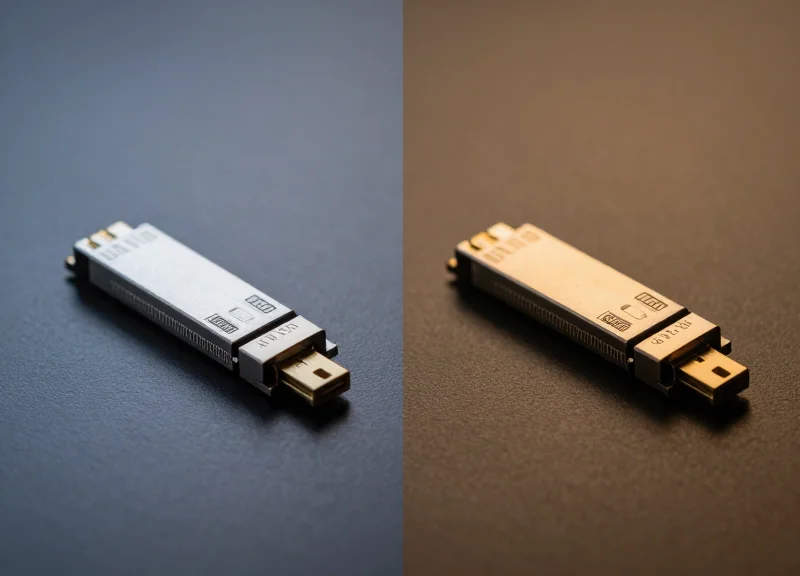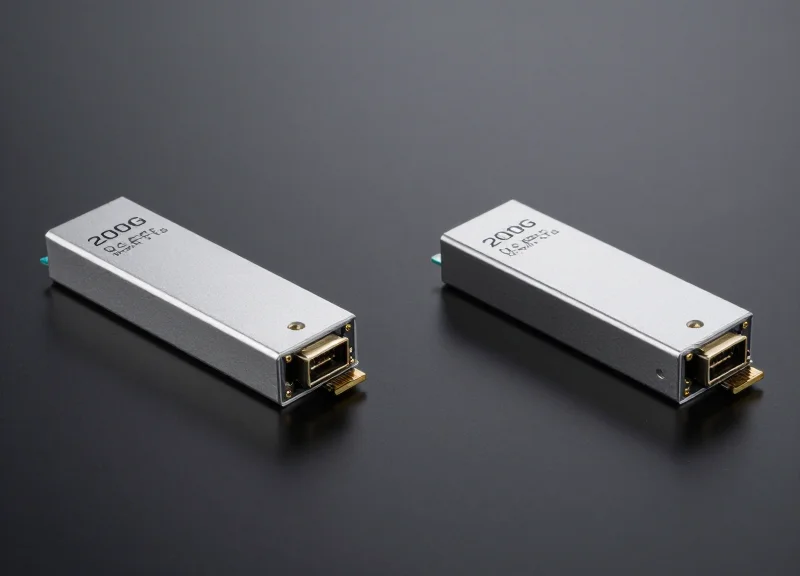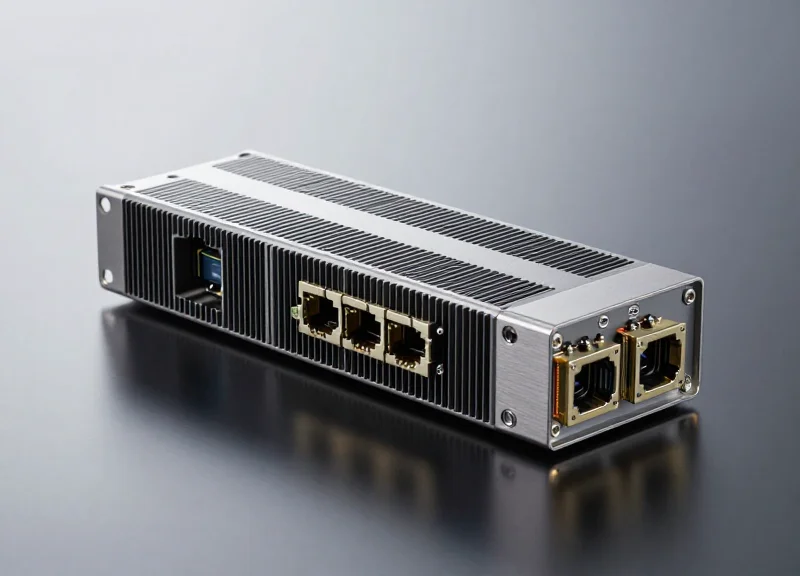
The explosive growth of generative AI and LLMs has shifted data center requirements from standard 100G/400G lanes to the massive throughput of 800G. For enterprises and cloud providers building the next generation of AI clusters, the challenge isn't just speed—it's scalability, power efficiency, and cost management. This guide breaks down why 800G is the standard for AI and how strategic wholesale sourcing can accelerate your deployment.
The Critical Role of 800G Optics in Modern AI Clusters

The Critical Role of 800G Optics in Modern AI Clusters
In the current era of Large Language Models (LLMs) and generative AI, the bottleneck of system performance has shifted from individual GPU compute power to the interconnect fabric. 800G optical transceivers are no longer a luxury but a necessity for AI clusters, as they facilitate the rapid movement of data across the 'East-West' traffic patterns dominant in distributed training. By doubling the bandwidth of the previous 400G standard, 800G optics ensure that high-end accelerators, such as the NVIDIA H100 and H200 series, are not left idling while waiting for data synchronization across the cluster.
Overcoming the Data Wall: Why 800G is the New Standard
As model parameters scale into the trillions, the 'All-Reduce' and 'All-to-All' communication collective operations become more frequent and data-intensive. 800G optics, utilizing 100G per lane SerDes technology, provide the necessary pipeline to prevent network congestion. This transition is critical for maintaining high GPU utilization rates (MFU), which directly impacts the return on investment for multi-billion dollar data center deployments.
| Feature | 400G OSFP/QSFP112 | 800G OSFP/QSFP-DD |
|---|---|---|
| Throughput | 400 Gbps | 800 Gbps |
| Per-Lane Speed | 50G or 100G PAM4 | 112G PAM4 |
| AI Training Efficiency | Moderate (Small/Medium Clusters) | High (Massive GPU Clusters) |
| Typical Application | Cloud Data Centers | GPU-to-GPU Fabrics / InfiniBand NDR |
Key Advantages for Wholesale Buyers and AI Architects
- How does 800G improve AI training speed?
800G optics reduce the time spent in the 'communication phase' of parallel computing. By increasing the bandwidth between nodes, the data required for gradient synchronization moves faster, allowing the GPUs to return to the 'computation phase' sooner. - Is 800G compatible with InfiniBand and Ethernet?
Yes. 800G transceivers are designed to support both InfiniBand NDR (Next Data Rate) and high-speed Ethernet protocols, making them versatile for various AI back-end and front-end network architectures. - What are the power efficiency gains of 800G?
Modern 800G modules often utilize 5nm or 7nm DSPs and silicon photonics, offering a lower power-per-bit ratio compared to legacy 400G solutions, which is vital for managing the thermal envelope of high-density AI racks.
For organizations looking to buy 800G optical transceivers wholesale in 2026, the focus is on securing a reliable supply chain for OSFP and QSFP-DD form factors. As demand for AI-optimized hardware continues to outpace supply, establishing custom quotes for bulk pricing early in the cluster design phase is essential for timely project execution and cost predictability.
Comparing 800G Form Factors: OSFP vs. QSFP-DD800
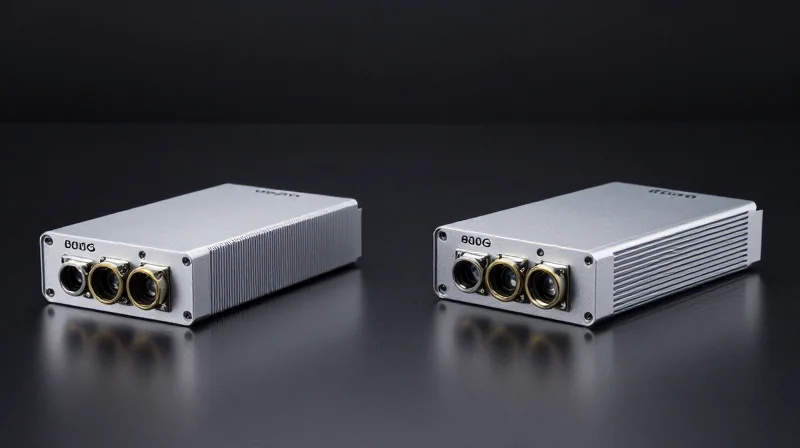
When sourcing 800G optical transceivers for AI clusters, the choice between OSFP and QSFP-DD800 is a critical architectural decision. While both support 800Gbps throughput using 8x100G lanes, OSFP is rapidly emerging as the preferred standard for high-density GPU fabrics due to its superior thermal efficiency, whereas QSFP-DD800 maintains a foothold in environments prioritizing backward compatibility with legacy QSFP infrastructure.
OSFP vs. QSFP-DD800: Technical Specification Comparison
| Feature | OSFP (Octal Small Form-factor) | QSFP-DD800 (Double Density) |
|---|---|---|
| Max Power Consumption | Up to 15W - 18W+ | Up to 12W - 14W |
| Thermal Management | Integrated Heat Sink (Superior) | Requires Host-Side Cooling |
| Backward Compatibility | Requires Mechanical Adapter | Native Support for QSFP+/28/56 |
| AI Accelerator Alignment | NVIDIA H100 / InfiniBand Standard | Ethernet Switches / Hyperscale IP |
| Physical Width | Slightly Wider | Standard QSFP Width |
The Critical Role of Thermal Management in AI Clusters
Thermal performance is the primary differentiator for wholesale buyers outfitting large AI clusters. OSFP modules feature an integrated heat sink directly on the pluggable unit, which significantly reduces the thermal resistance between the optical components and the airflow. This design allows OSFP to handle the high power envelopes (often exceeding 16W for 800G ZR/LR modules) required for long-reach or high-performance AI interconnects without throttling. In contrast, QSFP-DD800 relies on a flat-top design that requires a heat sink on the cage of the switch, which can limit cooling efficiency as port density increases.
Hardware Ecosystems: NVIDIA H100 and Beyond
For organizations deploying NVIDIA HGX H100 or H200 platforms, the OSFP form factor is the de facto choice. NVIDIA’s Quantum-2 InfiniBand and Spectrum-4 Ethernet switches are built natively for OSFP. Wholesale procurement strategies must account for this hardware lock-in; while QSFP-DD800 is highly versatile for traditional leaf-spine data center architectures utilizing Broadcom-based silicon, the specialized 'Finless OSFP' and standard OSFP variants are essential for the 800G InfiniBand links used in low-latency AI training fabrics.
Frequently Asked Questions for Bulk 800G Procurement
- Can OSFP transceivers be used in QSFP-DD ports?
No. OSFP and QSFP-DD are physically incompatible due to differences in width and connector depth. However, adapters exist for backward compatibility within OSFP cages to accept smaller QSFP modules. - Why is OSFP preferred for AI 'Wholesale' orders?
AI clusters generate extreme heat; OSFP’s ability to dissipate up to 18W safely makes it more reliable for the 24/7 high-duty cycles of LLM training compared to the tighter thermal margins of QSFP-DD. - Is there a price difference between OSFP and QSFP-DD800?
Currently, pricing is comparable for bulk orders, though OSFP 800G SR8 modules often see higher volume production due to the massive demand from NVIDIA-based AI data centers.
Understanding 800G Module Types: DR8, 2xFR4, and SR8
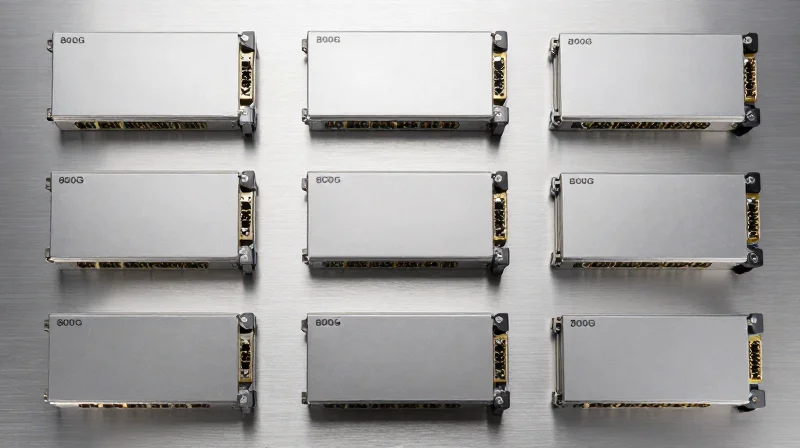
The transition to 800G networking in AI clusters is not a one-size-fits-all migration; rather, it involves a strategic selection of module types tailored to specific link lengths and cabling infrastructures. Whether deploying a compact GPU pod or a sprawling multi-row data center, architects must choose between Short Reach (SR8), Data Center Reach (DR8), and fiber-efficient 2xFR4 modules to balance latency, power consumption, and total cost of ownership (TCO).
800G SR8: The Efficiency Leader for Intra-Rack Connectivity
The 800G SR8 (Short Range) module is the primary workhorse for Top-of-Rack (ToR) switches connecting to AI servers. Utilizing 850nm VCSEL (Vertical-Cavity Surface-Emitting Laser) technology, these modules transmit over Multimode Fiber (MMF), specifically OM3, OM4, or OM5. In AI clusters where GPU-to-Switch latency is critical, SR8 provides the lowest power profile and cost per bit for distances up to 100 meters.
800G DR8: Parallel Single-Mode for Scalable AI Fabrics
For interconnects spanning between rows or connecting Leaf to Spine layers, the 800G DR8 (Data center Reach) is the industry standard. It leverages 500-meter transmission over Single-Mode Fiber (SMF) using parallel optics. By employing 8 channels of 100G PAM4, DR8 modules allow for seamless breakout configurations (e.g., 800G to 2x400G or 8x100G), which is essential for connecting high-radix switches to diverse AI accelerators.
800G 2xFR4: Maximizing Fiber Efficiency for Long-Reach Links
As AI clusters scale beyond a single room, fiber density becomes a bottleneck. The 800G 2xFR4 module addresses this by using CWDM (Coarse Wavelength Division Multiplexing) to combine four 100G channels onto a single fiber pair, repeated twice within the module. This reduces the physical fiber count significantly compared to DR8 while extending the reach to 2 kilometers, making it ideal for large-scale campus deployments or connecting separate AI compute pods.
| Module Type | Fiber Type | Max Reach | Connector Type | Primary Application |
|---|---|---|---|---|
| SR8 | Multimode (OM4/OM5) | 60m - 100m | MPO-16 / MPO-12 | Intra-rack GPU to ToR Switch |
| DR8 | Single-mode (OS2) | 500m | MPO-12 / MPO-16 | Leaf-Spine / Breakout to 400G |
| 2xFR4 | Single-mode (OS2) | 2km | Dual LC / Dual CS | Inter-pod / Campus AI Fabric |
- Can I use SR8 modules for long-distance AI links?
No, SR8 is limited to 100 meters on OM4 fiber due to the physical limitations of VCSEL technology and multimode dispersion. For distances exceeding 100m, DR8 or 2xFR4 is required. - Why choose 2xFR4 over DR8 for wholesale procurement?
While DR8 is often cheaper per module, 2xFR4 saves significant costs on cabling infrastructure and cable management in high-density environments because it requires 75% fewer fiber strands for the same bandwidth. - Are these modules backward compatible with 400G ports?
Compatibility depends on the switch OSFP/QSFP-DD port mapping, but DR8 is highly popular for wholesale because it can be easily broken down into 2x400G DR4 links for legacy 400G hardware.
The Economics of Wholesale: Reducing TCO for AI Scaling

The Economics of Wholesale: Reducing TCO for AI Scaling
Scaling AI clusters to thousands of nodes requires a commensurate volume of 800G optical transceivers, where the difference between retail and wholesale pricing can represent millions of dollars in capital expenditure. Bulk procurement optimizes TCO by lowering the per-port cost, reducing logistical overhead, and ensuring hardware consistency across the entire fabric, which minimizes troubleshooting time and operational expenses. By moving from reactive spot-buying to strategic wholesale agreements, organizations can stabilize their supply chain against the high volatility of the AI hardware market.
| Metric | Retail / Small Batch | Wholesale / Bulk (2026) |
|---|---|---|
| Unit Price | List price (Premium) | 15% to 30% discount via custom quotes |
| Lead Times | Subject to market availability | Priority allocation and staged delivery |
| Compatibility Testing | Standard vendor testing | Batch-specific validation for AI fabrics |
| Customization | Limited to off-the-shelf | Custom firmware and labeling available |
| Total Cost of Ownership | High (Individual shipping/billing) | Low (Consolidated logistics/support) |
The true value of wholesale 800G purchasing extends into operational efficiency. When modules are purchased in large, single-batch quantities, they typically share the same production lot and firmware version. This consistency is critical for AI workloads where even minor timing variances or link instabilities across the InfiniBand or Ethernet fabric can lead to GPU idle time, costing thousands of dollars per hour in lost compute productivity.
Strategic Advantages of Volume Procurement
- What is the typical Minimum Order Quantity (MOQ) for 800G wholesale pricing?
Most manufacturers and tier-1 distributors trigger wholesale pricing tiers at 128 or 256 units, aligning with standard leaf-spine switch port densities. - How do custom quotes improve project budgeting?
Custom quotes provide price protection for 6 to 12 months, shielding AI lab operators from price spikes caused by sudden surges in demand for components like EML lasers. - Can wholesale orders include mixed transceiver types?
Yes, custom bulk quotes often allow for a mix of OSFP DR8, 2xFR4, and SR8 modules to satisfy the various reach requirements of a full-tier AI data center architecture while maintaining volume discounts.
Ultimately, reducing TCO for AI scaling is about balancing immediate CAPEX with long-term reliability. Wholesale 800G procurement for 2026 focuses on securing the latest 112G-based DSP architectures at prices that allow for rapid cluster expansion without compromising on the thermal or electrical performance required by NVIDIA H100/B200 and AMD Instinct platforms.
OEM/ODM Customization: Tailoring Optics to Your Infrastructure
For organizations scaling massive AI clusters, the primary hurdle isn't just acquiring 800G hardware, but ensuring that hardware is recognized and optimized by proprietary network operating systems (NOS). OEM/ODM customization allows buyers to bypass the exorbitant markups of switch vendors while maintaining 100% functional parity. By leveraging custom firmware and hardware adjustments, wholesale 800G optics can be precision-engineered to match the exact performance profiles required by NVIDIA Quantum-2, Arista 7800R3, and Cisco 8000 series platforms.
Firmware Engineering: Overcoming Vendor Lock-In
The most critical aspect of 800G customization is the EEPROM programming. Proprietary switches often use 'vendor keys' to verify optics; if the firmware doesn't match the expected signature, the port may be disabled or limited to degraded performance. ODM services involve writing specific vendor codes, part numbers, and Digital Optical Monitoring (DOM) parameters into the transceiver's memory. This ensures that the AI cluster's management software sees the module as an 'official' component, allowing for accurate power reporting, thermal monitoring, and error-correction synchronization.
| Feature | Generic 800G Wholesale | ODM Customized 800G |
|---|---|---|
| Firmware | Standard MSA Compliant | Vendor-Matched (NVIDIA, Cisco, Arista) |
| Compatibility | Universal / Best Effort | Guaranteed 1:1 Functional Parity |
| DOM/DDM | Basic Telemetry | Calibrated for Specific OS Thresholds |
| Physical Branding | Manufacturer Label | Private Label / Custom Asset Tags |
| Packaging | Standard Bulk | Custom Anti-Static Kitting |
Physical Customization for High-Density AI Racks
In 800G environments, thermal management and physical cable density are significant concerns. ODM services extend beyond software to include hardware modifications. This includes custom pull-tab lengths and colors to facilitate easier maintenance in crowded InfiniBand or Ethernet racks, and even specialized heat sink designs for modules operating in high-heat zones near AI accelerators. These adjustments ensure that the physical infrastructure supports the lifecycle of the optics without interfering with airflow or mechanical clearances.
Frequently Asked Questions Regarding 800G Customization
- Can you provide firmware matching for NVIDIA InfiniBand NDR?
Yes, ODM services can program 800G OSFP modules with specific firmware that ensures full compatibility with NVIDIA Quantum-2 switches and ConnectX-7 NICs, including support for InfiniBand-specific diagnostic features. - What is the typical lead time for custom-labeled wholesale orders?
While standard wholesale units are often in stock, custom firmware and private labeling typically add 1-2 weeks to the lead time, depending on the volume of the order. - Is there a minimum order quantity for OEM customization?
For standard firmware matching, MOQ is often as low as 20 units. For full private labeling and physical hardware modifications, MOQs typically start at 100 units to offset the setup costs. - Will custom firmware affect the transceiver warranty?
No. When purchasing from a reputable wholesale provider, the warranty covers the customized firmware as part of the product's performance guarantee, independent of the switch manufacturer's policies.
Reliability and Interoperability Testing for Large-Scale Fabric
Reliability and Interoperability Testing for Large-Scale Fabric
In a multi-thousand node AI cluster, the reliability of individual 800G transceivers is the primary determinant of fabric uptime and overall compute efficiency. Unlike standard enterprise networks where a single link failure might be mitigated by redundant paths, AI workloads rely on tightly coupled parallel processing; a single failing transceiver can stall an entire GPU collective, leading to massive financial losses in compute time. Rigorous testing protocols ensure that wholesale-sourced modules meet the stringent Bit Error Rate (BER) and thermal stability requirements necessary to maintain the integrity of the InfiniBand or RoCE v2 fabrics that power modern LLM training.
Core Testing Protocols for 800G AI Networking
When sourcing 800G optics in bulk, vendors must provide documentation for multi-stage validation. This includes not just basic functional checks, but stress testing designed to simulate the unique environmental conditions of high-density AI racks.
| Test Category | Standard Testing Scope | AI-Grade Validation (800G) |
|---|---|---|
| Bit Error Rate (BER) | Pre-FEC (Forward Error Correction) verification. | Post-FEC zero-error stress testing over 72+ hours. |
| Interoperability | Verification with a single switch brand. | Cross-platform testing (NVIDIA, Arista, Cisco, and Whitebox). |
| Thermal Stress | Ambient temperature performance checks. | High-temp cycling (up to 70°C) with restricted airflow simulations. |
| Signal Integrity | Basic eye diagram analysis. | Complex TDECQ (Transmitter and Dispersion Eye Closure Quaternary) measurements. |
Solving the Interoperability Challenge in Mixed Ecosystems
Modern AI data centers rarely rely on a single hardware vendor for their entire lifecycle. Interoperability testing ensures that an 800G OSFP or QSFP-DD module purchased today will function flawlessly whether it is plugged into an NVIDIA Quantum-2 switch or a Broadcom-based Tomahawk 5 platform. This 'plug-and-play' capability is achieved through rigorous compliance with MSAs (Multi-Source Agreements) and custom firmware tuning that allows the module to communicate correctly with various Host Software Interfaces (HSI).
- Why is 'Burn-in' testing essential for bulk 800G orders?
Burn-in testing subjects transceivers to elevated temperatures and voltages for an extended period (usually 24-48 hours) to trigger 'infant mortality' failures before the units are shipped, ensuring only the most resilient hardware reaches the AI cluster. - How does 800G interoperability affect latency?
Inconsistent interoperability can lead to excessive FEC retries or link flapping. Validated modules ensure the fastest possible signal lock and minimal retransmissions, keeping tail latency low for synchronized AI training tasks. - Can custom firmware improve reliability?
Yes. Custom firmware can be optimized for specific cable lengths and switch architectures, adjusting the electrical output to compensate for signal degradation and improving the overall link margin.
Supply Chain Resilience: Navigating 800G Lead Times in 2026
Supply Chain Resilience: Navigating 800G Lead Times in 2026
Securing 800G optical transceivers in 2026 requires a strategic shift from reactive purchasing to a forecast-driven wholesale model to overcome persistent shortages in EML lasers and high-performance DSPs. While standard retail channels currently face lead times exceeding 16 to 20 weeks, organizations leveraging wholesale partnerships like Ubytelink can significantly reduce this window through prioritized production slots and pre-allocated component inventory. By integrating your deployment timeline with a wholesale procurement strategy, you ensure that the networking fabric is ready exactly when the compute nodes arrive, eliminating costly project delays.
| Procurement Variable | Retail / Spot Market | Ubytelink Wholesale Program |
|---|---|---|
| Typical Lead Times | 12 - 22 Weeks | 4 - 10 Weeks (Forecast-aligned) |
| Price Volatility | High (Subject to daily shifts) | Low (Contractual price-locking) |
| Component Priority | Lowest (Standard queue) | Highest (Reserved wafer allocation) |
| Logistics Control | Standard shipping only | Staged delivery and buffer stock |
Mitigating Risk Through Forecasting and Buffer Stocks
The most effective way to navigate the 800G supply chain is the implementation of a rolling 12-month volume forecast. This allows Ubytelink to act as your strategic buffer, managing the complexities of raw material acquisition on your behalf. For large-scale AI clusters, we recommend a 'Stock-and-Release' model where a percentage of your total order is held in local warehouses. This ensures that even if global lead times spike due to sudden spikes in hyperscale demand, your specific project remains insulated and on schedule.
- How can I ensure my 800G transceivers are available for a Q3 2026 expansion?
To guarantee Q3 delivery, wholesale agreements should be finalized by the end of Q1. This allows for the required 12-16 week cycle for high-binning laser selection and rigorous reliability testing. - What happens if component prices drop after I place a bulk order?
Ubytelink's wholesale quotes for 2026 deployments often include 'market-adjustment' clauses for multi-phase deliveries, ensuring your TCO remains competitive even as technology matures. - Can Ubytelink handle specialized logistics for international AI data centers?
Yes, our wholesale service includes end-to-end logistics management, including customs clearance and white-glove delivery to global data center hubs, reducing the administrative burden on your procurement team.
Future-Proofing: Transitioning from 800G to 1.6T Networks

Transitioning from 800G to 1.6T is not merely a speed increment; it represents a fundamental shift in electrical signaling and thermal management within the AI data center. Organizations investing in 800G optical transceivers today are establishing the foundation for 1.6T by adopting the OSFP (Octal Small Form-factor Pluggable) ecosystem, which is designed to handle the 224G-per-lane signaling required for the next generation of 1.6 Terabit networks. Future-proofing requires a dual focus on ensuring current hardware can scale and that the fiber plant supports the increasingly stringent link budgets of 1.6T optics.
The Role of 224G SerDes in the 1.6T Evolution
The leap to 1.6T is driven by the development of 224G SerDes (Serializer/Deserializer) technology. While 800G transceivers typically utilize 100G or early 112G lanes, 1.6T will double this density. Wholesale buyers should prioritize 800G modules that utilize the OSFP112 form factor, as this chassis architecture is physically and thermally aligned with the needs of upcoming 1.6T OSFP-1600 modules. This allows for a smoother transition where only the optics and switches are swapped, while the physical rack infrastructure remains intact.
Comparing 800G and 1.6T Technical Specifications
| Feature | 800G Transceivers | 1.6T Transceivers |
|---|---|---|
| Electrical Lane Speed | 112G PAM4 | 224G PAM4 |
| Standard Form Factor | OSFP / QSFP-DD800 | OSFP 1600 / QSFP-DD 1600 |
| Typical Power Consumption | 16W - 20W | 25W - 30W+ |
| Cooling Requirements | Air-cooled (Standard) | Enhanced Air / Liquid Cooling |
| Primary Use Case | 2026 AI Training Fabrics | Next-Gen LLM Inference/Training |
Strategic Planning for Wholesale Procurement
When procuring 800G transceivers wholesale for 2026 deployments, it is critical to evaluate the 'longevity' of the silicon inside. Optics utilizing 5nm or 4nm DSPs (Digital Signal Processors) offer better power efficiency, which is a vital metric when considering the massive power draw of a future 1.6T-upgraded cluster. By partnering with vendors like Ubytelink, organizations can secure 800G inventory that is tested for interoperability with the very 112G-per-lane systems that will act as the interim bridge to 1.6T fabrics.
Future-Proofing FAQ
- Will 800G OSFP modules work in 1.6T-ready switches?
Generally, yes. Most 1.6T OSFP ports are designed to be backward compatible with 800G modules, though the switch will operate at the lower speed for that specific port. - When is the expected mainstream adoption of 1.6T?
While 800G is the volume standard for 2026, initial 1.6T deployments are expected in late 2025 for hyperscale environments, with broader enterprise availability in 2026. - How does 1.6T impact fiber cabling?
1.6T often requires higher precision in fiber connectors (like MPO-16) and stricter adherence to distance limits due to the increased sensitivity of 224G signaling.
Sourcing 800G optical transceivers for AI clusters requires more than just a vendor; it requires a technical partner capable of delivering high-quality, high-volume solutions. By choosing wholesale and OEM/ODM options, you ensure your network scales as fast as your AI models. Contact Ubytelink today for a custom wholesale quote and expert guidance on your 800G deployment.