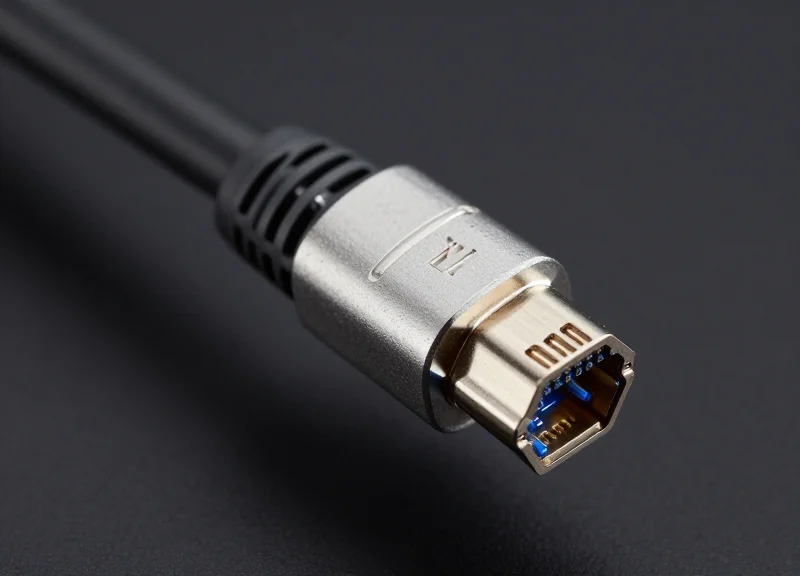
As data centers transition to 800G Ethernet to meet the massive bandwidth demands of AI and machine learning, the physical interconnect layer has become more critical than ever. While optical solutions dominate long distances, Direct Attach Copper (DAC) cables remain the bedrock of cost-effective, low-latency, short-reach connectivity. This article provides an authoritative look at 800G DAC technology, its engineering challenges, and its role in the next generation of networking.
The Evolution of 800G Ethernet Interconnects

The evolution of 800G Ethernet interconnects represents a strategic response to the unprecedented bandwidth requirements of modern hyperscale data centers and AI-driven compute clusters. As data traffic continues to scale exponentially, the industry has shifted from the established 400G standard to 800G to provide the necessary throughput for high-density switching and low-latency processing. This leap is not merely a doubling of speed, but a technical overhaul involving advancements in signal integrity, lane modulation, and physical media interface design.
The Technical Foundation: 112G SerDes Maturation
The primary enabler of the 800G era is the maturation of 112G SerDes (Serializer/Deserializer) technology. Previous 400G iterations relied largely on 50G PAM4 lanes; however, to reach 800G efficiently, the industry standardized on eight lanes of 112G PAM4 signaling. This allows network equipment to maintain the existing physical footprint of QSFP-DD and OSFP form factors while doubling the data capacity per port. The implementation of 112G SerDes is critical for 800G DAC cables, as it dictates the electrical characteristics and the stringent signal-to-noise ratio (SNR) requirements for short-reach copper links.
| Feature | 400G Ethernet (Legacy) | 800G Ethernet (Current) |
|---|---|---|
| Main SerDes Rate | 50G PAM4 | 112G PAM4 |
| Lane Configuration | 8 x 50G / 4 x 100G | 8 x 100G / 8 x 112G |
| Form Factors | QSFP-DD, OSFP | QSFP-DD800, OSFP1600 |
| Maximum Bandwidth | 400 Gbps | 800 Gbps |
Drivers of 800G Adoption in Data Centers
The surge in 800G adoption is driven by three primary factors: the proliferation of Large Language Models (LLMs), the rise of disaggregated storage architectures, and the need for improved power efficiency. In hyperscale environments, the 'East-West' traffic between servers has become a bottleneck. By deploying 800G interconnects, operators can reduce the number of cables required for the same aggregate bandwidth, thereby simplifying cable management and reducing the power-per-bit profile of the network.
- Why is 800G necessary for AI clusters?
AI training involves massive data exchanges between GPUs; 800G provides the fat pipes required to minimize synchronization latency and prevent idle cycles in expensive compute hardware. - What role does the 112G SerDes play in DAC reach?
The higher frequency of 112G signaling increases signal attenuation, which is why 800G DACs are typically limited to shorter lengths (1-2 meters) compared to their 400G predecessors. - How does 800G impact data center density?
800G allows for 25.6T and 51.2T switching ASICs to be fully utilized in a single 1U rack unit, doubling the density compared to 400G-based systems.
What is an 800G DAC Cable? Technical Fundamentals
Defining the 800G Direct Attach Copper (DAC) Cable
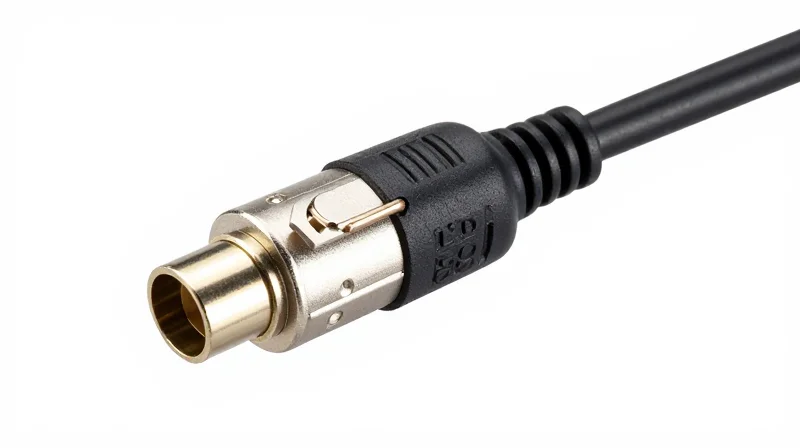
An 800G DAC (Direct Attach Copper) cable is a high-speed interconnect assembly that utilizes shielded twinaxial copper wiring to transmit data at an aggregate rate of 800 Gigabits per second (Gbps). These cables are fundamentally passive, meaning they do not incorporate active silicon components for signal retiming or amplification. Designed for ultra-short-reach connectivity, typically spanning 0.5 to 2 meters, 800G DACs are the primary solution for Intra-Rack connectivity (Server-to-ToR) in hyperscale data centers. They achieve their massive throughput by leveraging eight lanes of 112G-PAM4 signaling, providing a cost-effective and energy-efficient alternative to optical transceivers for short-range links.
The Physics of Twinaxial Construction
The technical foundation of an 800G DAC lies in its twinaxial (twinax) cable architecture. Unlike standard coaxial cables, twinax features two inner conductors per pair, which allows for differential signaling—a necessity for maintaining signal integrity at high frequencies. Each of the eight high-speed pairs is wrapped in a silver-plated or tinned copper shield to prevent electromagnetic interference (EMI) and minimize internal crosstalk. For 800G, the American Wire Gauge (AWG) typically ranges from 26AWG to 30AWG; while thicker wire reduces signal attenuation, it increases the physical bulk and bend radius of the cable, requiring precise mechanical engineering to fit within dense rack environments.
800G DAC Technical Specifications
| Parameter | Specification |
|---|---|
| Aggregate Bandwidth | 800 Gbps |
| Modulation | PAM4 (Pulse Amplitude Modulation 4-level) |
| Lane Configuration | 8 x 112.5 Gbps (8 channels) |
| Standard Reach | 0.5m, 1m, 1.5m, 2m |
| Power Consumption | ~0.1 Watts (Passive) |
| Form Factors | OSFP, QSFP-DD800 |
Enabling 800G: 112G SerDes and Signal Integrity
The leap to 800G is made possible by the industry-wide transition to 112G SerDes (Serializer/Deserializer) technology. By doubling the per-lane data rate from the 56G used in 400G systems, the 8-lane 800G architecture can fit within the same physical footprint as its predecessor. However, transmitting 112G signals over copper introduces significant challenges. High-frequency signals suffer from increased skin effect and dielectric loss. Consequently, 800G DACs are restricted to shorter distances than previous generations to ensure that the Bit Error Rate (BER) remains within manageable limits before the signal reaches the host's Forward Error Correction (FEC) engine.
- Does an 800G DAC require external power?
No, passive 800G DACs do not require a power source, as they lack active electronic components for signal processing, making them highly energy-efficient. - What is the difference between 800G DAC and AOC?
A DAC uses copper wiring for electrical transmission, while an Active Optical Cable (AOC) uses fiber optics and electrical-to-optical conversion, allowing for much longer distances. - Why is 2 meters the typical limit for 800G DAC?
At 112G per lane, the electrical signal experiences rapid attenuation; beyond 2 meters, the signal-to-noise ratio usually drops below the threshold required for reliable data recovery.
Form Factors: OSFP vs. QSFP-DD800
Form Factors: OSFP vs. QSFP-DD800
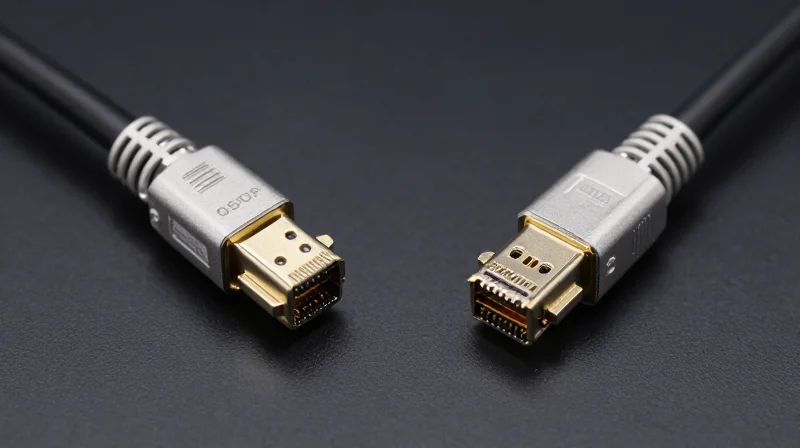
The choice between OSFP and QSFP-DD800 form factors for 800G DAC cables is primarily driven by the balance between superior thermal management and seamless backward compatibility with existing network infrastructure.
Architectural Design and Thermal Management
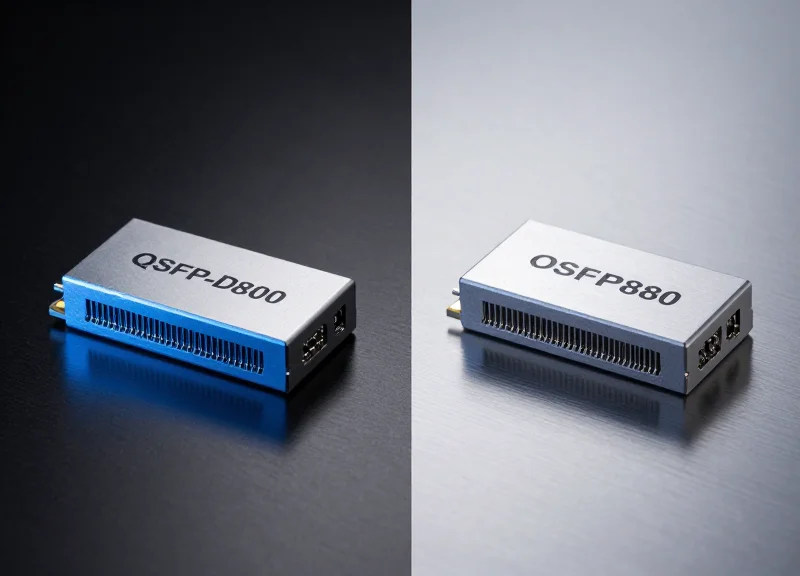
The OSFP (Octal Small Form-factor Pluggable) was designed with a larger footprint to accommodate an integrated heat sink, allowing it to handle higher power envelopes (up to 15-17W). This makes it highly efficient for DAC applications where the physical bulk of the copper wire can impede airflow. In contrast, QSFP-DD800 (Quad Small Form-factor Pluggable Double Density) maintains the same physical dimensions as its 400G predecessors. While this limits its internal thermal headroom compared to OSFP, it enables a much higher port density on the switch faceplate, which is critical for maximizing throughput in space-constrained data center racks.
| Feature | OSFP | QSFP-DD800 |
|---|---|---|
| Integrated Heat Sink | Yes (Enhanced Thermal Performance) | No (Uses Cage Heat Sink) |
| Backward Compatibility | Requires Mechanical Adapter | Native (QSFP-DD/QSFP56/QSFP28) |
| Dimensions (Width) | 22.58 mm | 18.35 mm |
| Power Capacity | Higher Potential (up to 15W+) | Standard (up to 12W-14W) |
| Lanes | 8 Lanes of 112G SerDes | 8 Lanes of 112G SerDes |
Compatibility and Deployment Considerations
For data center operators, the primary advantage of QSFP-DD800 is its backward compatibility. A QSFP-DD800 port can typically accept 400G QSFP-DD cables or even 100G QSFP28 modules without additional hardware. OSFP, while offering a clear path toward 1.6T and beyond due to its superior power handling, requires mechanical adapters to interface with the standard QSFP ecosystem. For 800G DAC cables specifically, the connector choice is often dictated by the switch silicon and the specific port configuration of the Top-of-Rack (ToR) switch.
- Is OSFP better than QSFP-DD800 for 800G DACs?
Both provide the same 800Gbps bandwidth. OSFP is better for systems requiring maximum thermal efficiency, while QSFP-DD800 is superior for density and backward compatibility. - Do 800G DACs require different power levels based on form factor?
As passive components, 800G DACs consume negligible power regardless of the form factor; however, the form factor choice influences the switch's overall cooling requirements and airflow path. - Can OSFP and QSFP-DD800 coexist in the same network?
Yes, many data centers use mixed environments, employing breakout cables or specialized adapters to bridge OSFP-based switches with QSFP-DD800-based NICs.
The Core Technology: 112G PAM4 SerDes
The leap to 800G DAC cables is primarily driven by the transition from 56G to 112G PAM4 SerDes (Serializer/Deserializer) technology. By utilizing eight lanes each operating at 112Gbps, 800G systems achieve double the throughput of their 400G predecessors without increasing the physical lane count, though this comes at the cost of significantly stricter requirements for signal precision and noise management.
Understanding 112G PAM4 Signaling
PAM4 (Pulse Amplitude Modulation 4-level) has become the industry standard for high-speed interconnects. Unlike traditional NRZ (Non-Return to Zero) which carries one bit per symbol, PAM4 carries two bits per symbol by using four distinct voltage levels. At 112G, the Nyquist frequency reaches approximately 28 GHz. This high frequency makes the signal extremely sensitive to physical imperfections in the copper medium, such as skin effect and dielectric loss.
| Feature | 400G DAC (Typical) | 800G DAC (Typical) |
|---|---|---|
| Lane Speed | 56 Gbps | 112 Gbps |
| Modulation | PAM4 | PAM4 |
| Baud Rate | 28 Gbaud | 56 Gbaud |
| Nyquist Frequency | 14 GHz | 28 GHz |
| Typical Max Reach | 3 Meters | 2 Meters |
The Signal Integrity Challenge: The Copper Wall
As data rates double to 112G per lane, the 'Copper Wall'—the physical limit where signal attenuation becomes too high for passive transmission—moves closer to the source. Insertion loss increases dramatically at higher frequencies. For 800G DACs, this means the maximum length for a passive cable is generally limited to 2 meters. Beyond this, the signal degrades so significantly that even advanced Forward Error Correction (FEC) cannot reliably reconstruct the data without the help of active components like DSPs or Retimers found in ACCs or AECs.
Mitigating Loss with Advanced Materials
To combat the losses associated with 112G signaling, 800G DAC manufacturers use lower-loss dielectric materials and thicker gauge (AWG) twinaxial wire. While 26AWG or 30AWG are common, the balance between cable thickness (which impacts airflow and bend radius) and signal performance is a critical design trade-off for 112G architectures.
- Why is 112G SerDes necessary for 800G?
It allows the 800G total bandwidth to be delivered over an 8-lane interface (8x112G), matching the standard port density of OSFP and QSFP-DD form factors. - Does 112G PAM4 require different FEC?
Yes, 112G systems typically require more robust Forward Error Correction (FEC) algorithms, such as KP4 FEC, to maintain a viable Bit Error Rate (BER) across the copper link. - What happens to DAC reach at 112G?
Reach is reduced compared to 56G; while 400G DACs could often reach 3m, 800G passive DACs are typically capped at 1.5m to 2m to stay within the allowable loss budget.
Signal Integrity and Reach Challenges
The Physical Limits of Copper: The 2-Meter Wall
While previous generations of Direct Attach Cables (DAC) enjoyed reaches of 5 to 7 meters, the transition to 800G—driven by 112G PAM4 signaling—confronts the fundamental physical limitations of copper. At these high frequencies, the electrical signal experiences rapid attenuation as it travels along the twinaxial medium. The industry has converged on 2 meters as the reliable limit for passive 800G DACs because beyond this distance, the 'eye diagram' of the signal closes completely due to insertion loss, making data recovery impossible without active amplification.
| Ethernet Standard | Per-Lane Rate | Typical Max Passive DAC Reach |
|---|---|---|
| 100G (QSFP28) | 25G NRZ | 5m - 7m |
| 400G (QSFP-DD) | 50G PAM4 | 3m |
| 800G (OSFP/QSFP-DD800) | 112G PAM4 | 2m |
Critical Signal Integrity Factors
To achieve 800G throughput, signal integrity must be managed with surgical precision. The primary obstacles are Insertion Loss (IL), Return Loss (RL), and Crosstalk. Insertion loss at 112G is nearly double that of 56G systems for the same distance. Furthermore, as the frequency increases, the 'skin effect' forces current to the surface of the conductor, increasing resistance. This is compounded by Near-End Crosstalk (NEXT) and Far-End Crosstalk (FEXT), where the high-speed signals in adjacent pairs interfere with one another, effectively drowning the intended data in electromagnetic noise.
The Role of Forward Error Correction (FEC)
Because 800G signals are so fragile, they rely heavily on sophisticated Forward Error Correction (FEC) algorithms within the switch or server silicon. However, even with KP4 FEC, the pre-FEC Bit Error Rate (BER) must remain within a specific threshold. Passive DACs must maintain a strictly controlled impedance (typically 100 Ohms) and minimize any discontinuities at the connector termination to prevent signal reflections that would otherwise overwhelm the FEC's ability to recover data.
Cable Gauge and Form Factor Constraints
To extend reach slightly or improve signal quality, manufacturers often use thicker copper conductors, measured in American Wire Gauge (AWG). While 30AWG or 32AWG is common for shorter 800G cables, reaching the full 2-meter mark often requires 26AWG. However, thicker cables present a mechanical challenge: they are significantly bulkier and less flexible, which can impede airflow in high-density racks and put physical strain on the OSFP or QSFP-DD ports. This trade-off between physical reach and cable manageability is a central design consideration for data center architects.
- Why can't we just use 5-meter 800G DACs?
At 5 meters, the signal attenuation at 112G speeds is so severe that no current SerDes technology can successfully equalize or recover the data without errors, even with FEC. - Do 800G DACs require higher quality copper?
Yes, 800G DACs typically utilize 'Silver-Plated' or high-purity oxygen-free copper and ultra-smooth foil shielding to minimize dielectric loss and skin effect resistance. - Is there an alternative for distances between 2m and 7m?
Yes, for reaches exceeding 2 meters where passive DACs fail, Active Copper Cables (ACC) or Active Optical Cables (AOC) are used to provide the necessary signal boost.
Comparing 800G DAC, AOC, and Optical Transceivers
Choosing between 800G DAC, AOC, and optical transceivers is a multidimensional decision governed by the physical constraints of the rack, the thermal capacity of the cooling system, and the overall CAPEX/OPEX budget. While DACs remain the gold standard for ultra-short reach due to their zero-power profile and low cost, optical solutions are indispensable once the distance exceeds two meters, where copper's signal integrity fails.
Side-by-Side Comparison: Performance Metrics
| Feature | 800G DAC | 800G AOC | 800G Transceiver |
|---|---|---|---|
| Maximum Reach | Up to 2 Meters | Up to 30-100 Meters | 500 Meters to 10+ Kilometers |
| Power Consumption | ~0 Watts (Passive) | 12W - 16W per end | 14W - 22W+ per module |
| Latency | Lowest (Nanoseconds) | Medium (DSP conversion) | Higher (Optical conversion/DSP) |
| Media Type | Twinaxial Copper | Multimode Fiber | SMF or MMF Fiber |
| Primary Cost | Lowest CAPEX | Medium CAPEX | Highest CAPEX |
Thermal and Power Considerations
The transition to 800G has made power density a critical bottleneck in data center design. Passive 800G DACs do not require active cooling at the cable level, as they lack a Digital Signal Processor (DSP). In contrast, 800G transceivers and AOCs rely heavily on DSPs to manage the 112G PAM4 signaling. This results in significant heat generation, often exceeding 15W per port, which can strain the thermal management systems of high-density 1U switches.
Latency and Signal Integrity
For AI/ML training clusters and high-frequency trading (HFT) environments, latency is a deciding factor. 800G DACs offer the 'cleanest' path for data, as there is no O-E (Optical-to-Electrical) conversion. AOCs and transceivers introduce slight delays due to the processing time required by the internal chips to correct bit errors and maintain signal stability over longer distances. In massive scale-out architectures, these microseconds can aggregate and impact overall GPU synchronization.
Selecting the Right Interconnect
- When to choose 800G DAC?
Select DACs for Top-of-Rack (ToR) connections between switches and servers within the same rack where the distance is under 2 meters. - When to choose 800G AOC?
Use AOCs for intra-row or leaf-to-leaf connections where copper is too heavy or thick to manage, but the cost of discrete transceivers is not justified. - When to choose 800G Transceivers?
Opt for transceivers when connecting across different rows or data halls, or when you need the flexibility of structured cabling and long-range single-mode fiber.
Thermal Management and Power Efficiency
Thermal Management and Power Efficiency
Unlike active optical solutions, 800G passive Direct Attach Copper (DAC) cables operate with zero power consumption, making them the most energy-efficient interconnect for short-reach applications. In the transition to 800G, where power density is a primary concern, the ability to transmit data without adding to the thermal load of the switch is a decisive architectural advantage.
The Zero-Power Advantage of Passive Copper
Passive DACs contain no active electronic components, such as lasers, drivers, or Clock and Data Recovery (CDR) chips. By relying purely on high-grade copper conductors for signal transmission, they do not dissipate heat within the cable assembly or the connector shell. In a data center environment where each 800G optical module can consume between 14W and 20W, deploying 800G DACs for top-of-rack (ToR) connections results in a massive reduction in the overall energy footprint of the network fabric.
| Interconnect Type | Power Consumption (Approx. per end) | Heat Dissipation |
|---|---|---|
| 800G Passive DAC | 0 Watts | Negligible (Passive) |
| 800G Active Optical Cable (AOC) | 12W - 16W | Significant |
| 800G Optical Transceiver (e.g., OSFP DR8) | 14W - 20W | Very High |
Simplifying Rack Cooling and Improving PUE
Thermal management is often the bottleneck in 800G infrastructure. Active components generate 'hot spots' at the switch faceplate, which can lead to port throttling or hardware failure if cooling systems cannot keep up. By utilizing 800G DACs, data center operators can keep faceplate temperatures lower, reducing the workload on high-RPM fans and air conditioning units. This leads to a measurable improvement in Power Usage Effectiveness (PUE), as less energy is diverted toward auxiliary cooling for the same amount of data throughput.
High-Density Connectivity without Thermal Throttling
As racks move toward 100kW+ power densities, every watt saved at the interconnect level allows for more compute or storage resources to be added to the same footprint. 800G DACs provide the thermal 'headroom' necessary to fully populate high-density 128-port switches without reaching the thermal limits of the chassis. This is particularly critical in AI and ML clusters where GPUs and switches are already operating at the edge of their thermal design power (TDP).
- Does an 800G DAC contribute to the switch's thermal budget?
No. Because passive DACs do not draw electricity from the host port, they do not contribute to the internal heat generated by the switch hardware. - How does the use of DACs affect cooling costs (OPEX)?
By eliminating the heat generation of thousands of transceivers, DACs significantly lower the electricity required for HVAC systems, reducing long-term operational expenses. - Are there thermal risks associated with 800G DACs?
The primary thermal consideration is not the cable itself, but the physical bulk of the copper. Proper cable management is required to ensure that thick 800G cables do not block the exhaust airflow from the switch.
Critical Use Cases in AI and Hyperscale Data Centers
Critical Use Cases in AI and Hyperscale Data Centers
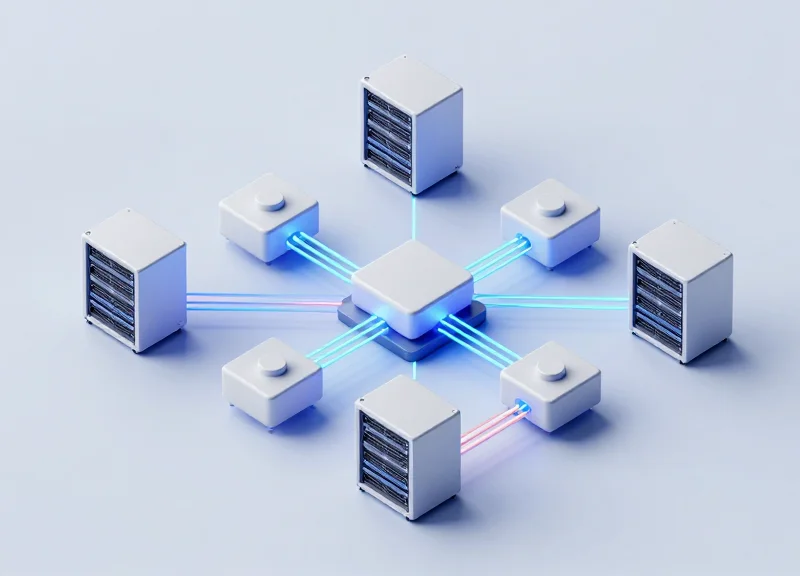
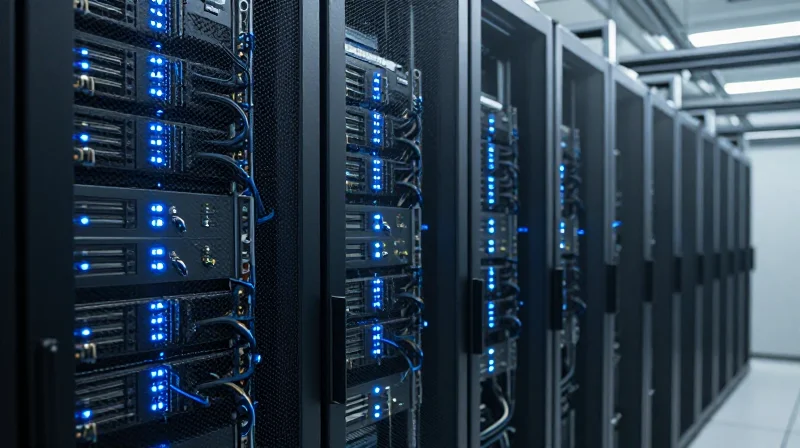
At the heart of the 800G evolution is the need for near-instantaneous data transfer between GPUs and high-performance switches. 800G Direct Attach Copper (DAC) cables are the preferred solution for short-reach, high-bandwidth applications within the rack, specifically targeting Top-of-Rack (ToR) to server connections where distances typically remain under 2 meters. By eliminating optical-to-electrical conversion, these cables provide the lowest possible latency profile, a non-negotiable requirement for synchronized AI workloads and distributed computing architectures.
Optimizing AI Training Clusters and Parallel Computing
AI workloads, particularly Large Language Model (LLM) training, involve massive parallel processing across thousands of compute nodes. The 'East-West' traffic generated by these clusters demands extreme reliability and deterministic performance. 800G DACs facilitate the massive throughput needed for RDMA over Converged Ethernet (RoCE) or InfiniBand architectures. Because they lack the active components found in AOCs, they offer a higher Mean Time Between Failure (MTBF), ensuring that the network does not become a bottleneck during critical gradient synchronization phases of model training.
Hyperscale Top-of-Rack (ToR) Connectivity
In hyperscale environments, cost and power efficiency are the primary drivers for 800G DAC adoption. As port density increases on next-generation 51.2T and 102.4T switches, the heat generated by thousands of active transceivers can strain even the most advanced liquid cooling systems. Passive 800G DACs generate zero heat at the cable level, significantly reducing the Total Cost of Ownership (TCO) by lowering both the initial CAPEX and the ongoing OPEX related to facility power and cooling infrastructure.
| Deployment Scenario | Primary Requirement | Preferred Cable Length | Key Advantage |
|---|---|---|---|
| GPU-to-ToR Switch | Ultra-low Latency | 0.5m - 1.5m | Minimal signal processing delay |
| Hyperscale Storage Array | High Throughput/Low Cost | 1.0m - 2.0m | Highest ROI per Gigabit |
| High-Frequency Trading | Deterministic Timing | 0.5m - 1.0m | Zero jitter from E-O conversion |
| High-Density Rack Compute | Thermal Management | 1.0m - 2.0m | Zero power consumption/No heat |
Deployment FAQ: 800G DAC in the Data Center
- Why is 800G DAC favored over AOC for AI clusters?
Latency is the critical factor. AI training requires synchronized communication between GPUs; DACs avoid the microseconds of latency introduced by the electrical-to-optical conversion process in AOCs. - What are the limitations of using 800G DAC in hyperscale settings?
The primary limitation is physical reach. Due to signal integrity challenges at 112G SerDes, 800G DACs are generally capped at 2 meters, making them unsuitable for inter-rack or long-row connections. - How does 800G DAC impact rack cooling strategy?
By utilizing passive copper, data center managers can allocate more of the rack's power and cooling budget to high-wattage GPUs and CPUs rather than the interconnect hardware.
Compliance and Standards: IEEE and MSA
Compliance and Standards: IEEE and MSA
The reliability of 800G Direct Attach Cables (DAC) hinges on a dual-layered framework of industry standards: the IEEE 802.3ck specification, which defines the high-speed electrical signaling requirements, and various Multi-Source Agreements (MSAs), which dictate the physical dimensions and thermal management of the transceiver modules. These standards ensure that cables from different manufacturers remain functionally interchangeable, maintaining signal integrity over copper media while keeping bit error rates (BER) within acceptable limits for hyperscale networking.
IEEE 802.3ck: The 100G Lane Foundation
The IEEE 802.3ck standard is the primary authority for 800G Ethernet over electrical interfaces. It establishes the parameters for 100 Gbps per lane signaling using Pulse Amplitude Modulation 4-level (PAM4). For 800G DACs, this means aggregating eight lanes of 100G. The standard specifies critical metrics such as Channel Operating Margin (COM), Insertion Loss (IL), and Return Loss (RL), ensuring that even at these extreme frequencies, the passive copper medium can successfully transmit data without excessive degradation.
Multi-Source Agreements (MSAs) and Form Factors
While IEEE handles the 'how' of data transmission, MSAs handle the 'where' and 'what.' Groups like the QSFP-DD800 MSA and the OSFP MSA define the mechanical blueprints for the 800G ecosystem. These agreements specify the physical size of the connector, the pin mapping, and the management interface (such as CMIS). This standardization prevents vendor lock-in and allows data center operators to mix and match switches and cables with confidence.
| Standard Body/Agreement | Primary Focus | Key Contribution to 800G DAC |
|---|---|---|
| IEEE 802.3ck | Electrical Signaling | Defines 100G-per-lane PAM4 modulation and BER requirements. |
| QSFP-DD800 MSA | Form Factor (Backward Compatibility) | Defines 8-lane double-density connector compatible with older QSFP. |
| OSFP MSA | Form Factor (Thermal) | Defines a larger module with integrated heat sinks for high-power cooling. |
| CMIS (Common Management Interface) | Software Control | Standardizes the communication between the host and the cable module. |
Common Questions on 800G Compliance
- Can I use an OSFP 800G DAC in a QSFP-DD800 port?
No, OSFP and QSFP-DD800 are physically different form factors with different dimensions and pin configurations. They require matching ports or specific adapter hardware. - Does 800G DAC require FEC (Forward Error Correction)?
Yes, IEEE 802.3ck mandates the use of FEC (specifically RS-FEC) to manage the high Bit Error Rate inherent in 100G PAM4 electrical signaling over copper. - Is back-compatibility with 400G standard?
Generally, yes. QSFP-DD800 ports are designed to be backward compatible with 400G QSFP-DD cables, provided the switch firmware supports the lower speed.
800G DAC cables represent the pinnacle of copper interconnect engineering, offering a unique blend of low cost, zero power consumption, and ultra-low latency. As networking speeds continue to climb, understanding the technical nuances of these cables is essential for building scalable infrastructure. Ready to upgrade your network? Contact our technical team today for a consultation on 800G connectivity solutions tailored to your data center's needs.