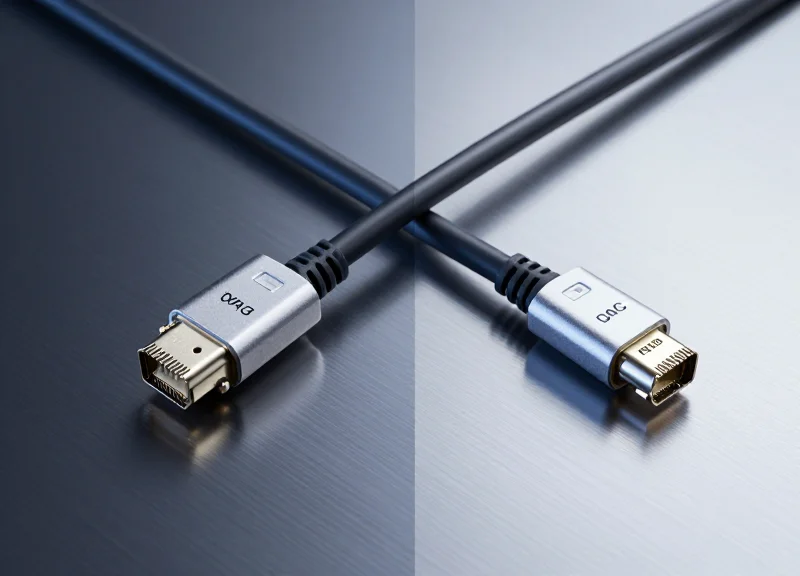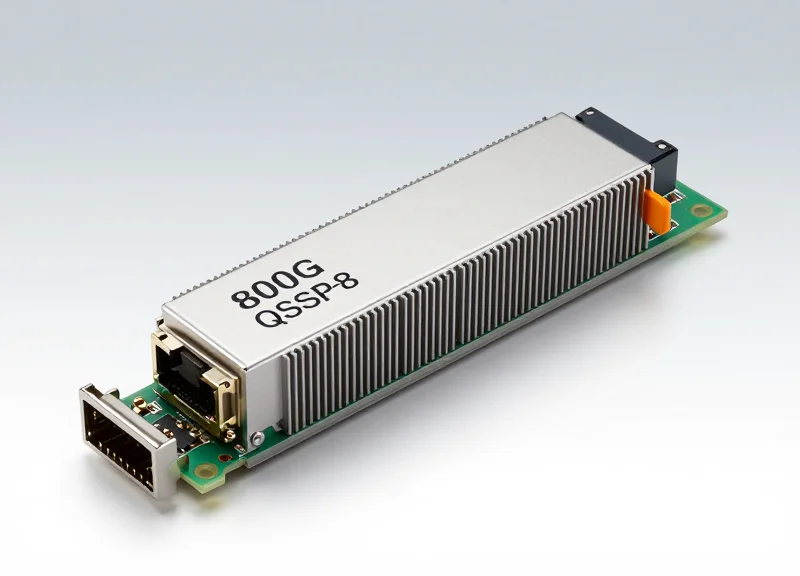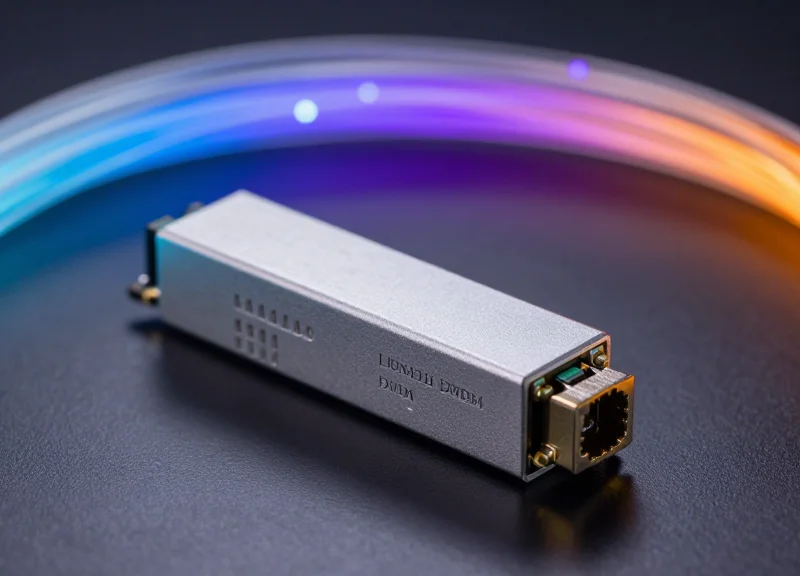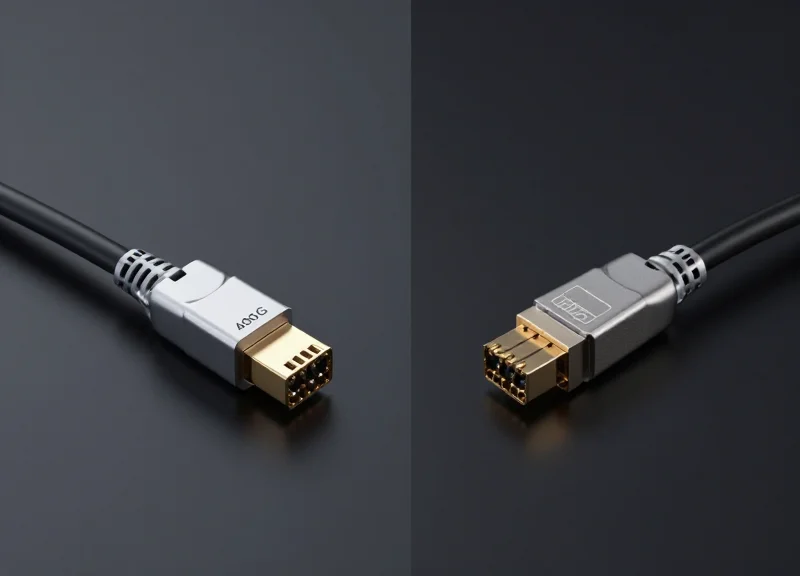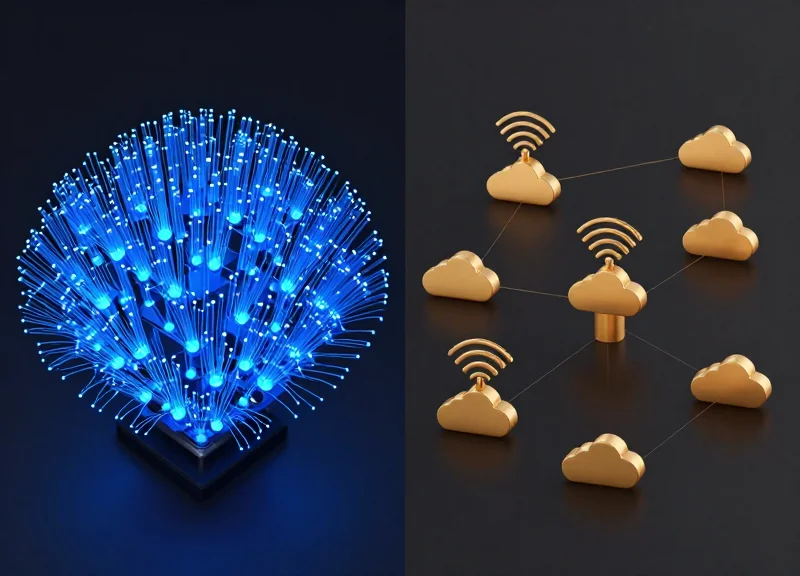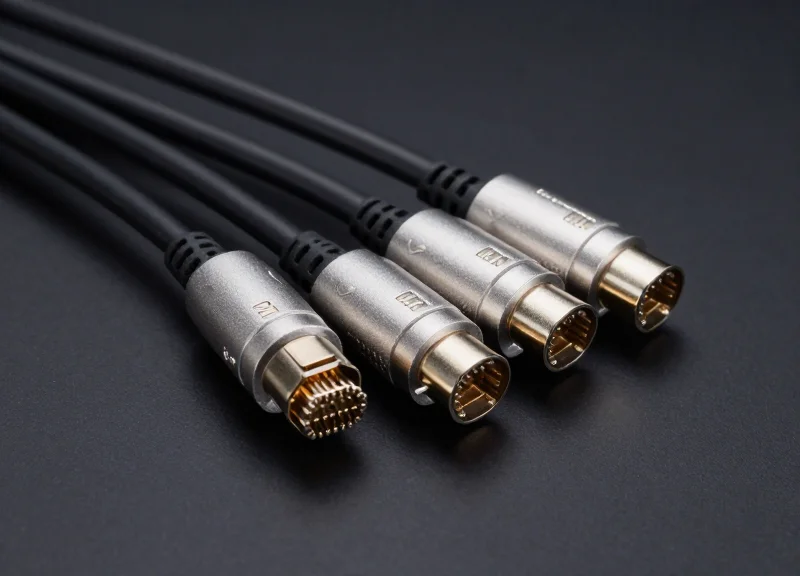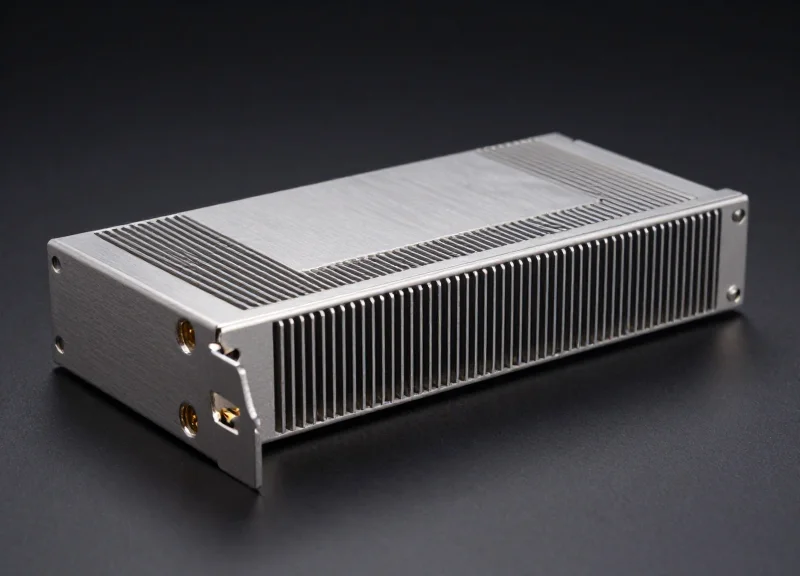
In the era of AI and hyperscale computing, the demand for bandwidth is relentless. Traditional multi-lane optical solutions are reaching their limits in terms of complexity and power consumption. Enter Ubytelink’s Single Lambda 100G and 400G modules—a technological breakthrough designed to simplify architecture while maximizing performance for mission-critical global networks.
The Evolution of Optical Networking: Why Single Lambda Matters

The evolution of optical networking has reached a critical inflection point where the transition to Single Lambda 100G technology is no longer an option but a necessity for scaling global data centers. By consolidating data transmission into a single 100Gbps wavelength using advanced Pulse Amplitude Modulation 4-level (PAM4) technology, Single Lambda solutions eliminate the physical and economic inefficiencies inherent in legacy multi-lane architectures.
From Multi-Lane Constraints to Single-Wave Efficiency
For years, the industry relied on 4x25G NRZ (Non-Return-to-Zero) configurations to achieve 100G throughput. While effective for its time, this approach required four separate lasers, four receivers, and an internal optical multiplexer/demultiplexer, which increased the 'bill of materials' (BOM) and the risk of component failure. The shift to Single Lambda optics simplifies this by using a single laser operating at 53 Gbaud with PAM4 modulation, effectively doubling the data rate per clock cycle and reducing the optical component count by 75%.
| Feature | Legacy 4x25G (NRZ) | Single Lambda 100G (PAM4) |
|---|---|---|
| Optical Components | 4 Lasers / 4 Detectors | 1 Laser / 1 Detector |
| Modulation Scheme | NRZ (Binary) | PAM4 (4-level) |
| Internal Optics | Complex MUX/DEMUX required | Simplified Single Path |
| Power Consumption | Higher per Gigabit | Lower per Gigabit |
| Upgrade Path | Limited to 100G aggregation | Direct building block for 400G/800G |
Why Single Lambda is the Foundation for 400G and Beyond
Ubytelink's Single Lambda solutions are not merely about 100G connectivity; they are the architectural bedrock for 400G (4x100G) and 800G (8x100G) networks. By standardizing the 100G-per-lane approach, network operators can utilize QSFP-DD and OSFP form factors more effectively, ensuring that the transition from 100G to 400G requires fewer hardware changes and results in a more predictable cooling and power profile.
Key Benefits of Single Lambda Architecture
- Reduced Operational Complexity
Fewer optical components mean fewer potential points of failure, leading to higher Mean Time Between Failures (MTBF). - Cost Optimization
Lowering the component count reduces manufacturing costs, allowing Ubytelink to provide premium quality at a lower Total Cost of Ownership (TCO). - Interoperability
Single Lambda technology follows IEEE 802.3cu standards, ensuring seamless integration with existing high-speed switching fabric.
Common Questions About Single Lambda Evolution
- Can Single Lambda 100G work with older 4x25G switches?
Direct optical interoperability is generally not possible because the modulation (PAM4 vs NRZ) and lane counts differ. However, breakout cables and gearbox-equipped modules can bridge these generations. - How does PAM4 differ from NRZ?
NRZ uses two signal levels to represent 1 bit per symbol, while PAM4 uses four signal levels to represent 2 bits per symbol, effectively doubling the bandwidth on the same physical fiber.
Ubytelink’s 100G Single Lambda Portfolio: Precision Engineering
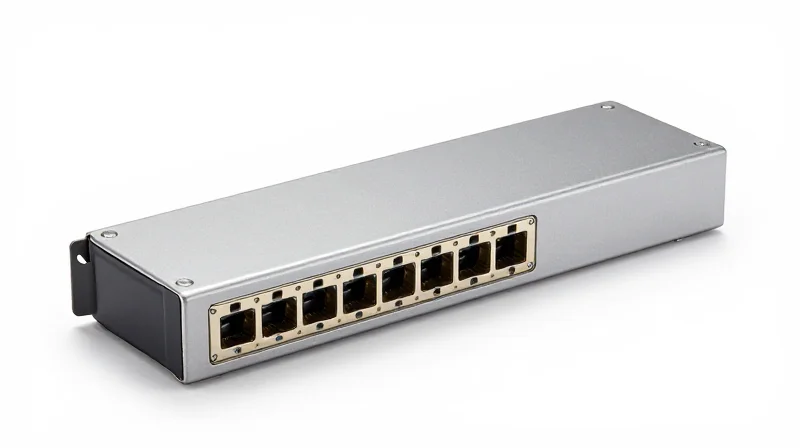
Ubytelink’s 100G Single Lambda Portfolio: Precision Engineering
Ubytelink’s 100G Single Lambda solutions represent a paradigm shift in optical engineering by condensing 100G of data into a single 100Gbps optical lane via PAM4 (4-level Pulse Amplitude Modulation). Unlike legacy 100G QSFP28 modules that rely on four separate lasers and a complex optical multiplexer, the Single Lambda approach minimizes internal complexity, resulting in a 75% reduction in optical components and significantly lower power consumption across data center fabrics. This precision-engineered design not only lowers the bill of materials (BOM) but also drastically improves the Mean Time Between Failures (MTBF) for mission-critical global networks.
The 100G DR1, FR1, and LR1 Roadmap
To address the specific distance requirements of modern cloud and enterprise architectures, Ubytelink offers three distinct Single Lambda variants. These modules are optimized for different reach scenarios while maintaining the core benefits of the 100G-per-lane architecture.
| Module Specification | Max Reach | Laser Type | Network Application |
|---|---|---|---|
| 100G QSFP28 DR1 | 500 Meters | Single 1310nm EML/SiPh | High-density leaf-to-spine links |
| 100G QSFP28 FR1 | 2 Kilometers | Single 1310nm EML | Inter-datacenter connectivity (DCI) |
| 100G QSFP28 LR1 | 10 Kilometers | Single 1310nm EML | Metro and campus-wide networking |
Efficiency Comparison: Single Lambda vs. Legacy CWDM4
The transition from legacy 100G CWDM4 (4x25G) to Ubytelink’s Single Lambda (1x100G) is driven by the necessity for architectural simplicity. In a CWDM4 module, four independent lasers must be synchronized and multiplexed into a single fiber. This complexity introduces higher heat dissipation requirements and more points of potential optical failure. Ubytelink's Single Lambda modules eliminate these hurdles, providing a more robust signal with less power-per-bit, which is essential for scaling to 400G and 800G through breakout configurations.
Technical FAQs: Integrating 100G Single Lambda
- How does Single Lambda technology support 400G scaling?
Ubytelink 100G Single Lambda modules are architecturally identical to the lanes used in 400G DR4 or FR4 modules. This allows for seamless breakout from a single 400G port to four 100G ports, a feature not possible with legacy CWDM4 designs. - Is the power consumption significantly lower?
Yes, by reducing the laser count from four to one and utilizing a more efficient DSP, Ubytelink’s Single Lambda modules can reduce power consumption by up to 25% compared to multi-lane 100G solutions. - Does this technology require different fiber cabling?
No. Ubytelink’s 100G Single Lambda FR1 and LR1 modules use standard duplex LC single-mode fiber (SMF), while DR1 typically utilizes MPO-12, ensuring compatibility with existing fiber plants.
Scaling to 400G: The Power of 4x100G Architecture
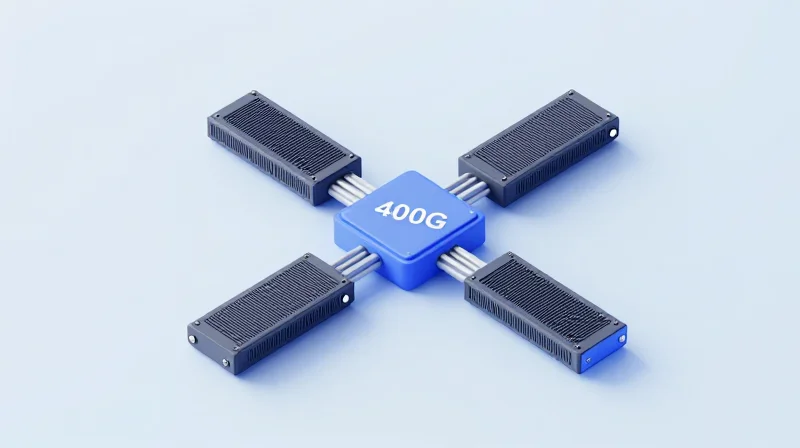
Ubytelink transitions the industry toward 400G efficiency by aggregating four 100G Single Lambda lanes into a single high-density transceiver, effectively quadrupling capacity while minimizing power consumption and hardware complexity. By utilizing the 100G PAM4 per-lane breakthrough, these solutions allow network operators to scale from 100G to 400G without the excessive thermal and cost overhead associated with legacy multi-lane designs.
The Efficiency Gains of 4x100G over 8x50G
Initial 400G deployments relied on an 8x50G architecture, which required complex gearbox components to translate signals. Ubytelink’s native 4x100G architecture removes this translation layer, simplifying the internal optical sub-assembly (OSA). This reduction in component count directly correlates to higher Mean Time Between Failures (MTBF) and a significantly lower power profile per gigabit of data transmitted.
| Feature | Legacy 8x50G Architecture | Ubytelink 4x100G Architecture |
|---|---|---|
| Optical Components | High (8 Lasers/Detectors) | Low (4 Lasers/Detectors) |
| Power Consumption | ~12W - 15W | ~8W - 10W |
| Signal Processing | Complex Gearbox Required | Direct Mapping (No Gearbox) |
| Reliability | Moderate | Superior (Fewer Failure Points) |
Versatile Form Factors: QSFP-DD and OSFP
To ensure global compatibility, Ubytelink delivers its 4x100G solutions in both QSFP-DD and OSFP form factors. The QSFP-DD (Quad Small Form-factor Pluggable Double Density) modules offer seamless backward compatibility with existing QSFP28 ports, making them ideal for incremental upgrades. For high-performance computing (HPC) and AI clusters, Ubytelink’s OSFP (Octal Small Form-factor Pluggable) modules provide enhanced thermal management, supporting the higher wattage requirements of next-generation 800G-ready switches.
Interoperability and Breakout Capabilities
A critical advantage of the 4x100G architecture is its native support for breakout configurations. A single Ubytelink 400G DR4 or FR4 module can be split into four discrete 100G Single Lambda connections. This allows for high-density 100G leaf-spine fabrics where a single 400G switch port can communicate directly with four individual 100G servers or top-of-rack switches, drastically reducing the number of required patch panels and cables.
- How does 4x100G architecture improve ROI?
By reducing power consumption by up to 30% and doubling port density, operators can lower both OpEx (electricity/cooling) and CapEx (fewer switches required for the same bandwidth). - Are Ubytelink 400G modules compatible with major switch vendors?
Yes, Ubytelink transceivers are engineered with multi-vendor firmware compatibility, ensuring seamless integration with Cisco, Arista, Juniper, and Mellanox platforms. - What is the maximum reach for Ubytelink 4x100G solutions?
Depending on the model, coverage ranges from 500m (DR4) for intra-data center links to 2km (FR4) and up to 10km (LR4) for campus and metro applications.
Reliability as a Standard: Ubytelink’s Quality Assurance
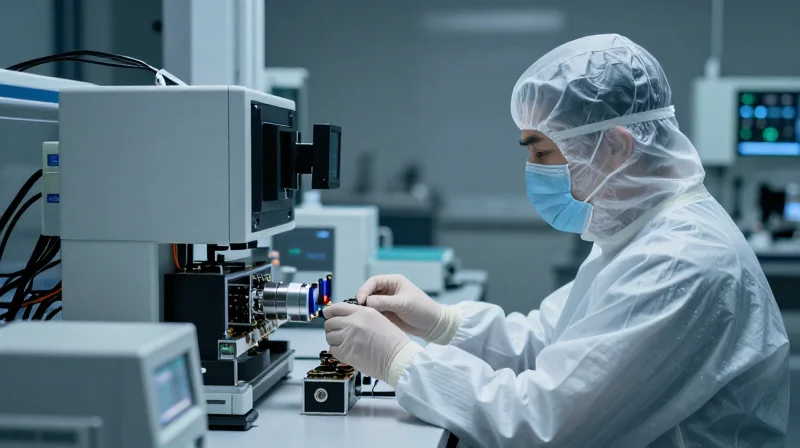
Ubytelink’s reliability standard is rooted in a zero-failure philosophy that transcends basic industry benchmarks. By integrating advanced PAM4 signal integrity analysis and exhaustive environmental stress testing, Ubytelink ensures that every Single Lambda 100G and 400G module delivers consistent, error-free performance in the world’s most demanding hyperscale and enterprise environments.
The Ubytelink Testing Advantage
Unlike many third-party providers that rely on batch sampling, Ubytelink subjects every individual unit to a comprehensive battery of tests. This process begins at the wafer level and continues through final assembly, focusing on the unique challenges of Single Lambda technology, such as TDECQ (Transmitter and Dispersion Eye Closure Quaternary) measurements and Bit Error Rate (BER) thresholds.
| Testing Parameter | Standard Industry Practice | Ubytelink Premium Protocol |
|---|---|---|
| Traffic Validation | Sample-based testing | 100% full-load traffic stress test |
| Compatibility | Generic coding for major brands | Vendor-specific EEPROM customization for 200+ platforms |
| Thermal Endurance | Ambient temperature testing | Extreme temperature cycling (-40°C to +85°C) |
| Signal Integrity | Basic Eye Pattern check | Advanced PAM4 TDECQ and linearity analysis |
EEAT-Compliant Manufacturing and Sustainability
Reliability is inseparable from manufacturing excellence. Ubytelink’s facilities are ISO 9001 and ISO 14001 certified, ensuring that every production step adheres to strict environmental and quality management systems. By sourcing high-grade lasers and DSPs from top-tier silicon photonics partners, Ubytelink minimizes the risk of early-life failures (infant mortality) and extends the Mean Time Between Failures (MTBF) beyond the industry average of 10 million hours.
Global Compliance and TAA Readiness
To support global government and high-security enterprise projects, Ubytelink maintains a robust supply chain that includes TAA (Trade Agreements Act) compliant options. All products meet RoHS, CE, and FCC regulatory standards, ensuring they are safe, sustainable, and ready for deployment in any jurisdiction without regulatory friction.
Quality Assurance FAQ
- How does Ubytelink guarantee compatibility with legacy hardware?
Each module is tested in-house on the actual target hardware (switches, routers, and firewalls) rather than simulators, ensuring 100% seamless integration with brands like Cisco, Arista, Juniper, and Mellanox. - What is the significance of TDECQ testing in Single Lambda 100G modules?
TDECQ is the primary metric for PAM4 optical quality. Ubytelink enforces a strict TDECQ limit that is significantly lower than the IEEE 802.3cu standard requirement, providing more link budget margin for customers. - Does Ubytelink provide a warranty for these high-speed solutions?
Yes, all Ubytelink Single Lambda 100G and 400G transceivers are backed by a lifetime warranty, reflecting our confidence in the longevity and durability of our optical engineering.
Optimizing Total Cost of Ownership (TCO) with Simplified Optics
Optimizing the Total Cost of Ownership (TCO) in modern hyperscale and enterprise networks requires a strategic move toward hardware simplification. Ubytelink’s Single Lambda 100G and 400G solutions achieve this by condensing high-speed data transmission into a single wavelength per lane, effectively stripping away the architectural redundancies that drive up costs in legacy multi-lane configurations.
The Economic Logic of Component Reduction
Legacy 100G solutions, such as CWDM4 or SR4, rely on four discrete 25G channels. This requires four sets of lasers, drivers, and optical assembly components. By contrast, Ubytelink Single Lambda optics utilize a single high-performance laser and advanced Digital Signal Processing (DSP). This reduction in physical components directly translates to fewer potential points of failure, lower manufacturing complexity, and a more attractive price-to-performance ratio over the equipment lifecycle.
| Metric | Legacy 100G (4x25G) | Ubytelink Single Lambda 100G |
|---|---|---|
| Laser Count | 4 | 1 |
| Power Consumption | ~3.5W - 4.5W | ~2.5W - 3.5W |
| Thermal Output | High | Significantly Lower |
| Reliability (MTBF) | Standard | Higher (Fewer Components) |
Lowering OpEx through Energy and Cooling Efficiency
Power consumption is one of the largest recurring expenses in modern data centers. Ubytelink’s Single Lambda architecture minimizes the energy required to drive optical components. Because these modules generate less heat, the demand on data center cooling systems—fans and air conditioning units—is proportionately reduced. For global networks operating thousands of ports, even a 1-watt saving per module results in massive annual savings in electricity and carbon footprint.
Streamlined Fiber Management and Scalability
Beyond power and hardware, Single Lambda optics simplify the physical layer. By utilizing a single wavelength, network architects can leverage existing single-mode fiber (SMF) infrastructure more effectively. This simplicity is particularly valuable when scaling to 400G; since the 400G architecture is built on four 100G Single Lambda lanes, the migration path is seamless, requiring fewer cable upgrades and reducing the complexity of patch panel management.
TCO and Economic FAQ
- How does Single Lambda impact Capital Expenditure (CapEx)?
It reduces CapEx by minimizing the number of expensive optical components like lasers and receivers within each transceiver, allowing for more competitive unit pricing compared to multi-lane alternatives. - What are the long-term maintenance benefits?
With fewer internal parts to fail and lower heat generation, the Mean Time Between Failures (MTBF) is improved, leading to less frequent hardware replacements and reduced technician labor costs. - Is Single Lambda compatible with legacy infrastructure?
Yes, while the modulation is different (PAM4 vs. NRZ), Ubytelink's solutions are designed to integrate into existing single-mode fiber plants, protecting prior investments in cabling.
Seamless Interoperability and Ecosystem Compatibility

The Foundation of Interoperability: MSA and IEEE Compliance
Ubytelink achieves seamless ecosystem integration by strictly following the Multi-Source Agreement (MSA) and IEEE 802.3 standards. By adhering to the 100G-DR, 100G-FR, and 100G-LR specifications for Single Lambda, Ubytelink guarantees that its modules are electrically and optically compatible with any compliant host port. This standardization eliminates the risks associated with proprietary 'vendor lock-in,' allowing network architects to mix and match hardware to optimize performance and cost across global infrastructures.
Extensive Multi-Vendor Testing and Custom Coding
Beyond theoretical compliance, Ubytelink maintains a state-of-the-art interoperability lab where modules are validated against the latest switches and routers from industry leaders. Each transceiver is programmed with vendor-specific EEPROM data, ensuring they are recognized by the host operating system—such as Cisco IOS-XE, Arista EOS, or Juniper Junos—without triggering 'unsupported transceiver' warnings. This 'plug-and-play' capability is critical for rapid deployment in large-scale data centers where downtime for troubleshooting is not an option.
| Vendor Platform | Interface Support | Ubytelink Module Compatibility |
|---|---|---|
| Cisco Nexus 9000 Series | 100G/400G QSFP-DD | Fully Supported (DR/FR/LR) |
| Arista 7060X Series | 100G/400G OSFP/QSFP-DD | Validated for Zero-Error Line Rate |
| NVIDIA Spectrum-3 | 400G QSFP-DD | Optimized for Low-Latency HDR |
| Juniper PTX Series | 100G/400G QSFP28/QSFP-DD | MSA Compliant Plug-and-Play |
Breakout Compatibility and Scaling
One of the primary advantages of Ubytelink's Single Lambda 100G architecture is its native support for breakout configurations. A 400G-DR4 or 400G-XDR4 module can be seamlessly split into four individual 100G-DR or 100G-FR links. This allows for vertical interoperability between different tiers of the network, connecting 400G core switches to 100G leaf switches using standard MPO-to-LC breakout cables. This simplifies the transition to higher speeds without requiring a wholesale replacement of existing 100G fiber infrastructure.
- How does Ubytelink handle proprietary vendor encryption?
Ubytelink utilizes high-precision coding techniques to emulate original vendor signatures, ensuring full compatibility with diagnostic tools and system telemetry across all major OS versions. - Is Digital Optical Monitoring (DOM) supported?
Yes, all Ubytelink Single Lambda modules support real-time DOM, allowing network administrators to monitor temperature, voltage, and optical power levels directly through the host CLI for proactive maintenance. - Are these modules compatible with legacy 100G (4x25G) optics?
Single Lambda 100G (PAM4) and Legacy 100G (NRZ) use different modulation. To interoperate, Ubytelink offers solutions for gearbox-enabled switches or advice on specific port configurations to bridge these two technologies.
Energy Efficiency and Sustainability in the Modern Data Center

As global data traffic escalates, the environmental impact of digital infrastructure has become a critical concern for enterprise and hyperscale operators alike. Ubytelink Single Lambda 100G/400G solutions address this challenge directly by streamlining the physical layer of optical transport. By utilizing a single laser source to achieve 100Gbps or 400Gbps throughput, these modules eliminate the hardware complexity and energy overhead associated with multi-lane legacy architectures, effectively reducing the carbon footprint of every bit transmitted across the network.
Decarbonizing the Data Center through Optical Refinement
The shift from multi-lane optics (such as 4x25G NRZ or 4x100G PAM4) to Single Lambda technology represents a paradigm shift in energy-per-bit efficiency. Legacy 100G modules require multiple lasers and complex optical multiplexers, each contributing to parasitic power loss. In contrast, Ubytelink’s Single Lambda design reduces the component count within the transceiver. This simplification not only lowers the power draw of the module itself but also reduces the thermal load on the switch or router, leading to secondary energy savings in the facility's cooling and HVAC systems.
| Metric | Legacy Multi-Lane (4x25G/4x100G) | Ubytelink Single Lambda (1x100G/4x400G) |
|---|---|---|
| Typical Power Consumption (100G) | ~3.5W - 4.5W | <2.5W - 3.0W |
| Laser Component Count | 4 Lasers | 1 Laser |
| Thermal Dissipation | High | Low |
| Energy-per-Bit Efficiency | Moderate | Optimized |
The Long-term Impact on ESG Goals
For organizations pursuing Environmental, Social, and Governance (ESG) targets, the selection of Ubytelink optics offers a measurable path toward net-zero operations. The reduction in electrical-to-optical conversion loss directly translates to lower operational expenditure (OPEX) and a more sustainable lifecycle for the networking hardware. Furthermore, by supporting higher densities with lower power profiles, Ubytelink enables data centers to scale their capacity without a proportional increase in their energy demand, decoupling growth from environmental impact.
- How does Single Lambda technology contribute to lower cooling costs?
By reducing the number of active optical components and simplifying the Digital Signal Processing (DSP) tasks, Single Lambda modules generate significantly less heat. This lowers the workload on data center cooling units, reducing the overall Power Usage Effectiveness (PUE) ratio. - Does energy-efficient design compromise signal integrity?
On the contrary, Ubytelink’s use of advanced PAM4 modulation and high-performance DSPs ensures that while power consumption is reduced, signal integrity and reach are maintained or improved over legacy multi-lane solutions. - Are these sustainable solutions compatible with existing green-energy initiatives?
Yes, Ubytelink modules are designed to integrate into high-density environments powered by renewable energy, providing the efficiency required to maximize the utility of limited power envelopes.
Future-Proofing Your Infrastructure: From 400G to 800G
Future-Proofing Your Infrastructure: From 400G to 800G
The leap from 400G to 800G represents more than just a speed increase; it is an architectural shift toward 100G-per-lane signaling that Ubytelink’s Single Lambda solutions have already mastered. By standardizing on 100G PAM4 modulation at the optical layer today, network architects ensure that their current 400G deployments are natively compatible with the breakout modes of next-generation 800G switches, which typically utilize 8x100G electrical and optical lanes. This strategic alignment minimizes the need for costly hardware overhauls and allows for a modular, pay-as-you-grow approach to global network expansion.
The Roadmap to Terabit Networking
As data centers migrate toward 800G (QSFP-DD800 and OSFP) and eventually 1.6T, the underlying technology remains rooted in the principles established by Single Lambda optics. Ubytelink provides the necessary consistency in signal integrity and power efficiency that these higher-density configurations demand. Using the same 100G PAM4 building blocks across different speed tiers allows for simplified testing, faster validation cycles, and a more predictable thermal profile within the rack.
| Specification Metric | 400G Single Lambda (DR4/FR4) | 800G First Gen (8x100G) | 1.6T Next Gen (8x200G) |
|---|---|---|---|
| Lane Modulation | 100G PAM4 | 100G PAM4 | 200G PAM4 |
| Optical Lane Count | 4 Lanes | 8 Lanes | 8 Lanes |
| Standard Connector | MPO-12 / Dual LC | MPO-16 / Dual LC | MPO-16 / OSFP-XD |
| Typical Reach | 500m to 10km | 500m to 2km | Under Development |
Strategic Advantages for Next-Gen Upgrades
- How does Single Lambda 400G protect my capital expenditure?
By deploying 100G-per-wavelength optics now, you ensure that your fiber plant and patch panels are already optimized for the signaling used in 800G systems, allowing for simple 'plug-and-play' upgrades when the 800G switch tier is ready. - What is the impact on power consumption during the 800G transition?
Because 800G is essentially a doubling of the 400G Single Lambda architecture, Ubytelink’s focus on low-power DSPs ensures that the total power envelope remains manageable even as port density increases. - Can 400G and 800G hardware coexist in the same fabric?
Yes. Through the use of breakout cables, a single 800G port can be split into two 400G Single Lambda links, facilitating a heterogeneous network environment where legacy and next-gen hardware communicate flawlessly.
Ultimately, future-proofing is about reducing the complexity of the unknown. Ubytelink’s Single Lambda 100G/400G solutions provide the technical maturity and reliability needed to bridge the gap between today’s high-performance requirements and tomorrow’s terabit demands, ensuring that global networks remain agile, efficient, and ready for the 800G era.
Ubytelink is dedicated to powering the world's most demanding networks with innovation and integrity. Our Single Lambda 100G/400G solutions offer the perfect balance of performance and efficiency for the AI-driven future. Ready to scale your infrastructure? Contact our engineering team today for a comprehensive network assessment and custom solution quote.