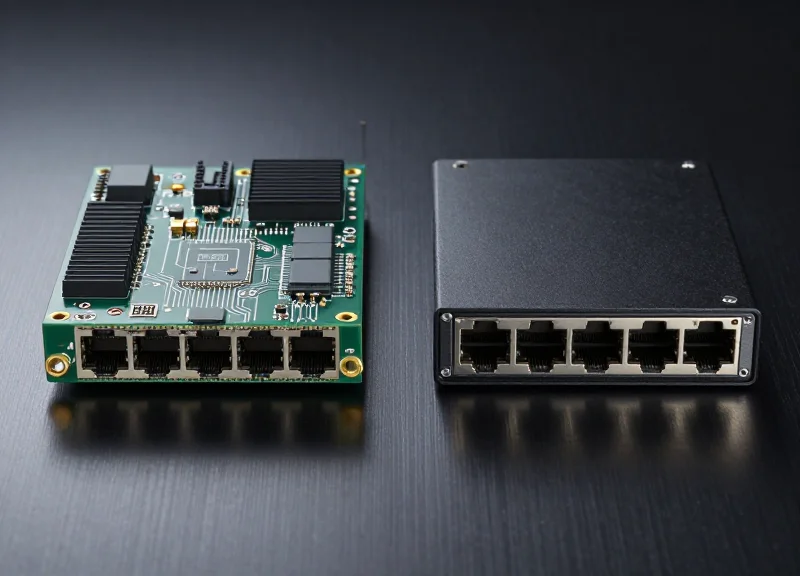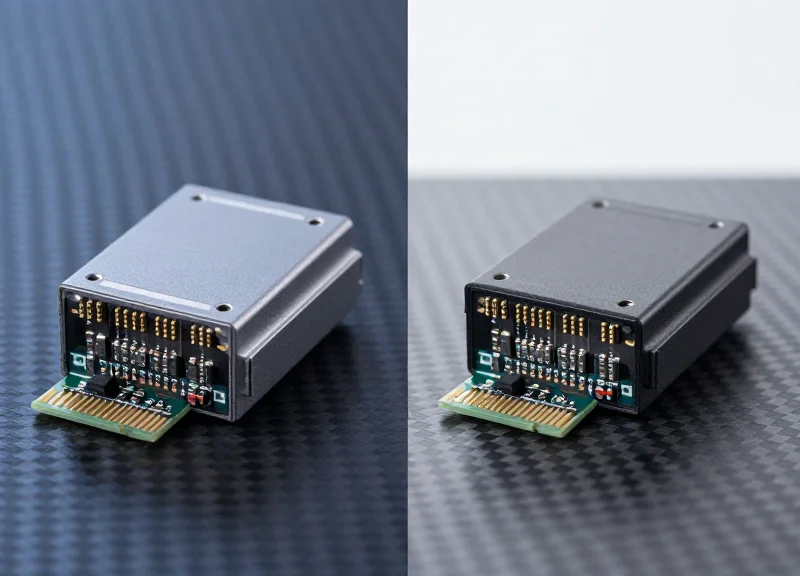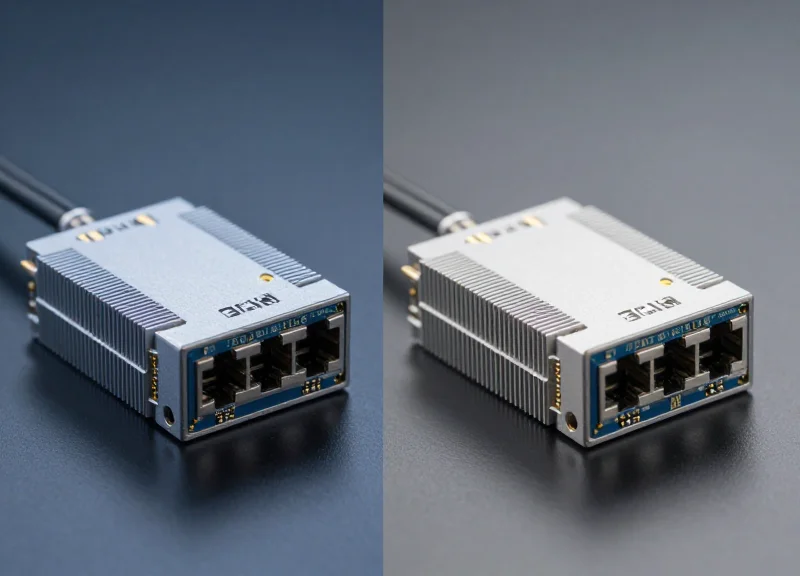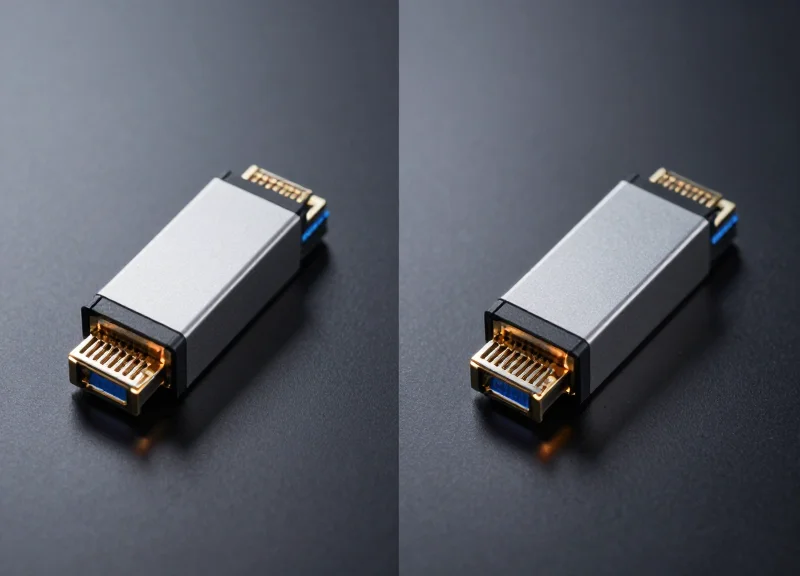
As AI-driven workloads and cloud computing push existing infrastructure to its limits, the shift to 800G is no longer optional—it is a strategic necessity. Understanding the Return on Investment (ROI) of upgrading to 800G involves more than just looking at the price per bit; it requires a deep dive into total cost of ownership (TCO), power efficiency, and long-term scalability. This article breaks down why 800G is the most cost-effective path forward for modern data centers and how wholesale sourcing can accelerate your financial gains.
The Strategic Shift: Why 800G is the New Benchmark

The strategic shift to 800G is defined by the convergence of Artificial Intelligence (AI) requirements and the exhaustion of 400G's cost-to-performance ratio in hyperscale environments. As organizations seek to maximize the ROI of their wholesale networking investments, 800G has emerged as the new benchmark because it delivers double the bandwidth of previous standards while utilizing the same physical footprint, effectively cutting the cost-per-bit and reducing the Total Cost of Ownership (TCO) for large-scale deployments.
The Drivers of 800G Dominance in 2026
Three primary factors are accelerating the adoption of 800G technology. First, the rise of Large Language Models (LLMs) requires low-latency, high-bandwidth interconnects that 400G simply cannot sustain under peak loads. Second, the migration toward 112G SerDes (Serializer/Deserializer) technology has made 800G native and more efficient to implement at the silicon level. Finally, the pressure to reduce carbon footprints in data centers has made the improved power-per-gigabit metrics of 800G indispensable for wholesale operators.
Comparative Analysis: 400G vs. 800G
| Feature | 400G Ethernet | 800G Ethernet |
|---|---|---|
| Max Throughput | 400 Gbps | 800 Gbps |
| Standard Form Factor | QSFP-DD / OSFP | QSFP-DD800 / OSFP800 |
| Power Consumption | Higher per Gbps | ~25% lower per Gbps |
| Best Use Case | General Enterprise / Edge | AI Clusters / Hyperscale Core |
| ROI Timeline | Mature / Stable | High Yield for Bulk Upgrades |
Economic Implications for Wholesale Procurement
For wholesale buyers, the ROI of 800G is realized through architectural consolidation. By deploying 800G optics and switches, operators can reduce the number of required cables and ports by 50% compared to 400G setups achieving the same capacity. This reduction in hardware complexity directly translates to lower maintenance costs and higher reliability. Custom quotes for 2026 indicate that while the initial capital expenditure for 800G is higher, the volume-based pricing models significantly bridge the gap, making it a more viable long-term investment for future-proofing infrastructure.
Strategic Migration FAQ
- Is 800G backward compatible with 400G infrastructure?
Yes, most 800G OSFP and QSFP-DD800 modules support breakout configurations (e.g., 2x400G), allowing for a phased migration strategy. - Why should I request a custom quote instead of using list prices?
Wholesale pricing for 800G is highly sensitive to volume and supply chain cycles; custom quotes allow for tailored ROI projections based on specific port densities. - What is the primary power advantage of 800G?
800G utilizes advanced 5nm and 7nm DSPs, which significantly lower the thermal output and power draw per gigabit of data transferred.
Analyzing the ROI: Beyond the Initial Capital Expenditure

[生成失败] PermissionDeniedError: Error code: 403 - {'error': {'message': 'user quota is not enough (request id: 20260514101328777154931Gf3161yE)', 'type': 'new_api_error', 'param': '', 'code': 'local:insufficient_quota'}}
Energy Efficiency and Thermal Performance
[生成失败] PermissionDeniedError: Error code: 403 - {'error': {'message': 'user quota is not enough (request id: 2026051410133651122470324BbUS43)', 'type': 'new_api_error', 'param': '', 'code': 'local:insufficient_quota'}}
Maximizing Density: Saving Data Center Real Estate

[生成失败] PermissionDeniedError: Error code: 403 - {'error': {'message': 'user quota is not enough (request id: 20260514101343940312671DVeGnlG0)', 'type': 'new_api_error', 'param': '', 'code': 'local:insufficient_quota'}}
The Power of Wholesale: Driving Down TCO
The Power of Wholesale: Driving Down TCO
Wholesale procurement is the single most effective lever for accelerating 800G adoption, as it directly mitigates the high capital expenditure typically associated with bleeding-edge network hardware. By shifting from transactional retail acquisitions to strategic wholesale partnerships, data center operators can achieve a reduction in Total Cost of Ownership (TCO) that often ranges from 20% to 40%. This financial efficiency is realized through significantly lower per-port costs, reduced shipping overhead, and the ability to lock in pricing against market volatility, ensuring that the transition to 800G is as fiscally responsible as it is technically necessary.
Economies of Scale in 800G Deployment
The manufacturing economics of high-speed optics like OSFP and QSFP-DD800 transceivers favor volume. For manufacturers, large-scale orders allow for the amortization of fixed costs—such as clean-room setup and automated testing calibration—across more units. For the buyer, this translates into a price-per-gigabit that is frequently lower than legacy 400G infrastructure when purchased at scale. Furthermore, bulk procurement simplifies logistics, reducing the 'soft costs' of internal procurement processes and inventory management.
| Procurement Metric | Retail/Transactional | Wholesale/Bulk (800G) |
|---|---|---|
| Unit Price Point | Standard Market Rate | Tiered Volume Discount |
| Price Stability | Subject to Market Spikes | Contractually Locked-In |
| Lead Time Management | First-Come, First-Served | Reserved Production Slots |
| Logistics Cost | High (Per Shipment) | Low (Consolidated Freight) |
Maximizing ROI Through Custom Quotes
Generic price lists rarely reflect the reality of a large-scale 800G upgrade. Custom quotes are essential because they allow for the integration of value-added services that further drive down TCO. These may include extended warranties, customized firmware for multi-vendor compatibility, and staged delivery schedules. By tailoring the quote to the specific rollout phases of a data center, organizations can avoid 'shelfware'—hardware that sits in inventory losing value—and ensure that capital is deployed only when the infrastructure is ready for installation.
Wholesale Strategy FAQ
- At what volume does 800G wholesale pricing typically begin?
While it varies by vendor, wholesale pricing structures usually activate at quantities sufficient for a full row or POD deployment, typically starting between 50 and 100 units. - Does bulk pricing compromise the quality of optics?
No. In fact, wholesale orders often undergo more rigorous batch testing and come with dedicated engineering support to ensure compatibility with specific switch architectures. - How does wholesale procurement affect the 800G payback period?
By reducing the initial CAPEX by up to 30%, wholesale procurement can shorten the ROI payback period from 24-30 months to 14-18 months, depending on power savings and bandwidth utilization.
OEM/ODM Customization for Specialized Network Needs
For enterprise and hyperscale operators, the ROI of an 800G upgrade is maximized when the hardware is precisely tuned to the existing environment. OEM/ODM customization allows organizations to bypass the premium costs of proprietary vendor modules by providing optical transceivers and cables that are electrically and firmware-optimized for specific switches, routers, and network interface cards (NICs), ensuring 100% compatibility and operational stability.
Comparative Advantages: Standard vs. Custom 800G Wholesale
| Feature | Standard Wholesale Modules | OEM/ODM Custom Solutions |
|---|---|---|
| Hardware Handshaking | Generic/Best Effort | Validated Vendor-Specific Firmware |
| Brand Integration | Third-party Labelling | Private Labeling & Serial Tracking |
| Link Tuning | Fixed Parameters | Adjustable Power & Signal Settings |
| System Reporting | Basic DOM/DDM Support | Enhanced Telemetry for Proprietary OS |
Deep Dive into Specialized Network Needs
The transition to 800G introduces complexities in signal integrity and thermal management that generic modules often fail to address in multi-vendor environments. Custom ODM services enable the development of modules with specific EEPROM coding that mirrors the 'fingerprint' of Tier-1 networking brands. This ensures that features like Forward Error Correction (FEC) and Link Training function exactly as they would with original equipment, preventing link drops and high Bit Error Rates (BER) that can erode the ROI of a network overhaul.
Branding and Lifecycle Management
Beyond technical specifications, OEM/ODM partnerships offer significant advantages for Managed Service Providers (MSPs) and large enterprises through private labeling. By integrating custom serial numbering and branding, organizations can streamline asset management and enforce stricter warranty tracking across global data center footprints. This professional-grade customization reinforces brand authority and simplifies the logistics of multi-thousand-unit deployments.
Frequently Asked Questions: 800G Customization
- How does custom programming affect the 800G warranty?
A reputable OEM/ODM partner provides their own comprehensive warranty that often exceeds original vendor terms, and because the hardware is coded to match vendor specifications, it does not void the switch's hardware warranty. - Is there a minimum order quantity (MOQ) for custom 800G labels?
While MOQs vary by partner, wholesale relationships typically allow for custom labeling and serializing on orders starting at 50 to 100 units, making it accessible for mid-sized data center expansions. - Can custom modules solve 800G thermal issues in high-density racks?
Yes, ODM partners can often customize the shell design or internal component sourcing (such as lower-power DSPs) to ensure modules run cooler than generic alternatives, directly improving TCO through reduced cooling needs.
Navigating Technical Standards: OSFP vs. QSFP-DD800
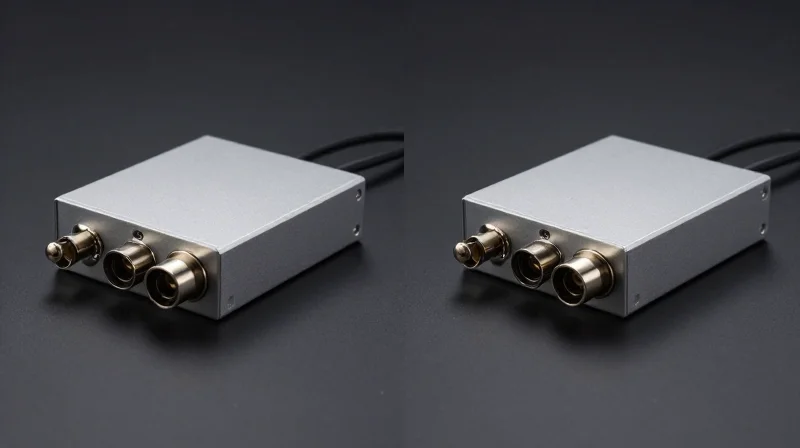
The choice between OSFP (Octal Small Form-factor Pluggable) and QSFP-DD800 (Quad Small Form-factor Pluggable Double Density) is the most consequential technical decision in an 800G deployment, as it dictates the thermal management strategy, port density, and long-term scalability of the data center fabric. While both standards achieve the same 800Gbps throughput using 8 lanes of 100G PAM4, they differ fundamentally in physical dimensions and heat dissipation capabilities, impacting the total cost of ownership (TCO) and ROI of wholesale upgrades.
Comparative Analysis: Thermal Efficiency and Density
| Feature | OSFP Form Factor | QSFP-DD800 Form Factor |
|---|---|---|
| Thermal Management | Superior: Integrated heat sink supports up to 15W-20W per module. | Moderate: Relies on system-side cooling; supports up to 14W-18W. |
| Backward Compatibility | Requires physical adapters for legacy QSFP modules. | Native backward compatibility with QSFP28 and QSFP56. |
| Size & Port Density | Slightly wider; allows for 32-36 ports per 1U. | More compact; maintains high density for existing QSFP ecosystems. |
| Future Roadmap | Clearer path to 1.6T due to larger power envelope. | Requires significant engineering for 1.6T transitions. |
Strategic Selection for Wholesale Procurement
For wholesale buyers, the OSFP standard is increasingly preferred for greenfield AI and Machine Learning (ML) clusters where high-power GPUs drive demand for modules with integrated cooling. The built-in heat sink of OSFP simplifies the thermal design of the switch itself, potentially reducing the cooling energy expenditure. Conversely, QSFP-DD800 is often the logical choice for brownfield expansions where maintaining compatibility with a massive installed base of QSFP-based optics is a priority to protect existing infrastructure investments.
Technical Specifications FAQ
- Are OSFP and QSFP-DD800 modules interchangeable?
No. They have different physical cage dimensions and electrical interfaces. A switch must be designed specifically for one or the other, though some vendors offer multi-standard line cards. - Which standard offers a better ROI for bulk purchases?
QSFP-DD800 often provides a better immediate ROI for enterprises leveraging existing QSFP infrastructure. However, OSFP offers better long-term ROI for hyperscalers planning to scale to 1.6T and beyond without replacing their cooling architecture. - How does power consumption differ between the two?
The modules themselves consume similar amounts of power for the silicon, but OSFP's superior thermal dissipation can lead to lower system-wide fan speeds and reduced operational costs in high-density environments.
When requesting custom quotes for 800G wholesale orders, it is vital to specify the cooling environment. If your data center utilizes liquid cooling or extreme airflow, the QSFP-DD800's density may be more attractive. For standard air-cooled environments pushing the limits of power density, OSFP is the industry-standard recommendation for maintaining reliability and performance.
Future-Proofing: Preparing for the 1.6T Era
Future-Proofing: Preparing for the 1.6T Era
Upgrading to 800G is not merely a capacity increase; it is an architectural bridge to 1.6T and beyond, ensuring that current investments in fiber cabling, cooling, and port density remain relevant. By adopting 112G SerDes signaling today, organizations align their physical layer with the requirements of future 1.6T modules, which will utilize either doubled 112G lanes or advanced 224G SerDes technology. This foresight prevents the 'technology cliff' where legacy 400G hardware requires a complete forklift upgrade to meet next-generation AI and machine learning demands.
Comparison of Infrastructure Readiness
| Technical Metric | 400G Generation | 800G Generation | 1.6T Generation |
|---|---|---|---|
| SerDes Lane Speed | 56G or 112G | 112G PAM4 | 224G PAM4 |
| Standard Form Factor | QSFP-DD | OSFP / QSFP-DD800 | OSFP-XD / OSFP1600 |
| Power Efficiency | Moderate | High (Optimal) | Extreme Density |
| Fiber Requirement | MPO-8 / LC | MPO-16 / MPO-12 | MPO-16 / Dual MPO-8 |
Synergy Between 800G Wholesale and 1.6T Migration
Securing custom quotes for 800G components in bulk allows data centers to standardize their OSFP or QSFP-DD footprints early. This is critical because the 1.6T roadmap heavily favors the OSFP-XD (Extra Density) form factor, which shares significant thermal and mechanical commonality with existing 800G OSFP designs. By investing in 800G wholesale today, buyers can amortize the costs of high-grade MPO-16 cabling and cooling infrastructure that will be mandatory for the 1.6T era, effectively future-proofing the physical plant at today's pricing.
Future-Proofing Strategy: FAQ
- Will my 800G fiber plant support 1.6T speeds?
Yes, modern 800G deployments utilizing Singlemode MPO-16 or high-grade OM5 fiber are designed to meet the link budget requirements for the first generation of 1.6T transceivers. - Which form factor is better for 1.6T readiness?
The OSFP form factor is generally considered more future-proof for 1.6T due to its superior thermal dissipation capabilities, which are essential for the 25W-30W power envelopes expected in 1.6T modules. - How does bulk 800G pricing impact long-term ROI?
By lowering the initial per-port cost through wholesale agreements, organizations can achieve a faster ROI, freeing up capital to begin pilot testing 1.6T hardware as soon as it enters the early-adoption phase.
Choosing the Right Wholesale Partner for 800G
Choosing the right partner for 800G optics requires a transition from simple procurement to a strategic alliance where quality assurance, technical interoperability, and supply chain transparency take precedence over the lowest unit cost. The ideal partner must act as a technical extension of your team, providing validated interoperability for OSFP and QSFP-DD800 form factors, regional inventory buffers, and engineering-level support to mitigate the complexities of high-density optical networking.
Distinguishing Strategic Partners from Transactional Vendors
| Evaluation Pillar | Standard Retailer | Enterprise Wholesale Partner |
|---|---|---|
| Compatibility Assurance | Limited to generic specifications | 100% hardware-specific code validation |
| Quality Control | Standard batch sampling | Individual serialization and full lab reporting |
| Supply Chain | Subject to market volatility | Managed inventory and buffer stock agreements |
| Engineering Support | Self-service online resources | Dedicated technical account managers |
Core Criteria: QA, Engineering, and Logistics
When evaluating a partner for bulk 800G procurement, prioritize three core pillars: Quality Assurance (QA), Engineering Expertise, and Supply Chain Resilience. QA should include 100% interoperability testing in high-load host environments like Arista, Cisco, or NVIDIA switches to prevent costly downtime. Engineering expertise is vital for navigating the nuances of 800G, such as selecting between DR8, 2xFR4, or VR8 modules based on your existing fiber plant. Finally, supply chain resilience involves the partner's ability to maintain local safety stock, shielding your project timelines from global semiconductor fluctuations and logistics bottlenecks.
Wholesale Partnership FAQ
- What documentation should be provided with an 800G wholesale order?
You should demand comprehensive compliance certificates for MSA standards, TAA (if applicable), and individual serialized test reports showing optical power levels, Bit Error Rate (BER), and Eye Diagram analysis. - How do partners ensure long-term hardware compatibility?
Leading wholesale partners offer firmware support and re-coding services, ensuring that if you upgrade your switch hardware, your existing 800G optics can be updated to remain compatible with the new ecosystem. - Can a wholesale partner help with custom 800G labeling and kitting?
Yes, strategic partners often provide value-added services such as custom labeling for asset management and specialized kitting to align with multi-site data center deployment schedules.
The transition to 800G is a critical step in building a future-ready network that is both high-performing and cost-efficient. By focusing on wholesale acquisition and leveraging custom OEM/ODM options, businesses can drastically improve their ROI and operational agility. Ready to scale your network? Contact Ubytelink today for the best wholesale pricing and expert guidance on your 800G upgrade journey.