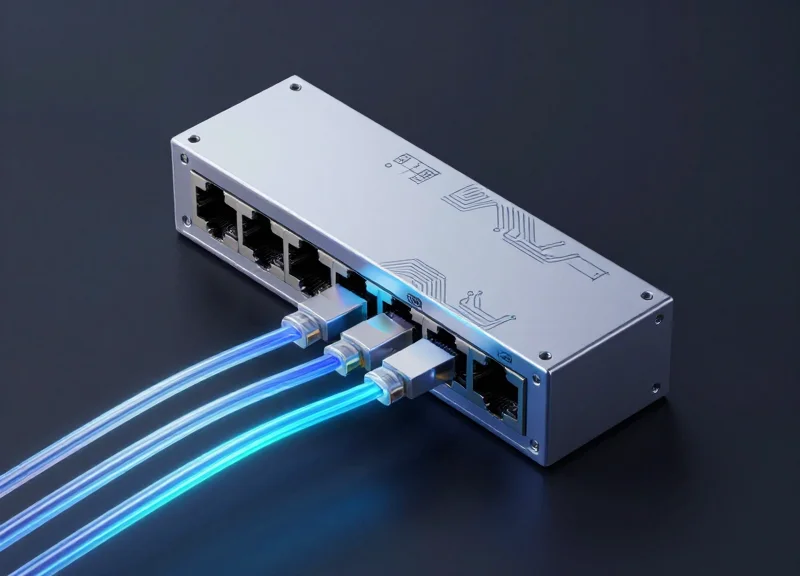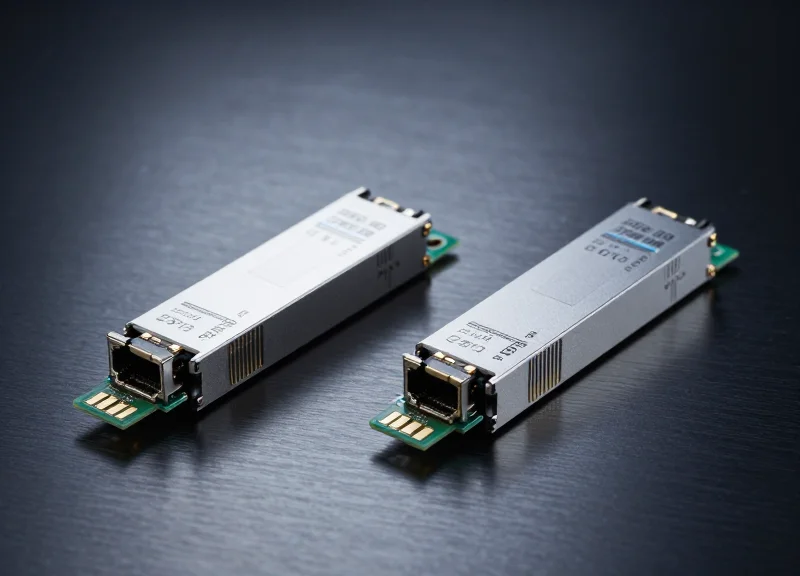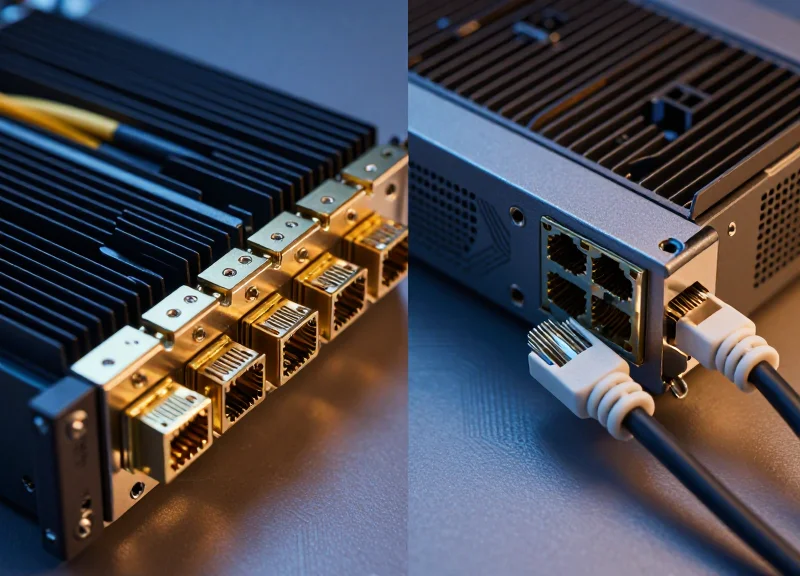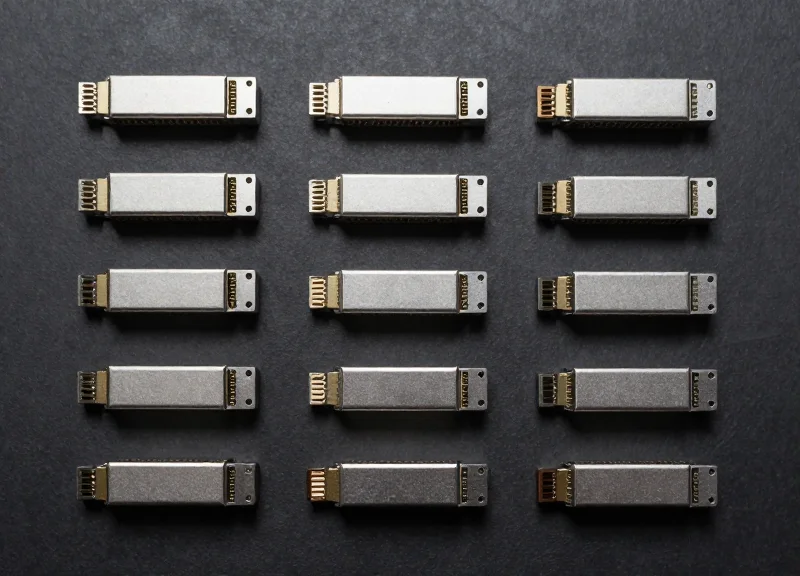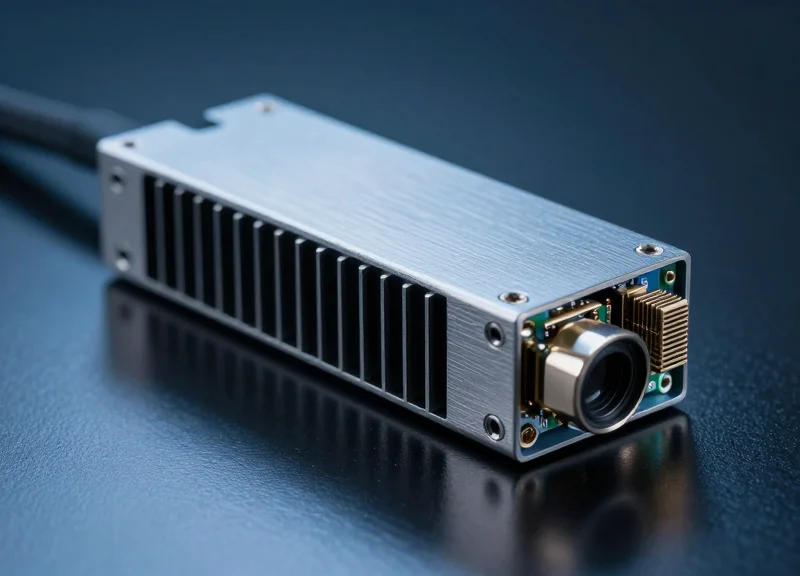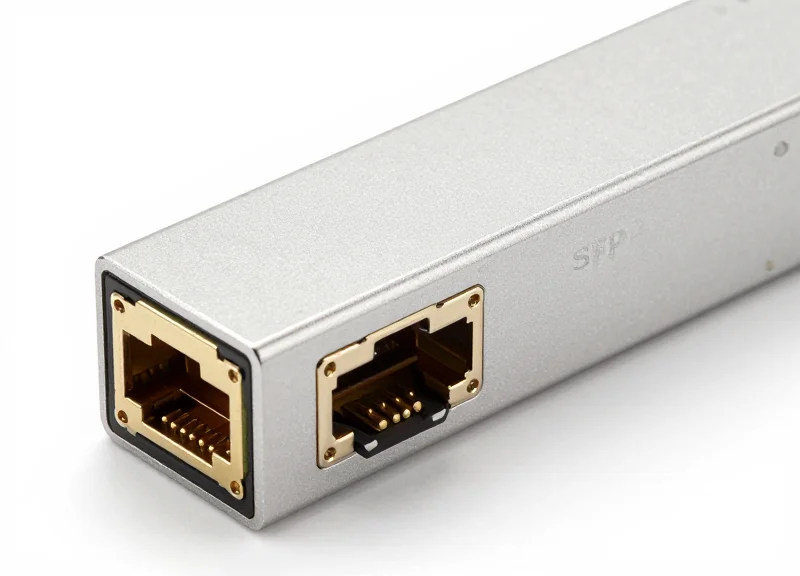
In the rapidly evolving landscape of hyperscale data centers and enterprise networks, balancing bandwidth growth with budget constraints is the ultimate challenge. 100G CWDM4 Economy modules provide the perfect middle ground, offering high-speed performance without the premium price tag. This article provides a comprehensive look at how businesses can leverage wholesale opportunities and custom manufacturing to scale their fiber infrastructure efficiently.
Understanding 100G CWDM4 Economy: Performance Meets Savings

100G CWDM4 Economy transceivers represent the strategic middle ground in high-density networking, offering a 2km reach over single-mode fiber (SMF) without the premium price tag associated with long-haul LR4 optics. The 'Economy' designation refers to specialized manufacturing efficiencies and power-optimized designs specifically tailored for commercial data center environments where distance requirements are standardized and extreme thermal ranges are managed by internal cooling systems. This allows wholesale buyers to achieve 100Gbps throughput at a significantly lower total cost of ownership compared to traditional optical standards.
The Multi-Source Agreement (MSA) Foundation
Unlike standards defined by the IEEE, CWDM4 was established by a Multi-Source Agreement (MSA) to address a specific gap in the market: the need for a low-cost, 100G interface for 2km reaches. It utilizes Coarse Wavelength Division Multiplexing (CWDM) technology to multiplex four wavelengths—1271, 1291, 1311, and 1331nm—each carrying a 25Gbps NRZ signal. This architecture allows the transceiver to operate over standard duplex LC single-mode fiber, reducing cabling complexity compared to parallel fiber solutions like PSM4.
Comparing CWDM4 Economy with Other 100G Standards
When procuring optics in bulk, understanding the trade-offs between distance, fiber type, and cost is essential. CWDM4 Economy is specifically engineered to outperform SR4 in distance and PSM4 in cabling costs, while remaining more affordable than LR4.
| Standard | Max Reach | Fiber Type | Connector | Relative Cost |
|---|---|---|---|---|
| 100G SR4 | 100m | MMF (OM4) | MPO-12 | Lowest |
| 100G PSM4 | 500m | SMF | MPO-12 | Low |
| 100G CWDM4 Economy | 2km | SMF | Duplex LC | Medium (Optimized) |
| 100G LR4 | 10km | SMF | Duplex LC | High |
Wholesale Strategic Advantages
- Reduced Power Consumption
Economy models are often designed with lower power envelopes, reducing the heat load in high-density leaf-spine architectures. - Simplified Cabling Infrastructure
By using duplex LC connectors instead of MPO, CWDM4 minimizes the cost of the physical fiber plant and simplifies cable management. - Interoperability
Despite the 'Economy' branding, these modules strictly adhere to MSA specifications, ensuring they work seamlessly with switches from major vendors like Cisco, Arista, and Juniper.
Frequently Asked Questions
- Does CWDM4 Economy require FEC?
Yes, the CWDM4 MSA requires the host system to use RS-FEC (Forward Error Correction) to ensure reliable data transmission across the 2km link. - Can I use CWDM4 for distances shorter than 2km?
Absolutely. It is the preferred choice for any single-mode link between 500m and 2km where LR4 would be over-engineered and too expensive. - What is the primary difference between CWDM4 and CLR4?
While very similar, CLR4 is a distinct MSA that supports both FEC and non-FEC applications, whereas CWDM4 is specifically designed for use with FEC, allowing for more economical transceiver designs.
The Economics of Wholesale: Why Bulk Buying is Crucial in 2026
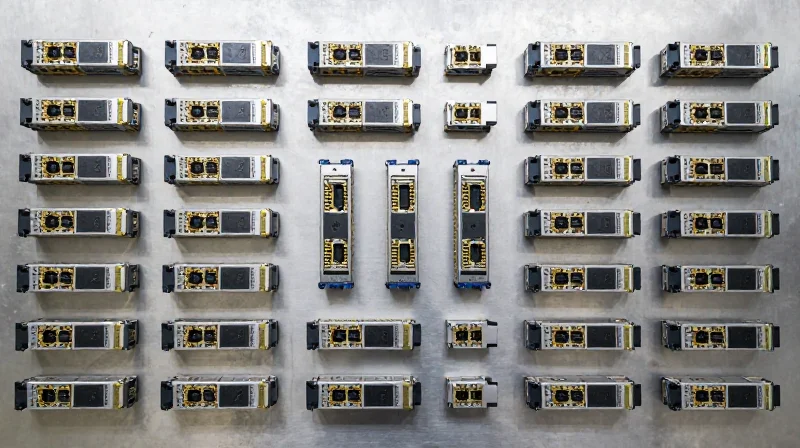
The Economic Logic of Wholesale Procurement
In the current fiscal landscape, buying 100G CWDM4 Economy modules at scale is a foundational strategy for optimizing Total Cost of Ownership (TCO). By moving from transactional purchasing to bulk acquisition, enterprises can capture aggressive tiered pricing that significantly lowers the cost-per-gigabit. This approach allows data center operators to allocate capital more efficiently, transforming what would be a variable expense into a predictable, high-value asset investment that supports long-term infrastructure scaling.
Comparative Analysis: Retail vs. Wholesale Economics
| Procurement Metric | Retail/Spot Market | Wholesale/Bulk Order |
|---|---|---|
| Unit Pricing | Standard List Price (High) | Tiered Discounts (20-35% Lower) |
| Inventory Security | Subject to Stock-outs | Guaranteed Allocation/Buffer Stock |
| Customization | Generic/Standard Only | Custom Coding and Labelling Included |
| Logistics Cost | High per-unit shipping | Consolidated Freight Efficiencies |
Shielding Your Network from 2026 Market Volatility
The 2026 supply chain remains susceptible to raw material fluctuations and geopolitical shifts affecting semiconductor fabrication. Wholesale purchasing acts as a strategic hedge against this volatility. By securing custom quotes for large volumes, businesses lock in current rates and insulate themselves from the 'price creeping' often seen in the spot market. Furthermore, bulk partners often provide 'first-right-of-refusal' on new batches, ensuring that critical 100G CWDM4 deployments are never delayed by global shortages.
Wholesale & Custom Quote FAQ
- How does a custom quote differ from standard bulk pricing?
A custom quote factors in specific requirements such as multi-vendor compatibility coding, specialized testing reports, and staged delivery schedules, often providing better value than a flat bulk rate. - What is the typical Minimum Order Quantity (MOQ) for wholesale 100G CWDM4?
While it varies by provider, significant economy-of-scale discounts typically begin at the 50 to 100-unit threshold for 2026 contracts. - Does wholesale buying affect the technical support level?
Actually, wholesale buyers usually receive dedicated account management and priority technical support, facilitating faster resolution for large-scale deployments.
Technical Deep Dive: QSFP28 CWDM4 Specifications
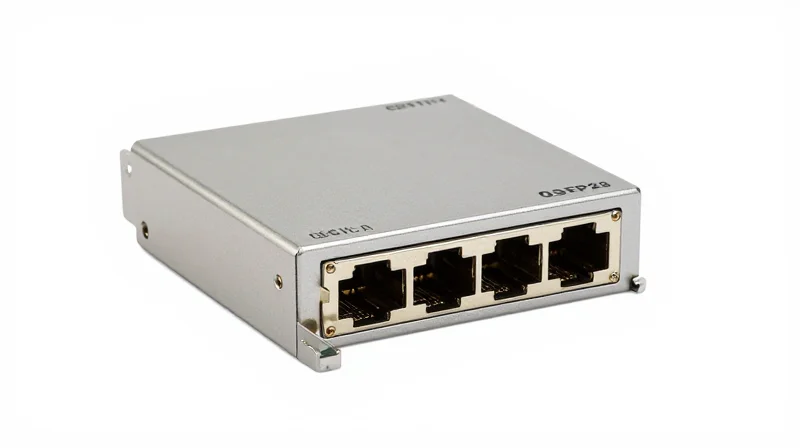
Technical Deep Dive: QSFP28 CWDM4 Specifications
The QSFP28 CWDM4 Economy module utilizes Coarse Wavelength Division Multiplexing (CWDM) technology to aggregate four 25Gbps optical signals onto a single pair of single-mode fibers (SMF), delivering a total throughput of 100Gbps. Unlike SR4 variants that require expensive multi-fiber MPO ribbons, CWDM4 optimizes infrastructure costs by leveraging duplex LC connectors and a refined optical architecture designed specifically for 2km reaches in high-density data center environments. By focusing on the 2km distance—rather than the 10km range of LR4—manufacturers can utilize uncooled DFB lasers, significantly lowering the unit cost while maintaining carrier-grade reliability.
Optical Architecture and Wavelength Grid
| Parameter | Specification | Notes |
|---|---|---|
| Center Wavelengths | 1271, 1291, 1311, 1331 nm | ITU-T G.694.2 Compliant |
| Max Link Distance | 2km | Over G.652 Single-mode Fiber |
| Connector Type | Duplex LC | Supports standard SMF patch cords |
| Modulation Type | NRZ | Low-latency non-return-to-zero |
| Optical Budget | 5.0 dB | Includes 2.0 dB for fiber attenuation |
Thermal Management and Power Consumption
Thermal efficiency is a critical differentiator for the 'Economy' series. These modules are engineered to operate within a standard commercial temperature range (0°C to 70°C) with a maximum power consumption of <3.5W per unit. By utilizing integrated Digital Diagnostic Monitoring (DDM/DOM), network administrators can track real-time metrics such as laser bias current, internal temperature, and optical power. This telemetry is vital for wholesale deployments where high-density switches generate significant heat, requiring modules that can maintain signal integrity without exceeding power envelopes.
Technical FAQ for Wholesale Buyers
- Does the CWDM4 Economy module require FEC?
Yes, the 100G CWDM4 MSA standard mandates the use of Host-side KR4 RS-FEC (Reed-Solomon Forward Error Correction) to achieve a Bit Error Rate (BER) of better than 5E-5. - Is it compatible with legacy 100G LR4 interfaces?
No. While both use SMF, they utilize different wavelength grids and spacing. CWDM4 uses 20nm spacing, whereas LR4 uses the LAN-WDM grid with much tighter spacing. They will not interoperate. - What is the expected reliability for economy-grade modules?
Despite the 'Economy' label, these modules typically maintain a Mean Time Between Failures (MTBF) exceeding 1,000,000 hours, provided they are operated within specified temperature and power limits.
OEM/ODM Capabilities: Tailoring Hardware to Your Architecture
Customizing 100G CWDM4 hardware through OEM/ODM services is the most effective strategy for eliminating vendor lock-in and ensuring that 'Economy' tier modules function flawlessly within high-performance Arista, Cisco, or Juniper environments. By tailoring the internal EEPROM code and physical specifications, enterprises can achieve the exact performance metrics of original manufacturer optics at a fraction of the wholesale cost.
EEPROM Coding and Firmware Optimization
The most critical aspect of OEM tailoring is the firmware. Most Tier-1 switch manufacturers employ 'vendor checking' protocols that reject generic transceivers. Through custom EEPROM coding, our 100G CWDM4 modules are flashed with specific vendor signatures, serial numbers, and part IDs. This ensures that the QSFP28 ports recognize the modules as 'Native,' enabling full access to DOM (Digital Optical Monitoring) features and preventing port-disablement errors.
Comparing Standard vs. Tailored 100G CWDM4 Modules
| Feature | Standard Off-the-Shelf | OEM/ODM Tailored |
|---|---|---|
| Compatibility | Generic MSA (May trigger errors) | 100% Guaranteed Vendor-Specific |
| EEPROM Coding | Fixed/Generic | Custom Serial/Part Numbering |
| Physical Labeling | Generic Manufacturer Label | Private White-Label/Logo Branding |
| Pull-Tab Color | Standard Green/Blue | Customizable for Cable Management |
| DOM/DDM Support | Basic Support | Optimized for Switch Telemetry |
Mechanical and Aesthetic Customization
Beyond the digital layer, ODM capabilities extend to the physical form factor. For large-scale data center deployments, custom pull-tab lengths or colors can be implemented to streamline cable management in high-density racks. Additionally, private labeling allows distributors and system integrators to build brand equity by featuring their own logos and bespoke packaging on high-volume wholesale orders.
Frequently Asked Questions: Custom Quotes & Compatibility
- Can a single wholesale order be coded for multiple different switch brands?
Yes. Wholesale orders can be partitioned so that a specific percentage of the batch is coded for Cisco, another for Arista, and the remainder for generic MSA environments, all under one custom quote. - Does custom firmware affect the performance of the CWDM4 laser?
No. Firmware modifications only affect how the switch identifies the module. The underlying optical performance, including the 1271-1331nm wavelength multiplexing and 2km reach, remains consistent with MSA standards. - What is the lead time for custom OEM labeling?
Typically, custom labeling adds 3-5 business days to the production cycle, depending on the complexity of the artwork and the volume of the 100G CWDM4 order.
Comparing CWDM4 vs. PSM4 and LR4: Choosing the Right 100G
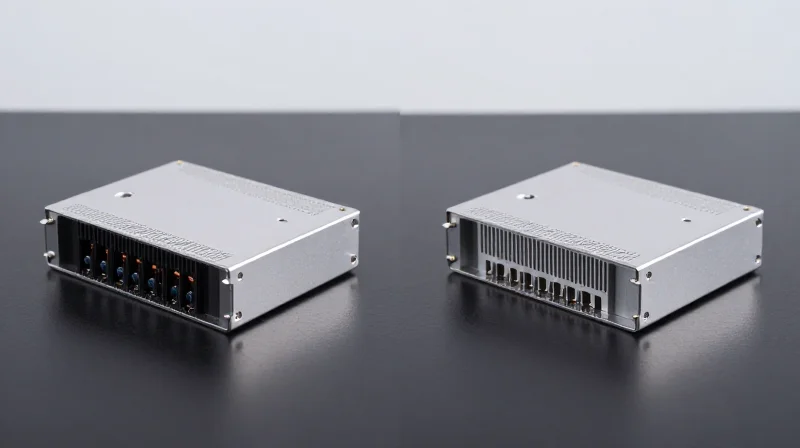
Choosing the Right 100G Standard: Finding the Performance Sweet Spot
Selecting the appropriate 100G transceiver standard is a balance between initial hardware cost, existing fiber plant infrastructure, and required reach. For data center interconnects (DCI) and enterprise backbones spanning up to 2km, the 100G CWDM4 Economy series provides the most efficient ROI by utilizing Coarse Wavelength Division Multiplexing to run 100G over a single pair of single-mode fibers (SMF), effectively bypassing the high cabling costs of PSM4 and the over-engineered thermal overhead of LR4.
Comparative Technical Matrix: CWDM4 vs. PSM4 vs. LR4
| Feature | 100G PSM4 | 100G CWDM4 | 100G LR4 |
|---|---|---|---|
| Transmission Media | 8-strand Parallel SMF | 2-strand (Duplex) SMF | 2-strand (Duplex) SMF |
| Reach (Max) | 500m to 2km | 2km | 10km |
| Connector Type | MTP/MPO-12 | LC Duplex | LC Duplex |
| Laser Technology | 4x Uncooled DML | 4x Uncooled DML (CWDM) | 4x EML (LAN-WDM) |
| Relative Cost | Low (Module) / High (Fiber) | Medium (Balanced) | High (Module) |
Infrastructure Cost vs. Module Cost
The primary differentiator between CWDM4 and PS4 lies in the fiber infrastructure. While PSM4 modules are often cheaper to manufacture because they lack optical multiplexers, they require 8 fibers per link. In large-scale wholesale deployments, the cost of high-density MPO cabling and patch panels quickly erodes any savings from the transceiver. Conversely, 100G LR4 modules are designed for long-haul 10km reaches, utilizing cooled EML lasers that consume significantly more power and generate higher heat, making them an expensive and inefficient choice for intra-data center links under 2km.
Strategic Implementation FAQ
- Can CWDM4 interoperate with LR4?
No. CWDM4 uses a 20nm grid (1271nm to 1331nm) while LR4 uses a much tighter 4.5nm LAN-WDM grid. They are optically incompatible. - Why choose 'Economy' CWDM4 for wholesale?
Economy versions are optimized for 0-70°C commercial environments, stripping away the cost of industrial-grade temperature ratings that most indoor data centers do not require. - Does CWDM4 require FEC?
Yes, the 100G CWDM4 standard requires Forward Error Correction (RS-FEC) on the host switch to ensure link integrity over the 2km span.
For engineers planning 2026 capacity upgrades, the wholesale CWDM4 Economy model represents the 'Goldilocks' zone—offering the fiber efficiency of LR4 with a price point closer to PSM4, especially when sourced through custom bulk quotes that leverage high-volume production runs.
Quality Assurance: EEAT Standards in Optical Manufacturing

Quality Assurance: EEAT Standards in Optical Manufacturing
Quality assurance for 100G CWDM4 economy modules translates technical expertise into operational trust by utilizing automated validation platforms that simulate real-world data center traffic and environmental stressors before any bulk shipment occurs. By strictly adhering to Experience, Expertise, Authoritativeness, and Trustworthiness (EEAT) principles, manufacturers ensure that 'Economy' grade modules maintain high signal integrity and low failure rates, equivalent to Tier-1 branded optics.
Signal Integrity: The Role of Eye Diagrams and BER Testing
The primary indicator of an optical transceiver's health is the Eye Diagram. A wide 'eye' opening indicates low jitter and precise timing, which is essential for the 25.78Gbps per channel rate of CWDM4. Coupled with Bit Error Rate (BER) testing, these metrics verify that the module can handle high-frequency data without loss. For wholesale purchasers, receiving a serialized test report for each module is a non-negotiable requirement for verifying quality at scale.
| Test Category | Performance Metric | Standard Threshold |
|---|---|---|
| Signal Quality | Optical Eye Diagram | Mask Margin > 20% |
| Data Integrity | Bit Error Rate (BER) | < 5x10^-5 (Pre-FEC) |
| Power Stability | Extinction Ratio | > 3.5 dB |
| Environmental | Thermal Cycling | 0°C to 70°C Stability |
Ensuring Long-Term Reliability in Bulk Shipments
When buying 100G CWDM4 economy wholesale, the risk of 'infant mortality' in hardware is mitigated through accelerated aging tests. These tests expose the modules to high temperatures and voltages for extended periods (burn-in) to identify weak components before they reach the customer. This rigorous vetting process is what separates reputable manufacturers from low-quality imitators, providing network engineers with the confidence that their bulk investment will last the full lifecycle of the network hardware.
- How do you verify the quality of a bulk 100G CWDM4 order?
Each batch should include comprehensive test reports covering wavelength accuracy, output power, and receiver sensitivity, along with a documented Eye Diagram for signal clarity. - What is the importance of BER in economy modules?
A low Bit Error Rate (BER) ensures that the Forward Error Correction (FEC) on the switch can easily manage any minor signal degradation, preventing packet drops and latency spikes. - Do economy wholesale modules carry a warranty?
Reputable wholesale suppliers following EEAT standards typically provide a 3-to-5 year warranty and a lifetime replacement policy for compatibility issues.
The Procurement Process: How to Secure the Best Custom Quotes
Strategic Procurement: Securing Competitive 100G CWDM4 Custom Quotes
To secure the most advantageous custom quotes for 100G CWDM4 Economy transceivers in 2026, procurement teams must look beyond the per-unit price and focus on total cost of ownership (TCO) and supply chain resilience. A successful procurement strategy leverages high-volume demand to negotiate tiered pricing structures while maintaining rigid standards for technical compatibility and failure rates. By centralizing the RFQ process and providing detailed network environment specifications, buyers can force competitive bidding among tier-1 and tier-2 manufacturers, ensuring that economy-grade pricing does not compromise 100G performance.
Essential Supplier Evaluation Metrics
| Evaluation Factor | Procurement Significance | Benchmark Requirement |
|---|---|---|
| Manufacturing Capacity | Ensures scalability for future upgrades | Minimum 10k units/month |
| Compliance Standards | Guarantees interoperability | MSA, CE, FCC, and RoHS compliant |
| Lead Time Consistency | Reduces project downtime risk | Stable delivery within 10-15 business days |
| Warranty & RMA Support | Protects capital expenditure | Minimum 3-year replacement guarantee |
Managing Lead Times and Bulk Logistics
For bulk orders exceeding 500 units, lead time management becomes the primary bottleneck in network expansion. Purchasing managers should negotiate 'Stock-and-Release' agreements, which allow the buyer to lock in bulk pricing while scheduling deliveries in smaller, manageable batches. This approach mitigates the risk of semiconductor shortages and ensures that 100G CWDM4 modules are available exactly when deployment phases begin. Additionally, verify that the supplier utilizes specialized anti-static packaging and provides serialized tracking for each transceiver to streamline the receiving and audit process.
Procurement FAQ: Wholesale Best Practices
- What is the minimum order quantity (MOQ) for custom quotes?
While specific thresholds vary, most manufacturers initiate custom wholesale pricing for 100G CWDM4 Economy modules at orders of 50 to 100 units. - Can we request custom firmware for different switch brands?
Yes, the RFQ should specify multi-vendor compatibility requirements. Wholesale suppliers often provide custom coding for Arista, Cisco, and Juniper environments at no extra cost for bulk orders. - How do volume tiers affect the discount percentage?
Typically, purchasers see price breaks at 100, 500, and 1,000 unit increments, with discounts ranging from 15% to 40% off the standard retail price depending on the contract duration.
Why Ubytelink is the Industry Leader for CWDM4 Solutions
Why Ubytelink is the Industry Leader for CWDM4 Solutions
Choosing the right partner for 100G CWDM4 procurement involves more than comparing unit prices; it requires a vendor that understands the nuances of spectral density, thermal management, and long-term link stability. Ubytelink dominates this sector by offering a refined 'Economy' series—a line specifically engineered to meet MSA standards while stripping away the unnecessary overhead costs typical of Tier-1 OEMs. This directly translates into higher ROI for data center operators without compromising the technical integrity of the optical link.
The Ubytelink Value Proposition vs. Generic Suppliers
| Service Metric | Ubytelink Economy Advantage | Standard Market Suppliers |
|---|---|---|
| Pricing Model | Tiered Bulk Discounts & Custom Quotes | Fixed Retail/Distributor Pricing |
| Testing Protocols | 100% In-House BER & Eye Diagram Testing | Randomized Batch Sampling |
| Customization | EEPROM Coding & Branding Available | Standard Generic Firmware |
| Lead Times | Global Logistics & Localized Inventory | Dependent on Factory Cycles |
Technical Excellence and Integration Support
Beyond hardware, Ubytelink provides end-to-end technical consultation that is often missing in wholesale transactions. Whether it is ensuring compatibility with legacy switches or optimizing link budgets for diverse 2km reaches, our engineers work directly with your procurement team. This technical-first approach minimizes the risk of network downtime and ensures that every module in a bulk order performs to exact specification upon arrival.
Strategic Value in Wholesale Procurement for 2026
Our 2026 pricing strategy is built for the current economic climate, focusing on high-volume availability and rapid fulfillment. By maintaining strategic inventory levels of CWDM4 components and leveraging vertically integrated manufacturing, we insulate our clients from the volatility of the global semiconductor supply chain. This stability makes Ubytelink the preferred partner for hyperscale expansions where timing is as critical as budget.
Frequently Asked Questions about Ubytelink Wholesale
- How does Ubytelink handle custom quotes for large projects?
We assign a dedicated account manager to evaluate your specific volume requirements and network architecture, delivering a personalized, tiered quote within 24 hours. - Are these modules compatible with major switch brands?
Yes, Ubytelink CWDM4 modules are flashed with compatibility-tested EEPROM code for all major vendors, including Cisco, Arista, Juniper, and Dell. - What is the warranty period for wholesale orders?
We provide a comprehensive 5-year warranty on all 100G CWDM4 modules, backed by a rapid replacement program to ensure zero operational lag.
Scaling your network with 100G CWDM4 Economy modules is the most strategic way to meet 2026's data demands without overextending your budget. By partnering with a dedicated wholesale and OEM/ODM provider like Ubytelink, you gain access to premium hardware and expert guidance tailored to your specific needs. Ready to take the next step? Contact Ubytelink today for a personalized bulk quote and expert consultation.