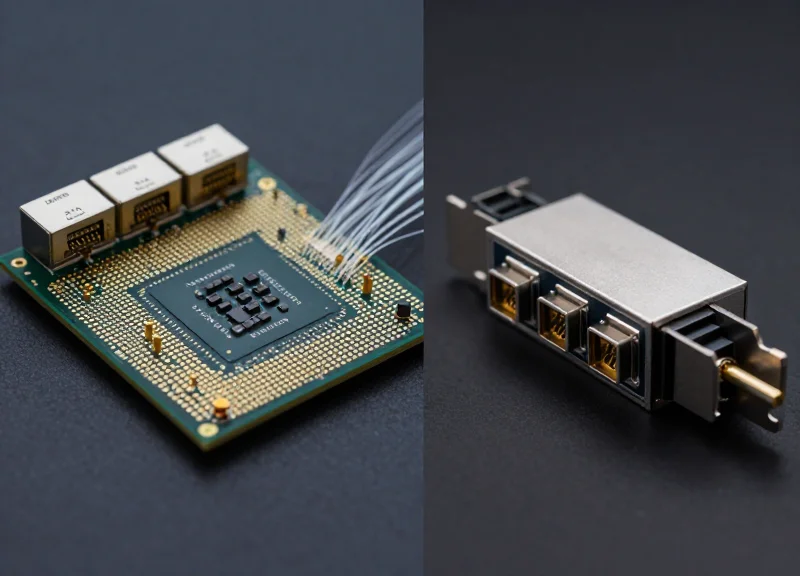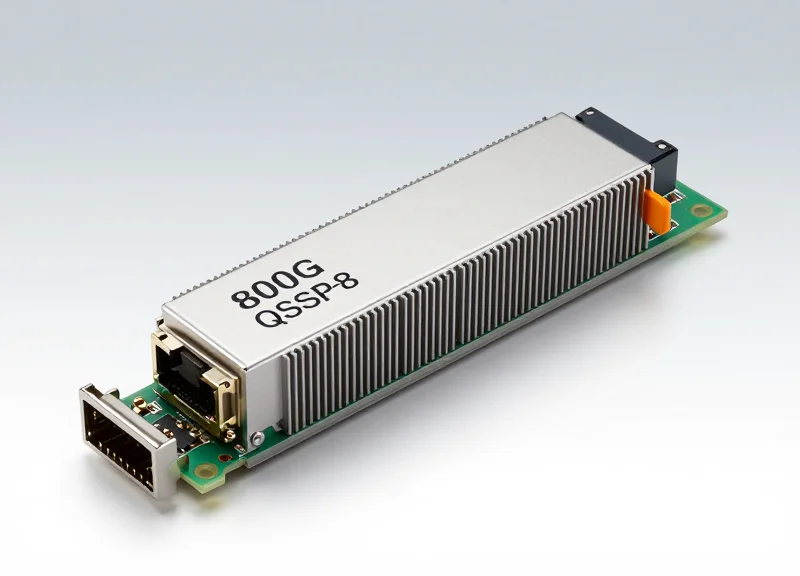
In the era of 5G and IoT, edge computing is no longer a luxury—it is a necessity for low-latency performance. However, scaling these distributed networks requires high-performance interconnects that can handle massive data throughput without breaking the budget. This guide explores how to strategically source interconnect modules through wholesale channels and leverage custom manufacturing to future-proof your infrastructure.
The Strategic Importance of Edge Computing Interconnects in 2026

The Strategic Importance of Edge Computing Interconnects in 2026
In 2026, the surge in AI-driven processing and IoT density has transitioned edge computing from a niche architecture to a core strategic necessity. Edge computing interconnects serve as the vital nervous system for this transformation, enabling data to bypass the bottlenecks of centralized cloud facilities. By facilitating high-throughput, low-latency communication directly at the data source, these specialized optical and copper modules ensure that real-time decision-making systems—ranging from autonomous vehicles to automated manufacturing lines—operate without the crippling delays of traditional backhaul routing.
Edge vs. Traditional Data Center Interconnects: Key Technical Divergences
While traditional data center interconnects (DCI) focus on massive, long-haul throughput between stable, climate-controlled environments, edge interconnects must prioritize physical durability and extreme latency optimization. Edge hardware often operates in 'unfriendly' environments—outdoor cabinets, cell towers, or factory floors—where thermal management and vibration resistance are as critical as the bit rate itself.
| Feature | Traditional DCI | Edge Interconnects |
|---|---|---|
| Primary Environment | Tier 3/4 Data Centers | NEMA Enclosures / Remote Sites |
| Temperature Tolerance | Controlled (18°C - 27°C) | Industrial Grade (-40°C to +85°C) |
| Latency Profile | Throughput Optimized | Ultra-Low Latency Optimized |
| Form Factors | QSFP-DD, OSFP | SFP28, SFP56, CSFP (Compact) |
| Resilience | Standard EMI Shielding | Enhanced Ruggedization & IP Ratings |
Throughput and Environmental Resilience
The demand for throughput at the edge has escalated to 25G and 50G per port as standard, with 100G becoming common for aggregation points. However, speed is useless without reliability. Wholesale buyers in 2026 are increasingly specifying Industrial Temperature (I-Temp) modules that can withstand the thermal cycles of outdoor deployments. This resilience reduces the Total Cost of Ownership (TCO) by minimizing truck rolls and hardware replacements in difficult-to-access geographic locations.
- Why is latency the primary driver for edge interconnect upgrades?
As applications move toward closed-loop automation, the round-trip time to a central cloud (often 50-100ms) becomes unacceptable. Edge interconnects aim for sub-10ms latency to support safety-critical systems. - What should bulk buyers look for in edge module specifications?
Buyers should prioritize I-Temp ratings, low power consumption (to reduce heat in sealed enclosures), and multi-vendor compatibility to avoid supply chain lock-in. - Are copper DACs still relevant in edge deployments?
Yes, Direct Attach Copper (DAC) cables remain essential for short-reach, top-of-rack connections within edge micro-data centers due to their near-zero latency and cost-effectiveness.
Wholesale Sourcing vs. Retail: Maximizing Your Infrastructure ROI
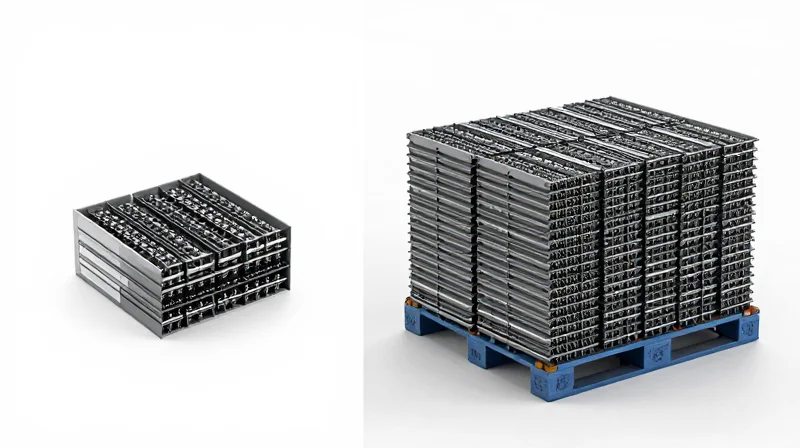
Wholesale sourcing for edge computing interconnects is the primary lever for maximizing infrastructure ROI because it eliminates the prohibitive markups associated with retail distribution and ensures hardware consistency across decentralized nodes. By shifting to bulk procurement, organizations can reduce the total cost of ownership (TCO) for edge clusters by up to 40%, allowing for more aggressive deployment schedules within the same capital expenditure (CAPEX) constraints.
Retail vs. Wholesale: Cost-Benefit Matrix
| Feature | Retail Sourcing | Wholesale (Bulk) Sourcing |
|---|---|---|
| Unit Pricing | Standard MSRP with minimal discounts | Tiered volume discounts and custom quotes |
| Inventory Reliability | Subject to market availability | Dedicated stock allocation and lead-time priority |
| Technical Support | Generic consumer-level support | Direct engineering and account management |
| Project Scalability | High incremental costs per node | Linear cost scaling with budget predictability |
Achieving Budget Stability in Volatile Markets
In 2026, the supply chain for high-speed transceivers and active optical cables (AOCs) remains sensitive to fluctuations in component availability. Wholesale agreements provide a strategic buffer, locking in pricing through custom quotes that protect long-term project budgets from sudden market spikes. This stability is crucial for edge deployments where thousands of individual interconnects must be synchronized across disparate geographic locations.
- How does wholesale sourcing improve ROI for edge computing?
Bulk purchasing lowers the initial CAPEX per site, which shortens the time-to-value for new service rollouts. Additionally, uniform hardware reduces maintenance complexity and spare parts inventory costs. - When should an enterprise switch from retail to custom quotes?
The transition should occur once a deployment exceeds 50 nodes or requires specific environmental hardening that is not available in off-the-shelf retail products. - What are the risks of sticking with retail procurement?
Retail procurement often leads to 'hardware fragmentation' where different batches of interconnects have varying performance profiles, leading to inconsistent latency and increased troubleshooting time.
The Impact of Custom Quotes on 2026 Planning
Custom quotes are not merely about price; they are about aligning hardware specifications with the precise requirements of edge environments, such as industrial temperature ratings and high-vibration resilience. In 2026, leveraging bulk pricing allows firms to reallocate saved capital into higher-bandwidth interconnects, effectively future-proofing their infrastructure without exceeding the original budget.
Navigating OEM and ODM Options for Custom Network Needs

For organizations looking to buy edge computing interconnects wholesale, the selection between Original Equipment Manufacturer (OEM) and Original Design Manufacturer (ODM) services is a strategic decision that determines the degree of hardware control, speed-to-market, and total cost of ownership. While OEM solutions provide high-quality, pre-validated components under a specific brand, ODM services offer the flexibility to co-design bespoke hardware optimized for the unique constraints of edge environments, such as extreme temperatures or restricted spatial footprints.
Defining OEM vs. ODM in the Edge Computing Landscape
In the context of 2026 network infrastructure, an OEM produces interconnects based on their own specifications, which are then purchased and utilized by other companies. Conversely, an ODM designs and manufactures products based on a client's specific requirements, essentially acting as an outsourced R&D and production wing. For edge computing, where standard data center modules may fail to meet environmental or latency standards, understanding these nuances is vital for bulk procurement success.
| Feature | OEM (Original Equipment Manufacturer) | ODM (Original Design Manufacturer) |
|---|---|---|
| Design Control | Limited to branding and minor firmware tweaks | Full control over hardware specifications and PCB layout |
| Time-to-Market | Rapid deployment of off-the-shelf components | Extended timeline due to R&D and prototyping |
| IP Ownership | Retained by the manufacturer | Often shared or owned by the client |
| Minimum Order Quantity (MOQ) | Typically lower, suitable for standard bulk orders | High MOQs required to offset engineering costs |
| Cost Structure | Standard wholesale pricing tiers | NRE (Non-Recurring Engineering) fees + unit cost |
Strategic Advantages of the OEM Model for Wholesale Buyers
The OEM model is the gold standard for projects requiring reliable, standardized interconnects that must adhere to universal protocols like SFP28, QSFP28, or OSFP. By choosing OEM wholesale options, enterprises benefit from mature manufacturing processes and existing certifications (such as CE, FCC, or RoHS), which significantly reduces the risk of deployment delays. It is the ideal path for scaling edge nodes where compatibility with existing Cisco, Arista, or Juniper ecosystems is the primary concern.
Driving Innovation Through ODM Partnerships
For specialized edge use cases—such as military-grade ruggedization, underwater sensor networks, or proprietary AI-acceleration modules—the ODM route is often necessary. ODM partnerships allow for the integration of unique chipsets or specialized cooling fins that standard OEM modules lack. This approach is increasingly popular in 2026 as telecommunications providers seek to differentiate their 5G edge offerings with custom-tailored interconnect hardware that provides a competitive edge in latency and power efficiency.
Common Procurement Questions: Customization and Logic
- What is the typical MOQ for a custom ODM interconnect project?
Most manufacturers require a minimum commitment of 1,000 to 5,000 units for custom ODM designs to justify the engineering and tooling costs. - Can OEM interconnects be customized with proprietary firmware?
Yes, many wholesale OEM providers offer 'white-label' services where custom firmware can be injected to ensure compatibility with proprietary network operating systems (NOS). - Which model offers better long-term price stability?
OEM models generally offer more predictable wholesale pricing, whereas ODM pricing can fluctuate based on the cost of specific custom components and raw material shifts.
Ultimately, the decision should be guided by your project's technical requirements and deployment timeline. For rapid expansion using proven technology, OEM wholesale is the superior choice. For breakthrough applications requiring proprietary hardware architectures, the ODM model provides the necessary flexibility to lead the market.
Key Technical Specifications for High-Performance Edge Modules
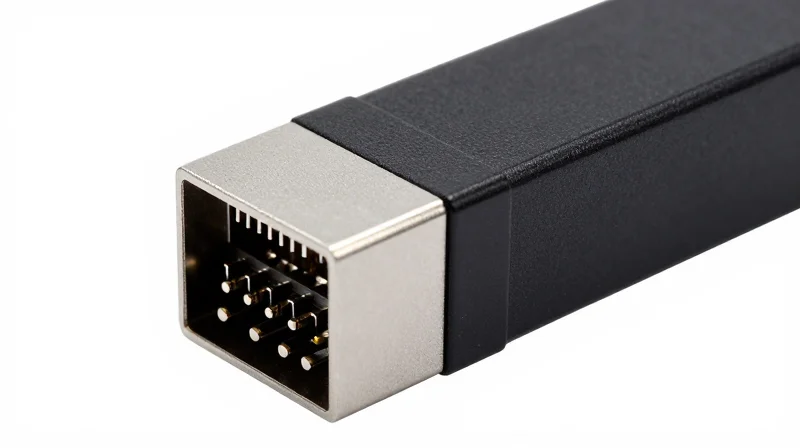
High-performance edge modules represent a critical shift in networking hardware, prioritizing extreme data density and environmental resilience over the massive, climate-controlled scaling found in traditional data centers. When sourcing interconnects for edge deployments, technical specifications must focus on minimizing signal degradation in compact spaces while maintaining the thermal stability required for remote, often unattended, installations.
Evolution of Edge Form Factors: QSFP28 vs. SFP-DD
The physical footprint of an interconnect determines the port density of edge gateways and micro-data centers. While QSFP28 remains the industry standard for 100G throughput, SFP-DD (Small Form-factor Pluggable Double Density) is emerging as the preferred choice for edge sites requiring high-speed links in a footprint compatible with legacy SFP ports.
| Form Factor | Data Rate | Lane Configuration | Edge Advantage |
|---|---|---|---|
| SFP-DD | Up to 100G | 2-Lane (PAM4) | Backward compatibility with SFP+ and high port density. |
| QSFP28 | 100G | 4-Lane (NRZ/PAM4) | Mature ecosystem and lower cost per gigabit in bulk. |
| SFP56 | 50G | 1-Lane (PAM4) | Ideal for 5G fronthaul and low-power edge nodes. |
| QSFP-DD | 200G/400G | 8-Lane (PAM4) | Future-proofing high-capacity edge aggregation points. |
Thermal Management and Power Efficiency
In the confined spaces of an edge enclosure, heat is the primary enemy of performance. Industrial-grade modules are designed with lower power consumption targets—often staying below 3.5W for 100G modules—to reduce the thermal load on passive cooling systems. Furthermore, wholesale buyers should prioritize modules with extended temperature ranges (Industrial Temp: -40°C to +85°C) to ensure operational continuity in outdoor or non-climate-controlled environments.
Technical FAQ for Edge Interconnect Sourcing
- Why is 'Double Density' (DD) critical for edge applications?
Double Density form factors allow network operators to double the number of ports in the same physical space, which is essential for compact edge hardware where rack units are limited. - How does PAM4 signaling impact edge module selection?
PAM4 (Pulse Amplitude Modulation) allows for higher data rates over existing fiber but requires modules with sophisticated Digital Signal Processors (DSPs), which may increase power consumption compared to older NRZ modules. - What is the importance of 'Industrial Temperature' ratings?
Commercial-grade modules often fail at 70°C, whereas Industrial-grade modules are tested to 85°C, making them necessary for enclosures located near heat-generating machinery or in hot climates.
Quality Assurance and Compliance in Bulk Interconnect Sourcing
In the context of 'Buy Edge Computing Interconnects Wholesale: Custom Quotes & Bulk Pricing 2026', quality assurance (QA) is not a secondary consideration but the primary safeguard against catastrophic network failure. When procuring thousands of transceivers or DAC cables for distributed edge nodes, even a 1% failure rate can result in significant operational downtime and expensive on-site maintenance. Reliable sourcing demands a rigorous vetting process that evaluates a supplier's adherence to international standards and their internal testing protocols.
Essential Industry Certifications and Standards
A reputable wholesale supplier must demonstrate compliance with globally recognized quality management systems. These certifications serve as the baseline for trust in high-volume transactions. Buyers should request documentation for ISO 9001, which ensures consistent quality management, and ISO 14001 for environmental responsibility. Furthermore, for edge environments where safety is paramount, UL (Underwriters Laboratories) and CE markings are non-negotiable for power-carrying components.
Signal Integrity and Performance Testing
| Test Type | Technical Objective | Importance for Edge Computing |
|---|---|---|
| Bit Error Rate (BER) | Measures the ratio of errored bits to total bits transmitted. | Ensures data accuracy over high-speed links in high-interference environments. |
| Eye Pattern Analysis | Visualizes signal health and timing jitter. | Critical for high-density SFP-DD and QSFP28 modules to prevent signal degradation. |
| Temperature Cycling | Tests performance under extreme heat and cold fluctuations. | Essential for unconditioned edge cabinets and outdoor enclosures. |
| Compatibility Testing | Validates the module's EEPROM coding against host hardware. | Ensures 'plug-and-play' functionality across diverse multi-vendor equipment. |
Navigating Multi-Vendor Compatibility and MSA Compliance
Edge computing architectures often leverage hardware from various manufacturers (e.g., Cisco, Arista, Juniper). To avoid the 'vendor lock-in' trap while maintaining reliability, wholesale buyers must prioritize Multi-Source Agreement (MSA) compliant interconnects. MSA standards define the physical dimensions and electrical interfaces, ensuring that third-party modules perform identically to OEM counterparts. High-quality vendors will offer customized EEPROM coding services to guarantee seamless recognition by the host's operating system.
Supply Chain Transparency and EEAT Compliance
Expertise, Authoritativeness, and Trustworthiness (EEAT) in sourcing are established through supply chain transparency. Reliable partners provide full traceability of components, from the laser source to the final assembly. Wholesale buyers should inquire about the 'Origin of Goods' and look for suppliers who perform 100% serialized testing rather than batch sampling, as this ensures every single unit in a bulk order meets the required specifications.
Quality Assurance FAQ
- How do I verify a supplier's testing claims?
Request a sample 'Test Report' for a specific serial number. Authentic suppliers provide detailed data on TX/RX power levels and wavelength accuracy. - Why is TAA compliance important for wholesale orders?
Trade Agreements Act (TAA) compliance is mandatory for US government contracts and ensures that products are manufactured in approved countries, often indicating higher manufacturing oversight. - Can custom-coded interconnects void my switch warranty?
No. Laws such as the Magnuson-Moss Warranty Act in the US protect users; however, using MSA-compliant, high-quality third-party optics is key to avoiding support disputes with OEMs.
The Ubytelink Advantage: Reliable Hardware for Scalable Networks

The Ubytelink Advantage: Reliable Hardware for Scalable Networks
Choosing Ubytelink for wholesale edge computing interconnects ensures that your infrastructure is built on a foundation of carrier-grade reliability and precision engineering. Our commitment to the 2026 standards for high-speed data transmission allows network architects to scale seamlessly while maintaining strict cost-to-performance ratios through custom quotes and tiered bulk pricing structures. By prioritizing hardware longevity and low-latency performance, we help operators mitigate the risks associated with rapid decentralized network expansion.
Carrier-Grade Reliability and Rigorous Testing
In the edge computing sector, hardware failure can lead to significant downtime in remote locations where maintenance is costly. Ubytelink addresses this by implementing a zero-tolerance quality control protocol. Every optical transceiver and DAC cable undergoes a multi-step validation process, including real-world traffic simulation and EEPROM coding verification to ensure 100% compatibility with your existing switches and routers.
| Performance Metric | Standard Wholesale Hardware | Ubytelink Carrier-Grade |
|---|---|---|
| Compatibility Testing | Generic batch sampling | 100% individual unit verification |
| Mean Time Between Failure (MTBF) | Standard industrial grade | Extended lifespan (500,000+ hours) |
| Signal Integrity | Variable based on batch | Validated high-speed waveform consistency |
| Vendor Lock-in Prevention | Limited to specific brands | Multi-vendor platform interoperability |
Scalable Solutions for Wholesale Buyers
Whether you are upgrading a regional data center or deploying thousands of micro-edge nodes, Ubytelink provides the logistical support and inventory depth needed to sustain momentum. Our wholesale program is designed for flexibility, offering bespoke coding services and custom labeling for large-scale OEM/ODM projects.
- How does Ubytelink ensure compatibility across different hardware brands?
We maintain a state-of-the-art testing lab with equipment from major vendors like Cisco, Arista, and Juniper to verify that our modules function seamlessly across diverse hardware ecosystems. - Can I request a custom quote for specific technical requirements?
Yes, our technical team specializes in generating custom quotes that account for specific cable lengths, power consumption limits, and wavelength requirements unique to edge environments. - What are the benefits of Ubytelink's bulk pricing in 2026?
Our 2026 pricing models are designed to provide significant cost savings for volume purchases, allowing for a lower total cost of ownership (TCO) without sacrificing signal integrity or build quality.
Future-Proofing Your Edge: Transitioning to 400G and Beyond

Future-Proofing Your Edge: Transitioning to 400G and Beyond
Transitioning to 400G at the network edge is a strategic imperative for organizations looking to support the next generation of AI-driven applications, 5G densification, and real-time data processing. By leveraging wholesale procurement strategies now, operators can lock in competitive pricing for high-bandwidth interconnects like QSFP-DD, ensuring that their infrastructure can handle massive throughput increases without requiring a forklift upgrade of the entire network architecture.
Evaluating the Shift from 100G to 400G Architecture
The shift to 400G represents more than just a speed increase; it introduces a transition from NRZ (Non-Return to Zero) to PAM4 (Pulse Amplitude Modulation 4-level) signaling. This evolution allows for higher data density over the same physical fiber, making it ideal for the space-constrained environments of edge data centers. Wholesale buyers must prioritize modules that balance thermal efficiency with signal integrity to ensure long-term reliability in these compact sites.
| Feature | 100G (QSFP28) | 400G (QSFP-DD) |
|---|---|---|
| Modulation | NRZ / PAM4 | PAM4 |
| Electrical Interface | 4 x 25G | 8 x 50G |
| Backward Compatibility | N/A | Supports QSFP28/QSFP56 |
| Primary Edge Use Case | Standard Access Nodes | Aggregation & AI Processing |
Strategic Procurement: Navigating the 400G Wholesale Market
When sourcing 400G interconnects wholesale, the primary goal is to minimize the cost-per-bit while maximizing hardware longevity. Requesting custom quotes that include tiered volume discounts allows for a phased rollout, where 400G is deployed at critical aggregation points first, followed by a wider deployment as edge traffic demands grow. It is also essential to vet suppliers for their roadmap support of 800G and beyond, ensuring a partner that can scale alongside your technology needs.
- When is the right time to transition to 400G wholesale?
The optimal time is when your current 100G links consistently reach 70% utilization or when deploying high-density AI clusters that require sub-millisecond latency and massive bandwidth. - Does 400G require a complete cabling overhaul?
Not necessarily. While 400G can run on existing Single Mode Fiber (SMF) using DR4 or FR4 modules, short-range deployments may require upgrading to MPO-16 connectors for multi-mode fiber. - How do custom quotes assist in 400G budgeting?
Custom quotes allow for 'mix-and-match' pricing, enabling you to bundle 10G/25G access optics with 400G core optics to achieve the best overall bulk discount.
By planning for 400G today through strategic wholesale partnerships, edge providers can ensure they have the capacity to lead the market in 2026 and beyond. The focus should remain on interoperability and high-quality silicon to prevent vendor lock-in and maintain a flexible, scalable edge ecosystem.
Streamlining Global Supply Chain Logistics for Network Hardware
In the fast-paced world of edge computing, hardware delays can derail entire network deployments, costing thousands in lost productivity. Streamlining global supply chain logistics requires a partner who integrates real-time inventory tracking with regional distribution hubs to minimize the distance between the factory floor and the edge data center. By leveraging established shipping lanes and pre-cleared customs protocols, wholesale buyers can secure the components they need while insulating themselves against the volatility of international freight, ensuring that critical milestones remain on schedule.
Overcoming Lead-Time Volatility with Strategic Warehousing
Wholesale procurement in 2026 is no longer just about price; it is about availability. A dedicated partner mitigates lead-time risks by maintaining buffer stocks of high-demand items like 100G/400G transceivers and active optical cables (AOCs). This proactive approach allows for rapid fulfillment even when global manufacturing cycles experience fluctuations. By aligning your rollout schedule with a partner’s inventory forecast, you can transition from a reactive 'break-fix' mindset to a proactive deployment strategy.
| Logistics Model | Typical Lead Time | Ideal Use Case | Risk Level |
|---|---|---|---|
| Direct Factory Ship | 4-10 Weeks | Non-urgent replenishment | High (Manufacturing delays) |
| Regional Hub Fulfillment | 3-7 Business Days | Standard project rollouts | Low (Stocked locally) |
| Vendor Managed Inventory | Next-Day/Scheduled | High-growth edge networks | Minimal (Dedicated stock) |
Logistics and Global Fulfillment FAQ
- How are international customs and duties managed for bulk orders?
We typically utilize a DDP (Delivered Duty Paid) framework for major markets, meaning our logistics team handles all import documentation and fees to ensure seamless delivery to your facility without unexpected costs. - Is multi-site distribution available for large-scale edge projects?
Yes. We can kit and ship a single wholesale order to multiple geographic locations simultaneously, allowing your field technicians to receive hardware exactly when and where it is needed. - What packaging standards are used to protect bulk interconnects?
All wholesale shipments use industrial-grade, ESD-safe packaging. We employ reinforced master cartons and individual protective sleeves for optics to ensure signal integrity is maintained during long-haul transit. - Can we track our bulk shipment in real-time?
Every wholesale order includes end-to-end tracking data, from the moment it leaves our distribution center until it reaches your loading dock, integrated via our logistics portal.
Optimizing your edge network starts with the right hardware at the right price point. By choosing Ubytelink for your wholesale interconnect needs, you gain access to tier-1 manufacturing quality and bespoke OEM/ODM capabilities. Ready to scale? Contact our expert team today for a personalized quote and technical consultation to power your 2026 infrastructure goals.