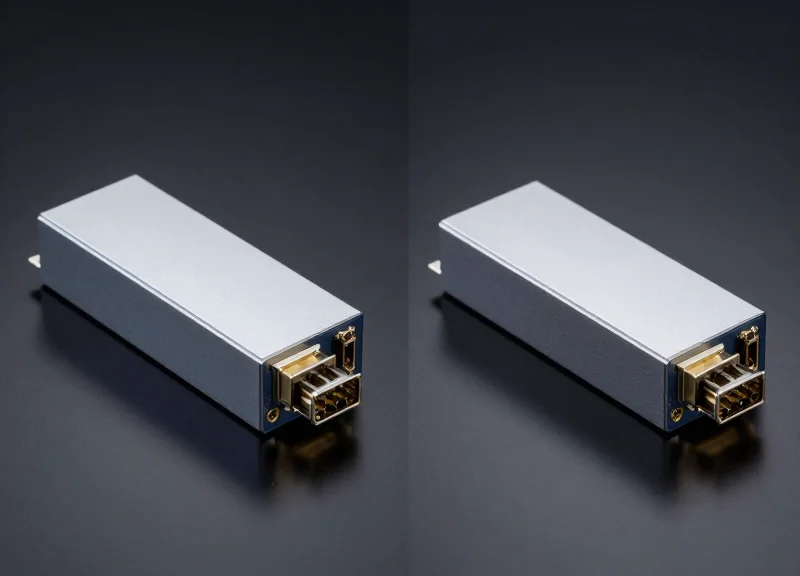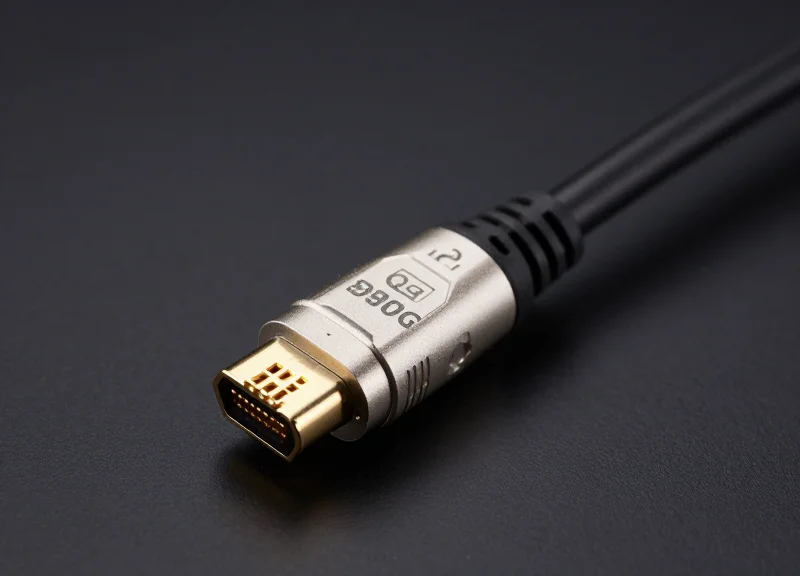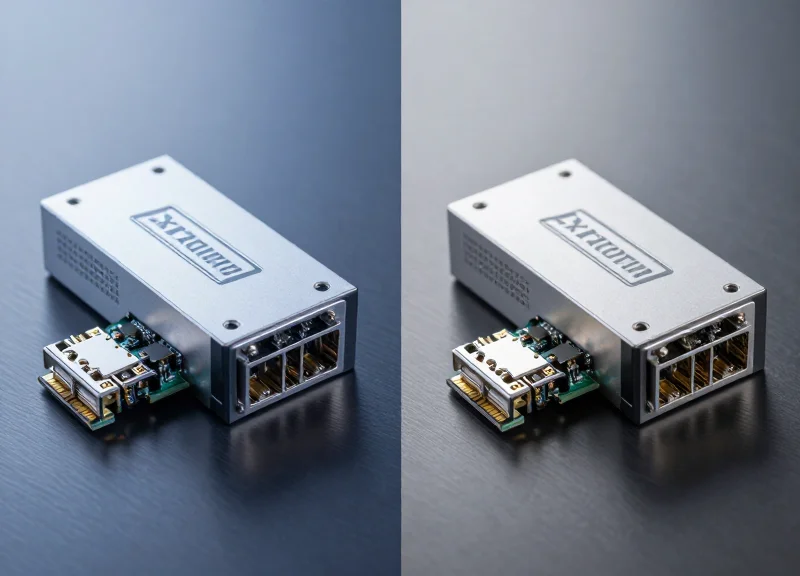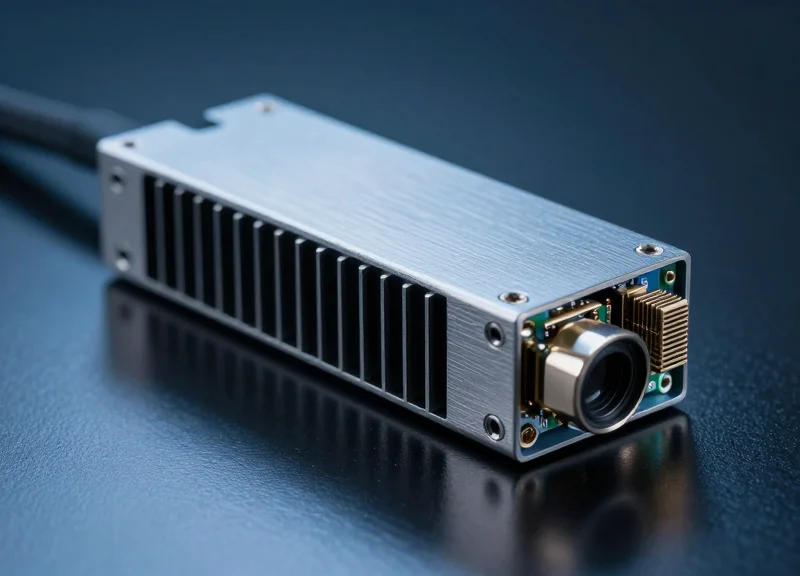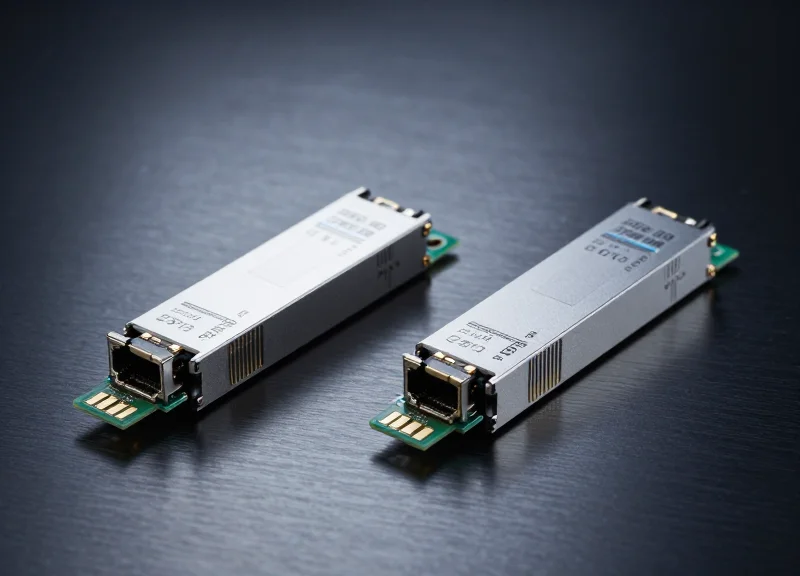
As 5G deployments accelerate, the fronthaul network faces unprecedented pressure to deliver high bandwidth and ultra-low latency. While legacy 10G solutions are reaching their limits and 100G remains cost-prohibitive for massive scale, 25G SFP28 has emerged as the industry standard. This article explores why SFP28 is the optimal choice and how it compares to alternative standards in terms of technical performance and economic viability.
The Evolution of 5G Fronthaul: Why 25G is the New Baseline

The Evolution of 5G Fronthaul: Why 25G is the New Baseline
The shift to 25G SFP28 as the baseline for 5G fronthaul is driven by the massive bandwidth requirements of 5G New Radio (NR), which legacy 10G SFP+ links cannot sustain. As operators move from the Common Public Radio Interface (CPRI) to the enhanced CPRI (eCPRI) standard, 25Gbps provides the optimal balance between throughput capacity, power efficiency, and cost-effectiveness required to support Massive MIMO and high-frequency spectrum deployments.
From CPRI to eCPRI: Solving the Bandwidth Crisis
In 4G LTE networks, the CPRI protocol functioned as a point-to-point synchronous interface that transported constant bit rate data. As 5G introduced wider channels (up to 100MHz) and Massive MIMO (64T64R), a linear scaling of CPRI would have required hundreds of gigabits per second at every cell site, which was economically unfeasible. The eCPRI standard was developed to move the functional split between the Baseband Unit (BBU) and Remote Radio Unit (RRU), effectively compressing the fronthaul traffic while requiring a 25G physical layer to handle the bursty, packetized data flow.
| Feature | CPRI (Legacy 4G) | eCPRI (5G NR) | |||
|---|---|---|---|---|---|
| Interface Speed | Typically 1.25G to 10G | Typically 25G to 50G | |||
| Efficiency | Low (Fixed bit rate) | High (Statistical multiplexing) | Functional Split | PHY-RF Split | High-PHY Split (Option 7-2x) |
| Transport Network | Point-to-Point Fibre | Ethernet/IP Based |
The Technical Superiority of 25G SFP28
The selection of 25G SFP28 as the 5G standard over 10G or 40G alternatives is a matter of engineering efficiency. 25G SFP28 utilizes a single-lane 25Gbps SerDes, which matches the form factor of the 10G SFP+. This allows network equipment manufacturers to reuse the same physical port density while delivering 2.5 times the bandwidth. Compared to 40G (which requires four 10G lanes), 25G offers lower power consumption and simplified optical design, making it the most cost-efficient path for high-density 5G radio access network (RAN) deployments.
- Why is 10G SFP+ insufficient for 5G fronthaul?
10G links lack the throughput to support the 100MHz carrier bandwidth and 64-layer MIMO configurations typical of 5G NR, leading to severe bottlenecks. - How does 25G SFP28 improve cost-efficiency?
It provides a significant increase in capacity using a single laser source, maintaining the compact SFP footprint while reducing the cost-per-bit compared to multi-lane 40G solutions. - Does eCPRI require 25G?
While eCPRI can run on various speeds, 25G is the industry-standard 'sweet spot' that accommodates the 5G functional split 7.2x requirements without over-provisioning hardware.
25G SFP28 vs. 10G SFP+: Bridging the Bandwidth Gap
The transition from 10G SFP+ to 25G SFP28 bridges the bandwidth gap by delivering a 150% increase in data throughput within the exact same physical footprint, satisfying the stringent latency and capacity requirements of 5G eCPRI fronthaul networks. While 10G SFP+ was the workhorse of 4G LTE, it cannot sustain the massive data flows required by 5G New Radio (NR), making the 25.78 Gbps capability of SFP28 the new baseline for mobile backhaul and fronthaul infrastructure.
Technical Specification Comparison: 10G vs. 25G
SFP28 (Small Form-factor Pluggable 28) is the direct successor to SFP+. The '28' denotes that each lane can handle up to 28 Gbps, though it is typically clocked at 25.78 Gbps for Ethernet and eCPRI standards. The following table illustrates the core differences between these two generations of optical modules.
| Feature | 10G SFP+ | 25G SFP28 |
|---|---|---|
| Maximum Data Rate | 10.3125 Gbps | 25.78125 Gbps |
| Standard Protocol | IEEE 802.3ae | IEEE 802.3by / 802.3cc |
| Lane Configuration | 1 x 10G | 1 x 25G |
| Form Factor | SFP+ | SFP28 (SFP+ Compatible) |
| Fronthaul Application | 4G CPRI (Option 2-8) | 5G eCPRI / CPRI (Option 10) |
| Power Consumption | Typically < 1W | Typically 1W - 1.5W |
Why 10G is Insufficient for 5G NR
The shift to 5G introduces Massive MIMO and wider channel bandwidths (up to 100MHz or more), which exponentially increases the traffic between the Building Baseband Unit (BBU) and the Remote Radio Unit (RRU). In a 4G environment, 10G SFP+ modules could easily handle the CPRI traffic for standard sector configurations. However, a single 5G 64T64R Massive MIMO antenna array can generate traffic exceeding 20 Gbps. Attempting to use 10G links in this scenario would require excessive link aggregation, consuming more switch ports and increasing fiber cabling complexity, whereas a single 25G SFP28 link handles the same load with higher efficiency.
Backward Compatibility and Path to 100G
A significant advantage of 25G SFP28 is its physical compatibility with 10G SFP+ slots. Most SFP28 ports on modern switches and routers can auto-negotiate down to 10G, allowing operators to deploy 25G-capable hardware today while still utilizing legacy 10G optics. Furthermore, four-lane 100G (QSFP28) technology is built upon the same 25G electrical lane architecture, making SFP28 the building block for future network scaling.
- Can I use SFP28 modules in SFP+ ports?
Generally no. While SFP28 ports are backward compatible with SFP+ modules, an SFP+ port typically lacks the electrical clock rate to support a 25G SFP28 module unless specifically designed by the manufacturer. - What is the primary benefit of 25G over 10G in terms of cost?
25G provides 2.5 times the bandwidth of 10G at a price point that is significantly less than 2.5 times the cost of 10G, resulting in a much lower cost-per-gigabit. - Does 25G require different fiber cabling than 10G?
No, both SFP+ and SFP28 use the same LC duplex connectors and standard Single Mode Fiber (SMF) or Multi-Mode Fiber (MMF), although 25G is more sensitive to signal loss over long distances.
Latency Benchmarks: Meeting the Demands of URLLC
25G SFP28 technology serves as the critical physical layer foundation for 5G Ultra-Reliable Low-Latency Communications (URLLC) by providing the necessary bandwidth to minimize serialization delay while utilizing advanced SerDes (Serializer/Deserializer) architectures that keep processing overhead to a minimum. Unlike legacy 10G systems that struggle with congestion-induced jitter, the 25Gbps rate ensures that high-priority URLLC packets are transmitted across the fronthaul with deterministic latency, typically keeping the transceiver-level delay in the nanosecond range to preserve the tight 1ms end-to-end budget required for mission-critical applications.
Technical Drivers of Latency in the 5G Fronthaul
In a 5G New Radio (NR) environment, latency is composed of propagation delay (the physical speed of light through fiber) and equipment processing delay. While fiber propagation is constant at approximately 5µs per kilometer, the efficiency of the SFP28 module's internal circuitry is what differentiates performance. 25G SFP28 modules are designed to support the eCPRI protocol, which allows for more efficient functional splits (such as Split 7.2x) between the Baseband Unit (BBU) and Radio Unit (RU). This optimization reduces the volume of data that must be processed in real-time, effectively lowering the overall 'time-to-air' for wireless signals.
Comparative Latency Performance Benchmarks
| Interface Type | Serialization Delay (64B Packet) | Processing Latency | URLLC Compatibility |
|---|---|---|---|
| 10G SFP+ | 51.2 ns | ~300-500 ns | Insufficient |
| 25G SFP28 | 20.48 ns | < 100 ns | Optimal |
| 100G QSFP28 | 5.12 ns | < 100 ns | High (But Over-provisioned) |
Minimizing Jitter with Deterministic Processing
For URLLC to be effective in applications like autonomous driving or remote surgery, latency must not only be low but also highly consistent (low jitter). 25G SFP28 transceivers achieve this through the use of high-precision Clock and Data Recovery (CDR) circuits. These components ensure that data is retimed and transmitted with minimal phase noise. Furthermore, the use of Forward Error Correction (FEC) is often optimized or bypassed (using 'FEC-off' modes) in short-reach fronthaul links to eliminate the computational delay associated with error-correction algorithms, further shaving off tens of microseconds from the signal path.
Frequently Asked Questions: Latency & URLLC
- How does the 25G SFP28 reduce serialization delay compared to 10G?
Serialization delay is the time required to pulse data bits onto the fiber. Because 25G operates at a 2.5x higher clock rate than 10G, it places bits on the medium significantly faster, reducing the time a packet spends entering and exiting the transceiver. - Does the choice of SFP28 reach (SR vs. LR) impact latency?
The reach itself (e.g., 300m vs 10km) does not change the internal processing speed of the module, but the total link latency will increase by approximately 5ns per meter due to fiber propagation. 25G LR modules are typically used in fronthaul to maintain signal integrity over longer spans without needing mid-span amplification, which would add latency. - Can 25G BiDi SFP28 modules improve URLLC performance?
Yes. Bidirectional (BiDi) modules use a single fiber for both TX and RX. This eliminates path length asymmetry between the uplink and downlink, which is critical for the high-precision time synchronization (PTP/IEEE 1588) required by 5G URLLC services.
Power Consumption Analysis: Efficiency at the Edge
Power Consumption Analysis: Efficiency at the Edge
The 25G SFP28 transceiver represents the optimal balance of power consumption and throughput for 5G fronthaul, typically operating under 1.5W per module to ensure that remote radio units (RRUs) remain within strict thermal and energy budgets. Unlike data center environments, the 5G edge demands hardware that can survive extreme temperatures with limited cooling, making the low power-per-bit profile of SFP28 a critical design requirement rather than a luxury.
Granular Scaling vs. High-Density Power Draw
When comparing 25G SFP28 to 100G QSFP28 alternatives, the primary advantage lies in granularity. A 100G module often consumes between 3.5W and 5W. While this might seem efficient for bulk data, 5G fronthaul links often require discrete 25G paths for different sectors or MIMO layers. Using an SFP28 allows operators to power only the capacity they need, avoiding the 'stranded power' associated with underutilized 100G ports. This granular approach reduces the total heat load on the RRU chassis, which is often cooled passively in outdoor deployments.
| Metric | 25G SFP28 (SR/LR) | 100G QSFP28 (LR4) |
|---|---|---|
| Typical Power Consumption | 1.0W - 1.5W | 3.5W - 5.0W |
| Max Operating Temperature | Industrial (-40°C to 85°C) | Commercial (0°C to 70°C) |
| Power-per-Bit Efficiency | Excellent for 25G-50G links | High for 100G, poor for partial loads |
| Thermal Footprint | Low and distributed | High and concentrated |
Thermal Challenges in Outdoor 5G Deployments
Remote Radio Units are frequently installed in environments where ambient temperatures exceed 50°C. Because these units are sealed to meet IP65/IP67 ratings, heat must be dissipated through the metal casing. SFP28 modules are designed with industrial temperature (I-Temp) tolerances in mind, ensuring that signal integrity is maintained even as the module approaches 85°C internally. The smaller form factor of SFP28 also allows for more effective heat-sinking on the front panel of the RRU compared to the larger, heat-intensive QSFP28 modules.
- Why is power consumption critical for 5G fronthaul?
Most 5G RRUs are pole-mounted and rely on passive cooling. High power consumption increases internal temperatures, which can lead to component failure or thermal throttling of the radio performance. - How does SFP28 compare to 10G SFP+ in terms of efficiency?
SFP28 provides 2.5 times the bandwidth of 10G SFP+ with only a marginal increase in power (often less than 0.2W difference), significantly improving the power-per-bit ratio. - Does SFP28 support industrial temperature ranges?
Yes, most 25G SFP28 modules for fronthaul are specifically rated for Industrial Temperature ranges (-40°C to 85°C) to handle the rigors of outdoor edge environments.
Total Cost of Ownership (TCO): The Economic Reality

Total Cost of Ownership (TCO): The Economic Reality
The transition to 5G fronthaul is as much a financial challenge as it is a technical one, and 25G SFP28 technology stands as the most pragmatically priced solution for current network demands. By offering a 2.5x capacity increase over legacy 10G infrastructure while maintaining the same physical footprint, 25G SFP28 avoids the massive capital outlays required for 100G hardware while delivering the necessary bandwidth for 5G New Radio (NR) deployments. The economic reality is that 25G SFP28 provides the lowest cost-per-bit in the edge environment, where port density and fiber availability are often constrained.
CapEx Breakdown: Transceivers and Infrastructure
Capital expenditure (CapEx) in the fronthaul is primarily driven by transceiver unit costs and the compatibility of existing hardware. Since 25G SFP28 is backward compatible with SFP+ ports in many instances, operators can often upgrade their bandwidth without a full chassis replacement. Furthermore, the massive scale of 25G production for the data center market has created an economy of scale that 100G QSFP28 solutions, which require more complex internal components like four-channel lasers, cannot yet match for edge-access price points.
| Metric | 10G SFP+ | 25G SFP28 | 100G QSFP28 |
|---|---|---|---|
| Relative Cost per Unit | 1.0x (Baseline) | 1.2x - 1.5x | 4.5x - 6.0x |
| Fiber Efficiency | Low | High (with BiDi/WDM) | Very High |
| Power Consumption | ~1W | ~1.5W | 3.5W - 5W |
| Infrastructure Reuse | 100% | High (SFP Compatible) | Low (Requires QSFP Ports) |
OpEx: Fiber Utilization and Maintenance
Operational expenditure (OpEx) is significantly reduced through efficient fiber utilization. 25G SFP28 modules support Bidirectional (BiDi) and Wavelength Division Multiplexing (WDM), allowing multiple 25G streams to share a single fiber strand. This is critical in dense urban areas where leasing new fiber can cost thousands of dollars per kilometer annually. Additionally, the thermal efficiency of 25G modules results in lower cooling costs at the Remote Radio Unit (RRU), extending the lifespan of outdoor equipment compared to the high-heat profile of 100G alternatives.
- Is the upgrade from 10G to 25G cost-effective?
Yes, because it provides 150% more bandwidth for only a marginal increase in transceiver cost, often utilizing the same fiber cables and rack space. - How does 25G impact the power budget?
25G SFP28 is highly efficient, drawing significantly less power per gigabit than 10G, which reduces the total energy bill for large-scale cell site deployments. - Does 25G reduce fiber leasing costs?
By utilizing BiDi and WDM technologies, 25G SFP28 can reduce the number of required fiber strands by 50% or more, directly lowering OpEx for leased infrastructure.
In summary, while 100G remains the choice for core aggregation, the TCO for the 5G fronthaul favors 25G SFP28. Its ability to balance initial hardware costs with long-term savings in power and fiber leasing makes it the standard-bearer for sustainable 5G expansion.
Alternative Technologies: WDM, BiDi, and Tunable SFP28
Advanced 25G Variants: Solving Fiber Scarcity and Deployment Complexity
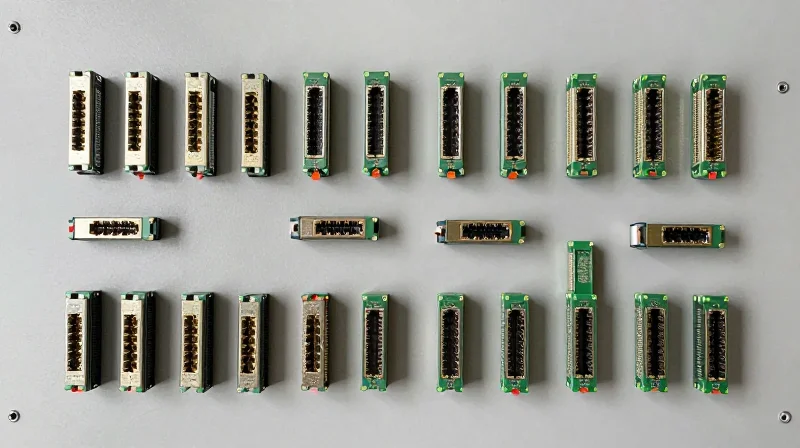
While standard dual-fiber 25G SFP28 modules serve as the baseline for 5G fronthaul, alternative technologies like BiDi and WDM are often preferred because they significantly reduce the amount of physical fiber required between the Building Baseband Unit (BBU) and Remote Radio Unit (RRU). In scenarios where fiber leasing costs are high or physical duct space is exhausted, these alternatives provide a more scalable and cost-effective path than simply pulling more glass.
Bidirectional (BiDi) SFP28: Single-Strand Efficiency
BiDi SFP28 modules utilize Wavelength Division Multiplexing to transmit and receive data over a single strand of fiber by using two different wavelengths (typically 1270nm and 1330nm). By cutting fiber requirements by 50%, BiDi optics allow operators to double the capacity of their existing fiber plant instantly. This is particularly advantageous in urban 5G rollouts where municipal fiber access is limited and expensive.
WDM SFP28 (CWDM and DWDM)
Coarse Wavelength Division Multiplexing (CWDM) and Dense Wavelength Division Multiplexing (DWDM) SFP28 modules are used when multiple 5G sectors need to be aggregated onto a single fiber pair. Passive CWDM can support up to 18 channels, while DWDM can support significantly more. This technology is essential for 'C-RAN' (Centralized Radio Access Network) architectures, where a single hub serves dozens of remote sites, drastically reducing the total cost of ownership (TCO) of the transport network.
Tunable SFP28: Simplification of Inventory
Tunable DWDM SFP28 modules represent the high-end of alternative technologies. Unlike fixed-wavelength modules that require a unique SKU for every channel, a single Tunable SFP28 can be programmed to any wavelength on the ITU-T C-band grid. This reduces the operational burden of 'sparing' (keeping backup stock), as one module can replace any of 40+ different fixed-channel optics, simplifying field maintenance and emergency repairs.
| Technology | Fiber Usage | Relative Cost | Primary Use Case |
|---|---|---|---|
| Standard SFP28 | Dual Strand | Low | Short-reach, abundant fiber sites |
| BiDi SFP28 | Single Strand | Medium | Fiber-constrained urban fronthaul |
| WDM (Fixed) | 1 Pair (Shared) | Medium-High | High-density C-RAN aggregation |
| Tunable SFP28 | 1 Pair (Shared) | High | DWDM networks, inventory optimization |
- Can BiDi SFP28 communicate with standard SFP28?
No, BiDi modules must be used in pairs (upstream and downstream) and are incompatible with standard dual-fiber modules due to their single-port, dual-wavelength design. - Is Tunable SFP28 worth the higher initial price?
Yes, for large-scale DWDM deployments. The reduction in inventory complexity and the ability to dynamically reconfigure channels often outweigh the higher per-unit CapEx through OpEx savings. - Does WDM impact latency in 5G fronthaul?
Passive WDM systems introduce negligible latency, making them fully compliant with the strict timing requirements of the CPRI/eCPRI protocols used in 5G.
Future-Proofing for 5G Advanced and Beyond
Future-Proofing for 5G Advanced and Beyond
25G SFP28 technology is uniquely positioned as the long-term baseline for 5G fronthaul because it balances immediate capacity requirements with a highly scalable form factor. As operators transition toward 5G Advanced (3GPP Release 18 and beyond), the investment in 25G infrastructure acts as a strategic bridge, ensuring that current deployments can support increased bandwidth demands through evolutionary rather than revolutionary hardware upgrades.
Scalability to 50G and 100G
The evolution of the SFP form factor ensures that the physical layer of the fronthaul does not become a bottleneck. By utilizing PAM4 (Pulse Amplitude Modulation) signaling, the industry has paved the way for 50G (SFP56) and 100G (SFP112) modules that maintain the same compact footprint as the 25G SFP28. This allows network operators to reuse existing high-density switch chassis and O-RAN configurations while doubling or quadrupling capacity as cell site traffic intensifies.
| Technology | Form Factor | Modulation | Target Application | Backward Compatibility |
|---|---|---|---|---|
| 25G SFP28 | SFP28 | NRZ | Standard 5G Fronthaul | 10G SFP+ |
| 50G SFP56 | SFP56 | PAM4 | Massive MIMO / 5G Advanced | 25G SFP28 |
| 100G SFP112 | SFP112 | PAM4 | High-Capacity Aggregation | 50G / 25G |
The Role of O-RAN and Ecosystem Longevity
The shift toward Open RAN (O-RAN) architectures further solidifies the 25G SFP28's role. Because O-RAN emphasizes standardized interfaces, the SFP28 module remains the most cost-effective, multi-vendor interoperable solution available. This prevents vendor lock-in and ensures that as the ecosystem matures toward 5G Advanced, the supply chain for 25G components remains robust, driving down OpEx through economies of scale and simplified sparing strategies.
- Will 25G SFP28 be obsolete when 6G arrives?
No; while 6G will require significantly higher speeds at the core, 25G is expected to remain a dominant edge and fronthaul standard for years due to its optimal balance of power consumption, thermal performance, and cost. - Can I use SFP56 modules in SFP28 ports?
Generally, yes, if the host port supports the necessary clock rates. The SFP form factor is designed for backward compatibility, though the link will likely be throttled to the maximum speed of the port (25G). - Does 5G Advanced mandate 50G fronthaul?
Not strictly. 5G Advanced optimizes current spectrum, but only ultra-wideband Massive MIMO deployments (e.g., 64T64R with 200MHz bandwidth) typically require moving beyond the capacity of a single 25G link.
Choosing the right optical transceiver is critical for the success of 5G infrastructure. While 10G is fading and 100G is often overkill, 25G SFP28 provides the perfect balance of performance, power efficiency, and cost. For network architects looking to optimize their 5G fronthaul, prioritizing SFP28 ensures a scalable and reliable network. Contact our engineering team today for a customized optical solution audit.