In the fast-paced world of global networking, hardware reliability is the backbone of success. As enterprises scale their infrastructure using Juniper switches, the demand for high-performance optical modules has never been higher. This article explores how Ubytelink bridges the gap between premium OEM performance and budget-conscious deployment, providing the stability required for today's most demanding environments.
The Evolution of Modern Network Infrastructure and the Role of Optics
The Shift Toward Optical Dominance in Modern Networking
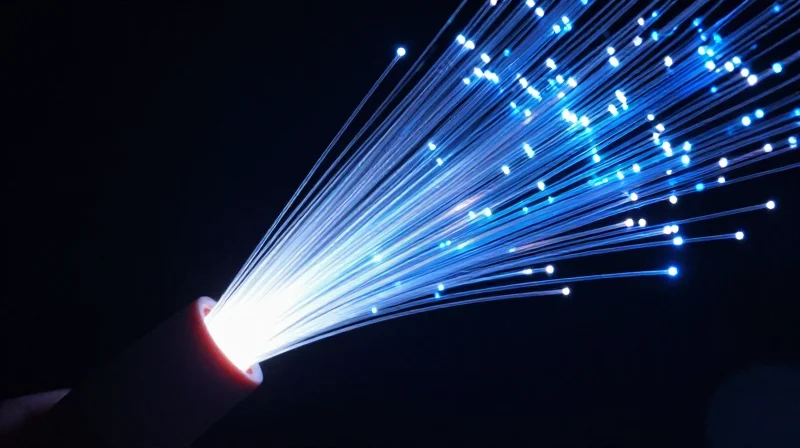
The evolution of modern network infrastructure is defined by the migration from copper-based signals to optical transmission, a transition necessitated by the exponential growth in global data consumption. As enterprises and service providers scale their operations to meet the demands of cloud computing, AI workloads, and 5G connectivity, the physical layer must evolve to handle terabits of throughput. Fiber optics have emerged as the backbone of this movement, offering virtually unlimited bandwidth potential and significantly lower signal attenuation compared to traditional electrical conductors. In this landscape, the transceiver is no longer a mere peripheral; it is the critical translation engine that converts electrical data from high-performance hardware, such as Juniper switches, into light pulses capable of traversing global distances at the speed of light.
Comparing Transmission Mediums in Enterprise Environments
| Feature | Copper (Base-T/DAC) | Fiber Optics (SMF/MMF) |
|---|---|---|
| Maximum Distance | Up to 100m (Cat6a) / 7m (DAC) | Up to 100km+ (Single Mode) |
| Bandwidth Capacity | Limited (up to 10G/40G) | Extremely High (400G/800G+) |
| EMI Resistance | Susceptible to interference | Immune to electromagnetic interference |
| Latency | Higher due to signal processing | Ultra-low at speed of light |
The Critical Role of the Transceiver in Data Throughput
While the fiber optic cable provides the pathway, the transceiver determines the efficiency and integrity of the data flow. In a Juniper-driven environment, the compatibility and quality of the optics directly impact the bit error rate (BER) and overall network stability. Low-quality or non-optimized transceivers can lead to packet loss, increased heat generation, and unpredictable port failures, which ripple through the architecture to cause service disruptions. Premium solutions, such as those provided by Ubytelink, ensure that the precise wavelengths and power levels required by Juniper’s advanced Junos OS are maintained, securing the high-speed throughput necessary for modern global networks.
Network Evolution FAQ
- Why is fiber preferred over copper for modern 100G+ networks?
Fiber offers significantly lower attenuation and higher frequency support, allowing data to travel further and faster without the physical limitations and heat generation inherent in copper cabling. - Does the choice of optics affect energy efficiency?
Yes. High-quality transceivers are engineered for lower power consumption per gigabit, which reduces the total cost of ownership and cooling requirements in large-scale data centers. - How do Ubytelink optics ensure compatibility with Juniper hardware?
They are programmed with specific EEPROM signatures that match Juniper's strict hardware requirements, ensuring seamless integration and full diagnostic visibility through the switch CLI.
Why Juniper Switch Users Are Moving Toward Specialized Third-Party Solutions
The migration toward specialized third-party optics for Juniper switches is primarily driven by the need to optimize capital expenditure (CAPEX) and enhance supply chain resilience without sacrificing the high-performance standards required by modern data centers. As organizations scale their 10G, 40G, and 100G infrastructures, the 'vendor tax' associated with OEM-branded optics has become an unsustainable operational burden, prompting a shift toward providers who offer equivalent technical specifications at a fraction of the cost.
The Economic and Operational Drivers of the Market Shift
For years, network administrators adhered to OEM optics out of a perceived necessity for hardware stability. However, the democratization of optical technology has revealed that specialized third-party modules often utilize the same high-tier components—such as lasers from Broadcom or Lumentum—found in branded modules. By choosing specialized alternatives, enterprises can reallocate significant portions of their budget from basic connectivity components to core infrastructure upgrades or security initiatives.
| Feature | OEM (Juniper) Branded | Ubytelink Specialized Solutions |
|---|---|---|
| Price Point | High Premium (up to 800% markup) | Cost-Effective (Transparent Pricing) |
| Lead Time | Can range from weeks to months | Immediate stock / Rapid shipping |
| Warranty | Standard 1-year limited | Lifetime Replacement Warranty |
| Component Quality | Tier-1 MSA Compliant | Tier-1 MSA Compliant |
| Multi-Vendor Support | Locked to specific hardware | Cross-platform compatibility |
Addressing Common Concerns in Specialized Optics Adoption
- Will using third-party optics void my Juniper switch warranty?
No. Under the Magnuson-Moss Warranty Act and similar international fair-trade laws, OEMs cannot legally void a hardware warranty simply for using a third-party peripheral unless that specific component causes direct damage to the system. - How do third-party modules ensure Junos OS compatibility?
Specialized providers like Ubytelink utilize advanced coding labs to program the EEPROM of each transceiver with the specific signatures required for seamless recognition by the Junos operating system, preventing 'unsupported transceiver' errors. - Is the performance identical to OEM modules?
Yes. Because these solutions adhere to Multi-Source Agreements (MSA), the electrical and optical performance parameters are identical to the standards used by Juniper, ensuring the same bit-error rates (BER) and reach.
Reliability in High-Density Environments
In high-density Juniper environments, such as those utilizing the QFX or EX Series switches, heat dissipation and power consumption are critical factors. Specialized third-party providers focus on rigorous testing protocols that simulate these high-load environments. By ensuring that optics operate within the exact thermal and power envelopes specified by Juniper, these solutions maintain the long-term health of the switch chassis while providing the 24/7 reliability required for global network operations.
The Ubytelink Advantage: Rigorous Testing and Quality Assurance
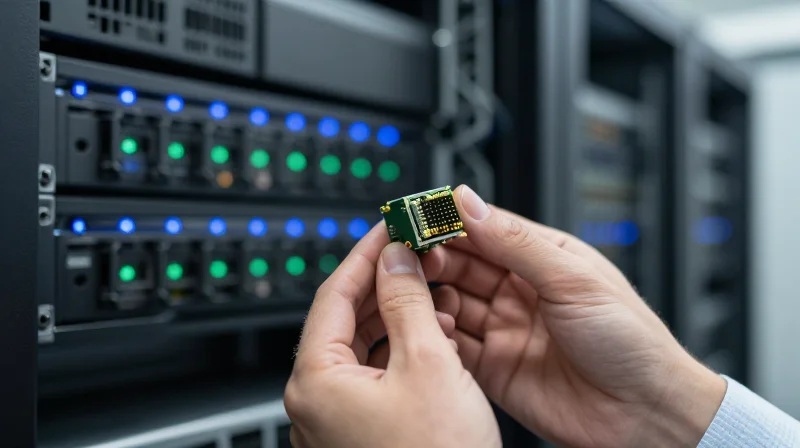
Ubytelink distinguishes itself in the networking market by moving beyond generic 'compatible' labels, instead employing a comprehensive validation framework that mirrors the exact operational demands of Juniper EX, QFX, and MX series hardware. This 'zero-compromise' approach ensures that every optical transceiver delivered behaves exactly as an OEM component would, maintaining signal integrity and total Junos OS interoperability across global data center deployments.
The 100% Compatibility Testing Protocol
Unlike mass-market third-party vendors that rely on batch-based statistical sampling, Ubytelink subjects every single unit to an exhaustive testing cycle. We utilize an on-site test bed comprising the latest Juniper switching platforms to verify that our optics are recognized instantly by the system without 'unsupported transceiver' warnings or software-level rejections.
| Testing Parameter | Generic Third-Party Optics | Ubytelink Juniper Solutions |
|---|---|---|
| Hardware Validation | Generic Emulator Testing | Actual Juniper Switch Testing |
| EEPROM Coding | Static/Generic Code | Custom Serialized & Vendor Specific |
| Failure Rate Goal | Approx. 1-3% | Target Zero-Fail (0.01%) |
| Thermal Stressing | Rarely Performed | Mandatory 24-48 Hour Burn-in |
Production-Grade Reliability Metrics
- Signal Integrity & Bit Error Rate (BER)
Each module is tested for laser eye diagram stability and receiver sensitivity to ensure BER is well below the required threshold for 10G, 40G, and 100G speeds. - Junos OS Interoperability
We verify compatibility across multiple versions of Junos OS, ensuring that diagnostic commands like 'show chassis hardware' and 'show interfaces diagnostics optics' provide real-time, accurate data. - Digital Optical Monitoring (DOM) Accuracy
Precise calibration of DOM sensors allows network administrators to monitor temperature, voltage, and bias current with the same precision as original Juniper components.
Quality Assurance FAQ
- Will Ubytelink optics void my Juniper warranty?
No. Under international law (such as the Magnuson-Moss Warranty Act in the US), hardware vendors cannot void a warranty solely for using third-party components unless those components directly cause damage. - How do you handle Junos firmware updates?
Our engineering team continuously monitors new Junos releases. Our optics are coded with firmware-resilient EEPROM settings to ensure they remain functional even after major system updates. - What is the return rate for Ubytelink solutions?
Due to our individual unit testing, our return rate is lower than the industry average for OEM optics, currently maintaining a success rate exceeding 99.98%.
Comprehensive Compatibility: Supporting Juniper EX, QFX, and MX Series
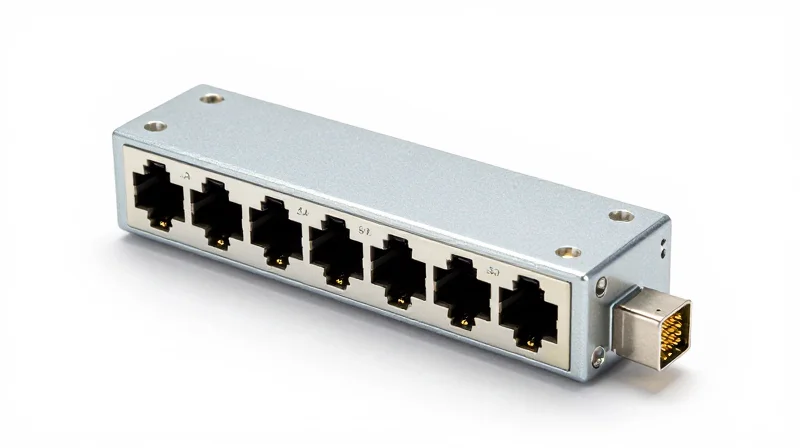
Comprehensive Compatibility: Supporting Juniper EX, QFX, and MX Series
Ubytelink Juniper Switch Optics Solutions deliver native-level performance across the Junos OS ecosystem, ensuring that enterprises can scale their infrastructure from the campus edge to the service provider core without the restrictive costs of proprietary hardware. By providing 100% bit-for-bit compatibility, Ubytelink allows network architects to maintain high-density throughput and carrier-grade reliability across diverse hardware generations.
Enterprise and Campus Connectivity: The EX Series
The Juniper EX Series is the backbone of modern campus and branch office networking. Ubytelink supports the full range of EX platforms, from the entry-level EX2300 to the high-performance EX4650. Our SFP and SFP+ modules are specifically coded to bypass the common 'unsupported transceiver' warnings in Junos, providing stable 1G and 10G uplinks that are essential for power-over-ethernet (PoE) access points and end-user device aggregation.
Next-Generation Data Centers: The QFX Series
Data center environments utilizing QFX5100 or QFX10000 series switches demand low-latency and high-bandwidth interconnects. Ubytelink offers a robust selection of 25G SFP28, 100G QSFP28, and 400G QSFP-DD modules designed for spine-and-leaf architectures. These optics undergo rigorous thermal testing to ensure they can withstand the intense airflow and heat dissipation requirements of high-density data center racks.
Carrier-Grade Routing: The MX Series
For service providers and large enterprises using MX Series 3D Universal Edge Routers, reliability is non-negotiable. Ubytelink provides specialized long-haul optics, including 100G ER4 and ZR4 solutions, that are fully compatible with MX240, MX480, and MX960 MPC line cards. Our DWDM and OTN-compatible modules enable service providers to maximize fiber utilization across metropolitan and wide-area networks.
| Juniper Series | Primary Form Factors | Max Speed Supported | Network Application |
|---|---|---|---|
| EX Series | SFP, SFP+, QSFP+ | 40 Gbps | Campus Access & Aggregation |
| QFX Series | SFP28, QSFP28, QSFP-DD | 400 Gbps | Data Center Leaf/Spine Fabric |
| MX Series | SFP+, QSFP28, CFP2 | 100 Gbps+ | Edge Routing & Core Transport |
| ACX Series | SFP, SFP+, QSFP28 | 100 Gbps | Metro Ethernet & Mobile Backhaul |
Compatibility and Support FAQ
- Will Ubytelink optics work with Junos 'show chassis hardware' commands?
Yes, our optics are programmed with Juniper-specific EEPROM data, allowing them to be correctly identified and monitored by the Junos operating system just like OEM modules. - Does using third-party optics void the Juniper hardware warranty?
No. Under international trade laws and the Magnuson-Moss Warranty Act, manufacturers cannot void a hardware warranty simply for using compatible third-party components. - Are 400G optics supported for the newest QFX switches?
Absolutely. Ubytelink provides 400G QSFP-DD modules tested for the latest Juniper QFX series, supporting the high-radix demands of modern cloud providers.
Maximizing ROI: Balancing Cost-Efficiency with Mission-Critical Stability
Maximizing ROI: Balancing Cost-Efficiency with Mission-Critical Stability
For CTOs and Network Architects, the true value of Ubytelink Juniper Switch Optics Solutions lies in the strategic optimization of both Capital Expenditure (CapEx) and Operational Expenditure (OpEx). By eliminating the 'OEM tax' without sacrificing the rigorous performance standards of the original manufacturer, Ubytelink allows organizations to reallocate budget toward innovation and scalability while ensuring that network uptime—the lifeblood of modern enterprise—remains uncompromised.
Breaking the OEM Premium Trap
The traditional networking model often forces a false choice: pay excessive premiums for OEM-branded optics or risk network instability with unverified third-party components. Ubytelink disrupts this paradigm by utilizing the same high-tier silicon and laser components as major brands, but without the artificial price inflation. This approach provides a predictable cost structure for high-density deployments in data centers and service provider backbones.
| Metric | Juniper OEM Optics | Ubytelink Solutions |
|---|---|---|
| Acquisition Cost | High (Premium Branding) | Low to Moderate (Value-Driven) |
| Technical Performance | Standardized | Identical / Certified |
| Lead Times | Often 4-12 Weeks | Typically 1-2 Weeks |
| Spares Strategy | Cost Prohibitive | Affordable On-site Redundancy |
Ensuring Long-Term Operational Stability
Cost savings are meaningless if they lead to increased downtime. Ubytelink mitigates risk through a 'Zero-Failure' philosophy, where every transceiver is pre-tested in actual Juniper hardware environments rather than generic simulators. This ensures full EEPROM compatibility and seamless integration with Junos OS, preventing the common 'Unsupported Transceiver' errors that plague lesser-quality alternatives and cause administrative overhead for IT teams.
FAQ: ROI and Performance with Ubytelink
- Does using Ubytelink optics void my Juniper hardware warranty?
No. Under international law (such as the Magnuson-Moss Warranty Act in the US), hardware manufacturers cannot void a system warranty simply for using third-party peripherals unless the peripheral is proven to have caused the damage. - How does Ubytelink support 400G and 800G transitions?
We offer high-performance QSFP-DD and OSFP solutions designed for Juniper's latest platforms, ensuring a cost-effective path to next-generation bandwidth without the prohibitive costs of OEM optics. - What is the typical ROI timeframe when switching to Ubytelink?
Most enterprises see a total return on investment within the first single project deployment, often realizing 60% to 80% savings compared to OEM pricing immediately.
Technical Deep-Dive: Ensuring Seamless Integration with Junos OS
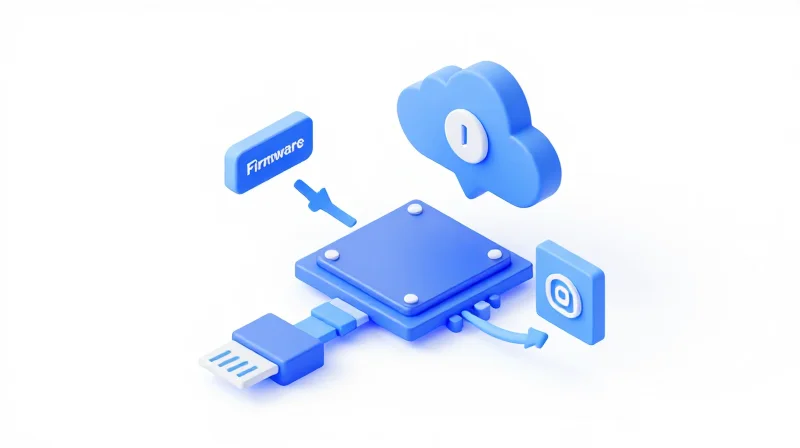
The Mechanics of Native Junos Recognition
True seamless integration with Junos OS is achieved when a third-party transceiver is recognized by the system as a native 'Juniper-certified' component, eliminating the need for CLI overrides or manual configuration workarounds. Ubytelink achieves this through a rigorous bit-by-bit emulation process where the transceiver’s internal software is aligned with the specific hardware abstraction layers (HAL) of Juniper’s EX, QFX, and MX series platforms.
EEPROM Programming and Vendor Specific Data
At the heart of compatibility is the EEPROM (Electrically Erasable Programmable Read-Only Memory). When an optic is inserted, Junos OS queries the I2C bus to read the transceiver's memory map. Ubytelink optics are programmed with precision-coded vendor strings, part numbers, and serial numbers that match Juniper’s whitelist. This ensures that the 'show chassis hardware' and 'show interfaces diagnostics optics' commands return accurate, native data without triggering 'Unsupported Transceiver' warnings.
| Feature | Ubytelink Juniper-Compatible | Generic Third-Party |
|---|---|---|
| Junos OS Recognition | Native / Automatic | Often 'Unidentified' or 'Non-Juniper' |
| DOM/DDM Telemetry | Full Real-time Monitoring | Limited or Inaccurate Reporting |
| System Alarms | None (Clean Boot) | Frequent 'Unsupported' Log Alarms |
| CLI Configuration | Standard Plug-and-Play | May require 'allow-unsupported-transceiver' |
Digital Optical Monitoring (DOM) Synchronization
Integration extends beyond identification; it involves operational telemetry. Ubytelink ensures that the Digital Optical Monitoring (DOM) registers are perfectly mapped to Junos specifications. This allows network administrators to monitor transmit/receive power levels, temperature, and voltage directly through Juniper’s native management tools, such as Junos Space or Mist AI, ensuring that threshold alarms function exactly as they would with OEM hardware.
- Do Ubytelink optics require special commands to work in Junos?
No. Because Ubytelink optics are programmed with Juniper-native firmware, they are recognized immediately upon insertion without the need for the 'allow-unsupported-transceiver' hidden command. - Will these optics work after a Junos OS upgrade?
Yes. Ubytelink tracks Junos release notes and firmware updates to ensure that our EEPROM coding remains compatible with new software revisions and hardware security checks. - How is the serial number managed for inventory tracking?
Each Ubytelink optic carries a unique serial number that is both physically labeled and digitally encoded, allowing for seamless asset tracking within the Junos CLI.
Global Supply Chain and Rapid Deployment for Enterprise Scalability

Eliminating Lead-Time Bottlenecks for Enterprise Scalability
In the modern enterprise landscape, the ability to scale network capacity is often throttled by the long lead times of original equipment manufacturers (OEMs), which can span several months. Ubytelink addresses this challenge by maintaining a massive, ready-to-ship inventory of Juniper-compatible optical transceivers. This logistics-first approach ensures that network architects can transition from design to deployment in days rather than quarters, maintaining business momentum and preventing infrastructure-induced project delays.
Supply Chain Performance: Ubytelink vs. Traditional OEMs
| Logistics Metric | Ubytelink Deployment | Standard OEM Model |
|---|---|---|
| Average Lead Time | 24 - 72 Hours | 12 - 24 Weeks |
| Inventory Philosophy | Stock-on-Hand Strategy | Just-in-Time / Build-to-Order |
| Global Fulfillment | Strategic Regional Hubs | Centralized Factory Shipping |
| Order Minimums | Flexible / No Minimums | High Volume Requirements |
Strategic Logistics Features for Global Operations
- Strategic Global Distribution Hubs
By positioning inventory in key logistical corridors, Ubytelink minimizes transit times and reduces shipping costs for international enterprise clients. - Real-Time Inventory Visibility
Enterprise partners gain access to precise stock levels, allowing for accurate project planning without the risk of sudden backorders. - Regulatory and Customs Expertise
Ubytelink manages the complexities of international trade compliance, ensuring that optics reach their destination without being stalled at customs borders.
Rapid Deployment FAQs
- How quickly can Ubytelink fulfill high-volume orders for 400G optics?
Most high-capacity optics, including 100G and 400G modules, are maintained in stock for immediate dispatch, often reaching the site within 48 to 72 hours globally. - Does Ubytelink support drop-shipping to remote data center locations?
Yes, we provide direct-to-site shipping services, allowing hardware to arrive exactly where it is needed, pre-tested and ready for immediate installation. - How is product quality maintained during rapid global transit?
All modules undergo rigorous testing before shipment and are packed in specialized ESD-safe, shock-resistant packaging to ensure they arrive in perfect working condition.
Mitigating Risk: Warranty and Support for Long-Term Peace of Mind
Comprehensive Protection for Critical Network Infrastructure
Mitigating risk in high-stakes networking environments requires more than just high-performance hardware; it demands a comprehensive support ecosystem that guarantees longevity and immediate resolution of technical hurdles. Ubytelink mitigates these risks by offering an industry-leading lifetime warranty on all Juniper-compatible optics, paired with expert-level technical assistance. This approach effectively eliminates the 'vendor lock-in' fear by providing a safety net that often exceeds the standard terms offered by original equipment manufacturers (OEMs), ensuring that your investment in Ubytelink Juniper Switch Optics Solutions remains secure throughout the entire lifecycle of your hardware.
Lifetime Warranty: A Commitment to Quality
While many manufacturers limit their liability to a few years, Ubytelink’s lifetime warranty reflects the high confidence we place in our rigorous testing and manufacturing standards. This warranty is not merely a replacement policy; it is a promise of sustained performance. If a module fails due to material or workmanship defects at any point during its service life in your Juniper environment, Ubytelink provides a streamlined replacement process designed to minimize network disruption.
| Feature | Ubytelink Support & Warranty | Standard OEM Support |
|---|---|---|
| Warranty Duration | Lifetime Replacement | Typically 1-3 Years Limited |
| Replacement Strategy | Advance Replacement Options | Standard RMA (Return First) |
| Technical Assistance | 24/7 Expert Engineer Access | Tiered Support (Often Paid) |
| Compatibility Guarantee | Lifetime Junos OS Support | Limited to Proprietary Hardware |
Expert Technical Support and Troubleshooting
Beyond hardware replacement, Ubytelink provides deep technical expertise to assist with complex deployments. Whether you are troubleshooting an unexpected link-down event in a Junos OS environment or require assistance with specific EEPROM configurations for legacy Juniper switches, our support team bridges the gap between hardware delivery and operational excellence. This proactive support model reduces the Total Cost of Ownership (TCO) by decreasing the time and resources your internal IT teams must spend on optical interconnect issues.
- How does Ubytelink handle Junos OS updates that might impact third-party optics?
We continuously monitor Junos OS release notes and test our optics against new firmware. If an update changes how transceivers are recognized, our technical team provides firmware patches or re-coded modules to maintain seamless compatibility. - What is the 'Advance Replacement' service?
To ensure maximum uptime for mission-critical networks, Ubytelink can ship replacement units before receiving the faulty hardware, significantly reducing the Mean Time to Repair (MTTR). - Will using Ubytelink optics void my Juniper switch warranty?
No. Under international regulations and the Magnuson-Moss Warranty Act, OEMs cannot void a hardware warranty simply for using third-party components unless those components directly caused the damage.
Ubytelink provides the perfect synergy of quality and value for your Juniper network environment. Don't let high costs or lead times bottleneck your growth—upgrade your infrastructure with confidence. Contact our technical team today for a consultation on the best optics for your specific Juniper switch models and take the first step toward a more resilient network.