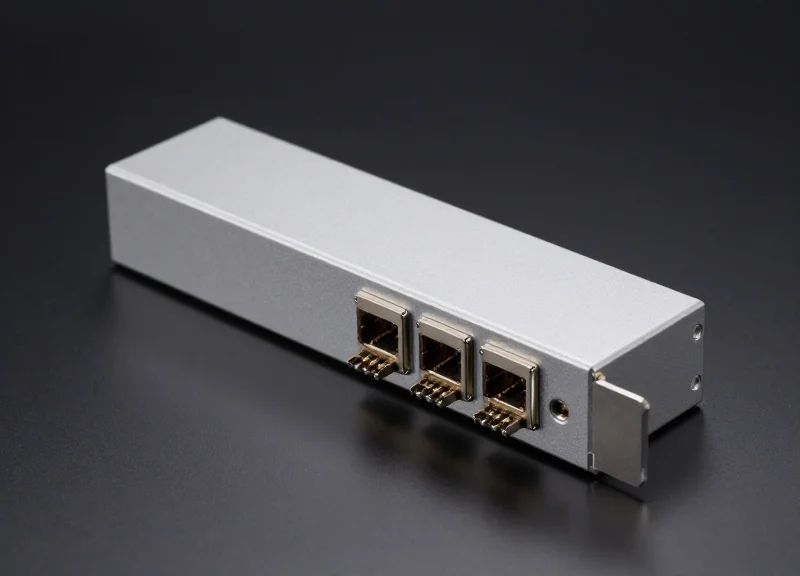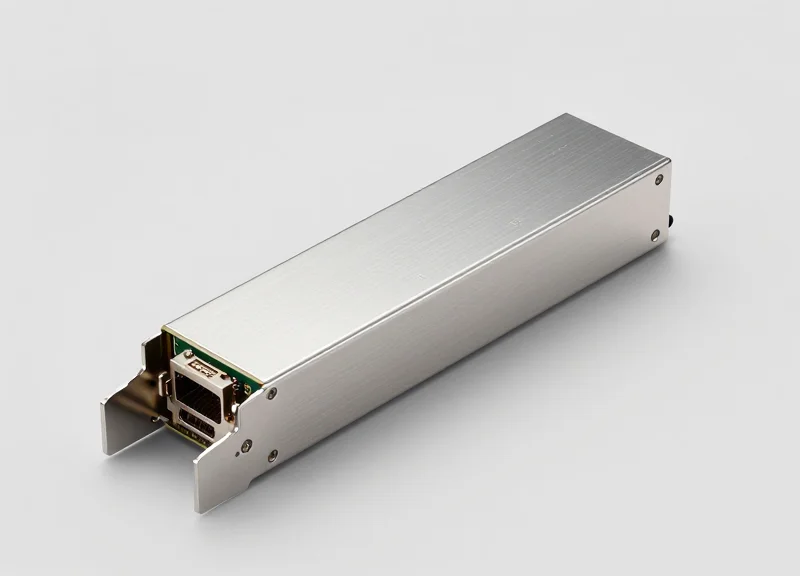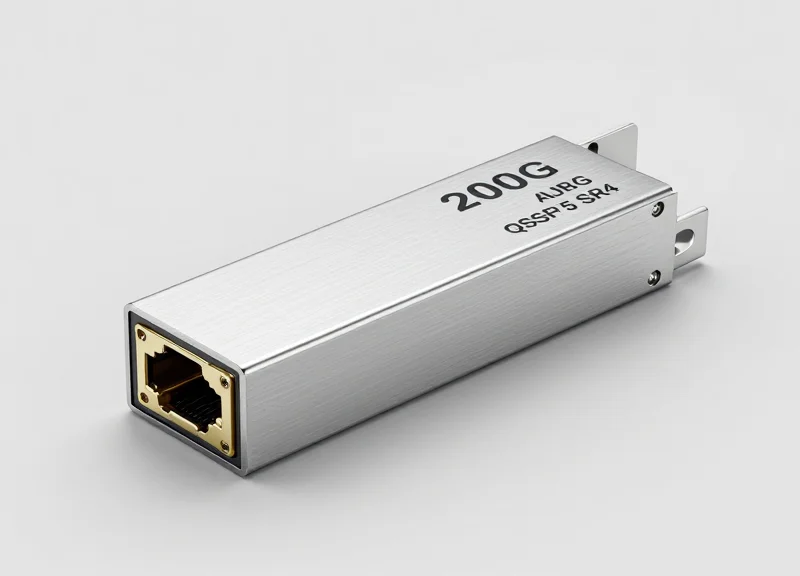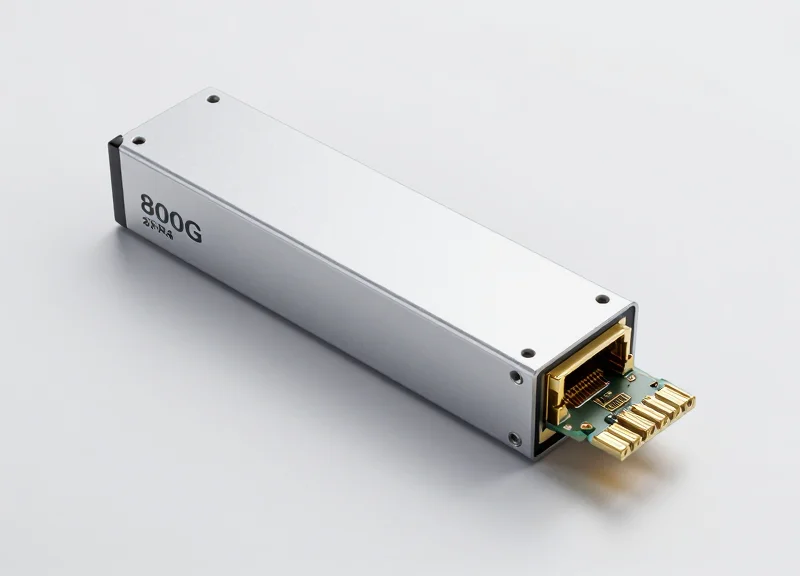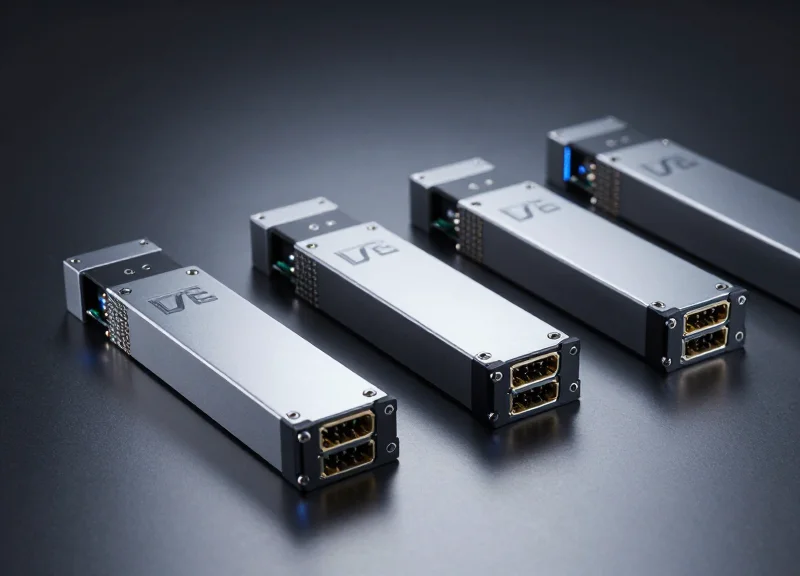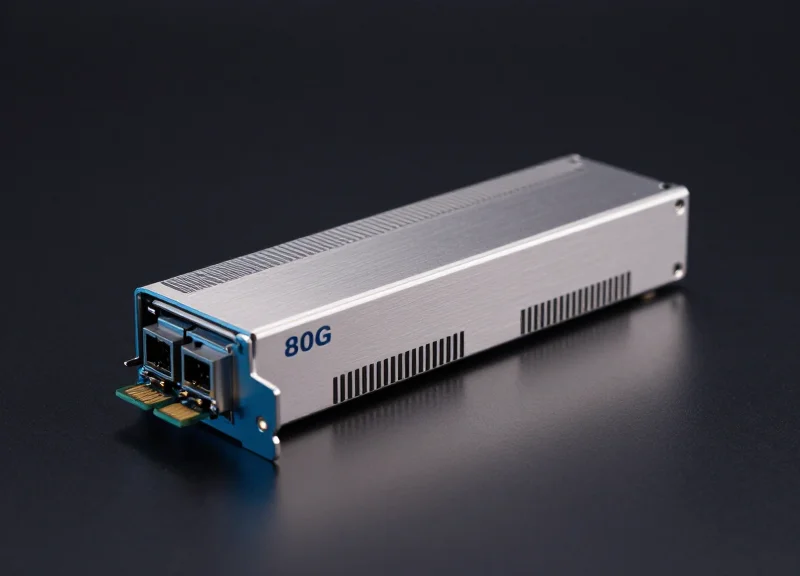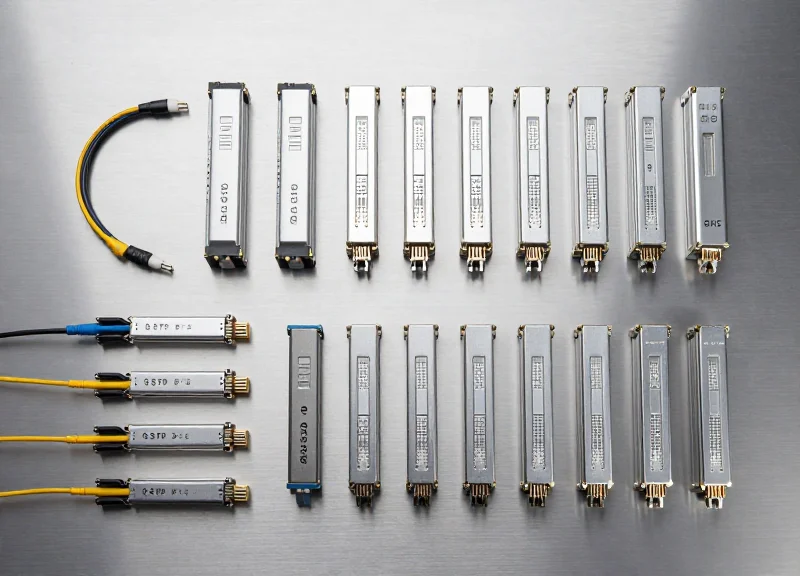
As data centers face unprecedented demand for bandwidth, the shift toward 100G and 400G architectures has moved from a luxury to a necessity. Understanding the technical specifications and the strategic value of bulk-purchasing these critical optical 'tips' or transceivers is essential for maintaining both network integrity and budgetary control in a competitive digital landscape.
The Evolution of High-Speed Optical Interfaces

The evolution of high-speed optical interfaces is characterized by a transition from simple serialized data streams to complex, multi-lane architectures and advanced modulation techniques, driven primarily by the need for higher density and lower power consumption in hyper-scale data centers. While 10G was sufficient for standard enterprise tasks, the explosion of cloud-native applications and AI training models has forced a rapid migration to 100G and 400G frameworks, which utilize PAM4 signaling and silicon photonics to achieve unprecedented throughput.
The 100G Era: Transitioning to QSFP28
The move to 100G marked the first major shift toward lane aggregation. By utilizing four 25Gbps lanes within the QSFP28 form factor, network operators were able to quadruple their bandwidth without a proportional increase in physical footprint or power draw. This era established the standard for high-density switching, making 100G the baseline for modern enterprise backbones.
The 400G Leap: PAM4 and AI Workloads
To reach 400G, the industry moved beyond traditional Non-Return-to-Zero (NRZ) signaling to Pulse Amplitude Modulation (PAM4). By transmitting two bits per symbol, PAM4 allows 400G interfaces to handle the massive east-west traffic generated by AI clusters and distributed databases. This transition also introduced the QSFP-DD and OSFP form factors, which provide the thermal management necessary for high-wattage optical engines.
| Interface Standard | Modulation Type | Typical Form Factor | Primary Use Case |
|---|---|---|---|
| 10G/40G | NRZ | SFP+ / QSFP+ | Enterprise Access/Aggregation |
| 100G | NRZ / PAM4 | QSFP28 / DSFP | Standard Cloud Data Centers |
| 400G | PAM4 | QSFP-DD / OSFP | AI Clusters & Hyperscale Core |
Evolutionary Milestones and Adoption
- Why did the industry move from NRZ to PAM4?
NRZ signaling became physically limited by Shannon's law at higher frequencies; PAM4 effectively doubles the bandwidth in the same spectral space, making 400G and 800G feasible. - How does AI impact the demand for 400G?
AI training requires massive parallel processing across thousands of GPUs; 400G provides the necessary low-latency, high-bandwidth interconnects to prevent networking bottlenecks during data synchronization. - What is the role of backward compatibility in this evolution?
Most 400G (QSFP-DD) ports are designed to be backward compatible with 100G (QSFP28) modules, allowing for a phased migration and protecting existing hardware investments.
Technical Deep Dive: QSFP28 vs. QSFP-DD Form Factors
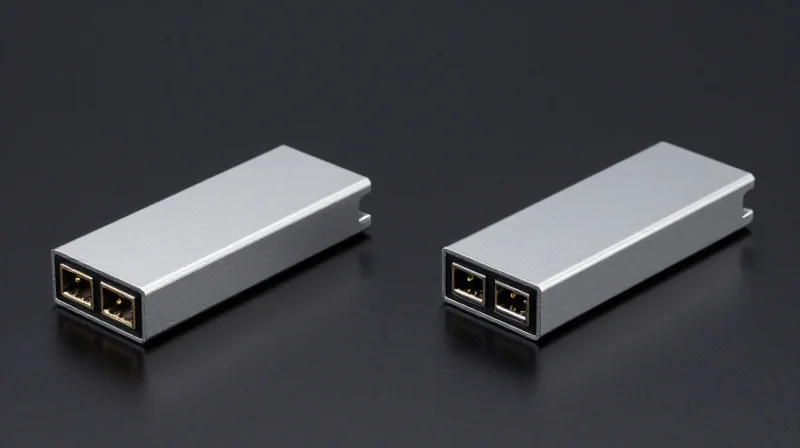
Transitioning from 100G to 400G involves more than just a speed increase; it represents a fundamental shift in interface density, moving from the 4-lane Quad Small Form-factor Pluggable 28 (QSFP28) to the 8-lane Double Density (QSFP-DD) standard. While both form factors share similar external dimensions, the electrical and physical internal structures differ significantly to accommodate higher throughput and increased thermal demands.
Physical and Electrical Specifications
The QSFP28 module operates using four electrical lanes, typically running at 25 Gbps each to reach the 100G aggregate. In contrast, the QSFP-DD form factor employs an 8-lane electrical interface. By utilizing PAM4 (Pulse Amplitude Modulation 4-level) signaling, each of these eight lanes can handle 50 Gbps, effectively quadrupling the total bandwidth while maintaining a footprint nearly identical to its predecessor.
| Feature | QSFP28 (100G) | QSFP-DD (400G) |
|---|---|---|
| Electrical Lanes | 4 Lanes | 8 Lanes |
| Modulation | NRZ / PAM4 | PAM4 |
| Max Power Consumption | Up to 5W | Up to 12W - 20W |
| Connector Rows | Single Row | Double Row |
| Backward Compatibility | N/A | Supports QSFP28/QSFP+ |
Pin Density and Mechanical Innovation
QSFP-DD's Double Density nomenclature refers to its increased number of electrical interfaces. While QSFP28 uses a single row of pins, QSFP-DD utilizes two rows of pins. The mechanical design is specifically engineered so that the first row of pins in a QSFP-DD port matches the pinout of a standard QSFP28 module, ensuring seamless backward compatibility. This allows data center operators to populate 400G ports with existing 100G optics during transitional phases without hardware replacement.
Critical FAQs for Technical Procurement
- Can a QSFP-DD port always accept a QSFP28 module?
Yes, the QSFP-DD specification is designed to be backward compatible with QSFP28 and QSFP+ modules, provided the system software and switch ASIC support the lower speed configuration. - How does thermal management differ between these form factors?
QSFP-DD modules require more sophisticated cooling solutions, often including integrated heat sinks or optimized airflow designs, due to the higher power density and heat dissipation of 400G electronics. - What is the impact of PAM4 signaling on bulk buying?
PAM4 is more sensitive to signal noise than NRZ. When bulk buying, it is critical to ensure that cable quality and transceiver manufacturing tolerances meet strict 400G standards to prevent high Bit Error Rates (BER).
Modulation Techniques: NRZ vs. PAM4

Modulation Techniques: NRZ vs. PAM4
The primary differentiator between standard 100G and high-capacity 400G optics lies in how data is encoded across the optical link; while 100G typically relies on traditional Non-Return-to-Zero (NRZ) modulation, 400G requires Pulse Amplitude Modulation 4-level (PAM4) to achieve higher throughput without exponentially increasing the physical bandwidth requirements of the electrical components.
NRZ: The Legacy of Binary Signaling
Non-Return-to-Zero (NRZ) is a two-level modulation format where a high voltage level represents a logical '1' and a low voltage level represents a logical '0'. In the context of 100G (QSFP28), the hardware typically utilizes four lanes of 25Gbps NRZ signals. While NRZ is highly resistant to noise due to the wide gap between its two states, it reaches a physical limit as speeds increase toward 400G. To achieve 400G using NRZ, the industry would have required either double the number of fibers or doubling the clock speed, both of which introduce excessive heat, power consumption, and signal integrity issues.
PAM4: The Solution for 400G Density
PAM4 addresses the limitations of NRZ by using four distinct signal levels to represent data, allowing for two bits of information per symbol period (00, 01, 10, and 11). By transmitting two bits per clock cycle, PAM4 effectively doubles the data rate of a transmission link compared to NRZ at the same baud rate. This efficiency allows 400G modules to operate using 50Gbps or 100Gbps lanes, keeping the physical lane count manageable within the QSFP-DD form factor.
| Feature | NRZ (Non-Return-to-Zero) | PAM4 (Pulse Amplitude Modulation 4) |
|---|---|---|
| Signal Levels | 2 (Low/High) | 4 (0, 1, 2, 3) |
| Bits Per Symbol | 1 Bit | 2 Bits |
| Bandwidth Efficiency | Standard | Double |
| SNR Sensitivity | Low (Robust) | High (Sensitive) |
| Primary Usage | 100G (QSFP28) | 400G/800G (QSFP-DD/OSFP) |
Impact on Signal Integrity and FEC
A critical technical detail for bulk buyers to understand is that PAM4's increased density comes at the cost of a reduced Signal-to-Noise Ratio (SNR). Because the four voltage levels are closer together than the two levels in NRZ, the signal is more susceptible to noise and interference. To counteract this, 400G systems integrate Forward Error Correction (FEC). FEC adds redundant data to the transmission, allowing the receiving end to identify and correct bit errors. When purchasing 400G tips, ensuring compatibility between the switch's FEC settings and the transceiver's internal DSP is essential for link stability.
- Does 400G always require PAM4?
Yes, the 400G Ethernet standard (IEEE 802.3bs) specifically mandates PAM4 modulation for both electrical and optical interfaces to handle the required data density. - Can I use NRZ transceivers in a PAM4 port?
In many cases, 400G ports are backward compatible and can downshift to NRZ to support 100G QSFP28 modules, but the modulation type must match the module being used. - Why is PAM4 more expensive than NRZ?
The complexity of the Digital Signal Processor (DSP) required to encode and decode four-level signals, along with mandatory FEC components, increases the manufacturing cost compared to simpler NRZ chips.
The Economics of Bulk Procurement in Networking
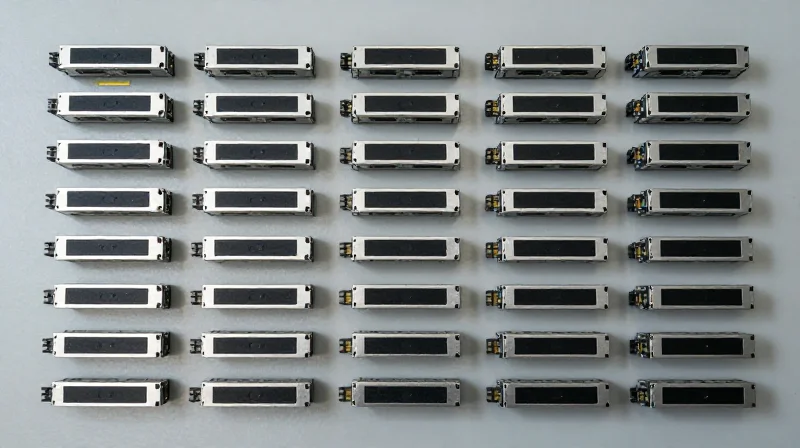
The economics of bulk procurement in high-speed networking revolve around the significant reduction of Total Cost of Ownership (TCO) by minimizing the per-port cost of 100G and 400G deployments. For data center operators and enterprises, moving from opportunistic, small-scale purchases to bulk acquisition allows for deeper negotiation on margins, standardized hardware revision control, and streamlined logistical workflows that collectively lower both Capital Expenditure (CAPEX) and Operating Expenses (OPEX).
Total Cost of Ownership (TCO) Breakdown
When purchasing 100G QSFP28 or 400G QSFP-DD modules, the unit price is merely the tip of the iceberg. Bulk buying addresses hidden costs associated with procurement, such as shipping duties, multi-stage testing, and the administrative burden of managing multiple vendor invoices. Furthermore, it ensures that all modules in a specific fabric segment share the same internal components and firmware versions, which drastically reduces troubleshooting time during network outages.
| Procurement Metric | Small-Scale Purchase | Bulk Procurement (100+ Units) |
|---|---|---|
| Average Unit Discount | 0% - 10% (MSRP-based) | 30% - 55% (Volume-based) |
| Logistics Cost per Unit | High (Individual shipping) | Low (Consolidated freight) |
| Firmware Consistency | Variable (Mixed batches) | High (Single production run) |
| QA Overhead | Manual per unit | Automated batch sampling |
Risk Mitigation Strategies for Large-Scale Batches
While bulk buying offers financial rewards, it also concentrates risk. If a single production batch of 400G PAM4 optics contains a systemic manufacturing defect, a large-scale deployment could face widespread failure. To mitigate this, technical teams must implement a multi-layered validation strategy that balances cost savings with reliability.
- Golden Sample Validation
Before fulfilling a bulk order, request 'Golden Samples' from the specific production lot to undergo rigorous stress testing in your specific switch environment. - Staggered Delivery Schedules
Negotiate bulk pricing but request delivery in staggered phases. This prevents inventory obsolescence and allows for the identification of batch defects before the entire stock is deployed. - Vendor Diversification
Avoid single-vendor lock-in by splitting bulk requirements between two reputable suppliers to ensure supply chain resilience without losing volume-tier pricing.
Bulk Buying FAQ
- Does bulk buying 400G optics lead to high inventory depreciation?
Yes, as technology matures, prices drop. It is critical to align bulk purchases with immediate project rollouts rather than long-term storage to avoid holding depreciated assets. - How do I verify the quality of a 100-piece batch of 100G tips?
Utilize automated Bit Error Rate (BER) testing and Optical Time Domain Reflectometer (OTDR) checks on a statistically significant sample (typically 10-15%) of the batch. - Is third-party (compatible) bulk buying safe for 400G?
Yes, provided the vendor offers programmable EEPROMs and local technical support to handle firmware adjustments for specific OEM switch NOS updates.
Ensuring Interoperability Across Multi-Vendor Environments
Achieving seamless interoperability in multi-vendor 100G/400G environments is not merely about physical fit; it requires deep alignment between the transceiver's firmware and the host system's diagnostic monitoring interface (DMI). When bulk buying, the risk of vendor lock-in or 'port rejection' is mitigated by selecting transceivers that adhere strictly to Multi-Source Agreement (MSA) standards and feature customizable EEPROM coding to emulate original equipment manufacturer (OEM) behavior. Ensuring that the 100G (QSFP28) or 400G (QSFP-DD) tips can be recognized across Cisco, Arista, and Juniper platforms simultaneously is a prerequisite for scaling modern leaf-spine architectures.
The Role of MSA Standards in Interoperability
The foundational layer of interoperability lies in the SFF (Small Form Factor) committee specifications. These standards define the mechanical, electrical, and management interfaces, ensuring that a 'generic' bulk-purchased tip can technically communicate with any compliant host. For 400G, the introduction of the Common Management Interface Specification (CMIS) was a pivotal shift to handle the increased complexity of PAM4 signaling and module state machines.
| Feature | 100G (QSFP28) Standard | 400G (QSFP-DD) Standard |
|---|---|---|
| Management Interface | SFF-8636 | CMIS (Common Management Interface Specification) |
| Form Factor Spec | SFF-8665 | SFF-8632 / INF-8628 |
| Electrical Interface | OIF CEI-28G-VSR | OIF CEI-56G-VSR-PAM4 |
| Interoperability Basis | Hard-coded logic | Software-defined state machine |
Firmware and EEPROM Customization Strategies
Most tier-1 hardware vendors implement 'vendor check' software that reads the EEPROM of an inserted transceiver. If the Vendor Name, Part Number, or OUI (Organizationally Unique Identifier) doesn't match the internal whitelist, the port may be disabled or trigger warning flags. Bulk procurement strategies must include a verification step for 'third-party coded' modules. This involves using high-speed programmers to inject the specific identification strings required for platforms like Cisco’s Nexus or Arista’s 7000 series, ensuring the host OS treats the tip as a native component.
Post-Purchase Validation Checklist
After receiving a bulk shipment, it is essential to perform sample testing across the actual hardware environment. This includes verifying Digital Diagnostic Monitoring (DDM) accuracy for parameters such as TX/RX power levels, temperature, and bias current. In 400G environments, checking for Forward Error Correction (FEC) alignment between different vendor endpoints is critical, as mismatched FEC settings (e.g., KP4 vs. No-FEC) are a common cause of link-down issues despite physical connectivity.
- What is CMIS and why does it matter for 400G interoperability?
CMIS is the Common Management Interface Specification. It allows a host to manage multi-lane modules like 400G QSFP-DD through a standardized software model, reducing the need for vendor-specific drivers. - How do you resolve 'Unsupported Transceiver' errors in multi-vendor setups?
While coding is the preferred fix, many platforms allow a CLI override, such as the 'service unsupported-transceiver' command in Cisco IOS, though this may void support for that specific port. - Can 100G tips work in 400G ports?
Yes, QSFP-DD ports are backwards compatible with QSFP28 (100G) tips. However, the management interface must support the transition from SFF-8636 to CMIS legacy modes.
Thermal Management and Power Efficiency at Scale
Thermal Management and Power Efficiency at Scale
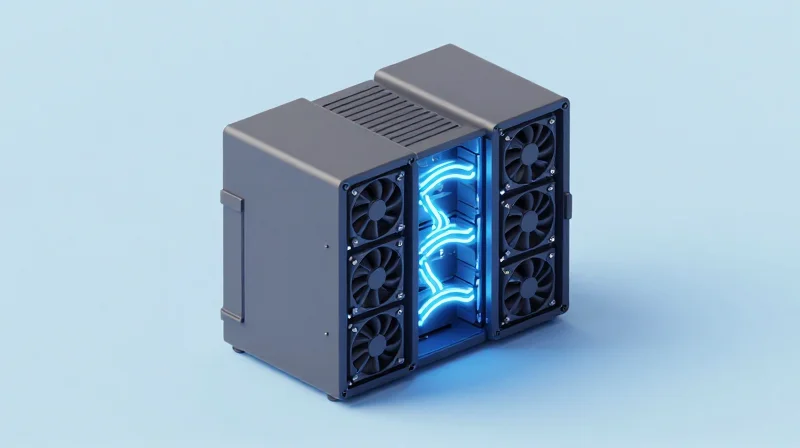
Bulk deployment of 400G optics introduces substantial thermal loads, as these modules often consume between 10W and 14W each, compared to the 3.5W to 5.5W typical of 100G QSFP28 modules. At scale, a fully loaded 32-port 400G switch can generate over 400W of heat from transceivers alone, necessitating advanced cooling architectures and proactive power management to avoid link failures and optical degradation. Efficiently managing this heat is not merely a hardware concern but a primary driver of Total Cost of Ownership (TCO) in modern data centers.
Power Density Analysis: 100G vs. 400G Standards
| Module Type | Typical Power Consumption | Max Thermal Envelope | Cooling Design |
|---|---|---|---|
| 100G QSFP28 (LR4/SR4) | 3.5W - 4.5W | 70°C | Standard Chassis Airflow |
| 400G QSFP-DD (DR4/FR4) | 10W - 12W | 70°C - 75°C | Enhanced Airflow / Rider Heatsinks |
| 400G OSFP (ZR/ZR+) | 14W - 20W | 85°C | Integrated Fin Heatsinks |
Mitigating Thermal Throttling in High-Density Deployments
When sourcing 100G and 400G tips in bulk, it is vital to evaluate the Common Management Interface Specification (CMIS) support of the hardware. Modern transceivers use CMIS to provide real-time telemetry, including internal temperature, laser bias current, and voltage. Integrating these metrics into a centralized Network Management System (NMS) allows for predictive cooling. For instance, if a cluster of 400G ports shows a rising thermal trend, the system can dynamically adjust fan speeds or redistribute traffic loads to prevent the modules from entering a self-protective shutdown state.
Furthermore, the choice between QSFP-DD and OSFP form factors during bulk procurement often hinges on thermal overhead. While QSFP-DD is backwards compatible with QSFP28, its thermal path is more restricted. OSFP, conversely, was designed with an integrated heatsink, making it the preferred choice for high-power coherent 400G optics that exceed 15W. Buyers must ensure their switch hardware is optimized for the specific airflow direction (Front-to-Back vs. Back-to-Front) to match the cooling profile of their chosen modules.
- What happens if a 400G module exceeds its thermal threshold?
The module will typically enter a self-protection mode, reducing laser power (throttling) or shutting down entirely, which leads to immediate packet loss and link instability. - How does bulk buying impact power efficiency calculations?
Standardizing on a single high-efficiency vendor through bulk procurement ensures consistent power draw across the fabric, simplifying the provisioning of Data Center Infrastructure Efficiency (DCIE) metrics and Power Usage Effectiveness (PUE). - Are active optical cables (AOCs) cooler than transceivers?
AOCs generally consume less power than discrete transceiver-plus-fiber combinations because they are optimized as a single unit, making them ideal for high-density, short-reach intra-rack connections.
Quality Assurance: Testing Protocols for Bulk Batches
Quality Assurance: Testing Protocols for Bulk Batches
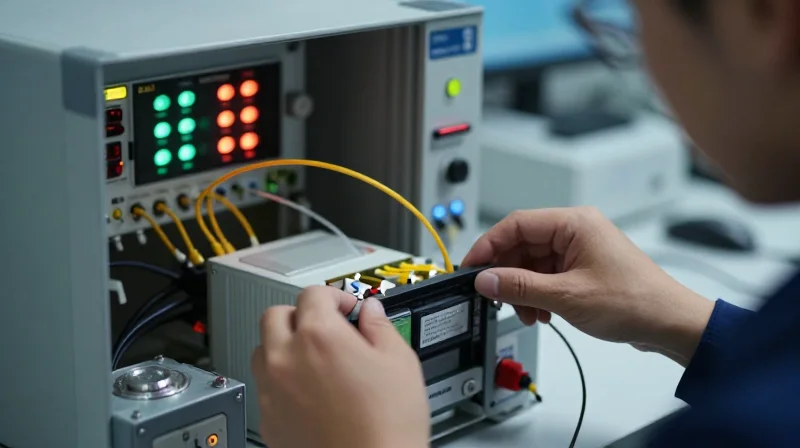
Quality assurance (QA) in bulk 100G and 400G procurement is not merely about verifying functionality; it is about ensuring statistical consistency across thousands of units. When dealing with high-speed optics, even minor manufacturing variances can lead to catastrophic link failures or intermittent packet loss. A professional QA protocol for bulk batches must involve a combination of automated bench testing, environmental stress screening, and rigorous data analysis of signal integrity metrics like Bit Error Rate (BER) and Eye Diagrams to ensure that every module adheres to IEEE and MSA standards.
Key Performance Metrics for Bulk Validation
| Testing Metric | Technical Significance | 400G Performance Benchmark |
|---|---|---|
| Bit Error Rate (BER) | Quantifies the probability of bit errors occurring during transmission. | < 2.4e-4 (Pre-FEC limit for PAM4) |
| TDECQ | Transmitter and Dispersion Eye Closure Quaternary; measures PAM4 signal quality. | Must be below 3.4 dB for standard reach |
| Extinction Ratio | The ratio between high and low optical power levels. | Minimum 3.5 dB for optimal signal clarity |
| Receiver Sensitivity | The minimum optical power required for the receiver to maintain target BER. | Typically -10 dBm to -12 dBm depending on reach |
The Role of BER and Eye Diagram Analysis
For 400G systems, which utilize PAM4 modulation, Bit Error Rate (BER) testing is critical because the signal-to-noise ratio is significantly tighter than in 100G NRZ systems. Automated testers must verify that the Pre-Forward Error Correction (Pre-FEC) BER is low enough for the host's FEC algorithm to eliminate errors entirely. Complementing this is Eye Diagram analysis, which provides a visual 'mask' of the signal. In bulk shipments, technicians look for 'eye closure' caused by jitter or noise; a consistent eye opening across the batch indicates stable laser performance and high-quality TOSA/ROSA components.
Bulk Testing FAQ
- Is 100% testing necessary for bulk orders?
While 100% testing is ideal, most tier-1 vendors perform automated testing on all units for basic functionality (EEPROM, Power, TX/RX) and sample 5-10% for deep signal integrity analysis (BER/Eye) to verify batch consistency. - How does temperature cycling affect bulk QA?
High-speed optics generate significant heat. Testing modules at extreme temperatures (0°C to 70°C) during the QA phase helps identify 'weak' units that might fail in high-density data center environments. - Why is TDECQ prioritized over traditional masks in 400G?
TDECQ is a more accurate representation of how a PAM4 signal will perform after passing through a real-world fiber link, making it the industry standard for 400G quality validation.
Future-Proofing: From 400G to 800G Transitions
Future-Proofing: From 400G to 800G Transitions
Strategic procurement of 400G components is not just about meeting current bandwidth demands; it is a prerequisite for a cost-effective 800G migration. Organizations must focus on hardware that supports 112G SerDes and compatible form factors to ensure that the transition involves simple module swaps rather than a complete forklift upgrade of the switching fabric. By selecting components today that align with the electrical and optical standards of tomorrow, enterprises can significantly lower their long-term Total Cost of Ownership (TCO).
Form Factor Strategy: OSFP vs. QSFP-DD
When bulk buying 400G modules, the choice between QSFP-DD and OSFP is the most critical architectural decision. While QSFP-DD provides excellent backward compatibility with 100G/200G QSFP ports, OSFP offers superior thermal headroom required for the high power consumption of 800G and 1.6T optics. Organizations planning for rapid 800G adoption often favor OSFP for their 400G pods to maintain a consistent cooling and physical layout across generations.
| Feature | 400G Standard (Current) | 800G Standard (Transition) |
|---|---|---|
| Electrical Lane Speed | 56G or 112G SerDes | 112G SerDes |
| Modulation | PAM4 | PAM4 (with higher precision) |
| Common Form Factors | QSFP-DD / OSFP | OSFP / QSFP-DD800 |
| Optical Interface | 8x50G or 4x100G | 8x100G or 2x400G |
SerDes Alignment and Breakout Efficiency
The transition to 800G is underpinned by the shift to 112G SerDes technology. A key tip for bulk buying 400G is to prioritize modules that utilize 112G electrical lanes (such as 400G-DR4 or 400G-FR4 using 4x112G configurations). This allows for seamless breakout configurations where a single 800G port can be split into two 400G links without the need for power-hungry gearboxes, drastically improving port density and energy efficiency in the data center.
- Can 400G QSFP-DD modules work in 800G ports?
Yes, most 800G QSFP-DD800 ports are backward compatible with 400G QSFP-DD modules, allowing for a phased hardware rollout. - Is it worth bulk buying 400G now if 800G is available?
Yes, for most enterprise and mid-scale cloud deployments, 400G currently offers the best balance of price-per-bit and ecosystem maturity. - How does fiber cabling change for 800G?
800G frequently utilizes MPO-16 or dual MPO-12 connectors, so current fiber bulk purchases should include high-density OS2 or OM4 cabling that supports these configurations.
Ultimately, future-proofing requires a balance between current price performance and technical longevity. Procurement teams should work closely with vendors to ensure that 400G optics are tested for interoperability with next-generation 800G switches, focusing on Bit Error Rate (BER) stability across different SerDes speeds.
Successfully scaling to 100G or 400G requires more than just hardware; it requires a strategic approach to technical compatibility and procurement. By mastering the specifications and leveraging the power of bulk acquisition, you can ensure your data center remains agile and cost-effective. Contact our engineering team today to build a customized high-speed optical roadmap for your enterprise.