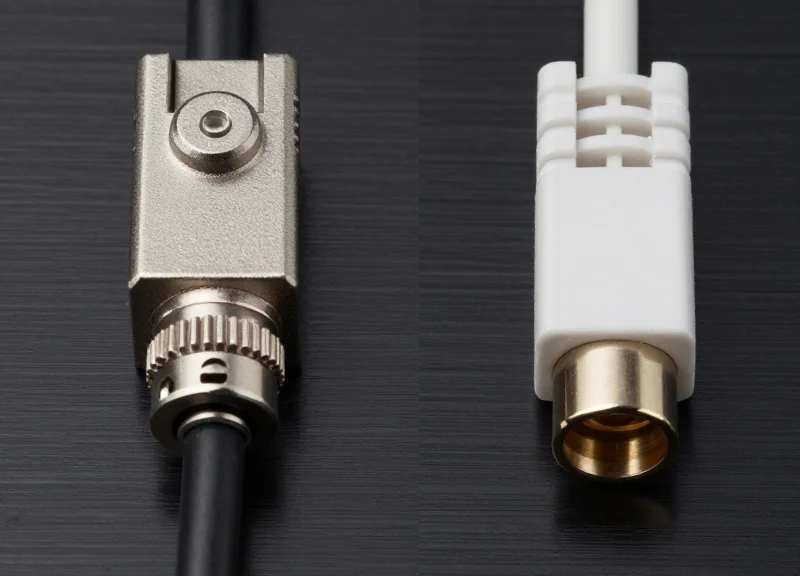
In the high-stakes world of aerospace and defense, the choice of interconnect technology can be the difference between mission success and catastrophic failure. As data demands soar, engineers face a critical crossroads: stick with proven military-grade optical solutions or leverage the cost-efficiencies of high-end commercial alternatives. This guide breaks down the performance metrics and financial realities of both paths.
Understanding the Standard: What Defines Military-Grade Optical Interconnects?
Understanding the Standard: What Defines Military-Grade Optical Interconnects?
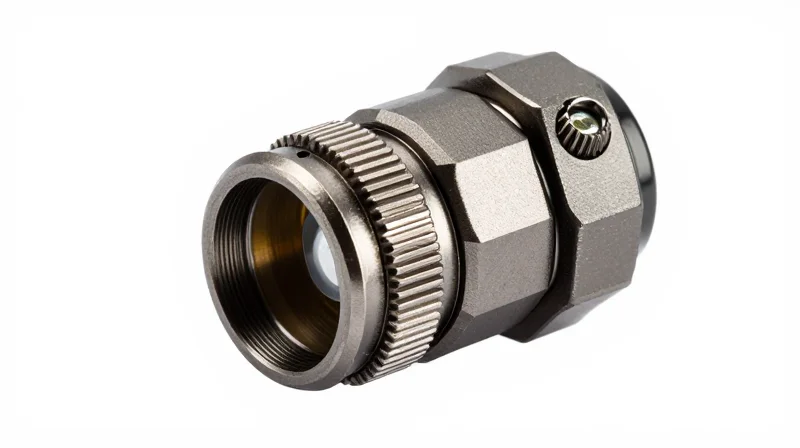
Military-grade optical interconnects are specialized hardware components engineered to maintain signal integrity under extreme mechanical, environmental, and thermal stress that would instantaneously compromise standard commercial-off-the-shelf (COTS) equipment. Defined by stringent standards such as MIL-DTL-38999 and ARINC 801, these interconnects are distinguished by their 'mission-critical' architecture, which prioritizes survival and low-decibel insertion loss in environments characterized by high vibration, wide temperature fluctuations, and chemical exposure. While a data center interconnect focuses on high-density throughput in climate-controlled racks, a military interconnect is designed for the fuselage of a supersonic jet, the deck of a naval vessel, or the rugged terrain of a ground-based tactical unit.
The Benchmarks of Performance: MIL-DTL-38999 and ARINC 801
The MIL-DTL-38999 standard describes a family of circular connectors known for their robustness and versatility. When adapted for fiber optics, these connectors utilize specialized termini that protect the delicate glass fibers from external forces. ARINC 801, conversely, is the industry standard for high-performance aeronautical fiber optics, offering a 1.25mm ferrule design that allows for higher density and easier maintenance in the field. These standards ensure that regardless of the manufacturer, the interconnects meet specific threshold requirements for mating cycles, salt spray resistance, and electromagnetic interference (EMI) shielding.
| Feature | Military Grade (MIL-SPEC/ARINC) | Commercial / Data Center |
|---|---|---|
| Operating Temperature | -55°C to +125°C | 0°C to 70°C |
| Vibration & Shock | MIL-STD-810G (Extreme Resistance) | Minimal (Stationary Racks) |
| Mating Cycles | 500 to 2,000+ Cycles | 50 to 100 Cycles |
| Ingress Protection | IP67/IP68 + Fluid Resistance | IP20 (Dust/Moisture Sensitive) |
| Coupling Mechanism | Triple-start Thread / Bayonet / Self-locking | Push-Pull / Friction Fit |
Engineering for Survival: Physical Characteristics
To achieve these ratings, military-grade interconnects utilize materials and mechanical designs that are absent in commercial alternatives. This includes specialized housing materials like marine bronze, stainless steel, or composite shells with high-conductivity plating for EMI protection. Internally, they often feature 'expanded beam' technology, which uses lenses to expand the light signal across a larger gap, making the connection significantly less sensitive to dust and debris compared to the 'physical contact' methods used in standard LC or MPO connectors.
Standards FAQ
- Can commercial fiber cables be used with military connectors?
While the glass fiber itself may be similar, the buffering and jacketing of military cables are much thicker and made of ruggedized materials like Polyurethane or ETFE to withstand abrasion and chemicals. - What is the primary failure point for commercial interconnects in military settings?
Mechanical fatigue from vibration and 'piston effects' caused by thermal expansion are the leading causes of failure for commercial interconnects in defense applications. - Is ARINC 801 better than MIL-DTL-38999?
They serve different purposes; MIL-DTL-38999 is a shell standard often used to house various termini, whereas ARINC 801 is a specific terminus standard designed for high-density and easy cleaning in aerospace.
Latency Benchmarking: Real-Time Performance in Critical Systems

Latency Benchmarking: Real-Time Performance in Critical Systems
In critical defense and aerospace applications, latency is measured in nanoseconds, where the difference between military-grade optical interconnects and standard COTS alternatives can determine the success of signal processing for radar, electronic warfare, and fly-by-wire systems. While standard optics prioritize throughput, military-grade components focus on minimizing transit time and ensuring absolute determinism under extreme physical stress. The primary differentiator lies in how military-grade optics handle signal integrity without the need for the extensive error correction or retransmission protocols that often plague commercial-grade equipment in harsh environments.
Propagation Speed and Signal Integrity
Military fiber optics utilize specialized glass compositions and ruggedized ferrule alignments that maintain optimal light paths even during high-G maneuvers or extreme temperature fluctuations. In contrast, copper-based alternatives suffer from electromagnetic interference (EMI) which necessitates heavy shielding or digital error correction (FEC), both of which add significant latency overhead. Military-grade optics eliminate the EMI bottleneck entirely, allowing for 'speed-of-light' data transfer through the medium with negligible processing delay at the transceiver level.
| Metric | Military Optical (MIL-SPEC) | Commercial Optical (COTS) | High-Speed Copper (Twinax) |
|---|---|---|---|
| Signal Propagation Delay | ~4.9 ns/m | ~5.0 ns/m | ~4.5 - 5.5 ns/m (Variable) |
| Processing Overhead | Minimal (Optimized for Real-Time) | Standard (Buffer/Retiming) | High (Error Correction Required) |
| EMI Sensitivity | None | Low | High (Increases Jitter) |
| Determinism | Excellent (Predictable) | Moderate | Low (Environment Dependent) |
The Necessity of Determinism in Mission-Critical Systems
For mission-critical systems like missile guidance or real-time sensor fusion, the average latency is often less important than the 'worst-case' latency. Military-grade interconnects are engineered for minimal jitter, ensuring that data arrives within a predictable window regardless of thermal expansion or mechanical vibration. Commercial components often lack the precision-machined ferrules and physical stability required to prevent micro-reflections and modal dispersion under stress, which can cause unpredictable packet retransmissions and lag spikes that a tactical system cannot tolerate.
- Why is latency lower in optical systems compared to copper in military environments?
Optical fibers are immune to EMI, removing the need for heavy shielding and complex signal regeneration steps that slow down data transmission in electrically noisy environments. - Does ruggedization increase latency?
No, ruggedization focuses on physical integrity. By maintaining precise alignment under stress, it prevents the latency spikes associated with signal degradation and mechanical misalignment. - How does thermal stability affect latency?
Military-grade interconnects use materials with low thermal expansion coefficients, ensuring the optical path remains constant, whereas COTS components may experience path length changes that introduce timing jitter.
Power Consumption and SWaP-C Constraints
The Strategic Impact of Optical Interconnects on SWaP-C
Military-grade optical interconnects are the primary enablers for meeting stringent Size, Weight, Power, and Cost (SWaP-C) requirements because they provide an order-of-magnitude reduction in cable mass and power-per-bit compared to legacy copper systems. In modern defense platforms, where every ounce of weight translates to reduced fuel range and every watt of power requires complex thermal management, the efficiency of the data backbone is no longer just a performance metric—it is a mission-critical constraint. By utilizing low-power transceivers and high-density fiber ribbons, engineers can aggregate terabits of data while maintaining a footprint that copper simply cannot achieve.
Comparative Metrics: Optical vs. Alternative Solutions
| Metric | Military Optical (e.g., ARINC 801) | High-Speed Copper (Twinax) | COTS Optical (Standard SFP+) |
|---|---|---|---|
| Power Consumption (per 10Gbps) | <150mW per link | ~500mW - 1.5W (Active) | ~300mW - 800mW |
| Weight (kg per km) | ~2 - 5 kg | ~50 - 120 kg | ~10 - 20 kg (Non-rugged) |
| Cable Diameter | 1.8mm - 2.0mm | 6.0mm - 9.0mm | 2.5mm - 3.5mm |
| Max Temperature Tolerance | +85°C to +125°C | +70°C (limited by dielectric) | +70°C (standard) |
Thermal Dissipation and Reliability in Sealed Environments
A major component of the 'Power' constraint in SWaP-C is the secondary cost of cooling. Military electronics are often housed in sealed, conduction-cooled enclosures where airflow is non-existent. Standard commercial optics generate significant localized heat that can cause thermal runaway or necessitate bulky heat sinks. Conversely, military-grade optics are designed with wide-bandgap materials and optimized laser drivers that maintain low current draw across extreme temperature fluctuations. This efficiency reduces the 'Size' and 'Weight' of the overall platform by eliminating the need for heavy liquid cooling loops or oversized fans, thereby lowering the total lifecycle 'Cost'.
Frequently Asked Questions: SWaP-C Optimization
- How does fiber optics improve fuel efficiency in aerospace applications?
By replacing hundreds of pounds of copper shielding and wiring with lightweight fiber optics, the overall takeoff weight of the aircraft is reduced, directly increasing loiter time and reducing fuel consumption. - Is the 'Cost' in SWaP-C higher for military optics?
While the initial acquisition cost of MIL-spec components is higher than COTS alternatives, the lifecycle cost is significantly lower due to increased reliability, reduced power infrastructure requirements, and longer Mean Time Between Failures (MTBF). - Why is power consumption critical for man-portable systems?
For dismounted soldiers, lower power consumption in optical interconnects translates to fewer batteries required in the field, reducing the physical load and increasing operational duration.
Ultimately, the transition from copper to military-grade optics is driven by the limits of physics. As data rates climb toward 100G and beyond, the power required to push electrical signals through copper over several meters becomes unsustainable for mobile or airborne platforms. Optical interconnects provide the only viable path forward that balances high-speed data throughput with the uncompromising limits of the SWaP-C framework.
Environmental Resilience: Beyond the Data Center
Engineered for Extremes: Why Data Center Optics Fail in the Field
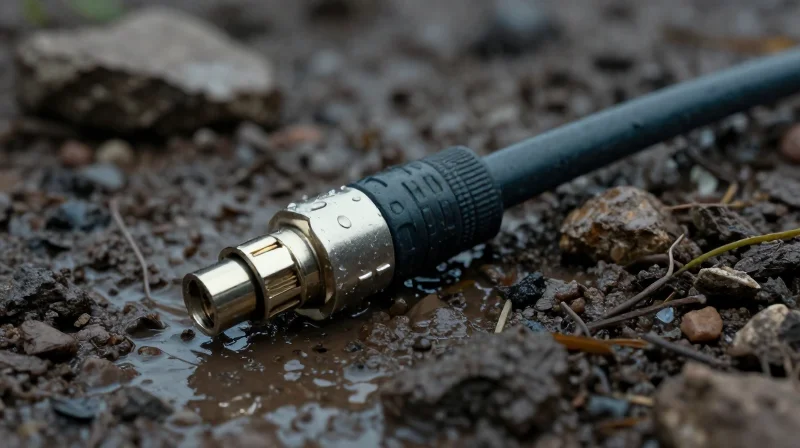
Military-grade optical interconnects are specifically engineered to provide continuous uptime in environments where commercial-off-the-shelf (COTS) alternatives experience catastrophic failure. While a standard data center offers a stable climate with minimal mechanical stress, tactical deployments involve extreme vibration, thermal shock, and high-energy electromagnetic interference (EMI). Ruggedized solutions like the ARINC 801 or MIL-DTL-38999 series utilize specialized physical contact (PC) or expanded beam (EB) technology to ensure that the optical path remains aligned even when the chassis is subjected to the high G-loads of aerospace or tracked vehicle operations.
| Environmental Factor | Commercial / Data Center (COTS) | Military Grade (Ruggedized) |
|---|---|---|
| Operating Temperature | 0°C to +70°C | -55°C to +125°C |
| Vibration Resilience | Minimal (Static Rack Mount) | High (MIL-STD-810G, up to 50G+) |
| EMI/RFI Protection | Limited to Shielded Cables | 360° Shell Grounding & High Attenuation |
| Mating Cycles | ~200-500 Cycles | 500-2,000+ Cycles (Durability focus) |
| Contamination Handling | High Sensitivity (Requires Cleaning) | High Tolerance (Expanded Beam Tech) |
Mechanical Resilience and Vibration Dampening
In a military context, vibration is not just a nuisance but a primary cause of signal 'chatter' and connector fatigue. Military-grade interconnects employ precision-machined ceramic ferrules and spring-loaded termini that maintain constant physical contact between fiber ends. For even more extreme environments, Expanded Beam (EB) technology uses lenses to widen the light path across the connector interface. This makes the connection significantly less sensitive to micro-movements and particulate contamination, which would otherwise cause a commercial LC or MPO connector to lose the link entirely.
Thermal Stability and EMI Immunity
Thermal cycling in tactical environments can cause a phenomenon known as 'fiber pistoning,' where the fiber moves within the connector due to differential expansion rates of glass and plastic. Military interconnects mitigate this through specialized adhesives and heat-shrink components. Furthermore, while the optical fiber itself is immune to electromagnetic interference (EMI), the transceivers and connector shells must be hardened. Military connectors feature conductive plating (such as Olive Drab Cadmium or Electroless Nickel) and EMI gaskets to ensure that the high-speed electronic signals converted to light are not corrupted by nearby radar or jamming equipment.
- How do military connectors prevent signal loss during high-G maneuvers?
They utilize high-retention force coupling nuts and anti-disconnect mechanisms (like triple-start threads) to ensure that the ferrules remain physically mated regardless of external mechanical force. - Why is 'Expanded Beam' technology preferred for field deployments?
Expanded beam connectors use lenses to expand the light signal to many times its original size before it crosses the air gap, making the link highly resistant to dust, mud, and vibration that would block a standard butt-joint fiber. - Does the increased weight of ruggedized connectors impact performance?
While ruggedized shells are heavier, the performance gain in reliability outweighs the weight penalty; however, modern composite materials are increasingly used to meet SWaP-C requirements without sacrificing environmental resilience.
The Total Cost of Ownership (TCO) Equation
The Financial Reality of Mission-Critical Hardware
The Total Cost of Ownership (TCO) for optical interconnects is a function of acquisition cost, installation labor, maintenance frequency, and the financial impact of system downtime. While commercial-off-the-shelf (COTS) components offer an attractive entry price, they often fail to account for the 'ruggedization tax'—the hidden costs associated with housing, shielding, and frequently replacing fragile components in harsh environments. Military-grade interconnects are engineered to eliminate these variables, providing a predictable and often lower long-term financial profile through superior Mean Time Between Failures (MTBF) and resilience against environmental stressors.
Lifecycle Cost Comparison: Mil-Spec vs. COTS
| Cost Variable | Military-Grade (e.g., 38999 Series) | Commercial/Industrial (COTS) |
|---|---|---|
| Initial Acquisition (CapEx) | High (Premium Materials/Testing) | Low to Moderate |
| Replacement Frequency | Rare (10-20+ Year Lifecycle) | Frequent (2-4 Year Lifecycle) |
| Maintenance Requirements | Low (Self-aligning, sealed units) | High (Frequent cleaning/alignment) |
| Failure-Induced Costs | Minimal (Fail-safe designs) | Extremely High (System Downtime) |
Quantifying the Cost of System Failure
In military and aerospace sectors, the cost of a single interconnect failure is rarely limited to the price of the connector itself. It encompasses the labor for field replacement, the logistics of transporting technicians to remote locations, and the catastrophic potential of mission failure. For instance, an optical link failure in a satellite ground station or an avionics suite can result in millions of dollars in lost data or platform unavailability. Mil-Spec optics utilize hardened ceramic ferrules and specialized strain relief that prevent the signal degradation and mechanical fatigue that lead to these expensive interruptions.
Operational Logistics and Long-term Support
Another critical component of TCO is the longevity of the supply chain. Military-grade interconnects adhere to standardized footprints (such as MIL-DTL-38999 or ARINC 801) that remain stable for decades. Conversely, commercial standards evolve rapidly, often rendering COTS components obsolete within five years. This forces expensive system-wide redesigns and retrofitting. By choosing military-grade solutions, organizations ensure that replacement parts remain available and compatible throughout the 20-to-30-year lifecycle of the platform, avoiding the 'technical debt' inherent in consumer-grade technology.
- How does environmental testing impact the TCO?
While rigorous testing (vibration, thermal shock, salt spray) increases the initial price, it guarantees performance in the field, eliminating the need for unscheduled maintenance that can cost ten times the original part price. - Can COTS components be ruggedized to match Mil-Spec TCO?
Rarely. Secondary ruggedization (adding external enclosures or shock absorbers) increases the Size, Weight, and Power (SWaP) footprint and adds labor costs that usually exceed the price of an inherently ruggedized military connector. - What is the primary driver of ROI for military optics?
The primary driver is 'Operational Readiness.' By reducing the frequency of repairs, these components keep assets in the field longer, maximizing the utility of the entire multi-million dollar platform.
Integration Challenges: Retrofitting vs. New Builds
Integration Challenges: Retrofitting vs. New Builds
The decision to deploy military-grade optical interconnects often hinges on whether the platform is a legacy asset requiring a mid-life upgrade (retrofit) or a clean-sheet design (new build). While new builds offer the luxury of optimizing signal paths and chassis layouts for fiber from day one, retrofitting requires navigating a complex landscape of physical constraints, media conversion needs, and legacy electrical interfaces that can complicate the performance-to-cost ratio.
The Retrofit Dilemma: Bridging the Legacy Gap
Retrofitting legacy platforms with optical interconnects rarely involves a simple 'plug and play' scenario. The primary challenge lies in the physical and electrical architecture; legacy airframes and naval vessels were often designed for bulky copper wiring harnesses. Integrating fiber requires specialized media converters to translate electrical signals from aging processors into optical pulses. These converters add 'Size, Weight, and Power' (SWaP) penalties that can sometimes offset the weight savings of the fiber itself. Furthermore, installers must ensure that ruggedized fiber connectors fit within the existing mechanical envelopes of the platform's bulkheads and avionics bays.
| Metric | Retrofit Integration | New Build Integration |
|---|---|---|
| Design Constraints | High: Must fit existing form factors | Low: Optimized for modern standards |
| Infrastructure Needs | Requires media converters/adapters | Native optical backplanes |
| Installation Complexity | Extensive: Routing through old paths | Streamlined: Modular assembly |
| Initial CAPEX | Higher per connection (conversion) | Lower per connection (integrated) |
| Long-term Scalability | Limited by legacy bottlenecks | High: Built for future upgrades |
Clean-Sheet Optimization in New Builds
In new builds, engineers can adopt a 'fiber-first' mentality, utilizing Open Systems Architecture (OSA) standards such as SOSA (Sensor Open Systems Architecture) or OpenVPX. This allows for the integration of blind-mate optical backplanes and high-density circular connectors (like MIL-DTL-38999 with expanded beam inserts) directly into the system architecture. By eliminating the need for transitional hardware, new builds achieve the highest possible signal integrity and the lowest possible latency, ensuring the platform can handle the massive data throughput required for modern AI-driven electronic warfare and sensor fusion.
- Can commercial-off-the-shelf (COTS) optical cables be used in military retrofits?
While COTS cables offer lower costs, they typically lack the tensile strength and thermal stability required for military environments. In retrofits, using COTS usually leads to premature failure due to the tight bends and high vibration found in legacy cable runs. - What is the most common failure point in an optical retrofit?
The interface between legacy copper and new fiber. Media converters are often the weakest link, susceptible to thermal stress and electromagnetic interference (EMI) if not properly ruggedized. - How does 'blind-mate' technology benefit new builds?
Blind-mate optical connectors in new builds allow for modular 'plug-in' cards, enabling rapid field repairs and upgrades without the need for manual fiber threading or delicate alignment by technicians.
Scalability and Future-Proofing for 6G and Beyond

Scalability and Future-Proofing for 6G and Beyond
The transition to 6G and AI-augmented warfare demands a physical layer capable of handling Terabit-per-second (Tbps) data rates while operating in congested and contested electromagnetic environments. Military-grade optical interconnects are the only viable solution for this transition, offering a scalable architecture that supports massive throughput increases through wavelength division multiplexing (WDM) and multi-core fiber designs without requiring a complete redesign of the ruggedized physical housing.
Supporting the AI-Driven Combat Edge
Next-generation combat systems rely on real-time sensor fusion and autonomous decision-making, which necessitate high-density computing at the edge. Military-grade optics facilitate this by providing the necessary backplane for mobile data centers and modular open systems architectures (MOSA). Unlike commercial-off-the-shelf (COTS) alternatives, these interconnects are designed with the thermal stability and mechanical robustness to maintain signal integrity during the high-speed data bursts required by AI inference engines in extreme environments.
| Capability Metric | Current Military Standard (5G-Era) | Next-Gen 6G Requirements | Optical Advantage |
|---|---|---|---|
| Data Throughput | 10 - 100 Gbps | 100 Gbps - 1 Tbps+ | Scalable via WDM without cable weight increase. |
| Latency Threshold | 1-10 milliseconds | Sub-1 millisecond | Near-zero propagation delay compared to copper. |
| Spectrum Use | Sub-6GHz / mmWave | Terahertz (THz) Frequencies | Immunity to EMI from high-frequency transceivers. |
| Connection Density | Moderate | Ultra-High (Massive IoT/Sensors) | Small form-factor multi-fiber connectors. |
Ensuring Long-Term Viability via Modular Design
Future-proofing defense infrastructure involves minimizing Size, Weight, and Power (SWaP) while maximizing modularity. Military-grade interconnects utilize expanded beam technology and high-performance ceramics that allow for thousands of mating cycles. This durability ensures that as electronic components are upgraded from 5G to 6G or beyond, the optical backbone remains intact, significantly reducing long-term lifecycle costs and avoiding the 'rip-and-replace' cycles common with less durable commercial hardware.
- Why is 6G readiness critical for current optical procurements?
Military platforms often have lifecycles spanning decades; choosing optics that support current 5G speeds but are theoretically capable of 6G throughput prevents premature obsolescence. - Can commercial fiber handle the bandwidth requirements of 6G?
While commercial fiber can handle the speed, it lacks the physical ruggedization to maintain that bandwidth under the vibration and thermal shock conditions of a combat zone. - How does optical interconnectivity assist in AI decision-making?
It provides the ultra-low latency pathway between sensors and processors, ensuring AI algorithms receive data fast enough to act in real-time kinetic scenarios.
Selection Framework: When to Choose Ruggedized over COTS
Strategic Framework: Navigating the MIL-SPEC vs. COTS Divide
The decision to deploy military-grade optical interconnects over Commercial Off-The-Shelf (COTS) alternatives is rarely a matter of raw bandwidth; instead, it is a calculation of risk tolerance versus procurement agility. While COTS components offer superior price-to-performance ratios in controlled environments, ruggedized interconnects are essential when the operational envelope includes extreme thermal cycling, high-intensity vibration, or corrosive atmospheric exposure where a single point of failure results in catastrophic mission loss.
Decision Matrix: Environmental and Mission Factors
| Selection Factor | COTS / Industrial | Ruggedized (MIL-SPEC) |
|---|---|---|
| Vibration & Shock | Low (Fixed ground installations) | Severe (Aerospace, tracked vehicles) |
| Thermal Range | 0°C to +70°C | -55°C to +125°C+ |
| Mission Criticality | Non-essential / Redundant | Safety-of-Flight / Combat Ops |
| Moisture/Salt Spray | Minimal (Indoor use) | High (Maritime, outdoor deployable) |
| Lifecycle Expectancy | 2–5 years (Rapid refresh) | 10–20 years (Sustained platform) |
The Case for Ruggedized Hegemony
Ruggedized interconnects should be the default choice for any platform where the cost of a maintenance intervention exceeds the initial unit cost of the component. In subsea, orbital, or deep-combat deployments, the logistical tail required to replace a $500 COTS transceiver can easily reach tens of thousands of dollars. MIL-SPEC connectors, featuring circular shells, specialized plating (e.g., Nickel or Zinc-Cobalt), and ceramic ferrules, are engineered to prevent the ingress of dust and moisture that causes signal degradation in standard LC or MPO interfaces.
Strategic Selection Checklist
- Is the vibration profile random or periodic above 20G?
If yes, standard plastic latching mechanisms in COTS connectors will fatigue and fail. Ruggedized screw-thread or bayonet-style couplings are mandatory. - Does the system require 'Instant-On' capability in Arctic or Desert conditions?
Military-grade optics are tested for rapid thermal expansion/contraction. COTS optics may suffer from delamination or alignment shift under these conditions. - Is the deployment 'Set and Forget' for more than 5 years?
Ruggedized components undergo rigorous aging tests to ensure material stability over decades, whereas COTS components are optimized for 3-year data center refresh cycles. - Are there stringent Size, Weight, and Power (SWaP) constraints?
While COTS is lighter, military-grade micro-connectors (like the 38999 Series III) offer higher density per square inch of bulkhead space while maintaining environmental seals.
Engineering leads should adopt a 'COTS-where-possible, Rugged-where-necessary' approach, using industrial-grade components for climate-controlled shipboard server rooms while reserving MIL-SPEC hardware for the exterior sensors and weapon system interfaces that bridge the gap between the hull and the harsh external environment.
Choosing the right optical interconnect involves balancing immediate costs against long-term operational reliability. While commercial alternatives offer lower entry prices, the superior latency and durability of military-grade solutions often provide a lower TCO in harsh environments. Contact our engineering team today for a custom performance audit and find the optimal interconnect solution for your next project.