In an era where data consumption is growing exponentially, upgrading to 100G and 400G connectivity is a strategic necessity for modern enterprises and data centers. However, the transition involves significant capital expenditure and technical complexity. This comprehensive guide outlines how procurement professionals can navigate the wholesale market, secure competitive pricing, and utilize OEM/ODM services to build a future-proof network infrastructure.
The Evolution of High-Speed Networking: Moving from 100G to 400G

The Evolution of High-Speed Networking: Moving from 100G to 400G
The transition from 100G to 400G represents a pivotal moment in high-speed networking, where the focus has shifted from simple throughput increases to optimizing data density and power efficiency. While 100G remains the established workhorse for campus networks and mid-tier data centers, 400G has emerged as the essential standard for core switching and hyperscale environments. This evolution is necessitated by the rise of AI-driven workloads and massive cloud migrations, which demand the 400 Gbps capacity provided by advanced PAM4 signaling and high-density form factors like QSFP-DD.
Comparing 100G and 400G Infrastructure
| Feature | 100G (QSFP28) | 400G (QSFP-DD) |
|---|---|---|
| Throughput | 100 Gbps | 400 Gbps |
| Modulation | NRZ | PAM4 |
| Power Per Bit | Higher | Significantly Lower |
| Market Status | Mature / Commodity | High Growth / Scaling |
Wholesale Procurement Strategy for 2026
For organizations planning bulk purchases in 2026, the strategy involves a calculated balance between legacy support and future-proofing. Wholesale buyers are increasingly requesting custom quotes that bundle 100G optics for edge connectivity with 400G modules for core uplinks. This hybrid approach leverages the current low price points of 100G components while investing in the long-term scalability of the 400G ecosystem.
- Is 100G still a viable investment for 2026?
Absolutely. 100G remains highly cost-effective for enterprise-grade applications where the extreme density of 400G is not yet a technical requirement. - What is the primary benefit of 400G over 100G?
Beyond raw speed, 400G offers a 4x increase in bandwidth within the same physical rack space, drastically reducing power and cooling costs per gigabit. - Does 400G support backward compatibility?
Yes, most 400G QSFP-DD ports are designed to be backward compatible with standard 100G QSFP28 modules via specialized breakout cables or adapters.
Why Bulk Buying is Critical for Data Center Scalability

For modern data centers, scalability is not just a technical requirement but a financial challenge; bulk buying 100G and 400G optical transceivers is critical because it allows operators to synchronize infrastructure growth with predictable capital expenditure. By moving away from transactional, ad-hoc purchasing, organizations can secure consistent hardware versions and significantly lower the per-port cost, which is the primary metric for high-density networking efficiency.
Economies of Scale: Driving Down Per-Port Costs
The manufacturing process for high-speed optics like 400G QSFP-DD or 100G QSFP28 modules involves significant fixed costs. When vendors receive bulk orders, they can optimize production runs and pass those savings to the buyer. This wholesale approach typically results in a 15% to 30% reduction in price compared to retail list prices. In a data center environment requiring thousands of links, these savings represent millions of dollars in reclaimed budget that can be reallocated to power, cooling, or further bandwidth expansion.
| Order Volume (Units) | Average 100G Savings | Average 400G Savings | Total Cost of Ownership Impact |
|---|---|---|---|
| 1-10 | Base Price | Base Price | High TCO per Port |
| 50-100 | 5-10% Discount | 8-12% Discount | Moderate Savings |
| 500-1000 | 15-20% Discount | 20-25% Discount | Optimal Scalability |
| 1000-5000 | Custom Quote Required | Custom Quote Required | Lowest Unit Cost |
Strategic Advantages of Wholesale Procurement
Beyond the immediate price tag, bulk procurement offers several operational advantages that are vital for massive scaling. It ensures 'batch consistency,' meaning all transceivers in a deployment share the same firmware version and hardware revision, which drastically simplifies troubleshooting and management at scale. Furthermore, custom quotes for wholesale orders often include guaranteed lead times, protecting data center operators from the supply chain volatility that often plagues the 400G market.
- Why are custom quotes better than standard wholesale lists?
Custom quotes allow for dynamic pricing based on current semiconductor availability and can include bundled services like pre-configuration or custom labeling, which are not available at standard price points. - How does bulk buying impact the deployment timeline?
Ordering in bulk allows for 'staged delivery' schedules, where a single contract locks in a low price while hardware is delivered in phases as the data center racks are built out. - Can 100G and 400G be combined in a single bulk quote?
Yes, most tier-1 vendors encourage hybrid quotes, as it helps them manage their overall inventory and provides the buyer with a deeper aggregate discount across different speed tiers.
Future-Proofing Through Bulk Licensing and Support
Scalability also involves the software layer. Bulk purchasing often enables data centers to negotiate enterprise-level support contracts and firmware licensing that cover the entire fleet of transceivers. This holistic approach ensures that as you migrate from 100G to 400G or eventually 800G, your procurement strategy remains agile and your infrastructure stays fully supported without the administrative burden of tracking thousands of individual warranties.
Technical Considerations: QSFP28, QSFP-DD, and OSFP Standards
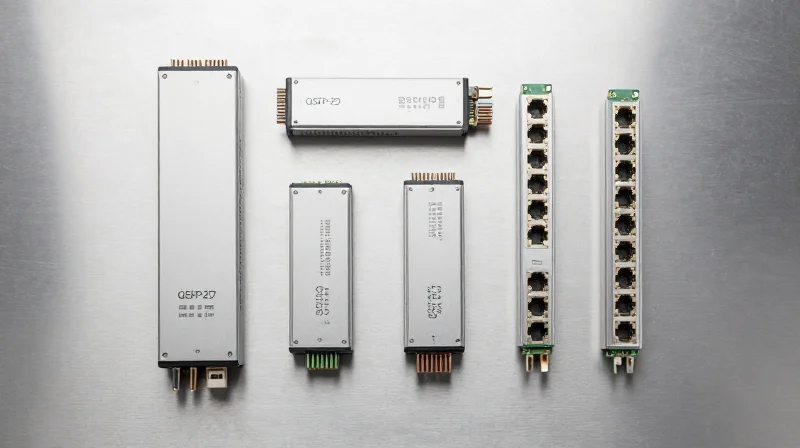
Technical Considerations: QSFP28, QSFP-DD, and OSFP Standards
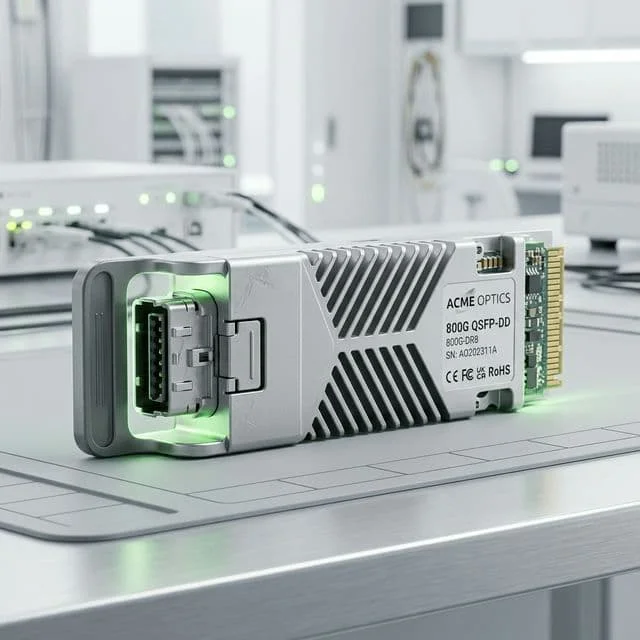
When procuring 100G and 400G transceivers at scale, the choice of form factor—QSFP28, QSFP-DD, or OSFP—dictates not only the port density and thermal management of your data center but also the long-term backward compatibility with legacy infrastructure. QSFP28 serves as the mature, cost-optimized standard for 100G deployments, while the competition between QSFP-DD and OSFP defines the 400G landscape, each offering unique advantages in terms of power dissipation and future-proofing.
QSFP28: The Foundation of 100G Networking
The Quad Small Form-factor Pluggable 28 (QSFP28) is the industry standard for 100G Ethernet. By utilizing four electrical channels of 25Gbps each, it offers high density and low power consumption. For bulk buyers, QSFP28 represents a highly stable investment due to its market maturity, making it the preferred choice for enterprise leaf-spine architectures. It is essential to verify that your existing switch ports support the specific optical interface (SR4, LR4, or CWDM4) before placing a wholesale order, as power consumption varies across these sub-standards.
400G Standards: QSFP-DD vs. OSFP Comparison
Transitioning to 400G introduces two primary form factors. The QSFP Double Density (QSFP-DD) expands on the original QSFP architecture by adding a second row of electrical contacts, allowing for 8-lane interfaces while maintaining mechanical backward compatibility with QSFP28. Conversely, the Octal Small Form-factor Pluggable (OSFP) is physically wider and deeper, featuring integrated heat sinks. While OSFP offers superior thermal performance for high-power optics—essential for 400G ZR/ZR+ long-haul applications—it requires physical adapters to maintain compatibility with QSFP28 hardware.
| Feature | QSFP28 | QSFP-DD | OSFP |
|---|---|---|---|
| Max Data Rate | 100G | 400G (800G Ready) | 400G (800G+ Ready) |
| Electrical Lanes | 4 x 25G | 8 x 50G (PAM4) | 8 x 50G (PAM4) |
| Backward Compatibility | QSFP+ | QSFP28 / QSFP+ | Requires Adapter |
| Thermal Capacity | 3.5W - 5W | Up to 12W - 15W | 15W - 20W+ |
| Primary Use Case | Standard 100G DC | High-Density 400G | Thermal-Heavy / DCI |
Technical FAQ for Wholesale Procurement
- Can I plug a bulk-purchased QSFP28 module into a QSFP-DD port?
Yes, QSFP-DD ports are designed to be backward compatible. A QSFP28 module will fit into a QSFP-DD slot and function at 100G speeds, provided the switch OS supports the configuration. - When is OSFP a better investment than QSFP-DD for 400G?
OSFP is often the superior choice for high-power applications like 400G ZR or future transitions to 800G, as its larger size and built-in heat sink handle thermal loads better than the more compact QSFP-DD. - How does form factor affect bulk pricing and custom quotes?
QSFP28 typically has the lowest price-per-gigabit due to high production volume. 400G modules like OSFP often require more stringent testing and higher-quality materials, leading to steeper unit costs but better long-term scalability.
The Power of OEM/ODM Customization with Ubytelink

The Power of OEM/ODM Customization with Ubytelink
Customization through OEM/ODM services is the critical bridge between standard networking hardware and high-performance infrastructure, allowing for precision modifications in firmware, thermal thresholds, and power efficiency that generic products simply cannot match. For enterprises looking to Buy Bulk Buying 100G/400G Tips Wholesale, leveraging custom quotes means moving beyond basic specifications to secure hardware that is engineered for their specific rack density and cooling capabilities.
Why Standard Optics May Fall Short in Advanced Deployments
While standard QSFP28 and QSFP-DD modules adhere to MSAs (Multi-Source Agreements), they often lack the granular tuning required for proprietary vendor OS environments or extreme edge computing scenarios. Ubytelink fills this gap by offering bespoke engineering that addresses unique signal integrity issues or specific reach requirements that deviate from the standard 2km or 10km benchmarks.
| Feature | Standard Off-the-Shelf | Ubytelink Custom OEM/ODM |
|---|---|---|
| Firmware Compatibility | Broad/Generic | Vendor-Specific (Cisco, Arista, Juniper, etc.) |
| Operating Temperature | Commercial (0°C to 70°C) | Industrial/Extended (-40°C to 85°C) |
| Power Consumption | Fixed per MSA | Optimized for Low-Power Data Centers |
| Branding & Labeling | Manufacturer Standard | White Label or Custom Branding |
Strategic Advantages of Ubytelink's Custom Engineering
- Firmware Agility
We provide custom-coded firmware to ensure 100% host-device compatibility, eliminating 'unsupported transceiver' errors in legacy or highly secured switch environments. - Thermal Management
For 400G deployments where heat is a primary failure mode, our ODM services include enhanced heat sink designs and specialized materials for better dissipation. - Efficiency Tuning
We can engineer modules with lower power draw to help reduce the total cost of ownership (TCO) in massive wholesale deployments.
Custom Quotes & Wholesale FAQ
- Can I request custom labeling for bulk 400G orders?
Yes, Ubytelink offers full OEM branding services, including custom labels, pull-tab colors, and serialized tracking tailored to your inventory management system. - Is there a minimum order quantity (MOQ) for custom firmware?
Custom firmware typically requires a minimum volume to offset engineering costs, though we offer flexible tiers for clients purchasing 100G/400G wholesale. - How does customization affect lead times in 2026?
By maintaining an agile supply chain, Ubytelink minimizes delays. While custom ODM projects take longer than off-the-shelf shipping, our vertical integration ensures we remain faster than industry averages.
Ensuring Quality and Reliability in Wholesale Shipments
When procuring high-speed optical modules in bulk, quality assurance (QA) shifts from a routine check to a critical risk-mitigation strategy. Because a single batch of substandard 100G or 400G transceivers can cause cascading link failures across an entire data center tier, wholesale buyers must prioritize vendors that implement 100% serial testing rather than statistical sampling. Reliable wholesale shipments ensure that every module adheres to strict Multi-Source Agreement (MSA) standards, guaranteeing that signal integrity, thermal stability, and power consumption remain within specified thresholds even under peak load.
Key Performance Indicators for High-Speed Transceiver Reliability
For 100G (NRZ) and 400G (PAM4) optics, the margins for error are razor-thin. Testing must go beyond simple connectivity checks to include deep physical layer analysis. Bit Error Rate (BER) testing is the gold standard, ensuring that the module can handle traffic without excessive packet retransmissions. Additionally, Eye Diagram analysis evaluates the 'openness' of the signal; a clean eye indicates low jitter and high noise immunity, which is vital for long-reach (LR) and extended-reach (ER) applications.
| Test Protocol | Target Metric | Impact on Reliability |
|---|---|---|
| BER (Bit Error Rate) | Pre-FEC < 1E-12 | Prevents packet loss and reduces latency caused by retransmissions. |
| Eye Diagram Analysis | Wide mask margin | Ensures signal clarity and immunity to crosstalk/inter-symbol interference. |
| Temperature Cycling | 0°C to 70°C (Comm) | Validates that performance remains stable under fluctuating data center heat. |
| TX/RX Power Levels | Within IEEE spec | Prevents receiver saturation or signal attenuation over distance. |
Solving the Interoperability Puzzle
One of the greatest challenges in bulk buying is ensuring that the transceivers work seamlessly with diverse hardware from Cisco, Arista, Juniper, and white-box switches. Ubytelink addresses this through extensive interoperability verification in a mirrored lab environment. By verifying the EEPROM/DOM (Digital Optical Monitoring) coding against specific firmware versions of the host equipment, wholesale buyers can avoid the 'unsupported transceiver' errors that frequently plague lower-tier bulk shipments.
Quality and Reliability FAQs
- How does 400G testing differ from 100G testing?
400G uses PAM4 signaling, which is more sensitive to noise. Testing requires more sophisticated Error Correction (FEC) analysis and tighter jitter control compared to 100G NRZ. - What is the industry-standard failure rate for wholesale optics?
Tier-1 providers like Ubytelink aim for a Return Merchandise Authorization (RMA) rate of less than 0.1%. Rigorous pre-shipment testing is what keeps this number low. - Does bulk pricing affect the quality of the individual units?
No. Bulk pricing is achieved through economies of scale in manufacturing and logistics. Quality protocols should remain identical for one unit or one thousand units.
Navigating the Global Supply Chain for 2026

Navigating the global supply chain for 100G and 400G transceivers in 2026 demands a shift from reactive purchasing to proactive resource orchestration. As AI-driven data centers consume vast quantities of high-bandwidth optics, enterprise buyers must anticipate longer lead times and price fluctuations by establishing direct relationships with manufacturers and diversifying their logistics channels to ensure network uptime.
Mitigating Lead Time Volatility in the 400G Era
Lead times for 400G QSFP-DD and OSFP modules are increasingly tied to the availability of specialized Digital Signal Processor (DSP) chips and EML laser components. To secure bulk pricing in 2026, organizations should move away from 'spot market' buying and toward 12-to-18-month rolling forecasts. This allows wholesalers to reserve manufacturing capacity, ensuring that bulk shipments arrive in alignment with phased network rollouts rather than causing project delays.
Inventory Strategy: JIT vs. Strategic Buffering
| Procurement Strategy | Key Advantage | Primary Risk | 2026 Recommendation |
|---|---|---|---|
| Just-in-Time (JIT) | Lowers warehousing costs | High risk of project stalls | Avoid for 400G deployments |
| Strategic Stockpiling | Shields against price hikes | Capital allocation lock-in | Recommended for core 100G optics |
| Hybrid Managed Buffer | Balance of cost and speed | Requires accurate forecasting | Best for large-scale AI clusters |
Supply Chain Resilience FAQ
- How can I protect my bulk order from sudden price increases?
Lock in pricing through long-term Master Purchase Agreements (MPAs) or by placing blanket purchase orders that allow for scheduled releases over a 6-12 month period. - What is the impact of geopolitical shifts on 100G/400G sourcing?
Diversifying manufacturing origins—such as utilizing vendors with facilities in multiple regions—reduces the risk of tariff spikes and shipping bottlenecks in specific trade lanes. - Should I prioritize air freight or sea freight for bulk transceivers?
For 400G optics, the value-to-weight ratio is high, making air freight the standard to minimize transit time and reduce the 'inventory in transit' cost, despite higher shipping rates.
Leveraging Custom Quotes for Supply Chain Stability
Ultimately, the most effective way to navigate the 2026 market is through a 'Custom Quote' model. Unlike standard e-commerce checkouts, a custom wholesale quote incorporates current component availability, logistics optimizations, and tiered pricing based on the specific delivery timeline of the project, providing a more realistic and enforceable roadmap for large-scale network expansions.
Comparing Vendor Ecosystems: Third-Party vs. Brand-Name Optics
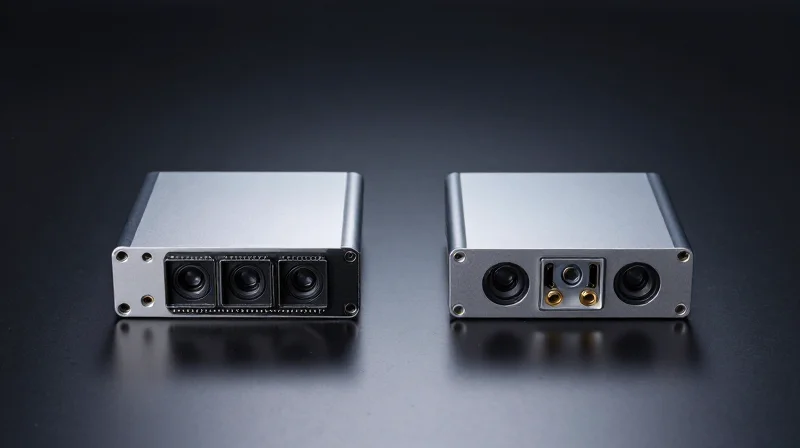
The Economic Reality of 100G/400G Procurement: OEM vs. Third-Party
In the 2026 optical market, the price delta between Original Equipment Manufacturer (OEM) modules and Tier-1 third-party alternatives can range from 60% to over 90%, making it the most critical variable in bulk 100G and 400G procurement. While OEMs offer a 'single-pane-of-glass' support experience, the technological gap has virtually disappeared, as both parties often source components from the same few high-end foundries. For wholesale buyers, the decision hinges on balancing immediate CAPEX savings against long-term operational risk management.
| Feature | Brand-Name (OEM) | Premium Third-Party |
|---|---|---|
| Typical Cost | Premium (3x - 10x higher) | Aggressive Wholesale Pricing |
| Compatibility | Guaranteed for native OS | Multi-vendor (EEPROM Coding) |
| Lead Times | Can be long (8-12 weeks) | Often In-Stock (1-2 weeks) |
| Standardization | Proprietary Validation | MSA (Multi-Source Agreement) |
| Warranty | Standard 1-year | Often Lifetime Replacement |
When to Prioritize OEM Solutions
Despite the cost, brand-name optics remain the standard for mission-critical core backbones where 'SmartNet' or equivalent support contracts are non-negotiable. If a network failure requires immediate on-site manufacturer intervention, having OEM optics eliminates any 'finger-pointing' during the troubleshooting process. For 400G links involving complex coherent optics (ZR/ZR+), some buyers prefer OEM-validated modules to ensure seamless integration with proprietary software-defined networking (SDN) controllers.
Leveraging Third-Party Optics for Bulk Scalability
For data center interconnects (DCI) and leaf-spine architectures where volume is high, third-party optics are the industry standard. High-quality vendors provide modules coded with the specific firmware signatures required to bypass 'unsupported transceiver' warnings in major OS environments like Cisco, Arista, and Juniper. By purchasing third-party in bulk, organizations can afford to keep significant on-site spares—often 10% of the total deployment—which provides a faster recovery time than waiting for an OEM RMA process.
Frequently Asked Questions: Compatibility and Support
- Will using third-party optics void my switch warranty?
No. In the US, the Magnuson-Moss Warranty Act protects consumers by stating that a manufacturer cannot void a warranty simply for using third-party components, unless they can prove the component caused the damage. - How do third-party vendors ensure 400G interoperability?
Reputable vendors use sophisticated coding stations and real-world testing labs containing the latest switches from Arista, Cisco, and Mellanox to verify that the EEPROM data matches OEM expectations. - What is the Bit Error Rate (BER) difference?
When sourced from Tier-1 factories, third-party 100G/400G modules meet the same IEEE and MSA standards for BER (typically better than 1E-12) as OEM modules.
Best Practices for Requesting Custom Wholesale Quotes
Securing the lowest price-per-unit for 100G and 400G transceivers requires a shift from passive procurement to active specification. Because the market for high-speed optics is sensitive to component yields and silicon availability, providing a supplier with a comprehensive 'Request for Quote' (RFQ) package reduces their risk profile, allowing them to pass on aggressive volume discounts that are typically unavailable through standard e-commerce channels.
The Anatomy of a High-Precision Wholesale RFQ
| Parameter | Requirement Details | Impact on Wholesale Pricing |
|---|---|---|
| Form Factor & Reach | QSFP28 vs. QSFP-DD; SR4, LR4, or DR4 specifics. | High: Component costs vary drastically based on laser type and reach. |
| Device Compatibility | Specific OEM (Cisco, Arista, Juniper) or Open Standards. | Medium: Affects the coding and testing labor required by the vendor. |
| Volume & Forecasting | Immediate quantity plus 12-month projected rollout. | Critical: Allows vendors to secure raw materials at lower tiered rates. |
| Shipping & Incoterms | Ex-Works, FOB, or DDP requirements. | Medium: Influences the final landed cost and insurance premiums. |
Strategic Timing and Bundling for Maximum Leverage
To optimize your 2026 procurement strategy, avoid piecemeal ordering. Vendors are significantly more likely to provide 'Tier 1' pricing when 100G/400G transceivers are bundled with high-margin accessories like DAC cables or AOCs. Furthermore, requesting quotes during the final month of a fiscal quarter can often yield an additional 3-5% discount as suppliers look to meet volume targets.
- How detailed should my compatibility requirements be?
Extremely. Provide the exact switch model and firmware version to ensure the custom quote includes the cost of specialized EEPROM coding and interoperability verification. - Is it better to request a fixed price or a floating bulk rate?
For 400G optics, which are still seeing price erosion, a floating rate with a 'price protection' clause for 6 months is often superior to a fixed long-term contract. - What is the typical turnaround for a custom wholesale quote?
For quantities exceeding 500 units, expect 48 to 72 hours. This allows the vendor to coordinate with their upstream fab and logistics partners for the best possible rate.
Strategic procurement of 100G and 400G modules is the cornerstone of a cost-effective network expansion. By focusing on quality assurance, wholesale advantages, and customized OEM/ODM options, your organization can achieve unprecedented bandwidth efficiency. Ready to take the next step? Contact Ubytelink today for a personalized wholesale quote and let our experts guide your network scaling journey.