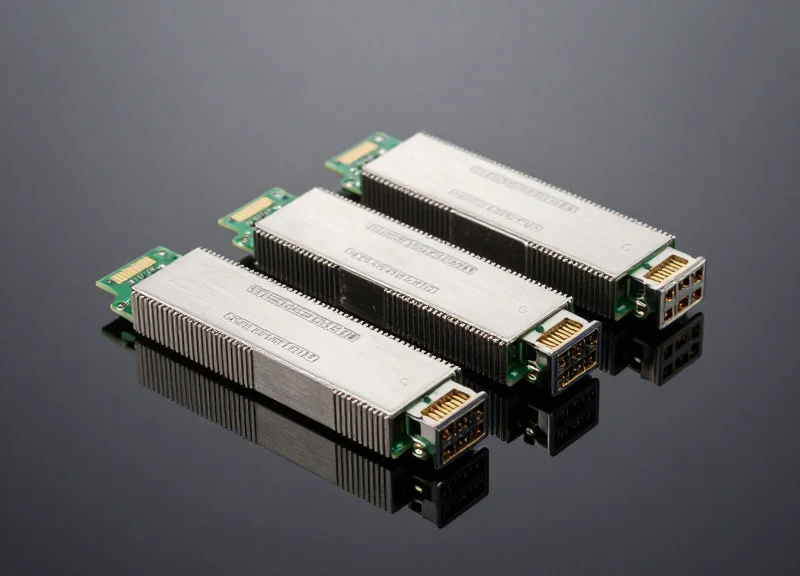
As data demands skyrocket, enterprise networks and data centers are rapidly transitioning to 200G architectures. Sourcing high-performance 200G QSFP56 ER4 transceivers at scale requires a balance of technical precision and cost-effective procurement. This guide explores how to leverage wholesale opportunities and custom manufacturing to future-proof your infrastructure.
The Evolution of 200G: Why QSFP56 ER4 Matters

The 200G QSFP56 ER4 optical transceiver marks a pivotal shift in high-speed networking, offering a robust solution for service providers and data center operators who require high-bandwidth density across distances up to 40km. By utilizing sophisticated PAM4 modulation and integrated LAN-WDM technology, the ER4 variant provides the necessary reach for metro-core and backhaul applications that standard short-reach modules cannot satisfy. This evolution is essential for bridging the gap between traditional 100G infrastructure and the looming requirements of 400G and 800G ecosystems, allowing for cost-effective scaling without a complete overhaul of fiber plants.
The Technological Leap: From NRZ to PAM4
Unlike the previous generation of QSFP28 modules which relied primarily on Non-Return to Zero (NRZ) signaling, the QSFP56 form factor leverages Pulse Amplitude Modulation 4-level (PAM4). This transition is the cornerstone of 200G efficiency. By doubling the bits per symbol, QSFP56 ER4 can transmit 200Gbps of data over four lanes of 50G each. This spectral efficiency is what allows the ER4 to maintain a compact footprint while delivering the thermal performance and signal integrity required for 40km transmissions over single-mode fiber (SMF).
Comparing 200G QSFP56 Variants
| Module Type | Max Distance | Fiber Type | Primary Application |
|---|---|---|---|
| QSFP56 SR4 | 100m | Multimode (OM4) | Intra-rack/Data Center |
| QSFP56 DR4 | 500m | Single-mode (SMF) | Campus/Short-reach DCI |
| QSFP56 FR4 | 2km | Single-mode (SMF) | Data Center Interconnect |
| QSFP56 LR4 | 10km | Single-mode (SMF) | Enterprise/Metro Core |
| QSFP56 ER4 | 40km | Single-mode (SMF) | Long-haul/Backhaul/Metro |
Key Benefits of the ER4 Specification
- Why is 40km the industry benchmark for ER4?
The 40km reach allows operators to bypass intermediate amplification sites, significantly reducing capital expenditure (CAPEX) and operational complexity in metro-ring architectures. - How does LAN-WDM technology benefit signal integrity?
QSFP56 ER4 uses LAN-WDM wavelength grids (1295nm to 1309nm) which sit in the zero-dispersion window of single-mode fiber, ensuring minimal signal degradation over long spans. - What is the impact on power consumption?
Modern QSFP56 ER4 designs focus on low power dissipation (typically under 7W-8W), making them more energy-efficient per gigabit than older 100G ER4 solutions when deployed at scale. - Is QSFP56 ER4 compatible with legacy systems?
While it shares the physical size of QSFP28, the electrical interface uses PAM4 rather than NRZ, requiring host platforms specifically designed for 200G signaling to operate correctly.
Technical Deep Dive: QSFP56 ER4 Specifications
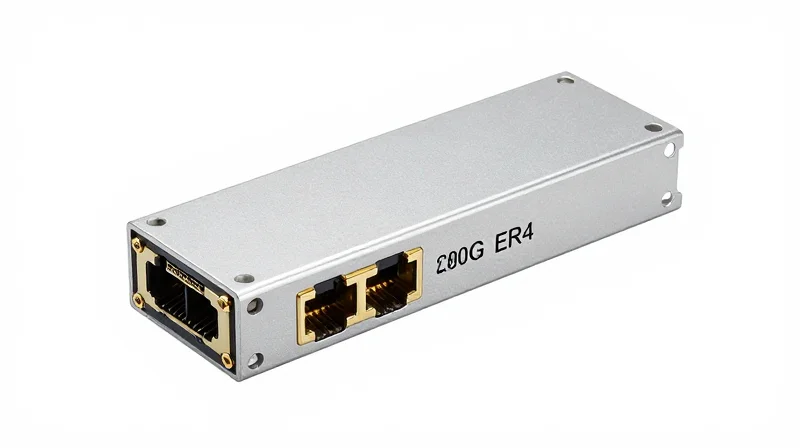
The Core Architecture of 200G QSFP56 ER4
The 200G QSFP56 ER4 transceiver is built upon the foundational IEEE 802.3bs and QSFP56 Multi-Source Agreement (MSA) standards, designed to deliver 212.5 Gbps of aggregate throughput. By utilizing four independent lanes of 53.125 Gbps, this module leverages 4-level Pulse Amplitude Modulation (PAM4) rather than traditional NRZ. This transition to PAM4 is critical; it allows the module to transmit two bits of information per symbol, effectively doubling the data density without requiring a proportional increase in optical bandwidth, which is essential for achieving the extended 40km reach.
Optical Wavelengths and LWDM Precision
To mitigate the signal degradation associated with long-distance fiber runs, the ER4 variant employs a LAN-WDM (LWDM) wavelength grid. These wavelengths are strategically placed in the O-band to minimize chromatic dispersion. Unlike CWDM, which has wider spacing, LWDM uses a narrow 800GHz channel grid, ensuring high-performance transmission even over 40km of single-mode fiber (SMF).
| Parameter | Technical Specification |
|---|---|
| Modulation | PAM4 (Pulse Amplitude Modulation 4-level) |
| Wavelengths (LWDM) | 1295.56nm, 1300.05nm, 1304.58nm, 1309.14nm |
| Transmission Distance | Up to 40km (using SMF with Host KP4 FEC) |
| Power Consumption | Maximum 7.5W (Typical < 7.0W) |
| Optical Interface | Duplex LC Connector |
| Operating Temperature | 0°C to 70°C (Commercial Grade) |
Power Efficiency and Thermal Management
Power consumption is a pivotal metric for wholesale buyers managing hyperscale data centers. The QSFP56 ER4 is engineered for a maximum power draw of 7.5W. This efficiency is achieved through integrated Digital Signal Processing (DSP) chips that handle the complex PAM4 signaling while maintaining a low thermal footprint. Lower power consumption not only reduces operational expenditure (OPEX) but also simplifies the cooling requirements for high-density switches where 32 or more ports may be active simultaneously.
Technical FAQ: Implementation and Compatibility
- Does the 200G QSFP56 ER4 require Forward Error Correction (FEC)?
Yes, the ER4 module requires the host system to enable KP4 FEC (Forward Error Correction) to achieve a link distance of 40km. Without FEC, the bit error rate (BER) would exceed the threshold for reliable data transmission. - Can I use QSFP56 ER4 in a QSFP28 slot?
While the physical dimensions are the same, QSFP28 slots generally support NRZ modulation. Because the QSFP56 ER4 uses PAM4 signaling, the host port must be specifically designed to support 200G PAM4 logic. - What is the sensitivity requirement for the receiver?
Due to the 40km reach, the receiver uses highly sensitive APD (Avalanche Photodiode) components. It is vital to ensure that for short-distance testing, appropriate attenuators are used to prevent damage to the sensitive optical receiver.
Comparing 200G QSFP56 vs. 200G QSFP-DD
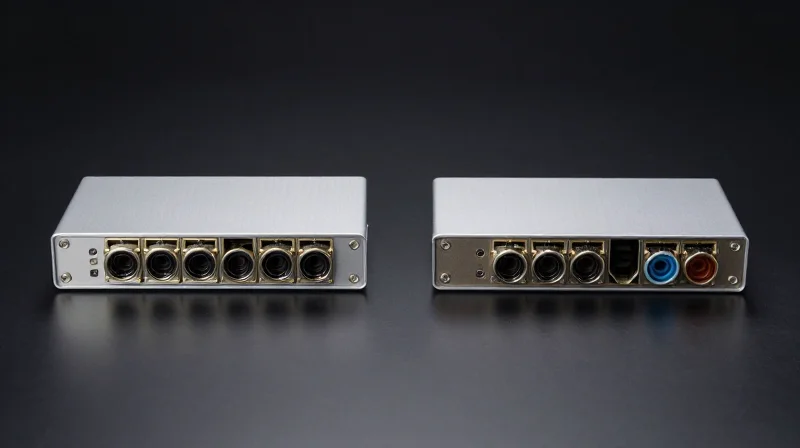
Comparing 200G QSFP56 vs. 200G QSFP-DD
The primary distinction between 200G QSFP56 and QSFP-DD lies in their electrical interface and intended density; while QSFP56 utilizes four 50G PAM4 lanes to achieve 200G, QSFP-DD (Double Density) employs an eight-lane interface to support up to 400G, often making QSFP56 the more power-efficient and cost-effective choice for dedicated 200G ER4 links. For wholesale buyers, understanding this architectural divergence is critical for ensuring compatibility with existing switch hardware and future-proofing long-distance fiber spans.
| Specification | QSFP56 (200G) | QSFP-DD (200G/400G) |
|---|---|---|
| Electrical Lanes | 4 Lanes x 50G | 8 Lanes x 25G or 50G |
| Modulation | PAM4 | NRZ or PAM4 |
| Backward Compatibility | QSFP+, QSFP28 | QSFP28, QSFP56 |
| Max Power (Typical ER4) | Approximately 7.0W | Often >10W in 400G config |
| Best Use Case | Dedicated 200G long-haul (40km) | High-density 400G breakout |
Architectural Efficiency and Thermal Management
QSFP56 transceivers are purpose-built for 200G applications, maintaining the same physical footprint as the legacy QSFP28 standard but doubling the throughput via PAM4 modulation. This makes them ideal for ER4 (Extended Range) applications where thermal management is paramount. Because ER4 optics require specialized lasers to reach 40km, the 4-lane architecture of QSFP56 generates less heat than an 8-lane QSFP-DD configuration running at partial capacity, leading to higher reliability in high-temperature data center environments.
- Is a 200G QSFP56 ER4 compatible with QSFP-DD ports?
Yes, most QSFP-DD ports are backward compatible with QSFP56 modules. This allows wholesale purchasers to deploy 200G ER4 optics in newer 400G switches without requiring specialized adapters. - Why choose QSFP56 over QSFP-DD for bulk 200G deployments?
QSFP56 is generally more cost-efficient for 200G-only networks. It provides a mature supply chain for ER4 optics and avoids the complexity of managing eight electrical lanes when only four are required for the 200G throughput. - What are the cabling requirements for these form factors?
Both form factors utilize standard LC duplex connectors for ER4 connectivity over Single-Mode Fiber (SMF), meaning the external fiber infrastructure remains identical regardless of the internal transceiver form factor.
Maximizing ROI with Wholesale Procurement
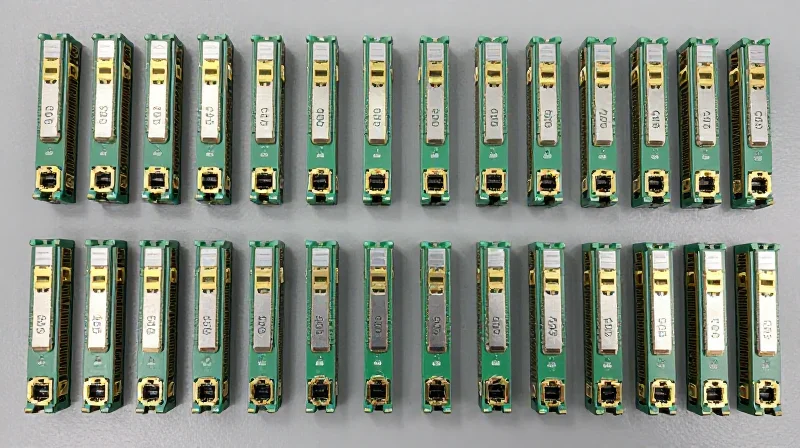
Maximizing ROI with Wholesale Procurement
Bulk procurement of 200G QSFP56 ER4 modules transforms network scaling from a high-margin reactive expense into a strategic asset by drastically reducing the cost-per-port and stabilizing the supply chain for critical 40km long-haul links. By shifting away from ad-hoc retail purchases, operators can realize a significantly lower Total Cost of Ownership (TCO) through economies of scale, streamlined logistics, and enhanced vendor support agreements.
Cost Advantages: Retail vs. Wholesale Analysis
| Procurement Metric | Retail/Spot Purchase | Wholesale/Bulk Contract |
|---|---|---|
| Average Unit Price | Market Premium | 15% - 35% Volume Discount |
| Supply Chain Stability | Subject to market volatility | Reserved inventory & staggered delivery |
| Technical Support | Standard ticketing | Dedicated FAE (Field Application Engineer) |
| Batch Consistency | Mixed production lots | Single-lot manufacturing for uniformity |
Optimizing Inventory and Deployment Efficiency
Beyond the immediate reduction in hardware costs, wholesale procurement simplifies inventory management. Deploying 200G QSFP56 ER4 modules from a single manufacturing batch ensures uniform power consumption and thermal performance across your data center fabric or service provider edge. This consistency reduces the complexity of troubleshooting and minimizes the risk of interoperability issues that often plague mixed-vendor or mixed-lot environments.
Wholesale Procurement FAQ
- How do custom quotes impact the price of 200G ER4 modules?
Custom quotes allow vendors to offer tiered pricing based on specific volume commitments, often unlocking significant discounts that are not available through standard online pricing. - What are the lead times for bulk 200G QSFP56 ER4 orders in 2026?
While spot buys may ship immediately, wholesale orders typically have a managed lead time of 2-6 weeks, allowing for batch-specific testing and coordinated shipping schedules. - Can custom firmware be requested during wholesale procurement?
Yes, bulk buyers often have the leverage to request specific EEPROM coding or firmware versions to ensure 100% compatibility with legacy or specialized OEM switching hardware.
The Power of OEM/ODM Customization for Optical Modules
The Power of OEM/ODM Customization for Optical Modules
In modern heterogeneous network environments, OEM/ODM customization acts as the bridge between generic hardware and seamless multi-vendor interoperability. For organizations looking to buy 200G QSFP56 ER4 wholesale, customization ensures that modules are not only cost-effective but also fine-tuned to bypass proprietary software locks, optimize power consumption, and provide physical branding that aligns with corporate infrastructure standards.
Solving Multi-Vendor Compatibility with Tailored Firmware
The primary challenge in deploying wholesale optical modules is ensuring they are recognized by switches from different manufacturers like Cisco, Arista, Juniper, or Mellanox. Through custom firmware engineering, suppliers can write specific EEPROM/A0h data that mimics original equipment manufacturer (OEM) signatures. This eliminates 'unsupported transceiver' errors and ensures that advanced diagnostics, such as Digital Optical Monitoring (DOM), report accurate data across all platforms.
Hardware Modifications and Private Labeling
Beyond the code, OEM services allow for physical adjustments. This includes custom pull-tab lengths and colors for easier identification in high-density racks, as well as private labeling for distributors who wish to maintain brand consistency. For unique deployments, hardware modifications can also include specialized heat sinks or industrial-grade temperature components for modules operating in harsh telco environments.
| Feature | Standard Wholesale Module | Customized OEM/ODM Module |
|---|---|---|
| Vendor Interoperability | Generic; may trigger errors | Multi-vendor coded for specific switches |
| Branding & Identification | Manufacturer default label | Private label and custom pull-tab colors |
| Firmware Flexibility | Static; non-upgradable | Field-upgradable or custom tailored |
| Diagnostic Support | Standard DOM | Enhanced monitoring for specific OS |
FAQ: Customizing Your 200G ER4 Deployment
- Can I request dual-coding for a single 200G QSFP56 ER4 module?
Yes. Many OEM providers can code modules to be compatible with two different vendors simultaneously, such as Cisco and Arista, ensuring flexibility in mixed-switch environments. - How does customization affect bulk pricing for 200G modules?
While custom firmware is often included in wholesale quotes, significant hardware modifications or private labeling may incur a slight nominal fee per unit, which is typically offset by the reduced cost of troubleshooting. - Is the performance of customized modules different from standards?
No. The core optical performance and LWDM specifications remain compliant with IEEE 802.3bs and MSA standards; customization only enhances compatibility and physical integration.
Ensuring Network Integrity: Testing and Quality Control

Ensuring network integrity when purchasing 200G QSFP56 ER4 modules at scale requires a multi-layered approach to quality control, moving beyond basic connectivity checks to include Bit Error Rate (BER) analysis and environmental stress testing. Because ER4 optics utilize PAM4 modulation and integrated Avalanche Photodiode (APD) receivers to reach 40km without optical amplification, even minor manufacturing deviations can lead to significant packet loss or link failure over time. For wholesale buyers, verifying that every unit meets strict IEEE 802.3bs and MSA standards is the only way to safeguard large-scale infrastructure investments.
Industrial-Grade Manufacturing and MSA Compliance
Reliable wholesale optics are built upon adherence to Multi-Source Agreements (MSA) and global manufacturing standards. These frameworks ensure that the 200G QSFP56 ER4 modules are physically and logically interoperable with diverse switching hardware while meeting specific power consumption and thermal dissipation requirements. High-quality vendors implement ISO 9001-certified processes, ensuring every unit in a bulk order maintains the same tight tolerances as the initial sample. This consistency is vital for long-haul applications where signal attenuation is a constant factor.
Critical Quality Control Metrics for 200G Optics
| Test Type | Performance Target | Network Impact |
|---|---|---|
| BER Testing | < 2.4e-4 (Pre-FEC) | Prevents uncorrectable errors and minimizes latency overhead. |
| Eye Diagram Analysis | Wide Margin / Low Jitter | Ensures signal clarity at 53.125GBd per lane for reliable data recovery. |
| Temperature Cycling | -40°C to +85°C (Storage) | Guarantees long-term hardware stability in high-density data center racks. |
| TX/RX Optical Power | Per IEEE 802.3bs | Maintains the link budget required for the full 40km transmission distance. |
Multi-Vendor Compatibility and Firmware Validation
One of the highest risks in bulk procurement is firmware incompatibility with host devices from major manufacturers like Cisco, Arista, or Juniper. Advanced quality control involves 'real-world' testing where modules are validated in the actual target hardware environment. This process checks for Digital Optical Monitoring (DOM) accuracy, ensuring that the network management system can correctly report temperature, voltage, and bias current. Without precise DOM data, predictive maintenance becomes impossible, increasing the risk of unexpected outages in the field.
FAQ: Quality Assurance in Bulk 200G Procurement
- How do you verify the quality of a bulk 200G ER4 order before shipment?
Reputable vendors provide serialized test reports for each module, detailing the output power, receiver sensitivity, and BER performance recorded during the final quality control stage. - What is the significance of the APD receiver in ER4 quality testing?
The APD is highly sensitive to input power; quality control must ensure it is not overloaded during testing and that its sensitivity is high enough to detect weak signals after 40km of fiber attenuation. - Do these modules support error correction for high-speed data?
Yes, 200G QSFP56 ER4 modules rely on host-side KP4 Forward Error Correction (FEC). Quality control verifies that the module's signal-to-noise ratio is sufficient for the FEC to effectively eliminate transmission errors.
Supply Chain Resilience in 2026
Supply Chain Resilience in 2026: Securing Your 200G QSFP56 ER4 Roadmap
In the current telecommunications landscape, supply chain resilience for 200G QSFP56 ER4 modules is no longer just about maintaining inventory; it is about the strategic predictability of project execution. For network operators and data center managers looking to secure wholesale pricing, understanding the interplay between raw material availability—specifically specialized EML lasers—and manufacturing throughput is essential for maintaining 2026 upgrade schedules without costly delays.
Navigating Lead Times and Inventory Stability
While the extreme semiconductor shortages of the early 2020s have largely normalized, the 200G QSFP56 ER4 remains a high-precision component with specific production requirements. Lead times can fluctuate based on global demand for 40km-reach optics. Partnering with a supplier that maintains 'active' inventory and a robust component buffer allows for more flexible project pivoting.
| Procurement Model | Estimated Lead Time | Risk Level | Best Use Case |
|---|---|---|---|
| Spot Buy (Small Batch) | 1-3 Business Days | High (Price Volatility) | Emergency repairs or small expansions |
| Wholesale Bulk Order | 2-4 Weeks | Low (Locked-in Price) | Scheduled network rollouts |
| Custom OEM/ODM Batch | 4-8 Weeks | Moderate (Production-based) | Specialized firmware or proprietary hardware |
The Ubytelink Advantage: Why Strategic Partnerships Matter
A reliable supplier like Ubytelink acts as more than a vendor; they serve as a logistics buffer. By offering custom quotes and bulk pricing structures, Ubytelink aligns production schedules with client milestones. This proactive approach to manufacturing—securing EML lasers and internal DSPs months in advance—mitigates the risk of sudden market spikes or logistics bottlenecks, ensuring that your 200G infrastructure remains on track.
- How does Ubytelink handle sudden surges in wholesale demand?
We maintain a safety stock of common 200G configurations and have priority agreements with Tier-1 component manufacturers to expedite production when demand spikes occur. - Can I lock in bulk pricing for staggered deliveries throughout 2026?
Yes, our custom quotes allow for framework agreements where pricing is fixed, and shipments are scheduled according to your project's regional rollout phases. - What happens if there is a logistics delay for international orders?
Ubytelink utilizes a multi-hub shipping strategy and partners with premium carriers to provide end-to-end tracking and expedited customs clearance, minimizing the transit impact on your timeline.
Future-Proofing Your Data Center with 200G Solutions

Future-Proofing Your Data Center with 200G Solutions
Investing in 200G QSFP56 ER4 technology is not merely an incremental bandwidth upgrade; it is a strategic decision to align your network architecture with the trajectory of high-speed optical communications. By adopting the QSFP56 form factor, data center operators leverage PAM4 (Pulse Amplitude Modulation 4-level) signaling, which is the foundational technology for 400G and 800G standards. This allows for a smoother architectural transition compared to legacy 100G NRZ systems, ensuring that current hardware deployments remain compatible with the next generation of switching and routing silicon.
Bridging the Gap to 400G and 800G
The 200G QSFP56 ER4 acts as a cost-effective bridge for enterprises that are not yet ready for the full power consumption and thermal demands of 400G, yet require significantly higher density than 100G can provide. Because it utilizes four 50G lanes, it mirrors the electrical lane logic found in many 400G (8x50G) and early 800G configurations. This technical synergy simplifies the migration of management software and physical layer monitoring, as the PAM4 signaling protocols remain consistent across the upgrade path.
| Feature | 100G QSFP28 ER4 | 200G QSFP56 ER4 | 400G QSFP-DD ER8 |
|---|---|---|---|
| Modulation | NRZ | PAM4 | PAM4 |
| Electrical Lane Speed | 25Gbps | 50Gbps | 50Gbps |
| Max Reach | 40km | 40km | 40km |
| Standardization | IEEE 802.3ba | IEEE 802.3bs/cd | IEEE 802.3cn |
Maximizing Existing Fiber Assets
For many operators, the most significant constraint is the availability of dark fiber. The 200G QSFP56 ER4 maximizes current fiber efficiency by delivering 200Gbps over a single pair of single-mode fibers up to 40km. By utilizing LAN-WDM technology, it offers superior performance in terms of dispersion tolerance and signal integrity compared to CWDM alternatives. This allows organizations to double their capacity without the massive capital expenditure required for new fiber installation or the complexity of external amplification.
- Can 200G QSFP56 ER4 modules be used in 400G switches?
Yes, many 400G QSFP-DD ports are backward compatible with QSFP56 modules. This allows you to upgrade your switching fabric to 400G today while continuing to use 200G optics for long-reach links to save on initial optics costs. - Why is PAM4 signaling important for future-proofing?
PAM4 doubles the bit rate in the same bandwidth compared to NRZ. Since 400G and 800G standards are built on 50G and 100G PAM4 lanes, starting with 200G QSFP56 ensures your technical team is familiar with the signaling and troubleshooting techniques required for the future. - How does 200G ER4 compare to dual 100G links?
A single 200G ER4 link reduces port consumption, lowers total power consumption per bit, and simplifies cable management compared to using two separate 100G ER4 links, leading to better long-term TCO.
Upgrading your network shouldn't be limited by generic hardware or excessive retail margins. Ubytelink offers the technical expertise and manufacturing flexibility to provide high-quality 200G QSFP56 ER4 modules tailored to your specific needs. Ready to scale your infrastructure with the best wholesale pricing and OEM/ODM options? Contact Ubytelink today for a custom quote.