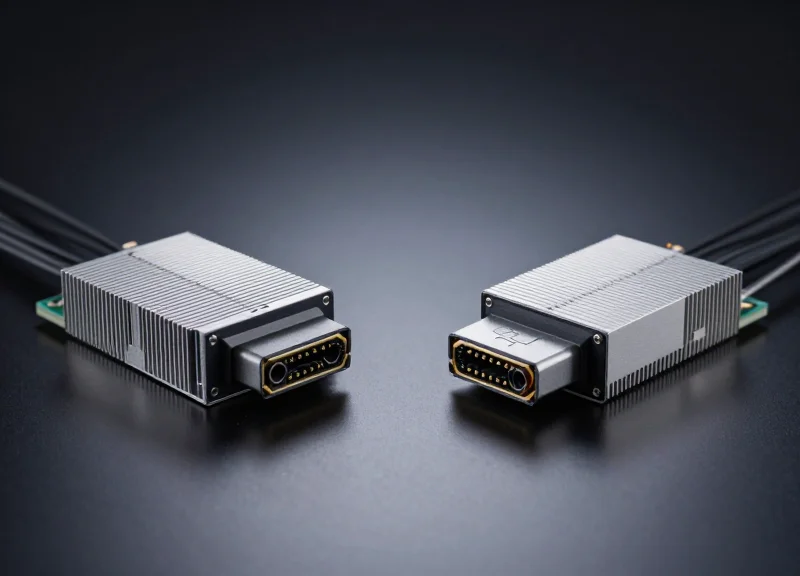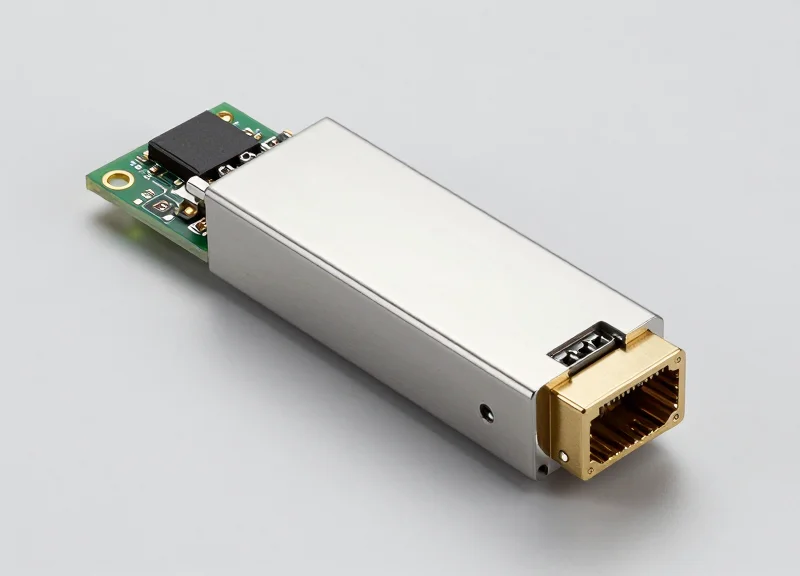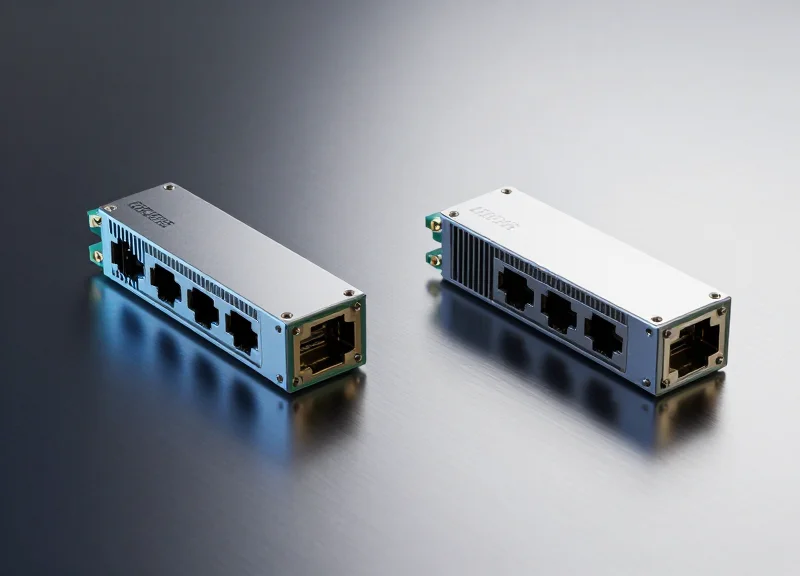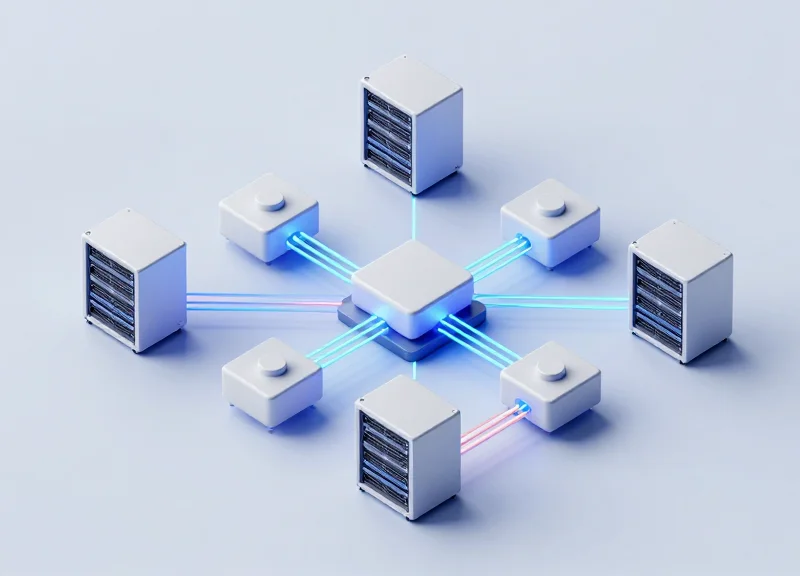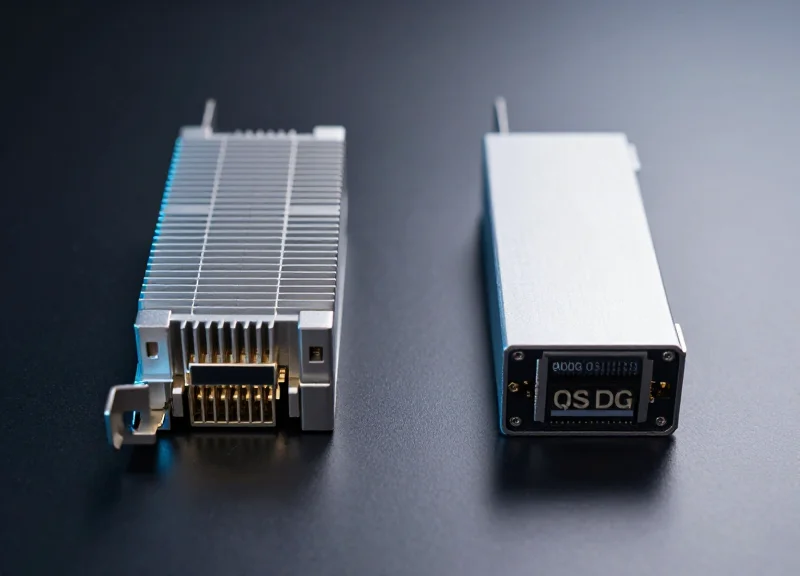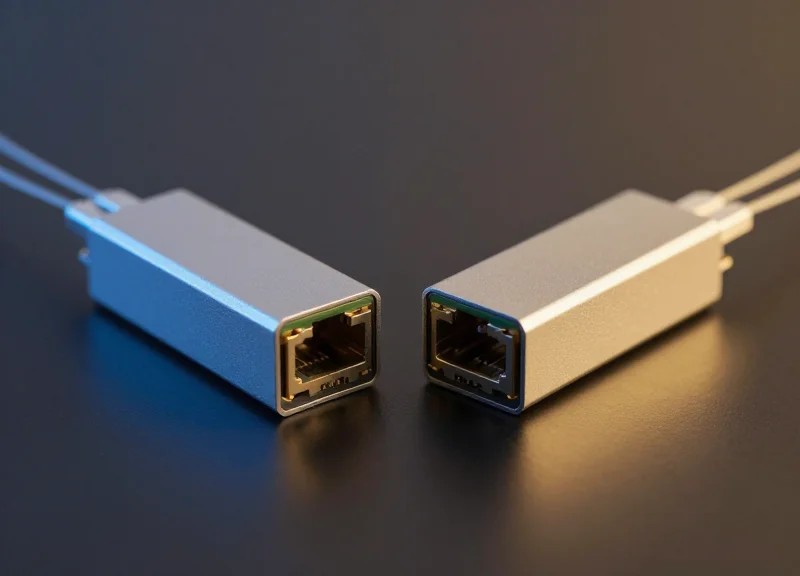
In the high-stakes world of data center networking, the choice of optical transceivers is often reduced to a battle between OEM branding and third-party affordability. However, a deeper look reveals that the real value lies in the intersection of performance metrics—specifically latency and power consumption—and the security of a lifetime warranty. This article explores whether lifetime warranty offerings truly outperform industry alternatives in the long run.
The Evolution of the Transceiver Market

The Evolution of the Transceiver Market
The optical transceiver market has transitioned from a rigid, OEM-exclusive monopoly to a highly competitive, standardized ecosystem where third-party modules now match or exceed the performance of brand-name hardware. Originally, networking giants like Cisco, Juniper, and Arista maintained strict control over the optical layer through proprietary firmware and 'vendor lock-in' tactics, but the rise of Multi-Source Agreements (MSAs) has leveled the playing field, allowing specialized manufacturers to produce compatible, high-quality optics for a global market.
The Era of OEM Dominance and Proprietary Constraints
In the early days of fiber networking, purchasing a switch necessitated purchasing the same brand's transceivers. This was largely a result of proprietary coding and the lack of interoperability standards. OEMs (Original Equipment Manufacturers) justified their significant markups—often 10x the cost of production—by citing testing, validation, and support. For IT directors, this created a 'safe' but expensive procurement cycle where the fear of voided warranties or technical failures kept them tied to OEM hardware.
The Rise of MSAs and Market Liberalization
The industry reached a turning point with the formation of Multi-Source Agreements (MSAs). These industry-wide standards defined the physical dimensions, electrical interfaces, and signaling for modules like SFP, QSFP, and OSFP. Because these standards are public, third-party manufacturers began producing optics that adhered to the exact same specifications as OEM modules. This democratization shifted the focus from 'who made it' to 'how well it performs,' paving the way for the lifetime warranties and rigorous third-party testing seen today.
| Feature | The OEM Monopoly Era | The Modern Open Ecosystem |
|---|---|---|
| Market Access | Exclusive to switch vendors | Open, MSA-compliant manufacturers |
| Pricing Strategy | High-margin, bundled with hardware | Cost-plus, competitive pricing |
| Interoperability | Restricted to specific brands | Cross-platform compatibility |
| Warranty Length | Standard 90 days to 1 year | Commonly Lifetime Warranty |
| Firmware Control | Proprietary/Locked | Flexible/Programmable |
Understanding the Shift: Market FAQ
- Why did third-party transceivers gain so much traction?
The primary drivers were cost-efficiency and the realization that OEMs do not typically manufacture their own optics; they source them from the same factories as high-end third-party providers. - Does using non-OEM optics void the switch warranty?
No. In the United States, the Magnuson-Moss Warranty Act prohibits manufacturers from voiding a warranty simply because a third-party component was used, provided that component did not cause the damage. - What role does the Lifetime Warranty play in this evolution?
It serves as a trust-building mechanism. Third-party vendors offer lifetime warranties to demonstrate superior MTBF (Mean Time Between Failures) and to offset the perceived risk of moving away from OEM branding.
Defining the 'Lifetime Warranty' Advantage

Defining the 'Lifetime Warranty' Advantage
In the networking industry, a 'Lifetime Warranty' is a strategic commitment that guarantees hardware functionality for the duration of the product's market relevance, often extending five to ten years beyond the manufacturer's End of Sale (EoS) announcement. Unlike traditional OEM warranties that sunset after 12 to 36 months, this advantage ensures that optical transceivers—the critical points of failure in high-speed links—remain covered against manufacturing defects and component degradation for their entire deployed life, effectively transferring the risk of hardware failure from the enterprise to the vendor.
Comparing Coverage: OEM vs. Lifetime Standards
| Feature | Standard OEM Warranty | Third-Party Lifetime Warranty |
|---|---|---|
| Standard Duration | 90 Days to 3 Years | Life of Product (+5 years post-EOL) |
| Recurring Costs | Requires paid support contracts | Included in purchase price |
| RMA Speed | Tiered (Standard vs. Premium) | Often includes Advanced Replacement |
| Post-Discontinuation | Limited or no support | Continued replacement support |
The primary differentiator lies in the 'Warranty Cliff.' With OEM hardware, once the initial period expires, enterprises are forced to choose between expensive support extensions (like Cisco SMARTnet) or operating at risk. A lifetime warranty eliminates this binary choice by providing a perpetual safety net, allowing network architects to sweat assets longer and maximize the return on investment (ROI) for their optical infrastructure.
Key Performance & Cost FAQs
- Does 'Lifetime' mean my lifetime or the product's?
In networking, it refers to the 'Life of the Product.' This typically covers the time the product is actively manufactured plus a significant period (often 5+ years) after the manufacturer ceases production. - How does this affect Total Cost of Ownership (TCO)?
By removing the need for annual support renewals and the cost of out-of-warranty replacements, a lifetime warranty can reduce the 10-year TCO of a transceiver by as much as 70% compared to OEM equivalents. - Is the RMA process faster with third-party lifetime warranties?
Leading third-party vendors often provide advanced replacement services as part of their lifetime guarantee, shipping a new unit before the failed one is returned to minimize network downtime. - Does a longer warranty imply higher quality?
Yes. Vendors offering lifetime coverage must maintain lower Failure-in-Time (FIT) rates to remain profitable; therefore, the warranty acts as a proxy for rigorous testing and component quality.
Latency Benchmarks: Speed Beyond the Spec Sheet
Latency in optical transceivers is primarily a function of the internal Digital Signal Processor (DSP) and the Physical Layer (PHY) chipsets, both of which are governed by Multi-Source Agreements (MSA). Because premium third-party vendors offering lifetime warranties typically utilize the same Tier-1 silicon (such as Broadcom, MaxLinear, or Marvell) found in OEM modules, there is no measurable delta in signal processing speed or packet propagation between the two categories.
Dispelling the 'Third-Party Lag' Myth
A common misconception in data center procurement is that OEM-branded modules are 'tuned' for higher speeds. In reality, the optical-to-electrical conversion process follows rigid IEEE standards. Whether a module is branded by a switch manufacturer or a specialized third-party, the time it takes for a photon to be converted into an electron (and vice versa) remains constant if the internal componentry is identical.
| Performance Metric | OEM Standard Module | Premium Third-Party (Lifetime) |
|---|---|---|
| Propagation Delay | < 0.1 ns (excluding fiber) | < 0.1 ns (excluding fiber) |
| DSP Processing Time | Dependent on FEC (e.g., RS-FEC) | Identical FEC Implementation |
| Bit Error Rate (BER) | 10^-12 to 10^-15 | 10^-12 to 10^-15 |
| Jitter Tolerance | IEEE 802.3 Compliance | IEEE 802.3 Compliance |
The Impact of Forward Error Correction (FEC)
In high-speed 100G, 400G, and 800G environments, latency is most significantly impacted by Forward Error Correction (FEC). Since FEC is handled at the host's ASIC or the transceiver's DSP, and these components must adhere to interoperability standards, a third-party module with a lifetime warranty will not introduce any additional 'shimming' or processing overhead that would increase nanosecond counts beyond OEM specs.
- Does the warranty type affect internal clock speeds?
No. The lifetime warranty is a service-level commitment to durability and build quality; it does not change the clock frequency or the serialization/deserialization (SerDes) speed of the hardware. - Why do some generic modules show higher jitter?
While premium third-party modules match OEM specs, budget-tier 'white label' modules may use inferior oscillators or capacitors. Premium modules with lifetime warranties use high-grade components to maintain signal integrity over decades. - Is heat dissipation related to latency?
Indirectly. Excessive heat can cause thermal throttling or increased bit errors requiring retransmission. Quality third-party modules are engineered for thermal efficiency to maintain consistent latency profiles.
Ultimately, the performance of an optical module is a matter of physics and engineering standards, not marketing labels. Benchmarks consistently show that premium third-party transceivers provide the exact same sub-nanosecond response times as OEM units, but with the added security of a long-term reliability guarantee.
Power Consumption: The Hidden Cost of Optics
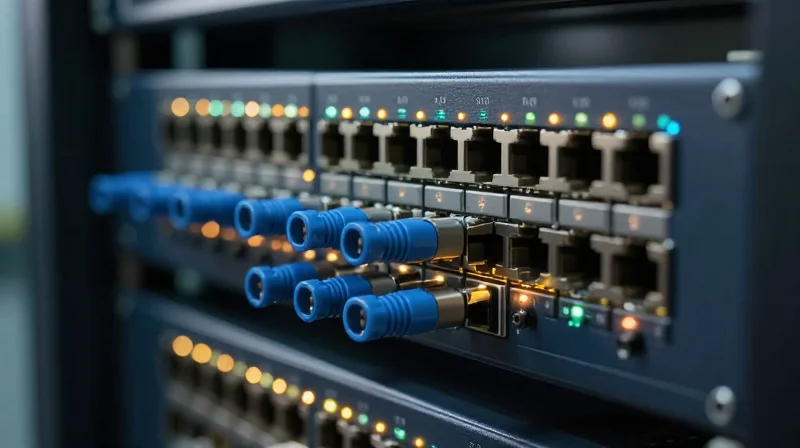
In modern high-density networking environments, the power consumption of a single transceiver may seem negligible, but when scaled across thousands of ports, it becomes a primary driver of operational expenditure (OPEX). While performance benchmarks often focus on throughput, the wattage required to achieve that speed—and the subsequent heat generated—determines the long-term viability of the hardware. Efficiency-optimized third-party transceivers often outperform legacy OEM modules by utilizing advanced Digital Signal Processing (DSP) chipsets that draw significantly less power, directly reducing both the utility bill and the strain on the facility's cooling infrastructure.
The Thermal Multiplier: Why Every Watt Counts
The true cost of power in the data center is not just the electricity consumed by the transceiver itself, but the 'cooling tax' associated with it. For every watt of power consumed by an optical module, roughly 0.5 to 1.0 additional watts are required to power the Computer Room Air Conditioning (CRAC) units needed to dissipate that heat. High-power modules can lead to localized 'hot spots' within a rack, forcing fans to run at higher RPMs, which further increases energy consumption and noise levels while reducing the lifespan of adjacent sensitive components.
| Transceiver Type | Standard Power Draw (W) | High-Efficiency Alt (W) | Annual Cooling Savings (per 1000 Units) |
|---|---|---|---|
| 10G SFP+ | 1.0 - 1.5W | 0.8W | Estimated $450 - $900 |
| 100G QSFP28 (LR4) | 3.5 - 4.5W | 3.0W | Estimated $3,200 - $6,400 |
| 400G QSFP-DD (DR4) | 10.0 - 12.0W | 8.5W | Estimated $11,000 - $22,000 |
DSP Advancements and Energy Efficiency
The disparity in power consumption between premium third-party alternatives and standard OEM modules is largely due to the generation of the Digital Signal Processing (DSP) silicon used inside. Modern 7nm and 5nm DSPs found in high-end alternatives significantly lower the power floor compared to older 16nm architectures often found in older OEM stock. By choosing modules with lower power envelopes, network architects can maximize port density without exceeding the power delivery capacity of the rack PDU (Power Distribution Unit).
Power & Efficiency FAQ
- Does lower power consumption affect signal reach?
No. Modern high-efficiency transceivers maintain full compliance with IEEE and MSA standards, ensuring that signal integrity and reach are preserved even while operating at lower power envelopes. - How does power draw impact the 'Lifetime' of the hardware?
Lower power consumption results in lower internal operating temperatures. Heat is the primary cause of laser degradation; therefore, cooler-running modules typically have a lower failure rate and are more likely to last the full duration of a lifetime warranty. - Can switching transceivers help meet ESG or Green initiatives?
Absolutely. For large-scale deployments, reducing transceiver power draw by even 0.5W per module can result in megawatt-hour savings annually, significantly lowering the carbon footprint of the data center.
Compatibility and EEPROM Programming

The reliability of a lifetime warranty transceiver is intrinsically linked to its ability to flawlessly emulate OEM signatures through advanced EEPROM (Electrically Erasable Programmable Read-Only Memory) programming. Unlike generic modules that may use a one-size-fits-all firmware approach, premium third-party optics are coded with vendor-specific serialized data to ensure they are recognized as 'native' by the host switch, thereby preventing software-based port blocking and ensuring full access to Digital Optical Monitoring (DOM) features.
Decoding the EEPROM: The Key to Multi-Vendor Interoperability
The EEPROM functions as the transceiver's identity card. It contains the Multi-Source Agreement (MSA) standard data, but more importantly, it holds the vendor-specific code required to bypass 'unsupported transceiver' warnings. Professional-grade providers utilize sophisticated coding labs to replicate the unique algorithms used by manufacturers like Cisco, Juniper, and Arista. This level of precision is what allows for a lifetime warranty, as it guarantees the module will remain functional even after significant Network Operating System (NOS) updates that often disable inferior, poorly coded modules.
| Feature | OEM Original | Generic Alternative | Lifetime Warranty Third-Party |
|---|---|---|---|
| Vendor Recognition | Native / 100% | Often Rejected/Error | Native Emulation |
| DOM/DMD Support | Full Support | Limited or Missing | Full Support |
| Firmware Resilience | High | Low (Updates may break) | High (Tested via Lab) |
| Warranty Coverage | 1-3 Years | Limited 90-day/1-year | Lifetime Guarantee |
The Testing Protocol: Beyond the Coding Room
Hardware compatibility is not just about software; it is about physical validation in real-world environments. Premium providers maintain extensive 'compatibility labs' stocked with hundreds of switch and router models. Each module is tested for signal integrity, power consumption, and thermal performance within the specific chassis it is intended for. This rigorous process identifies potential electrical mismatches that could lead to intermittent port flapping or CRC errors—issues that frequently plague lower-cost alternatives that lack the financial backing of a lifetime warranty service model.
Compatibility and Coding FAQ
- Will using third-party programmed transceivers void my switch warranty?
No. In the United States, the Magnuson-Moss Warranty Act protects consumers by preventing manufacturers from voiding a warranty simply because a third-party component was used, unless that component specifically caused the damage. - What happens if a switch firmware update disables my transceiver?
Lifetime warranty providers offer ongoing firmware support. If an OEM update changes the handshake protocol, the provider typically replaces or recodes the modules to restore compatibility at no additional cost. - How is 'Generic' coding different from 'Vendor-Specific' coding?
Generic coding follows basic MSA standards but lacks the specific vendor OUI and checksums required for full feature sets. Vendor-specific coding mimics the exact parameters the switch expects to see for a 'genuine' module.
Total Cost of Ownership (TCO) Breakdown

Quantifying the Lifetime Value of Transceiver Investments
Analyzing the Total Cost of Ownership (TCO) for transceivers reveals that the initial purchase price is merely the tip of the iceberg; the true financial impact includes replacement frequency, sparing strategies, and the administrative burden of RMA processes. While OEM modules often command a 500% to 800% price premium while offering only a limited 1-to-3-year warranty, third-party transceivers backed by a lifetime warranty eliminate the 'refresh tax.' By shifting the risk of hardware failure from the enterprise budget to the vendor for the entire functional life of the equipment, organizations can realize a TCO reduction of up to 70% over a five-year lifecycle.
| Cost Factor | OEM (Standard Warranty) | Third-Party (Lifetime Warranty) | Discount White-Box (1-Year) |
|---|---|---|---|
| Initial CAPEX High | $$$$$ | $$ | $ |
| Sparing Requirements | Minimal (High Unit Cost) | Optimized (Cost-Effective) | High (High Failure Risk) |
| Replacement Cost (Year 4+) | Full Market Price | Included ($0) | Full Market Price |
| Administrative Overhead | High (Contract Tracking) | Low (Universal Coverage) | Moderate (Frequent RMAs) |
| 5-Year Projected TCO | Very High | Lowest | Moderate-High |
The Impact of Replacement Cycles on Budget Predictability
Data center hardware typically remains in active service for five to seven years, yet most standard manufacturer warranties expire well before the hardware reaches end-of-life. A lifetime warranty acts as a financial hedge against inflation and hardware obsolescence. Without it, a failure in year four requires an unbudgeted CAPEX expenditure at current market rates. With a lifetime agreement, that single initial investment covers the link for its entire operational duration, providing CFOs with the budget predictability required for long-term infrastructure planning.
- Inventory Sparing Costs
The capital tied up in keeping emergency replacement units on-site. Lower-cost modules allow for higher sparing ratios (N+2) without bloating the budget. - Support Contract Renewals
OEMs often require active service contracts (e.g., SmartNet) to maintain hardware replacement eligibility, a recurring cost avoided with lifetime warranties. - Logistics and Labor
The internal cost of engineers diagnosing failures and procurement teams processing RMAs. High-quality third-party modules with low failure rates minimize these 'soft' costs.
FAQ: Financial Implications of Warranty Structures
- Does a lifetime warranty really cover 'everything'?
It generally covers any hardware failure resulting from manufacturing defects or component degradation for as long as the original purchaser uses the product, excluding physical abuse or improper installation. - How does sparing impact the TCO calculation?
By utilizing third-party modules, organizations can afford to stock 10% on-site spares for the same price as a single OEM module, virtually eliminating the cost of network downtime. - What is the 'Hidden Tax' of OEM optics?
The hidden tax refers to the mandatory annual support fees required to receive the same expedited replacement services that many premium third-party vendors include as standard.
Reliability and Mean Time Between Failures (MTBF)
Reliability as a Prerequisite for Lifetime Coverage
Reliable transceivers backed by a lifetime warranty are engineered to achieve a Mean Time Between Failures (MTBF) that frequently exceeds 5,000,000 hours, ensuring that the hardware outlasts the lifecycle of the host switch. This high statistical reliability is not an accidental byproduct but a result of using Tier-1 optical components and rigorous Environmental Stress Screening (ESS) that filters out units prone to 'infant mortality' failures before they enter the supply chain.
| Reliability Metric | Standard Generic Alternatives | Lifetime-Grade Transceivers |
|---|---|---|
| MTBF Rating | 1,000,000 - 2,000,000 Hours | 5,000,000+ Hours |
| QC Testing Ratio | Batch-based (e.g., 5-10%) | 100% Individual Unit Testing |
| Laser Component | Grade B/C Diode | Tier-1 Grade A Diode |
| Burn-in Protocol | Minimal / Optional | Mandatory 24-48 Hour Stress Test |
The Impact of Manufacturing Standards on TCO
The manufacturing process for lifetime-warranty optics adheres to Telcordia GR-468 standards, which define the reliability assurance requirements for optoelectronic devices. By investing in precision automated assembly and gold-plated connectors, these transceivers maintain signal integrity and lower thermal signatures. This focus on durability directly impacts the Total Cost of Ownership (TCO) by eliminating the hidden costs of emergency troubleshooting, network downtime, and the logistical burden of frequent RMAs associated with lower-grade alternatives.
The 'Bathtub Curve' and Failure Prevention
Most electronic failures occur either very early in the product's life or at the very end of its usable lifespan—a phenomenon known as the Bathtub Curve. Transceivers with lifetime warranties are subjected to extensive factory burn-in periods at elevated temperatures. This process forces early-stage failures to occur in the factory rather than in the customer’s production environment, ensuring that the units shipped are in the most stable 'middle' portion of their reliability curve.
- Does a higher MTBF guarantee the transceiver will never fail?
No, MTBF is a statistical prediction of reliability over a large population of devices. However, a higher MTBF indicates a significantly lower probability of failure and reflects the superior quality of internal components. - How does heat affect the MTBF of an optical module?
Optical components, particularly the laser diode, are highly sensitive to thermal stress. Premium transceivers use efficient internal heat dissipation designs to keep operating temperatures low, thereby preserving the MTBF rating and extending the functional life of the device. - Why do third-party lifetime warranties often outperform OEM warranties in reliability tests?
Many specialized third-party vendors implement more stringent testing for multi-vendor compatibility and environmental resilience than OEMs, who may rely on generic manufacturing batches without the same level of specialized QC.
Strategic Sourcing: Risk Mitigation in the Supply Chain
Strategic Sourcing: Risk Mitigation in the Supply Chain
Strategic sourcing that prioritizes lifetime warranties offers a proactive defense against the dual threats of OEM planned obsolescence and unpredictable supply chain disruptions. By decoupling transceiver lifecycles from restrictive OEM hardware support timelines, enterprises can maintain network continuity without being forced into premature and costly hardware refreshes. This approach ensures that the network infrastructure remains agile, resilient, and independent of the vendor-specific roadmaps that often prioritize profit over the longevity of existing hardware investments.
Bypassing OEM End-of-Life (EOL) Mandates
Original Equipment Manufacturers (OEMs) frequently utilize End-of-Life (EOL) and End-of-Sale (EOS) announcements as a mechanism to drive customers toward newer, more expensive hardware generations. When an OEM declares a transceiver EOL, they effectively sunset the support and availability for that part, regardless of whether the customer's existing infrastructure is still functional. Third-party vendors offering lifetime warranties mitigate this risk by maintaining robust production lines and extensive inventories for both current and legacy modules, effectively extending the operational life of network hardware by years or even decades.
| Risk Factor | OEM Support Model | Lifetime Warranty Model |
|---|---|---|
| Hardware Availability | Limited to current product cycles | Extended availability for legacy and new hardware |
| Support Duration | Fixed period (often 3-5 years) | Indefinite lifetime support |
| Supply Chain Lead Times | Subject to global OEM logistics delays | Rapid fulfillment via localized buffer stock |
| Planned Obsolescence | High (Forced upgrade cycles) | Low (Hardware lasts until physical failure) |
Resilience Against Global Disruption
The vulnerability of lean, just-in-time supply chains was exposed during recent global semiconductor shortages. Enterprises relying solely on OEM optics faced lead times exceeding six months for standard 10G and 40G components. Strategic sourcing through lifetime warranty providers offers a buffer against such volatility. These providers typically maintain significant on-hand stock to fulfill warranty obligations and immediate orders, ensuring that network expansions or emergency repairs are not sidelined by global logistics bottlenecks.
- How does a lifetime warranty protect against supply chain shortages?
Vendors offering lifetime guarantees must maintain dedicated replacement pools and diverse sourcing channels to honor their long-term commitments, providing a more stable supply than the production-on-demand model of OEMs. - Can I still source transceivers for 10-year-old switches?
Yes. Third-party providers specializing in lifetime warranties typically support hardware long after the OEM has issued an EOL notice, allowing you to maintain legacy systems without compromising on performance. - Does this strategy impact network compliance or security?
No. Reputable third-party providers adhere to the same MSA standards as OEMs, ensuring that sourced optics meet all regulatory and performance requirements for secure enterprise environments.
The Verdict: Balancing Performance and Protection
The Verdict: Balancing Performance and Protection
The ultimate verdict on optical transceivers is that performance metrics and warranty terms are inseparable components of network health; while high-level performance keeps data flowing today, a lifetime warranty ensures the infrastructure remains viable and cost-effective throughout its entire operational lifecycle. Choosing between vendor options is not merely a financial decision but a strategic calculation of risk versus performance. While high-specification transceivers ensure immediate data throughput, a lifetime warranty serves as a vital insurance policy against the inevitable degradation of optical components, effectively decoupling hardware reliability from manufacturer-dictated refresh cycles.
Performance is the Baseline, Protection is the Multiplier
Technical specifications such as Mean Time Between Failures (MTBF) and bit error rates are the foundation of any transceiver purchase. However, even the highest-quality optics can face environmental stressors or unexpected hardware revisions. In this context, a lifetime warranty acts as a performance multiplier. It provides the confidence to deploy high-density modules in mission-critical paths, knowing that any performance dip or hardware failure will be remediated without additional CAPEX. This synergy allows network architects to focus on scalability rather than replacement logistics.
| Attribute | OEM Standard | Low-Cost Alternatives | Lifetime-Guaranteed 3rd Party |
|---|---|---|---|
| Initial Cost | High | Low | Moderate |
| Performance Reliability | Proven | Variable/Uncertain | High-Grade Tested |
| Replacement Cost | High (Full MSRP) | Variable (High Volume) | Zero |
| Support Life | Fixed (3-5 Years) | None/Limited | Full Product Life |
| Risk Mitigation | Low | Low | High |
Strategic ROI: Beyond the Initial Invoice
Maximum ROI is achieved when the cost of an asset is amortized over the longest possible period without incurring unexpected maintenance expenses. Third-party transceivers backed by a lifetime warranty provide this exact advantage. Unlike OEM optics that often fall under End-of-Life (EOL) policies after five years, lifetime-guaranteed optics remain supported as long as the hardware is in use. This protects enterprises from forced upgrades and supply chain disruptions, ensuring that the network's performance is protected by a financial safety net that lasts as long as the equipment itself.
Frequently Asked Questions
- Does a lifetime warranty really cover the entire life of the transceiver?
Yes, typically a lifetime warranty covers the product for as long as the original end-user owns the product or until the product is no longer manufactured, often extending well beyond standard 1-3 year OEM warranties. - How does a lifetime warranty impact Total Cost of Ownership (TCO)?
It significantly lowers TCO by eliminating the need to budget for replacement hardware and reducing the labor costs associated with managing multiple warranty claims over several years. - Are lifetime-guaranteed transceivers compatible with all major switch brands?
High-quality third-party providers ensure their transceivers are coded specifically for compatibility with brands like Cisco, Arista, and Juniper, maintaining the same performance standards as OEM parts.
While OEM transceivers offer a sense of brand security, the technical performance and financial benefits of lifetime warranty alternatives are increasingly undeniable for modern enterprises. By focusing on latency, power efficiency, and TCO, network architects can build more resilient and cost-effective infrastructures. Ready to optimize your network? Contact our engineering team today for a custom TCO audit and performance evaluation.