In today's hyper-connected landscape, off-the-shelf networking components often fall short of specific architectural requirements. For data centers and ISPs, the ability to source customized, high-performance optical modules through OEM/ODM services is no longer a luxury—it is a competitive necessity. This guide explores how leveraging wholesale partnerships for optics can drive network efficiency and significant cost savings.
The Evolution of Optical Networking: Why OEM/ODM Matters

The Evolution of Optical Networking: Why OEM/ODM Matters
Modern optical networking has transitioned from a landscape dominated by vendor-locked, high-margin proprietary hardware to a 'white-box' and open-standards ecosystem where Original Equipment Manufacturing (OEM) and Original Design Manufacturing (ODM) services provide the foundational agility required for massive data scaling. By decoupling the hardware layer from restrictive software licenses, network architects can now source high-performance components that offer identical—and often superior—performance at a fraction of the cost of traditional branded solutions.
Breaking the Cycle of Proprietary Lock-in
For decades, enterprise and data center architects were tethered to the software and hardware stacks of single-source vendors. This 'black box' approach often meant paying a 300% to 500% premium for optical transceivers and components that were functionally identical to generic counterparts. The rise of OEM/ODM services in 2026 allows wholesale buyers to bypass these artificial price floors, gaining direct access to the same high-tier manufacturing lines used by global brands, but with customized firmware and specifications tailored to specific architectural needs.
| Feature | Branded Proprietary | OEM/ODM Wholesale |
|---|---|---|
| Cost Structure | High Premium / Fixed | Direct Manufacturing / Bulk Discounts |
| Compatibility | Vendor-Restricted | Multi-Platform Interoperable |
| Supply Chain | Opaque & Rigid | Transparent & Agile |
| Firmware | Locked / Standard | Customizable / Optimized |
Strategic Advantages for Modern Data Infrastructure
- Why is OEM/ODM critical for 2026 network deployments?
As 400G and 800G deployments become the standard, the fiscal pressure of proprietary optics becomes unsustainable. OEM/ODM provides the only viable path to maintaining ROI while meeting the bandwidth demands of AI and machine learning workloads. - How does ODM differ from standard OEM in optics wholesale?
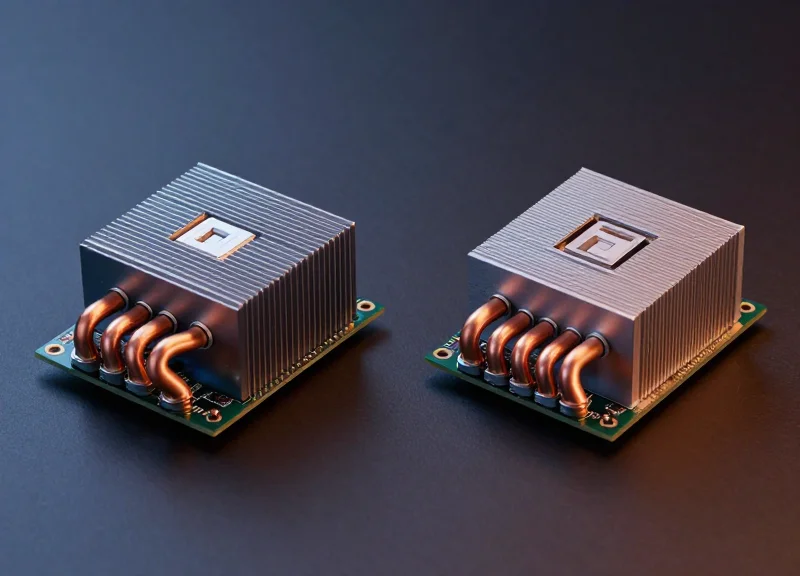
While OEM focuses on rebranding established designs, ODM (Original Design Manufacturing) allows for bespoke engineering, such as specialized cooling for high-density transceivers or unique form factors for edge computing environments. - What role does custom pricing play in this evolution?
Wholesale optics procurement relies on volume; OEM/ODM channels facilitate direct negotiation, ensuring that custom quotes reflect the actual scale of the project rather than rigid retail price lists.
In the current market, the decision to buy OEM/ODM services for optics wholesale is no longer just a cost-saving measure—it is a strategic imperative. By leveraging customized bulk pricing and tailor-made hardware, organizations gain the independence necessary to build resilient, future-proof networks that are not beholden to a single vendor's roadmap or supply chain vulnerabilities.
Defining OEM vs. ODM for Optical Modules
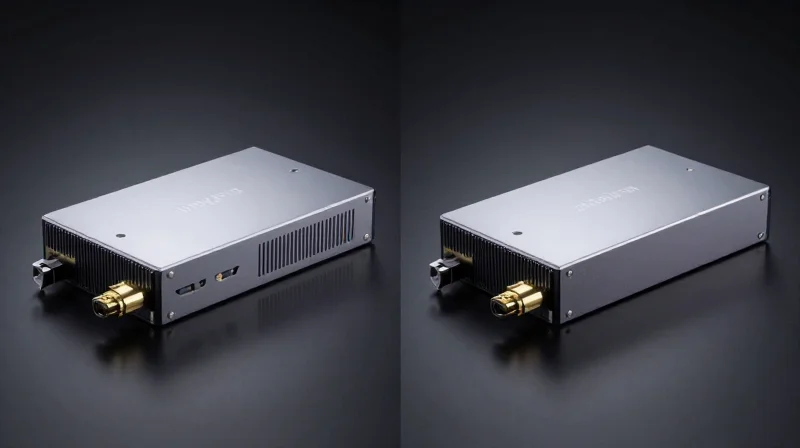
Defining the choice between OEM and ODM is a strategic decision that separates buyers who want to build unique proprietary hardware from those looking to quickly scale using proven, industry-standard designs. In Original Equipment Manufacturing (OEM), the buyer provides the technical specifications and owns the intellectual property, while the manufacturer handles production. In contrast, Original Design Manufacturing (ODM) relies on the manufacturer's existing designs, allowing the buyer to brand and sell a finished product with minimal development time.
Original Equipment Manufacturing (OEM): Precision and Control
OEM services are designed for organizations that require highly specific optical transceiver performance that is not available on the open market. This model is common among large-scale cloud service providers and telecommunications companies that have internal engineering teams. In an OEM partnership, you control the hardware design, the selection of internal components like lasers and DSP chips, and the proprietary firmware. This ensures total compatibility with specialized network architectures and provides a significant competitive advantage through hardware exclusivity.
Original Design Manufacturing (ODM): Speed and Scalability
For the majority of wholesale buyers in 2026, ODM services offer the most efficient path to procurement. ODMs possess a library of pre-validated designs for standard modules like 100G QSFP28 or 400G QSFP-DD. When you buy ODM, you are essentially purchasing a 'white-label' product. The manufacturer has already completed the R&D, testing, and compliance certifications (such as CE, FCC, or RoHS). The buyer's role is primarily branding, making this the ideal solution for distributors and system integrators who need reliable optics at high volumes without the overhead of engineering costs.
| Feature | OEM Model | ODM Model |
|---|---|---|
| Design Origin | Provided by Buyer | Provided by Manufacturer |
| IP Ownership | Buyer retains all rights | Manufacturer retains design rights |
| Development Time | 6-18 Months (High) | 1-3 Months (Low) |
| Initial Investment | Significant (NRE and R&D) | Minimal (Labeling and Packaging) |
| Customization | Full control over hardware/firmware | Limited to branding and minor coding |
Key Factors for 2026 Procurement Strategy
When requesting custom quotes for wholesale optics, you must evaluate your internal resources. If your team can manage the complex lifecycle of hardware design and validation, OEM offers a path to a unique product. However, if your priority is capturing market share or refreshing a data center with standard 800G modules, the ODM route provides better bulk pricing and a much faster time-to-market. Most modern vendors now offer a hybrid approach, providing 'Semi-Custom' options that bridge the gap between these two traditional models.
- Which model is better for bulk pricing?
ODM generally offers better bulk pricing because the manufacturer spreads the R&D costs across multiple clients using the same base design. - Can ODM modules be coded for specific switches?
Yes, most ODM providers offer custom EEPROM coding to ensure the modules are recognized and compatible with major vendor equipment like Cisco or Arista. - Does OEM require a higher MOQ?
Typically, yes. Because OEM involves custom production runs and dedicated manufacturing processes, Minimum Order Quantities (MOQs) are usually higher than for standard ODM products.
The Strategic Advantages of Wholesale Optics Sourcing
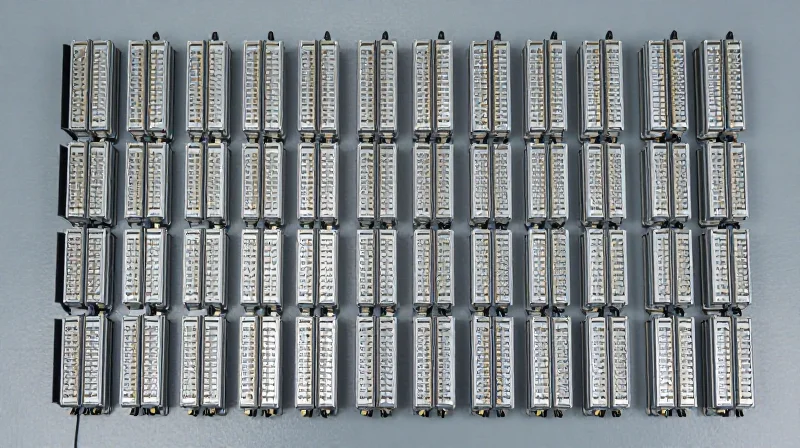
Maximizing ROI Through Strategic Wholesale Optics Sourcing
Transitioning to wholesale optics sourcing for OEM/ODM services offers more than simple volume discounts; it represents a fundamental shift in network economics. By bypassing traditional retail markups and middleman overhead, organizations can capture significant cost-per-gigabit savings. In the 2026 landscape, where data demands are surging, bulk procurement provides the financial predictability needed to scale infrastructure while maintaining a lean operational budget. This approach allows network architects to reallocate capital from hardware premiums toward advanced software-defined networking and security enhancements.
Comparative Analysis: Retail vs. Wholesale Procurement Models
| Metric | Individual/Retail Procurement | Wholesale OEM/ODM Sourcing |
|---|---|---|
| Unit Cost Comparison | High (Premium Brand Markup) | Low (Factory-Direct Pricing) |
| Customization Depth | None (Off-the-shelf) | High (Firmware/Labeling/Specs) |
| Supply Chain Control | Low (Dependent on Stock) | High (Priority Lead Times) |
| Technical Support | General Support Tiers | Direct Engineering Collaboration |
Operational Resilience and Supply Chain Stability
Wholesale sourcing acts as a hedge against the volatility of the global semiconductor and components market. By securing custom quotes and bulk pricing in advance, enterprises establish a predictable pipeline of critical hardware, such as SFP28, QSFP28, and the latest 800G modules. This stability is essential for maintaining uptime and meeting deployment deadlines in a competitive digital economy.
- How does bulk pricing improve long-term ROI?
Bulk pricing drastically lowers the total cost of ownership (TCO) by reducing the initial acquisition cost, allowing for faster depreciation and better alignment of hardware expenses with revenue-generating services. - Can wholesale sourcing mitigate lead time issues?
Yes, wholesale agreements typically include prioritized production slots and dedicated inventory buffers, which shield buyers from the sudden lead time spikes common in retail markets. - What role does interoperability play in wholesale strategy?
Wholesale OEM/ODM services allow for multi-vendor compatibility testing at the factory level, ensuring that bulk-purchased modules work seamlessly across diverse hardware environments without proprietary lock-in.
Ultimately, the strategic advantage of wholesale optics lies in the synergy between financial efficiency and technical flexibility. For organizations looking to lead in 2026 and beyond, leveraging custom quotes and bulk pricing is not merely a purchasing tactic, but a cornerstone of a robust infrastructure strategy.
Customization Deep Dive: Firmware, Hardware, and Compatibility

Customization Deep Dive: Firmware, Hardware, and Compatibility
The primary value proposition of OEM/ODM services for optical transceivers lies in the ability to bridge the gap between generic hardware and vendor-locked network environments. By utilizing sophisticated firmware engineering and hardware tailoring, OEM providers allow wholesale buyers to bypass proprietary 'handshake' locks, ensuring that modules are recognized as authentic by switches and routers from vendors like Cisco, Arista, Juniper, and Dell.
EEPROM Coding and Firmware Engineering
Every optical module contains an EEPROM (Electrically Erasable Programmable Read-Only Memory) that stores critical information, including the manufacturer name, part number, and serial number. In a wholesale OEM context, this coding is fully customizable. Engineers can write specific 'Vendor Signatures' into the firmware, allowing the module to pass the internal validation checks of proprietary OS environments. This level of customization also extends to Digital Diagnostic Monitoring (DDM) parameters, ensuring that temperature, voltage, and bias current reporting are accurate for the specific host platform.
| Feature | Generic/Standard Optics | OEM/ODM Customized Optics |
|---|---|---|
| Vendor Compatibility | Limited to Open Standards | Platform-Specific Coding (Cisco, Juniper, etc.) |
| EEPROM Content | Standard MSA Data | Custom Serial Numbers & Vendor Branding |
| DDM/DOM Calibration | Factory Default | Precision-Tuned for Specific Hardware |
| Firmware Updates | Static | Field-Upgradable for New OS Versions |
Hardware Modifications and Private Labeling
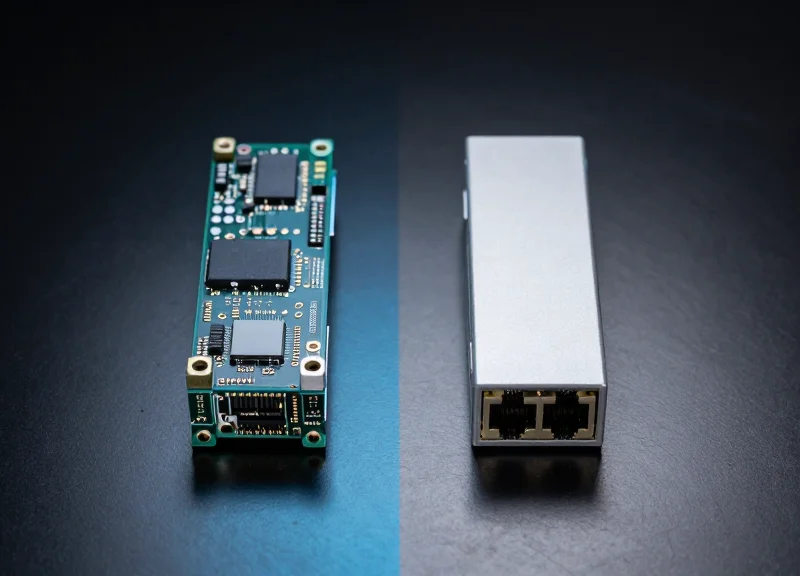
Beyond the code, physical hardware can be modified to meet specific operational requirements. This includes the integration of specialized heat sinks for high-density environments, custom-colored pull tabs for easy cable management in large data centers, and laser-etched private labeling. For ODM clients, this might even involve redesigning the PCB layout to accommodate unique power consumption constraints or extended temperature ranges for industrial deployments.
- Can one module support multiple vendor platforms?
Yes. Through a process known as 'Multi-Coding,' OEM providers can program a single transceiver with multiple firmware images, allowing it to function seamlessly across different hardware brands in a heterogeneous network. - Does custom labeling affect the warranty or certifications?
No. Professional OEM/ODM services maintain full CE, FCC, and RoHS compliance regardless of the branding on the external sticker or shell. - How is compatibility tested for bulk orders?
Wholesale providers typically utilize 'Compatibility Labs' equipped with various vendor switches (e.g., Nexus 9K, Arista 7000 series) to verify every batch of custom firmware before shipment.
show inventory
! Output showing OEM module recognized as Cisco Original
NAME: "Transceiver 1/1", DESCR: "Cisco 10Gbase-SR SFP+ Module"
PID: SFP-10G-SR          , VID: V01 , SN: OEM20260501001
Quality Assurance: Testing Protocols and MSA Compliance
Quality Assurance: Testing Protocols and MSA Compliance
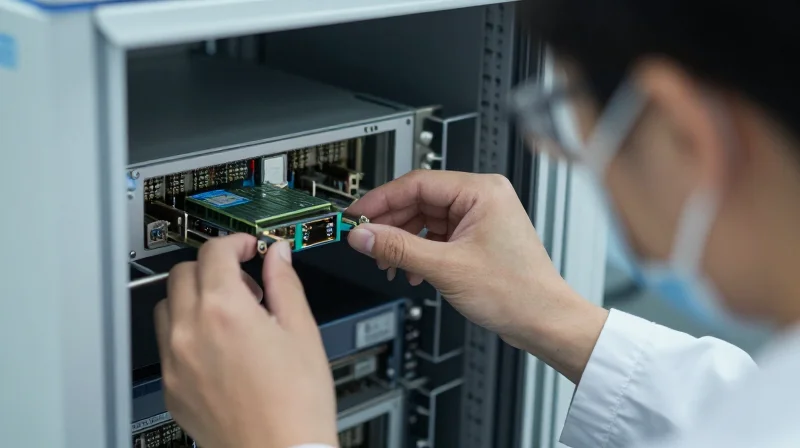
In the optics wholesale market, quality assurance is defined by the rigid adherence to Multi-Source Agreements (MSA) and the execution of exhaustive signal integrity testing. Because OEM/ODM services often involve replacing high-margin brand-name modules, the third-party hardware must meet or exceed the performance benchmarks of original equipment manufacturers. Professional-grade manufacturing utilizes state-of-the-art Bit Error Rate (BER) testers and digital sampling oscilloscopes to ensure that every photon emitted and received falls within the exact parameters required for stable, long-haul, or high-speed data transmission.
The Role of Multi-Source Agreement (MSA) Standards
MSA standards are the bedrock of the optics industry, acting as the 'blueprint' that ensures transceivers from different manufacturers are physically and electrically compatible with various host platforms (like Cisco, Juniper, or Arista). For wholesale buyers, MSA compliance is a non-negotiable requirement. It covers everything from mechanical dimensions and pin-outs to the I2C management interface and EEPROM memory maps. By strictly following standards such as SFF-8431 for SFP+ or SFF-8665 for QSFP28, OEM providers guarantee that their modules will fit and communicate correctly with the host switch’s operating system.
Core Signal Integrity and Reliability Tests
Beyond physical dimensions, the internal performance of the transceiver must be verified through a battery of tests designed to simulate real-world data center conditions. Signal integrity testing focuses on the 'eye diagram'—a visual representation of digital signals that reveals jitter, noise, and timing errors. A wide, clear 'eye' indicates a high-quality signal with low interference, ensuring that data is transmitted without corruption even over maximum rated distances.
| Test Protocol | Key Parameter Measured | Importance for Wholesale Buyers |
|---|---|---|
| Bit Error Rate (BER) Testing | Ratio of errored bits to total bits | Ensures link stability and prevents packet loss in high-traffic environments. |
| Eye Diagram Analysis | Signal amplitude, jitter, and rise/fall times | Validates the electrical-to-optical conversion quality and signal clarity. |
| Thermal Cycling & Burn-in | Performance at temperatures -40°C to +85°C | Confirms reliability in harsh environments and identifies early-life failures. |
| Interoperability Testing | Compatibility with various vendor OS (IOS, Junos) | Guarantees the module is recognized and fully functional in multi-vendor fabrics. |
Quality Assurance FAQ
- Why is MSA compliance critical for OEM optics?
MSA compliance ensures that third-party modules are interchangeable with branded ones, maintaining consistent physical form factors and electrical specifications across different hardware platforms. - What is the difference between standard and carrier-grade testing?
Standard testing often involves basic link-up checks, while carrier-grade testing includes 24-48 hour burn-in cycles and comprehensive BER analysis to ensure zero-fail performance in mission-critical networks. - How does signal integrity impact bulk pricing?
While higher-tier testing protocols may slightly increase the per-unit cost, they significantly lower the Total Cost of Ownership (TCO) by reducing Return Material Authorizations (RMAs) and network downtime.
Scaling for the Future: 400G, 800G, and Beyond

Scaling to 400G, 800G, and eventually Terabit Ethernet requires more than just raw speed; it demands a fundamental shift in how hardware is sourced, tested, and integrated. By leveraging OEM/ODM services, organizations can bypass the significant 'innovation tax' associated with first-party branded optics, gaining direct access to the latest Silicon Photonics and PAM4 modulation technologies at wholesale price points that make massive-scale upgrades economically viable.
The Roadmap to 800G: Overcoming Technical Barriers
As data centers migrate from 100G to 400G and 800G, the technical requirements for signal integrity and thermal management become exponentially more complex. ODM partners play a critical role here by providing specialized cooling solutions and custom-tuned firmware that ensure OSFP and QSFP-DD modules operate reliably within high-density switch environments. This bespoke engineering is essential for maintaining uptime as power consumption per port increases.
| Feature | 400G (QSFP-DD) | 800G (OSFP/QSFP-DD800) | 1.6T (Future) |
|---|---|---|---|
| Modulation | PAM4 | PAM4 / Coherent | Advanced PAM4 / Coherent |
| Typical Power | 10W - 14W | 16W - 24W | 25W - 30W+ |
| Primary Use | Cloud Edge / Core | AI Clusters / Hyperscale | Next-Gen AI Backbones |
| Cost Efficiency | High (Mature) | Moderate (Scaling) | Emerging (Development) |
Future-Proofing via Custom ODM Solutions
The transition to next-generation speeds often leaves legacy infrastructure behind. However, OEM services allow for the creation of customized 'breakout' solutions and multi-rate optics that can operate at 400G while remaining backward compatible with 100G ports through specialized EEPROM coding. This flexibility ensures that wholesale investments made today do not become obsolete during the next hardware refresh cycle.
- How do ODM services assist with 800G power management?
ODMs design custom heat sinks and utilize high-efficiency Silicon Photonics to reduce the thermal footprint of 800G modules, ensuring they stay within the power envelopes of standard data center switches. - Can I get custom firmware for 400G optics to support specific AI fabrics?
Yes, ODM providers can optimize firmware for InfiniBand or specialized Ethernet RoCE environments, ensuring low latency and high throughput for AI and Machine Learning workloads. - Is bulk pricing available for 800G modules in 2026?
While 800G is still in the early adoption phase, ODM partnerships allow for volume-based tiered pricing that is significantly lower than MSRP for branded equivalents.
Ultimately, the move toward 800G and 1.6T is inevitable for organizations managing AI-driven traffic. By securing an ODM/OEM partner early in the cycle, enterprises can influence the design specifications of their optics, ensuring that their 2026 bulk purchases are fully optimized for the bandwidth demands of 2026 and beyond.
Navigating the Procurement Process: From Quote to Deployment
Successfully navigating the OEM/ODM procurement process for optics wholesale requires a disciplined bridge between technical requirements and financial planning. For 2026, the process has evolved to include more rigorous pre-production validation phases, ensuring that custom-coded modules for 100G, 400G, or 800G networks meet specific hardware environments before capital is committed. By following a structured 'Quote-to-Deployment' roadmap, organizations can mitigate compatibility risks while capturing the significant cost advantages of direct-from-factory sourcing.
The Four Pillars of the Procurement Roadmap
The procurement process is rarely a simple transaction; it is a collaborative engineering effort. From the first RFQ to the final logistics check, transparency regarding switch compatibility and firmware requirements is paramount.
| Stage | Key Deliverables | Typical Timeline |
|---|---|---|
| 1. Quotation & RFQ | Bill of Materials (BOM), pricing tiers, and lead times. | 3-5 Business Days |
| 2. Prototype Validation | Golden Samples, EEPROM coding verification, and lab testing. | 2-3 Weeks |
| 3. Mass Production | Batch manufacturing, burn-in testing, and quality control. | 4-8 Weeks |
| 4. Logistics & Deployment | Custom labeling, regional shipping, and site integration. | 1-2 Weeks |
Technical Validation: The Sample Phase
Before committing to bulk pricing for 2026 projects, buyers must undergo a 'Golden Sample' phase. This is where the OEM provider delivers a small batch of transceivers coded specifically for the client's host platforms (e.g., Cisco, Arista, or Juniper). Testing in a live environment or a mirrored lab ensures that digital optical monitoring (DOM) functions correctly and that the modules do not trigger 'unsupported transceiver' errors which can disrupt network management systems.
Finalizing Bulk Pricing and Logistics
Once samples are approved, the focus shifts to volume logistics. Wholesale buyers should negotiate pricing based on annual projected volume rather than single orders. Furthermore, 2026 supply chain strategies often involve 'staggered delivery' where large orders are manufactured at once to lock in component pricing but shipped in phases to align with data center build-out schedules.
Frequently Asked Questions: Procurement & Deployment
- What are typical MOQs for custom ODM designs?
While standard OEM modules may have MOQs as low as 20 units, custom hardware modifications or unique form factors typically require a minimum order of 100 to 500 units to offset engineering and tooling costs. - How are bulk pricing tiers structured for 2026?
Pricing usually follows a volume-discount model with major break points at 100, 500, and 1,000+ units. High-volume commitments can yield savings of up to 50% compared to small-batch purchases. - What happens if a module fails post-deployment?
Reputable OEM/ODM partners provide a hardware replacement warranty, often 3 to 5 years. For mission-critical deployments, many offer 'advance replacement' services where new units are shipped before the faulty ones are returned.
Vetting Your Partner: What to Look for in an Optical Manufacturer
Vetting Your Partner: What to Look for in an Optical Manufacturer
The success of a wholesale optics procurement strategy hinges on the manufacturing partner's ability to balance technical precision with high-volume output while maintaining 100% compatibility across multi-vendor environments. In 2026, the criteria for a top-tier OEM/ODM partner have shifted from simple cost-efficiency to include deep engineering expertise in high-speed data transmission (400G/800G) and resilient supply chain logistics.
Key Performance Indicators for Manufacturer Evaluation
| Evaluation Criterion | Strategic OEM Partner | Standard Volume Supplier |
|---|---|---|
| Technical R&D | In-house firmware development & custom PCB design | Standard reference designs only |
| Testing Protocols | 100% real-application host testing & signal integrity | Batch or sample testing |
| Compliance | Strict MSA & TAA compliance with full documentation | Basic ISO certification |
| Supply Resilience | Multi-source raw material stockpiling | Just-in-time single-source reliance |
Technical Expertise and Interoperability
A vetted manufacturer must demonstrate more than just assembly capabilities. They should provide detailed documentation on their firmware coding processes, ensuring that optical transceivers are recognized seamlessly by hardware from major vendors like Cisco, Arista, and Juniper. When buying OEM/ODM services for optics wholesale, look for partners who utilize advanced automated testing stations that simulate real-world data center conditions to minimize Field Failure Rates (FFR).
Production Capacity and Global Logistics
Scalability is the cornerstone of wholesale procurement. Ensure your partner has the cleanroom capacity (Class 100,000 or better) to handle sudden spikes in demand without compromising lead times. Furthermore, evaluate their global support structure; a manufacturer with regional warehouses and local technical support teams can drastically reduce downtime and simplify the RMA process for bulk deployments.
- How do I verify the quality of an OEM's signal integrity?
Request eye diagram test results and Bit Error Rate (BER) reports for the specific batch. A transparent manufacturer will provide these as part of their standard Quality Assurance (QA) documentation. - Can the manufacturer support proprietary coding requirements?
The best ODM partners offer customized EEPROM coding services, allowing you to match the specific vendor IDs and serial numbering required for your unique network infrastructure. - What certifications are non-negotiable for 2026 wholesale?
Beyond ISO 9001, ensure they hold RoHS, CE, and FCC certifications, and strictly adhere to Multi-Source Agreement (MSA) standards for physical and electrical specifications.
Optimizing your network infrastructure requires a balance of high-end performance and fiscal responsibility. By choosing OEM/ODM services for your optics, you gain the flexibility to innovate while maintaining strict budget control. Ready to elevate your connectivity? Contact Ubytelink today for a customized quote and discover how our wholesale pricing can power your next network expansion.