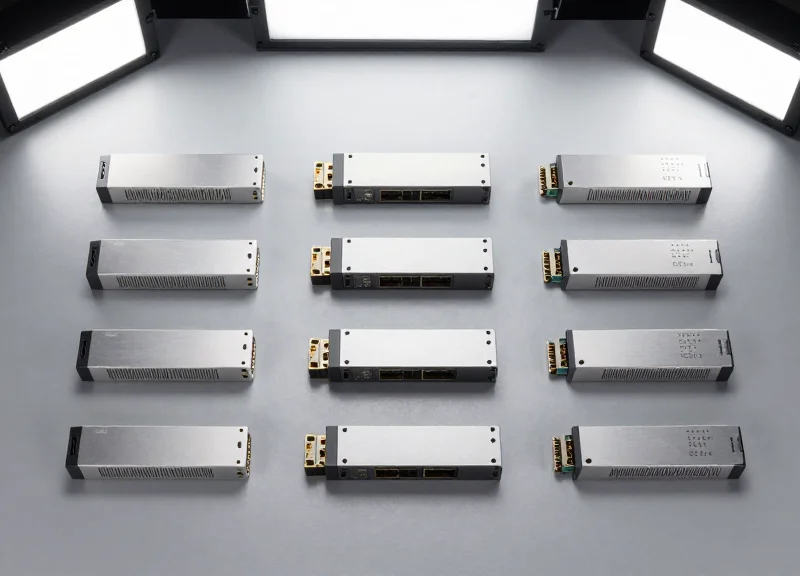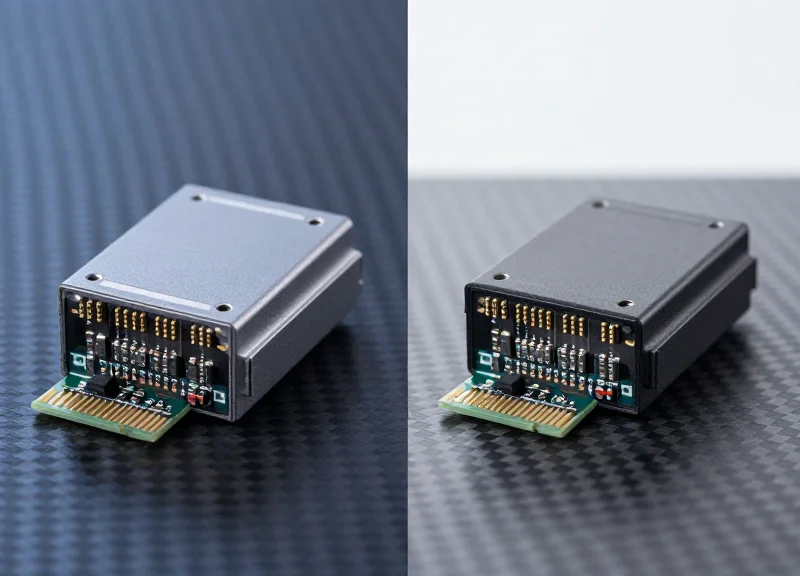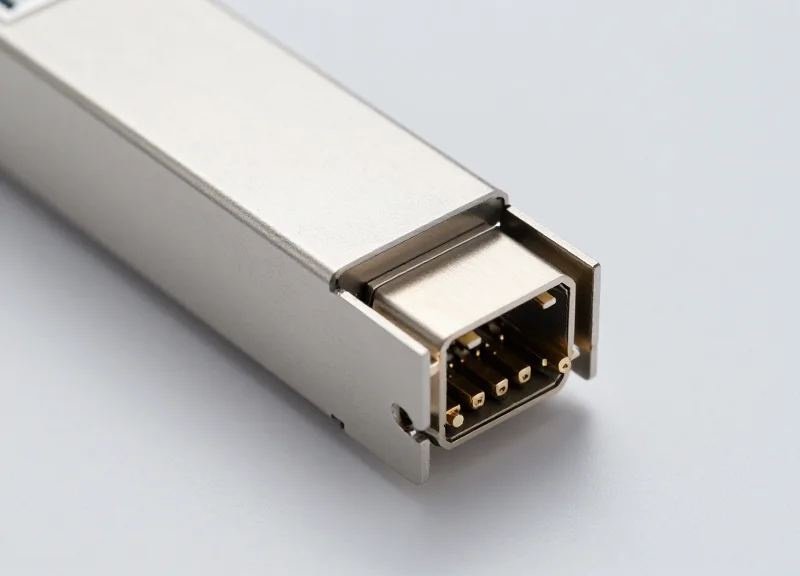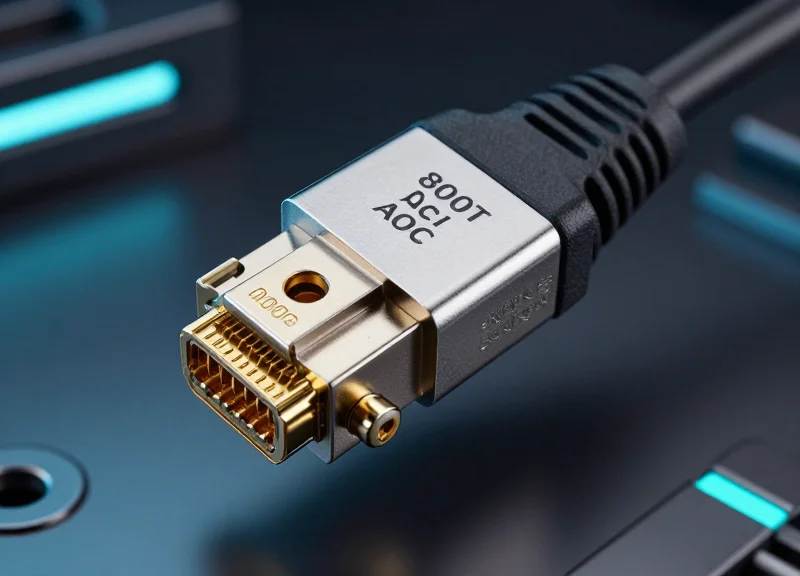
As network demands skyrocket, the quality of your optical components determines your uptime and scalability. Choosing the right transceiver manufacturer is the difference between seamless integration and costly network failures. This guide provides an industry veteran's perspective on securing bulk pricing and high-performance modules for 2026.
The Strategic Importance of Transceiver Sourcing in 2026

The Strategic Importance of Transceiver Sourcing in 2026
In 2026, the strategic landscape for optical transceiver procurement has shifted from simple hardware acquisition to a mission-critical supply chain strategy. As enterprises and data centers transition toward 400G and 800G architectures, selecting a wholesale manufacturer is no longer just about finding the lowest price point; it is about securing a partnership that ensures long-term network stability and technical compliance. The ability to secure custom quotes and leverage bulk pricing allows organizations to remain competitive in a market defined by rapid technological turnover and high performance requirements.
Market Dynamics and Wholesale Advantage
The explosion of AI-driven workloads and 5G expansion has created a surge in demand for high-density optical interconnects. In this environment, purchasing through traditional retail channels often leads to fragmented supply chains and higher overhead. Wholesale manufacturers provide the necessary vertical integration to offer consistent quality control and significant cost savings through bulk pricing structures, which are essential for maintaining the economic viability of massive network expansions.
| Sourcing Priority | 2022 Focus | 2026 Strategic Shift |
|---|---|---|
| Supply Management | Just-in-time delivery | Strategic stockpiling via bulk pricing |
| Standardization | Generic compatibility | Custom-engineered OEM compatibility |
| Financial Model | Initial unit cost | Total Cost of Ownership (TCO) optimization |
Sourcing Strategies FAQ
- How do custom quotes impact large-scale optical deployments?
Custom quotes enable organizations to negotiate specific testing requirements and volume-based discounts that are not available in standard retail pricing, ensuring the optics meet specific hardware tolerances and budget constraints. - Why is bulk pricing essential for 2026 network upgrades?
With the increased unit costs of high-speed 400G and 800G modules, bulk pricing is the primary mechanism for reducing the capital expenditure and ensuring that large-scale infrastructure projects remain profitable. - What role does manufacturer reliability play in sourcing?
A reliable manufacturer minimizes the risk of network downtime caused by substandard components, which is crucial as global bandwidth demands reach all-time highs and service level agreements become more stringent.
Ultimately, the decision of how to choose a transceiver manufacturer wholesale comes down to identifying a partner that balances technical innovation with economic scalability. As we move deeper into 2026, the organizations that prioritize these strategic sourcing relationships and move beyond simple transactional purchasing will be best positioned to handle the next generation of data demands with efficiency and resilience.
Evaluating Technical Expertise: Beyond the Datasheet

Technical expertise in transceiver manufacturing is not found in the baseline specifications of a product, but in the manufacturer's ability to maintain signal integrity across diverse environments and their capacity to adapt to evolving network protocols. When purchasing at scale, a datasheet represents only a snapshot of ideal conditions; true value lies in the engineering depth that ensures every unit in a 1,000-piece order performs as reliably as the test sample. Evaluating these capabilities requires a deep dive into the vendor's R&D investment, testing rigor, and their approach to high-speed data challenges.
Assessing R&D Infrastructure and Innovation
A top-tier manufacturer allocates a significant percentage of revenue back into Research and Development. This is evidenced by their in-house laboratory capabilities, such as high-frequency oscilloscopes, bit error rate testers (BERT), and environmental stress screening (ESS) chambers. For wholesale buyers, this translates to lower failure rates and a faster transition to next-generation technologies like Silicon Photonics (SiPh) and Coherent Optics. Without an active R&D department, a manufacturer is merely a generic assembly plant, unable to provide the technical roadmap necessary for long-term infrastructure planning.
| Criteria | Technical Manufacturing Partner | Generic Volume Wholesaler |
|---|---|---|
| Firmware Customization | Deep-level coding for multi-vendor compatibility | Standard generic coding only |
| Testing Protocols | 100% testing across full temperature ranges | Sample-based or batch testing |
| 800G/1.6T Readiness | Active development and early sampling | Reactive to market availability |
| Signal Integrity | Advanced PAM4 and FEC error correction tuning | Basic adherence to MSA standards |
The Necessity of Engineering Support and Firmware Flexibility
Wholesale procurement often involves complex multi-vendor environments where transceivers must interface with hardware from various OEMs. A manufacturer’s technical expertise is most visible during integration, specifically through their ability to provide custom firmware and EEPROM coding. This ensures that transceivers bypass proprietary locks and 'handshake' correctly with specific hardware. In 2026, as software-defined networking (SDN) becomes standard, the ability of a manufacturer to provide rapid firmware patches to fix compatibility issues post-purchase is a critical safety net for bulk buyers.
Handling High-Speed Demands: 400G and 800G Realities
As the industry shifts toward 400G and 800G, the technical margin for error vanishes. High-speed signals are susceptible to jitter, dispersion, and thermal issues that do not affect 10G or 100G modules to the same degree. Evaluating a manufacturer in 2026 requires verifying their expertise in PAM4 (Pulse Amplitude Modulation 4-level) signaling and thermal dissipation designs. High-density AI workloads require transceivers that can handle extreme thermal loads without throttling performance; only manufacturers with advanced thermal engineering can guarantee uptime in these high-stakes environments.
Technical Sourcing FAQ
- How can I verify a manufacturer's R&D claims?
Request proof of compliance with MSA (Multi-Source Agreement) standards and ask for detailed test reports, including Eye Diagrams and Bit Error Rate (BER) results, for the specific production batch being quoted. - Why is firmware customization critical for bulk orders?
Enterprise-grade switches often require specific coding to recognize third-party modules. A manufacturer with deep engineering expertise can provide bespoke coding that ensures seamless plug-and-play functionality across different hardware brands like Cisco, Arista, and Juniper. - What role does thermal management play in technical evaluation?
High-speed transceivers generate significant heat. A technically proficient manufacturer uses superior heat-sink designs and high-grade internal components to prevent thermal issues, which is essential for maintaining network stability in high-density data centers.
Maximizing ROI through Wholesale and Bulk Procurement
Maximizing ROI through Wholesale and Bulk Procurement
Transitioning from retail-level purchasing to a wholesale model is the most effective way to optimize infrastructure budgets; it allows network operators to bypass middleman margins and secure per-unit pricing that is often 40% to 70% lower than standard list prices. By engaging directly with manufacturers for custom quotes, organizations align their hardware spend with actual deployment scales, ensuring that every dollar spent contributes directly to network performance rather than distribution overhead.
The Financial Impact of Direct Manufacturer Quotes
Direct wholesale procurement provides more than just a lower price tag; it offers a transparent cost structure. When a manufacturer provides a custom quote, they account for the specific testing protocols, labeling requirements, and logistical staging needed for your project. This level of customization eliminates the hidden costs often associated with 'off-the-shelf' retail products that may require additional third-party validation or re-coding to work with specific OEM switches.
| Procurement Factor | Retail/Distribution Model | Wholesale/Direct Model (2026) |
|---|---|---|
| Unit Cost | High (Fixed List Price) | Low (Volume-Based Tiers) |
| Logistics | Pay-per-shipment | Consolidated/Scheduled Deliveries |
| Technical Support | General Helpdesk | Dedicated Field Application Engineer |
| Customization | None (Standard SKUs) | Full (EEPROM Coding & Labeling) |
| Price Stability | Market Fluctuations | Contract-Locked Pricing |
Leveraging Economies of Scale in High-Speed Optics
For 400G and 800G deployments, the cost of optical components represents a massive portion of the bill of materials (BOM). Wholesale agreements allow for 'Blanket Purchase Orders,' where a company commits to a high volume over 12 months. This enables the manufacturer to purchase raw materials like lasers and DSP chips at lower costs, passing those savings to the buyer while guaranteeing stock availability during global supply chain disruptions.
- What is the typical Minimum Order Quantity (MOQ) for wholesale transceiver pricing?
While it varies by manufacturer, wholesale tiers generally begin at 50 to 100 units for standard 10G/25G optics, and as few as 10 to 20 units for high-end 400G modules. - Can custom quotes include specialized firmware for multi-vendor compatibility?
Yes, one of the primary benefits of wholesale procurement is the ability to request custom EEPROM coding that allows the same transceiver to function across Cisco, Arista, and Juniper hardware simultaneously. - How does bulk pricing affect the warranty and RMA process?
Wholesale agreements often include enhanced SLA terms, such as advanced hardware replacement or a dedicated buffer stock held at the manufacturer's warehouse specifically for your account.
Ultimately, the shift to wholesale procurement in 2026 is not merely a cost-cutting exercise; it is a strategic move toward network resilience. By securing a direct relationship with a manufacturer through custom quotes, enterprises ensure that their infrastructure can scale rapidly without the financial friction or unpredictability of the retail market.
Navigating OEM vs. ODM: Tailoring Solutions to Your Network
Navigating OEM vs. ODM: Tailoring Solutions to Your Network
Deciding between an Original Equipment Manufacturer (OEM) and an Original Design Manufacturer (ODM) is a critical step when you buy how to choose a transceiver manufacturer wholesale. While the terms are often used interchangeably in casual conversation, they represent two fundamentally different approaches to hardware sourcing. For a network architect or procurement lead, this choice determines the level of control over hardware specifications, the speed of deployment, and the final unit cost during bulk acquisition. Selecting the right path ensures that your optical infrastructure is not just functional, but optimized for your specific data throughput and thermal requirements.
The OEM Model: Efficiency and Market Standardization
The OEM model is built on the foundation of Multi-Source Agreements (MSAs). In this scenario, the manufacturer produces transceivers based on existing, proven designs that meet industry standards. These products are often 'off-the-shelf' in terms of engineering, meaning they are ready for immediate mass production. For wholesale buyers, the OEM route offers the fastest lead times and the lowest barrier to entry for standard 10G, 40G, and 100G modules, as the research and development costs have already been amortized across the market.
The ODM Model: Proprietary Innovation and Custom Engineering
ODMs offer a higher degree of technical flexibility by allowing buyers to participate in the design phase. This is ideal for hyperscale data centers or specialized telecommunications providers who require unique firmware configurations or unconventional hardware modifications. If your network utilizes proprietary switching fabric that requires specific EEPROM coding to bypass vendor lock-in, an ODM partner can engineer a ground-up solution. This model transitions the manufacturer from a simple supplier to a strategic engineering partner.
| Feature | OEM (Original Equipment) | ODM (Original Design) | |
|---|---|---|---|
| Design Ownership | Manufacturer owned | Can be co-developed/Buyer spec | Low to Moderate |
| Customization Level | Limited (Firmware only) | High (Hardware & Firmware) | High (Hardware & Firmware) |
| Time to Market | Short (Days/Weeks) | Extended (Months for R&D) | Moderate |
| Typical MOQ | Low to Medium | Very High | High |
White-Labeling: Building Brand Equity through Wholesale
A major advantage of wholesale transceiver procurement in 2026 is the ability to utilize white-labeling services. Manufacturers can produce high-performance optics that carry your organization’s branding, custom part numbers, and serialized tracking. This is particularly valuable for resellers and Managed Service Providers (MSPs) who want to provide a professional, unified product line to their clients. White-labeling allows you to leverage the manufacturer's technical R&D while maintaining the customer-facing relationship and brand loyalty.
- When should I choose an ODM over an OEM?
Choose an ODM when you have unique technical requirements not met by MSA standards, such as specialized power consumption limits or custom long-reach optical needs. - Does white-labeling affect the warranty of wholesale transceivers?
No, professional manufacturers provide the same performance warranties for white-labeled products as they do for their in-house brands, provided the contract terms are clearly defined. - How does the choice impact 2026 bulk pricing?
OEM is cheaper for smaller bulk orders due to zero R&D overhead, but ODM can achieve lower per-unit costs at extreme volumes (e.g., 50,000+ units) once the initial engineering investment is recovered.
Ensuring Interoperability: The Multi-Source Agreement (MSA) Standard
When you buy how to choose a transceiver manufacturer wholesale, MSA compliance is the primary technical safeguard that ensures a module from a third-party manufacturer will perform identically to an OEM-branded equivalent. By adhering to these industry-wide standards, manufacturers guarantee that their QSFP28, SFP+, or OSFP modules will physically fit, electrically interface, and communicate correctly with the host system's management software, regardless of the chassis brand.
The Financial and Technical Impact of MSA Standards
In the context of bulk pricing and 2026 infrastructure scaling, MSA compliance transforms transceivers from proprietary 'black boxes' into standardized commodities. This standardization is what enables significant cost savings; without the MSA framework, network operators would be forced to pay the 300% to 1000% markups typically associated with OEM-locked hardware. For wholesale buyers, verifying MSA adherence is the first step in ensuring that custom quotes translate into functional, high-stability network components.
| Feature | MSA-Compliant Wholesale | OEM-Branded Retail |
|---|---|---|
| Compatibility | Universal (Multi-vendor) | Single-vendor locked |
| Price Point | 80-90% Lower | Premium MSRP |
| Firmware Flexibility | User-reprogrammable | Fixed/Locked |
| Supply Stability | High (Multiple Sources) | Limited to OEM Supply Chain |
Key MSA Technical Specifications to Verify
To ensure long-term stability in a multi-vendor environment, wholesale buyers should verify that their chosen manufacturer adheres to specific MSA documents which govern form factors and management interfaces. These include the SFF-8472 for DDM (Digital Diagnostic Monitoring) and SFF-8431 for electrical interfaces. These standards ensure that your switches can monitor temperature, voltage, and laser bias in real-time, preventing unexpected link failures.
Common Questions on MSA Interoperability
- Does using MSA-compliant transceivers void my switch warranty?
No. In the United States, the Magnuson-Moss Warranty Act protects consumers by prohibiting manufacturers from voiding warranties simply because a third-party component was used, provided that component does not cause direct damage. - How do manufacturers ensure compatibility with specific brands like Cisco or Arista?
While the hardware is MSA-standardized, the software/EEPROM must be coded with specific vendor signatures. Leading wholesale manufacturers provide 'triple-coded' or 'multi-coded' modules that carry the necessary identifiers to pass the host's authentication checks. - Why is MSA compliance critical for custom quotes in 2026?
As data rates move toward 400G and 800G, the thermal and power tolerances defined by the MSA become even tighter. Compliance ensures that high-speed modules will not overheat or exceed the power budget of the host port.
Ultimately, the MSA standard is what enables the competitive wholesale market. By focusing on manufacturers who participate in or strictly follow these agreements, enterprises can leverage bulk pricing strategies to maximize their 2026 CAPEX efficiency without compromising on the reliability or performance of their optical transport layer.
Rigorous Quality Control: Testing Procedures and Reliability

Rigorous Quality Control: Testing Procedures and Reliability
When purchasing transceivers at a wholesale level, the difference between a high-performing network and frequent outages lies in the manufacturer’s commitment to exhaustive quality control (QC) procedures. A reliable manufacturer must demonstrate a multi-layered testing framework—encompassing signal integrity, thermal endurance, and mechanical durability—to ensure that every unit meets or exceeds industry benchmarks like Mean Time Between Failures (MTBF). Reliability in high-volume production is not a byproduct of luck; it is the result of standardized, repeatable testing protocols that filter out defective components before they enter the supply chain.
Essential Testing Protocols and Burn-in Procedures
A professional-grade testing lab is equipped with high-precision oscilloscopes, spectrum analyzers, and automated test stations. One of the most critical phases is the 'Burn-In' test, where modules are operated at elevated temperatures—typically between 70°C and 85°C—for a period of 24 to 48 hours. This process deliberately stresses the optical sub-assemblies (TOSA/ROSA) to force 'infant mortality' failures to occur within the factory rather than in the client’s production environment. By the time a wholesale order reaches a data center, the hardware should have already proven its thermal resilience.
| Testing Phase | Primary Objective | Key Metrics Measured |
|---|---|---|
| Burn-In Testing | Identify early component failure | Current consumption, Thermal stability |
| Optical Performance | Ensure signal clarity | Extinction ratio, Eye diagram, Rx sensitivity |
| Mechanical Stress | Verify physical durability | Vibration resistance, Plug/unplug cycles |
| Compatibility Validation | Confirm multi-vendor support | EEPROM coding, CLI recognition |
Quantifying Reliability and Interoperability
Reliability is formally quantified through MTBF ratings, which for high-tier manufacturers should ideally exceed 1,000,000 hours. Furthermore, because wholesale orders often support heterogeneous networks, manufacturers must perform comprehensive interoperability checks. This involves testing modules across a vast library of host equipment from vendors such as Cisco, Arista, Juniper, and Dell. The goal is to ensure that Digital Diagnostic Monitoring (DDM) data is accurately reported and that the module's firmware aligns perfectly with the switch's operating system, preventing 'unsupported transceiver' errors.
- What is the significance of an Eye Diagram test?
It provides a visual representation of signal quality and jitter, ensuring the transceiver transmits clean data without bit errors across the specified distance. - Why is 100% testing better than batch testing?
Batch testing only identifies systematic manufacturing errors; 100% testing ensures every individual module in a wholesale order meets performance specifications. - How does DDM support quality assurance?
Digital Diagnostic Monitoring allows network administrators to track temperature, voltage, and optical power in real-time, facilitating proactive maintenance and troubleshooting.
Supply Chain Resilience and Lead Time Optimization
Successful wholesale procurement of optical transceivers in 2026 depends on a manufacturer's ability to maintain consistent lead times despite global logistics volatility. Supply chain resilience is not merely about having stock on hand; it involves strategic sourcing of sub-components, geographical diversification of manufacturing facilities, and the implementation of advanced logistics forecasting to mitigate unforeseen delays. Buyers must prioritize manufacturers that offer transparency into their component sourcing and maintain robust contingency plans for international shipping disruptions.
Strategies for Lead Time Optimization
Optimizing lead times requires a multi-faceted approach that balances inventory costs with the need for immediate hardware availability. Wholesale buyers should look for manufacturers that utilize 'Just-in-Case' inventory models for high-demand modules, such as 10G SFP+ and 100G QSFP28, rather than relying solely on 'Just-in-Time' production which is highly susceptible to component shortages.
| Supply Chain Strategy | Typical Lead Time | Risk Mitigation Level |
|---|---|---|
| Traditional Overseas Sourcing | 8-12 Weeks | Low: Vulnerable to shipping delays and tariffs |
| Regional Hub Distribution | 1-3 Weeks | Medium: Buffers against local logistics bottlenecks |
| Vendor Managed Inventory (VMI) | 24-72 Hours | High: Provides immediate access to critical spares |
Geographic Diversification and Regional Warehousing
To minimize the impact of geopolitical tensions and trade barriers, leading transceiver manufacturers are increasingly diversifying their production footprint. By operating facilities across multiple regions—such as Southeast Asia, North America, and Europe—manufacturers can bypass localized shutdowns. Furthermore, regional warehousing allows for 'last-mile' optimization, where the bulk of the shipping time is absorbed during the restocking of the hub rather than during the critical project deployment phase.
Supply Chain FAQ
- How do manufacturers mitigate semiconductor and laser diode shortages?
Top-tier manufacturers enter into Long-Term Supply Agreements (LTSAs) with chipset vendors and maintain a strategic buffer of raw materials to insulate production from market fluctuations. - What is the impact of dual-sourcing on wholesale pricing?
While dual-sourcing sub-components may slightly increase the base cost, it significantly reduces the financial risk of project delays, making it a more cost-effective long-term strategy for bulk buyers. - Should I prioritize manufacturers with local technical support?
Yes. Localized support usually indicates the presence of regional inventory hubs, which is a strong indicator of faster replacement cycles and shorter lead times for custom orders.
Future-Proofing Your Network with Next-Gen Modules

Future-Proofing Your Network with Next-Gen Modules
To effectively future-proof a network in 2026, sourcing must move beyond current 100G requirements to focus on manufacturers capable of mass-producing 400G and 800G modules with high thermal efficiency and signal integrity. Choosing a wholesale partner for these next-gen transceivers requires a deep dive into their roadmap for PAM4 (Pulse Amplitude Modulation 4-level) signaling and their ability to provide custom quotes for high-density form factors like QSFP-DD and OSFP.
The 400G to 800G Migration Path
As data centers transition to AI-driven workloads, the demand for bandwidth is doubling every two years. Manufacturers who are leaders in this space are moving toward Silicon Photonics (SiPh), which integrates laser sources and electronic components onto a single silicon chip. This technology reduces power consumption and increases reliability compared to traditional discrete components, making it a critical factor for bulk pricing evaluations.
| Feature | 100G (Legacy/Current) | 400G (High Growth) | 800G (Next-Gen) |
|---|---|---|---|
| Modulation | NRZ or PAM4 | PAM4 | PAM4 / Coherent |
| Form Factor | QSFP28 | QSFP-DD / OSFP | OSFP / QSFP-DD800 |
| Power Consumption | ~3.5W - 5W | ~10W - 14W | ~16W - 24W |
| Primary Use Case | Enterprise / Edge | Data Center Core | AI Clusters / HPC |
Vetting Manufacturers for Advanced R&D
- Early Access Samples
Forward-looking manufacturers provide engineering samples of 800G or 1.6T modules to wholesale partners months before general availability to ensure compatibility. - Thermal Management Solutions
As wattage increases with speed, verify that the manufacturer uses advanced heat sink designs and low-power DSP (Digital Signal Processor) chipsets. - Interoperability Testing
Ensure the manufacturer participates in OIF (Optical Internetworking Forum) interoperability plugs to guarantee their 400G/800G modules work across diverse switch brands.
FAQ: Scaling with Next-Gen Hardware
- Is it worth buying 800G modules now?
If you are building AI or Machine Learning clusters, 800G is becoming the standard. For general enterprise use, 400G currently offers the best balance of cost-per-bit and port density. - How does bulk pricing differ for 400G vs 100G?
400G pricing is more sensitive to volume due to the higher cost of the DSP and EML (Electro-absorption Modulated Laser) components. Custom quotes often include tiered discounts based on quarterly volume commitments. - What role does Co-Packaged Optics (CPO) play?
CPO is the future of networking where the optics are moved onto the switch package. Manufacturers investing in CPO today are those you should prioritize for long-term strategic partnerships.
Selecting a transceiver manufacturer is a pivotal decision for your network's future. By focusing on quality, compatibility, and wholesale value, you can ensure long-term operational success. Ready to scale your network? Contact Ubytelink today for the best wholesale pricing and professional OEM/ODM options to receive your custom quote for 2026.