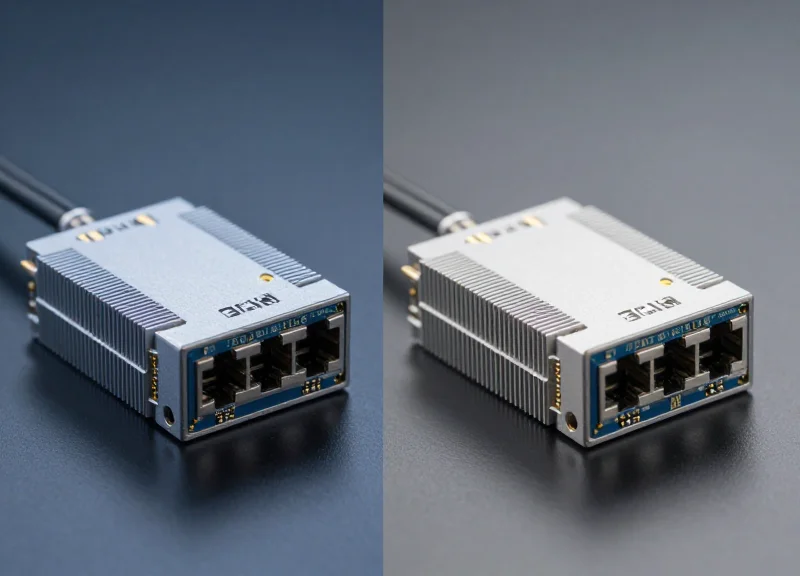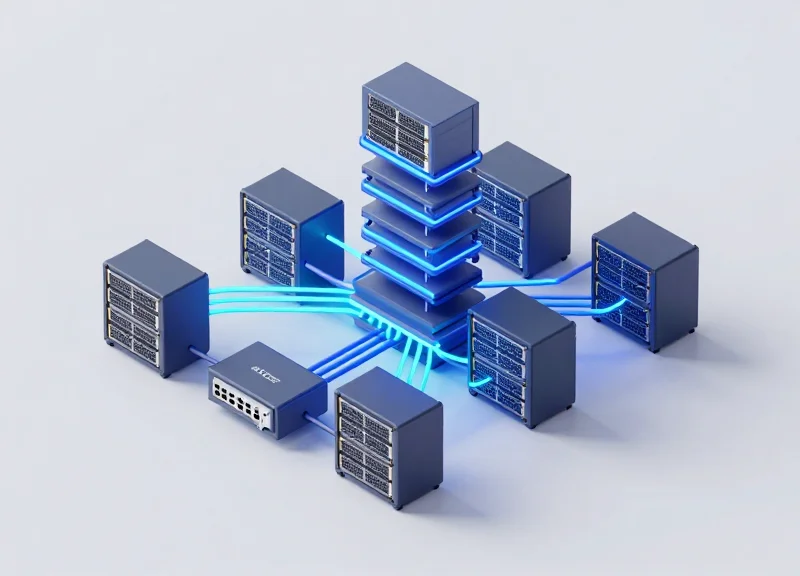
As global data traffic continues to surge, the transition to 400G Leaf-Spine topology has become the gold standard for high-performance data centers. However, scaling these networks involves navigating complex hardware requirements and significant capital expenditure. This article breaks down the strategic advantages of wholesale sourcing and how custom OEM/ODM solutions can solve the most pressing challenges in modern network engineering.
The Evolution of Leaf-Spine Topology in the 400G Era

The Evolution of Leaf-Spine Topology in the 400G Era
The transition to 400G Leaf-Spine topology is a response to the explosive growth of East-West traffic—data moving between servers within the same data center—which now accounts for the vast majority of network activity. Unlike traditional hierarchical designs that rely on Spanning Tree Protocol (STP), the Leaf-Spine architecture provides a non-blocking, high-bandwidth fabric that ensures every leaf switch is exactly one hop away from any other leaf switch, effectively eliminating the bottlenecks inherent in older 10G and 40G infrastructures.
From Three-Tier Complexity to Flat-Fabric Efficiency
Traditional three-tier architectures (Access, Aggregation, Core) were optimized for North-South traffic—data moving in and out of the data center. However, as cloud computing and AI workloads increased, this model struggled with high latency and 'choke points' where multiple access switches competed for limited core bandwidth. The 400G Leaf-Spine evolution flattens this structure, using Equal-Cost Multi-Path (ECMP) routing to load-balance traffic across all available links simultaneously.
| Feature | Legacy Three-Tier | 400G Leaf-Spine |
|---|---|---|
| Primary Traffic Focus | North-South (Client-Server) | East-West (Server-Server) |
| Link Utilization | Active/Standby (STP) | All-Active (ECMP) |
| Latency Performance | Variable (Variable Hops) | Predictable & Consistent |
| Scalability Path | Vertical (Expensive Upgrades) | Horizontal (Add Spines/Leaves) |
Optimizing 400G Throughput for Modern Workloads
At 400G speeds, the choice of optical transceivers (QSFP-DD vs. OSFP) and cabling becomes critical to the Leaf-Spine topology. Wholesale purchasers must account for the power density and thermal requirements of 400G switches. By utilizing a Leaf-Spine fabric, organizations can maintain a flexible oversubscription ratio—often 3:1 for enterprise or 1:1 for high-frequency trading—ensuring that the massive 400Gbps pipes are utilized to their full potential without packet drops during traffic bursts.
- Why is 400G Leaf-Spine essential for AI/ML?
AI training requires massive synchronization between GPU clusters; a 400G Leaf-Spine fabric provides the ultra-low latency and high-bandwidth RDMA over Converged Ethernet (RoCE) support needed to prevent compute idling. - Does Leaf-Spine reduce hardware costs?
While 400G optics carry a premium, the ability to scale horizontally using commodity-style 'white box' or branded wholesale switches often results in a lower total cost per gigabit compared to massive monolithic core chassis. - How does it handle link failure?
In a 400G Leaf-Spine setup, if a single spine switch fails, the network only loses a fraction of its total bandwidth (e.g., 1/4th if using 4 spines), rather than losing half the network as is common in traditional active/passive pairings.
Critical Hardware: Selecting 400G Modules for Leaf and Spine Switches
Critical Hardware: Selecting 400G Modules for Leaf and Spine Switches
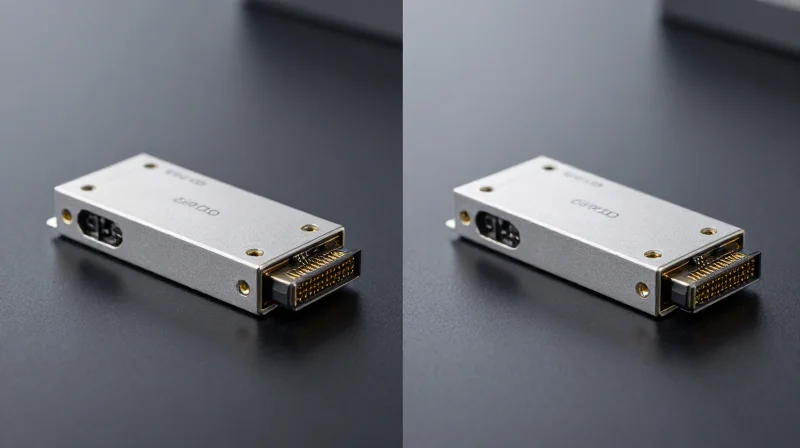
Selecting the appropriate 400G optical modules for a leaf-spine architecture depends primarily on your switch's port density and thermal requirements, with QSFP-DD serving as the industry standard for backward compatibility and OSFP offering superior heat dissipation for future-proof 800G transitions. In a typical wholesale deployment, the 'leaf' layer usually leverages cost-effective, short-reach optics (SR8 or DR4), while the 'spine' layer utilizes high-density modules capable of supporting longer runs and higher-bandwidth aggregation.
QSFP-DD vs. OSFP: The Battle of Form Factors
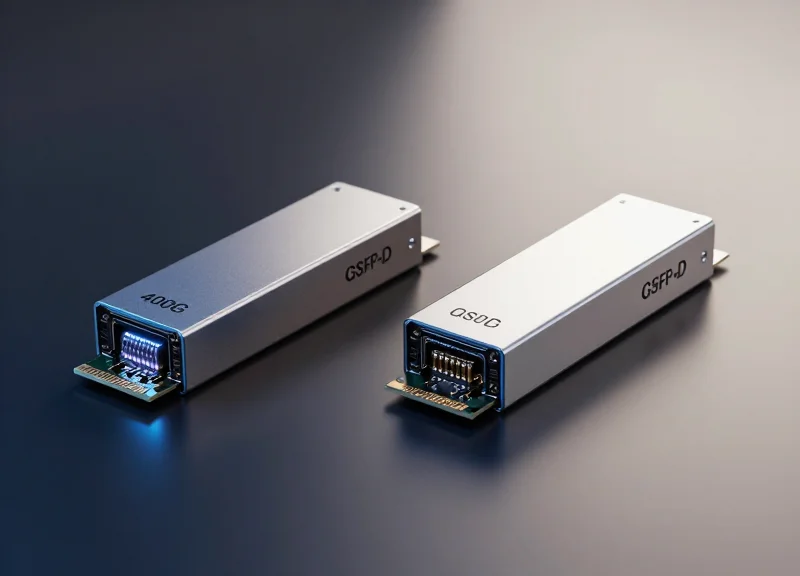
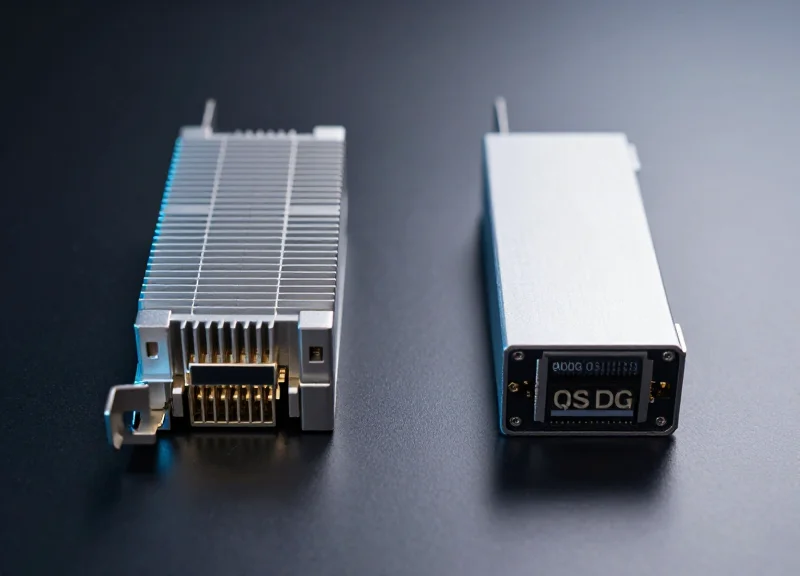
The choice between QSFP-DD (Quad Small Form-factor Pluggable Double Density) and OSFP (Octal Small Form-factor Pluggable) is the most significant hardware decision in 400G networking. QSFP-DD is favored for its backward compatibility with legacy QSFP28 modules, allowing for a seamless transition in existing racks. Conversely, OSFP modules are physically larger and include integrated heatsinks, making them ideal for high-power applications where thermal management is a constraint.
| Feature | QSFP-DD | OSFP |
|---|---|---|
| Backward Compatibility | Yes (QSFP+/QSFP28/QSFP56) | No (Requires Adapter) |
| Thermal Performance | Moderate (External Heatsink) | Excellent (Integrated Heatsink) |
| Max Power Consumption | Up to 12W - 15W | Up to 15W - 20W |
| Deployment Use-Case | Mainstream Data Centers | High-Density AI & 800G Prep |
Distance and Fiber Considerations for Wholesale Procurement
When sourcing modules at wholesale volumes, understanding the link budget between leaf and spine switches is critical for cost optimization. For intra-rack connections (DAC/AOC) or short-reach leaf-to-spine links, 400G-SR8 (Short Reach) is the standard for MPO-16 fiber. For larger fabric footprints where distances exceed 100 meters, 400G-DR4 (500m) or 400G-FR4 (2km) modules using Single-Mode Fiber (SMF) are required to maintain signal integrity without excessive latency.
- Why is backward compatibility important for 400G leaf switches?
It allows operators to use existing 100G QSFP28 transceivers in 400G ports, facilitating a phased upgrade rather than a total hardware replacement. - When should I choose DR4 over SR8 modules?
Choose DR4 when moving to Single-Mode Fiber (SMF) architectures or when the physical distance between the leaf and spine layers exceeds the 100m limit of Multi-Mode Fiber (MMF). - How does power consumption affect wholesale pricing?
Higher power modules like OSFP may require more robust cooling infrastructure, which increases the Total Cost of Ownership (TCO) beyond the initial bulk purchase price.
Economic Benefits of Wholesale 400G Sourcing
Transitioning to a 400G leaf-spine architecture requires a substantial capital outlay for high-density switches and high-speed optical transceivers, but wholesale procurement strategies transform these costs from prohibitive hurdles into long-term competitive advantages. By centralizing volume through custom quotes, data center operators can unlock tiered pricing and project-specific incentives that are fundamentally unavailable in retail environments, leading to a faster path to ROI.
Maximizing ROI Through Economies of Scale
The primary economic driver for wholesale 400G sourcing is the dramatic reduction in the marginal cost per gigabit. As leaf-spine topologies often require hundreds, if not thousands, of QSFP-DD or OSFP modules, even a small percentage reduction in unit price results in significant capital savings. Bulk sourcing also allows for standardized hardware across the fabric, which minimizes the logistical costs associated with managing heterogeneous hardware batches.
| Cost Factor | Retail/Small-Scale Sourcing | Wholesale Bulk Sourcing |
|---|---|---|
| Unit Price (Per Port) | Standard Market Rate | Tiered Discounts (15-30% Savings) |
| Logistics & Shipping | Multiple Shipments/Fees | Consolidated Freight & Customs |
| Inventory Management | Complex/Fragmented | Simplified Spares & Uniformity |
| Support/Warranty | Standard Individual Terms | Enterprise SLA & Bulk Coverage |
Reducing Total Cost of Ownership (TCO)
The Total Cost of Ownership (TCO) for a 400G fabric is not merely the sum of its hardware; it includes power efficiency, cooling, and maintenance. Wholesale partners often provide more than just hardware; they offer design validation and consolidated testing reports that ensure all components are pre-verified for interoperability. This reduces the labor costs associated with 'burn-in' testing and troubleshooting during the initial deployment phase, significantly lowering the soft costs that often plague large-scale network upgrades.
- How do custom quotes impact project timelines?
Wholesale custom quotes often include guaranteed production slots and staged delivery schedules, protecting operators from market volatility and supply chain bottlenecks that affect retail stock. - What is the benefit of bundling transceivers with switches?
Bundling allows for deeper 'system-level' discounts and ensures that the physical layer components are optimized for the specific ASIC power profiles of the 400G switches. - Does wholesale sourcing affect warranty and RMAs?
Yes, bulk agreements typically feature streamlined RMA processes, often including advance hardware replacement strategies that minimize downtime for critical leaf-spine links.
Unlocking Value through OEM/ODM Customization
Unlocking Value through OEM/ODM Customization
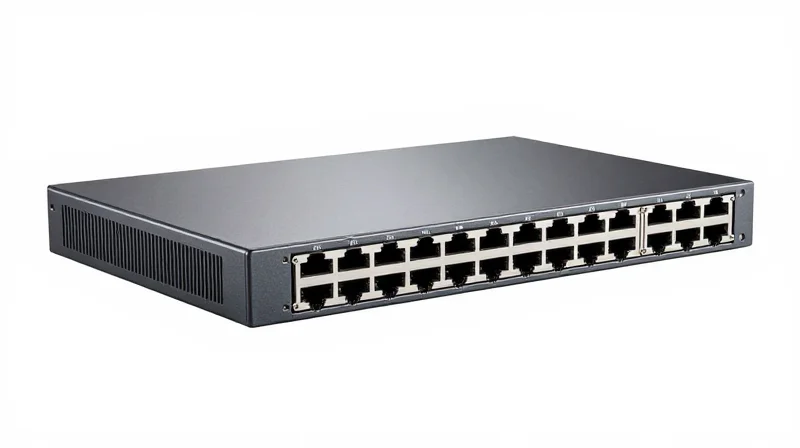
OEM/ODM customization provides the critical architectural flexibility required to solve unique environmental and performance bottlenecks that generic, off-the-shelf 400G hardware cannot address. By tailoring optical transceivers and cabling to the specific power envelopes, thermal profiles, and firmware requirements of a private data center, operators can achieve significantly higher stability and efficiency in high-density leaf-spine fabrics.
In a 400G environment, standard modules often operate at the edge of their thermal limits. Custom-engineered solutions allow for the modification of heat sink designs or the selection of ultra-low-power internal components to ensure that leaf switches—which often face the highest port density—remain within safe operating temperatures. This prevents thermal throttling and extends the mean time between failures (MTBF) for the entire network tier.
Firmware Optimization and Multi-Vendor Interoperability
One of the primary advantages of wholesale customization is the ability to write bespoke firmware for the EEPROM and Microcontroller Unit (MCU). In complex leaf-spine topologies utilizing hardware from multiple vendors like Arista, Cisco, and NVIDIA/Mellanox, custom-coded optics ensure 100% host-to-module compatibility. This eliminates the 'unsupported transceiver' warnings and diagnostic blind spots that often plague standard wholesale imports, allowing for full access to Digital Optical Monitoring (DOM) data across the fabric.
| Feature | Standard Off-the-Shelf | Custom OEM/ODM Solution |
|---|---|---|
| Power Consumption | Fixed (Typical 10W-12W for QSFP-DD DR4) | Optimized (As low as 8W-9W per module) |
| Firmware | Generic/Generic Multi-Source | Vendor-Specific (Cisco, Arista, Juniper, etc.) |
| Cabling Lengths | Standard Increments (1m, 3m, 5m) | Bespoke Lengths (e.g., 1.25m to minimize slack) |
| Thermal Management | Standard Passive Cooling | Enhanced Heat Sinks or Custom Fin Designs |
Physical Layer Customization for High-Density Racks
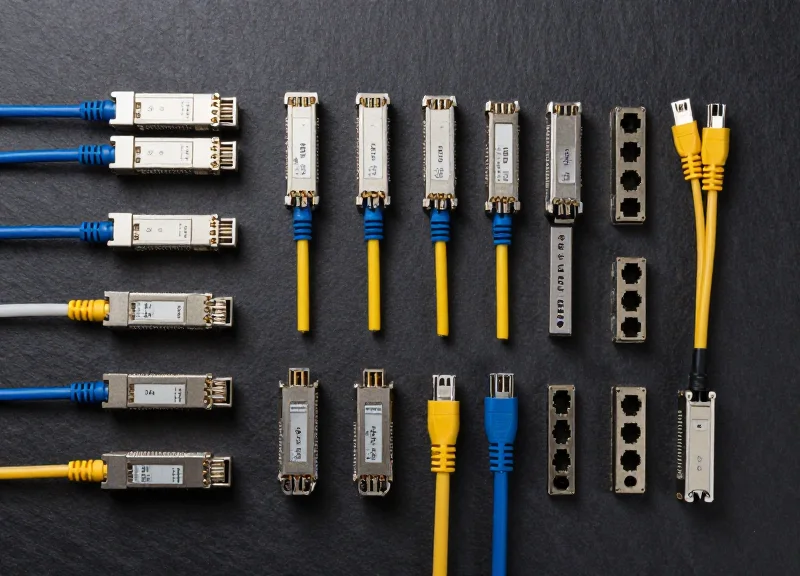
Beyond the optics themselves, wholesale customization extends to the physical interconnects. Custom-length Direct Attach Cables (DACs) and Active Optical Cables (AOCs) are essential for maintaining optimal airflow in leaf-spine setups. Excess cable slack creates 'air dams' that impede cooling; by ordering exact lengths tailored to rack dimensions, operators can reduce cooling energy costs by up to 15%. Additionally, custom breakout configurations—such as 400G to 8x50G or 2x200G—can be engineered to match the specific port-mapping requirements of proprietary high-frequency trading or AI training clusters.
- Can custom 400G optics support non-standard distances?
Yes, ODM services can tune lasers and receivers for specific link budgets, such as 500m or 2km reaches that fall between standard DR4 and FR4 specifications. - Does customization increase lead times for wholesale orders?
Initially, the engineering phase adds 2-4 weeks, but once a specification is locked, wholesale production timelines typically align with standard manufacturing cycles. - How does custom firmware impact network security?
Custom firmware allows for secure boot features and prevents unauthorized third-party modules from being used in the infrastructure, enhancing physical layer security.
Solving Thermal and Power Challenges in High-Density 400G Networks

Solving the thermal and power challenges of 400G networks requires a holistic approach that combines energy-efficient optical selection with advanced rack-level cooling. As 400G leaf-spine architectures move toward 32-port and 64-port switch densities, the power consumption of optics alone can exceed 400-800W per rack unit (RU). Without proper mitigation, this heat density leads to thermal throttling, increased bit error rates, and shortened hardware lifespans. Operators must balance the high bandwidth of 400G with the physical constraints of the data center environment by selecting transceivers with the lowest possible power-per-bit metrics.
The Thermal Impact of 400G Form Factors
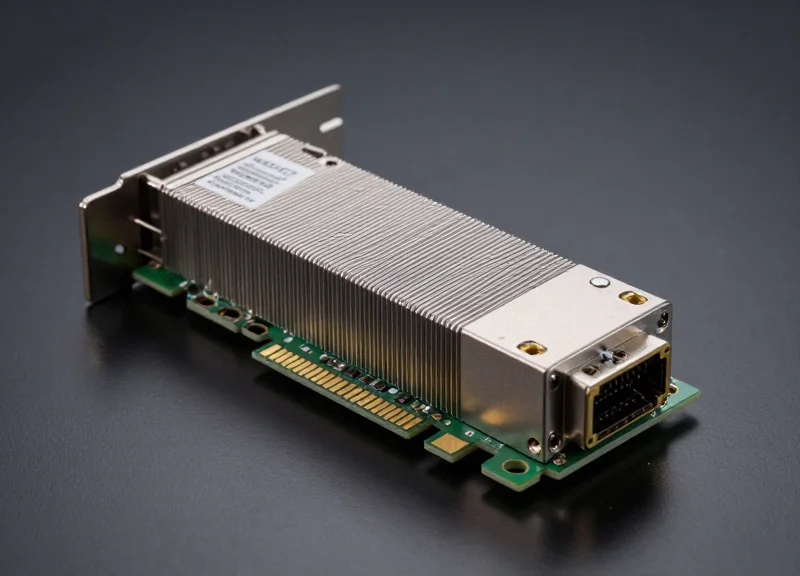
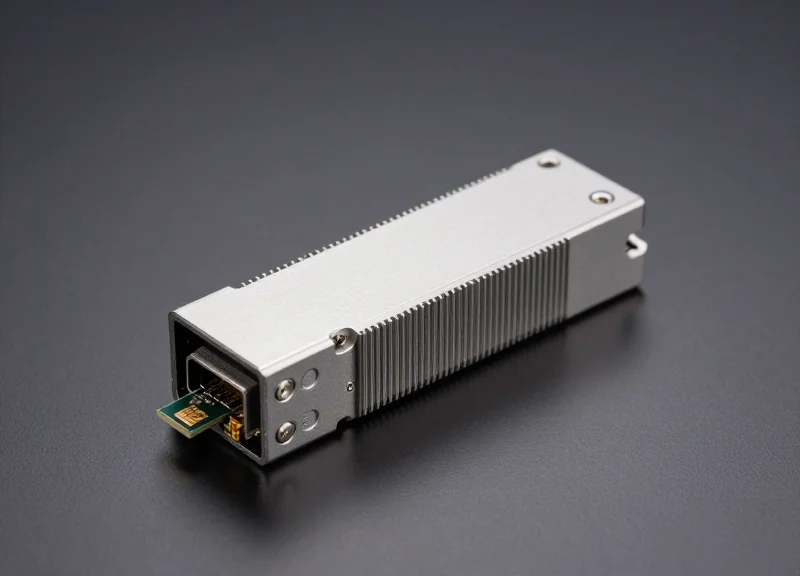
The choice between QSFP-DD and OSFP form factors significantly influences the thermal profile of a leaf-spine fabric. While QSFP-DD offers backward compatibility with QSFP28, its compact design limits the surface area for heat dissipation. Conversely, the OSFP form factor includes an integrated heat sink, allowing it to handle higher power envelopes (up to 15W or more) more effectively. When sourcing 400G wholesale, it is essential to match the transceiver's thermal dissipation capacity with the airflow direction (Front-to-Back or Back-to-Front) of the host switch to avoid hot spots.
| Metric | 100G (QSFP28) | 400G (QSFP-DD) | 400G (OSFP) |
|---|---|---|---|
| Typical Power Consumption | 3.5W - 5W | 10W - 12W | 12W - 14W |
| Heat Dissipation Design | Passive Housing | Riding Heat Sink | Integrated Heat Sink |
| Max Thermal Envelope | ~6W | ~14W | ~16W+ |
| Density per 1RU | 32 Ports | 32-36 Ports | 32 Ports |
Strategies for Reducing Power-Induced TCO
To mitigate power challenges in large-scale 400G deployments, engineers are increasingly turning to Direct Attach Cables (DACs) for short-reach leaf-to-server connections, as they consume near-zero power compared to active optical cables (AOCs) or transceivers. For longer spine-to-leaf spans, selecting transceivers with advanced 7nm DSPs (Digital Signal Processors) can reduce power consumption by up to 10-15% per module. When requesting custom quotes for bulk 400G orders, prioritizing these lower-wattage DSP revisions can significantly lower the Total Cost of Ownership (TCO) through reduced electricity and cooling costs over a 5-year lifecycle.
Thermal Management FAQ
- How does thermal throttling affect 400G performance?
When a transceiver exceeds its operating temperature (typically 70°C for commercial grade), the DSP may reduce performance or the switch may disable the port entirely to prevent permanent hardware damage, leading to network instability. - Can custom-engineered optics help with cooling?
Yes, OEM/ODM customization allows for the implementation of specific firmware that optimizes power draw for various link lengths, as well as the use of high-thermal-conductivity materials for module shells. - What role does airflow play in high-density 400G racks?
Proper airflow management, including the use of blanking panels and hot/cold aisle containment, is mandatory to ensure that the 400G optics at the top of the rack receive sufficient cool air to stay within operational limits.
Quality Control and Interoperability: Ensuring Network Stability

Maintaining network stability in a high-density 400G leaf-spine topology hinges on the seamless integration of optical transceivers with the switching fabric. As data centers shift toward wholesale procurement to manage costs, the primary technical challenge remains interoperability; specifically, ensuring that third-party 400G modules—such as QSFP-DD and OSFP—meet the stringent EEPROM coding and signal integrity requirements of Tier-1 vendors like Cisco, Arista, and Juniper. A robust quality control (QC) framework does more than verify connectivity; it validates the optical power levels, FEC (Forward Error Correction) performance, and thermal resilience necessary to prevent packet loss and link flapping in 24/7 mission-critical environments.
The Multi-Vendor Challenge: Cisco, Arista, and Juniper Compatibility
In a modern disaggregated data center, the leaf and spine layers often utilize hardware from different manufacturers. This heterogeneous environment demands that 400G optics are not only compliant with MSA (Multi-Source Agreement) standards but also specifically tuned for the Host Software and Network Operating Systems (NOS). For instance, Arista's EOS and Cisco's NX-OS have unique methods for reading DOM (Digital Optical Monitoring) data. Wholesale solutions must undergo real-world switch testing to ensure that the hardware recognizes the module natively, avoiding the need for 'unsupported-transceiver' workarounds that can complicate technical support and monitoring.
| Testing Metric | Requirement | Impact on Stability |
|---|---|---|
| EEPROM Verification | Vendor-Specific Coding | Ensures plug-and-play recognition and DOM accuracy. |
| TX/RX Eye Diagram | IEEE 802.3bs Standards | Guarantees signal clarity and minimizes bit error rates (BER). |
| Thermal Stress Test | High-Density Load Simulation | Prevents hardware failure during peak 400G power consumption. |
| Link Training | 100% Sync Interoperability | Ensures rapid synchronization between leaf and spine switches. |
Validation Protocols for Wholesale 400G Solutions
To guarantee carrier-grade reliability, our quality control process utilizes advanced automated testing stations. Every 400G transceiver is subjected to a battery of tests including optical spectrum analysis to verify wavelength stability and BERT (Bit Error Rate Testing) to ensure the pre-FEC (Forward Error Correction) margin is sufficient for long-term operation. By mirroring the customer's specific switch environment in our labs—using the exact firmware versions found in Cisco Nexus or Arista 7060X4 series—we eliminate the 'hidden' incompatibilities that often plague low-quality bulk imports.
- Can third-party 400G modules void my switch warranty?
No. Under the Magnuson-Moss Warranty Act and similar global regulations, hardware vendors cannot void a switch warranty simply for using third-party modules. However, the vendor may not provide support for the module itself, which is why choosing a wholesale provider with a robust local warranty is essential. - How is signal integrity verified for 400G-DR4/FR4 links?
We utilize high-performance oscilloscopes and BERT testers to verify PAM4 modulation quality. This ensures that the TDECQ (Transmitter and Dispersion Eye Closure Quaternary) values meet IEEE standards, preventing link instability over the life of the leaf-spine deployment. - Why is EEPROM coding critical for bulk orders?
Batch-level EEPROM customization ensures that every module in a 400G wholesale shipment is recognized as a 'certified' part by the switch NOS. This enables full access to diagnostic features like laser bias current and temperature monitoring, which are vital for proactive network maintenance.
Supply Chain Resilience for 400G Infrastructure
Securing a resilient supply chain for 400G leaf-spine infrastructure requires transitioning from a 'just-in-time' delivery model to a 'just-in-case' strategic reserve approach, focusing on multi-vendor interoperability to bypass single-source bottlenecks. By diversifying the supplier base for critical components like QSFP-DD transceivers and active optical cables (AOCs), enterprises can maintain deployment schedules even when specific global logistics lanes or semiconductor fabs face disruption.
Mitigating Lead Time Risks with Strategic Sourcing
The 400G ecosystem is highly sensitive to the availability of high-speed DSPs (Digital Signal Processors) and specialized laser diodes. To protect against the volatility of 2026 lead times, which can fluctuate from four weeks to six months, procurement teams should prioritize blanket purchase orders. This allows for the locking in of production slots and pricing without requiring immediate delivery of the entire volume, providing a steady flow of hardware as the network scales.
| Sourcing Strategy | Primary Benefit | Lead Time Impact |
|---|---|---|
| Spot Buying | Low immediate commitment | High risk of delays |
| Blanket Purchase Orders | Price protection & priority | Predictable delivery |
| Vendor Managed Inventory | Reduced warehouse overhead | Buffer against spikes |
| Multi-Vendor Sourcing | No single point of failure | Maximum flexibility |
Leveraging Third-Party Optics for Flexibility
One of the most effective methods for building supply chain resilience is the integration of high-quality third-party optics into the leaf-spine topology. While major switch OEMs often face the longest backlogs, specialized optical manufacturers can often fulfill custom wholesale orders more rapidly. Ensuring these modules are MSA-compliant (Multi-Source Agreement) guarantees that your 400G infrastructure remains vendor-agnostic, allowing you to pivot to alternative hardware providers if a primary vendor fails to meet a critical deadline.
FAQ: Securing 400G Inventory
- How far in advance should 400G components be ordered?
For large-scale wholesale deployments, a lead time of 12 to 18 weeks is recommended to account for potential component shortages and shipping delays. - What is the impact of custom quotes on supply stability?
Custom quotes for bulk orders often include Service Level Agreements (SLAs) regarding delivery timelines, providing more legal and operational certainty than retail purchases. - Can multi-vendor sourcing complicate troubleshooting?
While it adds a layer of complexity, using standardized diagnostic tools and ensuring all vendors meet the same IEEE specifications minimizes interoperability risks.
Ultimately, resilience is built on visibility. Maintaining a real-time dashboard of component transit and factory output helps network architects make data-driven decisions on when to accelerate or delay specific phases of a 400G rollout.
Future-Proofing Your Network: From 400G to 800G and Beyond

The transition from 400G to 800G is not merely a bandwidth increase but a shift in signal processing and physical density. For enterprises buying 400G wholesale today, future-proofing means prioritizing high-radix switches with 112G SerDes capabilities and adopting OSFP or QSFP-DD800 form factors that can accommodate the increased thermal loads of next-generation silicon. By planning for a 112G per lane architecture now, organizations can leverage their existing cable plant and spine-layer investments as they scale into the 800G era.
Comparison: 400G vs. 800G Architectural Requirements
| Feature | 400G Infrastructure | 800G/1.6T Evolution |
|---|---|---|
| Mainstream SerDes | 56G PAM4 / 112G PAM4 | 112G PAM4 / 224G PAM4 |
| Optical Form Factor | QSFP-DD / OSFP | OSFP / QSFP-DD800 |
| Fiber Connectors | MPO-12 / MPO-8 | MPO-16 / SN / MDC |
| Max Power Per Port | 12W - 15W | 18W - 25W+ |
Key Considerations for Long-Term Topology Scalability
When sourcing 400G components wholesale, the focus should be on 'radix' and 'density.' A leaf-spine topology built on 12.8Tbps or 25.6Tbps switching silicon provides the throughput necessary for 400G but may hit a ceiling quickly with AI/ML workloads. To bridge the gap to 800G, operators should look toward 51.2Tbps chips, which allow for a higher concentration of 400G ports today and a native transition to 800G tomorrow using 1:2 breakout cables or direct 800G optics.
Additionally, the choice of fiber cabling is paramount. Moving to 800G often necessitates MPO-16 or VSFF (Very Small Form Factor) connectors like SN or MDC to maintain port density. Wholesale buyers should evaluate if their current structured cabling can support the parallel optics required for the next leap in speed.
Future-Proofing FAQ: Transitioning Beyond 400G
- Can my 400G QSFP-DD ports support 800G optics?
Generally no. While 800G switches often use QSFP-DD800 ports that are backward compatible with 400G, standard 400G QSFP-DD ports do not have the electrical lanes or SerDes speed (112G) to support 800G modules. - Is it worth buying 800G-ready switches for a 400G network?
Yes, if your growth projections suggest an upgrade within 24-36 months. Buying 800G switches (like those based on Tomahawk 5 silicon) to run 400G traffic allows you to double your port density immediately while providing a seamless software-defined upgrade path. - What role does OSFP play in future-proofing?
OSFP is often preferred for 800G and beyond due to its superior thermal management capabilities. Choosing OSFP for your current 400G deployment simplifies the transition to higher-wattage 800G and 1.6T optics later.
Criteria for Choosing a 400G Wholesale Partner
Strategic Evaluation of 400G Wholesale Partners
Choosing a wholesale partner for 400G Leaf-Spine infrastructure is a critical decision that influences the long-term reliability and cost-efficiency of the data center. A qualified partner must go beyond simple hardware distribution; they must serve as a technical extension of your engineering team, offering deep insights into PAM4 signaling, link budgets, and the intricacies of high-density optical fabrics. The ideal partner provides a blend of competitive volume pricing, transparent supply chain logistics, and robust quality assurance protocols that mitigate the risks of network downtime.
Key Comparison: OEMs vs. Specialized Wholesalers
When scaling to 400G, many organizations compare traditional Tier-1 OEM vendors against specialized wholesale partners. While OEMs offer brand security, specialized partners often provide the agility and customization necessary for modern, open-networking environments.
| Selection Factor | Traditional OEM Vendors | Specialized 400G Wholesale Partners |
|---|---|---|
| Unit Pricing | Premium pricing with high brand markup | Aggressive bulk pricing and volume discounts |
| Technical Agility | Rigid hardware and software ecosystems | Flexible, vendor-neutral hardware support |
| Lead Times | Often subject to global supply chain backlogs | Proactive inventory management and safety stocks |
| Customization | Limited to standard product lines | Custom EEPROM coding and tailored cabling lengths |
| Technical Support | Tiered support queues and service contracts | Direct access to optical and network engineers |
Manufacturing Transparency and Compliance
In the 400G era, signal integrity is paramount. Partners should provide full transparency into their manufacturing and testing processes. This includes adherence to Multi-Source Agreements (MSA) to ensure interoperability and compliance with international standards such as ISO9001 for quality management and ISO14001 for environmental responsibility. For government and highly regulated sectors, verifying the availability of TAA (Trade Agreements Act) compliant products is essential to meet legal procurement requirements.
Partner Selection FAQ
- What specific testing protocols should a 400G partner follow?
A reliable partner must perform Bit Error Rate (BER) testing, eye diagram analysis, and real-world interoperability stress tests using switches from major vendors like Cisco, Arista, and Juniper. - How do wholesale partners handle firmware compatibility?
Top-tier wholesalers maintain a library of vendor-specific firmware and can provide custom EEPROM coding to ensure 400G transceivers and DACs are recognized immediately without error by the host switch. - Can wholesale partners assist with Leaf-Spine architecture design?
Many specialized partners offer design assistance, helping to calculate total link budgets and advising on the optimal mix of DACs, AOCs, and optical transceivers based on your specific rack distance and thermal requirements. - What is the importance of a 'Golden Sample' in wholesale procurement?
A 'Golden Sample' allows the customer to verify the exact performance and compatibility of a module in their unique environment before the wholesale partner initiates a high-volume production run.
Navigating the complexities of 400G infrastructure requires a partner that understands both the technical nuances of Leaf-Spine topology and the financial realities of network scaling. By leveraging wholesale pricing and specialized OEM/ODM services, you can achieve superior performance while maintaining a competitive budget. Ready to scale your network? Contact Ubytelink today for the best wholesale pricing and custom quotes on 400G modules.