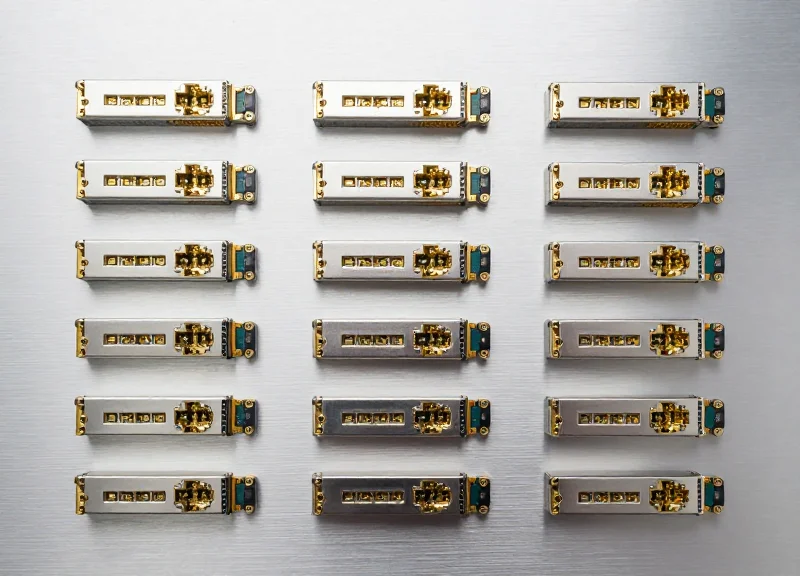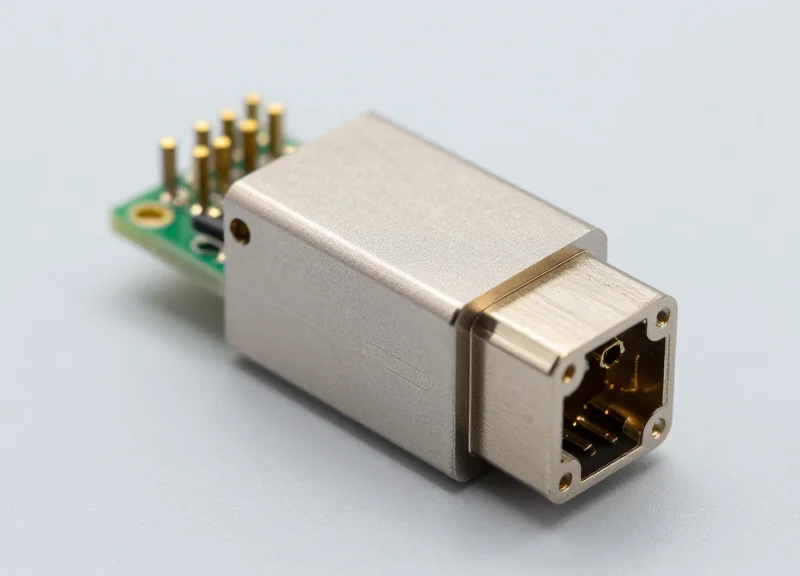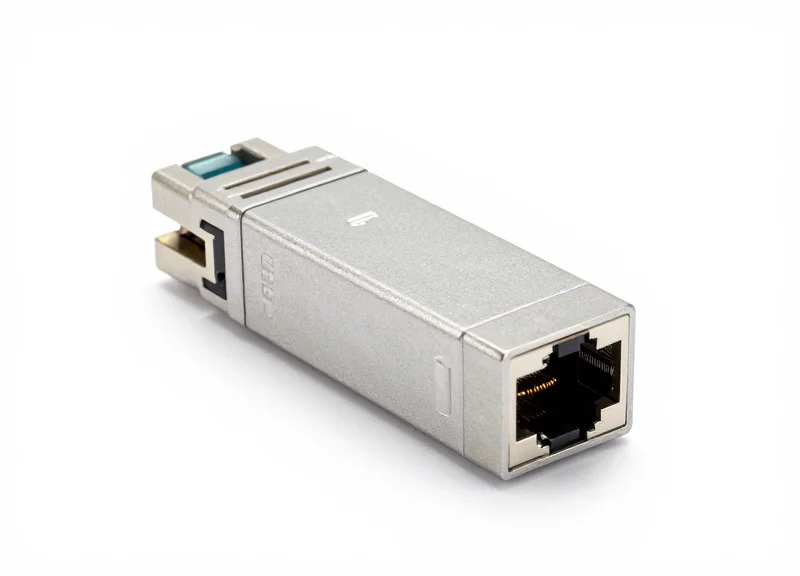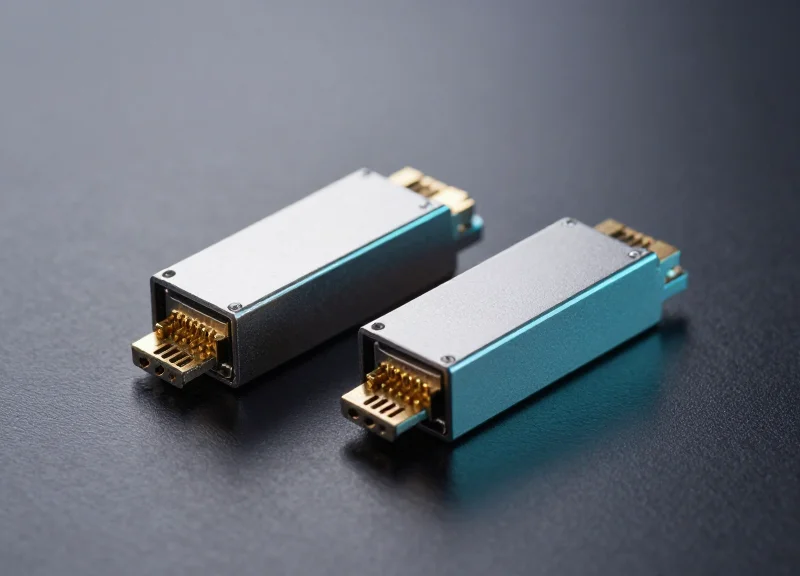
As data centers transition to 400G and 800G fabrics, the 100G edge is evolving. This guide explores why Single-Lambda SFP-DD is emerging as a critical standard for high-density, low-latency networking, and how it stacks up against traditional 4x25G solutions.
The Evolution of 100G: From Multi-Lane to Single-Lambda

The evolution of 100G technology represents a fundamental shift in optical engineering, moving from the complexity of multi-lane signal aggregation to the streamlined efficiency of single-wavelength transmission. Originally, 100G connectivity was achieved by multiplexing four 25Gbps lanes; however, the emergence of 100G Single-Lambda technology using PAM4 modulation has redefined the performance-to-cost ratio. This shift is not merely a speed upgrade but a necessary architectural change to support the high-density requirements of modern hyperscale data centers and 5G infrastructure.
The Legacy of 4x25G NRZ Architectures
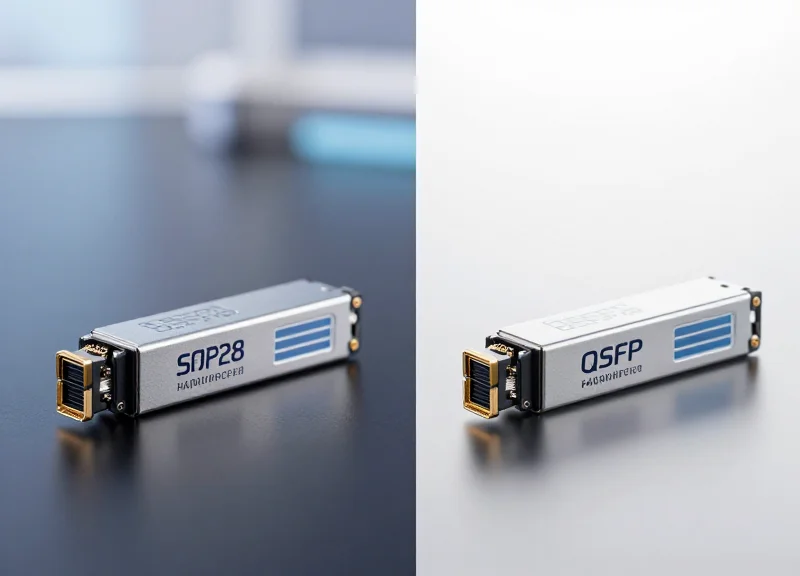
Early 100G solutions, most notably the QSFP28 standard, relied on four discrete channels of 25Gbps using Non-Return-to-Zero (NRZ) modulation. While revolutionary at the time, this 'multi-lane' approach required four sets of optical components, including lasers and receivers (TOSA/ROSA). This increased the physical complexity of the modules, led to higher power consumption, and created a scaling bottleneck as data center operators sought to increase port density without exponentially increasing hardware costs.
Defining the Single-Lambda 100G PAM4 Standard
Single-lambda 100G leverages Pulse Amplitude Modulation 4-level (PAM4) and sophisticated Digital Signal Processing (DSP) to transmit 100Gbps over a single optical wavelength. By transmitting two bits per symbol, PAM4 effectively doubles the data rate compared to NRZ for the same baud rate. This enables a 1:1 mapping between the electrical and optical lanes, eliminating the need for complex 'gearbox' components inside the transceiver and significantly reducing the optical component count.
| Feature | Legacy 4x25G NRZ | 100G Single-Lambda PAM4 |
|---|---|---|
| Optical Lane Count | 4 Lanes (4x25G) | 1 Lane (1x100G) |
| Modulation Type | NRZ (1 bit per symbol) | PAM4 (2 bits per symbol) |
| Hardware Complexity | High (Multi-laser arrays) | Low (Single laser) |
| Power Efficiency | Moderate | High (Optimized for SFP-DD) |
| 400G Compatibility | Incompatible with 400G lanes | Native path to 400G (4x100G) |
Strategic Impact of the Evolution
- How does single-lambda improve reliability?
By reducing the optical component count from four sets of lasers and detectors to just one, the Mean Time Between Failures (MTBF) is significantly improved, and the potential for lane-to-lane interference is eliminated. - Why is this transition necessary for 400G and 800G?
Modern switch ASICs are moving toward 100G-per-lane electrical interfaces. Using 100G single-lambda optics allows for a direct 1:1 match between the switch and the transceiver, which is the foundation for 400G (4x100G) and 800G (8x100G) breakouts. - What role does SFP-DD play in this evolution?
The SFP-DD form factor leverages single-lambda technology to double the port density of traditional SFP ports while maintaining backwards compatibility, making it the ideal vessel for high-density 100G deployments.
Technical Architecture: Decoding the SFP-DD Form Factor
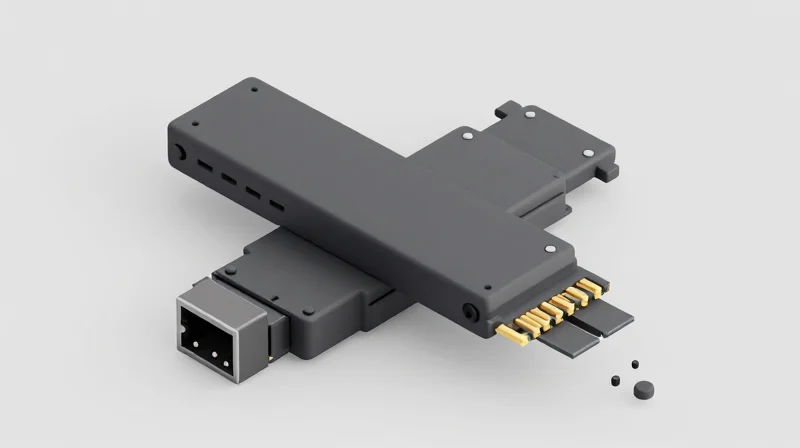
The Engineering Behind SFP-DD: Dual-Lane Efficiency
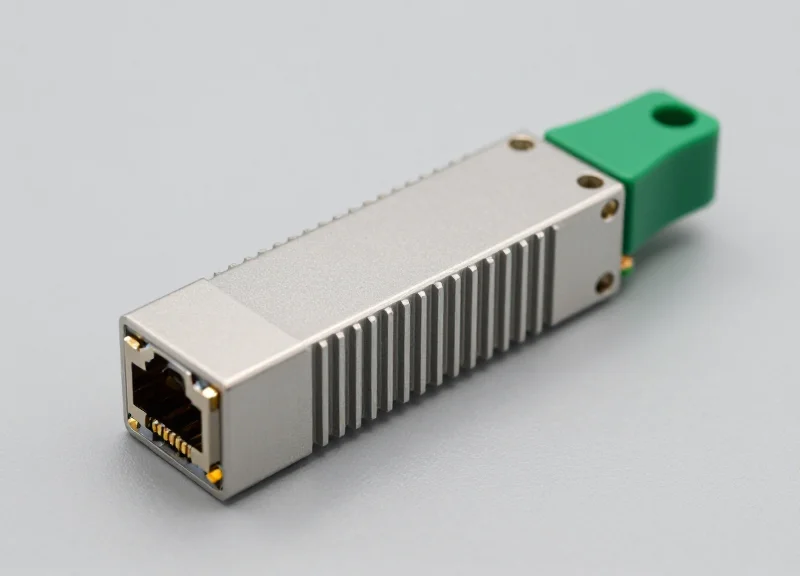
The SFP-DD (Small Form-factor Pluggable Double Density) form factor represents a critical architectural evolution in optical networking by doubling the electrical interface of the standard SFP module from one lane to two, effectively supporting 100G speeds within a footprint traditionally limited to 25G or 50G. This 'double density' is achieved through a multi-row contact system that allows the module to remain backwards compatible with legacy SFP+ and SFP28 ports while providing the high-speed lanes required for 100G single-lambda optics.
Electrical Interface and PAM4 Modulation
The technical core of the SFP-DD 100G module is its 2x50G PAM4 electrical interface. Unlike previous generations that relied on NRZ (Non-Return-to-Zero) signaling, SFP-DD utilizes PAM4 (4-Level Pulse Amplitude Modulation) to pack more data into each clock cycle. In a 100G single-lambda configuration, the transceiver's Digital Signal Processor (DSP) aggregates these two 50Gbps electrical lanes and converts them into a single 100Gbps optical signal. This reduction in lane count on the optical side significantly lowers the complexity of the internal optical sub-assemblies (TOSA/ROSA).
| Feature | SFP-DD (100G) | SFP56 (50G) | QSFP28 (100G) |
|---|---|---|---|
| Electrical Lanes | 2 Lanes | 1 Lane | 4 Lanes |
| Modulation Type | PAM4 | PAM4 | NRZ or PAM4 |
| Lane Rate | 50Gbps per lane | 50Gbps per lane | 25Gbps per lane |
| Backwards Compatibility | High (SFP+/SFP28/SFP56) | High (SFP+/SFP28) | Low (QSFP+ only) |
| Typical Application | High-density Top-of-Rack | Server Access | Enterprise Core |
Mechanical Compatibility and Thermal Management
A primary advantage of the SFP-DD architecture is its mechanical design. By utilizing a second row of pins recessed further into the cage, the SFP-DD MSA (Multi-Source Agreement) ensures that standard SFP modules can still be plugged into SFP-DD ports. From a thermal perspective, managing 100G in such a small form factor is challenging; however, the single-lambda approach reduces the number of lasers required, which helps maintain a manageable power envelope (typically under 3.5W to 4W) compared to older multi-lane 100G solutions.
Common Questions on SFP-DD Architecture
- Does SFP-DD require new cabling infrastructure?
No, because it uses single-lambda technology, it can often leverage existing LC duplex fiber plants used for 10G or 25G, provided the fiber quality meets the requirements for 100G PAM4 transmission distances. - How does the 'Double Density' physical connector work?
The SFP-DD connector features two rows of contacts. The first row matches the standard SFP pinout, while the second row provides the additional electrical lane and ground pins necessary for the 2x50G interface. - Can an SFP-DD port support 200G?
While the initial focus is 100G, the SFP-DD roadmap includes 200G (2x100G PAM4) capabilities, allowing for future-proofing of switch hardware density.
Latency Performance: Single-Lambda vs. Legacy Optics

100G Single-Lambda optics offer a significant latency advantage over legacy 4x25G architectures by eliminating the need for multi-lane deskewing and inverse multiplexing. While legacy systems must synchronize four independent signals, Single-Lambda technology processes a single high-baud-rate signal, reducing the computational overhead and signal processing time required at the Physical Medium Dependent (PMD) layer.
Comparing Signal Processing Delays
In legacy 100G systems, such as QSFP28 SR4 or LR4, the data is split across four 25Gbps lanes. This necessitates a 'gearbox' function and complex deskew logic to ensure that the bits arriving at different times across the fibers are correctly reassembled. In contrast, 100G Single-Lambda SFP-DD uses a single 53 Gbaud PAM4 signal. Because there is only one optical lane, the receiver does not need to wait for multiple lanes to align, which fundamentally lowers the intrinsic processing delay.
| Latency Component | Legacy 4x25G NRZ | Single-Lambda 100G PAM4 |
|---|---|---|
| Lane Synchronization | Required (Adds Delay) | Not Required (Minimal Delay) |
| Modulation Complexity | Low (NRZ) | Moderate (PAM4 DSP) |
| Deskew Buffering | Significant | None |
| Overall Processing Path | Parallelized/Complex | Serialized/Streamlined |
Forward Error Correction (FEC) and Throughput
The transition to 100G Single-Lambda necessitates the use of KP4 Forward Error Correction (FEC) to manage the higher Signal-to-Noise Ratio (SNR) requirements of PAM4 modulation. While FEC does introduce a small amount of fixed latency, the efficiency of Single-Lambda DSPs ensures that this is offset by the removal of lane-alignment delays. Furthermore, the streamlined architecture allows for more consistent throughput by reducing the Bit Error Rate (BER) floors that often plague aging multi-lane configurations.
Performance FAQs
- Does Single-Lambda latency impact High-Frequency Trading (HFT)?
Yes, the reduction in deskew logic makes Single-Lambda optics a preferred choice for latency-sensitive applications like HFT, where every nanosecond saved in the physical layer is critical. - Is the FEC latency in 100G PAM4 higher than NRZ?
Technically yes, KP4 FEC has a higher processing requirement than the NO-FEC or KR-FEC used in some NRZ links, but the total system latency is often lower due to the simplified optical path. - How does jitter compare between the two?
Single-Lambda 100G relies heavily on the DSP to compensate for jitter; while the modulation is more complex, the single-channel approach eliminates inter-lane crosstalk, a common source of jitter in 4x25G designs.
Power Consumption Metrics: Efficiency at Scale
The Shift to Single-Lambda: Redefining Power Efficiency
The transition to 100G Single-Lambda SFP-DD represents a paradigm shift in power efficiency, delivering approximately 30-40% reduction in power consumption per gigabit compared to legacy 4x25G solutions. By consolidating the optical path into a single 100G PAM4 wavelength, these modules eliminate the need for complex multiplexing and demultiplexing components, resulting in a lower Thermal Design Power (TDP). This reduction is critical for maximizing port density in modern leaf-spine architectures without exceeding the thermal limits of the chassis.
Comparative Power Profiles: SFP-DD vs. Alternatives
| Form Factor | Typical Power (W) | Power Efficiency (W per 100G) | Relative Heat Output |
|---|---|---|---|
| QSFP28 (4x25G NRZ) | 3.5W - 4.5W | 0.040 | High |
| SFP112 (1x100G PAM4) | 2.5W - 3.0W | 0.027 | Low |
| SFP-DD (Single-Lambda) | 2.5W - 3.2W | 0.028 | Low |
While SFP112 and SFP-DD share similar single-lambda efficiencies, the SFP-DD form factor offers a distinct advantage in backward compatibility and overall system density. In a typical 48-port switch configuration, the cumulative power savings of moving from QSFP28 to SFP-DD can exceed 70 Watts per Rack Unit (RU). This reduction directly translates to lower operational expenditure (OPEX) through reduced electricity costs and diminished cooling requirements in the cold aisle.
Thermal Management and Long-Term Reliability
Lower power consumption does more than just save on electricity; it drastically improves the thermal profile of the network equipment. High-density 100G environments often struggle with 'heat soak,' where the proximity of high-wattage transceivers leads to accelerated component degradation. SFP-DD’s architecture, when combined with Single-Lambda optics, allows for better airflow and lower heat dissipation per port, extending the Mean Time Between Failures (MTBF) for both the optics and the host switch.
- How does SFP-DD compare to QSFP28 in thermal efficiency?
SFP-DD modules typically dissipate 20-30% less heat for the same 100G throughput, allowing for higher density without requiring specialized liquid cooling or high-velocity fans. - Is there a power penalty for using the double-density interface?
No. While the SFP-DD uses two electrical lanes, the move to single-lambda PAM4 optics compensates for the interface overhead, maintaining a highly efficient profile compared to quad-lane alternatives. - How does Single-Lambda affect the overall data center carbon footprint?
By reducing the per-bit power requirement, Single-Lambda technology enables facilities to scale capacity while staying within existing power envelopes, directly supporting corporate green energy initiatives.
Maximizing Port Density in the Modern Data Center
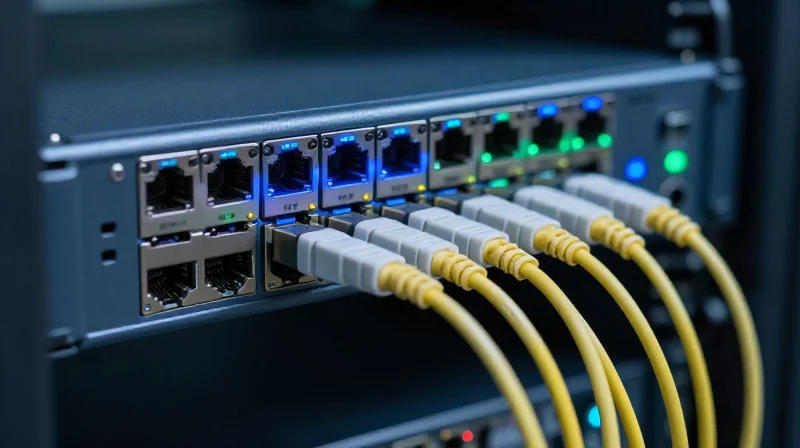
Scaling Connectivity: The Role of SFP-DD in High-Density Environments
SFP-DD (Small Form-factor Pluggable Double Density) maximizes port density by doubling the number of electrical lanes from one to two while maintaining mechanical backwards compatibility with the standard SFP footprint. This architectural shift allows network operators to transition from 25G or 50G per port to 100G or 200G within the same physical rack space, effectively doubling the bandwidth capacity of a single switch RU (Rack Unit) without increasing the physical dimensions of the hardware or the complexity of the cabling infrastructure.
Mechanical Footprint and Backwards Compatibility
The primary advantage of SFP-DD lies in its physical design, which incorporates a second row of electrical contacts to support high-speed PAM4 lanes. Unlike the larger QSFP (Quad Small Form-factor Pluggable) series, SFP-DD maintains the slim profile required for high-density faceplates. This enables equipment manufacturers to design switches that accommodate up to 48 or 96 ports in a 1U chassis. Furthermore, because the SFP-DD cage is designed to be backwards compatible, legacy SFP28 and SFP56 modules can be utilized in the same slots, providing a seamless migration path for brownfield data center upgrades.
| Form Factor | Electrical Lanes | Typical Port Count (1U) | Max Bandwidth per Port |
|---|---|---|---|
| SFP28 | 1 | 48 | 25G |
| QSFP28 | 4 | 32-36 | 100G |
| SFP-DD | 2 | 48-96 | 100G / 200G |
| SFP112 | 1 | 48 | 100G |
Thermal Management and Power Efficiency
While increasing density often leads to thermal challenges, SFP-DD is engineered to optimize airflow. By utilizing Single-Lambda 100G optics, the internal complexity of the transceiver is reduced compared to older multi-lane designs. This reduction in component count translates to lower power consumption per gigabit and a more manageable thermal profile. When deployed at scale, SFP-DD modules prevent the 'thermal throttling' often seen in densely packed QSFP28 environments, ensuring consistent performance across all ports even under heavy traffic loads.
Implementation FAQ
- Can SFP-DD ports support legacy SFP28 modules?
Yes, the SFP-DD cage is designed for backwards compatibility, allowing standard SFP+ and SFP28 modules to be plugged directly into the port for legacy support. - How does SFP-DD compare to QSFP-DD in terms of density?
While QSFP-DD offers higher total bandwidth per module (up to 800G), SFP-DD is superior for server-side density where 100G granularity and maximum port count per RU are the priority. - Does SFP-DD require specialized cooling systems?
No, it is designed to work with standard front-to-back airflow, though high-density deployments benefit from the reduced power consumption of Single-Lambda technology.
Total Cost of Ownership (TCO) Comparison

Evaluating the Total Cost of Ownership (TCO) for 100G Single-Lambda SFP-DD requires looking beyond the sticker price of individual transceivers to the systemic efficiencies gained through increased port density, reduced cabling complexity, and significantly lower power consumption. While legacy 4x25G solutions may seem cost-effective initially, the transition to single-lane 100G optics reduces the number of optical components and simplifies the hardware architecture, leading to a lower cost-per-bit over a standard 3-to-5-year hardware lifecycle.
Capex vs. Opex: A Financial Breakdown
Capital Expenditure (Capex) for SFP-DD includes not just the transceivers but also the high-density switches. However, because SFP-DD doubles the density of a standard SFP port, the cost of the switch chassis is effectively amortized over twice as many 100G links. Operational Expenditure (Opex) is where the Single-Lambda architecture provides the most significant relief, primarily through reduced power draw and simplified cooling requirements in the rack.
| Metric (per 100G Link) | QSFP28 (4x25G) | SFP112 (1x100G) | SFP-DD (1x100G) |
|---|---|---|---|
| Typical Power Draw | 3.5W - 4.5W | 2.5W - 3.0W | 2.5W - 3.2W |
| Relative Hardware Cost | Baseline (Low) | High (Early Adopter) | Moderate |
| Switch Port Density | 32 Ports / 1U | 48 Ports / 1U | 64-72 Ports / 1U |
| 5-Year Energy Cost | Highest | Reduced | Lowest (per Gigabit) |
Long-Term Power and Cooling Efficiency
The 100G Single-Lambda SFP-DD design utilizes a single laser and optical path, compared to the four lasers required for QSFP28 SR4 or PSM4. This reduction in componentry directly translates to lower heat dissipation. In large-scale data centers, every Watt saved at the transceiver level results in an additional 0.5W to 1W of savings in the cooling infrastructure (PUE factor), making SFP-DD the most economically viable choice for 100G deployments at scale.
TCO Comparison FAQ
- Does SFP-DD require more expensive cabling?
No. Because it uses Single-Lambda technology, it often uses the same LC duplex fiber as 10G or 25G links, avoiding the expensive MPO/MTP cabling required for multi-lane 100G solutions. - What is the primary driver of Opex savings in SFP-DD?
The primary drivers are the 40% reduction in power consumption compared to QSFP28 and the doubled port density which reduces the physical footprint and the number of switches required in the data center. - How does backward compatibility affect TCO?
SFP-DD is backward compatible with SFP28 and SFP56, allowing operators to reuse existing optics and cables during a phased upgrade, significantly lowering the initial migration Capex.
Backward Compatibility and Interoperability Challenges
The primary challenge in adopting 100G Single-Lambda SFP-DD lies in the shift from legacy NRZ (Non-Return-to-Zero) signaling to PAM4 (4-Level Pulse Amplitude Modulation), which necessitates sophisticated Digital Signal Processing (DSP) and creates a fundamental mismatch with older SFP+ or SFP28 ports that do not support multi-lane electrical interfaces. While the SFP-DD form factor is physically backward compatible, the host system must be capable of managing the dual-lane electrical density and the complex FEC (Forward Error Correction) requirements inherent in 100G PAM4 transmission.
Bridging the Modulation Gap: NRZ vs. PAM4
Legacy 10G and 25G systems utilize NRZ modulation, where a single bit is transmitted per clock cycle. In contrast, 100G Single-Lambda SFP-DD relies on PAM4, which packs two bits into four distinct signal levels. Interoperability between these generations requires a 'gearbox' function, typically residing in the module's DSP, to translate between the host's electrical lanes and the optical signal. This adds latency and power consumption compared to the native NRZ paths used in SFP28 modules, making real-time traffic management more complex in mixed-protocol fabrics.
Physical and Electrical Compatibility Matrix
| Module Type | Physical Compatibility | Electrical Lane Support | Modulation Method |
|---|---|---|---|
| SFP-DD | SFP-DD Port | Dual Lane (2x 50G) | PAM4 |
| SFP28 | SFP-DD Port (Backward) | Single Lane (1x 25G) | NRZ |
| SFP-DD | SFP28 Port | Not Compatible (Mechanical) | N/A |
| QSFP28 | QSFP28 Port | Quad Lane (4x 25G) | NRZ/PAM4 |
Legacy Infrastructure and Port Density Trade-offs
The SFP-DD (Double Density) specification was designed to allow a standard SFP+ or SFP28 module to be plugged into an SFP-DD port, but the reverse is not possible due to the deeper mechanical depth of the SFP-DD connector. This 'forward-only' physical compatibility means data center operators must upgrade their switch hardware to SFP-DD to gain flexibility. However, even when a port is physically compatible, the firmware and ASIC must support the 'breakout' or 'aggregation' modes required to treat a single SFP-DD port as two separate 50G channels or a single 100G channel, a feature often lacking in older top-of-rack switches.
Common Interoperability Questions
- Can I plug an SFP28 module into an SFP-DD port?
Yes, SFP-DD ports are designed to be backward compatible with SFP28 and SFP+ modules. The switch will simply use the primary set of contacts and disable the secondary lane. - Is SFP-DD compatible with existing QSFP28 100G modules?
Optically, yes, if both use the 100G-DR or 100G-FR standard. Electrically, they are different form factors and require different physical ports on the switch. - Does mixing NRZ and PAM4 impact network latency?
Yes, the DSP required for PAM4 modulation and the necessary Forward Error Correction (FEC) introduce more latency than traditional NRZ modules, which can be a factor in High-Frequency Trading (HFT) environments.
Future-Proofing: Aligning with 400G/800G Roadmap
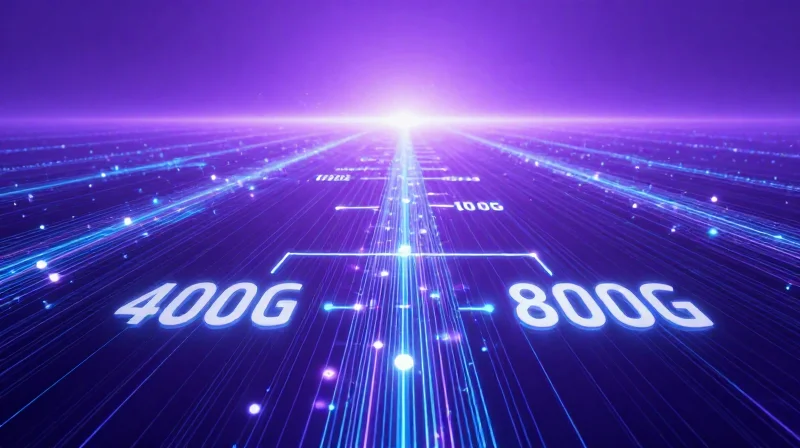
Adopting 100G Single-Lambda SFP-DD is a strategic necessity for organizations planning a migration to 400G and 800G ecosystems. Unlike legacy 100G solutions that rely on four 25G lanes (4x25G), Single-Lambda technology aligns the optical transmission rate with the 100G-per-lane SerDes architecture of next-generation ASICs. This alignment eliminates the need for complex, power-hungry gearboxing, providing a native path for high-density breakout configurations and significantly reducing the total cost of ownership for future-scale data centers.
The Shift to 100G SerDes Architecture
The industry is rapidly moving toward 100G SerDes as the baseline for switch silicon. While older 100G modules required four lanes of 25G, modern 12.8T, 25.6T, and 51.2T switches are optimized for 100G signaling. Utilizing SFP-DD modules with Single-Lambda optics ensures that the physical layer matches the internal logic of the switch, reducing latency and hardware complexity. This synergy is critical for the stability of 400G (4x100G) and 800G (8x100G) deployments.
Streamlining Breakout Configurations
Future-proofing relies heavily on the ability to 'break out' high-capacity ports into multiple lower-speed connections. 100G Single-Lambda enables seamless 400G-to-4x100G and 800G-to-8x100G transitions. This allows operators to deploy high-density 400G/800G switches in the core while maintaining 100G connectivity at the edge or leaf level without performance bottlenecks.
| Metric | Legacy 100G (4x25G) | 100G Single-Lambda (1x100G) |
|---|---|---|
| Optical Lane Rate | 25 Gbps per lane | 100 Gbps per lane |
| 400G Breakout Compatibility | Requires complex Gearbox | Native 1:4 Breakout |
| 800G Support | Not feasible/Extremely Complex | Native 1:8 Breakout |
| Scalability Limit | High complexity at 400G | Foundational for 800G/1.6T |
Reducing Path Dependency and Vendor Lock-in
By standardizing on Single-Lambda technology, enterprises avoid being locked into proprietary or legacy architectures that cannot scale. The SFP-DD form factor, with its dual-lane electrical interface, provides a uniquely flexible bridge that supports current 100G requirements while remaining physically and electrically compatible with the roadmaps of major switch and transceiver manufacturers.
- Will 100G Single-Lambda remain relevant when 800G becomes standard?
Yes. 800G modules (QSFP-DD800) typically use 8 lanes of 100G. Single-Lambda 100G SFP-DD modules will be the primary breakout target for these 800G ports, ensuring longevity for years to come. - Why should I choose SFP-DD over standard SFP112 for the 400G roadmap?
SFP-DD provides two electrical lanes, offering higher density and better support for the transition toward 200G and 400G-per-port signaling than single-lane form factors. - Does Single-Lambda technology simplify cable management?
Absolutely. Reducing the number of lasers and fibers required for a 100G link simplifies the structured cabling plant and makes the transition to 400G MPO-based breakouts much cleaner.
Navigating the shift to 100G Single-Lambda SFP-DD requires balancing current legacy support with future-proof scalability. By optimizing for power and density today, operators can significantly lower their long-term TCO. Contact our engineering team for a customized transceiver audit and roadmap.