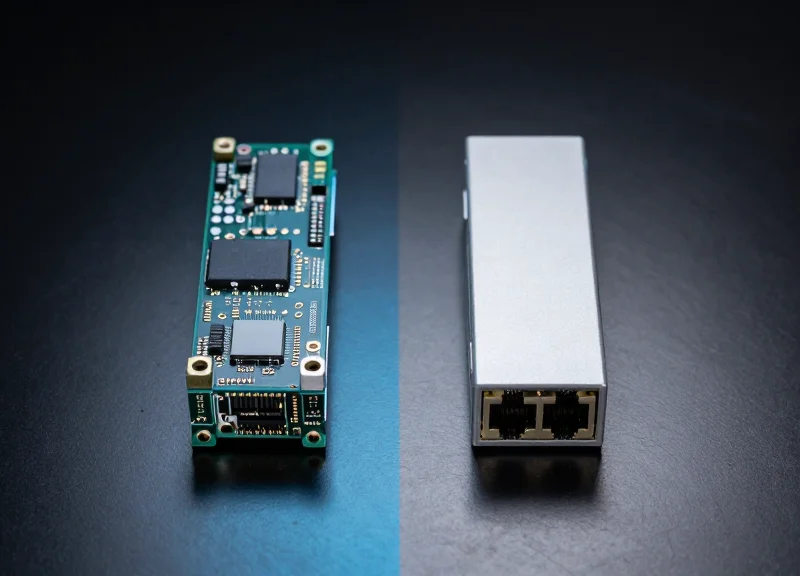
As artificial intelligence and machine learning workloads push data center boundaries, the industry is pivoting toward 1.6T networking. This article provides a Silicon Valley expert's perspective on how 1.6T evolution compares to current standards in critical metrics like latency, power, and cost.
The Current Landscape: Why 1.6T is the New Benchmark

The AI-Driven Shift to 1.6T Connectivity
The emergence of 1.6T as the new industry benchmark is a direct consequence of the rapid scaling of Large Language Models (LLMs) and generative AI clusters that require unprecedented data throughput and minimal latency. As model parameters grow into the trillions, the interconnect becomes the primary bottleneck, forcing a transition from 800G to 1.6T to maintain high GPU utilization rates and efficient training cycles.
While 400G and 800G technologies served the early cloud and hyperscale eras effectively, they are increasingly insufficient for the 'radix' requirements of modern data centers. 1.6T technology, typically utilizing 200G-per-lane SerDes, allows for higher density in switch configurations, reducing the total number of cables and transceivers needed while simultaneously lowering the power consumption per bit of data transferred.
| Metric | 400G Ethernet | 800G Ethernet | 1.6T Ethernet |
|---|---|---|---|
| Primary Use Case | General Cloud/Leaf-Spine | Standard AI Clusters | Next-Gen AI/LLM Training |
| Max Lane Speed | 50G/100G PAM4 | 100G PAM4 | 200G PAM4 |
| Bandwidth Density | Low | Medium | High |
| Power Efficiency | Baseline | ~20% Improvement | ~40% Improvement per bit |
Market Forces and Infrastructure Evolution
The shift is also motivated by economic factors. Hyperscalers are facing a 'power wall' where traditional scaling methods are no longer sustainable. By adopting 1.6T, operators can consolidate their network tiers, which reduces the physical complexity of the fabric and the associated cooling costs. The move toward 1.6T is essentially an optimization of the total cost of ownership (TCO) for AI infrastructure.
- Why is 800G being bypassed for 1.6T in some roadmaps?
Many leading AI developers are skipping intermediate 800G upgrades to move directly to 1.6T to future-proof their clusters against the massive bandwidth requirements of next-generation GPU architectures. - What role does 200G SerDes play?
The transition to 200G-per-lane signaling is the technological foundation of 1.6T, allowing for 8-lane modules to reach the necessary throughput without increasing the transceiver footprint. - Is 1.6T compatible with existing fiber?
Yes, 1.6T is designed to leverage existing OSFP and QSFP-DD form factors, though it requires higher-grade optics and potentially more robust thermal management.
In summary, 1.6T represents the apex of current networking evolution, serving as the connective tissue for the next decade of high-performance computing. It addresses the immediate capacity crunch while providing a scalable pathway for the next generation of AI innovation.
Architectural Deep Dive: 1.6T vs. 800G and 400G
Architectural Deep Dive: 1.6T vs. 800G and 400G
The transition to 1.6T Ethernet is defined by a fundamental leap in Serializer/Deserializer (SerDes) technology, moving from the 112G-PAM4 signaling used in 800G to the groundbreaking 224G-PAM4 standard. While 400G and 800G relied on scaling lane counts or incrementally improving 56G/112G architectures, 1.6T requires a complete overhaul of the physical layer (PHY) to manage signal integrity, power consumption, and thermal dissipation at double the previous data rate.
The 224G SerDes Breakthrough
At the heart of the 1.6T evolution is the 224G SerDes. In 800G systems, the typical configuration is 8 lanes of 100G (running at approximately 112Gbps). To achieve 1.6T, engineers had two choices: double the lanes to 16 or double the speed per lane to 200G. The industry has converged on the latter to maintain the current port density on 1RU switch faceplates. This change introduces significant challenges in reach and noise, as the Nyquist frequency for 224G is roughly 56GHz, making circuit board traces and connectors more susceptible to electromagnetic interference (EMI) and insertion loss.
| Feature | 400G Architecture | 800G Architecture | 1.6T Architecture |
|---|---|---|---|
| Standard SerDes | 56G or 112G | 112G | 224G |
| Lane Configuration | 8x50G or 4x100G | 8x100G | 8x200G |
| Modulation | PAM4 | PAM4 | PAM4 |
| Typical Form Factor | QSFP-DD / OSFP | QSFP-DD / OSFP | OSFP / OSFP-XD |
| Max Power Per Module | 10W - 12W | 15W - 18W | 25W - 30W+ |
Form Factor Evolution: OSFP and OSFP-XD
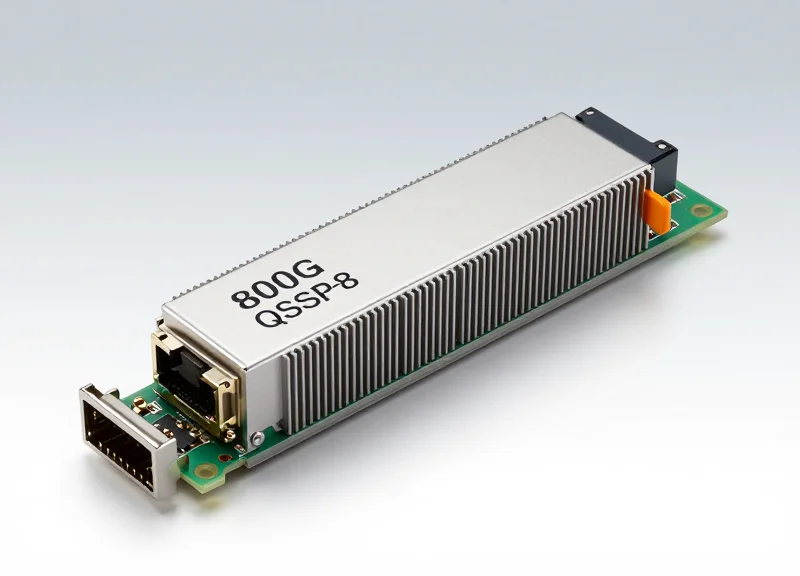
The physical footprint of these modules is evolving to handle the massive thermal load. While QSFP-DD was dominant in 400G, the 1.6T era is seeing a decisive shift toward OSFP (Octal Small Form-factor Pluggable). The OSFP-XD (Extra Density) variant is particularly notable, supporting 16 lanes of 100G or 8 lanes of 200G. These modules are designed with integrated heat sinks to manage the 30W+ of power required by the DSP (Digital Signal Processor) and optical components, a significant jump from the 12W seen in early 400G deployments.
- Why is 224G SerDes necessary for 1.6T?
It allows 1.6T to be delivered over 8 lanes, fitting into standard OSFP form factors and maintaining the same 32-port density on a standard switch chassis that was used for 800G. - How does 1.6T handle higher error rates?
Due to the signal degradation at 224G, 1.6T architecture employs more advanced Forward Error Correction (FEC) algorithms, often using a combination of inner and outer FEC to ensure data integrity. - Is 1.6T compatible with existing fiber infrastructure?
Yes, it is designed to work over standard single-mode fiber (SMF) for long-reach and multi-mode fiber (MMF) for short-reach, though it requires new transceivers and updated DSPs.
Latency Analysis: Crucial Gains for AI/ML Workloads
The Latency Advantage: Beyond Raw Throughput
The transition to 1.6T technology provides a fundamental shift in the latency profile of distributed AI training by addressing serialization delays and fabric congestion. In high-performance computing, raw bandwidth is only as effective as the network's ability to handle synchronized bursts of data. 1.6T modules, particularly those utilizing 224G SerDes, halve the serialization delay compared to 800G counterparts, ensuring that the massive parameter updates characteristic of Large Language Models (LLMs) move through the network with minimal overhead.
| Latency Metric | 400G (112G SerDes) | 800G (112G SerDes) | 1.6T (224G SerDes) |
|---|---|---|---|
| Serialization Delay (Minimum) | 1.28 ns | 0.64 ns | 0.32 ns |
| Switch Hop Latency (Avg) | 800ns - 1000ns | 600ns - 800ns | 450ns - 600ns |
| Fabric Topology Efficiency | Tier-3 Dominant | Tier-2/3 Hybrid | Tier-2 Optimized |
Optimizing Job Completion Time (JCT) via Fabric Flatness
AI training workloads are uniquely sensitive to 'tail latency,' where the entire cluster must wait for the slowest packet to arrive before proceeding to the next iteration of a training cycle. By doubling the radix of the switches, 1.6T allows for flatter network topologies. A cluster that previously required three tiers of switching to interconnect 10,000 GPUs at 400G can now be achieved in two tiers at 1.6T. This reduction in 'hops' removes cumulative buffering delays and lessens the probability of packet drops during intense 'All-Reduce' collective communication phases.
Addressing Micro-Bottlenecks and Incast Congestion
Micro-bottlenecks often occur during 'incast' events, where multiple worker nodes send data to a single parameter server or aggregator simultaneously. The increased pipe diameter of 1.6T ensures that buffers clear more rapidly. Furthermore, the higher lane speeds of 224G SerDes provide the necessary headroom to handle bursty AI traffic without triggering the flow control mechanisms that often throttle performance in legacy 400G or 800G environments.
- How does 1.6T improve synchronization in distributed training?
By reducing the time variance between the fastest and slowest packets (jitter), 1.6T ensures that GPU compute cycles are not wasted waiting for network synchronization. - Does 1.6T affect the efficiency of RDMA and RoCE?
Yes, the higher throughput and lower hop-count maximize the benefits of Remote Direct Memory Access (RDMA) over Converged Ethernet (RoCE) by providing a more deterministic path for memory-to-memory transfers. - What is the relationship between SerDes speed and latency?
Faster SerDes speeds like 224G allow bits to be clocked onto the wire faster, which directly reduces the physical layer latency for every packet transmitted.
Power Consumption: Solving the Watts per Gigabit Equation

The Efficiency Paradox: Scaling Bandwidth While Lowering Power Density
The transition to 1.6T optics represents a critical shift in the data center power equation: while the absolute wattage per module increases, the power consumed per gigabit of data transmitted actually decreases. By utilizing 3nm and 5nm Digital Signal Processors (DSPs) alongside 200G-per-lane SerDes technology, 1.6T modules achieve a superior efficiency profile that is essential for sustainable AI scaling. For hyperscale operators, solving the 'Watts per Gigabit' equation is no longer just a cost-saving measure; it is a thermal necessity to prevent hardware throttling in high-density rack environments.
Comparative Power Metrics: 400G vs. 800G vs. 1.6T
| Metric | 400G (QSFP-DD) | 800G (OSFP) | 1.6T (OSFP-XD/224G) |
|---|---|---|---|
| Avg. Module Power (W) | 12W | 16W - 18W | 22W - 28W |
| Watts per Gbps | 0.030 W/Gbps | 0.022 W/Gbps | 0.015 W/Gbps |
| Efficiency Gain (%) | Baseline | ~26% Improvement | ~50% Improvement over 400G |
| Process Node | 7nm DSP | 5nm DSP | 3nm DSP |
The Impact of DSP-Lite and LPO Alternatives
To further drive down power consumption, the industry is exploring alternatives to traditional retimed optics. Linear Drive Pluggable Optics (LPO) and Co-Packaged Optics (CPO) aim to remove or integrate the DSP, which typically accounts for 25-30% of a module's power draw. In the 1.6T era, LPO solutions are gaining traction for short-reach applications, potentially reducing module power to under 15W. However, this comes at the cost of stricter requirements on the host's SerDes signal integrity, creating a trade-off between system-level power savings and architectural complexity.
Power Management FAQ
- Does 1.6T require specialized cooling infrastructure?
Yes. While efficiency is higher, the thermal density of a 28W module in an OSFP-XD form factor requires advanced air cooling or liquid-to-chip cooling solutions to maintain reliability. - How does the 224G SerDes affect total system power?
The 224G SerDes reduces the number of lanes required to reach 1.6T, which simplifies PCB routing and reduces the total number of physical components, contributing to lower overall power overhead per port. - Is the power reduction linear as we move from 800G to 1.6T?
No, it is non-linear. The efficiency gains are primarily driven by the shrink in semiconductor nodes (e.g., from 5nm to 3nm). As we approach physical limits, each subsequent leap in bandwidth requires more sophisticated signal processing, making the W/Gbps metric harder to improve without radical architectural changes.
Total Cost of Ownership (TCO): The 5-Year Financial Outlook
Total Cost of Ownership (TCO): The 5-Year Financial Outlook
Transitioning to 1.6T technology represents a strategic financial pivot where higher initial capital expenditure (CAPEX) is systematically offset by radical reductions in long-term operational costs (OPEX) and infrastructure complexity. Over a five-year horizon, the 1.6T ecosystem delivers superior cost-per-gigabit metrics by collapsing network tiers, minimizing the physical footprint in the data center, and drastically improving the power-to-bandwidth ratio compared to multi-module 400G or 800G deployments.
CAPEX vs. OPEX: The Tipping Point
While 1.6T optical modules and high-radix switches currently carry a price premium, the reduction in total hardware count is the primary driver for long-term savings. A single 1.6T port effectively replaces four 400G ports or two 800G ports, which significantly reduces the number of switch chassis, power supplies, and fans required to sustain identical aggregate throughput. This consolidation simplifies the procurement lifecycle and reduces the recurring maintenance and licensing costs associated with high-density port counts.
| Financial Metric | 4x 400G Setup | 2x 800G Setup | 1x 1.6T Setup |
|---|---|---|---|
| Relative Initial CAPEX | 100% | 115% | 145% |
| 5-Year Power Consumption Cost | 100% | 85% | 65% |
| Cabling & Rack Space Cost | 100% | 50% | 25% |
| Estimated 5-Year TCO | High | Moderate | Lowest (Projected) |
Infrastructure Consolidation and Scaling Efficiency
The adoption of 1.6T allows for 'density-driven' savings that are often overlooked in short-term analysis. By utilizing 224G SerDes lanes, network architects can achieve higher port densities within the same 1RU or 2RU form factor, doubling the capacity of a standard rack. This density reduces the complexity of structured cabling—decreasing the total volume of fiber interconnects and transceiver endpoints. Furthermore, the reduction in physical 'cable sprawl' improves airflow management within the rack, leading to secondary savings in cooling energy and HVAC maintenance.
- When does 1.6T reach price-per-bit parity with 800G?
Market analysis suggests price-per-bit parity is typically reached within 18 to 24 months of volume production. However, when factoring in power and cooling savings, the 'economic crossover' often occurs much sooner for high-utilization AI/ML clusters. - How does 1.6T impact existing fiber plant investment?
1.6T leverages existing OS2 and OM4 fiber standards, preserving existing passive infrastructure. However, the higher baud rates require more stringent link budget management and high-quality connectors to prevent signal degradation, which may necessitate minor upgrades to patch panels. - What are the hidden costs of delaying the 1.6T upgrade?
Delaying the transition often results in 'technical debt,' where organizations continue to invest in older, power-hungry 400G/800G modules that occupy more rack space and increase the eventual cost of migration through increased cabling complexity and energy overhead.
Thermal Management and Cooling Challenges

Overcoming the Thermal Threshold of 1.6T Systems
The transition to 1.6T networking architectures represents a thermal inflection point where traditional air-cooling methods reach their physical limits. While 1.6T modules offer superior efficiency on a per-gigabit basis, the absolute heat dissipation per port—ranging from 25W to 30W—necessitates a radical redesign of switch chassis airflow and data center facility cooling strategies. Effectively managing this heat is not merely an operational preference but a requirement for maintaining signal integrity and hardware longevity in high-density AI and cloud environments.
Comparative Power and Cooling Profiles
| Metric | 400G (QSFP-DD) | 800G (OSFP) | 1.6T (OSFP-1600) |
|---|---|---|---|
| Typical Module Power | 10W - 12W | 15W - 18W | 25W - 30W |
| Max Chassis Heat (1U/32-Port) | ~400W (Optics only) | ~600W (Optics only) | ~960W (Optics only) |
| Cooling Method | Standard Air | Enhanced Air/Optimized Airflow | Liquid Cooling / DLC Recommended |
| Thermal Interface Material | Standard Pads | High-K Gels | Phase-Change / Graphene |
Facility Impact and Cooling Evolution
Implementing 1.6T hardware forces a re-evaluation of rack-level density. Traditional data centers designed for 10-15kW per rack are insufficient for 1.6T deployments, where a single 102.4T switch can exceed 2.5kW of total power consumption. This shift is accelerating the adoption of Direct-to-Chip (D2C) liquid cooling and Rear Door Heat Exchangers (RDHx). These technologies allow operators to maintain higher inlet temperatures, reducing the dependence on energy-intensive chillers and improving overall Power Usage Effectiveness (PUE).
Thermal Management FAQ
- Can 1.6T modules be cooled with traditional air flow?
While possible in specialized chassis with high-static pressure fans, the acoustic levels and energy cost often make air cooling impractical compared to liquid-assisted solutions. - How does heat affect 1.6T signal integrity?
Excessive heat increases the laser's relative intensity noise (RIN) and shifts the wavelength, leading to higher Bit Error Rates (BER) and reduced transmission distances. - What is the role of the OSFP-XD form factor in cooling?
The OSFP-XD (Extra Density) design includes integrated heatsink fins and optimized airflow paths specifically designed to handle the 30W+ thermal load of 1.6T components.
The Role of Silicon Photonics in 1.6T Evolution
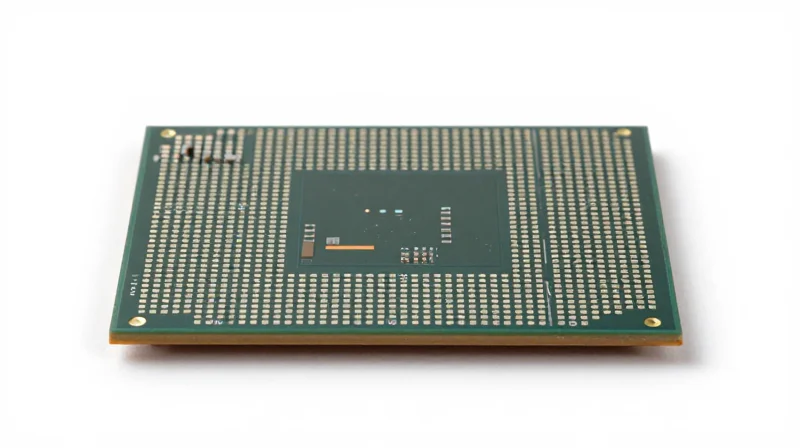
The Necessity of Silicon Photonics in 1.6T Networks
The transition to 1.6T networking represents a paradigm shift where traditional discrete optical assembly—reliant on separate lasers, modulators, and detectors—reaches its physical and economic ceiling. Silicon Photonics (SiPh) addresses these bottlenecks by integrating active and passive optical components onto a single silicon substrate using standard CMOS fabrication processes. This integration is essential for supporting 224G SerDes lanes, as it significantly reduces signal loss and parasitic capacitance that would otherwise plague discrete designs at these extreme frequencies.
Efficiency Comparison: Discrete vs. Silicon Photonics
| Metric | Discrete Optical Components | Silicon Photonics (SiPh) |
|---|---|---|
| Component Density | Low; limited by physical footprint | High; monolithic integration |
| Signal Loss at 200G+ IP | High due to wire bonding | Low due to on-chip waveguides |
| Manufacturing Style | Labor-intensive assembly | Automated wafer-scale production |
| Power Consumption | Higher (complex drive electronics) | Lower (optimized modulator driving) |
Overcoming the Copper and Thermal Wall
At 1.6T, the industry faces a dual challenge: the rapid attenuation of electrical signals over copper traces and the heat generated by the digital signal processors (DSPs). Silicon photonics enables the move toward Co-Packaged Optics (CPO) and Linear Drive Pluggable Optics (LPO). By utilizing Photonic Integrated Circuits (PICs), 1.6T modules can maintain the necessary signal-to-noise ratio while minimizing the thermal envelope. This allows data centers to maintain existing cooling infrastructures while doubling their throughput capacity, effectively extending the lifespan of current facility designs.
Common Inquiries on SiPh Implementation
- How does Silicon Photonics reduce 1.6T cost?
SiPh shifts the production model from boutique assembly to semiconductor-style mass production, enabling high-yield wafer-level testing and reducing the bill of materials for high-density transceivers. - Is SiPh compatible with existing fiber infrastructure?
Yes, SiPh-based 1.6T modules are designed to interface with standard single-mode fiber (SMF), ensuring that the backbone cabling does not need to be replaced. - What is the role of SiPh in LPO at 1.6T?
In Linear Drive Pluggable Optics, SiPh provides the high-linearity modulators required to transmit data without a power-hungry DSP, significantly lowering the total power per bit.
Interoperability and Backward Compatibility
Bridging the Generational Gap: 1.6T Interoperability
Successful 1.6T adoption hinges on the ability of new hardware to seamlessly interact with established 400G and 800G nodes, ensuring that 'rip-and-replace' cycles are minimized. The primary mechanism for this interoperability is the evolution of SerDes (Serializer/Deserializer) technology and the standardization of physical form factors like OSFP and QSFP-DD1600. While 1.6T utilizes 224G-per-lane electrical signaling, its value is maximized through its ability to scale down to 112G lanes, allowing for high-density breakout configurations that protect existing investments in legacy leaf-and-spine architectures.
Physical and Electrical Compatibility Matrices
The transition to 1.6T introduces the 224G SerDes, which represents a significant jump from the 112G SerDes used in 800G systems. To maintain backward compatibility, 1.6T switches must support multi-rate ports capable of 'gearboxing' or slowing down to accommodate legacy speeds. This is often achieved through advanced PHY (Physical Layer) chips that can handle various modulation schemes and lane rates.
| Feature | 1.6T (Next-Gen) | 800G (Legacy) | 400G (Legacy) |
|---|---|---|---|
| Lane Rate | 212.5 Gbps (224G SerDes) | 106.25 Gbps (112G SerDes) | 53.125 Gbps (56G SerDes) |
| Form Factors | OSFP1600, QSFP-DD1600 | OSFP, QSFP-DD800 | QSFP-DD, OSFP |
| Common Breakout | 2x800G, 4x400G, 16x100G | 2x400G, 8x100G | 4x100G, 8x50G |
| Connector Type | MPO-16, Dual LC | MPO-12/16, Dual LC | MPO-12, Dual LC |
The Role of Breakout Cables in Brownfield Integration
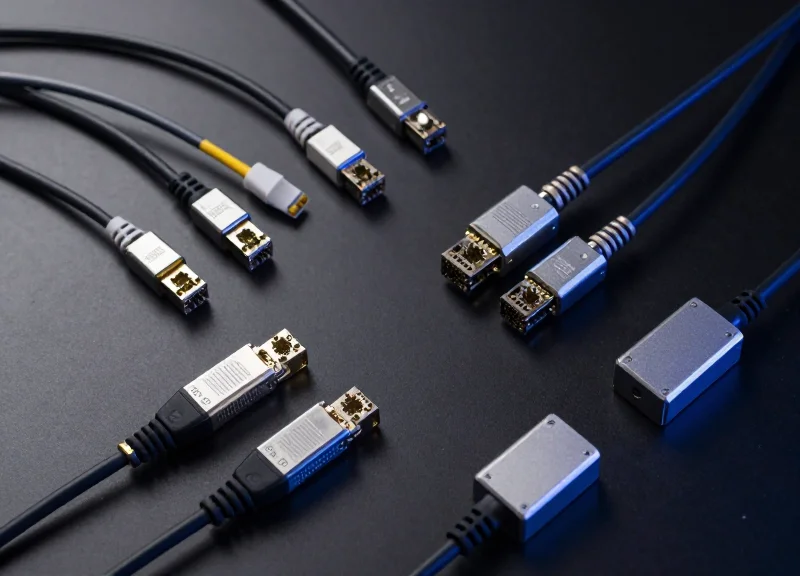
Breakout configurations are the 'glue' of the 1.6T era. By utilizing a single 1.6T port to drive four 400G links or two 800G links, operators can increase port density at the core while maintaining the current generation of Top-of-Rack (ToR) switches. This approach reduces cabling volume and allows for a phased upgrade path where the backbone is upgraded to 1.6T first, followed by incremental edge upgrades as bandwidth demands grow.
Integration and Standards FAQ
- Can 1.6T transceivers plug into 800G slots?
No, generally 1.6T modules like the OSFP1600 require a updated cage and thermal management system, though they are designed to be mechanically similar to facilitate backward-compatible designs in future switch generations. - Is 224G SerDes backward compatible with 112G signaling?
Yes, IEEE 802.3dj standards emphasize that 224G SerDes implementations should support sub-rates, enabling them to communicate with 112G-based 800G optics through proper clocking and modulation adjustments. - What is the biggest hurdle for 1.6T interoperability?
Signal integrity at 224G is the primary challenge. The tight tolerances required for 1.6T mean that legacy patch panels and older fiber runs must be validated for higher insertion loss sensitivity.
Strategic Timing: When to Invest in 1.6T Technology
Strategic Timing: When to Invest in 1.6T Technology
The optimal window for 1.6T investment is currently open for hyperscale operators managing large-scale AI training clusters, but for the broader enterprise market, the 'sweet spot' for adoption will likely occur between late 2025 and 2027. Decision-makers must evaluate their investment based on the exhaustion of current 800G port density and the readiness of 102.4T switching fabrics. While 1.6T offers a lower price-per-bit over the long term, early entry carries the 'pioneer tax' of lower initial yields and a developing supply chain for advanced optical components like LPO (Linear Drive Pluggable Optics) and CPO (Co-Packaged Optics).
Adoption Roadmap by Organization Type
| Organization Tier | Target Window | Primary Driver | Recommended Strategy |
|---|---|---|---|
| Hyperscale / Cloud | 2026 - 2025 | AI/ML Cluster Scale | Aggressive Early Adoption |
| Tier-2 Service Providers | 2025 - 2026 | Network Backbone Congestion | Fast-Follower Methodology |
| Large Enterprise | 2026 - 2027 | Private Cloud Modernization | Wait for Price-Per-Bit Parity |
| SMEs | 2028+ | General Commodity Refresh | Observe Market Standardization |
Technical Milestones for Investment
Before committing capital to a 1.6T migration, infrastructure architects should verify that their facility can handle the specific thermal and power requirements of the OSFP1600 or OSFP-XD form factors. Unlike previous generations, 1.6T deployment is not just a transceiver swap; it often necessitates a fundamental rethink of rack cooling and power distribution.
- Silicon Availability
Investment should coincide with the commercial availability of 102.4T switching silicon (e.g., Broadcom Tomahawk 6 class) to ensure full bandwidth utilization. - 224G SerDes Maturity
Ensure that the physical layer reaches a Bit Error Rate (BER) stability that allows for reliable transmission over passive copper cables for top-of-rack deployments. - MSA Standardization
Wait for finalized Multi-Source Agreement standards for OSFP-XD to avoid lock-in with proprietary early-market designs.
Frequently Asked Questions
- Is 800G a safer bet than 1.6T for the next three years?
For most enterprises, yes. 800G is currently at a mature point in its cost-reduction curve and provides sufficient headroom for non-AI intensive workloads. - Will 1.6T require immediate Liquid Cooling?
Not necessarily, but it is the tipping point. While 1.6T can be air-cooled with advanced heatsinks, the power density often makes liquid cooling more operationally efficient. - Does 1.6T offer backward compatibility?
Most 1.6T ports are designed to be backward compatible with 800G and 400G via breakout cables, though this depends on the specific switch silicon and port mapping.
The evolution to 1.6T is not just a speed upgrade; it is a fundamental shift in data center efficiency and scalability. To stay competitive in the AI era, organizations must weigh these performance gains against current standards. Contact our infrastructure experts today to schedule a custom TCO assessment for your next-gen upgrade.