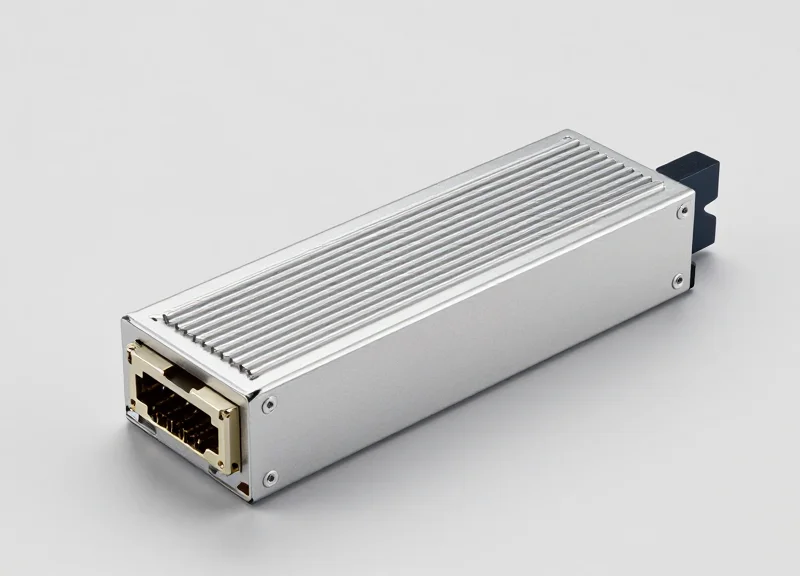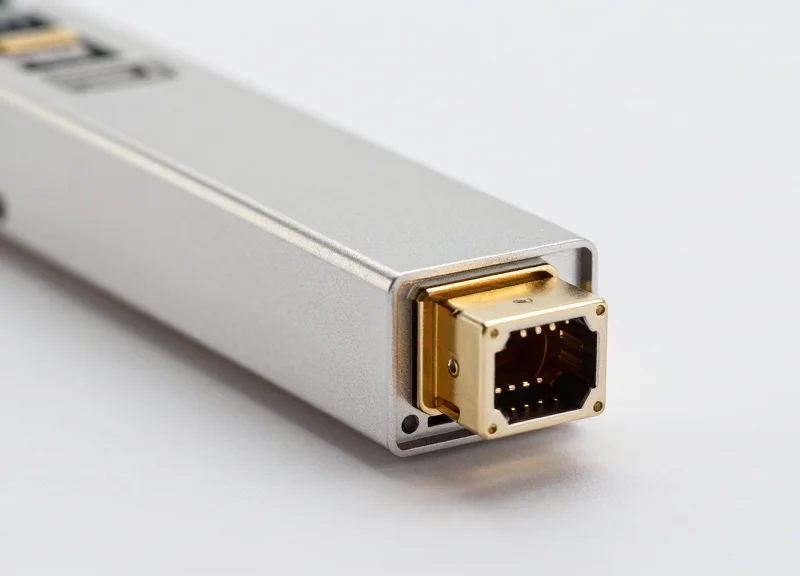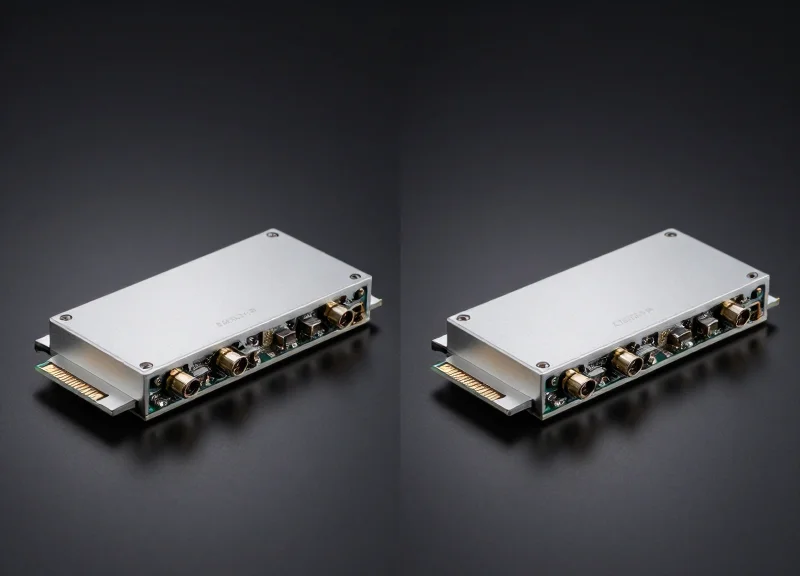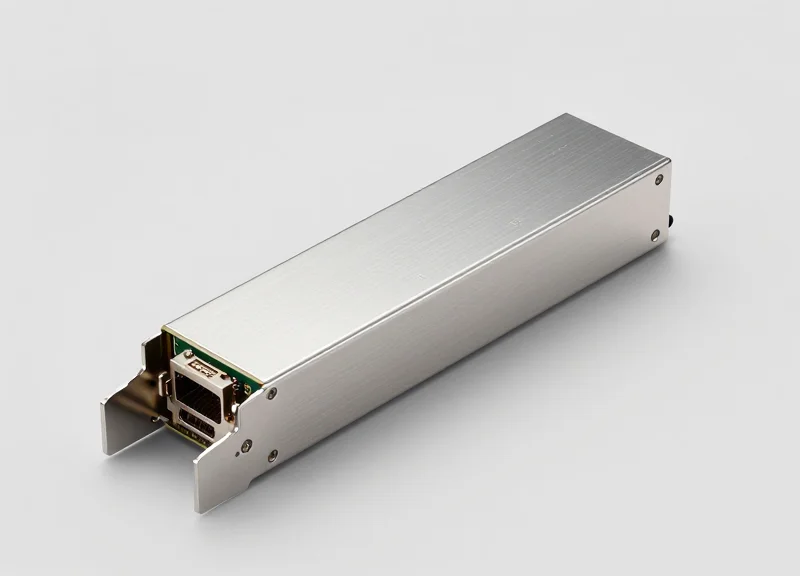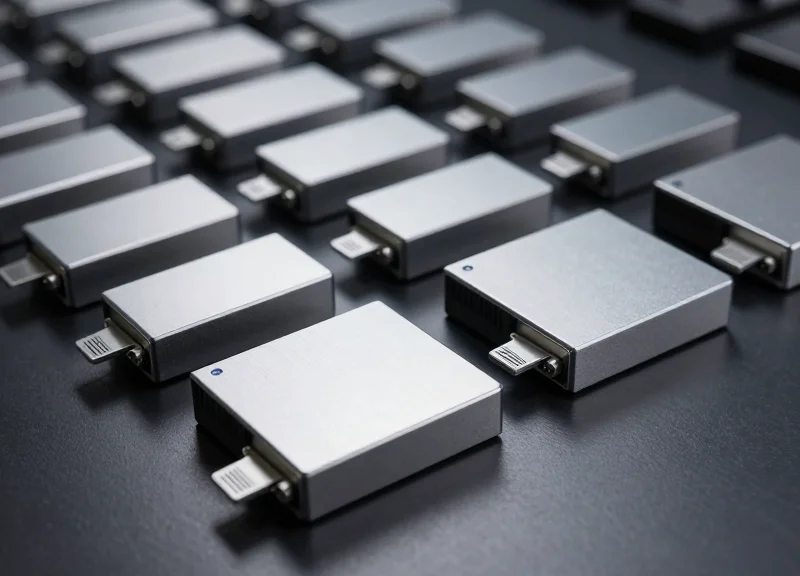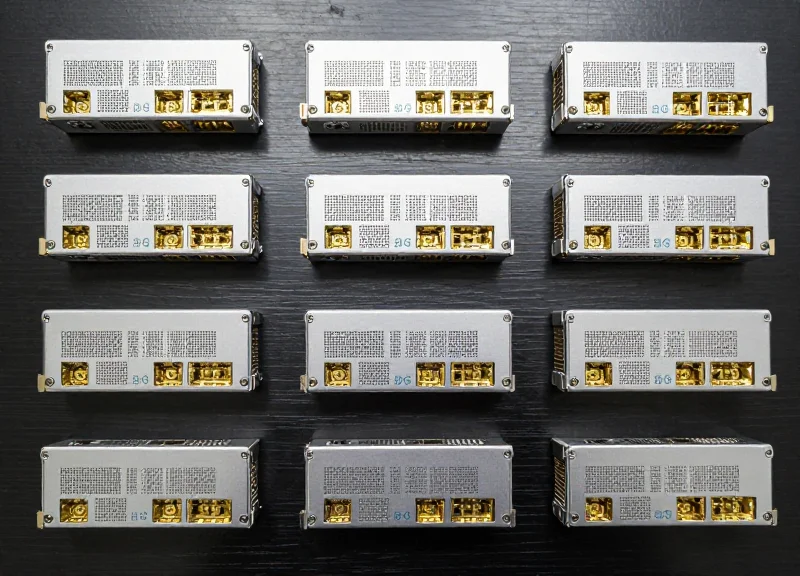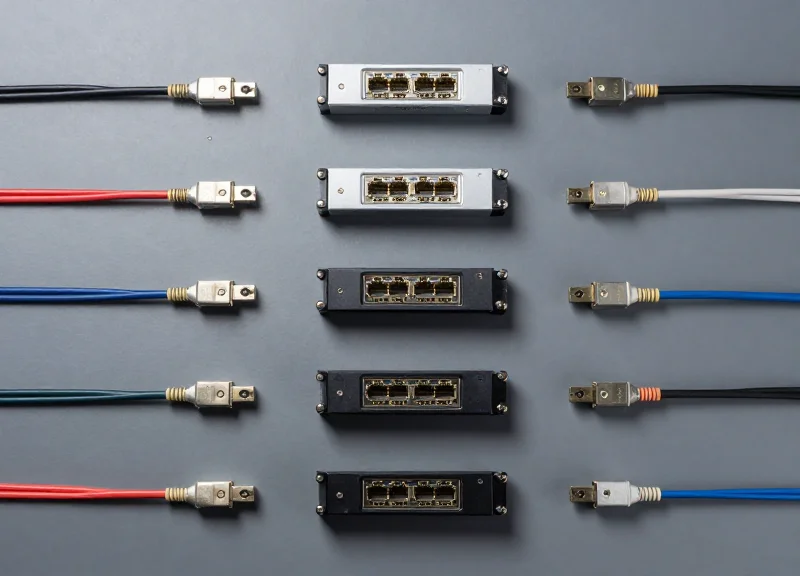
As AI workloads and data volumes explode, the physical interconnect becomes the critical bottleneck of the modern data center. NVIDIA LinkX (formerly Mellanox Link Solutions) provides the essential plumbing for high-performance computing, ensuring that data moves between GPUs and switches with the highest possible integrity and the lowest latency. In this guide, we break down the technical specifications and strategic applications of these industry-leading interconnects.
Understanding the NVIDIA LinkX Portfolio
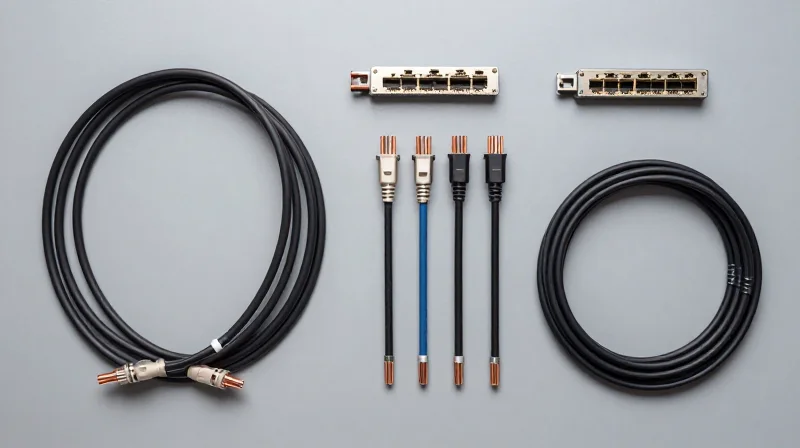
NVIDIA LinkX, formerly Mellanox LinkX, represents a comprehensive portfolio of high-speed interconnect products designed to link servers and storage to the network fabric. Unlike generic third-party optics, LinkX components are co-engineered alongside NVIDIA Spectrum Ethernet and Quantum InfiniBand platforms to ensure 'plug-and-play' compatibility, extreme reliability, and the lowest possible bit-error rates (BER) across diverse data center topologies. It serves as the physical foundation for the NVIDIA end-to-end networking vision, ensuring that the hardware interface never becomes the bottleneck for high-performance computing (HPC) or AI workloads.
The Strategic Role of LinkX in the Networking Stack
In the era of Generative AI and hyperscale cloud computing, the interconnect is no longer a passive component but a critical performance lever. LinkX solutions are rigorously tested to meet the exact signal integrity requirements of NVIDIA's ConnectX SmartNICs and BlueField DPUs. This vertical integration allows for features such as automated power management, detailed diagnostic monitoring through NVIDIA NetQ, and optimized latency profiles that are difficult to achieve with mixed-vendor environments.
Primary Interconnect Technologies
| Interconnect Type | Primary Media | Distance Profile | Key Advantage |
|---|---|---|---|
| Direct Attach Copper (DAC) | Twinax Copper | 0.5m to 5m | Lowest cost and zero power consumption. |
| Active Optical Cables (AOC) | Multimode Fiber | 3m to 100m | Thinner, lighter, and easier to route than DACs. |
| Optical Transceivers | Single-mode/Multimode | Up to 10km+ | Maximum flexibility for long-reach facility links. |
Dual-Protocol Optimization: Ethernet and InfiniBand
The LinkX portfolio is uniquely bifurcated to support the world's two most dominant high-speed networking protocols. For Ethernet environments, LinkX provides standards-compliant solutions that enhance the efficiency of traditional cloud and enterprise data centers. For InfiniBand environments—the gold standard for AI—LinkX offers specialized components designed for the Quantum-2 and NDR (Next Data Rate) architectures, supporting speeds up to 800Gb/s per port with specialized form factors like OSFP and QSFP-DD.
- Why choose LinkX over generic third-party optics?
LinkX components are specifically tuned for NVIDIA firmware, ensuring that features like Forward Error Correction (FEC) and Link Training are perfectly synchronized to reduce latency and packet loss. - Does LinkX support 800G networking?
Yes, NVIDIA LinkX includes a full range of 800Gb/s solutions for both NDR InfiniBand and high-speed Ethernet, utilizing advanced silicon photonics and 112G PAM4 signaling. - How does LinkX impact data center sustainability?
By optimizing signal integrity, LinkX reduces the need for aggressive error correction cycles, which in turn lowers the overall power consumption of the network interface.
Direct Attach Copper (DAC): The Low-Latency Standard
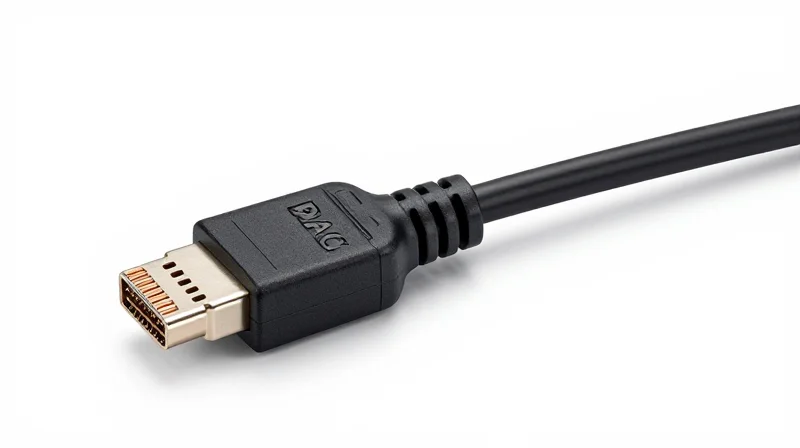
Direct Attach Copper (DAC) cables represent the most efficient interconnect method within the NVIDIA LinkX portfolio for short-reach applications, typically within a single rack or between adjacent racks. By utilizing twinaxial copper wires to transmit electrical signals directly without the need for electrical-to-optical conversion, DACs achieve near-zero latency and eliminate the power consumption associated with optical transceivers. This makes them the gold standard for Top-of-Rack (ToR) switching in high-performance computing (HPC) and AI fabrics where every microsecond and watt counts.
Passive vs. Active Copper Solutions
NVIDIA segments its copper solutions into Passive DACs and Active Copper Cables (ACC). While both utilize copper media, they differ in how they handle signal integrity, particularly as bandwidth scales toward 400G and 800G. Passive DACs contain no active electronics and rely entirely on the host port's SerDes to manage signal loss. Active Copper Cables, however, include linear equalizers to boost the signal, enabling thinner cable gauges and ensuring reliability at the extreme frequencies required for InfiniBand NDR and Ethernet 800GbE.
| Feature | Passive DAC | Active Copper Cable (ACC) |
|---|---|---|
| Power Consumption | ~0 Watts | < 1.5 Watts |
| Typical Reach | 0.5m - 3m | 3m - 5m |
| Signal Processing | None | Linear Equalization |
| Latency | Ultra-Low (Nanoseconds) | Low (Nanoseconds) |
| Best Use Case | Intra-rack ToR | Inter-rack/Adjacent Rack |
Thermal Efficiency and Operational Excellence
The thermal profile of NVIDIA DACs is a critical advantage for dense AI clusters. Because passive DACs do not generate heat, they allow switch and HCA (Host Channel Adapter) ASICs to operate at lower temperatures, which improves the longevity of the hardware and reduces the energy required for rack-level cooling. From a cost perspective, DACs provide the lowest Total Cost of Ownership (TCO) because they replace two expensive optical transceivers and a fiber patch cord with a single, durable cable assembly.
Technical Considerations for DAC Deployment
- Why is the reach limited to 3-5 meters?
As data rates increase (e.g., from 100G to 400G), the physical properties of copper cause higher signal attenuation at high frequencies, limiting the effective distance before the signal becomes unreadable without optical conversion. - Are NVIDIA DACs compatible with third-party switches?
While NVIDIA LinkX DACs follow industry-standard MSA specifications, they are specifically tuned and tested for 100% compatibility and optimized Bit Error Rates (BER) when used within the NVIDIA end-to-end ecosystem. - What is the difference between DAC and AOC?
DAC uses copper wiring and electrical signaling, whereas AOC (Active Optical Cable) uses fiber optics and electrical-to-optical conversion, allowing for much longer distances at the cost of higher power and latency.
Active Optical Cables (AOC): Performance for Mid-Range Reach
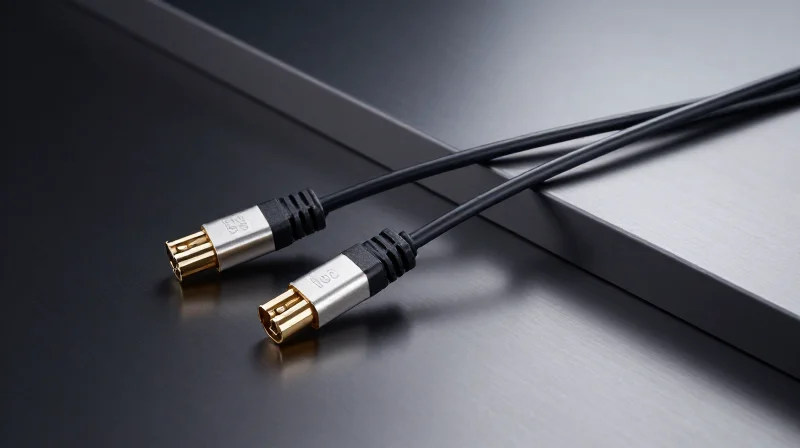
Active Optical Cables (AOC): Performance for Mid-Range Reach
Active Optical Cables (AOC) serve as the essential middle-tier interconnect in the NVIDIA LinkX portfolio, designed to extend network reach beyond the 3-to-5-meter limit of passive copper cables while avoiding the complexity of discrete optical transceivers. By permanently attaching optical transceivers to multi-mode fiber, AOCs provide a 'plug-and-play' solution that ensures high signal integrity and low bit error rates (BER) across distances up to 100 meters. This makes them the primary choice for linking switches across rows or connecting high-density GPU clusters where cable bulk and signal degradation would render copper solutions impractical.
The Engineering Behind AOC Airflow and Density
One of the most significant advantages of NVIDIA/Mellanox AOCs in high-performance computing (HPC) environments is their physical profile. As data rates climb to 400G (NDR) and 800G (XDR), traditional copper cables become increasingly thick and rigid to combat signal loss, which can severely obstruct airflow at the back of the server rack. AOCs utilize thin, flexible multi-mode fiber-optic strands, which dramatically reduce the cable diameter. This improved 'bend radius' simplifies cable management and ensures that cooling fans can efficiently exhaust heat from power-hungry components like NVIDIA H100 or B200 GPUs.
| Feature | Direct Attach Copper (DAC) | Active Optical Cable (AOC) |
|---|---|---|
| Max Reach | 3 - 5 Meters | Up to 100 Meters |
| Cable Weight | Heavy / Bulky | Lightweight / Thin |
| Power Consumption | Near Zero | ~1W to 4.5W per end (speed dependent) |
| Airflow Impact | Significant obstruction | Minimal obstruction |
| Primary Use Case | Intra-rack (ToR) | Inter-rack / End-of-Row |
InfiniBand and Ethernet Compatibility
NVIDIA LinkX AOCs are engineered specifically for the low-latency requirements of InfiniBand and high-speed Ethernet fabrics. Because the conversion from electrical to optical signals happens within the cable headshell, these components are factory-tuned to match the specific firmware of NVIDIA ConnectX adapters and Quantum switches. This vertical integration minimizes the 'tuning' time required during deployment and ensures that features like Remote Direct Memory Access (RDMA) function with the highest possible reliability.
- Are AOCs hot-swappable in NVIDIA switches?
Yes, NVIDIA LinkX AOCs are fully hot-swappable, allowing for maintenance and upgrades without powering down the network equipment. - Do AOCs require fiber cleaning?
No. Because the fiber is permanently attached to the transceiver head, the optical interface is sealed, eliminating the need for specialized fiber cleaning tools required by discrete transceivers. - Why choose AOC over discrete transceivers and fiber patch cords?
AOCs are generally more cost-effective for links under 100m because they use fewer components and undergo simplified testing compared to discrete optical modules.
By leveraging NVIDIA's stringent 'System-Level Testing' protocols, LinkX AOCs achieve a Bit Error Rate (BER) that is often several orders of magnitude better than industry standards (typically 1e-15 compared to the standard 1e-12). This precision is vital for large-scale AI training clusters where a single dropped packet can stall a massive synchronized computation.
Optical Transceivers: Scaling to 400G and 800G
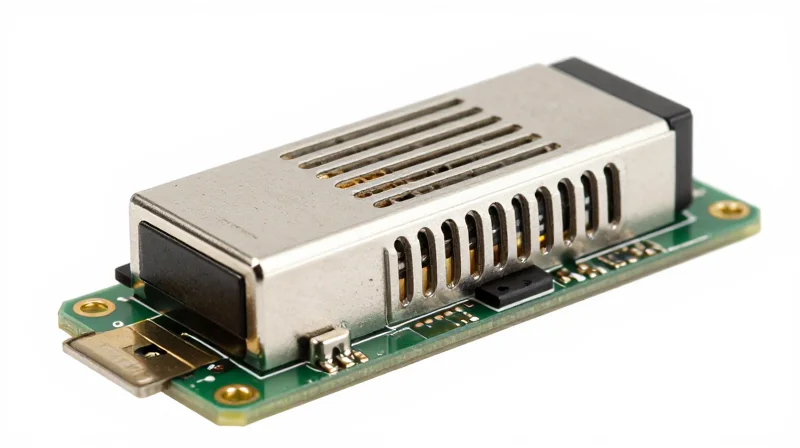
NVIDIA LinkX optical transceivers serve as the high-speed interface for modern AI and cloud infrastructures, converting electrical signals into optical pulses to overcome the physical distance limitations of copper. By leveraging 50G and 112G PAM4 (Pulse Amplitude Modulation 4-level) signaling, these transceivers facilitate the massive throughput required for 400Gb/s and 800Gb/s networks, ensuring that data-intensive applications running on NVIDIA Quantum and Spectrum switches maintain peak performance without bottlenecks.
Optical Standards: Navigating SR, DR, FR, and LR
Selecting the appropriate optical transceiver depends largely on the physical layout of the data center. NVIDIA provides a comprehensive suite of optics designed for both Multi-mode Fiber (MMF) and Single-mode Fiber (SMF) infrastructures. These standards are optimized for specific reach and cost profiles, ranging from short-reach connections within a single rack to long-haul links connecting different areas of a campus.
| Standard | Fiber Type | Typical Reach | Modulation | Primary Use Case |
|---|---|---|---|---|
| SR (Short Reach) | Multi-mode (MMF) | 50m - 100m | PAM4 | Top-of-Rack to Leaf/Spine |
| DR (Datacenter Reach) | Single-mode (SMF) | 500m | PAM4 | Spine to Super-Spine |
| FR (Fiber Reach) | Single-mode (SMF) | 2km | PAM4 | Large Fabric Interconnects |
| LR (Long Reach) | Single-mode (SMF) | 10km | PAM4 | Campus-wide Networking |
Scaling to 800G with OSFP and Silicon Photonics
The migration to 800G requires more than just increased signaling speed; it demands advancements in thermal management and component integration. NVIDIA has led the adoption of the OSFP (Octal Small Form-factor Pluggable) module for 800G due to its superior heat dissipation capabilities compared to the QSFP-DD. By using 112G SerDes technology, an 8-lane 800G transceiver can deliver double the density of previous generations. Furthermore, NVIDIA's investment in Silicon Photonics allows for the integration of multiple optical functions onto a single silicon chip, reducing complexity and enhancing reliability for high-radix switch environments.
Technical Considerations for 400G/800G Deployment
- How does PAM4 modulation enable 800G speeds?
PAM4 transmits two bits per symbol compared to the single bit in traditional NRZ, effectively doubling the data rate within the same bandwidth, which is essential for achieving 100G and 112G per-lane speeds. - Why is the OSFP form factor preferred for 800G LinkX solutions?
The OSFP design includes integrated cooling fins, which are necessary to manage the 15-25 watts of power consumed by 800G transceivers, ensuring they remain within safe operating temperatures. - What role do breakout cables play in 400G and 800G optics?
NVIDIA transceivers often support breakout modes, such as splitting a single 800G OSFP port into two 400G QSFP ports, allowing for high-density downlinks to multiple servers from a single switch port.
The InfiniBand Advantage in AI Networking

The InfiniBand Advantage in AI Networking
NVIDIA Link Solutions serve as the critical physical foundation for InfiniBand architecture, providing the signal integrity and low-latency characteristics necessary to sustain high-throughput, lossless GPU communication in large-scale AI clusters. Unlike standard networking cables, these components are specifically tuned to handle the deterministic traffic patterns of high-performance computing (HPC) and deep learning workloads.
Unlocking Hardware-Level Efficiency
InfiniBand is a software-defined, hardware-managed network. To maintain the 'lossless' nature of the fabric, every link must meet stringent signal-to-noise ratios. NVIDIA LinkX cables and transceivers are designed to support several key InfiniBand features that distinguish them from traditional Ethernet solutions.
- RDMA (Remote Direct Memory Access)
Enables direct data movement between GPU memories without involving the CPU, significantly reducing latency and jitter. - Adaptive Routing
The interconnects support the high-frequency signal switching required for the network to dynamically route traffic around congestion in real-time. - In-Network Computing (SHARP)
NVIDIA Link Solutions facilitate the massive bandwidth needed for data reduction tasks to be offloaded from GPUs directly to the network switches.
Technical Comparison: InfiniBand vs. Ethernet Interconnects
| Feature | InfiniBand Link Solutions | Standard Ethernet Interconnects |
|---|---|---|
| Latency Profile | Deterministic, Sub-microsecond | Variable, Higher Latency |
| Flow Control | Credit-based (Hardware Lossless) | Packet-drop based (Best Effort) |
| CPU Overhead | Zero (Offloaded via RDMA) | High (Interrupt-driven) |
| Routing Efficiency | Adaptive Routing (Dynamic) | Static or Hash-based (ECMP) |
InfiniBand Link Solution FAQ
- Why is Bit Error Rate (BER) more critical in InfiniBand?
Because InfiniBand is a lossless fabric, any bit error causes link-level re-transmissions that create 'bubbles' in data flow, significantly degrading collective communication performance. - Can generic cables achieve the same results as NVIDIA Link Solutions?
While physically compatible, generic cables often lack the specific firmware tuning (LinkX) required to optimize signal-to-noise ratios at 400G and 800G speeds, leading to higher latency. - How do these links support Adaptive Routing?
High-quality link solutions ensure that the physical layer can handle the rapid state changes and telemetry data required for the fabric to make routing decisions in nanoseconds.
Technical Specs: BER, Latency, and Power Consumption
The performance of a modern AI fabric is fundamentally limited by its weakest physical connection; NVIDIA LinkX components are engineered to exceed standard IEEE specifications, ensuring that high-speed InfiniBand and Ethernet networks operate at peak efficiency with minimal retransmissions and maximum data throughput.
Bit Error Rate (BER) and Signal Integrity
While standard industry specifications for high-speed optics often target a Bit Error Rate (BER) of 10^-12, NVIDIA LinkX optics and cables are designed and tested to much more stringent internal standards, typically reaching 10^-15. This three-order-of-magnitude improvement is critical because it reduces the frequency of packet loss and the subsequent need for Forward Error Correction (FEC) interventions. In high-bandwidth AI clusters, lower BER ensures that the 'Goodput'—the actual useful data transferred—remains as close to the theoretical line rate as possible.
| Technical Metric | NVIDIA LinkX Standard | Generic 3rd Party | AI Cluster Impact |
|---|---|---|---|
| Bit Error Rate (BER) | 10^-15 (Pre-FEC) | 10^-12 (Pre-FEC) | Reduced retransmissions and jitter |
| Latency (DAC/AOC) | Ultra-low (Near zero) | Variable (Signal Noise) | Faster MPI and RDMA synchronization |
| Power (400G Transceiver) | ~7.5 Watts | ~9.0 - 10.0 Watts | Lower thermal load per rack |
| Signal Reach | Optimized for NVIDIA Switches | Generic Tuning | Maximum cable length without loss |
Power Efficiency and Thermal Management
In a data center deploying thousands of 400G or 800G links, a difference of even 1.5 watts per transceiver can translate into several kilowatts of additional power consumption and heat generation per rack. NVIDIA LinkX solutions utilize advanced Silicon Photonics and highly integrated, low-power Digital Signal Processors (DSPs). By optimizing the internal ICs specifically for NVIDIA Mellanox Spectrum and Quantum switch silicon, these components maintain superior signal integrity while operating at a lower thermal envelope, which is essential for maintaining the stability of high-density GPU nodes.
The Latency Penalty of Retiming
Latency in LinkX solutions is minimized through the use of high-quality copper in DACs and efficient E/O (Electrical-to-Optical) conversion in transceivers. Generic cables often suffer from higher signal attenuation, requiring more aggressive equalization and retiming. This extra processing adds nanoseconds to every hop, which compounds across a multi-tier fat-tree topology, ultimately slowing down the 'All-Reduce' operations common in distributed AI training.
- Why is a 10^-15 BER important for InfiniBand?
InfiniBand is a lossless, credit-based fabric. Any physical layer error that requires a retry can stall the entire flow, leading to congestion. A lower BER ensures the fabric remains fluid and predictable. - How does NVIDIA achieve lower power consumption in transceivers?
By utilizing vertically integrated design, NVIDIA optimizes the firmware and the DSP settings specifically for the host ASIC, avoiding the 'one-size-fits-all' power overhead of generic modules. - Does LinkX improve system-level reliability?
Yes, by reducing the thermal stress on the switch ports through lower power draw, LinkX components extend the Mean Time Between Failures (MTBF) for the entire networking stack.
Compatibility and Interoperability with NVIDIA Spectrum and ConnectX
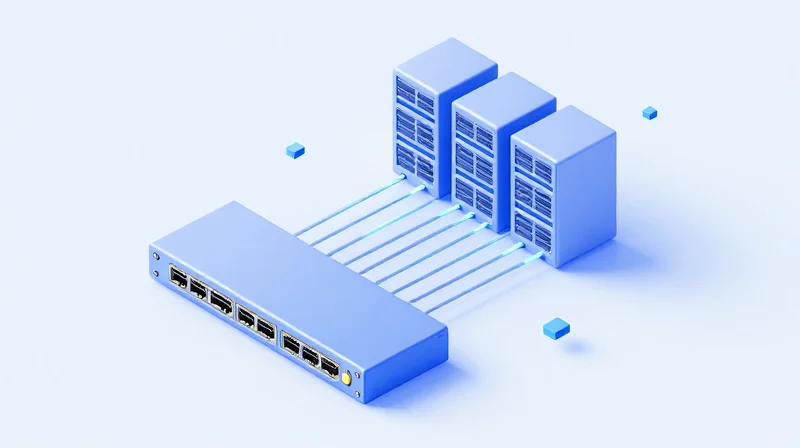
The Synergy of End-to-End Co-Engineering
NVIDIA LinkX solutions are uniquely co-designed with the internal SerDes (Serializer/Deserializer) specifications of NVIDIA Spectrum switches and ConnectX SmartNICs, ensuring that the physical layer precisely matches the silicon requirements for signal integrity and power efficiency. Unlike generic third-party optics that must adhere to broad, least-common-denominator standards, LinkX components are tuned to the specific voltage, thermal, and frequency profiles of NVIDIA’s networking silicon. This vertical integration eliminates the 'interoperability gap' that often plagues high-speed data center deployments, providing a 'plug-and-play' experience that guarantees rated throughput and the lowest possible Bit Error Rate (BER).
Integration with NVIDIA Spectrum Switches
Spectrum switches (including Spectrum-2, Spectrum-3, and the AI-optimized Spectrum-4) utilize LinkX data to manage thermal overhead and port power allocation dynamically. Because the switch firmware recognizes the specific LinkX module ID, it can apply optimized firmware-level settings for Pre-Emphasis and Equalization. This ensures that even at 400G and 800G speeds, the fabric remains stable under maximum load, which is critical for the non-blocking architecture and predictable latency required by modern cloud and enterprise data centers.
Optimizing ConnectX SmartNIC Performance
For the host side, ConnectX SmartNICs rely on LinkX interconnects to maintain the high signal-to-noise ratio necessary for advanced features like RDMA (Remote Direct Memory Access) and RoCE (RDMA over Converged Ethernet). The synergy between the SmartNIC and the cable allows for ultra-low latency 'cut-through' forwarding. When a ConnectX adapter detects a LinkX cable, it automatically configures the optimal link-training parameters, reducing the time required for link-up and minimizing the risk of link-flapping during high-bandwidth AI training or NVMe-over-Fabrics (NVMe-oF) operations.
| Feature | LinkX + NVIDIA Silicon | Generic Interconnects |
|---|---|---|
| Link Training | Automated & Optimized | Standard/Generic |
| Firmware Integration | Unified via NVIDIA SDKs | Manual/Third-party |
| Power Consumption | Validated Low-Power Profiles | Variable/Unoptimized |
| Diagnostic Depth | Full Telemetry (CUMULUS/MFT) | Basic Digital Diagnostics (DOM) |
Interoperability and Compatibility FAQ
- Are LinkX cables backward compatible with older ConnectX generations?
Yes, LinkX cables and transceivers generally support auto-negotiation, allowing a 400G cable to function at 100G or 200G speeds if the ConnectX SmartNIC or Spectrum switch port is configured for lower speeds, provided the physical form factors (e.g., QSFP-DD to QSFP56) are compatible or adapted. - Can I use LinkX transceivers with non-NVIDIA equipment?
While LinkX components are optimized for NVIDIA silicon, they follow MSA (Multi-Source Agreement) standards, making them physically compatible with other vendors' hardware. However, the advanced telemetry and specific SerDes tuning are only unlocked within an end-to-end NVIDIA environment. - How does NVIDIA validate LinkX compatibility?
Every LinkX product undergoes 'System-Level Testing' where they are stress-tested in actual Spectrum switches and ConnectX adapters under full load and extreme temperature variations to ensure zero-packet-loss performance before shipping.
Deployment Use Cases: From Enterprise Cloud to AI Factories

Strategic Deployment of NVIDIA LinkX Interconnects
Deploying NVIDIA/Mellanox Link Solutions is a strategic exercise in matching physical media to the specific topological requirements of the workload, ensuring that whether in a dense enterprise rack or a sprawling AI factory, data movement remains efficient, reliable, and power-optimized. By aligning cable types—Direct Attach Copper (DAC), Active Copper Cables (ACC), and Active Optical Cables (AOC)—with the specific tier of the network architecture, operators can eliminate bottlenecks and maximize the ROI of their Spectrum or Quantum switch fabric.
The Enterprise Cloud: Efficiency at the Edge
In typical enterprise private clouds, the primary focus is on Top-of-Rack (TOR) connectivity between servers and leaf switches. Distances are usually within 3 meters, making Passive Direct Attach Copper (DAC) cables the gold standard. These solutions provide the lowest latency and zero power consumption at the cable level, which is critical for reducing the overall PUE (Power Usage Effectiveness) of the data center. For high-availability enterprise environments, LinkX DACs are frequently used to connect NVIDIA ConnectX NICs to Spectrum switches, providing a validated 'plug-and-play' experience that minimizes troubleshooting during scale-out.
Hyperscale Data Centers: The Need for Reach and Density
For Hyperscalers and Cloud Service Providers (CSPs), the network spans vast distances between leaf, spine, and core layers. Here, single-mode fiber (SMF) optics and long-reach transceivers (such as 400G DR4 or FR4) are essential. NVIDIA Link Solutions address these needs with transceivers that support up to 2km or even 10km distances. The focus in these environments shifts to signal integrity and the ability to maintain a low Bit Error Rate (BER) across multi-tier closures, often utilizing MPO (Multi-fiber Push-On) connectors to maintain high density in cable management trays.
The AI Factory: Maximizing InfiniBand Throughput
Modern AI Factories, powered by NVIDIA H100 or B200 GPUs, utilize InfiniBand fabrics where bandwidth and low latency are non-negotiable. In these 'rail-optimized' designs, the physical layer must handle NDR (400G) and XDR (800G) speeds. Active Copper Cables (ACC) are often deployed in these scenarios to bridge the gap between 3 and 7 meters where passive DACs fail but optics are not yet cost-effective. These cables include linear redrivers that clean up the signal, enabling the high-density liquid-cooled racks common in AI factories to operate at peak efficiency without the heat and cost overhead of full optical modules.
| Use Case | Distance Range | Recommended Link Solution | Key Advantage |
|---|---|---|---|
| Enterprise Leaf-to-Server | < 3 Meters | Passive DAC | Lowest Latency & Zero Power |
| AI Cluster Interconnect | 3 - 7 Meters | ACC (Active Copper) | Signal Integrity at High Speed |
| Hyperscale Spine Fabric | 100m - 2km | SMF Transceivers / AOC | Massive Reach & Scalability |
| Edge/Micro Data Centers | 5 - 30 Meters | AOC (Active Optical) | Lightweight & Flexible Cabling |
Deployment FAQ
- When should I prioritize ACC over DAC?
Use Active Copper Cables (ACC) when your rack dimensions require runs between 3 and 7 meters at speeds of 400G or higher, where passive copper cannot reliably maintain signal integrity. - Does using non-NVIDIA cables void the warranty?
While it typically does not void the hardware warranty, using non-validated cables may lead to 'unsupported transceiver' errors and complicates the support process during performance troubleshooting. - Why is single-mode fiber preferred over multi-mode in newer AI factories?
As speeds reach 800G and beyond, the reach of multi-mode fiber (MMF) significantly decreases. Single-mode fiber provides better future-proofing and lower signal dispersion for high-speed AI fabrics.
Future-Proofing Your Infrastructure: Moving Toward 1.6T

Future-proofing an AI infrastructure requires a proactive shift from 800G to 1.6T speeds, a transition driven by the relentless demand for lower latency and higher radix in large-scale GPU clusters. NVIDIA/Mellanox Link Solutions are evolving to support this through the adoption of 224G SerDes (Serializer/Deserializer) technology, which doubles the lane rate of current 112G systems. This evolution ensures that the interconnect does not become a bottleneck for the next generation of AI accelerators and high-performance computing (HPC) nodes.
The Transition to 224G SerDes and 1.6T Throughput
The move to 1.6T per port is not merely a speed bump; it involves a fundamental redesign of the physical layer. By utilizing eight lanes of 224G PAM4 signaling, NVIDIA Link Solutions can achieve 1.6Tb/s aggregate bandwidth in a single OSFP or OSFP1600 form factor. This density is critical for maintaining the high-radix switch architectures found in NVIDIA Quantum-X800 InfiniBand and Spectrum-X800 Ethernet platforms.
| Feature | 800G Era (Current) | 1.6T Era (Emerging) |
|---|---|---|
| SerDes Lane Speed | 112G PAM4 | 224G PAM4 |
| Standard Interface | OSFP / QSFP-DD | OSFP1600 / OSFP-XD |
| Typical Reach (DAC) | Up to 2-3 Meters | Approx. 1-1.5 Meters (Linear) |
| Optical Technology | EML / Silicon Photonics | Advanced SiPh / Co-Packaged Optics |
Silicon Photonics and Linear Drive Innovations
As signal integrity becomes more challenging at 224G, NVIDIA is pivoting toward advanced silicon photonics. This involves integrating optical components directly into the silicon manufacturing process, reducing power consumption and thermal output compared to traditional discrete optics. Furthermore, Linear Drive Pluggable Optics (LPO) are gaining traction, removing the DSP (Digital Signal Processor) from the transceiver to reduce latency and power—crucial for the tightly coupled communication patterns of AI training.
Strategic Infrastructure Planning
For organizations deploying Link Solutions today, future-proofing involves selecting switches and cabling that accommodate the tighter tolerances of 1.6T. This includes investing in higher-grade OSFP cages and cooling solutions capable of handling the increased thermal density of next-generation transceivers.
- Will 800G cables work in 1.6T ports?
Generally, 800G cables are limited to 112G SerDes signaling. While some backwards compatibility may exist at reduced speeds, 1.6T performance requires specialized 224G-rated cabling and connectors. - Why is 1.6T necessary for AI?
As Model parameters grow, the 'All-to-All' communication between GPUs increases exponentially. 1.6T provides the necessary bandwidth to minimize the 'tail latency' that often stalls large-scale training jobs. - What role does Co-Packaged Optics (CPO) play?
CPO is the long-term solution where optics are moved onto the same package as the switch silicon, though the immediate 1.6T transition will likely rely on pluggable OSFP1600 modules first.
In conclusion, NVIDIA/Mellanox Link Solutions represent the gold standard for high-performance interconnects, offering the reliability and speed necessary for today’s AI-driven world. By carefully selecting between DAC, AOC, and optical transceivers, organizations can build a network fabric that is both scalable and cost-efficient. Are you ready to optimize your data center? Contact our technical experts today for a custom consultation on your next high-speed network deployment.