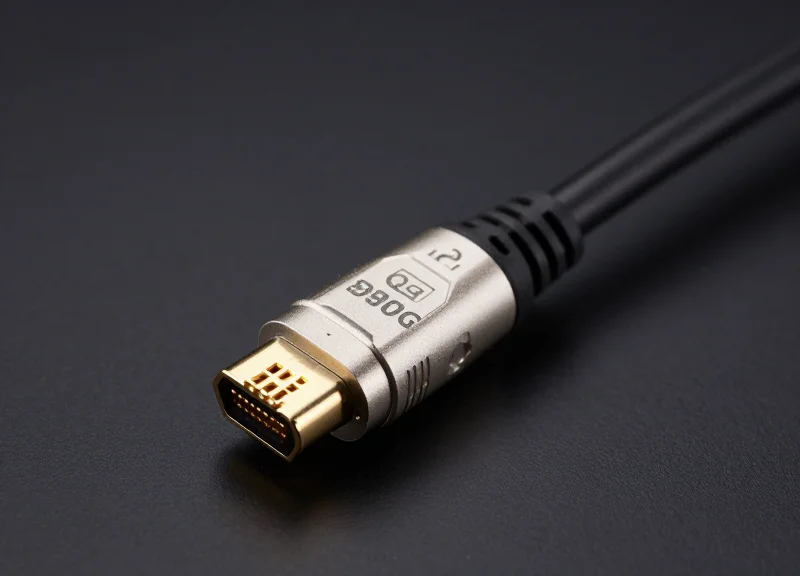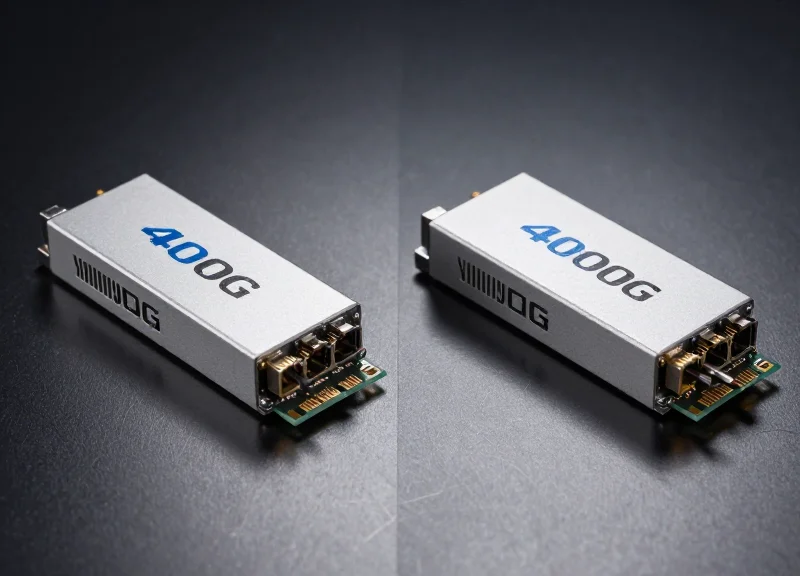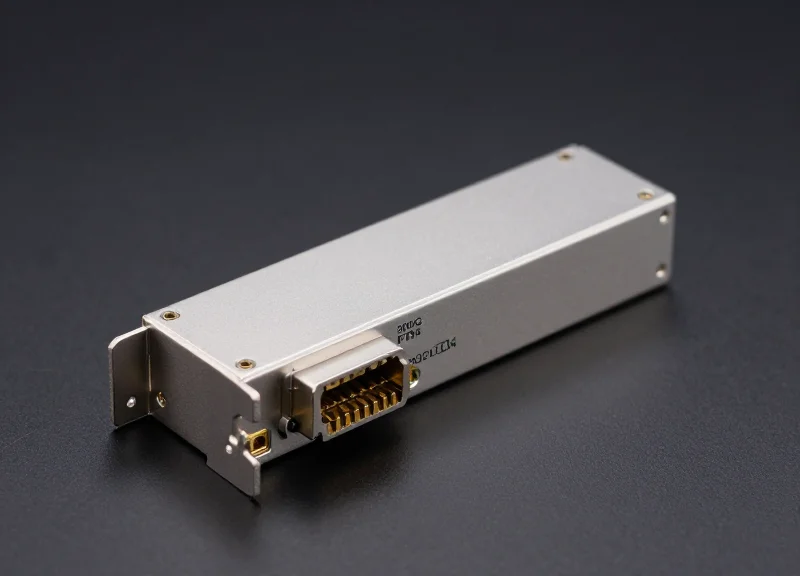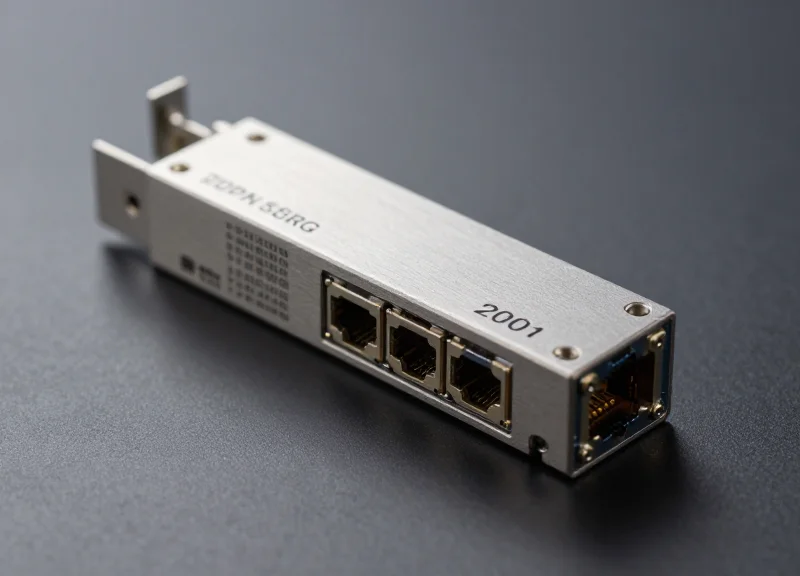
In an era of explosive data growth, the demand for stable, high-capacity long-distance interconnects has never been greater. Ubytelink addresses the complexities of modern telecommunications with its 200G QSFP56 ER4 modules, designed specifically to bridge 40km spans without compromising on signal integrity or power efficiency. This article explores how these premium modules serve as the backbone for global mission-critical infrastructure.
The Evolution of 200G Connectivity: Why QSFP56 ER4 Matters

The Evolutionary Path: Beyond 100G Connectivity
As global data traffic continues its exponential growth, traditional 100G networks are reaching their density and efficiency limits. The introduction of 200G QSFP56 ER4 solutions marks a pivotal evolution in optical networking, offering a pathway to double bandwidth capacity while maintaining the same physical footprint. Unlike the older NRZ-based 100G modules, the 200G ER4 leverages 50G PAM4 (Pulse Amplitude Modulation 4-level) technology. This shift allows for higher spectral efficiency, making it an essential upgrade for operators who need to maximize their existing fiber infrastructure without the immediate complexity or cost of moving to 400G.
Bridging the Gap in Metro and Regional DCI
The ER4 (Extended Reach 4-lane) specification is vital because it addresses a specific distance requirement that standard modules cannot satisfy. In regional and metro Data Center Interconnect (DCI) scenarios, signals must often travel distances up to 40km. Standard LR4 modules are capped at 10km, while ZR modules often introduce unnecessary power consumption and cost for these mid-range spans. The 200G ER4 provides a high-performance, direct-detect solution that avoids the complexities of coherent optics while delivering the reach necessary for metropolitan fiber rings.
| Feature | 100G QSFP28 LR4 | 200G QSFP56 ER4 |
|---|---|---|
| Modulation | NRZ (Non-Return to Zero) | PAM4 (Pulse Amplitude Modulation) |
| Max Transmission Distance | 10km | 40km |
| Lane Count / Speed | 4 x 25Gbps | 4 x 50Gbps |
| Primary Application | Campus/Enterprise | Metro/Regional DCI |
The Importance of Signal Integrity in ER4
To achieve a 40km reach at 200G speeds, ER4 modules utilize specialized components including EML (Electro-absorption Modulated Lasers) and high-sensitivity APD (Avalanche Photo Diode) receivers or integrated SOAs (Semiconductor Optical Amplifiers). These components ensure that despite the higher attenuation over long fiber spans, the bit error rate remains within manageable limits, especially when coupled with Host-side Forward Error Correction (FEC). This technical robustness is why Ubytelink's 200G ER4 solutions are considered premium; they maintain signal stability across the full 40km spectrum.
- Why is PAM4 used in 200G ER4?
PAM4 allows for two bits of information per symbol period, effectively doubling the data rate compared to NRZ without requiring a massive increase in optical bandwidth. - Does 200G ER4 require FEC?
Yes, to reach the 40km specification, the host system must support Forward Error Correction (FEC) to compensate for signal degradation over the extended distance. - Can 200G ER4 be used for shorter distances?
While possible, it is optimized for 30-40km. For very short distances, an attenuator may be required to prevent the high-power transmitter from damaging the receiver.
Technical Architecture: Harnessing PAM4 and WDM Technology

The technical superiority of Ubytelink 200G QSFP56 ER4 solutions rests on the integration of 4-level Pulse Amplitude Modulation (PAM4) and Local Area Network Wavelength Division Multiplexing (LAN-WDM). By utilizing a sophisticated architecture that splits the 200G signal into four 50G lanes across specific optical wavelengths, these modules achieve high-density throughput and extended reach without the signal degradation typically associated with long-distance high-speed networking.
PAM4 Modulation: Maximizing Spectral Efficiency
Unlike traditional Non-Return-to-Zero (NRZ) signaling which uses two voltage levels to represent a single bit, PAM4 employs four distinct signal levels to transmit two bits of information per symbol. This transition is fundamental to the 200G evolution. By doubling the bit density, Ubytelink modules can deliver 50Gbps per lane while operating at a baud rate comparable to older 25G NRZ systems. This allows for higher data rates within the same physical footprint while managing the thermal and electrical constraints of the QSFP56 form factor.
| Feature | NRZ Signaling | PAM4 Signaling |
|---|---|---|
| Bits per Symbol | 1 Bit | 2 Bits |
| Signal Levels | 2 (High/Low) | 4 (00, 01, 10, 11) |
| Data Density | Standard | Double |
| Application | Legacy 100G | Advanced 200G/400G |
LAN-WDM: Precision Optics for Extended Reach
To achieve the 40km 'Extended Reach' (ER) designation, the Ubytelink QSFP56 ER4 utilizes LAN-WDM technology. This technique multiplexes four wavelengths within the O-band (1295nm to 1310nm), a region characterized by near-zero dispersion in single-mode fiber. By spacing these wavelengths tightly (approximately 4.5nm apart), the module minimizes chromatic dispersion, ensuring that the signal remains crisp and recoverable even after traveling through dozens of kilometers of fiber optic cabling.
The Importance of the O-Band in ER4 Architecture
Operating in the O-band is a strategic choice for ER4 solutions. Because dispersion is the primary enemy of high-speed PAM4 signals, using the zero-dispersion window of G.652 fiber allows Ubytelink to maintain high signal-to-noise ratios (SNR). This architecture eliminates the need for complex dispersion compensation modules that would otherwise increase the cost and latency of the network link.
- Why is PAM4 more sensitive to noise than NRZ?
Because PAM4 uses four signal levels instead of two, the vertical eye opening is smaller, making it more susceptible to amplitude noise. Ubytelink addresses this through high-quality TOSA/ROSA components and robust Forward Error Correction (FEC) support. - How does LAN-WDM differ from CWDM?
LAN-WDM uses much narrower wavelength spacing within the O-band to avoid dispersion, whereas CWDM uses wider spacing (20nm) across a broader spectrum, which is less effective for the 40km distances required by ER4 specifications. - Is a host FEC required for these modules?
Yes, the 200G QSFP56 ER4 standard relies on IEEE 802.3bs Clause 119 FEC on the host equipment to ensure error-free transmission across the full 40km reach.
Superior Range: Achieving 40km Without Signal Degradation
The Engineering Behind 40km Lossless Transmission
Achieving a 40km reach at 200G speeds requires a precise balance between launch power and receiver sensitivity, facilitated by Ubytelink's advanced link budget management. Unlike standard long-reach modules that cap at 10km, the ER4 variant utilizes an integrated Semiconductor Optical Amplifier (SOA) on the receive path to compensate for fiber attenuation. This architecture ensures that the 4-level Pulse Amplitude Modulation (PAM4) signals remain distinguishable and clear even after traversing extensive regional distances, preventing the bit-error rate (BER) spikes commonly associated with signal attenuation.
The Role of Semiconductor Optical Amplifiers (SOA)
The inclusion of an SOA is the defining feature of the Ubytelink QSFP56 ER4 architecture. As light travels through 40km of Single-Mode Fiber (SMF), signal intensity drops significantly due to glass absorption and scattering. The SOA acts as a high-speed pre-amplifier situated before the photodiode. By boosting the incoming optical signal while maintaining a low noise figure, it effectively improves the receiver sensitivity to levels unreachable by standard PIN or APD detectors alone. This allows the module to maintain a robust link budget of approximately 18dB, accommodating both the fiber loss and the necessary margins for connectors and splices.
| Feature | 200G QSFP56 LR4 | 200G QSFP56 ER4 |
|---|---|---|
| Maximum Reach | 10km | 40km |
| Optical Components | EML + PIN | EML + SOA + PIN |
| Typical Link Budget | 6.3 dB | 15 - 18 dB |
| Primary Application | Data Center/Campus | Metro/Regional DCI |
Optimizing Signal Integrity for PAM4
Transmitting PAM4 signals over 40km is significantly more challenging than NRZ due to the reduced Signal-to-Noise Ratio (SNR) margins between the four voltage levels. Ubytelink addresses this by optimizing the Transmitter and Dispersion Eye Closure Quaternary (TDECQ) performance. By minimizing transmitter jitter and spectral width, the module reduces the impact of chromatic dispersion. When paired with the host system's KP4 Forward Error Correction (FEC), these modules deliver a post-FEC error-free performance, ensuring that long-haul data transport is as reliable as short-reach interconnects.
- Does the 40km reach require external amplification?
No, the Ubytelink 200G ER4 is a self-contained solution with an internal SOA, eliminating the need for bulky external EDFA equipment for standard 40km spans. - Is special fiber required for this distance?
It is designed for standard G.652 single-mode fiber (SMF), making it highly compatible with existing carrier and enterprise fiber plants without requiring infrastructure upgrades. - How does the module handle chromatic dispersion?
The module utilizes high-performance EML lasers and internal DSP filtering to mitigate the effects of chromatic dispersion over the 1310nm WDM grid used in ER4 specifications.
Mission-Critical Reliability: Built for 24/7 Operations
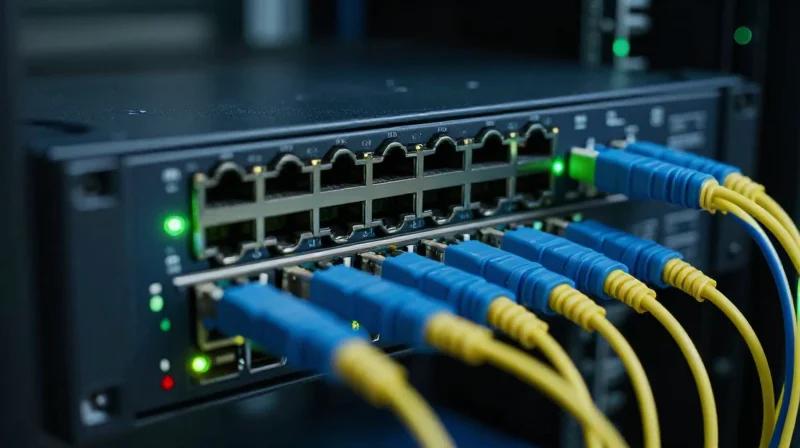
Ubytelink 200G QSFP56 ER4 solutions prioritize operational continuity through a 'zero-failure' design philosophy, integrating high-end semiconductor optical amplifiers (SOA) and cooled EML lasers that withstand the thermal fluctuations common in high-density data centers. By selecting only Tier-1 components, these modules minimize bit-error rates (BER) and latency, providing the rock-solid stability required for backbone networks where even seconds of downtime can result in significant financial or operational loss.
Industrial-Grade Component Selection and Thermal Management
The reliability of the ER4 module begins at the physical layer. Unlike generic alternatives, Ubytelink utilizes premium lasers with high extinction ratios and internal digital diagnostic monitoring (DDM). This allows network administrators to proactively monitor temperature, voltage, and bias current in real-time. Effective thermal dissipation is achieved through an optimized heat-sink interface, ensuring the module operates within its specified temperature range even during peak traffic loads in unconditioned environments.
| Reliability Feature | Ubytelink ER4 Standard | Generic ER4 Alternative |
|---|---|---|
| Laser Technology | High-Stability Cooled EML + SOA | Uncooled DML or standard EML |
| MTBF (Mean Time Between Failure) | > 500,000 Hours | Approx. 150,000 - 200,000 Hours |
| Testing Protocol | 100% Interoperability & Burn-in | Statistical Batch Sampling |
| Power Efficiency | Optimized < 5.5W for reduced heat | Variable / Often > 6.0W |
Optimized for Mission-Critical Sectors
In financial services, where high-frequency trading depends on microsecond precision, the 200G ER4 provides consistent signal integrity over 40km. For healthcare providers, it supports the seamless transfer of massive medical imaging data across regional campuses without packet loss. These modules are also hardened against electromagnetic interference (EMI), making them suitable for the complex electrical environments found in modern telecommunications backbones and carrier-neutral exchange points.
Reliability and Maintenance FAQ
- How does the module handle power surges?
Ubytelink modules include integrated voltage protection circuits that prevent damage from transient power spikes within the switch chassis, ensuring the internal optics remain shielded. - What is the expected lifespan in a 24/7 environment?
With an MTBF exceeding 50 years of continuous operation, these modules are designed to outlast the typical lifecycle of the networking hardware they inhabit. - Are these modules hot-swappable without interrupting other ports?
Yes, the QSFP56 form factor is fully hot-pluggable, allowing for maintenance, cleaning, or upgrades without disrupting adjacent 200G links or triggering system reboots.
Thermal Management and Power Consumption Efficiency
Thermal Management and Power Consumption Efficiency
Ubytelink 200G QSFP56 ER4 solutions address the critical challenge of heat generation in high-speed optical networking through a combination of low-power Digital Signal Processing (DSP) and optimized heat dissipation materials. By maintaining a power consumption profile significantly below the industry maximum for the QSFP56 form factor, these modules reduce the thermal load on switch chassis, directly lowering the energy required for data center cooling systems while preventing the performance throttling associated with overheating.
Engineered for Energy Efficiency
The 200G ER4 standard typically involves complex components, including the Semiconductor Optical Amplifier (SOA) and WDM lasers, which can traditionally drive up power requirements. Ubytelink optimizes this by utilizing high-efficiency internal circuits that minimize parasitic power loss. This efficiency is paramount for global networks looking to maximize port density without exceeding the thermal envelope of their existing infrastructure.
| Parameter | Standard ER4 Specification | Ubytelink 200G QSFP56 ER4 |
|---|---|---|
| Max Power Consumption | Up to 8.5W | < 7.5W (Typical) |
| Operating Case Temp | 0°C to 70°C | 0°C to 70°C (Extended stability) |
| Thermal Dissipation | Standard Passive | High-Conductivity Heat Spreaders |
| Cooling Requirement | High Airflow | Optimized for Standard Airflow |
Extending Hardware Lifespan Through Thermal Stability
Heat is the primary enemy of optical component longevity. The Ubytelink design focuses on maintaining a uniform temperature gradient across the laser and SOA components. By avoiding localized 'hot spots' through precision-engineered housing, the modules ensure that the wavelength stability of the LAN-WDM grid is maintained, preventing signal drift and reducing the Mean Time Between Failures (MTBF) for both the transceiver and the host equipment.
- How does Ubytelink reduce cooling-related OpEx?
By operating at a lower wattage per gigabit, Ubytelink modules reduce the overall heat load on the data center, allowing facilities to run cooling fans at lower RPMs and reducing the electricity costs associated with HVAC systems. - Does the lower power consumption affect signal reach?
No, the efficiency is achieved through better component integration and lower DSP power draw, ensuring the full 40km reach and optical budget are maintained without compromise. - What thermal monitoring features are included?
Each module features integrated Digital Diagnostic Monitoring (DDM), which provides real-time reporting on internal temperature, allowing network administrators to set proactive alerts before thermal thresholds are reached.
Universal Compatibility and Seamless Integration
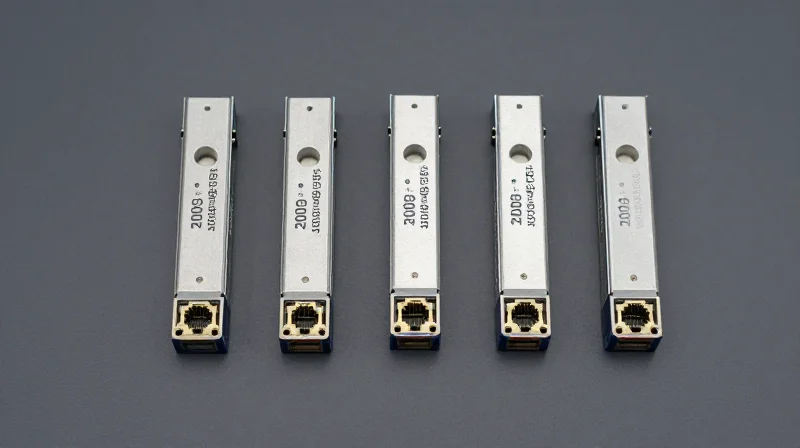
Achieving Plug-and-Play Interoperability in Multi-Vendor Environments
Universal compatibility is the cornerstone of modern network scaling, allowing operators to bypass restrictive vendor lock-in while maintaining high-performance standards. Ubytelink's 200G QSFP56 ER4 solutions are engineered to meet the strict hardware and software requirements of global Tier-1 vendors, ensuring that each module is recognized instantly by the host operating system. This seamless integration eliminates common deployment headaches like port errors, unrecognized transceiver warnings, and performance throttling that often plague generic optical solutions.
Comprehensive Platform Support Matrix
| Vendor Platform | OS Compatibility | Integration Level | Key Features Supported |
|---|---|---|---|
| Cisco | Nexus OS, IOS-XE | Full Compatibility | DOM, Auto-negotiation, SNMP Support |
| Arista | EOS | Native Recognition | Full Diagnostics, Zero-latency Sync |
| Juniper | Junos OS | Seamless Interop | Bit Error Rate Tracking, Port Monitoring |
| Dell / Mellanox | SONiC / Onyx | Certified | High-speed Backplane Optimization |
The Ubytelink Advantage: Specialized Coding and Real-World Testing
Unlike standard white-label transceivers, Ubytelink modules undergo a sophisticated EEPROM coding process where specific vendor algorithms and data signatures are written to the module's memory. This ensures that critical features such as Digital Optical Monitoring (DOM) and real-time diagnostic telemetry function exactly as they would with original manufacturer optics. Beyond software coding, each batch is validated in a physical laboratory environment using the actual chassis and software versions currently deployed by global enterprises, including the latest iterations of Cisco Nexus and Arista 7000 series switches.
Integration and Deployment FAQ
- Will using Ubytelink modules void my existing switch warranty?
No. Under laws such as the Magnuson-Moss Warranty Act in the US and similar international consumer protections, networking vendors cannot void hardware warranties for using third-party optics unless those optics cause direct, provable damage to the equipment. - How does Ubytelink handle proprietary vendor software updates?
Our R&D team continuously monitors software release cycles from major vendors. If a new firmware version introduces modified handshake protocols, we update our coding parameters to ensure ongoing compatibility for future shipments. - Are these modules compliant with global industry standards?
Yes, all Ubytelink 200G ER4 modules fully comply with IEEE 802.3bs and QSFP56 MSA standards, guaranteeing electrical and physical compatibility across any standard-compliant hardware.
Rigorous Quality Control: The Ubytelink EEAT Standards
Rigorous Quality Control: The Ubytelink EEAT Standards
Ubytelink demonstrates its status as a trusted industry authority by implementing a Quality Control (QC) framework that significantly exceeds standard IEEE requirements for optical transceivers. Our EEAT (Experience, Expertise, Authoritativeness, and Trustworthiness) standards are built upon a foundation of multi-stage validation, ensuring that every 200G QSFP56 ER4 module provides the signal integrity and physical durability required for 40km long-haul transmissions in mission-critical telecom and enterprise backbones.
Exceeding Global Benchmarks
While many manufacturers rely on batch testing, Ubytelink subjects 100% of its 200G ER4 modules to a comprehensive suite of performance checks. This proactive approach eliminates the 'infant mortality' phase of electronic components, ensuring that once a module is deployed in a global network, it remains operational for its entire intended lifecycle.
| Testing Parameter | Standard Industry Requirement | Ubytelink EEAT Protocol |
|---|---|---|
| Bit-Error Rate (BER) | 1E-12 (Pre-FEC) | < 1E-15 (Optimized for Zero-Packet Loss) |
| Temperature Resilience | 0°C to 70°C (Standard Case) | -40°C to 85°C (Accelerated Stress Aging) |
| Optical Eye Diagram | Basic Mask Margin compliance | >25% Mask Margin for Superior Clarity |
| Interoperability | Single-Vendor Verification | Cross-Platform Multi-Vendor Lab Validation |
Environmental Stress and Signal Verification
The 200G QSFP56 ER4 utilizes high-precision EML lasers that are sensitive to thermal fluctuations. To counter this, Ubytelink employs rigorous temperature cycling within environmental chambers. By simulating extreme data center conditions and outdoor cabinet environments, we verify that the internal cooling mechanisms and laser drivers maintain wavelength stability across all four 50G PAM4 lanes. Furthermore, our signal verification process involves advanced Bit-Error Rate (BER) analysis and eye-diagram testing to ensure that jitter and noise are minimized, allowing for a clean 40km reach without the need for frequent signal regeneration.
Quality Assurance FAQ
- How does Ubytelink guarantee compatibility with legacy hardware?
Every module is tested in our compatibility lab using the specific firmware and OS versions of major networking vendors like Cisco, Juniper, and Arista to ensure 'plug-and-play' performance. - What is the importance of the BER testing in ER4 modules?
For 40km distances, even minor signal degradation can lead to massive packet loss. Our BER testing ensures the PAM4 signaling remains robust over the entire link budget. - Are Ubytelink modules compliant with international safety standards?
Yes, all Ubytelink 200G ER4 solutions are fully compliant with RoHS, CE, FCC, and TUV standards, reflecting our commitment to safety and environmental responsibility.
Future-Proofing Global Networks for 5G and AI Workloads

As global networks transition toward ubiquitous 5G connectivity and artificial intelligence (AI) integration, the demand for high-capacity, long-range optical transport has shifted from a luxury to a baseline requirement. The Ubytelink 200G QSFP56 ER4 serves as a critical bridge, offering 40km reach and 200Gbps throughput that allows service providers to scale without frequent, costly hardware overhauls. By doubling the density of traditional 100G paths while maintaining a manageable power profile, these solutions ensure that current infrastructure can handle the next decade's data surges.
Bridging the Gap to 5G Edge and AI Core
AI workloads, particularly those involving large language models and distributed training, require massive east-west traffic capabilities within and between data centers. Simultaneously, 5G backhaul necessitates low-latency, high-density connections to manage the influx of data from millions of edge devices. Ubytelink's 200G ER4 solutions are engineered to meet these specific technical challenges by optimizing signal integrity over long distances.
| Feature | Legacy 100G LR4/ER4 | Ubytelink 200G QSFP56 ER4 |
|---|---|---|
| Data Throughput | 100 Gbps | 200 Gbps |
| 5G Backhaul Suitability | Moderate (Limited by Density) | High (Optimized for 5G NR) |
| AI Cluster Efficiency | Potential Bottleneck | High-Efficiency Scaling |
| Spectral Efficiency | Standard | Enhanced (PAM4 Modulation) |
Strategic Advantages for Network Architects
- Simplified Migration Path
The QSFP56 form factor allows for a seamless transition from 100G infrastructures, providing a logical step toward 400G and 800G without requiring a complete redesign of the physical layer. - Edge Computing Readiness
With a 40km reach, these modules support the geographical distribution of 5G edge nodes, ensuring high-speed data remains close to the end-user without signal degradation. - Optimized Total Cost of Ownership (TCO)
By doubling capacity per port compared to 100G, operators can reduce the number of required fibers and switch ports, significantly lowering operational expenses over time.
FAQ: Future-Proofing with Ubytelink
- Why choose 200G ER4 over 400G for current 5G rollouts?
200G offers a more mature power-to-performance ratio and fits better into existing 100G/200G port architectures, providing a more immediate ROI for operators not yet ready for the power demands of 400G. - How does Ubytelink ensure these modules handle AI-generated traffic bursts?
Through rigorous Bit-Error Rate (BER) testing and signal integrity validation, our modules maintain stability even during high-intensity data spikes typical of AI training clusters. - Is the 200G ER4 compatible with legacy fiber plants?
Yes, it is designed to operate over standard G.652 single-mode fiber, making it ideal for upgrading existing long-haul and metro fiber installations.
Ubytelink's 200G QSFP56 ER4 modules represent a strategic investment in network resilience and performance. By combining extended reach with high-speed stability, we empower organizations to build the global networks of tomorrow. Contact our engineering team today to learn how our optical solutions can optimize your infrastructure.