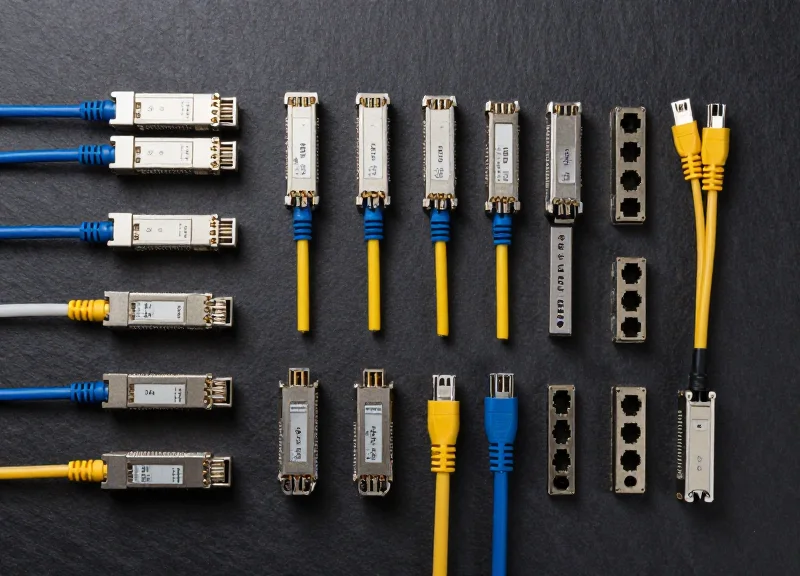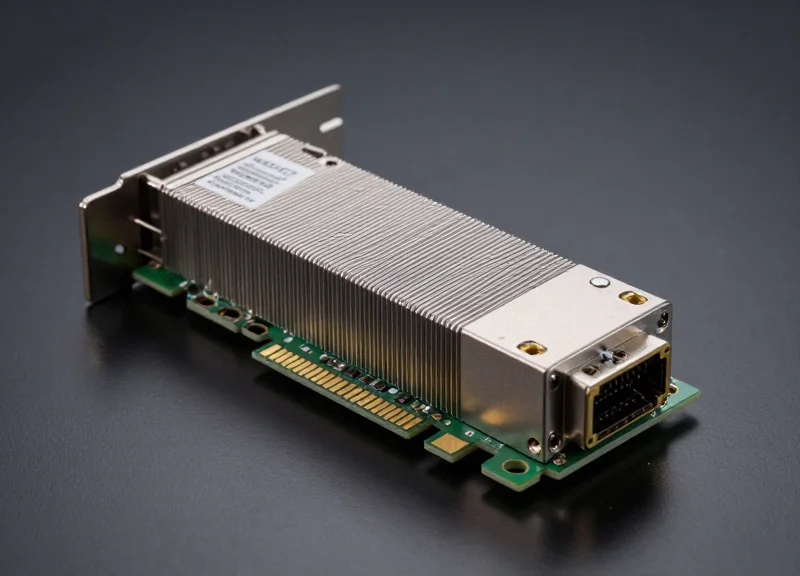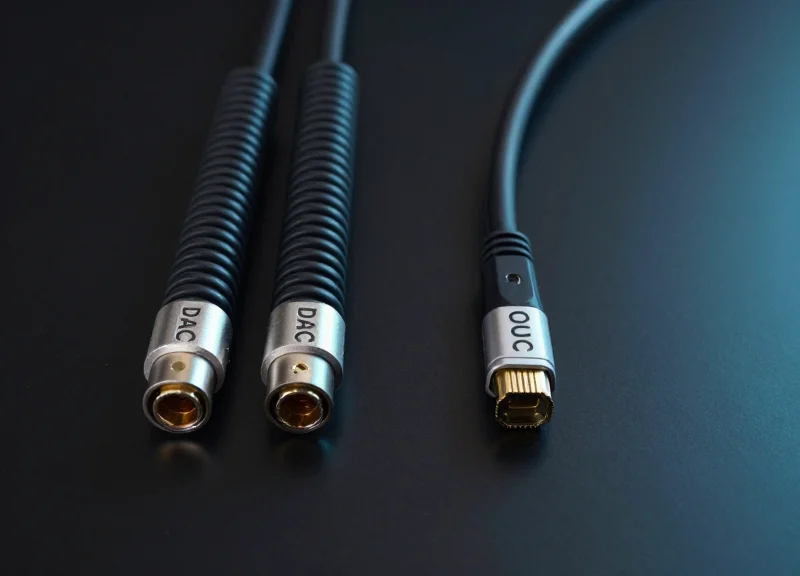
In the high-stakes world of hyperscale data centers and enterprise networks, every microsecond and milliwatt counts. While standard cabling often leads to excessive slack and thermal inefficiencies, custom length DAC and AOC solutions provide a strategic advantage in signal integrity and operational cost. This guide explores how precision-engineered interconnects redefine network architecture performance.
The Evolution of Data Center Interconnects

The Evolution of Data Center Interconnects
The transition from traditional structured cabling to modern Direct Attach Copper (DAC) and Active Optical Cable (AOC) solutions represents a fundamental shift in how network fabrics are architected. As data center bandwidth requirements scaled from 1GbE to 400GbE and beyond, the physical layer encountered massive bottlenecks; legacy copper solutions like Cat6a could no longer sustain the necessary signal integrity, latency profiles, or power efficiency required for high-density top-of-rack (ToR) and end-of-row (EoR) switching. This necessitated the rise of integrated interconnects that combine the transceiver and the cable into a single, factory-terminated assembly, optimizing performance for the short-reach links that comprise the majority of data center traffic.
From Standard RJ45 to Twinaxial Dominance
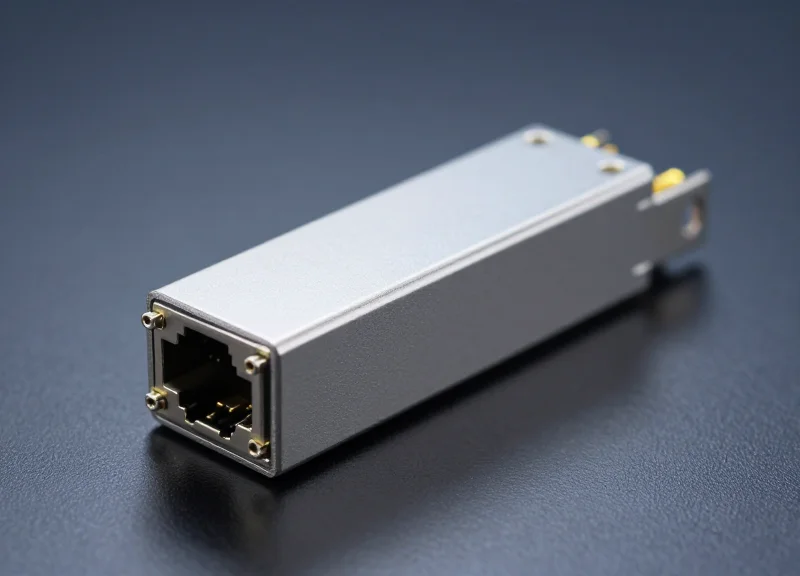
In the early era of networking, standard RJ45 copper ports were the gold standard for versatility. However, as speeds reached 10Gbps and 25Gbps, the power consumption required for 10GBASE-T transceivers became a thermal liability. Direct Attach Copper (DAC) cables emerged as the primary alternative, utilizing twinaxial copper wire to provide a passive, low-latency connection. By eliminating the need for complex electronic signal processing at each end, DACs significantly reduced the cost per port while maintaining near-zero power consumption, making them the default choice for intra-rack connections.
| Interconnect Type | Max Distance | Power Consumption | Latency Profile |
|---|---|---|---|
| Standard RJ45 (Cat6a) | 100 Meters | High (2-5W per port) | High (due to DSP) |
| Passive DAC | 7 Meters | Ultra-Low (<0.1W) | Ultra-Low (Passive) |
| Active AOC | 100+ Meters | Moderate (1-2W) | Low (Optical) |
The Rise of Active Optical Cables (AOC)
As data centers expanded into larger Leaf-Spine architectures, the 7-meter physical limit of passive copper became a constraint. Active Optical Cables (AOC) were developed to bridge this gap, using multimode fiber integrated with fixed optical transceivers. Unlike modular optics, AOCs do not have exposed optical connectors, which eliminates the risk of fiber contamination and simplifies deployment. This evolution allowed for thinner, lighter cabling that could span across aisles while supporting the same high-speed SFP and QSFP protocols as their copper counterparts.
- Why did data centers move away from modular transceivers for short reaches?
The move was driven by cost and reliability; DAC and AOC solutions are more affordable than buying separate transceivers and patch cords, and they remove the cleaning/maintenance requirements of open fiber ports. - How does custom length play into this evolution?
Modern high-density environments cannot afford the airflow blockages caused by cable slack. Custom length solutions allow for precision routing, which is essential for thermal management in hyperscale facilities. - Is copper still relevant in the age of AOC?
Yes, for reaches under 3 to 5 meters, DAC remains the most cost-effective and power-efficient solution available, maintaining a critical role in ToR server-to-switch links.
Technical Architecture: DAC vs. AOC vs. Optical Transceivers
Technical Architecture: DAC vs. AOC vs. Optical Transceivers
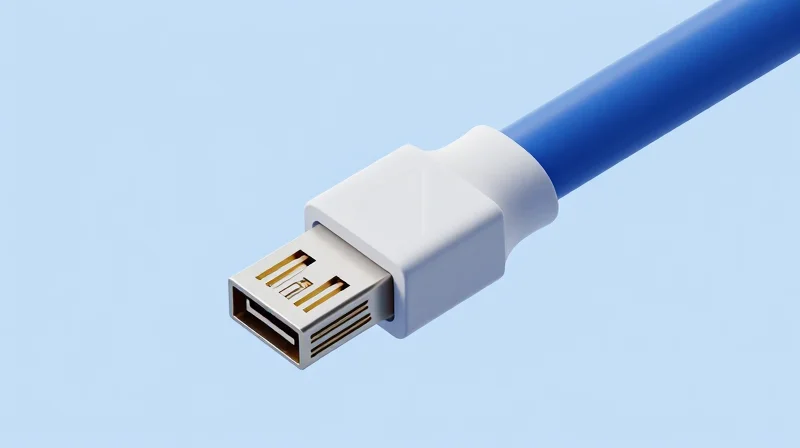
The primary architectural distinction between these interconnect technologies lies in their handling of electrical-to-optical conversion and the physical medium used for signal propagation. While DACs utilize passive or active copper twinax cables to carry electrical signals directly, AOCs and discrete transceivers rely on VCSEL-based optical engines and fiber optics to overcome the attenuation limits inherent in electrical transmission over distance. Understanding these physical layer differences is essential for optimizing data center fabric performance.
Physical Media and Hardware Components
Direct Attach Copper (DAC) cables are engineered with two-pair shielded copper wires integrated with SFP, QSFP, or OSFP connectors, typically lacking sophisticated optical components. Active Optical Cables (AOC) integrate the optical transceivers directly onto the ends of a fixed-length fiber cable, creating a permanently bonded assembly. This eliminates the need for external optical connectors like LC or MPO between the transceiver and the cable, which is the standard configuration for discrete optical transceiver solutions.
| Feature | DAC (Passive) | AOC | Optical Transceiver + Fiber |
|---|---|---|---|
| Media Type | Twinax Copper | Multimode Fiber | Multimode/Single-mode Fiber |
| Signal Conversion | None (Electrical) | Electrical-to-Optical | Electrical-to-Optical |
| Power Consumption | <0.1W per end | 0.6W - 2.0W per end | 1.0W - 4.5W per end |
| Max Reach (100G) | ~5m - 7m | Up to 100m | Up to 10km+ |
| Latency | Lowest (Nanoseconds) | Low (O/E Conversion) | Low (O/E Conversion) |
Signal Processing and Latency Dynamics
In low-latency environments such as High-Frequency Trading (HFT) or AI training clusters, the architecture of the interconnect is critical. Passive DACs offer the lowest possible latency because they do not require signal modulation, amplification, or conversion. AOCs and discrete transceivers introduce incremental delays due to the O/E (Optical-to-Electrical) conversion process and the internal Digital Signal Processing (DSP) or Clock and Data Recovery (CDR) circuitry required to maintain signal integrity at high-speed PAM4 modulation rates.
- Why is power consumption lower in DAC architectures?
DACs, specifically passive variants, lack the laser drivers, TOSA (Transmitter Optical Sub-Assembly), and ROSA (Receiver Optical Sub-Assembly) components that consume the majority of power in optical solutions. - How does the fixed nature of AOCs impact reliability?
By eliminating the exposed optical interface between the module and the fiber, AOCs prevent dust contamination and connector misalignment, which are leading causes of link failure in modular transceiver setups. - What role does DSP play in modern 400G/800G architecture?
In high-speed optical interconnects, the DSP compensates for chromatic dispersion and other signal impairments, a requirement not present in short-reach passive copper DACs.
Latency Benchmarks: Why Custom Length Matters

In the world of High-Performance Computing (HPC) and High-Frequency Trading (HFT), latency is measured in nanoseconds, and custom length DAC/AOC solutions serve as a critical tool for minimizing these delays by providing the shortest possible physical path and reducing signal processing overhead. Unlike standard-length off-the-shelf cables that often result in excess 'slack' coiled in cabinet sides, custom-fit interconnects ensure that signal travel time is physically minimized while avoiding the latency-inducing active components found in traditional optical transceivers.
The Passive Advantage: DAC vs. Optical Latency
The primary performance differentiator between interconnect types lies in the physical layer processing. Passive Direct Attach Copper (DAC) cables operate at the speed of electrons through copper with virtually zero processing delay. In contrast, Active Optical Cables (AOC) and discrete transceivers must convert electrical signals into light (and vice versa) using a laser driver and a TIA (Transimpedance Amplifier). This conversion process, combined with potential Digital Signal Processing (DSP) or retiming, introduces measurable lag that can hinder synchronized cluster performance.
| Interconnect Type | Typical Latency (Nanoseconds) | Primary Source of Delay | Best Use Case |
|---|---|---|---|
| Passive DAC (Custom Length) | < 0.1 ns | Physical Propagation Only | Ultra-low latency HFT / Top-of-Rack |
| Active Optical Cable (AOC) | 1.0 - 5.0 ns | E-to-O Conversion / Retiming | End-of-Row / Inter-Rack Linkage |
| Optical Transceiver (SR4/LR4) | 10 - 100+ ns | DSP / FEC / Conversion | Long-distance Spine-to-Leaf |
| 10GBASE-T Copper (RJ45) | 2,000+ ns | Complex Line Encoding | Legacy Storage / Management |
Calculating the 'Slack Tax': Length and Propagation Speed
Signal propagation speed in a typical twinaxial copper cable or fiber optic strand is roughly two-thirds the speed of light in a vacuum, translating to approximately 5 nanoseconds of delay per meter. When a data center uses a standard 3-meter DAC where a 1.2-meter custom length would suffice, an additional 1.8 meters of unnecessary cable is introduced. This 'slack tax' adds roughly 9 nanoseconds of round-trip latency—a negligible amount for standard enterprise applications, but a catastrophic delta for automated trading engines or distributed AI training models that rely on micro-synchronization.
FAQ: Understanding Latency in Custom Interconnects
- Does a custom 0.5m DAC perform better than a standard 1m DAC?
Yes. While the electronic performance is identical, the 0.5m cable reduces the physical distance the signal must travel, shaving off approximately 2.5 nanoseconds of latency. - Why does cable length matter more for DACs than AOCs?
DACs are used for the shortest, highest-speed links where nanosecond precision is the goal. For AOCs, which are typically longer, the latency is dominated by the E-to-O conversion circuitry rather than the fiber length itself. - Does Forward Error Correction (FEC) impact these benchmarks?
Significantly. At 100G and 400G speeds, FEC can add 100ns or more of latency. Using high-quality custom DACs over short distances can sometimes allow for lower-latency FEC modes if the signal integrity is sufficiently high.
Power Consumption and Thermal Dynamics
In modern high-density data centers, power efficiency and thermal management are primary drivers of total cost of ownership (TCO). Passive Direct Attach Copper (DAC) cables represent the pinnacle of energy efficiency by requiring zero power for operation, whereas Active Optical Cables (AOC) and transceiver-based fiber links introduce active silicon components that contribute both to direct energy costs and increased cooling requirements. Choosing custom-length passive DACs for short-reach applications eliminates the power overhead associated with signal conversion.
The Passive Advantage: Zero Watt Connectivity
Passive DACs utilize high-gauge copper wiring to transmit electrical signals directly between ports without the need for signal conversion. Because there are no lasers, photo-detectors, or Digital Signal Processors (DSPs) within the cable housing, the power draw is effectively 0W. This simplicity not only eliminates the electricity cost per link but also minimizes the thermal footprint within the switch port, preserving the lifespan of the network hardware and reducing the risk of component failure due to heat-induced stress.
Active Optical Cables and Transceiver Thermal Profiles
In contrast, AOCs and optical transceivers must perform an electrical-to-optical (E-O) conversion. This process requires Integrated Circuits (ICs) and Vertical-Cavity Surface-Emitting Lasers (VCSELs). Typically, a 100G QSFP28 AOC might draw between 1.5W and 3.5W per end, depending on the generation and whether the cable includes Clock and Data Recovery (CDR) functionality. When scaled across a standard 48-port switch, this adds approximately 150W to 300W of additional heat directly into the chassis airflow path.
| Component Type | Power Draw (Per End) | Heat Generation | Cooling Impact |
|---|---|---|---|
| Passive DAC | 0.0W | None | Ambient/Passive |
| Active Copper (ACC) | 0.5W - 1.2W | Low | Low-Velocity Airflow |
| AOC (Active Optical) | 1.5W - 3.5W | Moderate | Active Forced Air |
| Optical Transceiver | 2.0W - 4.5W+ | High | High-Velocity Airflow |
The Secondary Impact on Cooling and OpEx
The heat generated by active optics creates a 'thermal debt.' For every watt of heat produced at the port level, additional power is required by the data center's CRAC (Computer Room Air Conditioning) units to maintain operational temperatures. By using custom-length passive DACs for Top-of-Rack (ToR) and Middle-of-Row (MoR) connections, organizations can significantly reduce their Power Usage Effectiveness (PUE) ratio. Custom lengths are particularly beneficial here as they prevent excess cable loops from obstructing airflow in the back of the rack, further optimizing the thermal dynamics of the environment.
- Does cable length affect the power draw of a passive DAC?
No. Passive DACs have no active components, so the power draw remains 0W regardless of whether the cable is 0.5 meters or 5 meters long. - Why do optical transceivers generate more heat than AOCs?
Transceivers are often designed for longer distances and higher flexibility, requiring more robust lasers and internal electronics compared to the optimized, fixed-cable design of an AOC. - Can switching to DACs improve hardware reliability?
Yes. Lower heat levels at the switch port reduce the thermal aging of internal ASICs and transceiver cages, leading to higher system MTBF (Mean Time Between Failures).
The Hidden Cost of 'Off-the-Shelf' Lengths
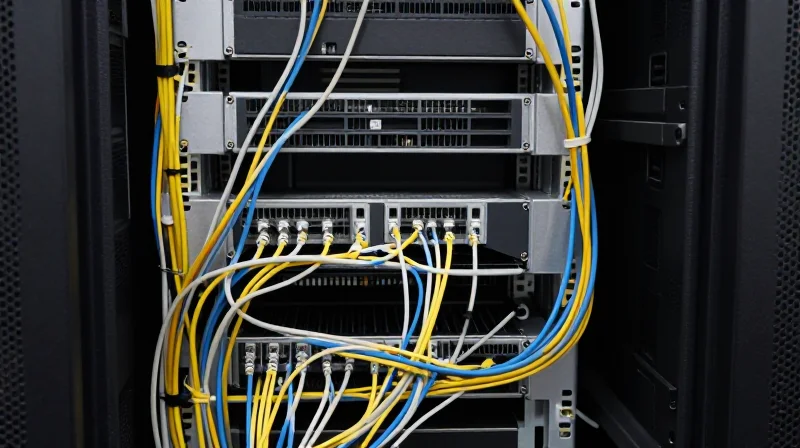
The primary disadvantage of 'off-the-shelf' cable lengths is the inevitable accumulation of cable slack, which creates a 'spaghetti' environment that compromises both thermal management and hardware reliability. In a high-density rack, excess cable length is not just a cosmetic issue; it is a physical barrier that restricts the intake and exhaust of cooling air, leading to higher operating temperatures and potential thermal throttling of active equipment. Furthermore, the unnecessary weight of coiled cables exerts constant mechanical torque on switch and server ports, which can cause physical damage to the transceiver cages over time.
Thermal Dynamics and Airflow Efficiency
Data center cooling depends on the predictable movement of air from cold aisles to hot aisles. When standard 2-meter or 3-meter cables are used for short distances, the leftover slack is typically bundled together. These bundles create 'dead zones' behind server exhaust fans, causing heat to recirculate within the rack. This increases the internal temperature, forcing the server fans to spin at higher speeds, which not only consumes more power but also increases the acoustic noise and vibration levels within the facility.
Port Integrity and Mechanical Stress
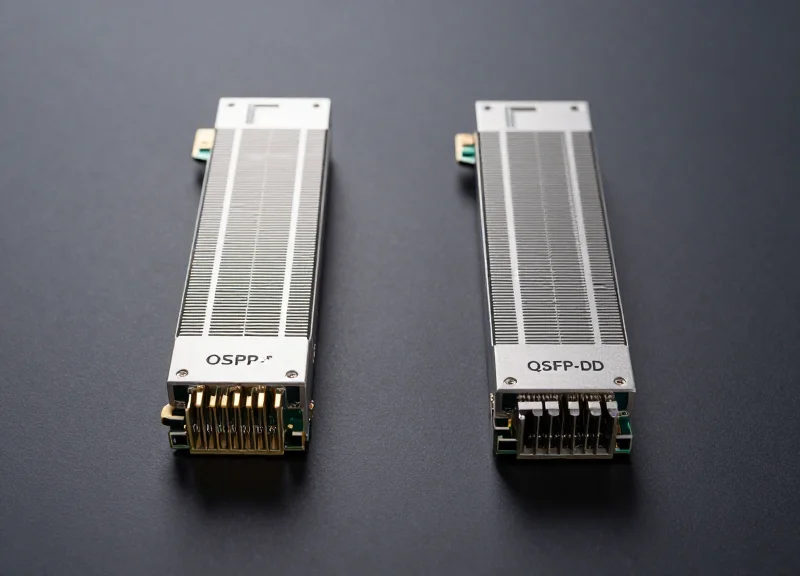
High-speed interconnects like QSFP-DD and OSFP are engineered for precise alignment. The bulk of excess cable, especially in heavier passive DAC configurations, creates a downward force on the port. Over months or years, this constant strain can lead to port fatigue, resulting in intermittent connectivity or 'ghost' link failures that are notoriously difficult to diagnose. Custom-length solutions mitigate this by providing the exact span required, ensuring the cable weight is properly supported by the rack infrastructure rather than the port itself.
| Feature | Off-the-Shelf Lengths | Custom-Length Solutions |
|---|---|---|
| Airflow Path | Obstructed by bundles | Clear and optimized |
| Mechanical Strain | High (due to slack weight) | Negligible |
| Cooling Costs | Higher (increased fan RPM) | Lower (natural convection) |
| Documentation | Difficult to trace | Clean and mapped |
| MTTR (Repair Time) | Slow (due to cable clutter) | Rapid (direct access) |
Maintenance and Reliability FAQ
- Does cable slack affect signal troubleshooting?
Yes, excess cabling makes it physically difficult to trace connections during an outage, significantly increasing the Mean Time To Repair (MTTR). - How does custom length impact fan power consumption?
By removing airflow obstructions, custom lengths allow fans to operate at lower, more efficient speeds, reducing total rack power draw by up to 5-10% in dense setups. - Can standard lengths cause physical port damage?
Continuous mechanical stress from heavy, coiled DACs can warp the internal pins of an SFP cage or cause solder joint failure on the host PCB.
Total Cost of Ownership (TCO) Comparison
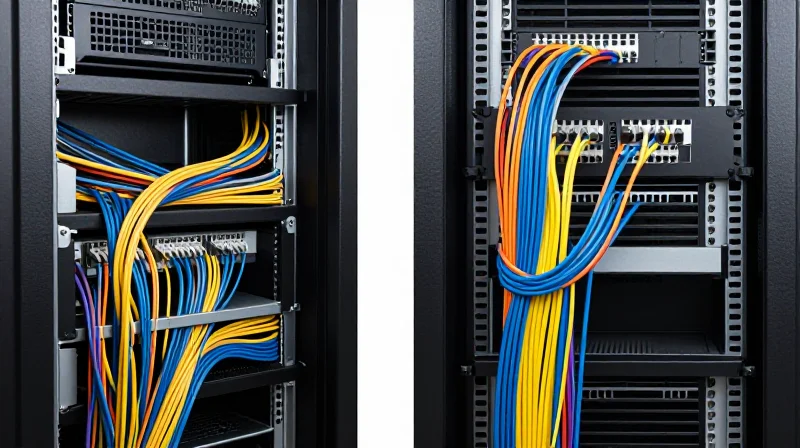
Calculating the Total Cost of Ownership (TCO) for data center interconnects requires looking beyond the unit price to encompass installation labor, power consumption, cooling requirements, and the risk of downtime. Custom-length DAC and AOC solutions provide a distinct financial advantage by eliminating the 'cable tax' associated with excess slack, which complicates airflow and increases the physical footprint of cable management hardware. By matching cable length to the exact rack distance, organizations reduce the need for expensive horizontal and vertical cable managers, which can account for up to 15% of total rack CapEx.
Direct Cost Comparison: Custom vs. Alternatives
| Cost Component | Standard Length DAC/AOC | Custom Length DAC/AOC | Transceiver + Structured Fiber |
|---|---|---|---|
| Initial Unit Cost | Low | Moderate | High |
| Cable Management Hardware | High Requirement | Minimal Requirement | Moderate Requirement |
| Installation Labor | High (Slack Management) | Low (Plug-and-Play) | High (Cleaning/Routing) |
| Power Consumption | Low to Moderate | Low to Moderate | Highest |
| Risk of Physical Damage | Moderate (Bending/Snagging) | Lowest | High (Fiber Contamination) |
Operational Expenditure: Energy and Cooling Efficiency
Energy efficiency is a primary driver of OpEx in modern high-performance computing. Passive DACs, regardless of length, consume nearly zero watts of power, whereas optical transceivers can consume between 1.5W and 5W per end. In a high-density deployment of 500 nodes, switching from transceivers to passive DACs can save thousands of dollars annually in direct electricity costs. Furthermore, custom lengths facilitate 'clean' air paths; by removing the obstructions caused by coiled excess cabling, fans operate at lower RPMs to maintain thermal targets, resulting in secondary energy savings and reduced acoustic noise.
Reliability and Risk Mitigation
The hidden cost of 'off-the-shelf' lengths often manifests in failure rates. When cables are too long, technicians are forced to bend them beyond their rated radius to fit within cabinets, leading to micro-fractures in AOCs or signal degradation in DACs. Custom lengths eliminate this stress. By reducing the number of connection points compared to a transceiver-plus-patch-cord approach, custom DACs and AOCs minimize the Mean Time Between Failures (MTBF). Avoiding a single network outage caused by a failed or loose connection can pay for the entire cost of the cable infrastructure multiple times over.
TCO Frequently Asked Questions
- How does custom length impact initial procurement time?
While custom manufacturing may add a small lead time compared to stock items, the reduction in installation hours—sometimes up to 50% faster deployment—generally results in an earlier 'go-live' date for the project. - Is the premium for custom lengths worth it for small deployments?
Yes, because the primary value lies in reliability and airflow. Even in a single rack, avoiding a cable-induced thermal hotspot can prevent expensive switch or server throttling. - What is the impact on future-proofing?
Custom lengths are designed for specific rack layouts. If your architecture follows standard RU spacing, these cables remain highly reusable across hardware refreshes as long as the data rate (e.g., 100G to 400G) remains compatible.
Signal Integrity and Reliability at Scale
The Engineering Precision of Custom-Length Interconnects
In 400G and 800G architectures, signal integrity is no longer a luxury but a strictly defined requirement. Custom length DACs and AOCs provide a direct, optimized electrical or optical path that eliminates the 'slack' found in off-the-shelf alternatives. This reduction in physical distance directly correlates to lower attenuation and reduced Bit Error Rates (BER). By matching the cable length precisely to the distance between ports, engineers remove the need for coiling or sharp bends—common practices with standard lengths that introduce impedance mismatches and increase crosstalk.
Signal Performance Comparison: Custom vs. Standard
| Parameter | Custom Passive DAC | Custom AOC | Standard (Coiled) DAC |
|---|---|---|---|
| Insertion Loss | Minimized per cm | Near-Zero (Optical) | Higher (Length dependent) |
| Typical BER | < 1E-15 | < 1E-12 | 1E-12 (Fluctuating) |
| Latency | Lowest (nanoseconds) | Low (Light speed + DSP) | Variable (Reflections) |
| 800G Viability | High (under 2m) | Highest (up to 100m) | Limited (Signal degradation) |
Navigating the 800G PAM4 Threshold
The transition to 800G utilizes PAM4 (Pulse Amplitude Modulation 4-level) signaling, which is significantly more sensitive to noise than previous NRZ (Non-Return to Zero) schemes. In a PAM4 environment, the signal-to-noise ratio (SNR) is significantly tighter. Custom length solutions ensure that the Signal-to-Noise Ratio (SNR) remains above the critical threshold required for Forward Error Correction (FEC) to operate efficiently. When FEC has to work overtime to correct errors caused by poor cabling lengths, the resulting latency jitter can cripple high-frequency trading platforms or AI training clusters.
BER_Margin = (Received_Signal_Quality - FEC_Threshold) / System_Noise_FloorReliability and Scale FAQs
- How does coiling standard cables affect signal integrity?
Coiling excess copper DAC cabling creates a parasitic inductance and increases electromagnetic interference (EMI). This degrades the signal eye diagram, leading to higher BER and potential link drops at 400G+ speeds. - Why is 'custom length' more reliable for long-term deployments?
Custom lengths reduce mechanical stress on the transceiver housing and internal solder joints by providing a clean, straight run, preventing the 'tug' that occurs when heavy standard-length bundles are managed in racks. - Does a shorter DAC cable always perform better?
In passive copper, yes. Attenuation is directly proportional to length. A 0.5m custom DAC will consistently provide a cleaner signal and higher SNR than a 2.0m standard cable used for the same distance.
Sustainability and ESG: The Green Data Center Edge

Sustainability and ESG: The Green Data Center Edge
Adopting custom-length DAC and AOC solutions is no longer just a technical preference; it is a strategic move toward meeting stringent Environmental, Social, and Governance (ESG) criteria. While performance and cost are primary drivers, the environmental impact of cabling—ranging from raw material extraction to long-term energy usage for cooling—has become a critical metric for modern data center operators. Custom solutions provide a direct path to sustainability by eliminating the 'slack' that characterizes traditional infrastructure.
Reducing Material Waste and E-Waste
Standard 'off-the-shelf' cables frequently result in excess length that must be coiled and tied within the rack. This excess represents literal kilograms of copper, plastic, and insulation that serve no functional purpose. Over a deployment of thousands of nodes, custom-length cables significantly reduce the total mass of materials introduced into the facility. This reduction not only lowers the carbon footprint associated with manufacturing and logistics but also simplifies the eventual decommissioning and e-waste recycling process at the end of the hardware lifecycle.
| Sustainability Metric | Standard Length Cables | Custom Length Solutions |
|---|---|---|
| Material Utilization | High waste (30-50% excess on average) | Optimal (Zero excess) |
| Packaging Impact | Standardized bulk (Higher volume) | Streamlined (Lower volume) |
| Airflow Impedance | High (Due to cable bundles and slack) | Minimal (Clean paths) |
| Recycling Complexity | High volume per rack | Low volume per rack |
Thermal Optimization and Energy Efficiency
The most significant 'green' benefit of custom lengths is found in the operational phase. Cable management is a primary factor in data center airflow dynamics. In high-density racks, the excess loops and bundles of standard cables create 'dead zones' and airflow obstructions. This forces cooling systems and server fans to run at higher RPMs to overcome the resistance, leading to increased Power Usage Effectiveness (PUE). Custom lengths enable clean, unobstructed pathways, allowing for lower fan speeds and significant cumulative energy savings across the facility.
- How do custom cables contribute to LEED or ISO 14001 certification?
By reducing physical material waste and improving energy efficiency (PUE), custom cables help facilities meet the resource-efficiency requirements of major environmental certifications. - Does the manufacturing of custom cables consume more energy?
No. In fact, custom manufacturing often uses less raw material and results in smaller shipping volumes, reducing the overall 'cradle-to-gate' carbon footprint compared to standard lengths. - Can optimized cabling reduce the cost of carbon offsets?
Yes. By lowering the total energy consumption required for cooling, data centers can report lower carbon emissions, reducing the financial burden of purchasing carbon offsets or credits.
Selection Framework: Choosing the Right Interconnect
Strategic Selection Framework for Modern Interconnects
The choice between Direct Attach Copper (DAC), Active Optical Cables (AOC), and discrete transceiver-plus-fiber solutions is governed by a technical audit of physical reach, power-per-bit targets, and signal integrity requirements. In 400G and 800G environments, the physical limitations of copper necessitate a more granular approach, where custom-length solutions are employed to bridge the gap between traditional passive media and more expensive active optical technologies.
Interconnect Decision Matrix
| Link Distance | Media Recommendation | Power Profile | Cost Impact |
|---|---|---|---|
| 0-3m | Passive DAC (Custom Length) | Zero Power | Lowest |
| 3-7m | Active DAC (ACC/AEC) | Ultra-Low (<1.5W) | Low/Moderate |
| 7-100m | Active Optical Cable (AOC) | Medium (2.0-3.5W) | Moderate |
| 100m-10km | Transceivers + MMF/SMF | High (>4.0W) | Highest |
When optimizing for low latency, passive DACs remain the industry standard because they avoid the overhead of electrical-to-optical conversion. However, for distances exceeding five meters in high-speed tiers, AOCs become the default choice to maintain signal integrity. Utilizing custom lengths across both media types ensures that engineers do not introduce unnecessary attenuation or airflow obstructions caused by excessive slack.
Decision Criteria and Strategic Questions
- How does cable density affect the selection?
In high-density top-of-rack scenarios, standard DACs can create 'cable dams' that impede cooling. Custom-length DACs or thinner Active Electrical Cables (AECs) should be selected to maintain thermal efficiency. - When should AOCs be prioritized over structured cabling?
AOCs are ideal for point-to-point connections within 100 meters where modularity at patch panels is not required, offering a lower cost and power profile than discrete transceivers. - Is power consumption a primary driver at 800G?
Yes. Since 800G transceivers can consume significant power, using passive DACs for short reaches is the most effective way to reduce the overall thermal load of the network switch.
Optimizing your network infrastructure starts with the right physical layer strategy. By choosing custom length DAC and AOC solutions, you secure a future-proof balance of speed, efficiency, and cost-effectiveness. Ready to optimize your rack architecture? Contact our engineering team for a custom assessment today.