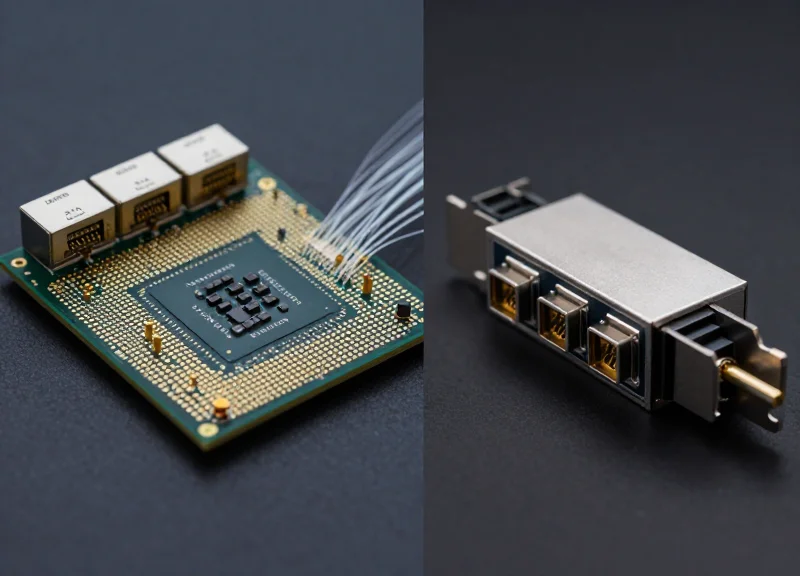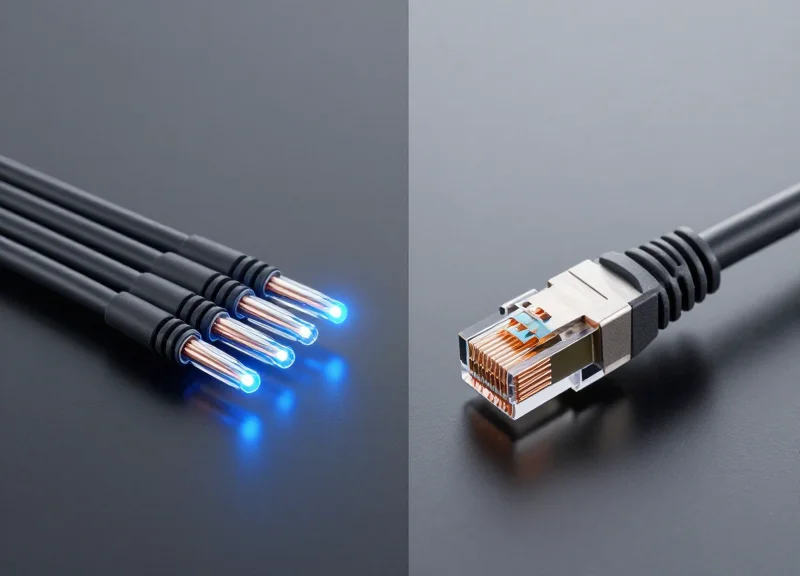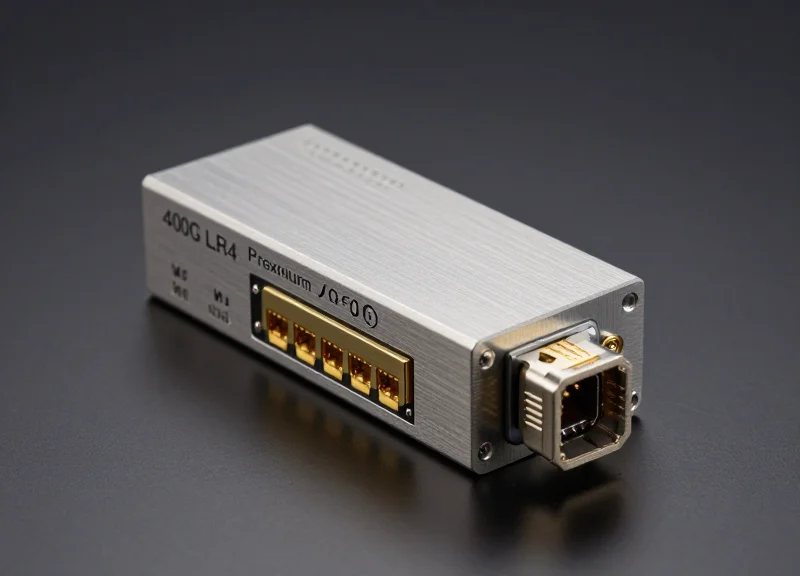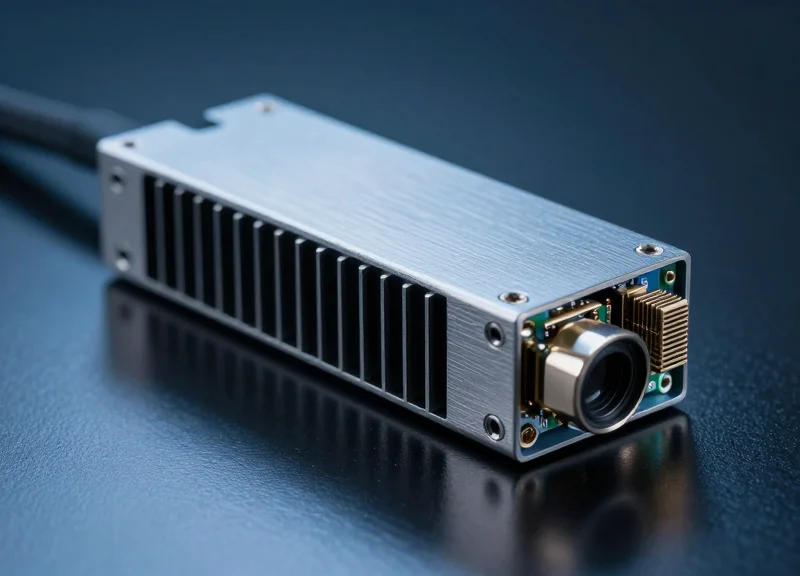
High-speed data transmission demands absolute precision. In the competitive landscape of fiber optics, Eye Diagram Analysis serves as the gold standard for verifying signal integrity and link reliability. As global networks transition toward 400G and 800G architectures, procurement professionals and network engineers face the dual challenge of ensuring technical excellence while managing costs. This article explores how sourcing optics with rigorous eye diagram testing at wholesale rates can future-proof your infrastructure.
The Critical Role of Eye Diagram Analysis in Modern Optics

Eye diagram analysis serves as the fundamental diagnostic tool for high-speed optical fiber communications, providing a composite view of digital signal performance by overlaying multiple bit sequences onto a single Unit Interval (UI). In the current landscape of modern optics, where data rates frequently exceed 400Gbps and 800Gbps, this analysis is indispensable for identifying timing jitter, amplitude noise, and the overall 'openness' of the eye, which directly correlates to the Bit Error Rate (BER) and long-term network reliability.
Key Performance Metrics in Eye Diagram Visualization
| Parameter | Visual Representation | Impact on Performance |
|---|---|---|
| Timing Jitter | Horizontal eye closure/width | Increases timing errors and synchronization failures |
| Noise Margin | Vertical eye closure/height | Reduces signal-to-noise ratio (SNR) and sensitivity |
| Rise/Fall Time | Slopes of signal transitions | Limits maximum achievable bandwidth and data rate |
| Extinction Ratio | Ratio of high to low power levels | Determines the efficiency of power usage in optical links |
The Strategic Value for Wholesale Procurement
For enterprises seeking custom quotes and bulk pricing in 2026, eye diagram analysis is not merely a technical specification but a risk mitigation strategy. When purchasing optical transceivers, active optical cables (AOCs), or high-speed interconnects in volume, buyers utilize eye diagrams as standardized proof of quality. A wide, clear eye opening across a batch of components ensures that the hardware can withstand the signal degradation inherent in long-distance transmissions and high-density data center environments.
- What does a closed eye indicate in high-speed optics?
A closed or narrowed eye indicates significant signal distortion caused by inter-symbol interference (ISI), excessive noise, or jitter, which leads to high error rates and potential link failure. - How do eye diagram results influence bulk pricing for 2026?
Components that demonstrate superior eye mask margins—indicating better tolerance to signal noise—often command higher bulk pricing due to their ability to perform reliably in demanding, high-bandwidth applications. - Why is real-time eye monitoring critical for wholesale buyers?
Real-time monitoring allows wholesale operators to verify that incoming hardware meets the specific signal integrity standards required for their unique network architecture before full-scale deployment.
Why Signal Integrity Dictates Network ROI

Why Signal Integrity Dictates Network ROI
Signal integrity is the fundamental metric that determines the profitability of a high-speed network. In the context of 2026 optics wholesale, purchasing modules with superior signal performance—validated through rigorous eye diagram analysis—reduces the Total Cost of Ownership (TCO) by minimizing Bit Error Rates (BER) and the resulting operational overhead. High-integrity signals ensure that data is transmitted accurately the first time, preventing the costly cycle of retransmissions and excessive power consumption associated with aggressive Forward Error Correction (FEC) processing.
The Financial Impact of Bit Error Rates (BER)
A low BER is not merely a technical preference; it is a financial imperative. When wholesalers provide custom quotes for 400G or 800G modules, the price reflects the quality of the optical engine and its ability to maintain a wide 'eye opening.' A narrow or closed eye indicates high jitter and noise, which leads to intermittent link failures. The cost of a single hour of network downtime in a data center environment can far exceed the initial savings of purchasing sub-standard, unverified optics.
| Performance Metric | High-Integrity Optics (Certified) | Budget/Unverified Optics |
|---|---|---|
| Average Bit Error Rate | < 10^-12 (Pre-FEC) | > 10^-10 (Pre-FEC) |
| Power Consumption | Lower (Efficient DSP usage) | Higher (Intensive FEC cooling) |
| Link Stability | High (99.999% uptime) | Variable (High flapping risk) |
| Maintenance Cost | Predictable/Low | High (Frequent RMAs) |
Long-Term Scalability and Bulk Pricing Strategy
Investing in signal-integrity-certified optics via bulk pricing allows enterprises to future-proof their physical layer. As networks migrate to higher speeds, modules with high mask margins and low jitter provide the headroom necessary to operate reliably even as physical infrastructure ages. This prevents early 'rip-and-replace' scenarios, ensuring that the capital expenditure (CapEx) allocated in 2026 continues to deliver value for several years.
- How does signal integrity affect power efficiency?
Clean signals require less digital signal processing (DSP) intervention. Reducing the workload of the DSP lowers the heat generation and power draw per port, leading to significant savings in cooling costs over thousands of units. - Why should wholesalers provide eye diagram reports?
Eye diagram reports serve as a certificate of volatility and quality. For bulk purchasers, these reports are proof that the batch meets the standardized mask requirements, ensuring uniform performance across the entire deployment. - Does custom quoting account for signal testing?
In 2026, premium wholesale quotes increasingly include 'burn-in' periods and individual eye diagram testing as a value-added service to guarantee that high-speed links will meet SLA requirements upon installation.
Wholesale Procurement Strategies for 2026
Procuring optical modules at scale in 2026 requires a shift from simple price-per-unit negotiation to a quality-first framework where Eye Diagram Analysis serves as the primary metric for long-term ROI. As enterprise networks transition to 400G and 800G architectures, the margin for signal error decreases significantly, making bulk acquisitions without verified jitter and noise performance a high-risk financial strategy.
Strategic Sourcing for AI and High-Density Environments
The explosion of AI workloads has fundamentally altered the wholesale optics market. Data centers are no longer just buying transceivers; they are buying guaranteed throughput. Strategic procurement now involves securing custom quotes that include 'Golden Sample' eye diagram reports for each batch. This ensures that the hardware can handle the PAM4 signaling complexities inherent in modern high-speed transmission.
2026 Pricing Models and Volume Advantages
| Procurement Tier | Volume (Units) | Pricing Advantage | Signal Validation Depth |
|---|---|---|---|
| Standard Enterprise | 100 - 500 | Base Wholesale (10-15% Off) | Standard Factory Batch Testing |
| Data Center Scale | 501 - 2,000 | Tier 2 Discount (20-25% Off) | Per-Batch Eye Diagram Reports |
| Hyperscale/Carrier | 2,000+ | Custom Contract Pricing | Full Serialization & Individual Eye Analysis |
Procurement Strategy FAQs
- Why should I request custom quotes for optics in 2026?
Custom quotes allow for the inclusion of specific signal integrity requirements, such as maximum allowable jitter or minimum mask margins, which are often overlooked in off-the-shelf pricing but are critical for high-speed network stability. - How does bulk pricing impact the cost of Eye Diagram Analysis?
When purchasing in bulk, the overhead cost of advanced laboratory testing is amortized across thousands of units, reducing the per-module cost of signal validation to a fraction of the price compared to small-batch testing. - What are the risks of ignoring signal integrity in wholesale deals?
The primary risks include high Bit Error Rates (BER) and intermittent link failures, which can lead to costly network downtime and the need for massive RMA (Return Merchandise Authorization) cycles that erase any initial savings from low-cost bulk purchases.
By aligning procurement strategies with rigorous technical standards, organizations can leverage 2026 market trends to secure infrastructure that is both cost-effective and technically superior. Moving forward, the integration of eye diagram metrics into the RFP (Request for Proposal) process will distinguish market leaders from those facing recurring maintenance deficits.
OEM vs. ODM: Tailoring Optical Solutions to Your Needs
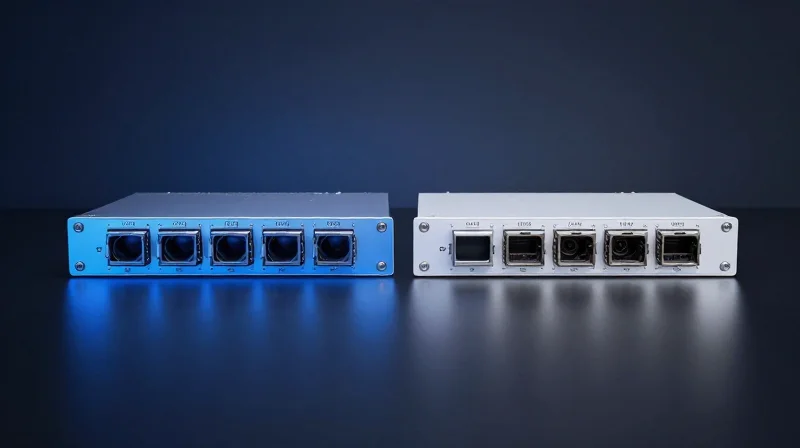
OEM vs. ODM: Defining Your Path to Optical Excellence
In the complex landscape of high-speed optics, the choice between Original Equipment Manufacturing (OEM) and Original Design Manufacturing (ODM) determines who owns the underlying architecture and how eye diagram performance is optimized. For wholesale buyers, this decision is not merely about branding, but about defining the precision of signal integrity. While OEM allows for absolute control over proprietary circuitry and laser driver tuning, ODM offers a turnkey solution where the manufacturer leverages their existing R&D to deliver proven performance at a faster pace.
| Feature | OEM Model | ODM Model |
|---|---|---|
| Design Ownership | Customer provides specific IP and design blueprints. | Manufacturer owns the core design and circuitry. |
| Customization | Deep customization of eye diagram parameters and ASIC firmware. | Standardized design with minor modifications or rebranding. |
| Time-to-Market | Longer due to custom R&D and validation cycles. | Faster, utilizing pre-validated hardware platforms. |
| Cost Structure | Higher initial NRE (Non-Recurring Engineering) fees. | Lower upfront costs, optimized for bulk production. |
| Signal Tuning | Client-led optimization of jitter and noise margins. | Manufacturer-preset performance based on industry standards. |
Customizing Signal Integrity via Wholesalers
Wholesale procurement in 2026 has evolved beyond off-the-shelf inventory. Large-scale enterprise and data center operators now utilize custom quotes to demand specific eye diagram performance thresholds. By working with an OEM partner, a buyer can mandate tighter extinction ratios or specific mask margins that exceed standard IEEE specifications. Conversely, ODM partners provide a cost-effective route for high-volume deployments where the manufacturer’s 'golden sample' eye diagram already meets the network's bit error rate (BER) targets.
Strategic Considerations for Manufacturing Models
- When should I choose the OEM route?
Choose OEM when you have proprietary signal processing algorithms or unique hardware form factors that require the manufacturer to build strictly according to your internal specifications. - Is ODM better for cost-sensitive bulk orders?
Yes, ODM is typically superior for bulk orders where the primary goal is cost-per-unit efficiency and the manufacturer's existing eye diagram validation meets your operational needs. - How does manufacturing choice affect eye diagram analysis?
OEM permits the buyer to define the testing methodology and specific mask coordinates, whereas ODM relies on the manufacturer's internal QA standards for signal validation. - Can I request custom firmware in an ODM model?
Often yes, many ODM providers allow for 'white-label plus' services where firmware is tweaked to improve compatibility with specific switch vendors while maintaining the base hardware design.
Ultimately, the 2026 wholesale market rewards buyers who understand their technical threshold. If your network ROI depends on ultra-low latency and hyper-specific signal tuning, the OEM model justifies its premium. For standard high-density deployments where speed and volume are paramount, the ODM model provides the most efficient path to scaling your optical infrastructure.
Technical Specifications That Matter in Bulk Orders
Technical Specifications That Matter in Bulk Orders
In the context of high-volume optical module procurement, technical specifications are not merely datasheet entries but represent the margin for error within a massive infrastructure deployment. When you buy eye diagram analysis in optics wholesale: custom quotes & bulk pricing 2026 strategies must prioritize the 'Eye Mask' as the ultimate gatekeeper. A well-defined eye diagram ensures that thousands of units will perform identically under varying thermal and electrical loads, preventing the high cost of manual troubleshooting in the field.
Core Eye Diagram Benchmarks for Wholesale Validation
| Parameter | Significance | Target Benchmark (Standard) |
|---|---|---|
| Extinction Ratio (ER) | Difference between logic '1' and '0' power levels. | 8.2 dB to 10 dB+ (depending on protocol) |
| Rise/Fall Times | Transition speed between levels; dictates bandwidth. | < 30 ps for 25G/100G modules |
| Eye Opening Height | Vertical margin protecting against amplitude noise. | Maximized within mask boundaries |
| Eye Width | Horizontal margin protecting against timing jitter. | Typically > 0.6 UI (Unit Interval) |
Extinction Ratio and Signal-to-Noise Integrity
The Extinction Ratio (ER) is perhaps the most critical metric for long-haul and data center interconnects purchased in bulk. It measures the efficiency with which a laser converts electrical input into distinct optical pulses. In wholesale batches, a fluctuating ER indicates poor laser binning or substandard driver circuitry. High-quality modules maintain a consistent ER, ensuring that the receiver can distinguish signals from background noise even after significant attenuation over fiber runs, thereby maintaining low Bit Error Rates (BER) across the entire network tier.
Temporal Precision: Rise and Fall Times
In 400G and 800G environments, the rise and fall times of the optical pulse determine the limits of data throughput. Slow transitions lead to 'closed eyes,' where the signal is sampled before it reaches a stable state. When evaluating wholesale quotes, it is vital to request statistical process control (SPC) data showing that the rise/fall times remain within a tight standard deviation across the entire production lot. This consistency is what separates tier-1 manufacturers from lower-cost alternatives that may exhibit 'lazy' transitions resulting in intermittent link drops.
Eye Opening Height and Noise Immunity
Eye opening height represents the vertical 'clearance' in the signal. A large eye height indicates that the module has superior noise immunity and can withstand the electrical interference common in high-density rack environments. For bulk buyers, this metric is a safeguard against cross-talk. If the eye height is marginal, the modules may work in a lab but fail when installed in a fully loaded chassis where electromagnetic interference (EMI) is prevalent.
Wholesale Technical FAQ
- Why is 'Eye Mask Margin' important for bulk orders?
Eye Mask Margin indicates how much the signal exceeds the minimum requirements. In bulk orders, a high margin (e.g., 20%+) ensures that even with slight manufacturing variances, every unit will meet performance standards. - Should I request individual test reports for each module?
For mission-critical wholesale orders, requesting digitized serialized test reports (including the eye diagram) for each module is standard practice to ensure accountability and traceability. - How does temperature affect these specifications in large deployments?
Optical performance shifts with heat. Bulk buyers should ensure that eye diagram specs are validated at both 'case cold' and 'case hot' temperatures to guarantee stability in real-world data center conditions.
Scaling from 100G to 800G: Challenges and Solutions

The evolution from 100G to 800G connectivity is defined by the transition from simple binary signaling to complex multi-level modulation formats that demand significantly higher precision in signal integrity. For wholesale buyers, this shift means that traditional performance metrics must be augmented with rigorous eye diagram analysis to ensure that high-density modules can maintain reliable data throughput amidst increased sensitivity to noise and jitter. Ubytelink facilitates this transition by providing custom-quoted 800G solutions that are pre-validated for the tighter tolerances required by modern data center fabrics.
Technological Hurdles in 800G Deployment
As bandwidth quadruples, the physical layer faces two primary challenges: signal degradation and heat dissipation. At 800G, the use of PAM4 (Pulse Amplitude Modulation 4-level) creates three vertical eye openings instead of one, effectively reducing the signal-to-noise ratio (SNR) by approximately 9.5 dB. This makes the accuracy of eye diagram analysis critical for identifying closure in any of the three eyes, which would otherwise lead to unacceptable bit error rates (BER).
| Metric | 100G (QSFP28) | 400G (QSFP-DD) | 800G (OSFP/QSFP-DD800) |
|---|---|---|---|
| Modulation | NRZ | PAM4 | PAM4 / Coherent |
| Eye Pattern | Single Eye | Triple Eye | Triple Eye (Compressed) |
| Signal Loss Tolerance | High | Moderate | Low (Requires FEC) |
| Power Consumption | ~3.5W | ~12W - 14W | ~16W - 24W |
Scaling Solutions and Quality Assurance
- How does Ubytelink ensure 800G reliability in bulk orders?
We implement a multi-stage validation process where every batch undergoes high-speed sampling oscilloscope testing to verify TDECQ (Transmitter and Dispersion Eye Closure Quaternary) levels, ensuring compliance with IEEE 802.3ck standards. - What role does FEC play in 800G scaling?
Forward Error Correction (FEC) is mandatory at 800G to compensate for the lower SNR of PAM4 signals. Our eye diagram analysis specifically measures the 'raw' signal quality before FEC to ensure the module isn't over-relying on error correction. - Can I get custom pricing for mixed-speed infrastructure?
Yes, Ubytelink provides custom quotes for 2026 that allow for hybrid procurement of 100G, 400G, and 800G modules, optimized for enterprises transitioning their legacy networks to high-bandwidth AI-ready architectures.
The Role of DSP and Silicon Photonics
To solve the signal integrity issues inherent in 800G, Ubytelink’s inventory leverages advanced Digital Signal Processors (DSP) and Silicon Photonics (SiPh). These technologies stabilize the eye diagram by actively compensating for chromatic dispersion and electronic crosstalk. When purchasing in bulk, opting for SiPh-based 800G modules can offer better thermal stability and lower power-per-bit, which is essential for maintaining eye height consistency across thousands of ports in a hyperscale environment.
The Ubytelink Advantage: Quality Meets Affordability
The Ubytelink Advantage: Quality Meets Affordability
Ubytelink redefines the wholesale optical market by ensuring that cost-efficiency never compromises signal integrity. By leveraging state-of-the-art eye diagram analysis across our entire 100G to 800G product line, we provide enterprise and data center clients with the assurance that every module meets stringent jitter and extinction ratio standards. Our advantage lies in a vertically integrated supply chain that allows us to absorb the costs of rigorous testing while passing significant savings to our bulk-order partners through custom-tiered pricing.
Precision Testing and Quality Assurance
Every module shipped from Ubytelink undergoes comprehensive performance validation. We utilize advanced Digital Communication Analyzers (DCA) to perform real-time eye diagram monitoring, ensuring that parameters such as eye height, eye width, and crossing percentages are optimized for long-haul and short-reach applications. This technical rigor minimizes the bit error rate (BER) and maximizes the lifecycle of the hardware in demanding network environments.
| Feature | Ubytelink Wholesale | Generic Wholesale Market |
|---|---|---|
| Eye Diagram Testing | 100% Individual Module Testing | Batch or Sample Testing Only |
| Logistics Support | Global Expedited Shipping | Regional/Standard Shipping |
| Price Flexibility | Custom Quotes based on Volume | Fixed Pricing Structures |
| Technical Support | Dedicated FAE (Field Application Engineer) | Generic Customer Service |
Supply Chain Efficiency and Global Reach
Affordability at Ubytelink is driven by our logistical prowess. We maintain strategic warehouses across key global hubs to reduce lead times and shipping overhead. For our 2026 wholesale partners, this means faster deployment cycles and lower total cost of ownership (TCO). Whether you are scaling a regional ISP or a global hyperscale data center, our infrastructure is designed to support rapid scaling with minimal friction.
- How do I request a custom quote for bulk 400G modules?
Clients can submit a request through our Wholesale Portal or contact a dedicated account manager directly. Quotes are typically generated within 24 hours based on volume, destination, and technical specifications. - Can Ubytelink provide specific eye diagram reports for my order?
Yes, we can provide serialized test reports for bulk orders upon request, detailing the mask margin and jitter performance of each module to satisfy internal compliance requirements. - What is the typical lead time for international bulk orders?
Standard bulk orders are processed and shipped within 3-5 business days, with global delivery taking between 5-10 days depending on the region and customs requirements.
Navigating the Supply Chain for Optical Components
The Strategic Importance of Supply Chain Resilience
Successfully navigating the supply chain for optical components in 2026 hinges on moving beyond simple transactions to integrated partnerships that stabilize lead times and guarantee signal integrity. As global demand for 400G and 800G optics surges, the ability to forecast requirements and secure capacity with Tier-1 manufacturers becomes the primary differentiator between project success and costly delays. Effective supply chain management ensures that when you Buy Eye Diagram Analysis in Optics Wholesale: Custom Quotes & Bulk Pricing 2026, the technical benchmarks of every module remain consistent across large-scale deployments.
Comparative Sourcing Models
| Feature | Transactional Sourcing | Strategic OEM Partnership |
|---|---|---|
| Lead Time Stability | High Volatility | Contractually Guaranteed |
| Quality Assurance | Batch-level Spot Checks | Continuous Eye Diagram Validation |
| Pricing Model | Market-dependent Spot Pricing | Fixed-Tier Wholesale Agreements |
| Technical Support | Limited/Generic | Direct Engineering Collaboration |
Mitigating Lead Times and Shortages
To combat the volatility inherent in semiconductor and laser diode production, buyers must leverage strategies such as safety stock buffering and multi-source verification. Utilizing partners like Ubytelink allows for a consolidated approach where logistics expertise meets technical oversight. By aligning procurement cycles with OEM production schedules, enterprises can bypass the typical 12-24 week wait times often associated with high-bandwidth transceivers, ensuring that bulk orders for eye diagram analysis-tested modules arrive according to critical project milestones.
Supply Chain FAQ
- How does wholesale procurement affect eye diagram consistency?
Wholesale agreements with certified OEMs ensure that all units in a specific production run utilize the same component bill of materials (BOM) and firmware version, leading to uniform eye opening heights and extinction ratios across thousands of units. - What are the primary risks in the 2026 optical supply chain?
Key risks include geopolitical trade constraints affecting substrate materials like InP and GaAs, as well as rapid shifts in demand from legacy 100G architectures to AI-driven 800G deployments which can exhaust available factory capacity. - Can custom quotes assist in long-term supply planning?
Absolutely. Requesting custom quotes for multi-quarter rollouts allows vendors to lock in component pricing and reserve factory floor time, protecting the buyer from mid-year price hikes and supply bottlenecks.
How to Request an Accurate Custom Quote

How to Request an Accurate Custom Quote
The path to securing the most competitive wholesale pricing for optical modules and eye diagram analysis starts with technical transparency and volume clarity. An accurate quote is not merely a price list; it is a tailored financial and technical proposal that accounts for specific performance thresholds, material yields, and logistical efficiencies. By providing a comprehensive data set up front, buyers allow Ubytelink to optimize production schedules and supply chain allocations, effectively reducing the risk premiums often included in vague estimates.
Key Data Points for Precision Quoting
To receive an actionable quote that reflects real-world wholesale advantages, procurement teams should move beyond generic part numbers. Specifying the exact operating environment, required mask margins in eye diagram tests, and the target extinction ratio allows our engineers to align manufacturing processes with your specific network demands. This level of detail minimizes back-and-forth communication and ensures that the final price reflects the exact performance tier required.
| Requirement Detail | Standard Request (General) | Precision Request (Wholesale Optimization) |
|---|---|---|
| Transceiver Type | 100G QSFP28 | 100G QSFP28 LR4 (Dual LC, 10km) |
| Performance Specs | Standard Compliant | Mask Margin >20%, BER <1x10^-12 |
| Volume Structure | Ongoing Supply | 500 Units Quarterly / 2,000 Units Annual |
| Compliance Needs | Generic MSA | Specific TAA Compliance or OEM Compatibility |
Wholesale Quoting FAQs
- How long does it take to receive a custom wholesale quote?
For standard high-speed modules (100G-400G), Ubytelink typically provides a detailed quote within 24 to 48 hours. Custom configurations requiring specialized eye diagram validation or specific wavelength tuning may require 3-5 business days for engineering review. - Are there price breaks for multi-year contracts?
Yes. We offer strategic pricing tiers for long-term supply agreements. By committing to annual volumes, clients can lock in lower rates and insulate themselves against market-driven price fluctuations in the semiconductor and optical component sectors. - Can I request specific test reports as part of the quote?
Absolutely. You can specify the inclusion of individual serialized eye diagram reports and spectral analysis data as part of your bulk order package. This ensures every unit meets your internal Quality Assurance benchmarks before it leaves our facility. - What information is needed for international shipping quotes?
Please provide the final destination port or facility address, preferred Incoterms (e.g., EXW, FCA, or DAP), and any specific customs documentation requirements unique to your region to ensure accurate logistics cost modeling.
Ultimately, the more granular your request, the more aggressive our pricing can be. At Ubytelink, we leverage our direct manufacturing oversight and rigorous testing protocols to provide wholesale solutions that don't compromise on signal integrity or long-term reliability. Contact our sales engineering team today to initiate your custom quote process for the 2026-2025 fiscal cycle.
Securing high-performance optical modules with verified Eye Diagram Analysis is no longer a luxury—it is a requirement for modern, scalable networks. By leveraging Ubytelink's wholesale pricing and extensive OEM/ODM capabilities, businesses can achieve a perfect balance between technical superiority and cost efficiency. Ready to scale your network? Contact Ubytelink today for a custom quote and expert consultation on your next bulk order.