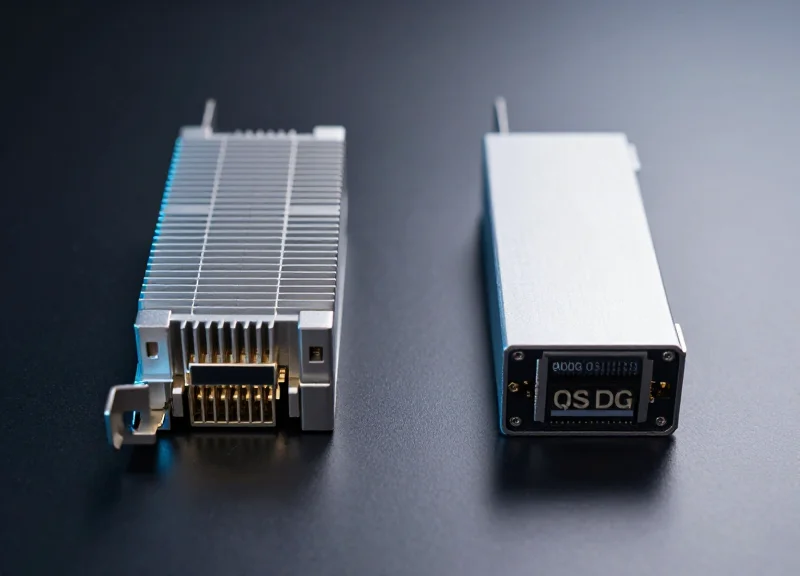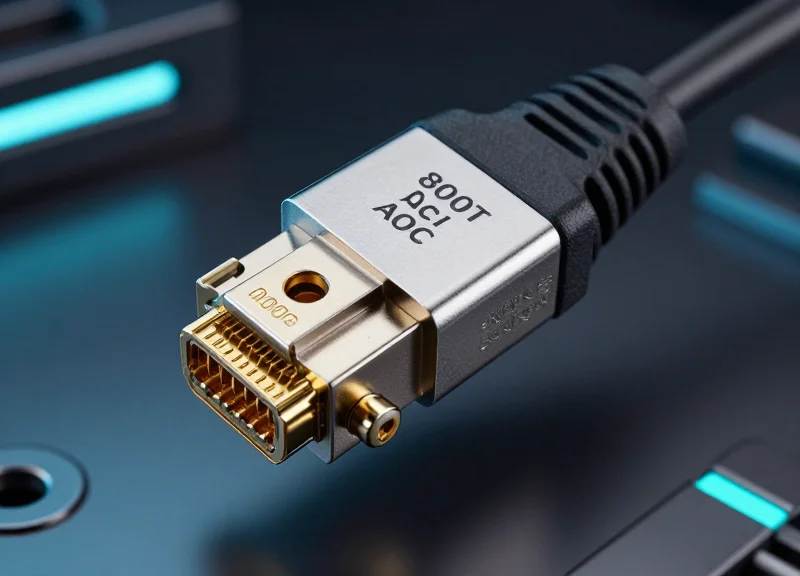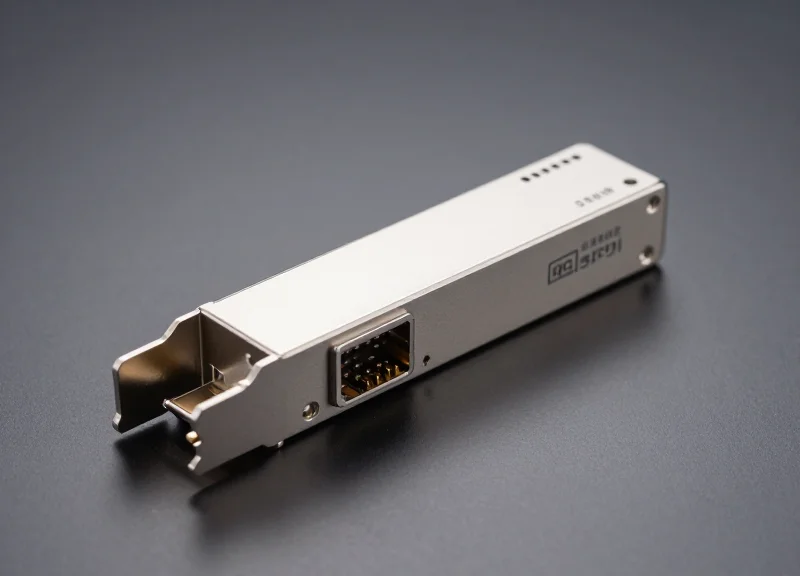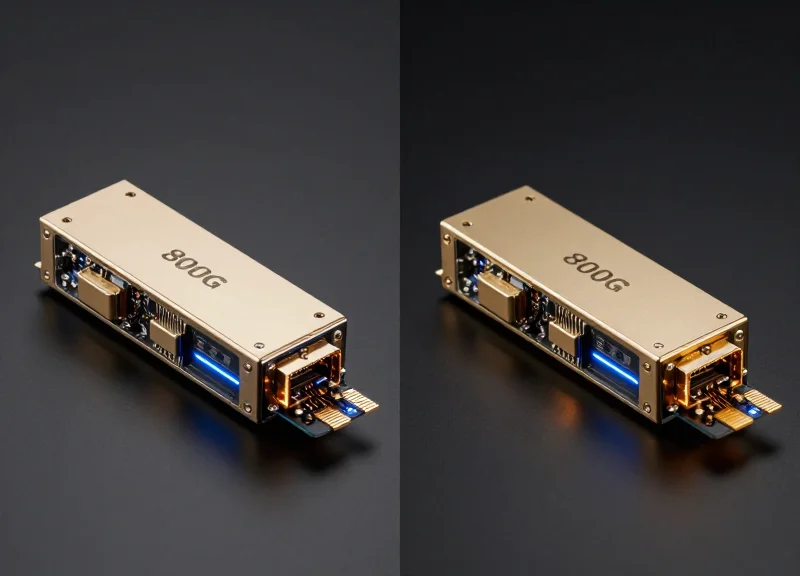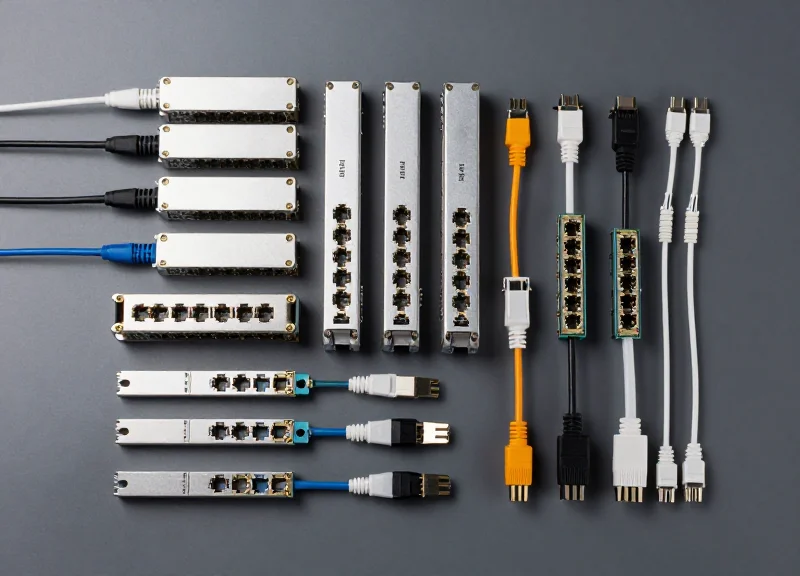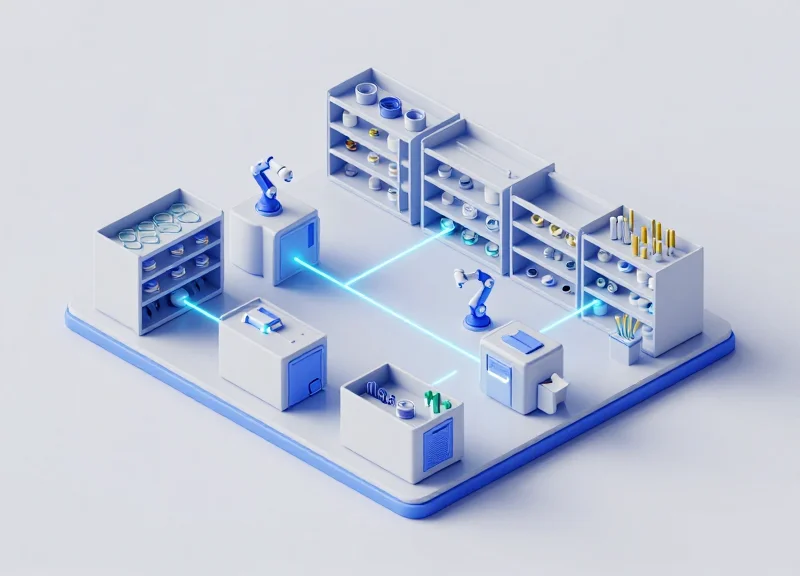
In the era of 400G and 800G networking, the complexity of managing thousands of optical transceivers and fiber assets has reached a breaking point. Effective Optics Inventory Management is no longer just about spreadsheets; it is a critical technical discipline that ensures network uptime, reduces OpEx, and enables seamless scaling. This guide dives into the architectural requirements and technical standards of modern optical asset tracking to provide a blueprint for network reliability.
The Evolution of Optical Networking and the Need for Precision Tracking
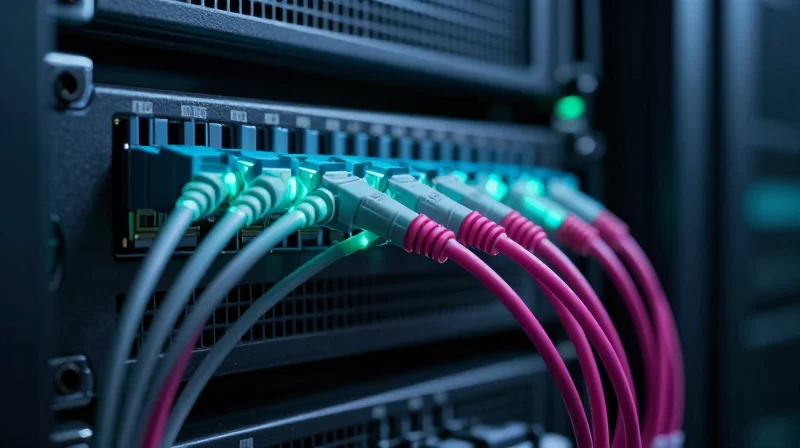
The Transition from 10G Legacy to 800G Complexity
Optics inventory management is the automated lifecycle tracking of transceivers, cabling, and optical components, a process that has become mandatory as data center interconnects scale toward 800G. In the era of 10G networking, tracking was often a static exercise involving spreadsheets and manual audits. However, the move to 400G and 800G architectures introduces PAM4 modulation, silicon photonics, and coherent optics, all of which require far more granular monitoring of physical layer metrics and firmware compatibility than their predecessors.
The Density Challenge of Leaf-Spine Fabrics
Modern data centers have largely abandoned the three-tier hierarchy in favor of leaf-spine architectures. While this provides massive East-West bandwidth, it also results in an explosion of optical connection points. A single spine switch can host dozens of high-density line cards, each filled with QSFP-DD or OSFP modules. Manually managing thousands of serial numbers, vendor codes, and wavelength specifications in such a dense environment is not only inefficient but also prone to human error that can lead to significant network downtime.
| Parameter | Legacy Era (1G/10G) | Modern Era (400G/800G+) |
|---|---|---|
| Port Density | Low (1-10 ports per RU) | Ultra-High (32-128 ports per RU) |
| Management Method | Manual Spreadsheets / CLI | API-driven Automated Discovery |
| Modulation Complexity | Simple NRZ (On-Off Keying) | Complex PAM4 and Coherent |
| Critical Metrics | Link Up/Down status | Real-time DDM, Pre-FEC BER, Power Draw |
Critical Drivers for Automated Tracking
- Why is real-time Digital Diagnostic Monitoring (DDM) essential?
As speeds increase, the margin for error in signal-to-noise ratios decreases. Real-time DDM tracking allows operators to see shifts in transmit/receive power levels before they result in a hard failure. - How does inventory management impact OpEx?
Precision tracking reduces 'Search and Rescue' missions where technicians hunt for specific serial numbers in a data hall, directly lowering the Mean Time to Repair (MTTR). - What role does firmware play in optics management?
Modern transceivers are sophisticated computers. Inventory systems ensure that all modules are running validated firmware versions to prevent interoperability issues with switch ASICs.
Core Components of an Optics Inventory System: Hardware and Metadata
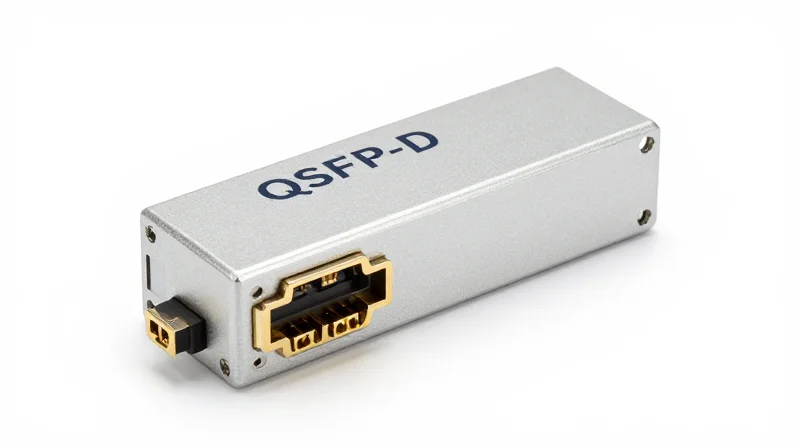
Core Components of an Optics Inventory System: Hardware and Metadata
Effective optics inventory management is built upon the ingestion of granular hardware data extracted directly from the transceiver's internal memory. Unlike general IT assets, optical modules contain a wealth of embedded information—governed by Multi-Source Agreements (MSAs) such as SFF-8472 and SFF-8636—that provides a verifiable digital identity and real-time operational status. A robust system must bridge the gap between static 'on-the-shelf' data and dynamic 'in-the-switch' telemetry to ensure network reliability.
Static Metadata: The Transceiver Digital Identity
Every professional-grade optical transceiver contains an EEPROM (Electrically Erasable Programmable Read-Only Memory) chip. This chip serves as the module's 'birth certificate,' storing immutable data points that the host switch reads upon insertion. For inventory managers, this metadata is the source of truth for compatibility auditing and asset lifecycle management.
| Data Field | Technical Source | Inventory Function |
|---|---|---|
| Vendor Serial Number | EEPROM Address 96-111 | Unique tracking for warranty claims and RMA processing. |
| Vendor PN (Part Number) | EEPROM Address 40-55 | Identifies exact specifications (e.g., 400G-DR4 vs 400G-FR4). |
| Wavelength/Lane Code | EEPROM Address 60-61 | Critical for DWDM channel assignment and fiber planning. |
| Date Code | EEPROM Address 84-91 | Assists in identifying batches prone to premature failure (MTBF tracking). |
| Transceiver Code | EEPROM Address 3-10 | Identifies form factor (QSFP28, SFP+) and reach (SR, LR, ER). |
Real-Time Telemetry: DOM and DDM Ingestion
Beyond static identification, advanced inventory systems leverage Digital Optical Monitoring (DOM) or Digital Diagnostic Monitoring (DDM). This allows the system to monitor the 'health' of the inventory while it is active in the field. By tracking metrics such as Tx/Rx power levels and laser bias current, inventory managers can move from reactive replacement to predictive maintenance, identifying optics that are 'drifting' out of specification before a hard failure occurs.
Hardware and Metadata FAQ
- Why is EEPROM data more reliable than physical labels?
Physical labels can be damaged, removed, or falsified. EEPROM data is electronically encoded into the hardware and is what the switch uses to determine link parameters, making it the technical 'source of truth'. - What is the role of the Vendor OUI in inventory management?
The Organizationally Unique Identifier (OUI) is a 24-bit number assigned by the IEEE. It allows inventory systems to verify the actual manufacturer of the optical components, which is vital for multi-vendor sourcing strategies. - How does DOM data assist in inventory planning?
By monitoring Rx power over time, inventory managers can identify aging fiber spans or degrading modules, allowing them to stage replacement inventory in specific geographic locations before the link drops.
Technical Protocols: Leveraging SNMP, NETCONF, and gNMI for Real-time Visibility

To achieve a truly automated optics inventory, the management system must interface with the network element's control plane using standardized protocols that can interpret low-level hardware registers. These protocols serve as the conduit for retrieving static data, such as serial numbers and part numbers, as well as dynamic Digital Optical Monitoring (DOM) metrics like laser bias current and optical receive power.
The Protocol Landscape for Optical Discovery
The choice of protocol dictates the granularity, speed, and scalability of the inventory system. While legacy environments still rely heavily on polling-based mechanisms, modern hyperscale data centers are shifting toward push-based streaming telemetry to maintain a real-time digital twin of their optical layer.
SNMP: The Ubiquitous Polling Baseline
Simple Network Management Protocol (SNMP) remains the most common method for retrieving optical data. It relies on Management Information Bases (MIBs), specifically the Entity MIB (RFC 6933) and various vendor-specific MIBs for DOM data. However, SNMP faces challenges with scale; polling thousands of transceivers across a spine-leaf fabric can introduce significant CPU overhead on the switch and latency in data updates.
NETCONF and YANG: Model-Driven Inventory
NETCONF (Network Configuration Protocol) provides a more robust alternative by utilizing YANG (Yet Another Next Generation) data modeling. Unlike SNMP's unstructured OIDs, YANG models like OpenConfig-Platform define a hierarchical structure for optical components. This allows for transactional integrity and a cleaner programmatic interface for extracting complex metadata such as wavelength tuning ranges and forward error correction (FEC) statistics.
gNMI and Streaming Telemetry: Real-Time Visibility
gRPC Network Management Interface (gNMI) represents the cutting edge of optics management. By using a 'subscribe' instead of a 'poll' model, gNMI allows the network device to stream telemetry updates to a collector whenever a state changes. For high-speed 400G/800G links, where optical power fluctuations can signal imminent failure, the sub-second updates provided by gNMI are essential for proactive maintenance.
| Feature | SNMP | NETCONF | gNMI |
|---|---|---|---|
| Data Model | MIBs (OIDs) | YANG (XML/JSON) | YANG (ProtoBuf) |
| Communication | Poll-based (UDP) | Request-Response (SSH) | Streaming (gRPC/HTTP2) |
| Performance | Low/Moderate | Moderate/High | Very High |
| Optics Use Case | Basic Asset Tracking | Detailed Config & Inventory | Real-time DOM Monitoring |
Protocol Implementation FAQs
- Can I use SNMP for 800G optics management?
Yes, but it is not recommended for high-frequency telemetry. SNMP can pull static inventory data like serial numbers, but it lacks the efficiency needed for the rapid monitoring required by 800G power envelopes. - What is the primary advantage of OpenConfig for optics?
OpenConfig provides a vendor-neutral YANG model, ensuring that optics from different manufacturers plugged into different switches (Arista, Cisco, Juniper) can be managed using a single, unified data structure. - Is gNMI difficult to implement for optics inventory?
It requires a collector capable of handling gRPC streams and modern NOS support. While more complex than SNMP, it significantly reduces network overhead by eliminating redundant polling requests.
Managing Vendor Heterogeneity: Overcoming the Challenges of Multi-Vendor Optics
Managing Vendor Heterogeneity: Overcoming the Challenges of Multi-Vendor Optics
Effective management of vendor heterogeneity relies on a dual-track strategy of enforcing Multi-Source Agreement (MSA) standards for physical interoperability while implementing sophisticated EEPROM validation and inventory tracking to bypass proprietary hardware locks. As network operators transition away from single-vendor lock-in to reduce TCO (Total Cost of Ownership), the inventory system must transition from a simple asset list to a compatibility engine that understands the specific 'coding' requirements of diverse host platforms.
MSA Standards vs. Proprietary Vendor Locks
While MSA standards define the mechanical and electrical specifications of transceivers (such as the SFP-8472 or QSFP-DD standards), hardware manufacturers often implement 'Vendor Checks' at the software level. These checks query the transceiver’s internal EEPROM for specific Vendor OUI (Organizationally Unique Identifier) or checksum values. If the data does not match the expected 'original' hardware, the switch port may be disabled or transition into an 'err-disabled' state.
| Feature | Generic MSA-Compliant | Vendor-Branded (OEM) | Third-Party Coded |
|---|---|---|---|
| Cost Basis | Low (Commodity Pricing) | High (Premium Markup) | Moderate |
| Interoperability | Universal Physical Fit | Locked to Host Brand | Emulated OEM Identity |
| Software Support | May require CLI overrides | Native / Seamless | Native (if coded correctly) |
| Inventory Tracking | Standard Serial/Model | Proprietary Part Numbers | Mapping required for SKU |
Technical Strategies for Interoperability
To navigate a heterogeneous landscape, network engineers must employ specific technical workarounds and management protocols. This includes the use of 'service unsupported-transceiver' commands on specific CLI environments, which permits the use of third-party optics while acknowledging that the vendor may limit support for physical layer issues. Advanced inventory management systems automate this by storing the 'Programmed For' metadata, allowing operators to see not just what the optic is, but which host system it has been flashed to support.
- How can I ensure third-party optics work across different switch vendors?
Utilize a centralized inventory system that tracks the 'Coding Profile' of each optic. Many third-party optics can be re-programmed in the field to mimic the EEPROM signatures of different OEMs, ensuring the host switch accepts the transceiver as 'native'. - What are the risks of using 'service unsupported-transceiver' commands?
The primary risk is the loss of official TAC support for that specific port. Additionally, certain DOM/DDM telemetry features may not report correctly if the host software does not recognize the specific data offset in the third-party EEPROM. - Does mixing vendors affect optical performance?
Generally, no. As long as both ends of the link adhere to the same IEEE standards (e.g., 100GBASE-LR4), the physical light transmission remains compatible regardless of the brand on the transceiver casing.
The Importance of EEPROM Management
A technical deep dive into optics inventory is incomplete without mentioning EEPROM field-reprogramming. Modern optics inventory management often involves a 'GBC' (Generic Brand Compatibility) approach, where a single SKU is stocked but flashed with specific vendor code just-in-time for deployment. This reduces spare parts fragmentation and ensures that the inventory remains fluid across a multi-vendor data center fabric.
Lifecycle Management: From Procurement and Burn-in to Retirement
Optics lifecycle management is the end-to-end technical governance of optical transceivers, transforming them from simple hardware components into tracked assets with measurable health metrics. Unlike passive components, active optics require a structured pipeline that begins with validated procurement, moves through a high-stress 'burn-in' phase to eliminate infant mortality failures, and concludes with a data-driven retirement strategy based on real-world telemetry rather than arbitrary timelines.
Inbound Inspection and Initial Validation
The lifecycle begins at the loading dock. Upon receipt, technical teams must verify that the optics conform to Multi-Source Agreement (MSA) standards and hardware compatibility lists. This stage involves verifying the EEPROM data (Vendor Name, Part Number, and Serial Number) via CLI or specialized optics programmers to ensure the modules haven't been mislabeled. Physical inspections check for port cleanliness and housing integrity, preventing the introduction of contaminants into the production fiber plant.
The Burn-in Phase: Mitigating Infant Mortality
Electronic and optoelectronic components follow the 'bathtub curve' regarding failure rates; they are most likely to fail during the first few dozen hours of operation or at the very end of their lifespan. To mitigate this, enterprise environments utilize a 'burn-in' period. Optics are installed in a test bed and subjected to high-traffic loads and thermal variations for 24 to 72 hours. During this time, Bit Error Rate (BER) testing is conducted. If an optic survives this high-stress period without exceeding error thresholds, it is cleared for production deployment.
| Lifecycle Stage | Key Technical Action | Primary Goal |
|---|---|---|
| Procurement | EEPROM/MSA Verification | Vendor Compatibility & Authenticity |
| Burn-in | BER & Thermal Stress Testing | Eliminating Infant Mortality Failures |
| Deployment | DOM/DDM Threshold Mapping | Establishing Performance Baselines |
| Retirement | Optical Power Drop Analysis | Preventative Decommissioning |
Active Monitoring and Predictive Retirement
Once in production, the focus shifts to Digital Optical Monitoring (DOM). Inventory management systems must poll these metrics (TX/RX power, temperature, bias current) continuously. Retirement should not be based on age alone but on performance degradation. A significant increase in laser bias current, for instance, often indicates a failing laser diode. By setting soft thresholds in the inventory management system, administrators can proactively swap optics during maintenance windows before a hard failure occurs.
Lifecycle FAQs
- Why is burn-in testing necessary for new optics?
Burn-in testing forces early-stage hardware failures in a controlled lab environment rather than in the production network, significantly increasing overall network reliability. - When should an optic be officially retired?
An optic should be retired when its RX power consistently falls below the sensitivity threshold, when laser bias current spikes significantly, or when it begins generating incremental CRC errors. - Can optics be repurposed after decommissioning?
Yes, optics removed from critical core layers can often be repurposed for lower-priority access layers or lab environments, provided they still pass basic diagnostic tests.
The Role of Automation and AI in Predicting Optics Failures

Predictive Maintenance: The Next Frontier of Optics Inventory Management
The integration of automation and AI into optics inventory management marks a transition from simple asset tracking to intelligent lifecycle orchestration. By leveraging Digital Optical Monitoring (DOM) data, network operators can now identify degradation patterns—such as gradual shifts in transmit power or temperature fluctuations—that precede catastrophic hardware failure, allowing for pre-emptive swaps that minimize downtime.
The Telemetry Data Driving AI Models
Modern transceivers provide a stream of real-time diagnostics known as Digital Diagnostic Monitoring (DDM). Machine learning models ingest this telemetry, focusing on four key features: Optical Receive/Transmit Power (dBm), Laser Bias Current, Internal Temperature, and Supply Voltage. Anomalies in these metrics, when correlated across thousands of units in a heterogeneous environment, serve as early warning signs of component fatigue or manufacturing defects that traditional threshold-based alerts often miss.
| Feature | Reactive Management | AI-Driven Predictive Management |
|---|---|---|
| Downtime Impact | High (Unplanned outages) | Minimal (Scheduled maintenance) |
| Inventory Strategy | Just-in-case (High safety stock) | Just-in-time (Data-backed allocation) |
| Failure Detection | Threshold-based alerts | Anomaly detection & health scoring |
| Operational Focus | Troubleshooting & Replacement | Lifecycle Optimization |
Algorithmic Approaches to Failure Prediction
Data scientists typically employ Random Forest classifiers or Long Short-Term Memory (LSTM) neural networks to analyze time-series data from optics. These models are trained to recognize the 'slope of degradation'—the specific rate at which a laser's bias current increases to maintain output power. When the model identifies a signature consistent with impending end-of-life, the inventory management system can automatically trigger a procurement workflow or alert a technician to replace the specific module before the link flaps.
Automation and AI FAQ
- Can AI predict 'infant mortality' in new optics?
Yes, by analyzing burn-in data and initial bias current spikes that deviate from standard vendor profiles during the first 48 hours of deployment. - Does this require proprietary vendor software?
No, most predictive models use standard SNMP or gRPC streaming telemetry data available from any MSA-compliant transceiver, regardless of the vendor. - How does automation improve inventory accuracy?
Automated discovery scripts poll network elements via API, ensuring the inventory database reflects real-time physical deployments rather than manual spreadsheet entries.
Integration Strategies: Connecting Inventory Management with DCIM and NMS
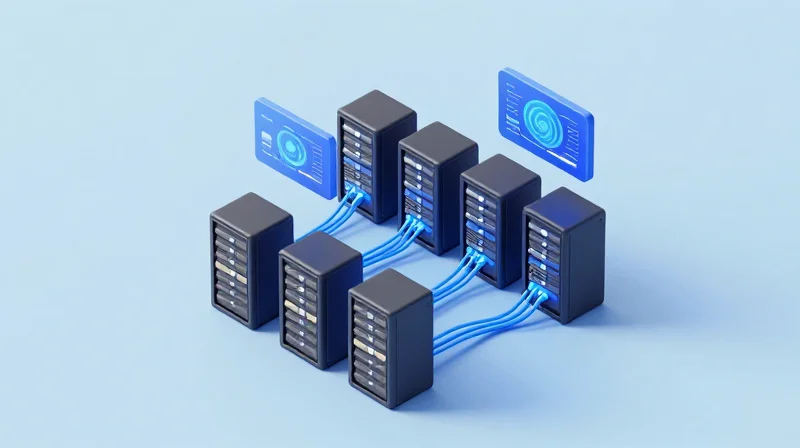
The Single Source of Truth: Why Integration is Mandatory
Integrating optics inventory management into broader Data Center Infrastructure Management (DCIM) and Network Management Systems (NMS) is the only way to eliminate the data silos that lead to overprovisioning, reactive maintenance, and deployment delays. By bridging the gap between the warehouse shelf and the production switch port, organizations can ensure that a transceiver's physical metadata—such as serial number, manufacturer, and batch ID—is consistently mapped to its operational metrics, like laser bias current and temperature. This holistic view enables automated asset tracking and predictive maintenance that isolated systems cannot achieve.
Defining the Roles of DCIM and NMS Integration
While both systems are critical, they serve distinct functions in the lifecycle of an optical transceiver. DCIM focuses on the physical placement and capacity, whereas the NMS focuses on the logical health and traffic flow.
| Feature | DCIM Integration Focus | NMS Integration Focus |
|---|---|---|
| Primary Objective | Physical asset tracking and rack space. | Logical performance and port status. |
| Data Handled | Serial numbers, SKU, location, warranty. | Optical power levels, BER, alarms. |
| Inventory Trigger | Generated upon rack installation/patching. | Generated upon port link-up or flap. |
| Lifecycle Stage | Procurement through Decommissioning. | Active Operation and Monitoring. |
API-First Architecture and Data Normalization
To connect these systems, a robust API-first approach is required. The inventory management system should expose RESTful endpoints that allow the DCIM to query available stock and the NMS to 'check-in' modules as they are plugged into active hardware. A significant technical challenge here is data normalization. Different vendors report transceiver data in varying formats; an effective integration layer must translate vendor-specific EEPROM data into a standardized format (such as OpenConfig) before it enters the NMS database. This ensures that a 400G-QSFP-DD from Vendor A is monitored using the same logic as one from Vendor B.
{
  "optics_inventory": {
    "serial_number": "OPT-12345-XYZ",
    "status": "active",
    "location": "Rack-04-A1",
    "switch_id": "TOR-01",
    "port_id": "Et1/1",
    "last_telemetry": {
      "tx_power": "-2.5dBm",
      "rx_power": "-3.1dBm"
    }
  }
}
Integration Best Practices FAQ
- How can I prevent duplicate records across DCIM and NMS?
Utilize the transceiver serial number as the unique primary key across all platforms. Ensure the inventory management system is the 'master' for serial number records to maintain data integrity. - Can integration automate RMA processes?
Yes. When the NMS detects optical levels exceeding failure thresholds, it can trigger a webhook to the inventory system to check for warranty status and automatically initiate an RMA ticket. - Is real-time synchronization necessary?
For mission-critical data centers, yes. Real-time sync ensures that if a technician swaps a module during a maintenance window, the change is reflected immediately in the NMS for monitoring.
Security and Compliance: Tracking the Chain of Custody for Critical Infrastructure
Security and Compliance: Tracking the Chain of Custody for Critical Infrastructure
In high-security environments, optics inventory management serves as a defensive layer that validates the provenance and integrity of every transceiver entering the network fabric. By maintaining a verifiable chain of custody, organizations can mitigate the risks associated with counterfeit hardware, which often lacks the rigorous quality control and secure firmware required to protect critical data paths from interception or unexpected failure.
Combatting Counterfeit Optics and Gray-Market Risks
Counterfeit transceivers are more than just a reliability concern; they are a security vulnerability. These modules may contain unauthorized firmware modifications or sub-standard components that exhibit erratic behavior under load. A technical approach to optics inventory management involves extracting and cataloging unique identifiers—such as the manufacturer's Serial Number (SN), Vendor OUI, and internal EEPROM checksums—to ensure the hardware matches the records of authorized distributors. Without this tracking, gray-market components can easily infiltrate the supply chain, compromising the 'hardware root of trust' required for modern zero-trust architectures.
| Security Metric | Manual/Legacy Inventory | Secure Optics Management |
|---|---|---|
| Provenance Verification | Visual inspection of labels | Automated EEPROM digital signature check |
| Audit Readiness | Retroactive spreadsheet updates | Real-time, timestamped event logging |
| Malicious Firmware Detection | None (Reactive) | Baseline versioning and anomaly detection |
| Chain of Custody | Fragmented procurement records | End-to-end lifecycle visibility |
Regulatory Compliance and Audit Documentation
For industries subject to NIST 800-161 (Supply Chain Risk Management) or GDPR, the ability to document the 'who, when, and where' of hardware deployment is mandatory. A centralized optics inventory provides an immutable audit trail. When a transceiver is decommissioned, the system records its disposal or destruction, ensuring that sensitive hardware does not resurface in unauthorized environments. This level of detail is essential during SOC2 audits or ISO/IEC 27001 certifications, where hardware-level asset management is often a scrutinized control point.
FAQ: Securing the Optics Supply Chain
- How do counterfeit optics impact network security?
Counterfeit optics can introduce instability into the physical layer, but more critically, they may contain unvetted firmware that lacks security patches or could theoretically facilitate side-channel attacks by compromising the management interface of the host switch. - What is a 'Digital Chain of Custody' for transceivers?
It is a continuous digital record that tracks the module from the manufacturer’s shipping dock through receiving, staging, active deployment in a specific port, and final decommissioning. - Can inventory management systems detect stolen optics?
Yes. By maintaining a database of 'known-good' serial numbers and their assigned locations, any optics that appear in the network without a matching procurement record can be flagged as unauthorized or potentially stolen hardware.
Measuring Success: Key Performance Indicators (KPIs) for Optics Management
Optics inventory management success is defined by the ability to maintain 100% link availability while minimizing capital tied up in idle hardware. Effective management moves beyond simple stock-taking to evaluate how quickly the organization responds to failures, how accurately it predicts demand, and how efficiently it manages the total lifecycle cost of every transceiver. By establishing a rigorous baseline of Key Performance Indicators (KPIs), network architects can transform optics from a perceived commodity into a strategic asset that supports high-availability Service Level Agreements (SLAs).
Operational Efficiency and Reliability Metrics
The most immediate indicators of success are operational. Mean Time to Repair (MTTR) for optical links is heavily dependent on having the correct transceiver type (wavelength, reach, and form factor) immediately available at the site of failure. A high MTTR often signals a breakdown in the 'last-mile' of the optics supply chain. Additionally, tracking the Spare-to-Active ratio ensures that the network is neither under-provisioned, which risks downtime, nor over-provisioned, which wastes budget.
| KPI Metric | Definition | Target Benchmark |
|---|---|---|
| Mean Time to Repair (MTTR) | The average time from port failure notification to link restoration. | < 2 Hours for core sites |
| Spare-to-Active Ratio | The percentage of inventory held in reserve compared to deployed units. | 5% to 10% per optic type |
| Inventory Accuracy Rate | The delta between the NMS/DCIM records and physical shelf counts. | > 99.5% accuracy |
| Annualized Failure Rate (AFR) | The percentage of the total optics population that fails within a year. | < 0.5% for high-quality modules |
Financial Health and Lifecycle KPIs
Total Cost of Ownership (TCO) is the definitive financial metric for optics management. It encompasses the initial purchase price, the cost of power and cooling over the module's lifespan, the administrative cost of managing RMAs, and the potential cost of network downtime caused by module failure. Successful management should see a year-over-year reduction in TCO through the use of high-reliability third-party optics and optimized inventory turnover rates, which measure how quickly spare stock is utilized and replenished.
- How does optics management impact TCO?
Efficient management reduces TCO by preventing over-purchasing, minimizing emergency shipping costs, and selecting hardware with lower failure rates that reduce expensive technician dispatches. - What is the ideal inventory turnover for transceivers?
While it varies by network scale, a healthy turnover rate ensures that optics do not sit in storage long enough to become technologically obsolete or lose warranty coverage. - Why is Inventory Accuracy critical for compliance?
For regulated industries, knowing the exact location and origin of hardware is a security requirement. Accuracy KPIs ensure that the 'Single Source of Truth' remains valid for audits.
Optimizing your optics inventory is the foundation of a resilient, high-performance network. By implementing technical automation and standardized tracking protocols, organizations can drastically reduce human error and hardware waste while ensuring maximum uptime. Ready to modernize your infrastructure? Consult with our engineering experts today to build a future-proof optics management strategy tailored to your high-speed network needs.