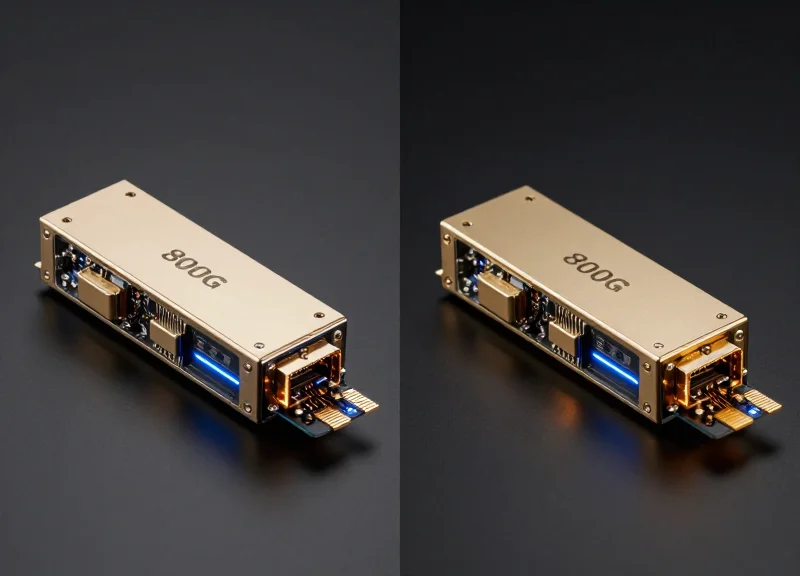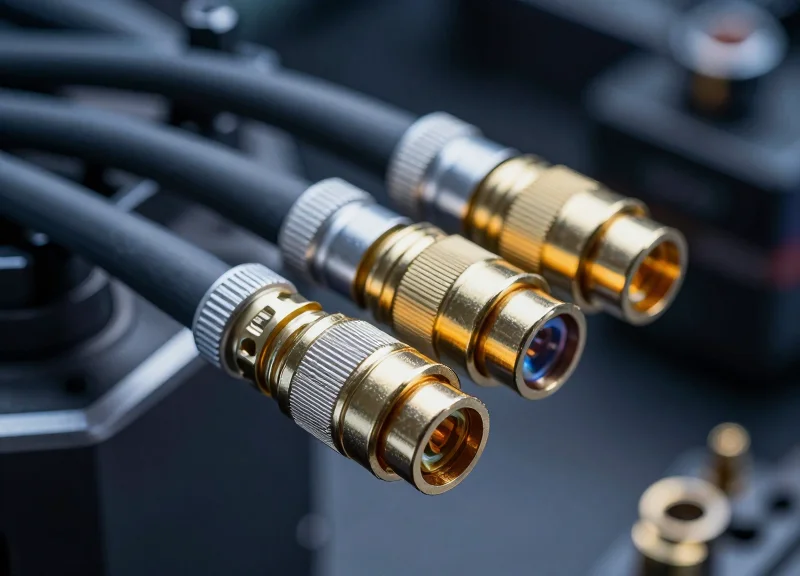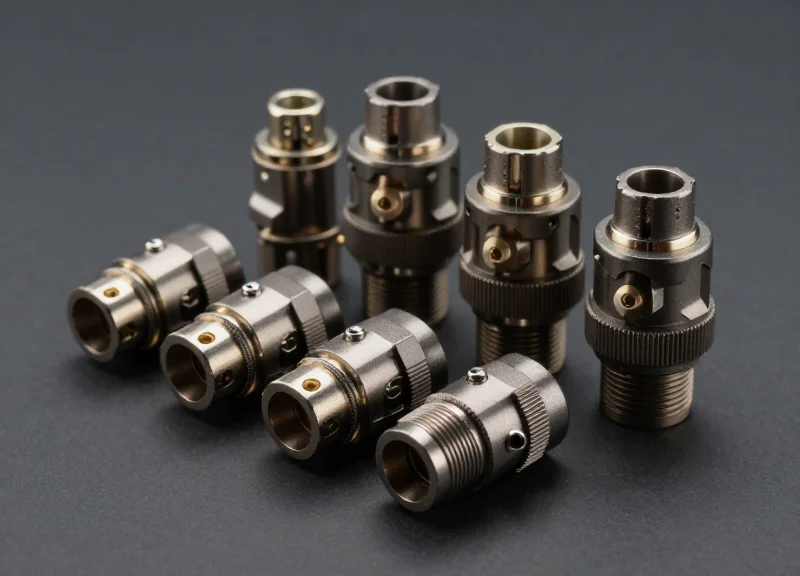
In high-stakes environments where failure is not an option, standard networking hardware is a liability. Military-grade optical interconnects provide the resilience, speed, and EMI resistance required for defense, aerospace, and industrial applications. Sourcing these components at scale requires a deep understanding of MIL-SPEC requirements and the logistical advantages of wholesale procurement.
Defining Military Grade: Standards and Certifications
Defining Military Grade: The Rigor of MIL-SPEC Standards
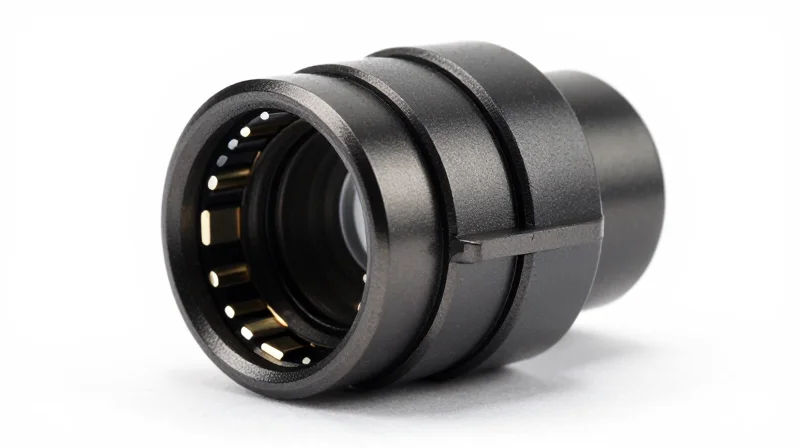
Military-grade optical interconnects are defined by their verified compliance with stringent United States Defense Standards (MIL-SPEC), which ensure operational reliability in environments where commercial hardware would fail. These certifications dictate the physical architecture, material science, and signal performance of fiber optic components, ensuring they can withstand extreme thermal fluctuations, mechanical shock, and electromagnetic interference (EMI). For procurement officers in 2026, 'military grade' is not a marketing descriptor but a technical guarantee that the interconnect meets specific benchmarks like MIL-DTL-38999 for circular connectors or MIL-PRF-29504 for high-precision optical termini.
Essential Certifications for Fiber Optic Systems
When sourcing optical interconnects at wholesale, understanding the distinction between various military standards is critical for ensuring system interoperability and mission success. The following table highlights the primary certifications governing the industry today.
| Standard | Primary Focus | Operational Significance |
|---|---|---|
| MIL-DTL-38999 | Circular Connectors | Provides the shell structure and environmental sealing for high-density fiber inserts. |
| MIL-PRF-29504 | Optical Termini | Specifies requirements for precision fiber optic termini used in multi-pin connectors. |
| MIL-STD-810H | Environmental Testing | Ensures the component survives salt fog, sand, vibration, and extreme altitude. |
| MIL-STD-1678 | Test Methodologies | Standardizes how fiber optic components are tested for light loss and durability. |
The Importance of MIL-PRF-29504 in Optical Signal Integrity
For optical systems, the MIL-PRF-29504 standard is the gold standard for performance. It governs the design and testing of the termini—the actual points where the fiber fibers meet. These components must maintain an incredibly low insertion loss (often <0.5dB) while subject to the constant vibration of jet engines or the corrosive atmosphere of naval vessels. Bulk pricing for 2026 often differentiates between 'commercial-off-the-shelf' (COTS) ruggedized parts and fully certified MIL-PRF-29504 components, with the latter offering a higher degree of assurance for mission-critical deployments.
Frequently Asked Questions Regarding Standards
- Is 'Ruggedized' the same as 'Military Grade'?
No. Ruggedized implies improved durability over standard parts, but only 'Military Grade' denotes that the product has passed specific MIL-STD or MIL-PRF testing protocols verified by independent or defense-certified labs. - Why is MIL-DTL-38999 Series III preferred for fiber?
Series III connectors feature a triple-start thread with a self-locking mechanism, which is essential for preventing decoupling during the high-frequency vibrations common in aerospace and ground defense vehicles. - Do these standards affect bulk pricing and custom quotes?
Yes. Fully certified components require more expensive materials (like specialized fluorosilicone seals and stainless steel shells) and extensive batch testing, which is reflected in the custom quotes for wholesale procurement.
The Strategic Advantages of Fiber Over Copper in Defense
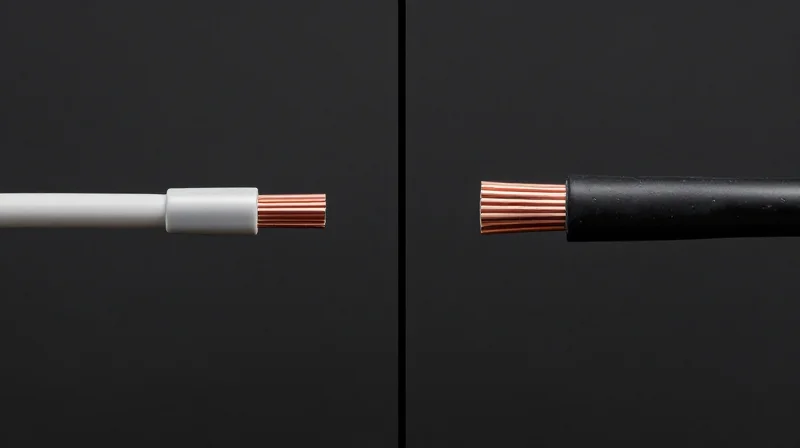
The Strategic Shift: Why Defense is Moving to Fiber
The transition from traditional copper cabling to optical interconnects in defense applications is driven by the demand for massive data throughput without the physical and electromagnetic liabilities of metal-based conductors. As modern battlefields become increasingly saturated with electronic warfare (EW) threats, optical fiber provides the only reliable pathway for secure, high-speed data transmission that remains unperturbed by high-intensity radio frequency environments.
EMI and RFI Immunity: Maintaining Signal Integrity in Contested Environments
Copper cables act as unintended antennas, susceptible to Electromagnetic Interference (EMI) and Radio Frequency Interference (RFI). In a defense context, this vulnerability can lead to data corruption or the total loss of communications during a jammer deployment. Fiber-optic interconnects are inherently dielectric (non-conductive), meaning they are naturally immune to EMI/RFI. This allows for cleaner signals in radar systems, missile guidance, and secure command centers where signal degradation is not an option.
SWaP-C Optimization: Size, Weight, and Power
Size, Weight, and Power (SWaP) are the three most restrictive constraints in aerospace and naval engineering. Fiber-optic cables offer a fraction of the weight of equivalent copper bundles while providing orders of magnitude more bandwidth. For every kilometer of cabling on an aircraft or naval vessel, switching to fiber can save hundreds of pounds, directly translating to increased fuel efficiency, longer loiter times, or the ability to carry additional mission-critical hardware.
| Feature | Military-Grade Fiber Optics | Legacy Copper (Coax/Twinax) |
|---|---|---|
| Bandwidth Capability | 100Gbps+ per fiber | Limited over long distances |
| Weight | Ultra-Lightweight (Dielectric) | Heavy (Metal Shielding) |
| EMI/RFI Resistance | Inherently Immune | Requires heavy shielding |
| Transmission Range | Kilometers without repeaters | Meters (Signal loss is rapid) |
| Security | Non-Radiating; difficult to tap | Radiates signals; easier to intercept |
Hardened Security and Data Integrity
Information security is a cornerstone of defense procurement. Unlike copper, which emits electromagnetic signatures that can be monitored remotely, fiber optics do not radiate energy. Attempting to tap a fiber line typically causes physical changes that result in detectable signal loss, providing an immediate alert to system administrators. This 'security by design' makes optical interconnects the gold standard for classified data networks.
Strategic Advantages FAQ
- How does fiber perform in extreme vibration environments?
Modern military-grade connectors (like MIL-PRF-29504) use ceramic ferrules and specialized spring-loaded mechanisms to maintain fiber alignment even under high-G vibrations and mechanical shock. - Can fiber interconnects handle the heat of an engine compartment?
Yes, high-temp military fiber is rated for temperatures exceeding -55°C to +125°C, often outperforming the insulation limits of standard copper cabling. - Is wholesale procurement available for custom tactical lengths?
Yes, bulk pricing models for 2026 allow for custom-length tactical assemblies and hybrid fiber/copper cables tailored to specific airframe or vehicle platforms.
Technical Requirements: Temperature, Vibration, and Shock

Extreme Temperature Resilience in Ruggedized Optics
Unlike commercial hardware, military-grade optical interconnects must maintain signal integrity across a vastly expanded thermal envelope, typically ranging from -40°C to +85°C (Industrial/Military Grade). In theater, equipment is subjected to rapid thermal cycling, where a device might transition from a sub-zero cold start in a high-altitude aircraft to the scorching heat of a desert floor. Bulk procurement strategies for 2026 emphasize modules with built-in thermal compensation and advanced material housings that prevent the misalignment of delicate internal fiber optics due to thermal expansion.
Mechanical Durability: Withstanding High-G Environments
Vibration and shock are the primary causes of mechanical failure in optical systems. For defense applications, interconnects are engineered to meet MIL-STD-810G requirements, ensuring they can survive the constant harmonic vibration of armored vehicles or the sudden, high-intensity shock of naval gun fire and missile launches. Optical connectors often utilize ceramic ferrules and specialized latching mechanisms to ensure that the physical contact between fibers remains constant, even when the chassis is subjected to 40G of acceleration or more.
| Requirement Category | Commercial Grade | Military Grade (Ruggedized) |
|---|---|---|
| Operating Temperature | 0°C to +70°C | -40°C to +85°C (Extended) |
| Vibration Resistance | Low (Office/Server Room) | High (MIL-STD-810G, Method 514) |
| Mechanical Shock | Minimal Protection | High-Impact (Up to 100G+ peak) |
| Housing Material | Plastic/Standard Alloy | Nickel-Plated Brass or Stainless Steel |
Mitigating Signal Loss Under Stress
The primary technical challenge in high-vibration environments is 'optical jitter' or momentary signal disconnects. Manufacturers of wholesale military interconnects utilize precision-engineered alignment sleeves and spring-loaded contact pins to maintain a stable optical path. When requesting custom quotes for 2026 projects, engineers must specify the expected G-force exposure to ensure the internal dampening of the transceiver or connector housing is sufficient for the specific platform, whether it be a UAV, tracked vehicle, or sea-based vessel.
- Why is the -40°C to +85°C range the industry standard?
This range covers the vast majority of terrestrial and aerospace deployments, ensuring components do not fail during extreme cold-soak or high-heat operational cycles common in global military theaters. - How does MIL-STD-810G impact wholesale pricing?
The certification requires extensive testing and more expensive, durable materials like specialized polymers and treated metals, which leads to a higher unit cost compared to commercial equivalents, though bulk purchasing significantly offsets these premiums. - Can these interconnects handle explosive shock?
Yes, military-grade interconnects are often rated for Pyrotechnic Shock (Method 517 of MIL-STD-810), which simulates the high-frequency shock environments caused by explosive separations or nearby impacts.
Wholesale Procurement: Optimizing Your Supply Chain
Wholesale Procurement: Optimizing Your Supply Chain
Successfully sourcing military-grade optical interconnects at scale requires a procurement strategy that balances immediate cost-efficiency with long-term mission readiness. In the 2026 defense landscape, optimizing the supply chain means moving beyond simple transactional purchasing to a model focused on lifecycle management, rigorous quality control, and strategic inventory positioning. By centralizing bulk orders and utilizing custom quotes, defense contractors can secure the 'Size, Weight, and Power' (SWaP) advantages of fiber optics while mitigating the risks associated with component obsolescence and lead-time volatility.
Strategic Sourcing Channels for Bulk Defense Components
Choosing the right channel is critical for maintaining the integrity of the supply chain. While direct-from-manufacturer procurement offers the most competitive pricing for high-volume needs, authorized distributors provide necessary agility for urgent project requirements.
| Procurement Channel | Primary Advantage | Primary Risk | Best Application |
|---|---|---|---|
| Direct OEM Sourcing | Lowest unit cost and custom engineering | Extended lead times and high MOQs | Large-scale vehicle or aircraft programs |
| Authorized Distributors | Immediate stock availability | Higher markup on unit pricing | Maintenance, Repair, and Overhaul (MRO) |
| Value-Added Resellers | Technical integration and kitting | Added service fees | Complex, multi-vendor sensor systems |
Securing Life-Cycle Support and Lead Time Stability
In the military sector, procurement does not end at delivery. To optimize the supply chain, buyers must negotiate for Product Discontinuance Notice (PDN) agreements and End-of-Life (EOL) protections. This is particularly vital for optical interconnects, where standards evolve rapidly. Establishing a 'Blanket Purchase Order' (BPO) allows organizations to lock in bulk pricing for 2026 while scheduling deliveries across multiple quarters, ensuring a steady flow of components without the burden of excessive warehousing costs.
Procurement Frequently Asked Questions
- How do custom quotes impact wholesale pricing for specialized optics?
Custom quotes allow manufacturers to amortize non-recurring engineering (NRE) costs across larger volumes, significantly reducing the per-unit price compared to small-batch or prototype orders. - What documentation should be required during wholesale intake?
Every bulk shipment must include Certificates of Conformance (CoC), full traceability back to the wafer or melt, and test reports verifying compliance with MIL-DTL-38999 or similar standards. - Can supply chain risks be mitigated through multi-sourcing?
Yes, while it may dilute bulk discounts, multi-sourcing from two qualified manufacturers for the same MIL-SPEC interconnect ensures that a single factory failure does not ground an entire program.
The OEM/ODM Edge: Tailoring Solutions to Mission Needs
The OEM/ODM Edge: Tailoring Solutions to Mission Needs
While standard military-spec components cover a broad range of applications, mission-critical systems often require bespoke optical interconnects that transcend commercial off-the-shelf (COTS) limitations. OEM (Original Equipment Manufacturer) and ODM (Original Design Manufacturer) services allow defense contractors to collaborate on specialized cabling, ruggedized transceiver housings, and proprietary connector interfaces that integrate seamlessly into unique hardware architectures while maintaining uncompromising signal integrity in harsh environments.
Customization Levels: COTS, MOTS, and Bespoke
| Category | Flexibility | Lead Time | Best Use Case |
|---|---|---|---|
| COTS | Minimal (Standard Specs) | Short | General comms, standardized racks |
| MOTS (Modified COTS) | Moderate (Housing/Coating) | Medium | UAVs, specialized ground vehicles |
| Full Custom (OEM/ODM) | High (Form factor, Protocol) | Longer | Next-gen radar, proprietary EW suites |
Optimizing for SWaP and Environmental Resilience
Tailored solutions focus heavily on the SWaP-C (Size, Weight, Power, and Cost) equation. For instance, an ODM partner might re-engineer a fiber optic transceiver to fit a non-standard PCB footprint or integrate specific ruggedization layers—such as specialized conformal coatings or vibration-dampening enclosures—that are not found in standard wholesale inventories. This level of granular engineering ensures that the interconnect is not a point of failure but a specialized asset tailored to the specific thermal and mechanical stresses of the platform.
- What is the typical lead time for custom optical prototypes?
Depending on complexity, initial prototypes generally range from 8 to 14 weeks, involving design validation and environmental stress testing (ESS). - Can OEM partners handle proprietary communication protocols?
Yes, ODM engineers can design firmware and hardware logic for non-standard or classified data rates and protocols to ensure interoperability with legacy or experimental systems. - How is Intellectual Property (IP) managed in custom designs?
Wholesale contracts typically include IP protection clauses, ensuring that the custom engineering remains the property of the client or is exclusively licensed for their specific platforms.
Securing the Data Link: Encryption and Hardware Integrity

Securing the Data Link: Encryption and Hardware Integrity
In modern electronic warfare and intelligence operations, the security of a data link is only as strong as its weakest physical connection. For military-grade optical interconnects, security is achieved through a multi-layered approach that combines physical anti-tamper mechanisms with a transparent, verifiable supply chain to prevent unauthorized access or signal degradation.
Hardware-Level Security Features
Unlike commercial-grade components, military optical interconnects often incorporate physical security features designed to detect or prevent hardware manipulation. This includes specialized housing materials that resist probing and fiber-optic tapping detection systems that monitor for minute changes in light attenuation, which could indicate a physical breach. Furthermore, many high-security connectors utilize unique keying and color-coding to prevent cross-connection in complex multi-domain environments.
| Feature | Commercial Standard | Military-Grade Secure |
|---|---|---|
| Housing Material | Standard Polymer/Aluminum | Non-Reflective, EMI-Shielded Composite |
| Tamper Evidence | None | Break-away seals and physical IDs |
| Signal Protection | Standard cladding | Low-leakage fiber with tapping detection |
| Keying Options | Standard LC/SC keys | Custom mechanical keying (10+ variations) |
The Importance of Supply Chain Sovereignty
Procuring optical interconnects wholesale requires more than just a competitive quote; it requires a deep dive into the provenance of every component. Counterfeit parts (suspect unapproved parts or SUPs) represent a significant vulnerability, potentially containing 'kill switches' or backdoors that compromise mission-critical systems. Organizations must prioritize TAA-compliant manufacturers and suppliers who offer full traceability from the raw glass to the finished connector assembly.
- Does optical fiber need encryption at the connector level?
While encryption usually occurs at the software or transport layer, hardware-level encryption (MACsec) is increasingly integrated into the optical transceiver modules attached to the interconnects to protect data-in-transit at the physical layer. - How can I verify the integrity of wholesale batches?
Wholesale buyers should request Certificate of Conformance (CoC) documentation and ensure the supplier adheres to AS9100D or ISO 9001:2015 standards for quality management and traceability. - What is the role of TAA compliance in secure procurement?
The Trade Agreements Act (TAA) ensures that products are manufactured in the United States or other designated countries, reducing the risk of foreign interference in the supply chain of critical defense components.
By integrating these hardware-level protections and maintaining a rigorous auditing process for wholesale suppliers, defense contractors and government agencies can ensure that their optical infrastructure remains resilient against both physical and cyber-based threats.
Evaluating ROI in Military Network Upgrades
Calculating Total Cost of Ownership (TCO) in Defense Networks
Investing in military-grade optical interconnects through wholesale channels is a strategic financial decision designed to minimize the long-term fiscal burden of network maintenance. While standard commercial components offer lower initial price points, their high failure rates in extreme environments—defined by intense vibration, thermal shock, and corrosive exposure—result in frequent, costly replacements and catastrophic mission downtime. By opting for ruggedized interconnects in the 2026 procurement cycle, defense organizations secure a significantly lower TCO by extending hardware lifecycles and reducing the intensive labor costs associated with field repairs.
Comparative Analysis: Commercial vs. Military Grade Components
| Metric | Commercial Grade Optics | Military Grade (Mil-Spec) Optics |
|---|---|---|
| Initial Unit Cost | Low | Moderate to High (Wholesale) |
| Operational Lifespan | 6-24 Months (in field) | 10-20 Years (in field) |
| Maintenance Frequency | High (Reactive Repairs) | Low (Preventative Only) |
| Signal Integrity Risk | High (Vibration Sensitive) | Negligible (Ruggedized) |
| Replacement Labor Costs | Substantial/Recurring | Minimal/One-time |
Strategic Advantages of Wholesale Acquisition
Wholesale acquisition of custom-quoted optical interconnects facilitates more than just volume discounts; it ensures 'technological continuity' across a deployment. When components are sourced in bulk, they typically originate from the same manufacturing lot, ensuring uniform performance characteristics across all network nodes. This uniformity simplifies the spare parts inventory and streamlines the training requirements for field technicians, further accelerating the realization of ROI.
- How does the initial cost of mil-spec interconnects compare to standard wholesale optics?
While mil-spec units can be significantly more expensive upfront, they typically outlast commercial variants by a factor of ten in tactical environments, yielding a positive ROI within the first 24 months of deployment. - What is the primary driver of ROI in wholesale military fiber optic upgrades?
The primary driver is 'Mission Readiness.' Reducing the frequency of network outages prevents costly mission delays and protects high-value hardware that depends on consistent, high-speed data flow. - Do custom quotes for bulk pricing include testing documentation?
Yes, reputable wholesale providers include full traceability and compliance documentation (such as MIL-DTL-38999), which avoids the hidden costs associated with audit failures or system incompatibility.
Future-Proofing with High-Speed 2026 Optical Trends

In 2026, future-proofing military optical interconnects centers on the rapid migration to 400G and 800G Ethernet standards, a shift necessitated by the massive bandwidth requirements of Artificial Intelligence (AI), real-time sensor fusion, and Multi-Domain Operations (MDO). By securing wholesale contracts for these high-capacity components now, defense organizations can bypass the bottlenecks of legacy 100G systems while benefiting from the economies of scale offered by current bulk pricing models.
Scaling to 400G and 800G in Tactical Environments
The demand for higher throughput is no longer confined to static, tier-one data centers. Modern field-deployed command centers now require high-speed optical backbones to process high-definition ISR (Intelligence, Surveillance, and Reconnaissance) data. The transition to 400G QSFP-DD and OSFP form factors allows for a significant increase in density and bandwidth without expanding the physical footprint of ruggedized server racks. Moving to 800G is the next logical step for centralized intelligence hubs that aggregate data from thousands of edge nodes.
| Standard | Throughput | Typical Use Case | Primary Interconnect |
|---|---|---|---|
| 100G Ethernet | 100 Gbps | Standard Tactical LAN / Edge Computing | QSFP28 |
| 400G Ethernet | 400 Gbps | Field-Deployed Data Centers / ISR Processing | QSFP-DD / OSFP |
| 800G Ethernet | 800 Gbps | Centralized Intelligence Hubs / AI Training | OSFP800 |
High-Speed Trends Shaping the 2026 Defense Landscape
Beyond raw speed, several technical trends are defining the next generation of military interconnects. Co-packaged optics (CPO) and the use of silicon photonics are becoming more prevalent as defense contractors seek to reduce power consumption and heat dissipation in enclosed, uncooled environments. Furthermore, the push for 'Open Systems Architecture' ensures that wholesale optical components are interoperable across different vendor platforms, preventing proprietary lock-in and simplifying future upgrades.
- Why is 400G becoming the standard for 2026 military upgrades?
400G provides the necessary headroom for AI-driven analytics and massive data sets generated by modern sensor arrays, while current wholesale availability makes it the most cost-effective path for multi-year refresh cycles. - Can high-speed 800G interconnects withstand harsh environments?
Yes, 2026 trends show a rise in ruggedized OSFP modules that include enhanced thermal management and vibration-resistant housing specifically designed for military-grade deployments. - How does bulk pricing impact the adoption of next-gen optics?
Purchasing 400G and 800G components wholesale allows defense agencies to lower the per-port cost significantly, making the leap to higher speeds more justifiable in large-scale network overhauls.
Investing in high-speed optical interconnects today is a strategic hedge against the data demands of tomorrow. As military operations become increasingly data-centric, the ability to move information at light speed across a resilient, high-bandwidth fiber backbone will be a primary differentiator in mission success.
Ready to scale your network with the highest standard of reliability? Investing in military-grade optical interconnects ensures your infrastructure can withstand the most extreme conditions while delivering peak performance. Contact Ubytelink today for a custom quote on our wholesale options and specialized OEM/ODM services to meet your exact specifications.