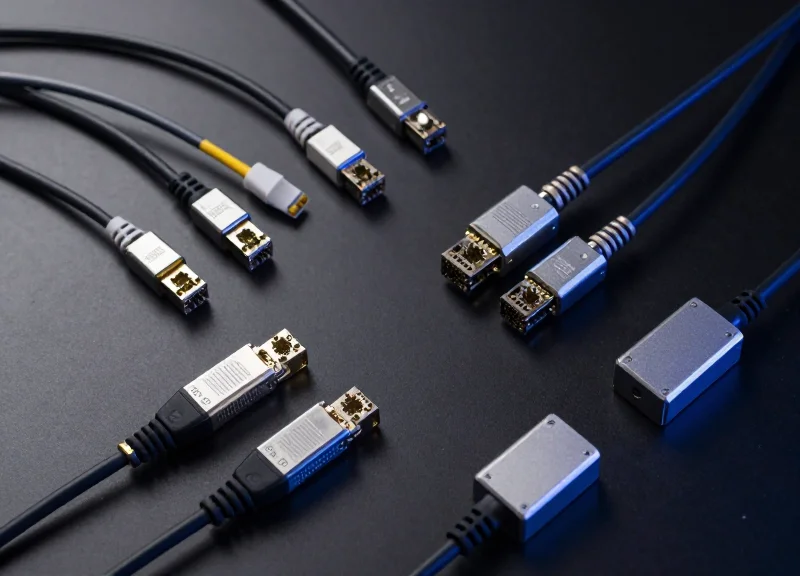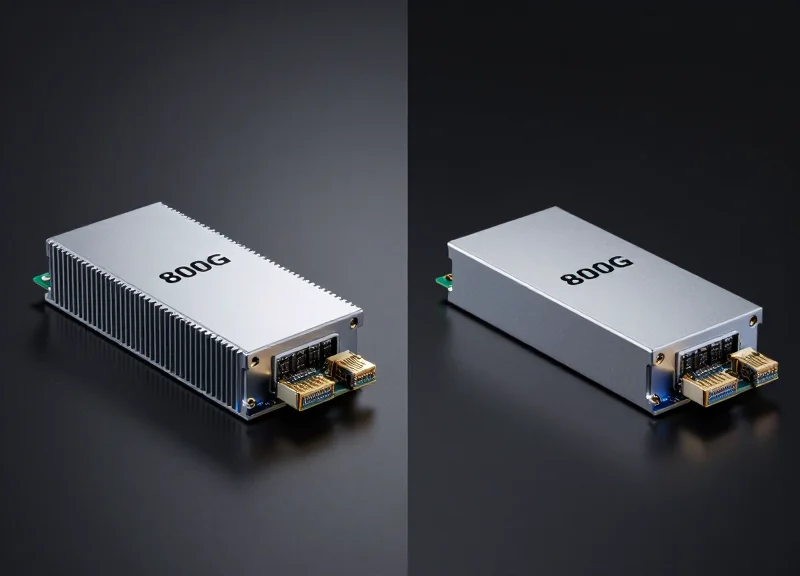
As urban centers evolve into interconnected smart cities, the demand for resilient data transmission has never been higher. Ubytelink addresses the complexities of mission-critical infrastructure with optical modules designed for the rigors of global scale and 24/7 uptime.
The Strategic Importance of a Smart City Fiber Backbone

The strategic importance of a smart city fiber backbone lies in its role as the digital central nervous system, providing the high-speed, low-latency connectivity required to link millions of IoT devices, 5G small cells, and municipal data centers. Without a premium-grade fiber foundation, the promise of autonomous transit, smart energy grids, and enhanced public safety remains unattainable due to the massive bandwidth demands of real-time urban analytics.
The Synergy Between Fiber Backbones and 5G Deployment
While 5G is often perceived as a wireless revolution, it is fundamentally powered by wireline fiber. To achieve the ultra-low latency promised by 5G, service providers must deploy a dense network of small cells, each requiring a high-capacity fiber 'backhaul' connection. Ubytelink's fiber solutions ensure that these networks can handle the exponential growth in mobile data traffic while maintaining the signal integrity necessary for mission-critical applications like remote surgery or vehicle-to-everything (V2X) communication.
| Feature | Legacy Copper Infrastructure | Smart City Fiber Backbone |
|---|---|---|
| Bandwidth Capacity | Limited (Mbps) | Virtually Unlimited (Tbps) |
| Latency Performance | High (20ms - 50ms+) | Ultra-Low (<1ms - 5ms) |
| Signal Degradation | High over distance | Minimal over long distances |
| Environmental Resilience | Susceptible to EMI/Corrosion | Immune to EMI; Highly durable |
Driving Real-Time Data Processing and Public Safety
Modern municipalities are increasingly relying on edge computing and real-time AI to manage urban flows. A robust fiber backbone enables the instantaneous transmission of high-definition video feeds for public safety monitoring and sensor data for adaptive traffic management. By reducing the physical distance data must travel over slow links, fiber optics facilitate immediate decision-making that can save lives during emergencies and significantly reduce urban congestion.
Critical Infrastructure FAQs
- Why is fiber preferred over satellite for smart cities?
Fiber offers significantly lower latency and higher reliability compared to satellite links, which are prone to atmospheric interference and high propagation delays. - How does a fiber backbone support IoT growth?
It provides the necessary 'on-ramp' for the massive volume of data generated by urban sensors, ensuring that the core network does not become a bottleneck as more devices are added. - Is the investment in fiber future-proof?
Yes. Once the physical fiber is laid, the network capacity can be upgraded simply by changing the electronics at either end, allowing it to serve the city for decades.
Ubytelink’s High-Performance Module Portfolio
Ubytelink’s High-Performance Module Portfolio
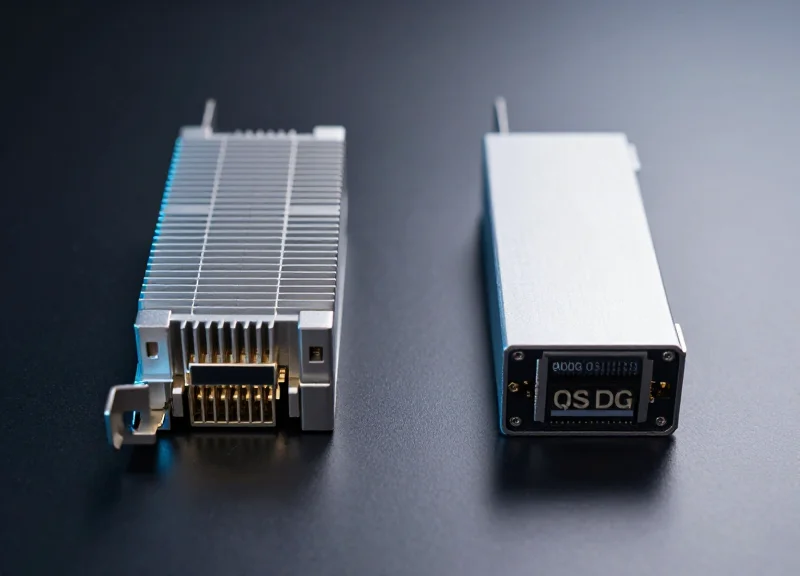
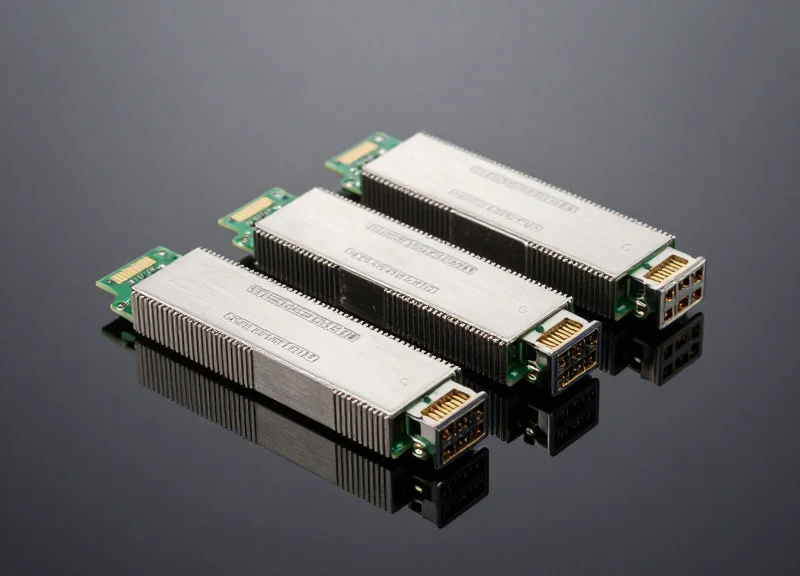
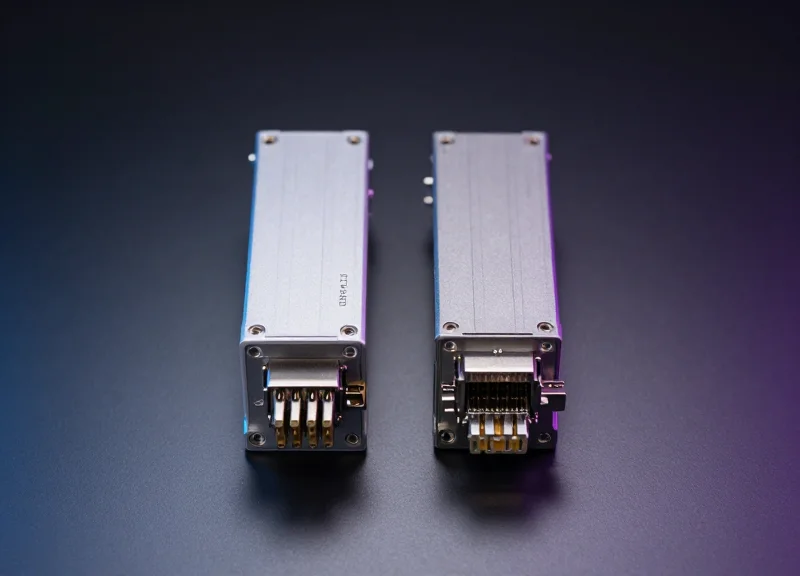
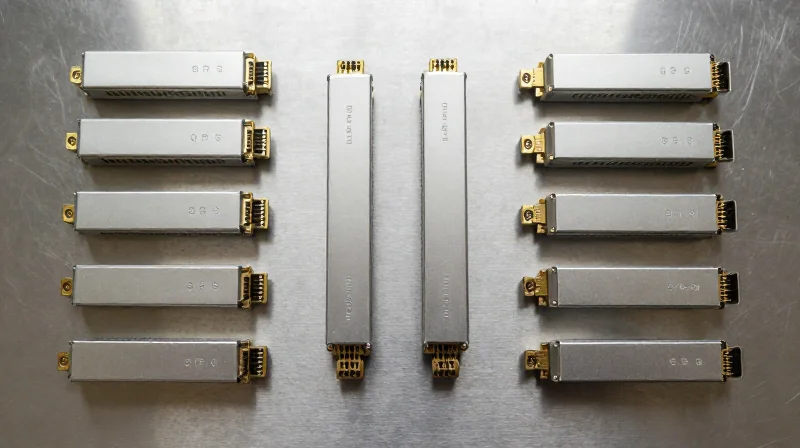
Ubytelink's optical module portfolio serves as the critical connective tissue of modern smart city backbones, offering a versatile range of transceivers that balance ultra-high-speed data transmission with exceptional long-range stability. By integrating cutting-edge photonics with rigorous quality control, these modules ensure that urban networks can scale seamlessly from 10G to 400G and beyond, accommodating the exponential growth of IoT sensors and municipal data traffic.
Core Hardware Solutions for Urban Connectivity
| Module Type | Max Data Rate | Max Distance | Typical Application |
|---|---|---|---|
| SFP/SFP+ (Short & Long Haul) | 10 Gbps | Up to 80km | Access layer & IoT endpoints |
| QSFP28 | 100 Gbps | Up to 40km | Core aggregation & Data Centers |
| QSFP-DD | 400 Gbps | Up to 10km (ZR/ZR+ options) | Hyperscale backbone & 5G Transport |
| BIDI SFP+ (Bi-Directional) | 10 Gbps | Up to 60km | Single-strand fiber efficiency |
The diversity within the Ubytelink catalog allows network architects to optimize for both cost and performance. For instance, Bi-Directional (BIDI) modules enable cities to double their existing fiber capacity without laying new cables, while our 400G QSFP-DD solutions provide the throughput necessary for AI-driven traffic management and real-time public safety analytics.
Unwavering Reliability and Multi-Vendor Interoperability
Every Ubytelink module undergoes rigorous testing across a wide range of temperature and humidity conditions to ensure performance in outdoor cabinets and harsh urban environments. Furthermore, our transceivers are programmed for 100% compatibility with over 200 major networking vendors, eliminating vendor lock-in and simplifying integration into existing heterogeneous infrastructures.
Common Implementation Questions
- Are Ubytelink modules compatible with legacy networking equipment?
Yes, Ubytelink transceivers are engineered with multi-vendor firmware support, ensuring seamless operation with both legacy systems and modern SDN-enabled hardware. - How do Ubytelink modules handle high-density urban environments?
Our modules utilize advanced thermal management designs to maintain signal integrity even in high-density rack configurations where heat dissipation is a primary concern. - Does Ubytelink offer solutions for long-distance municipal backbones?
Absolutely. We provide ER (Extended Range) and ZR (Zepto Range) optics capable of reaching up to 80km or 120km, ideal for connecting decentralized municipal hubs.
Engineering for Reliability: Performance in Mission-Critical Systems
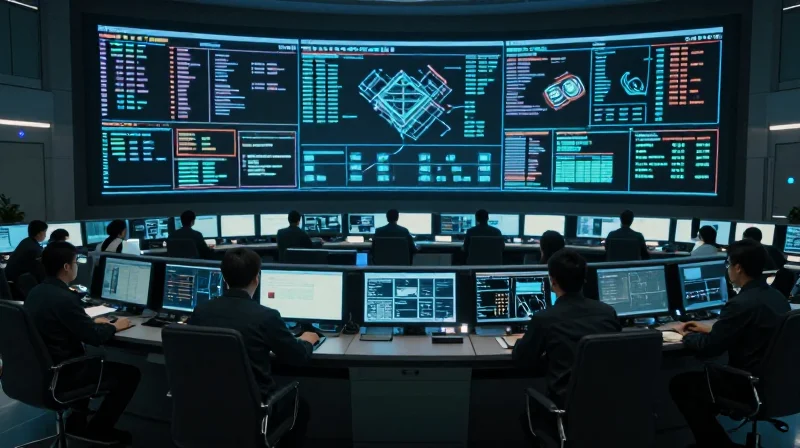
In the context of a smart city, reliability is the fundamental prerequisite for safety and continuity. Ubytelink Smart City Fiber Backbone Solutions provide the high-integrity data pipelines necessary for mission-critical services such as emergency response, power grid synchronization, and autonomous transit systems. These environments demand more than just raw speed; they require absolute packet delivery assurance and deterministic latency. Ubytelink modules are engineered with high-grade components that mitigate signal degradation, ensuring that critical telemetry and command-and-control data reach their destination without jitter or loss, even during peak urban traffic periods.
Architectural Foundations for High Availability
To achieve the resilience required for global networks, Ubytelink leverages a combination of hardware-level redundancy and intelligent monitoring. Every transceiver is equipped with enhanced Digital Diagnostics Monitoring (DDM), allowing network administrators to track optical power, temperature, and voltage in real-time. This proactive approach enables predictive maintenance, where potential link failures are identified and bypassed before they can impact public safety services. Furthermore, Ubytelink’s support for diverse network topologies, including ring and mesh configurations, ensures that the fiber backbone remains operational even in the event of physical fiber cuts.
| System Category | Operational Requirement | Ubytelink Engineering Solution |
|---|---|---|
| Emergency Services (911/112) | Zero Packet Loss & Instant Access | Enhanced Forward Error Correction (FEC) Support |
| Smart Power Grids | Electromagnetic Interference (EMI) Immunity | All-Optical Signal Path with Galvanic Isolation |
| Autonomous Transit | Ultra-Low Deterministic Latency | Optimized Silicon Photonics & Short-Reach Optics |
| Public Surveillance | High-Bandwidth Continuous Stream | High-Density WDM for Massive Data Throughput |
Hardened for Extreme Urban Environments
Unlike standard enterprise hardware, Ubytelink’s mission-critical modules are designed for the rigors of outdoor deployment. Urban environments expose networking gear to extreme temperature fluctuations, humidity, and vibrations from heavy transit. Ubytelink’s industrial-grade transceivers are rated for extended temperature ranges (-40°C to +85°C), ensuring that the fiber backbone remains stable whether installed in a subterranean utility vault or a sun-exposed roadside cabinet. This hardware hardening reduces the Total Cost of Ownership (TCO) by minimizing truck rolls and replacement cycles in difficult-to-access locations.
Mission-Critical Reliability FAQ
- How does Ubytelink prioritize traffic for emergency services?
While prioritization occurs at the switching layer, Ubytelink modules provide the high-fidelity physical layer and low-latency buffer management required to ensure that high-priority VLANs are delivered without hardware-induced delays. - Are these solutions compatible with existing municipal fiber?
Yes, Ubytelink modules support a wide range of wavelengths and protocols, allowing cities to upgrade their backbone performance using existing Single-Mode or Multi-Mode fiber plants without a total rip-and-replace. - What measures are in place for data security?
Ubytelink focuses on physical layer integrity. By maintaining high extinction ratios and signal-to-noise margins, the modules ensure that encrypted data streams remain clear and resistant to tapping or signal-based side-channel attacks.
Addressing Environmental and Physical Durability
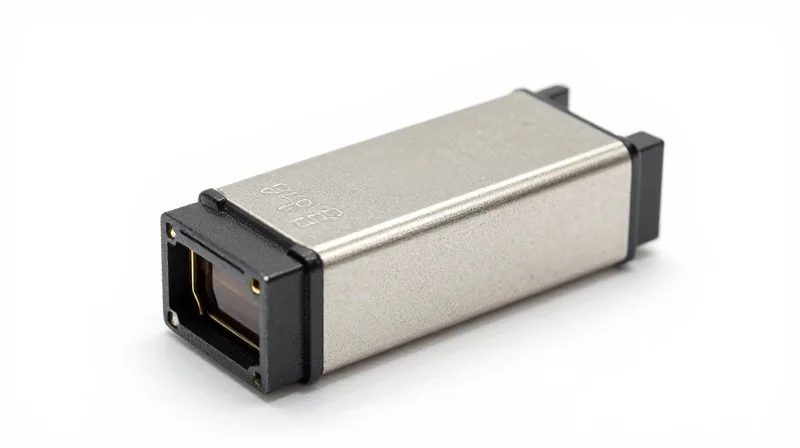
Ubytelink addresses environmental and physical durability by employing industrial-grade thermal management and ruggedized casing designs that allow fiber optic modules to function flawlessly within outdoor cabinets where temperature fluctuations and physical vibrations are constant. Unlike standard commercial-grade hardware, Ubytelink components are tested against rigorous international standards to ensure that the core backbone of a smart city—which supports everything from traffic sensors to emergency services—remains operational despite external weather cycles or urban pollution.
Thermal Management and Extreme Temperature Range
The most significant challenge for outdoor smart city infrastructure is the internal heat generated within unconditioned utility cabinets. Ubytelink utilizes specialized heat sinks and internal components with high thermal tolerance to prevent signal degradation or hardware failure during peak summer heat or sub-zero winter conditions. This thermal stability is critical for maintaining the tight timing requirements of high-speed data transmission in 5G and IoT networks.
| Specification Metric | Standard Commercial Grade | Ubytelink Industrial Grade |
|---|---|---|
| Operating Temperature Range | 0°C to 70°C (32°F to 158°F) | -40°C to +85°C (-40°F to 185°F) |
| Casing Material | Standard Polycarbonate/Zinc | High-Density Reinforced Zinc Alloy |
| Vibration Resistance | Minimal Protection | MIL-STD-810G Compliant |
| MTBF (Mean Time Between Failures) | Standard Enterprise Cycles | Extended Industrial Lifecycle (100k+ hours) |
Mitigating Physical Stress and Contamination
Beyond temperature, smart city modules face mechanical stress from urban vibrations—such as those caused by heavy rail or vehicular traffic—and exposure to microscopic contaminants. Ubytelink modules feature secure-latch mechanisms and gold-plated connectors that resist oxidation and ensure physical connectivity remains intact even in high-vibration zones. Furthermore, the internal optics are sealed to prevent dust ingress, which is the leading cause of signal loss in long-term outdoor deployments.
- How does Ubytelink protect against electromagnetic interference (EMI)?
Ubytelink modules are enclosed in fully shielded metal housings that prevent EMI from surrounding power lines and electronic equipment from corrupting data signals. - Are these modules compatible with existing outdoor street furniture?
Yes, Ubytelink follows standard SFP/QSFP form factors, allowing for seamless integration into existing NEMA-rated or IP67-rated outdoor enclosures and utility poles. - Do fluctuating humidity levels affect performance?
The modules are designed with moisture-resistant seals and non-corrosive materials to prevent internal condensation and electrical short-circuits in high-humidity environments.
Scalability: Future-Proofing Global Networks
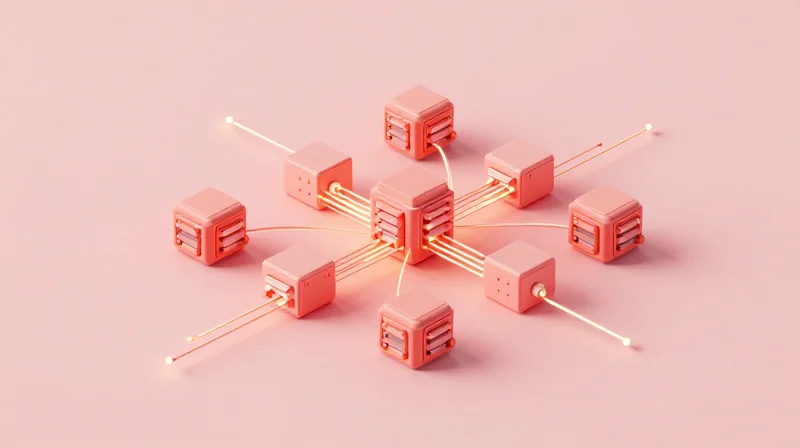
Scalability in smart city environments is defined by the ability to transition from localized IoT pilots to city-wide sensor networks without necessitating a complete overhaul of the existing physical layer. Ubytelink Smart City Fiber Backbone Solutions achieve this by utilizing high-density optical transceivers and wavelength division multiplexing (WDM) technologies, allowing municipalities to multiply their data throughput over existing fiber strands while maintaining low latency for critical services.
The Architecture of Infinite Expansion
A future-proof network must be built on the principle of modularity. Ubytelink modules are designed to support incremental bandwidth upgrades—moving from 1G to 10G, 40G, and even 100G—simply by swapping transceivers rather than re-digging trenches for new cable. This 'pay-as-you-grow' model is essential for urban planners who must balance immediate budgetary constraints with long-term technological roadmaps.
| Feature | Legacy Fiber Infrastructure | Ubytelink Scalable Solutions |
|---|---|---|
| Upgrade Path | Expensive 'Rip-and-Replace' | Modular Transceiver Hot-Swaps |
| Fiber Utilization | One service per fiber strand | High-density WDM (Multiple services per strand) |
| Density Support | Limited to thousands of nodes | Millions of IoT/Sensor endpoints |
| Network Latency | Increases as traffic scales | Consistent low-latency for mission-critical data |
Accommodating the IoT Explosion
As smart cities deploy millions of sensors for air quality, traffic flow, and energy management, the backbone must handle a massive influx of small data packets without congestion. Ubytelink's premium optical solutions ensure that the backhaul remains robust, providing the necessary 'headroom' for sudden spikes in data traffic caused by autonomous vehicle communication or public safety emergencies.
Strategic Implementation of WDM Technology
By implementing CWDM and DWDM modules, Ubytelink enables municipalities to partition their fiber networks. This allows for dedicated 'lanes' for essential services—such as emergency response and grid management—ensuring that growth in consumer internet usage or public Wi-Fi does not interfere with critical city operations.
Frequently Asked Questions: Scalability and Longevity
- How does Ubytelink support 5G densification?
Our high-speed optical modules provide the low-latency fronthaul and backhaul links necessary for 5G small cells, allowing cities to integrate cellular growth into their existing fiber backbone. - Can Ubytelink solutions work with existing legacy fiber?
Yes, our transceivers are engineered for high compatibility, allowing cities to maximize the bandwidth of installed single-mode and multi-mode fiber assets. - What happens when a city reaches its initial capacity?
Ubytelink's DWDM solutions allow for the expansion of up to 80-96 channels on a single fiber pair, effectively multiplying capacity without new construction.
Security at the Optical Layer
Security in smart city fiber backbones begins at the physical layer, where the integrity of the optical signal determines the resilience of the entire network. Ubytelink addresses security at the optical layer by engineering high-performance transceivers that minimize signal degradation and incorporate real-time monitoring capabilities to detect physical intrusions, such as fiber tapping or unauthorized access, without introducing the latency associated with higher-level software encryption.
Protecting Signal Integrity Against Interference and Interception
In a dense urban environment, electromagnetic interference (EMI) and radio frequency interference (RFI) can compromise traditional copper-based networks. Ubytelink’s premium fiber solutions are inherently immune to EMI, but they go further by ensuring superior signal-to-noise ratios (SNR). By maintaining high signal clarity, these modules prevent data leakage and jitter that could otherwise be exploited by sophisticated side-channel attacks aimed at reconstructing data from leaked optical signals.
Low-Latency Security Features and Real-Time Monitoring
Unlike traditional security measures that rely on heavy packet inspection at the application layer, Ubytelink focuses on Security by Design at the transport level. Our transceivers support Digital Optical Monitoring (DOM), allowing network administrators to track critical parameters in real-time. This provides an essential telemetry layer for smart city operators who must ensure 100% uptime for critical services.
| Security Feature | Ubytelink Implementation | Impact on Performance |
|---|---|---|
| Physical Layer Monitoring | DOM/DDM integration in all modules | Zero-latency real-time tracking |
| Signal Clarity | High-extinction ratio and low jitter | Prevents signal-based data theft |
| Physical Port Security | Industrial-grade latching mechanisms | Prevents accidental or malicious disconnects |
| Protocol Transparency | Format-agnostic transport | Supports external hardware encryption like MacSec |
FAQ: Enhancing Fiber Backbone Security
- Is fiber optic cabling 100% secure from tapping?
While more secure than copper, fiber can still be tapped by bending the cable to leak light. Ubytelink modules detect these micro-fluctuations in light power via DOM, alerting operators to potential intrusions instantly. - How does Ubytelink ensure supply chain security?
We adhere to strict global manufacturing standards and rigorous quality control protocols to ensure no backdoor hardware or unauthorized components are integrated into our optical transceivers. - Does optical layer security replace software encryption?
No, it complements it. Optical layer security provides the first line of defense against physical tampering, while software encryption protects the data payload at the upper layers.
The Role of Durability in Long-Term Network Security
Physical security also encompasses hardware durability. A module that fails due to extreme temperatures or humidity creates a vulnerability—a blind spot in the network surveillance or emergency system. Ubytelink’s industrial-grade modules ensure that security monitoring remains always-on, even in the harshest outdoor smart city environments, maintaining the continuous flow of data and security metadata essential for public safety.
Seamless Integration with Existing Network Architectures

Ubytelink's integration philosophy centers on the elimination of technical friction, ensuring that our smart city fiber backbone solutions act as a universal connector within heterogeneous network environments. By prioritizing Multi-Source Agreement (MSA) compliance and rigorous cross-platform testing, Ubytelink enables municipalities and global network operators to upgrade their infrastructure without the prohibitive costs or technical constraints of proprietary vendor lock-in.
Universal Compatibility in Heterogeneous Networks
Modern smart cities rarely rely on a single hardware provider. Most global networks are a tapestry of legacy systems and cutting-edge hardware from various manufacturers like Cisco, Juniper, and Huawei. Ubytelink modules are engineered to be 'vendor-agnostic,' meaning they are coded and tested to ensure 100% functional parity with the host hardware. This allows network architects to deploy Ubytelink solutions at the edge or the core without worrying about handshake failures or software-level rejections.
| Feature | Proprietary Solutions | Ubytelink Smart Solutions |
|---|---|---|
| Vendor Compatibility | Limited to single brand | Cross-platform universal support |
| Cost Efficiency | High premium for brand name | Optimized ROI with premium quality |
| Lead Times | Often delayed by supply chains | Agile manufacturing and global stock |
| Integration Effort | Complex licensing required | Seamless plug-and-play |
The Efficiency of Plug-and-Play Architecture
Time-to-market is a critical metric for smart city deployments. Ubytelink’s plug-and-play modules significantly reduce field installation time. Because our modules support Digital Optical Monitoring (DOM) and auto-negotiation protocols, they provide real-time performance data to existing Network Management Systems (NMS) the moment they are inserted. This immediate visibility ensures that maintenance teams can verify link integrity instantly, streamlining the commissioning process for large-scale fiber backbones.
Integration FAQs
- Will Ubytelink modules work with legacy 1G and 10G infrastructure?
Yes, our modules are designed with backward compatibility in mind, supporting multi-rate auto-negotiation to ensure stable performance when connected to older networking equipment. - Do I need to update my switch firmware to use Ubytelink?
No, because our modules adhere to industry-standard MSA specifications, they are recognized as native components by the host OS, requiring no specialized software or firmware hacks. - Is technical support available for third-party integration issues?
Ubytelink provides comprehensive technical assistance to ensure our modules interface perfectly with your specific configuration, regardless of the chassis or switch brand.
By bridging the gap between diverse hardware ecosystems, Ubytelink empowers smart cities to build more resilient, flexible, and cost-effective networks. Our commitment to premium quality ensures that while the integration is seamless, the performance remains world-class.
The ROI of Premium Quality for Municipalities
The Economic Logic of Premium Municipal Fiber
Investing in premium Ubytelink Smart City Fiber Backbone Solutions provides a superior Return on Investment (ROI) by minimizing the hidden costs associated with infrastructure maintenance, downtime, and premature hardware replacement. While initial capital expenditure (CAPEX) might be higher than generic alternatives, the drastic reduction in Operational Expenditure (OPEX) ensures that municipalities achieve a lower Total Cost of Ownership (TCO) over the network's multi-decade lifecycle.
Analyzing Total Cost of Ownership (TCO)
For a smart city, the cost of fiber is far more than the price per kilometer; it encompasses the expense of installation, the cost of specialized labor for repairs, and the economic impact of service interruptions to critical public utilities. Ubytelink’s high-grade materials and rigorous testing protocols result in significantly lower failure rates compared to commodity-grade glass. This reliability is paramount when fiber is buried under miles of asphalt, where a single repair can cost tens of thousands of dollars in excavation and traffic management.
| Financial Factor | Ubytelink Premium Solution | Standard Commodity Fiber |
|---|---|---|
| Annual Failure Rate | Less than 0.01% | 2.0% - 5.0% |
| Estimated Lifespan | 25 - 30 Years | 10 - 15 Years |
| Maintenance Requirement | Minimal / Proactive | High / Reactive |
| Upgrade Complexity | Plug-and-Play Compatibility | Frequent Hardware Replacement |
Scaling Without Re-Investment
Ubytelink’s 'install once' philosophy prevents the massive costs associated with 'rip-and-replace' cycles. As municipalities scale from basic connectivity to complex IoT ecosystems and 5G densification, premium fiber backbones support higher bandwidth densities and emerging optical protocols without requiring new cabling. This future-proofing ensures that the physical layer remains a static asset rather than a recurring expense.
FAQ: Financial Impact of Premium Infrastructure
- How does signal integrity impact the municipal bottom line?
Superior signal integrity reduces the need for signal regeneration equipment and lowers energy consumption at the transceiver level, leading to direct utility savings over thousands of nodes. - Why is 'future-proofing' considered a quantifiable ROI factor?
It eliminates the CAPEX of future upgrades by ensuring the current physical layer can handle next-generation data rates through simple optics swaps rather than expensive and disruptive cable trenching. - What is the average payback period for premium fiber investments?
While it varies by the scale of the deployment, the reduction in maintenance calls and the avoidance of emergency downtime usually offsets the initial price premium within the first 3 to 5 years of operation.
Ubytelink is more than a hardware provider; we are a partner in building the cities of tomorrow. Contact our engineering team today to discuss how our smart city fiber backbone solutions can stabilize and supercharge your mission-critical network infrastructure.