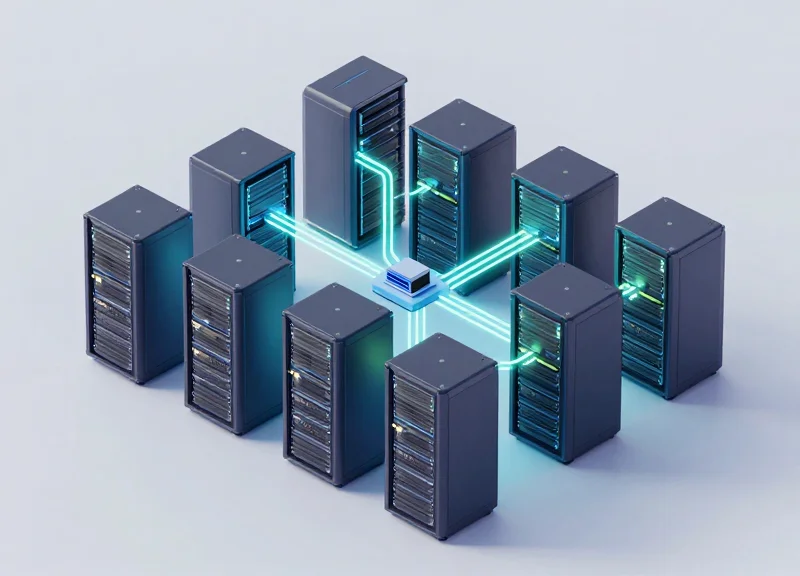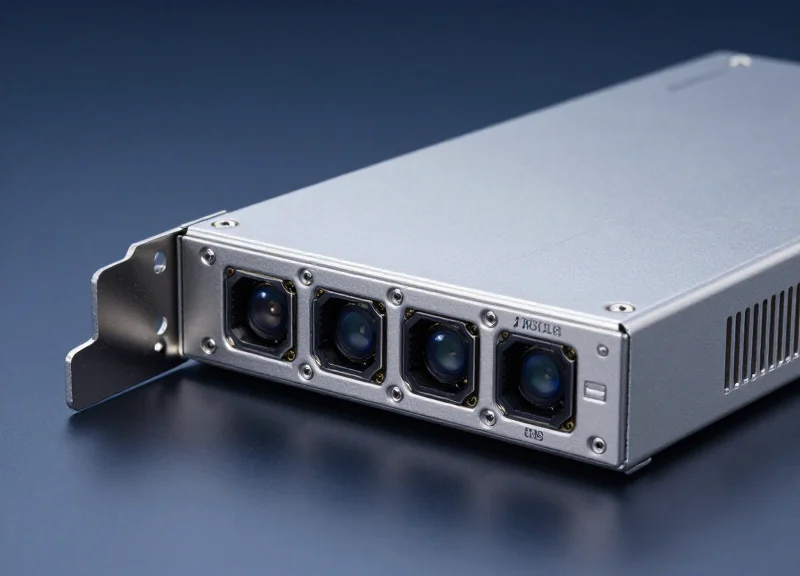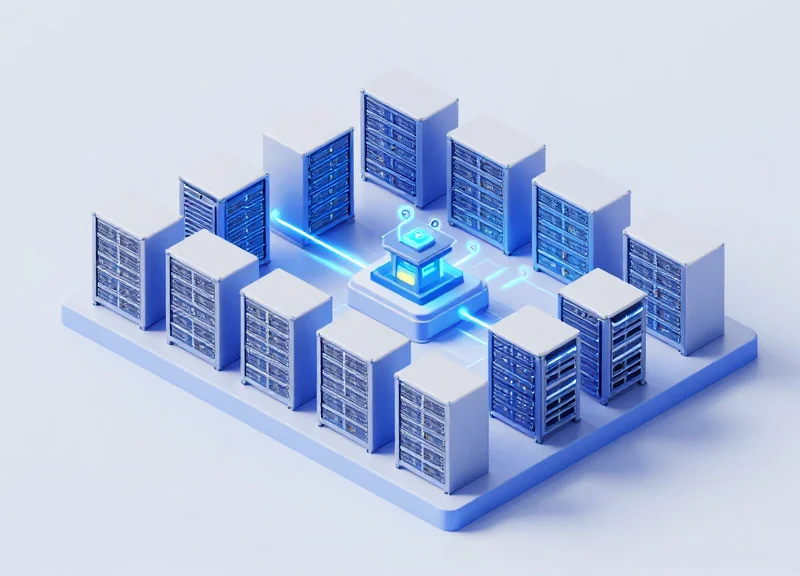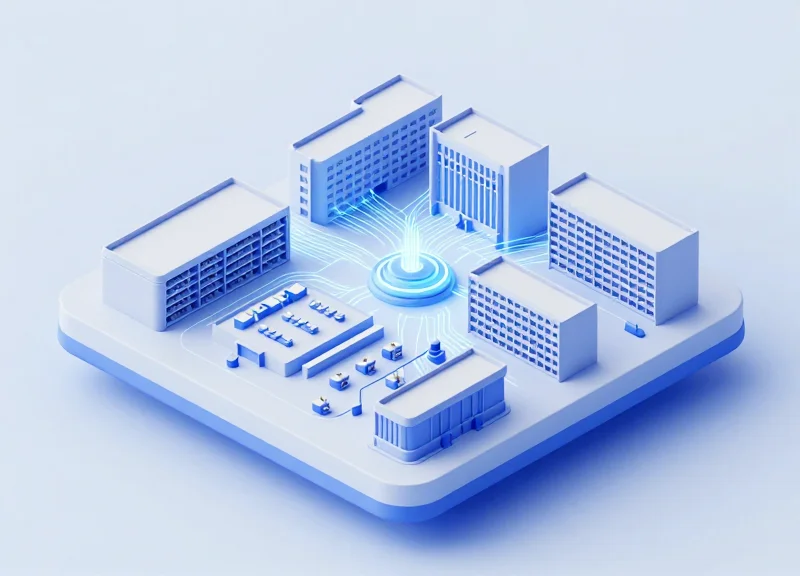
In the high-stakes world of modern medicine, milliseconds can save lives. As hospitals transition to data-heavy applications like 4K surgical imaging and AI-driven diagnostics, the underlying infrastructure must be infallible. This guide examines why network stability is the backbone of digital health and how high-speed optical technology ensures critical data reaches its destination without fail.
Defining Network Stability in a Clinical Context
Defining Clinical Stability Beyond Uptime
In a healthcare environment, network stability is defined as the deterministic capacity of an infrastructure to maintain consistent data throughput and sub-millisecond latency under extreme load. It transcends the binary state of uptime versus downtime; a stable clinical network ensures that life-critical data—such as high-resolution DICOM images, real-time physiological telemetry, and robotic surgical controls—retains absolute integrity and availability without packet loss or jitter. True stability means the network remains invisible to the clinician, providing the same high-speed performance during a mass casualty event or peak morning rounds as it does during low-utilization periods.
Stability Comparison: Enterprise vs. Clinical
| Metric | Standard Enterprise Stability | Clinical Network Stability |
|---|---|---|
| Operational Goal | Reliable access to cloud services | Zero-latency delivery of life-safety data |
| Latency Model | Probabilistic (Best-effort) | Deterministic (Guaranteed) |
| Congestion Handling | Packet buffering/delayed delivery | Prioritization via strict QoS mapping |
| Impact of Instability | Decreased worker productivity | Delayed diagnosis and compromised patient safety |
Technical Pillars of Medical Network Resilience
To achieve clinical-grade stability, the network must address 'Burstiness.' Medical imaging modalities like 3D CT scans generate massive data bursts that can saturate standard switch buffers. A stable network utilizes high-density buffers and deep packet inspection to ensure these bursts do not interfere with the low-bandwidth, high-priority heart rate telemetry packets. Stability is thus a function of traffic orchestration, ensuring that the most critical data reaches its destination with a guaranteed Quality of Experience (QoE) regardless of total network congestion.
- Why is jitter more dangerous than slow speeds in a hospital?
Jitter, or the variation in packet arrival times, causes synchronization failures in real-time monitoring and surgical video feeds, which is more disruptive to clinical decision-making than a consistent, slight delay. - What role does deterministic latency play?
Deterministic latency provides a predictable window for data arrival, which is essential for medical IoT devices that rely on exact timing for algorithmic analysis and patient alerts. - How does high-bandwidth availability impact stability?
Stability requires enough 'headroom' so that peak-load imaging transfers do not hit the throughput ceiling, which would otherwise trigger packet drops and protocol timeouts.
The Evolution of High-Speed Optical Networks in Hospitals
From Copper to Light: The Infrastructure Shift
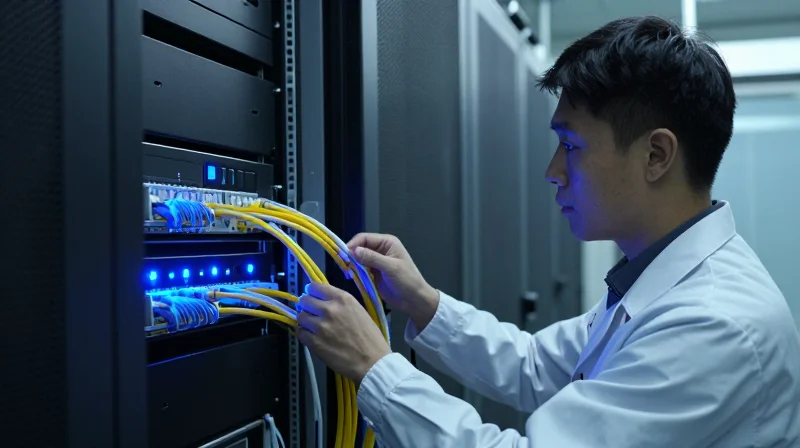
The transition from copper-based Ethernet to high-speed optical networks is the primary driver of modern healthcare data stability, moving away from a medium limited by physical resistance and toward one defined by the speed of light. As hospitals integrated high-resolution medical imaging and real-time telemetry, the legacy Category 5e and 6 copper infrastructures hit a ceiling in both bandwidth capacity and distance, necessitating a migration to fiber-optic backbones that offer near-infinite scalability.
Copper cabling faces significant challenges in clinical environments, specifically regarding electromagnetic interference (EMI) from diagnostic equipment like MRI machines and heavy-duty power systems. Fiber-optic cables, being dielectric, are immune to this interference, ensuring that data integrity remains uncompromised even when routed through dense utility corridors or near high-voltage medical devices.
Technical Comparison: Legacy Copper vs. Modern Optical Backbones
| Feature | Category 6A (Copper) | Single-Mode Fiber (OS2) |
|---|---|---|
| Max Bandwidth | 10 Gbps | 100+ Gbps |
| Distance Limit | 100 Meters | Up to 40 Kilometers |
| EMI Resistance | Susceptible (requires shielding) | Fully Immune |
| Latency Profile | Higher (due to signal processing) | Ultra-Low (optical pass-through) |
Enabling the Modern EMR and DICOM Workflow
The stability of a healthcare network is most visible during the retrieval of Electronic Medical Records (EMR) and Digital Imaging and Communications in Medicine (DICOM) files. A single 3D tomography scan can reach several gigabytes in size; on a legacy network, the 'time to first image' can lead to clinical frustration and delayed care. Optical networks provide the high-throughput 'fat pipes' required to stream these large datasets instantaneously across disparate wings of a hospital campus.
By utilizing Wave Division Multiplexing (WDM), hospitals can now run multiple data streams over a single pair of fibers. This allows for the physical isolation of critical life-safety networks, such as patient monitoring systems, from general administrative traffic while sharing the same physical fiber path, significantly enhancing both stability and security.
Technical FAQ: Optical Evolution
- Why is Single-Mode Fiber preferred over Multi-Mode in modern hospitals?
Single-Mode fiber (OS2) is increasingly preferred because it supports much longer distances and higher bandwidth over the long term compared to Multi-Mode (OM4/OM5), future-proofing the facility against the next decade of throughput increases. - Does fiber-optic cabling improve real-time surgical robotics?
Yes, the ultra-low latency of optical networks is vital for telesurgery and robotic-assisted procedures where milliseconds of lag can impact the precision of the surgeon's movements. - How does an optical backbone impact network uptime?
Fiber is less prone to environmental degradation, corrosion, and electrical surges, which reduces the rate of physical layer failures that often plague copper-based systems.
Technical Core: Bandwidth, Latency, and Jitter Specifications

Technical Core: Bandwidth, Latency, and Jitter Specifications
Network stability in healthcare is not merely a measure of uptime; it is the qualitative performance of data transmission defined by three core metrics: bandwidth, latency, and jitter. For clinical applications, stability requires these metrics to remain within strict tolerance levels to ensure that life-critical information, such as a surgeon’s haptic feedback or a patient’s cardiac rhythm, arrives in the correct sequence and without delay. When these parameters fluctuate, the resulting instability can lead to 'frozen' surgical feeds or missed telemetry alarms, directly impacting patient safety.
Defining Performance Thresholds for Medical Use Cases
Different clinical workflows demand varying levels of network performance. While a standard Electronic Medical Record (EMR) update can tolerate minor delays, real-time interventions cannot. The table below outlines the rigorous technical specifications required for modern digital health applications.
| Application | Target Latency | Permissible Jitter | Min. Bandwidth |
|---|---|---|---|
| Robotic Telesurgery | < 50 ms | < 2 ms | 100 - 500 Mbps |
| Diagnostic Imaging (PACS) | N/A (Asynchronous) | N/A | 1 - 10 Gbps (Burst) |
| Remote Patient Monitoring | < 200 ms | < 20 ms | 1 - 5 Mbps |
| High-Def Telehealth | < 150 ms | < 30 ms | 10 - 25 Mbps |
The Impact of Jitter on Clinical Precision
While latency refers to the absolute delay, jitter—the variation in that delay—is often the more disruptive force in healthcare. In a robotic surgery context, consistent jitter is essential for maintaining the 'control loop.' If a surgeon moves a controller and the visual feedback arrives at varying intervals (high jitter), the brain cannot compensate for the lag, leading to overcorrection and potential surgical errors. Stability, therefore, relies on Quality of Service (QoS) tagging to prioritize these packets over less time-sensitive background traffic.
- Why is latency more critical in surgery than in general telehealth?
In surgery, latency directly affects the hand-eye coordination loop. Delays exceeding 100-200ms can cause 'clash' where the visual representation of the tool lags behind the physical movement, whereas standard telehealth can tolerate slight audio/video desync without clinical risk. - How does bandwidth affect network stability during peak hours?
Bandwidth saturation occurs when massive files, like 3D MRI scans, compete with real-time telemetry. Without sufficient overhead or traffic shaping, this congestion leads to packet loss and increased jitter. - Can software-defined networking (SDN) improve these metrics?
Yes, SDN allows for dynamic path selection, ensuring that critical medical traffic is routed through the lowest-latency path available, effectively buffering the network against transient instability.
Architecting Redundancy for Zero-Downtime Environments
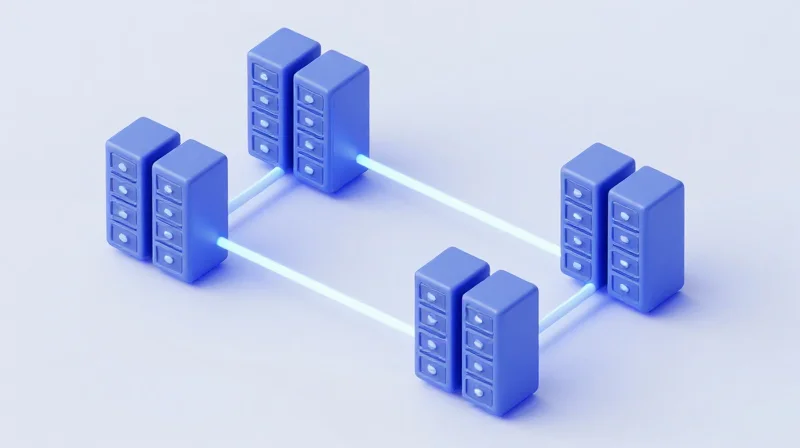
To achieve true zero-downtime, healthcare data networks must transition from reactive 'cold standby' models toward proactive active-active architectures where redundancy is integrated into the physical, data link, and network layers. This ensures that in the event of a hardware failure or a literal fiber cut, the transition to a secondary path is entirely transparent to clinical staff and automated patient monitoring systems, maintaining the rigorous stability required for modern digital medicine.
Core Failover Strategies: Dual-Homing and Path Diversity
Physical and logical path diversity serves as the primary defense against localized infrastructure failures. Physical diversity requires that redundant fiber links follow distinct geographical paths through a facility, ideally entering the building via separate points of entry to avoid a single 'backhoe event' causing a total blackout. Logically, dual-homing allows critical endpoints—such as EMR database servers or core distribution switches—to connect to two independent upstream nodes simultaneously. By utilizing technologies like Virtual PortChannel (vPC) or Multi-Chassis EtherChannel (MEC), hospitals can eliminate the convergence delays associated with traditional Spanning Tree Protocol (STP) and utilize all available bandwidth during normal operations.
| Redundancy Strategy | OSI Layer | Typical Failover Time | Primary Healthcare Use-Case |
|---|---|---|---|
| Dual-Homing (vPC/MEC) | Layer 2 | Sub-second | Connecting high-density imaging servers to the core. |
| BGP Multihoming | Layer 3 | Variable (seconds) | Ensuring cloud-based EMR access via multiple ISPs. |
| APS (Optical Protection) | Layer 1 | <50ms | Campus-wide fiber backbones for real-time telemetry. |
| SD-WAN Path Steering | Layer 3-7 | Milliseconds | Telehealth and remote clinic connectivity. |
Automated Protection Switching (APS) in Optical Loops
For large hospital campuses, the backbone often relies on optical ring topologies using DWDM (Dense Wavelength Division Multiplexing). Automated Protection Switching (APS) is a critical feature in these environments, providing a hardware-level 'self-healing' mechanism. APS monitors the light signal on the 'working' fiber; if a signal degradation or loss is detected, the hardware automatically switches the traffic to a 'protect' fiber in less than 50 milliseconds. This speed is vital for time-sensitive applications such as remote robotic-assisted surgery, where even a one-second dropout could have catastrophic clinical consequences.
- What is the primary obstacle to achieving 99.999% network stability?
The 'Hidden Common Point' failure, where redundant cables are accidentally routed through the same conduit or powered by the same PDU, creating a single point of failure despite logical redundancy. - How does active-active redundancy improve healthcare data throughput?
Unlike active-passive setups where half the infrastructure sits idle, active-active configurations load-balance traffic across all paths, reducing congestion and latency during peak medical imaging transfers. - Why is <50ms failover the industry benchmark?
Most Voice over IP (VoIP) and real-time medical monitoring packets will time out or experience noticeable jitter if the network takes longer than 50ms to recover, potentially leading to lost telemetry data.
Hardware Reliability: Transceivers, Switches, and Fiber Quality
The Physical Layer Foundation: Reliability at Scale
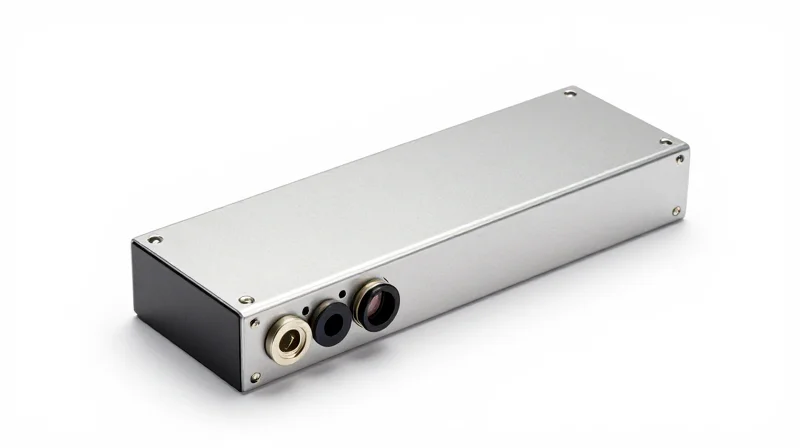
Hardware reliability in healthcare networks is the literal foundation upon which data stability is built; without high-integrity physical components, software-defined redundancy and high-level protocols cannot function effectively. In clinical settings, stability is defined by the resilience of the physical layer (Layer 1), where the quality of optical transceivers, the backplane capacity of switches, and the attenuation levels of fiber-optic cabling must meet rigorous standards to support 24/7/365 uptime. Even minor hardware inconsistencies can lead to micro-flapping, increased Bit Error Rates (BER), and catastrophic latency spikes during surgical imaging or patient telemetry.
Optical Transceivers and Digital Diagnostic Monitoring (DDM)
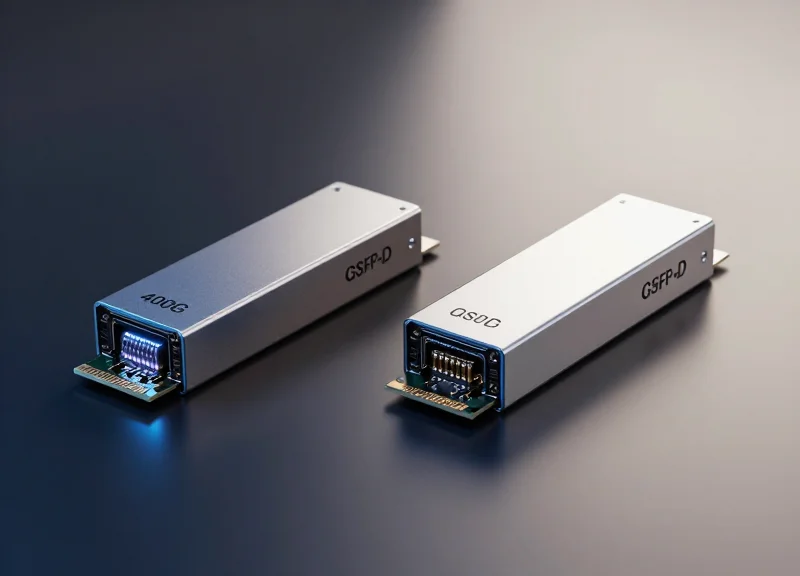
Optical transceivers (SFP+, QSFP28) are often the most overlooked failure points in a healthcare data center. Low-quality or 'white-label' modules may function under normal loads but often fail when thermal thresholds are reached or when high-bandwidth medical imaging streams saturate the link. High-reliability modules support Digital Diagnostic Monitoring (DDM), allowing network engineers to proactively monitor real-time parameters such as laser bias current, optical output power, and temperature. This telemetry is vital for predicting 'transceiver burnout' before it results in a link failure that could disconnect a nursing station from the central EMR.
Switching Fabric and Buffer Management
Healthcare switches must handle 'bursty' traffic, such as the sudden transfer of multi-gigabyte DICOM files. A stable network requires switches with deep packet buffers and non-blocking switching fabrics. If a switch cannot handle the instantaneous ingress of data, it drops packets, leading to TCP retransmissions that slow down the entire VLAN. For mission-critical stability, hardware must be selected based on its ability to maintain wire-speed performance even when security features like deep packet inspection (DPI) are enabled at the hardware level.
| Component | Enterprise Grade (Recommended) | Consumer/Generic Grade (Risk) |
|---|---|---|
| Transceivers | Includes DDM/DOM; Low BER; High thermal tolerance. | Unmonitored; High jitter; Prone to thermal drift. |
| Fiber Cabling | Bend-insensitive (BIF); OM4/OM5; Factory-certified. | Standard cladding; High macro-bend loss; Poor shielding. |
| Switching Fabric | Non-blocking; Deep buffers; Redundant ASICs. | Oversubscribed; Shallow buffers; Single point of failure. |
Fiber Quality and Signal Integrity
Fiber-optic quality is paramount in healthcare environments where cable runs often navigate through tight conduits alongside electrical shielding. Using high-purity glass with low attenuation coefficients ensures that signals remain clear over longer distances. Furthermore, the use of Bend-Insensitive Fiber (BIF) is critical in hospitals where cables are frequently manipulated in crowded IDF (Intermediate Distribution Frame) closets. Poorly terminated connectors or 'dirty' end-faces are the leading cause of intermittent link instability, often masquerading as software bugs.
- How does fiber cleaning affect clinical stability?
Microscopic dust on a fiber connector can cause back-reflection (ORL) and signal loss, leading to intermittent packet drops that interrupt real-time monitoring of patient vitals. - Why is transceiver 'vendor locking' often bypassed in healthcare?
While bypassing lock-ins can save costs, using third-party transceivers without rigorous validation can lead to firmware incompatibilities that crash switch ports during critical updates. - What role does cable labeling and management play in reliability?
Standardized cabling (ANSI/TIA-606-B) reduces 'Mean Time to Repair' (MTTR) by allowing technicians to quickly isolate and replace faulty hardware during a network emergency.
Data Integrity and Security in High-Speed Transmission
The Security-Stability Paradox in Ultra-High-Speed Healthcare Networks
In the context of 100G+ medical backbones, network stability is defined by the ability to maintain sub-millisecond latency and zero-packet loss while simultaneously enforcing rigorous encryption protocols. As healthcare facilities migrate to high-bandwidth environments for digital pathology and 3D imaging, traditional software-based security measures often become the primary bottleneck. True stability at these speeds is achieved by offloading cryptographic functions to the hardware layer, ensuring that security overhead does not induce jitter or packet retransmission cycles that could compromise real-time clinical workflows.
Hardware-Based Encryption: Implementing MACsec for Line-Rate Security
Media Access Control Security (MACsec), defined by IEEE 802.1AE, has emerged as the gold standard for securing high-speed healthcare data. Unlike IPsec, which operates at the network layer and introduces significant processing latency, MACsec provides hop-by-hop encryption at the link layer. This allows switches and routers to encrypt data at 'line rate'—meaning a 100Gbps port can encrypt 100Gbps of traffic with virtually no impact on throughput. For healthcare providers, this ensures that PHI (Protected Health Information) is protected against man-in-the-middle attacks at the physical layer without degrading the performance of latency-sensitive applications like remote patient monitoring.
| Feature | Software-Based (IPsec) | Hardware-Based (MACsec) |
|---|---|---|
| Processing Layer | Layer 3 (Network) | Layer 2 (Data Link) |
| Latency Profile | Variable/High (Microseconds to Milliseconds) | Fixed/Ultra-Low (Nanoseconds) |
| Throughput Impact | Significant degradation at 100G+ | None (Line-rate performance) |
| HIPAA Alignment | Suitable for WAN/Public Cloud | Ideal for High-Speed Data Center/Campus Interconnect |
Signal Integrity and Bit Error Rate (BER) Monitoring
Data integrity at high speeds is inextricably linked to signal quality. As photonics push beyond 100G, signal degradation due to dispersion or attenuation can lead to bit errors. Stability monitoring tools must track the Pre-Forward Error Correction (Pre-FEC) Bit Error Rate. By analyzing BER trends in real-time, network administrators can identify failing transceivers or deteriorating fiber spans before they cause a hard failure. This predictive maintenance is critical for medical environments where a sudden drop in network stability could interrupt a high-definition surgical stream or a critical EHR update.
FAQ: Security and Integrity in High-Speed Clinical Networks
- Does 100G speed make HIPAA compliance more difficult?
The speed itself does not change the compliance requirements, but it necessitates more sophisticated hardware. Traditional firewalls cannot inspect 100Gbps traffic without massive latency, so organizations must use hardware-accelerated encryption like MACsec to meet the 'Encryption in Transit' standard without breaking clinical workflows. - What is the role of FEC in healthcare data stability?
Forward Error Correction (FEC) allows the receiving hardware to detect and correct bit errors without requiring a retransmission. In healthcare, this prevents 'glitches' in real-time telemetry and ensures that large diagnostic files are not corrupted during high-speed transfer. - How does signal integrity monitoring prevent data breaches?
While primarily a stability tool, sudden changes in signal integrity or 'light levels' on a fiber strand can indicate physical tampering or an unauthorized tap, providing an additional layer of physical security for the healthcare network.
AI-Driven Predictive Maintenance for Healthcare Networks

AI-Driven Predictive Maintenance for Healthcare Networks
Predictive maintenance represents the evolution from reactive troubleshooting to proactive stability management by leveraging Software-Defined Networking (SDN) and Machine Learning (ML). In healthcare environments where network downtime can delay life-saving procedures, AI models analyze real-time telemetry from optical transceivers and switches to detect subtle degradation patterns—such as increased Bit Error Rates (BER) or fluctuating Received Signal Strength Indicators (RSSI). This allows network engineers to intervene and replace components during scheduled maintenance windows before a total link failure occurs, ensuring uninterrupted access to electronic health records (EHR) and medical imaging.
The Role of SDN in Network Observability
Software-Defined Networking (SDN) serves as the foundational architecture for predictive maintenance by decoupling the control plane from the data plane. This separation allows for granular, centralized visibility into the health of every node in the healthcare network. SDN controllers can stream high-fidelity telemetry data to analytical engines without impacting the throughput of medical traffic. By establishing a baseline of 'normal' performance, the system can identify statistical outliers that indicate a failing laser in a 100G transceiver or a micro-bend in a fiber optic cable long before traditional Simple Network Management Protocol (SNMP) traps would trigger an alert.
| Feature | Reactive Maintenance | Predictive Maintenance (AI-Driven) |
|---|---|---|
| Trigger Event | Total link failure or packet loss | Subtle telemetry anomalies (BER/RSSI) |
| Patient Impact | High: Interrupted imaging or EHR access | Zero: Pre-emptive rerouting and replacement |
| Cost Profile | High: Emergency repairs and downtime | Managed: Scheduled maintenance windows |
| Data Utilization | Post-mortem log analysis | Continuous real-time telemetry streaming |
Machine Learning Models for Optical Health
The implementation of machine learning in healthcare networks involves training algorithms on historical performance data to recognize the signatures of component fatigue. Long Short-Term Memory (LSTM) networks are particularly effective in this context, as they are designed to process time-series data. These models can correlate temperature spikes in a data center rack with a gradual decrease in optical output power, providing a multi-dimensional view of network health. By automating this analysis, healthcare IT teams can move away from 'firefighting' and toward a model of continuous stability.
FAQ: AI and Predictive Stability
- Can AI predict physical fiber cuts?
While AI cannot prevent physical damage from construction or accidents, it can often detect pre-failure strain or attenuation patterns that precede a break in some environmental scenarios. - Does predictive maintenance require high-performance computing on-site?
No, modern SDN controllers can export telemetry data to cloud-based or edge-computing engines that process the information asynchronously without burdening local clinical hardware. - How does this impact HIPAA compliance?
Predictive maintenance focuses on Layer 1 and Layer 2 physical telemetry and metadata; it does not inspect the payload of patient data, ensuring that privacy standards are strictly maintained.
Future-Proofing Healthcare Infrastructure for IoMT
Future-proofing healthcare infrastructure for the Internet of Medical Things (IoMT) necessitates a transition toward high-density, low-latency architectures capable of managing millions of concurrent data streams without compromising signal integrity. As the ratio of connected devices per patient increases, network stability is no longer just about uptime; it is about maintaining deterministic performance in a high-concurrency environment where latency-sensitive medical data competes for bandwidth with administrative and facility management traffic.
Decentralizing Data with Edge Computing
To maintain stability amid the IoMT explosion, healthcare organizations are increasingly adopting edge computing. By processing data at the network's periphery—closer to the patient and the device—hospitals can significantly reduce the load on the core network and minimize backhaul congestion. This approach mitigates the risk of 'data storms' and ensures that critical alerts from life-saving equipment are delivered with sub-millisecond latency, regardless of the traffic load on the centralized data center.
Comparison: Traditional vs. IoMT-Optimized Infrastructure
| Feature | Traditional Infrastructure | IoMT-Optimized Infrastructure |
|---|---|---|
| Traffic Management | Best-effort routing | AI-driven traffic shaping and QoS |
| Latency Profile | Variable (10ms - 50ms) | Deterministic (<5ms at the edge) |
| Device Density | Hundreds of devices per node | Thousands of devices per node (IPv6-native) |
| Scaling Logic | Vertical (Upgrading core hardware) | Horizontal (Distributed edge nodes) |
Network Slicing and Resource Reservation
Software-Defined Networking (SDN) enables the implementation of network slicing, a critical technique for future-proofing. By creating virtualized, isolated network segments for different classes of IoMT devices, administrators can ensure that critical telemetry—such as real-time cardiac monitoring—is never impacted by lower-priority traffic. This logical isolation provides a layer of stability that protects essential healthcare services from the inherent unpredictability of massive-scale device deployments.
Future-Proofing FAQ
- How does IPv6 impact IoMT stability?
IPv6 provides a vastly larger address space, eliminating the overhead of NAT (Network Address Translation) and allowing for more efficient peer-to-peer communication between devices, which reduces latency and improves stability. - Why is low-loss cabling critical for IoMT?
High device density increases the risk of electromagnetic interference (EMI); low-loss cabling and high-grade shielding ensure that signal integrity is maintained even in environments with thousands of wireless emitters. - Can AI-driven maintenance support IoMT scaling?
Yes, AI algorithms can predict device-level connection failures or bandwidth bottlenecks before they occur, allowing for automated re-routing of traffic to maintain constant network availability.
Achieving robust healthcare network stability is a technical necessity that directly impacts patient outcomes. By investing in high-quality optical infrastructure and proactive monitoring, healthcare providers can ensure their systems are ready for the future of digital medicine. Contact our technical consultants today for a comprehensive network reliability assessment.