As global bandwidth demands skyrocket, Internet Service Providers (ISPs) must balance rapid infrastructure expansion with strict budgetary constraints. The key to maintaining a competitive edge in 2026 lies in strategic sourcing of network optimization modules. This article explores how wholesale partnerships and custom OEM/ODM manufacturing can transform your network's efficiency and reliability.
The State of ISP Network Infrastructure in 2026

The state of ISP network infrastructure in 2026 is characterized by an aggressive pivot toward 400G and 800G transport layers to accommodate the compounding growth of global data traffic. Driven by the proliferation of generative AI, 8K streaming, and edge computing, Internet Service Providers (ISPs) are moving beyond traditional software-defined networking (SDN) toward specialized, hardware-accelerated optimization. Current infrastructure investments are no longer just about raw bandwidth; they are focused on 'intelligent throughput'—the ability to prioritize and optimize packets at the silicon level to reduce latency and power consumption in hyper-scale environments.
Key Drivers of Infrastructure Modernization in 2026
As legacy 100G systems reach their physical and economic limits, the industry is witnessing a shift where hardware efficiency directly dictates profit margins. Wholesale procurement of optimization equipment has become the primary strategy for ISPs looking to maintain competitive pricing while scaling their core capacity. This transition is not merely a speed upgrade but a fundamental redesign of the network edge, integrating more advanced Traffic Management Systems (TMS) and Deep Packet Inspection (DPI) capabilities directly into the hardware stack.
| Feature | Legacy Infrastructure (Pre-2023) | Modern ISP Infrastructure (2026+) |
|---|---|---|
| Standard Interface Speed | 10G / 100G | 400G / 800G |
| Optimization Focus | Software-based / Virtualized | ASIC & FPGA Hardware-accelerated |
| Latency Thresholds | 20ms - 50ms (Core) | Sub-5ms (Edge-to-Core) |
| Power Efficiency | 0.5 - 1.0 Watts per Gbps | 0.1 - 0.2 Watts per Gbps |
| AI Traffic Handling | Reactive / Best-effort | Predictive / Dedicated Slicing |
The Strategic Shift to Specialized Optimization Hardware
In 2026, the reliance on generic white-box switching is decreasing in favor of specialized optimization hardware. Modern ISPs are investing in custom-silicon solutions that offer integrated DDoS mitigation, advanced load balancing, and real-time packet shaping. By purchasing these components via wholesale custom quotes, ISPs can secure the bulk pricing necessary to overhaul entire regional hubs without the prohibitive costs associated with retail-tier networking gear. This hardware-centric approach ensures that network performance remains stable even during peak demand periods that would typically saturate software-based optimizers.
ISP Infrastructure FAQ
- Why is 400G/800G adoption essential for ISPs in 2026?
These standards provide the necessary density and power efficiency to handle massive traffic growth from AI applications and cloud gaming that 100G links can no longer support economically. - How does wholesale optimization hardware affect operating costs?
Bulk procurement allows ISPs to lower their cost-per-bit significantly while reducing energy overhead through modern ASIC designs, leading to higher long-term EBITDA. - What is the benefit of custom quotes for network optimization?
Custom quotes allow for tailored hardware configurations that match specific regional traffic patterns, ensuring ISPs do not overpay for unused features while securing volume discounts.
The Strategic Importance of Wholesale Sourcing
In the current landscape of rapid fiber expansion and high-capacity demand, wholesale sourcing is no longer just a procurement tactic; it is a fundamental business strategy. By purchasing network optimization modules in bulk, ISPs transition from a reactive 'break-fix' model to a proactive infrastructure cycle. This shift allows for the negotiation of custom quotes that reflect the long-term value of the partnership rather than the immediate market price, effectively reducing the Total Cost of Ownership (TCO) while ensuring that scaling operations are never throttled by hardware shortages.
Economic Impact: Ad-Hoc vs. Wholesale Procurement
| Procurement Metric | Ad-Hoc (Retail) Sourcing | Wholesale (Bulk) Sourcing |
|---|---|---|
| Average Unit Cost | Premium/List Pricing | 15%–35% Volume Discount |
| Shipping & Logistics | High (Per-item costs) | Low (Consolidated freight) |
| Hardware Consistency | Low (Varying revisions) | High (Uniform batches) |
| Lead Time Security | Market-dependent | Contractually guaranteed |
Mitigating Supply Chain Risks and Ensuring Uniformity
The volatility of the global semiconductor market continues to pose a threat to ISP rollout schedules. Wholesale sourcing mitigates this risk by establishing priority status with vendors. When an ISP commits to bulk pricing for 2026, they essentially 'reserve' production capacity. Furthermore, bulk sourcing ensures hardware uniformity across the network. Using the same version of optimization modules across all points of presence (PoPs) reduces the complexity of firmware updates, simplifies technician training, and streamlines the spare parts inventory, leading to further operational cost savings.
Strategic Customization for Growing Networks
Unlike off-the-shelf retail solutions, wholesale procurement allows for custom quotes tailored to specific network topologies. Whether an ISP requires specific port configurations for 400G environments or specialized DPI (Deep Packet Inspection) capabilities for traffic shaping, wholesale partners can work with engineering teams to provide optimized hardware packages that eliminate unnecessary features, further refining the return on investment (ROI).
- How does wholesale pricing affect TCO?
Wholesale pricing reduces TCO by lowering initial capital expenditure (CAPEX) through volume discounts and decreasing operational expenditure (OPEX) via standardized maintenance and consolidated support contracts. - Why are custom quotes better than standard pricing?
Custom quotes allow for the bundling of software licenses, extended warranties, and specific hardware configurations that align with an ISP's unique technical requirements, ensuring they don't pay for features they don't use. - Does bulk sourcing protect against inflation?
Yes, locking in bulk pricing through long-term contracts protects ISPs from mid-year price hikes and inflationary pressures on raw materials and logistics.
Defining Network Optimization Modules for ISP Scale
Defining Network Optimization Modules for ISP Scale
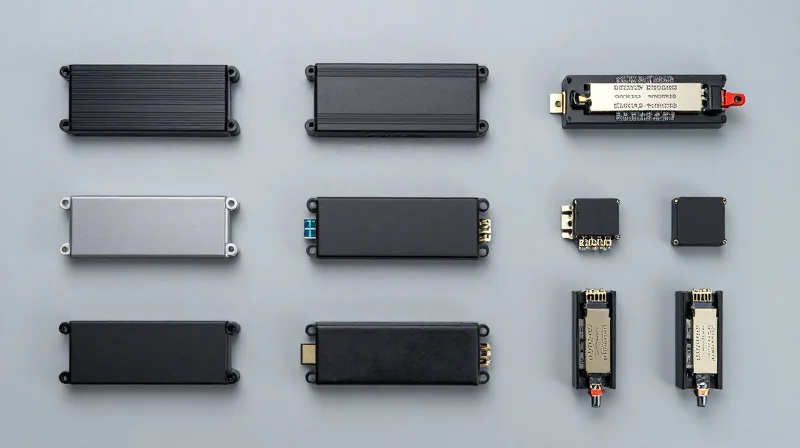
In the context of 2026 service provider requirements, network optimization modules are specialized hardware components designed to enhance signal integrity, manage wavelength distribution, and minimize latency across high-density fiber backbones. Unlike standard consumer-grade networking gear, these ISP-scale modules—including ROADMs, coherent optics, and advanced signal boosters—allow for the granular control of light and data packets, ensuring that massive bandwidth demands can be met without compromising the Quality of Service (QoS) required for modern 5G and enterprise applications.
Optical Layer Performance Modules
The foundation of ISP optimization lies at the optical layer. Wholesale procurement usually focuses on Reconfigurable Optical Add-Drop Multiplexers (ROADMs), which enable software-defined wavelength routing. By integrating ROADMs, ISPs can remotely adjust traffic paths without physical site visits, drastically reducing OpEx. Complementing these are Erbium-Doped Fiber Amplifiers (EDFA) and Raman amplifiers, which are critical for maintaining signal strength over long-haul distances exceeding 80km without the need for expensive electrical regeneration.
| Module Category | Key Hardware Components | Primary Technical Benefit |
|---|---|---|
| Optical Amplification | EDFA, Raman Amplifiers | Extends fiber reach without signal degradation. |
| Wavelength Management | ROADM, Muxponders | Enables dynamic capacity scaling and wavelength reuse. |
| Traffic Grooming | Packet-Optical Transport Systems (P-OTS) | Aggregates diverse traffic types into efficient high-speed streams. |
| Latency Optimization | Ultra-low Latency Switches / ASICs | Reduces serialization delay for high-frequency trading and gaming. |
Latency Reduction and Traffic Engineering Tools
Beyond the physical layer, optimization modules include high-performance ASICs designed for deep packet inspection (DPI) and traffic shaping. These modules are often integrated into modular chassis to provide real-time congestion management. By prioritizing latency-sensitive packets at the hardware level, ISPs can offer tiered service levels, such as 'premium routing' for gaming or financial services, which are increasingly lucrative in the wholesale market.
- What are coherent optics modules?
Coherent optics use advanced modulation schemes to transmit more data over a single wavelength, allowing ISPs to upgrade from 100G to 400G or 800G using existing fiber infrastructure. - How do signal boosters reduce TCO?
By amplifying light signals mid-span, these modules eliminate the need for costly OEO (Optical-Electrical-Optical) conversions, lowering power consumption and hardware costs. - Why is modularity important for wholesale quotes?
Modular systems allow ISPs to pay for only the capacity they need today while maintaining the ability to hot-swap higher-capacity line cards as subscriber density increases.
For ISPs planning their 2026 infrastructure cycles, sourcing these modules in bulk is the only viable path to achieving a sustainable price-per-bit. Custom wholesale quotes for these modules typically factor in the total throughput capacity (Tbps) and the physical distance of the spans being optimized, allowing for tailored performance profiles across regional and national backbones.
Unlocking Value through OEM and ODM Partnerships
Engaging in OEM (Original Equipment Manufacturing) and ODM (Original Design Manufacturing) partnerships represents a strategic evolution for ISPs seeking to move beyond generic, off-the-shelf hardware. These models allow providers to acquire highly specialized network optimization modules—such as custom-tuned signal regenerators or proprietary WDM components—at wholesale pricing while ensuring the hardware is built to their exact technical specifications. By controlling the design and branding of their infrastructure, ISPs can eliminate unnecessary features that inflate costs and focus capital on the specific latency and throughput enhancements their customer base demands.
Differentiating Between OEM and ODM for ISP Infrastructure
The choice between OEM and ODM depends largely on the ISP's internal engineering capacity and the level of uniqueness required for their network optimization strategy. OEM focuses on rebranding and minor modifications of existing high-performance designs, whereas ODM involves deep-level collaboration to build a product from the ground up.
| Feature | OEM Partnership | ODM Partnership | |||
|---|---|---|---|---|---|
| Design Ownership | Manufacturer-owned with ISP branding | Co-developed or ISP-specified | |||
| Time-to-Market | Rapid (Weeks to Months) | Moderate to Slow (6-12 Months) | NRE (Non-Recurring Engineering) Costs | Low to None | Significant investment required |
| Customization Level | Firmware, external casing, and labeling | Full hardware architecture and PCB layout | |||
| Minimum Order Quantity (MOQ) | Lower (Standard production runs) | Higher (Custom tooling requirements) |
Strategic Value of Custom Engineering in 2026
In the 2026 landscape of 400G and 800G deployments, custom-engineered optimization tools provide a technical moat. ODM partnerships allow ISPs to integrate specific chipset choices that prioritize power efficiency or thermal management in dense edge-computing environments. Furthermore, owning the 'blueprint' of your network optimization modules mitigates the risk of vendor lock-in and provides greater control over the hardware lifecycle, ensuring that replacement parts and expansions are available even if standard market trends shift.
Securing Wholesale Custom Quotes for Proprietary Hardware
- How do I initiate an ODM request for optimization modules?
ISPs should provide a Detailed Product Specification (DPS) that outlines specific performance metrics, such as decibel gain for boosters or specific wavelength tolerances for mux/demux units, to receive accurate bulk quotes. - What are the typical lead times for custom ISP hardware?
For OEM branding, lead times range from 4 to 8 weeks. For full ODM design and manufacturing, lead times generally extend to 6 months or more depending on the complexity of the custom PCB design. - Can I secure exclusive rights to a custom-designed module?
Yes, most ODM agreements for ISP network optimization include exclusivity clauses that prevent the manufacturer from selling your proprietary design to competitors, provided certain volume commitments are met. - How does bulk pricing scale with custom hardware?
Pricing usually follows a tiered structure where the initial unit cost includes amortized R&D expenses; as volume increases (e.g., 500+ units), the per-unit cost drops significantly compared to standard wholesale market prices.
Ultimately, unlocking value through these partnerships requires a long-term view of network growth. By integrating OEM/ODM into their procurement strategy, ISPs not only lower their Total Cost of Ownership (TCO) through bulk pricing but also build a more resilient, high-performance network that is uniquely their own.
Custom Quotes: Navigating the Bulk Pricing Model

Custom Quotes: Navigating the Bulk Pricing Model
Securing a custom quote for ISP network optimization equipment in 2026 demands more than a simple request for price-per-unit; it necessitates a comprehensive analysis of how volume scaling, technical customization, and logistical constraints intersect. In the wholesale market, the sticker price is merely a baseline, with true value unlocked through negotiated tiers that account for long-term infrastructure roadmaps and performance-critical specifications. A well-structured quote should provide transparency into how each variable—from hardware tolerances to shipping speed—affects the final bottom line.
Key Variables in Wholesale Quotation Analysis
When reviewing a bulk pricing proposal, ISPs must look beyond the initial discount. The primary variables include minimum order quantities (MOQ), tiered pricing break-points, and the customization premium—the additional cost associated with non-standard technical requirements like specialized wavelength filtering or proprietary chipset integration. Understanding these levers allows procurement teams to adjust order volumes to hit the most efficient price-performance ratio.
| Variable | Standard Bulk Quote | Strategic Custom Quote |
|---|---|---|
| Volume Focus | Flat discounts at fixed MOQs | Dynamic pricing based on annual commitment |
| Technical Scope | Off-the-shelf specifications | Application-specific hardware tuning |
| Lead Times | Standard (4-8 weeks) | Prioritized or Staggered delivery |
| TCO Impact | Short-term OpEx savings | Long-term CapEx efficiency and stability |
Mitigating Lead Time Risks in Bulk Procurement
Lead times are often the invisible cost in wholesale procurement. For ISP network optimization, where hardware must keep pace with subscriber growth, a lower price point often comes with longer manufacturing windows. High-value quotes should include clear milestones for production, quality assurance, and shipping. Utilizing Incoterms like DDP (Delivered Duty Paid) can further stabilize costs by including customs and freight in the upfront quote, preventing budget creep during international transit.
FAQ: Optimizing Wholesale Procurement Strategy
- How do volume thresholds typically affect the price per unit?
Most wholesale models operate on three to five pricing tiers; reaching the Enterprise tier typically requires a 20-30% increase in volume but can yield a 10-15% reduction in unit cost. - Should I prioritize lead time or price in a custom quote?
It depends on network urgency. If expanding into a new market, paying a 5% premium for Fast-Track production (reducing lead time from 12 to 6 weeks) often yields a higher ROI through faster subscriber acquisition. - Can I lock in pricing for multi-year rollouts?
Yes, many providers offer Blanket Purchase Orders where a fixed price is guaranteed for 12-24 months in exchange for a committed total volume, even if delivered in smaller, staggered batches.
Ensuring EEAT: Quality Control in Wholesale Networking
Ensuring quality control in the wholesale procurement of ISP optimization hardware requires a strategic shift from price-focused negotiation to a framework rooted in E-E-A-T (Experience, Expertise, Authoritativeness, and Trustworthiness). Because these components—ranging from wavelength multiplexers to latency-reduction modules—serve as the backbone of digital connectivity, a single failure in a bulk shipment can degrade service for thousands of end-users. To mitigate this risk, operators must implement a multi-layered vetting process that validates the manufacturer's technical pedigree, supply chain transparency, and adherence to global telecommunications standards.
Critical Compliance Standards for Wholesale ISP Modules
| Certification | Primary Focus | Importance for ISPs |
|---|---|---|
| ISO 9001:2015 | Quality Management Systems | Ensures the manufacturer follows repeatable, documented processes for bulk production. |
| IEEE Standards | Technical Interoperability | Guarantees that optimization hardware integrates seamlessly with existing vendor ecosystems. |
| NEBS Level 3 | Carrier-Grade Reliability | Verifies equipment performance under extreme heat, humidity, and seismic stress. |
| TAA Compliance | Supply Chain Integrity | Critical for ISPs bidding on government contracts or requiring high-security provenance. |
The E-E-A-T Vetting Process for Bulk Suppliers
Establishing trust with a wholesale partner goes beyond reviewing a custom quote; it involves a deep dive into their engineering expertise. Authoritative suppliers should be able to provide 'Golden Sample' validation, where a unit from the actual mass-production line is independently tested against the initial technical specifications. Furthermore, look for vendors who demonstrate 'Experience' through documented case studies in similar ISP environments and 'Expertise' via active contributions to networking standards bodies. A trustworthy supplier will be transparent about their component sourcing, specifically regarding the origin of chipsets and firmware to prevent future cybersecurity vulnerabilities.
Common Quality Control Inquiries
- How can I verify the longevity of bulk-purchased hardware?
Request Mean Time Between Failures (MTBF) data and Accelerated Life Testing (ALT) reports. Reliable vendors design ISP modules to last 7-10 years under continuous load. - What should be included in a wholesale Service Level Agreement (SLA)?
An E-E-A-T focused SLA must include Dead on Arrival (DOA) replacement guarantees, firmware support lifecycles, and a clear path for technical escalation. - Why is batch-testing critical for ISP optimization tools?
Wholesale manufacturing can suffer from 'batch drift' where later units use slightly different components. Random lot inspections ensure consistency across a 1,000+ unit order.
Integration and Scaling: From Purchase to Deployment

Integration and Scaling: From Purchase to Deployment
The successful implementation of wholesale network optimization hardware and software hinges on a structured integration workflow that bridges the gap between procurement and live operations. For ISPs, the objective is to move from a 'bulk asset' state to a 'functional utility' state without compromising the 99.999% uptime requirements typical of carrier-grade environments. This requires a tiered deployment model—beginning with laboratory validation, moving to localized pilot testing, and finally progressing to automated wide-scale rollout—to ensure that high-volume optimization modules harmonize with legacy routing protocols and existing BSS/OSS layers.
Comparative Deployment Strategies for New Optimization Tiers
| Deployment Mode | Operational Impact | Scaling Velocity | Recommended Application |
|---|---|---|---|
| In-Line Transparent | High (requires maintenance window) | Moderate | Deep Packet Inspection (DPI) & Shaping |
| Out-of-Band Mirroring | Negligible | High | Traffic Analysis & AI Optimization Training |
| Virtual/NFV Instance | Low | Instantaneous | Software-defined scaling for Edge PoPs |
| Hybrid Cloud-Edge | Moderate | High | Content Delivery and Latency Reduction |
Automation and Zero-Touch Provisioning (ZTP)
Scaling a wholesale purchase across hundreds of nodes is only feasible through automation. Modern ISP optimization modules support Zero-Touch Provisioning (ZTP), allowing hardware to call home to a central orchestrator upon installation. This reduces the need for manual on-site configuration by specialized engineers, significantly lowering the Total Cost of Ownership (TCO) associated with bulk deployments. By utilizing Infrastructure as Code (IaC) principles, ISPs can push consistent optimization policies across the entire network fabric simultaneously.
- How do I ensure interoperability between new wholesale modules and legacy gear?
Implement a rigorous lab staging phase that simulates your production environment's BGP and OSPF configurations. Ensure the optimization vendor provides standardized APIs (RESTful/NETCONF) to facilitate integration with existing management systems. - What is the best way to scale capacity during peak usage periods?
Utilize elastic licensing models often available with wholesale software bundles. This allows for 'bursting' capacity by activating dormant software cores or virtual instances during high-demand cycles without needing immediate hardware installs. - How do I manage hardware lifecycle during a mass deployment?
Establish a rolling upgrade schedule. Wholesale purchases often arrive in batches; stagger their deployment so that warranties and refresh cycles do not expire for the entire network at once.
Ultimately, the transition from purchase to deployment is the true test of an ISP’s operational maturity. By focusing on modular scalability and automated workflows, network operators can ensure that their 2026 wholesale investments translate directly into improved subscriber experiences and lower operational overhead for years to come.
The Ubytelink Advantage in ISP Optimization

The Ubytelink advantage lies in the unique intersection of hardware procurement and engineering consultancy, ensuring that ISPs do not just buy bulk components but acquire optimized, future-proofed network segments. By leveraging a verified global supply chain, Ubytelink mitigates the common risks of lead-time delays and technical incompatibility often found in standard wholesale marketplaces, offering a seamless path from custom quote to deployment.
Global Supply Chain Resilience and Priority Allocation
In the volatile landscape of 2026, hardware availability is as critical as price. Ubytelink maintains Tier-1 relationships with leading manufacturers of optical transceivers, Layer 3 switches, and signal amplifiers. This allows us to provide priority allocation for wholesale orders, ensuring that large-scale infrastructure projects remain on schedule regardless of broader market shortages. Our logistical framework is built to handle the complexities of international shipping and compliance, reducing the administrative burden on your procurement team.
| Feature | Standard Wholesale Market | The Ubytelink Advantage |
|---|---|---|
| Technical Consultation | Minimal / Sales-focused | Deep Engineering Integration |
| Lead Times | Standard (Subject to delays) | Priority Tier-1 Allocation |
| Customization | Off-the-shelf components | Bespoke hardware configurations |
| Quality Assurance | Sample-based testing | 100% component verification |
Bespoke Engineering for ISP-Specific Topologies
Unlike generic hardware vendors, Ubytelink recognizes that every ISP topology has unique pain points, whether it is high latency in rural backhauls or congestion in high-density urban cores. Our technical team works alongside your network architects to refine your wholesale quote based on specific throughput requirements and environmental factors. We don't just ship boxes; we provide the architectural blueprints that ensure every module contributes to a measurable increase in Network Efficiency Ratio (NER).
Ubytelink Wholesale FAQ
- How does Ubytelink handle custom firmware requests for bulk orders?
We offer pre-loading of custom firmware and configuration templates at the point of fulfillment, allowing for 'zero-touch' provisioning when hardware arrives at your data centers. - Can I secure locked-in pricing for multi-phase deployments?
Yes, our 2026 wholesale agreements include options for price-locking across phased deliveries, protecting your budget from mid-year market fluctuations. - What post-purchase support is available for wholesale clients?
Wholesale partners receive dedicated account managers and 24/7 technical escalation paths to ensure any integration hurdles are cleared immediately.
Future-Proofing Your Network with Advanced Hardware
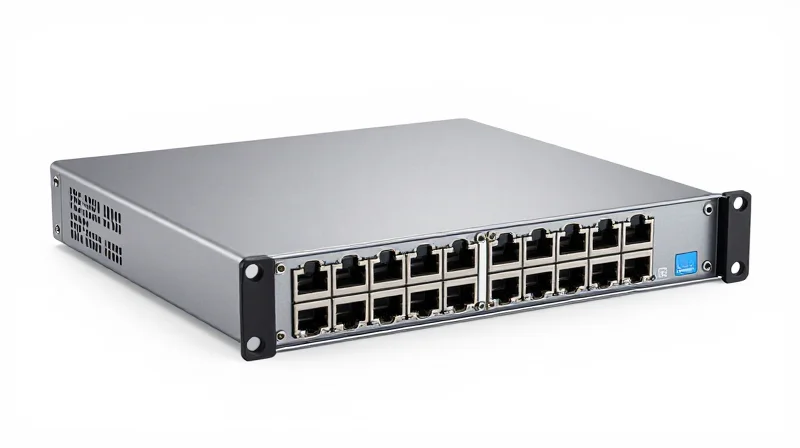
Future-proofing your network involves selecting optimization hardware that transcends current bandwidth demands by integrating modular chassis, software-defined networking (SDN) capabilities, and high-density port configurations that can be activated as subscriber demand grows. By prioritizing hardware with high throughput ceilings and multi-protocol support during wholesale procurement, ISPs can ensure their infrastructure remains relevant for a decade or more, avoiding the costly 'rip-and-replace' cycles associated with fixed-capacity devices.
The Shift Toward Modular Infrastructure
Modern ISP network optimization is moving away from monolithic, 'black box' appliances toward modular systems where line cards, processors, and interface modules can be swapped or upgraded independently. This architectural flexibility allows operators to scale specific segments of their network—such as moving from 10G to 100G or 400G interfaces—without replacing the entire chassis. Wholesale buyers should focus on vendors that offer extensive compatibility across hardware generations to maximize the lifespan of their initial investment.
| Feature | Legacy Hardware | Next-Gen Future-Proofed Systems |
|---|---|---|
| Throughput Scaling | Fixed Capacity | Modular/Pay-as-you-grow |
| Programmability | Static Firmware | Programmable ASICs / SDN Ready |
| Interface Density | Lower density (1G/10G) | Ultra-high density (100G/400G+) |
| Power Efficiency | High (Watts per Gbps) | Optimized (Low-power silicon) |
Strategic Wholesale Procurement for 2026
When requesting custom quotes in 2026, ISPs must look beyond the immediate requirements of their current subscriber base. Bulk pricing provides a unique opportunity to acquire premium, high-end optimization modules at a lower per-unit cost, making it financially viable to deploy 'dark' capacity that can be licensed and enabled as traffic increases. This proactive approach minimizes future lead-time risks and ensures that the hardware in the rack today is ready for the bandwidth spikes of tomorrow.
Key Hardware Characteristics for Longevity
- What is the most critical feature for future-proofing ISP hardware?
The presence of programmable ASICs and support for Software-Defined Networking (SDN) is paramount, as it allows the hardware to adapt to new protocols and traffic management algorithms through software updates rather than physical replacement. - How does bulk pricing impact future-proofing?
Bulk pricing allows ISPs to standardize on higher-tier hardware across their entire footprint, reducing the complexity of managing mixed-generation equipment and lowering the long-term total cost of ownership (TCO). - Should ISPs prioritize 400G-ready equipment now?
Yes. As data consumption trends upward, 400G readiness ensures that the network backbone can handle future transit demands without becoming a bottleneck as fiber-to-the-home (FTTH) speeds increase.
Optimizing an ISP network requires a blend of high-quality hardware and strategic financial planning. By leveraging wholesale pricing and custom OEM/ODM options, providers can scale effectively while maintaining superior service levels. Ready to elevate your infrastructure? Contact Ubytelink today for a custom quote on our premium ISP network optimization modules and start building a faster, more reliable future.