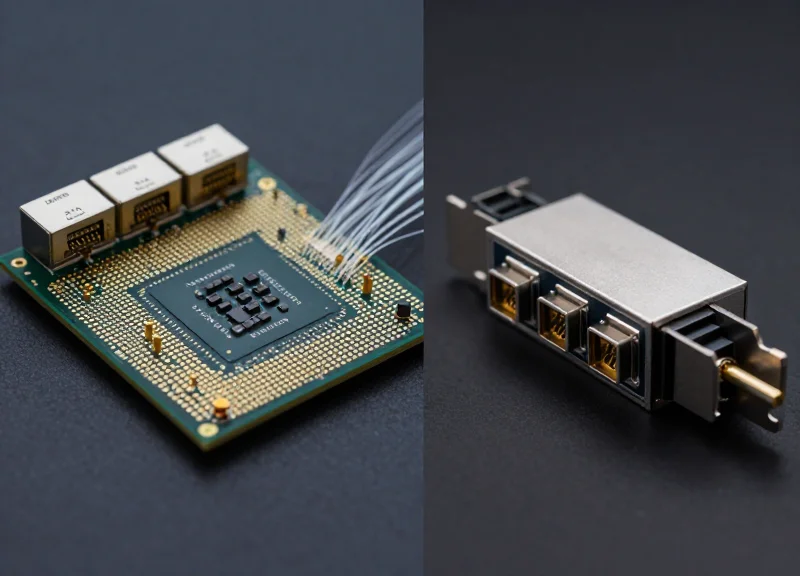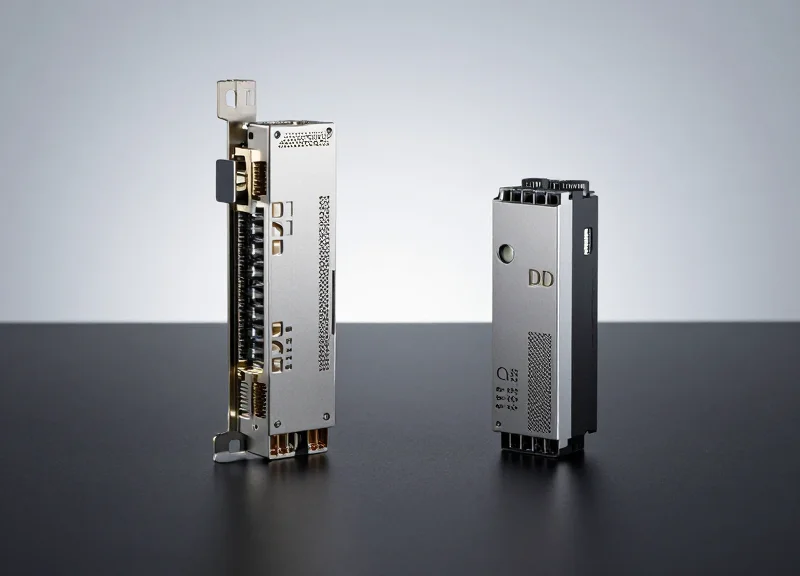
In the high-stakes world of High-Frequency Trading (HFT), the race to zero latency is both a physical and economic challenge. While standard enterprise connectivity focuses on throughput and reliability, HFT links prioritize the reduction of nanoseconds. This article provides a comprehensive technical comparison between specialized financial links and standard industry alternatives, addressing the core pillars of latency, power, and total cost of ownership.
The Evolution of Connectivity in Modern Finance

The Evolution of Connectivity in Modern Finance
The landscape of financial connectivity has transitioned from a race for bandwidth to an uncompromising battle for latency, where even a microsecond of delay can result in millions in lost opportunity. In the early days of electronic trading, standard fiber-optic networks provided sufficient speed; however, as High-Frequency Trading (HFT) became dominant, firms began bypassing public infrastructure in favor of proprietary microwave towers and experimental hollow-core fibers that transmit data at near-light speeds.
The Latency Threshold: Why Fiber is No Longer Enough
Standard fiber-optic cables are hindered by the physical properties of the silica glass core, which slows down light by approximately 31 percent compared to its speed in a vacuum. This refractive index, roughly 1.46, creates a speed limit that microwave links, which transmit through air with a refractive index of approximately 1.0003, easily surpass. For HFT firms, the switch to line-of-sight microwave transmission represented the first major paradigm shift, trading data capacity for raw execution speed.
| Medium | Latency (Speed of Light) | Reliability | Primary Use Case |
|---|---|---|---|
| Standard Fiber | ~69% c | High | Bulk data and non-HFT trading |
| Microwave/MMW | >99% c | Medium (Weather dependent) | Inter-exchange arbitrage |
| Hollow-Core Fiber | ~99% c | High | Intra-datacenter and short-haul HFT |
Bridging the Gap with Hollow-Core Fiber
Hollow-core fiber (HCF) represents the latest frontier in connectivity, effectively merging the speed of wireless transmission with the reliability and security of a physical cable. By guiding light through an air-filled central core rather than solid glass, HCF reduces signal latency by nearly 50 percent compared to traditional fiber. This technology is increasingly being deployed in high-density financial corridors where physical constraints or licensing issues prevent the installation of microwave towers.
- What is the main driver behind the shift to microwave links?
The primary driver is the speed of light in air, which is significantly faster than the speed of light in the glass cores of traditional fiber-optic cables, allowing for faster trade execution. - Is hollow-core fiber as reliable as standard fiber?
Yes, hollow-core fiber offers the physical protection and signal stability of a wired medium while providing latency characteristics that rival wireless technologies.
Latency Benchmarks: Nanoseconds vs. Milliseconds

The Latency Hierarchy: From Milliseconds to Nanoseconds
In the realm of high-frequency trading (HFT), latency is the primary metric of competitive viability, where the difference between an 'aggressive' fill and a missed opportunity is measured in the nanoseconds saved by signal propagation efficiency. While traditional enterprise ISP connections and standard dark fiber routes operate within the millisecond (ms) or high microsecond (μs) range, specialized HFT links utilize microwave, millimeter wave, and hollow-core fiber to approach the theoretical vacuum speed of light. This shift is not merely incremental; it represents a fundamental change in how data is transmitted, moving away from the refractive limitations of solid glass cores to faster mediums like air or specialized air-filled capillaries.
| Technology Type | Transmission Medium | Approx. Latency (per km) | Primary Use Case |
|---|---|---|---|
| Standard ISP Fiber | Solid Glass (G.652) | ~5.0 microseconds | General Banking / Retail Trading |
| Low-Latency Dark Fiber | Optimized Solid Glass | ~4.9 microseconds | Institutional Execution / Inter-broker |
| Hollow-Core Fiber (HCF) | Air-filled Microstructure | ~3.4 microseconds | Exchange Colocation / Short-haul |
| Microwave / RF | Atmospheric Air | ~3.3 microseconds | Long-haul HFT (e.g., Chicago to NY) |
| Millimeter Wave (mmW) | Atmospheric Air | ~3.3 microseconds | Ultra-short-haul (Metro) HFT |
The Physics of Propagation Delay
The performance gap between these technologies is dictated by the Refractive Index (n) of the transmission medium. Standard optical fiber has a refractive index of approximately 1.46 to 1.47, meaning light travels roughly 31 percent slower than it does in a vacuum. In contrast, microwave signals traveling through the atmosphere encounter a refractive index of nearly 1.0, allowing data to travel at approximately 99.9 percent of the speed of light in a vacuum. For a round-trip journey between major financial hubs like Chicago and New Jersey, this physical advantage translates into a multi-millisecond lead over traditional fiber-based competitors, a delta that is insurmountable for firms relying on standard telecommunications infrastructure.
- How does 'Jitter' affect latency benchmarks?
Jitter, or the variation in latency over time, is often more damaging than the base latency itself. HFT links are engineered for 'deterministic' performance, ensuring that every packet arrives with predictable timing, whereas standard ISP routes are subject to packet queuing and multi-tenant congestion. - Why is Hollow-Core Fiber gaining popularity over Microwave?
While microwave is faster, it is limited by bandwidth and atmospheric interference like rain fade. Hollow-core fiber offers near-microwave speeds (99 percent c) with the massive bandwidth capacity and reliability of physical fiber cabling. - Does distance optimization matter as much as medium?
Yes. In the nanosecond race, the 'Great Circle' route—the shortest geographic distance between two points—is essential. Even a faster medium cannot overcome the latency penalty of a suboptimal, zig-zagging physical path.
Ultimately, the transition from millisecond-level standard fiber to nanosecond-optimized HFT links is a transition from shared, routed networks to dedicated, point-to-point physical layer dominance. For HFT firms, the capital expenditure required to shave five microseconds off a cross-continental route is justified by the increased probability of being the first to react to price discovery events.
Microwave vs. Fiber: The Battle for the Shortest Path
The Physics of Propagation: Why Air Beats Glass
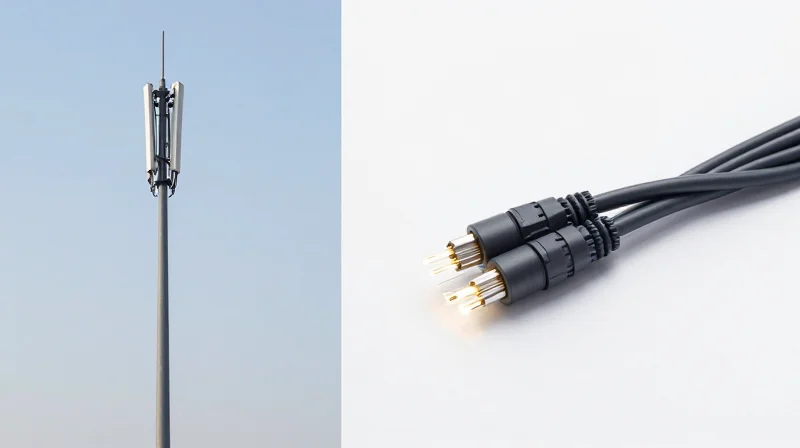
The fundamental speed advantage of microwave links over fiber-optic alternatives is dictated by the refractive index ($n$) of the medium through which the signal travels. In standard single-mode fiber (SMF), light signals are slowed down by the silica glass core, resulting in a refractive index of approximately 1.468. This means signals in fiber travel at roughly two-thirds the speed of light in a vacuum ($c$). In contrast, microwave signals transmitted through the atmosphere encounter a refractive index very close to 1.0003, allowing them to propagate at 99.97% of the speed of light. This discrepancy alone creates a persistent latency advantage of approximately 1.5 microseconds for every kilometer of distance covered.
Path Geometry and Geodesic Efficiency
Beyond the speed of the signal itself, microwave links benefit from superior path geometry. Fiber-optic cables must be physically buried, which forces them to follow 'Rights-of-Way' (ROW) such as railways, highways, or utility pipelines. These paths are rarely straight and often include significant deviations to bypass geographic or urban obstacles. Microwave networks utilize tower-to-tower line-of-sight (LoS) links that closely approximate a geodesic—the shortest possible distance between two points on the surface of the Earth. Even if fiber technology could reach the speed of light, it would still often lose to microwave due to this 'path stretch' factor.
| Parameter | Standard Fiber (SMF-28) | Microwave (Wireless) |
|---|---|---|
| Velocity of Propagation | ~204,000 km/s | ~299,700 km/s |
| Latency per km (Round Trip) | ~9.80 microseconds | ~6.67 microseconds |
| Typical Path Alignment | Indirect (ROW-based) | Direct (Line-of-Sight) |
| Signal Medium | Silica Glass | Atmosphere (Air) |
The Trade-off: Reliability vs. Latency
While microwave is the undisputed king of speed, it introduces technical trade-offs that fiber does not suffer from. Microwave links are susceptible to environmental factors such as 'rain fade,' where heavy precipitation absorbs high-frequency signals, potentially leading to packet loss or link failure. Furthermore, the available bandwidth on microwave spectrum is significantly lower than the terabit capacities of modern dense wavelength-division multiplexing (DWDM) fiber systems. For HFT firms, however, the sacrifice in bandwidth and 99.999% uptime is a calculated risk taken to achieve the lowest possible tick-to-trade latency.
- Can hollow-core fiber close the gap?
Hollow-core fiber (HCF) uses an air-filled core to achieve speeds similar to microwave (0.99c), but it is currently more expensive to manufacture and has higher attenuation over long distances compared to traditional fiber or wireless links. - Why isn't microwave used for all financial data?
The limited bandwidth of microwave bands makes it unsuitable for the massive data volumes of general market data feeds; it is reserved strictly for the most time-sensitive order execution and price discovery signals. - How do HFT firms handle microwave downtime?
Most firms employ a 'failover' strategy, where a backup fiber link is kept active to take over traffic immediately if atmospheric conditions degrade the wireless signal.
Power Consumption and Thermal Efficiency
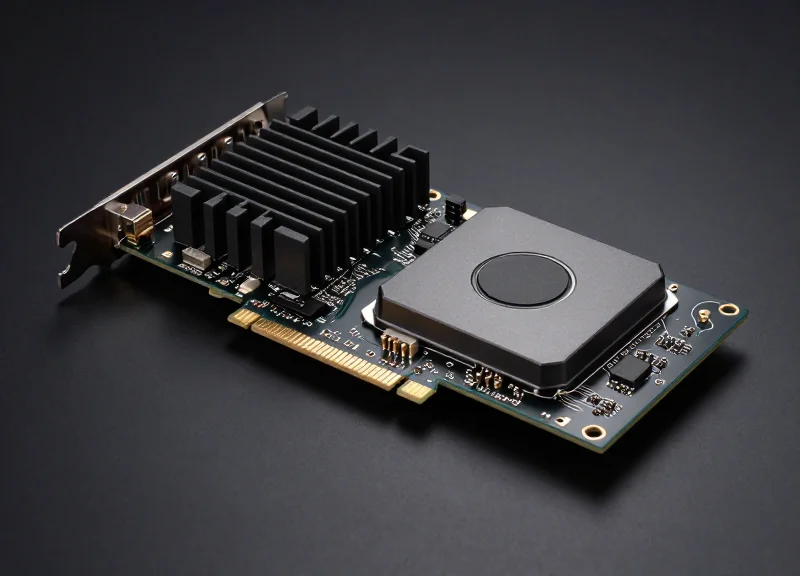
While specialized HFT hardware like FPGAs and custom ASICs offers significantly higher energy efficiency per transaction compared to standard COTS (Commercial Off-The-Shelf) equipment, they present a much higher power density that necessitates advanced thermal management strategies. The trade-off is one of optimization: HFT infrastructure minimizes wasted cycles through deterministic hardware paths, yet the extreme concentration of processing power in co-location environments creates thermal hotspots that standard data center cooling often cannot handle.
The Energy Profile of FPGAs vs. General Purpose CPUs
Standard enterprise servers rely on general-purpose CPUs (Central Processing Units) which are designed to handle a wide variety of tasks. This versatility comes at the cost of 'instruction overhead'—power consumed by features and logic gates that are not needed for a specific trading algorithm. In contrast, Field Programmable Gate Arrays (FPGAs) are hard-wired for a specific logic path. By eliminating the fetch-decode-execute cycle of a CPU, FPGAs can process market data at a fraction of the power per packet, though their idle power draw remains relatively high due to the nature of their semiconductor architecture.
| Hardware Type | Typical Power Draw (Watts) | Latency Performance | Thermal Density |
|---|---|---|---|
| FPGA-Accelerated NIC | 25W - 45W | Ultra-Low (Nanoseconds) | High (Requires Active Cooling) |
| Standard Intel/Mellanox NIC | 5W - 12W | Low (Microseconds) | Low (Passive Heat Sinks) |
| Overclocked HFT Server | 700W - 1100W | Deterministic (Nanoseconds) | Extreme (Liquid/Phase Change) |
| Standard Enterprise Server | 300W - 500W | Variable (Milliseconds) | Medium (Standard Airflow) |
Thermal Jitter and the Cost of Cooling
In the world of high-frequency trading, thermal management is not just about equipment longevity; it is about performance consistency. 'Thermal Jitter' occurs when a processor scales its clock speed down to prevent overheating. For an HFT firm, this micro-adjustment results in a latency spike that could lead to missed trades. To combat this, specialized HFT setups often bypass standard energy-saving features (like C-states in BIOS), leading to a constant, high-power draw regardless of market activity. This requires the use of high-static-pressure fans or even immersion cooling where servers are submerged in non-conductive fluid to maintain a perfectly stable temperature.
- Why do HFT firms prefer FPGAs over CPUs for power efficiency?
FPGAs allow for hardware-level parallelization, meaning they can process multiple data streams simultaneously without the energy overhead of a complex operating system or context-switching between threads. - Does higher power consumption always lead to faster trades?
Not necessarily. While overclocking increases power draw to gain speed, the primary goal of specialized HFT hardware is reducing 'jitter'—the variance in latency—which often requires more power to keep components in a high-performance, ready-state. - How does co-location pricing affect hardware choice?
Co-location providers often charge based on power density (kilowatts per rack). Specialized HFT gear is designed to maximize the computing power within these strict limits, often leading firms to choose the most efficient ASIC or FPGA to fit more 'intelligence' into a single rack.
Total Cost of Ownership (TCO) in High-Stakes Environments
Total Cost of Ownership (TCO) in High-Stakes Environments
The Total Cost of Ownership (TCO) for High-Frequency Trading (HFT) links is significantly higher and more complex than standard enterprise connectivity due to the extreme premiums paid for the lowest possible latency. While traditional fiber alternatives rely on shared infrastructure and standardized maintenance, HFT links—particularly microwave and millimeter-wave systems—require bespoke engineering, exclusive spectrum rights, and geographically optimized tower placements that drive both CAPEX and OPEX to the upper tiers of financial infrastructure spending.
Capital Expenditure (CAPEX): The Price of Early Entry
Initial investment in HFT links is front-loaded. Unlike fiber, where a firm might lease a wavelength from a provider, ultra-low latency wireless links often require the firm to build or lease specific 'Line of Sight' (LoS) paths. This involves purchasing high-gain parabolic antennas, specialized FPGA-based networking hardware that bypasses traditional OS kernels, and the acquisition of physical tower space. In competitive corridors like New Jersey to Chicago, the cost of 'path optimization'—finding the shortest possible straight line—can involve millions in real estate and infrastructure development.
| Cost Component | Microwave/RF HFT Link | Dark Fiber Alternative |
|---|---|---|
| Hardware Costs | Ultra-high (Custom FPGAs, RF Radios) | Moderate (Commercial Switches, SFPs) |
| Infrastructure | High (Tower construction or lease) | Low/Moderate (Existing conduit access) |
| Licensing | Exclusive spectrum auctions/fees | None (Included in lease) |
| Personnel | RF & Hardware Engineers (High Salary) | Standard Network Operations (IT) |
Operational Expenditure (OPEX) and Human Capital
Maintaining a lead in HFT requires more than just functional hardware; it requires constant optimization. OPEX is dominated by three main pillars: Spectrum Licensing, Physical Maintenance, and Specialized Engineering Talent. Spectrum fees are often recurring and subject to regulatory shifts, while physical maintenance includes emergency tower climbs to realign dishes after weather events. However, the most significant hidden cost is human capital. Operating these links requires a rare intersection of experts in RF physics, FPGA programming, and financial market micro-structure—a talent pool that commands a significant premium over traditional network administrators.
- Why is spectrum licensing so expensive for HFT?
Regulatory bodies charge premiums for the exclusive, interference-free frequencies required for reliable microwave transmission. In high-demand corridors, firms may engage in private auctions to secure the rights to specific frequency bands. - Does the performance justify the TCO?
Yes, for firms engaged in arbitrage where a single-microsecond advantage can represent millions in annual profit. If the link provides the 'first-look' at a price change, the TCO is often recouped within the first months of operation. - How does maintenance differ from standard fiber?
Fiber maintenance is usually handled by a third-party provider and is largely passive. HFT wireless links require proactive monitoring of atmospheric conditions and physical tower stability to prevent packet loss due to 'rain fade' or wind vibration.
Reliability and Jitter: The Standard Connectivity Advantage
Reliability and Jitter: The Standard Connectivity Advantage
While ultra-low-latency wireless links are optimized for raw speed, standard fiber-optic infrastructure offers a level of operational stability and deterministic performance that wireless alternatives cannot match. For financial institutions, standard connectivity serves as the essential backbone for risk management, regulatory compliance, and market data distribution—areas where a single dropped packet or a micro-burst of jitter can have significant downstream consequences. Standard fiber provides a controlled environment, largely immune to the external variables that plague specialized point-to-point wireless systems.
Environmental Resilience and Uptime
Specialized HFT links, particularly those utilizing microwave or millimeter-wave frequencies, are highly susceptible to atmospheric conditions. Phenomena such as rain fade, heavy snowfall, or even intense thermal inversions can degrade signal quality or cause total link failure. In contrast, carrier-grade fiber is typically buried and shielded, ensuring 99.999% uptime regardless of meteorological events. This resilience makes standard fiber the only viable choice for the heavy-lifting of financial operations where downtime translates directly into catastrophic operational risk.
| Metric | Standard Fiber-Optic | Specialized HFT Wireless |
|---|---|---|
| Uptime SLA | 99.999% (Five Nines) | 99.9% to 99.95% |
| Weather Sensitivity | Minimal to None | High (Rain, Fog, Snow) |
| Signal Consistency | High (Deterministic) | Variable (Stochastic) |
| Packet Loss | Near Zero (<0.001%) | Periodic Bursts Common |
The Impact of Jitter on Financial Systems
Jitter—the variation in time between packet arrivals—is often more disruptive than latency itself for non-execution systems. Standard fiber networks utilize mature switching technologies and well-defined buffer management to maintain consistent timing. In HFT wireless links, signal degradation often leads to retransmissions or error-correction overhead that introduces unpredictable jitter. For middle-office systems that synchronize global order books or reconcile trades, this lack of determinism can lead to race conditions and data integrity errors.
- Does fiber offer better packet delivery than wireless?
Yes, fiber-optic cables provide a physical medium with much higher Signal-to-Noise Ratios (SNR), resulting in significantly lower bit-error rates and near-zero packet loss compared to wireless paths. - Why is jitter a critical factor for compliance?
Regulatory reporting and audit trails require precise time-stamping; high jitter can cause synchronization offsets between distributed nodes, leading to non-compliant record-keeping. - Can wireless links be used as a primary connection?
Rarely for general operations. While they are primary for execution, they almost always require a fiber backup to maintain connectivity during adverse weather conditions.
Hardware Acceleration at the Edge
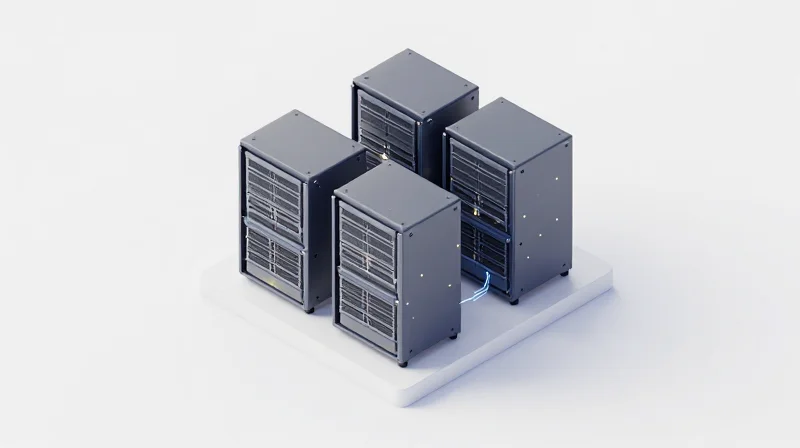
To realize the full potential of specialized microwave or millimeter-wave links, the trading infrastructure must eliminate 'internal' latency at the network edge. Even the most expensive long-haul connectivity becomes a bottleneck if the local execution stack—comprising network interface cards (NICs), switches, and the operating system kernel—introduces variable jitter and processing delays. Hardware acceleration at the edge ensures that the signal received from the link is processed and acted upon in nanoseconds, rather than microseconds, by offloading network logic from the CPU to specialized hardware.
FPGA-Based SmartNICs and Kernel Bypass
The most critical component in the edge stack is the FPGA-enabled SmartNIC. Traditional network interfaces rely on the operating system kernel to handle packet processing, which introduces significant interrupts and context switching. High-frequency traders use kernel bypass technologies (such as Solarflare’s Onload or Mellanox VMA) and Field Programmable Gate Arrays (FPGAs) to move the entire TCP/IP stack into hardware. This allows the trading application to 'see' the packet almost the instant it arrives at the physical port, bypassing the OS entirely.
| Feature | Standard COTS NIC | HFT-Optimized SmartNIC (FPGA) | |||
|---|---|---|---|---|---|
| Latency (Wire-to-App) | 5 - 50 Microseconds | < 1 Microsecond | |||
| Processing Jitter | High (OS Dependent) | Near Zero (Deterministic) | CPU Utilization | High (Interrupt Driven) | Very Low (Hardware Offload) |
| Custom Logic Support | None | Programmable (HDL/Verilog) |
Ultra-Low Latency Switching and L1 Fabrics
Standard 'store-and-forward' switches are unsuitable for HFT because they wait for an entire packet to arrive before forwarding it. Modern HFT environments deploy cut-through switches and Layer 1 (L1) matrix switches. L1 switches operate at the physical layer, acting as an electronic patch panel that can fan out a signal to multiple servers simultaneously with a latency overhead as low as 4 to 10 nanoseconds. This ensures that a price update arriving via a wireless link reaches every relevant trading engine at the same time.
The Synergy of Link Speed and Edge Hardware
When high-performance microwave links are paired with edge acceleration, the result is a deterministic execution path. If a firm uses a 100-mile microwave link to save 200 microseconds over fiber but uses standard switches that add 10 microseconds of jitter, they lose the competitive race to firms that have optimized their edge. The edge hardware effectively 'protects' the investment made in the expensive long-haul transport links.
- Does hardware acceleration replace the need for fast links?
No, they are complementary. A fast link provides the 'speed of light' advantage over distance, while hardware acceleration ensures that speed is not wasted during local processing. - What is the primary cost of edge acceleration?
Beyond the high CAPEX for FPGA cards and L1 switches, the primary cost is the specialized engineering talent required to program FPGAs in hardware description languages like Verilog or VHDL. - Can standard fiber links benefit from this hardware?
Yes. Even when using standard fiber, implementing SmartNICs and cut-through switching can reduce 'tick-to-trade' latency by over 90% compared to standard server configurations.
Scalability and Future-Proofing Financial Infrastructure

The Evolution of Low-Latency Connectivity
Future-proofing financial infrastructure demands a shift from static point-to-point links toward dynamic, software-defined ecosystems that can adapt to shifting market liquidity. As HFT firms and enterprise institutions look toward the next decade, the focus is moving beyond simple millisecond reductions toward global reach, resilience, and the integration of predictive analytics into the routing layer.
LEO Satellites vs. Terrestrial Microwave
Low Earth Orbit (LEO) satellite constellations, such as Starlink and Kuiper, represent the next major leap in HFT connectivity. Unlike traditional geostationary satellites, LEO units orbit close enough to the Earth to offer latency that rivals—and in some long-haul cases, beats—undersea fiber cables. For HFT, this means the ability to execute cross-continental arbitrage with fewer geographical constraints than terrestrial microwave towers.
| Feature | Microwave (Terrestrial) | Fiber (Standard) | LEO Satellite |
|---|---|---|---|
| Latency | Lowest (local) | Medium | Low (Global) |
| Scalability | Low (Line-of-Sight) | High (Established) | High (Global Coverage) |
| Maintenance | High (Tower upkeep) | Low (Service provider) | High (Subscription/Dev) |
| Weather Sensitivity | High | Low | Medium |
AI-Optimized Routing and Elastic Infrastructure
Enterprise networking is increasingly leveraging AI to close the performance gap with specialized HFT links. AI-optimized routing protocols can now predict network congestion or packet drops before they occur, rerouting financial data packets across the most efficient path in real-time. This elasticity allows firms to scale their bandwidth during periods of high market volatility without maintaining expensive, idle dark fiber capacity year-round.
- Will LEO satellites replace microwave links for HFT?
LEO satellites will likely complement rather than replace microwave. Microwave remains superior for short, direct hops between adjacent data centers, while LEO excels at long-distance, cross-border connectivity where building towers is impossible. - How does AI-optimized routing affect cost?
It significantly reduces costs by allowing firms to use standard carrier networks more effectively, minimizing the need for 24/7 dedicated private lines by dynamically scaling performance based on market conditions. - What is the biggest hurdle for future-proofing HFT systems?
The primary hurdle is 'Quantum Readiness.' As encryption standards evolve, infrastructure must be capable of supporting Quantum Key Distribution (QKD) to ensure that high-speed trade data remains secure against future compute threats.
Ultimately, the future of financial connectivity lies in a hybrid approach. The most successful firms will use a combination of ultra-low-latency HFT links for execution and AI-driven enterprise alternatives for data ingestion and risk management, ensuring both peak performance and long-term scalability.
The Decision Matrix: When to Invest in HFT-Grade Links
The decision to invest in HFT-grade links hinges on the 'latency sensitivity' of a firm's specific alpha profile; if a strategy's profitability decays faster than the time it takes to execute over standard fiber, the transition to specialized microwave or millimeter-wave infrastructure becomes a mandatory cost of doing business rather than an optional upgrade.
The Latency-Alpha Correlation Matrix
Not every trading strategy requires the absolute lowest latency. Understanding where a firm sits on the execution spectrum is the first step in the decision-making process. The following table maps common trading profiles to their ideal connectivity infrastructure.
| Trading Strategy | Latency Sensitivity | Recommended Link | Economic Rationale |
|---|---|---|---|
| Market Making (HFT) | Critical (<5 µs) | Microwave / MMW | Essential for queue position and avoiding toxic flow. |
| Cross-Asset Arbitrage | High (5 µs – 500 µs) | Dark Fiber / Hollow-Core | Speed is the primary competitive moat for price discovery. |
| Statistical Arbitrage | Medium (1ms – 10ms) | Low-Latency Fiber (SO) | Balanced approach between cost and execution speed. |
| VWAP/Execution Algos | Low (>10ms) | Standard Cloud / ISP | Focus on reliability and broad liquidity access over speed. |
Quantifying the Tipping Point
Firms must calculate the 'Latency-Adjusted ROI.' This involves estimating the potential increase in fill rates and the reduction in slippage against the 5x to 10x cost premium of HFT links. If the projected PnL uplift from shaving 100 microseconds off a round-trip exceeds the monthly lease and maintenance cost of a specialized link by at least 25%, the investment is strategically sound.
Strategic Investment FAQ
- When is standard fiber 'good enough'?
Standard fiber is sufficient for strategies that rely on proprietary data signals or complex modeling where compute time significantly outweighs transit time. - Should we build or lease HFT links?
Leasing from specialized providers is recommended for most firms to avoid the massive CapEx and regulatory hurdles of tower construction, unless the firm is a Tier-1 market maker. - How does weather impact the decision?
If your strategy requires 99.99% uptime, you must invest in a fiber failover alongside microwave links, as atmospheric conditions can degrade wireless performance.
Hybrid Connectivity: The Pragmatic Middle Ground
Many modern firms adopt a hybrid approach: utilizing ultra-low latency microwave links for order submission and cancellations, while using more cost-effective standard fiber for market data feeds and post-trade reporting. This bifurcated architecture optimizes the cost-per-packet while ensuring that the most time-sensitive actions remain competitive.
Navigating the complexities of HFT infrastructure requires a balance of extreme performance and fiscal responsibility. While specialized links offer unrivaled speed, their high TCO and power demands necessitate a strategic approach. Contact our network engineering consultants today to design a bespoke connectivity roadmap that aligns with your firm's trading objectives.