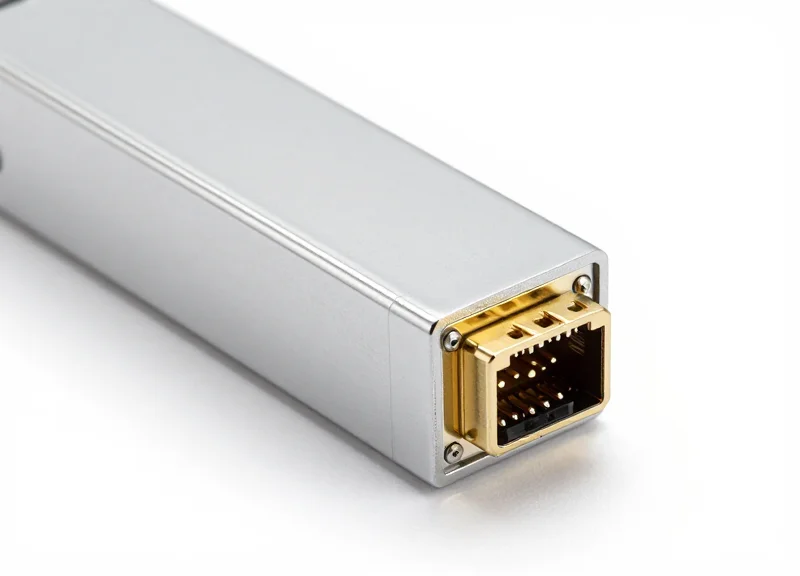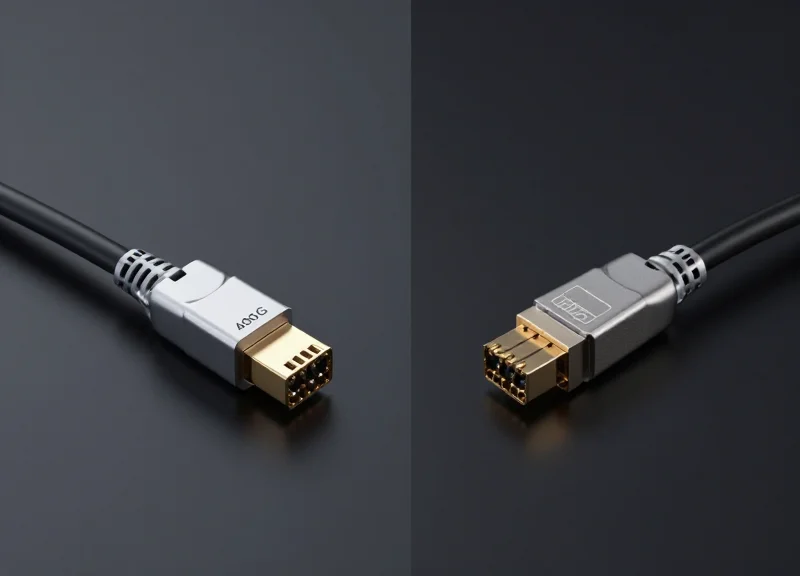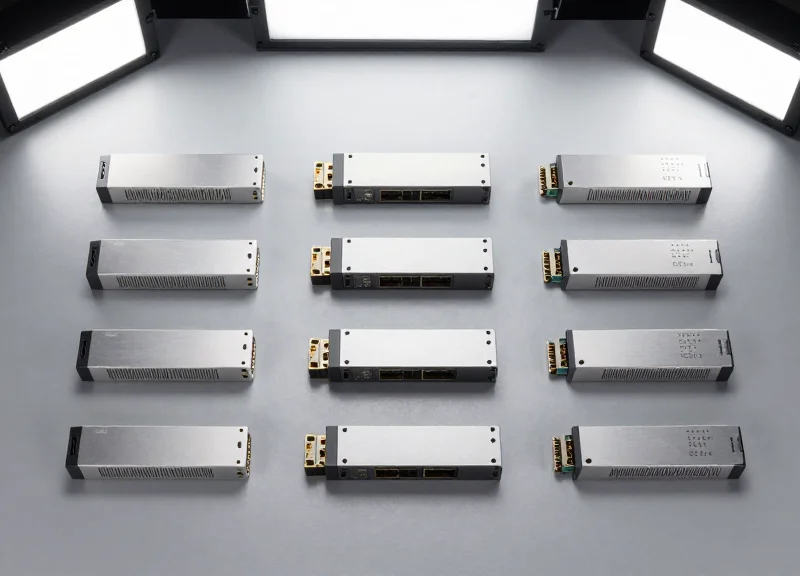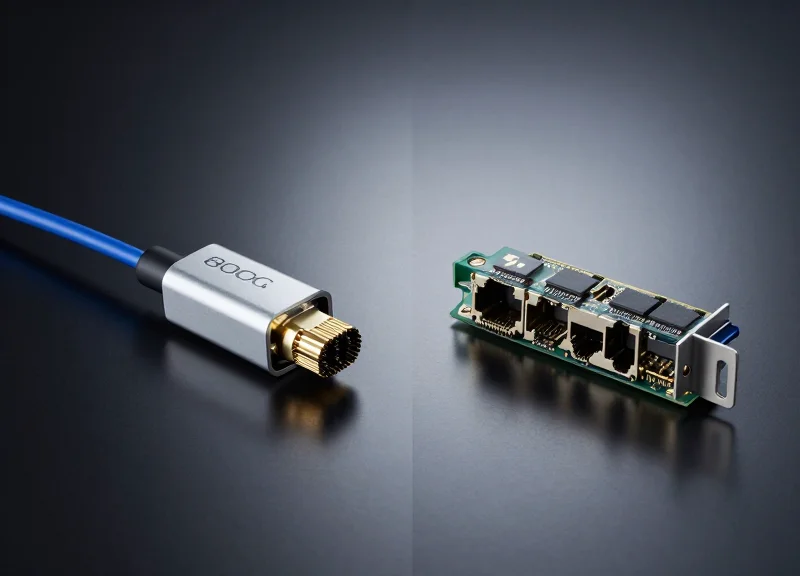
As data centers and telecommunications networks scale, the choice between standard off-the-shelf optics and custom OEM/ODM services becomes critical. This article breaks down how custom solutions outperform generic alternatives in latency, power consumption, and total cost of ownership to meet modern enterprise demands.
Understanding the Paradigm Shift: OEM/ODM vs. Off-the-Shelf (OTS) Optics
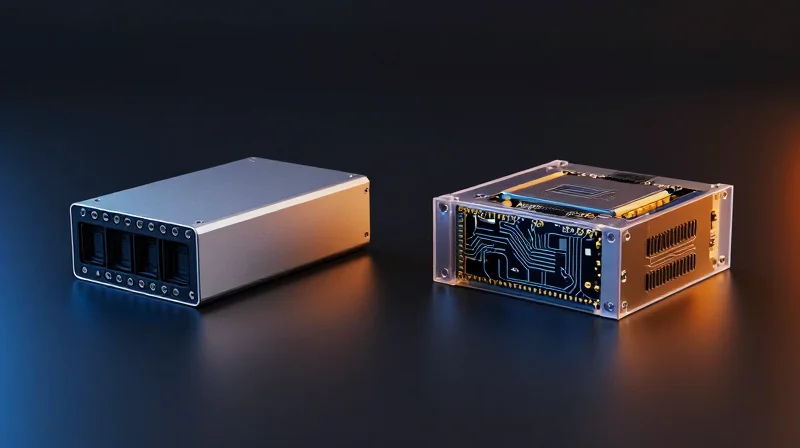
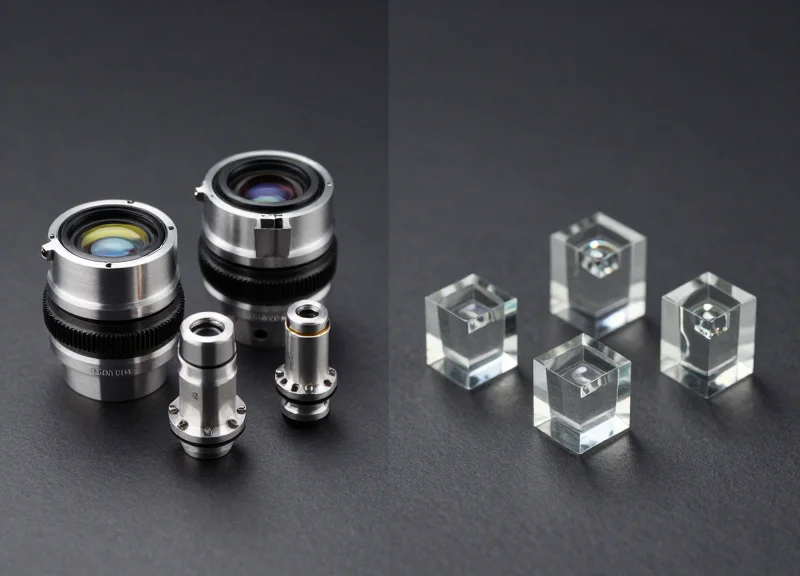
The transition from Off-the-Shelf (OTS) optics to OEM/ODM services marks a critical evolution in optical procurement, driven by the increasing complexity of photonics-enabled devices. While OTS components offer a shortcut for early-stage prototyping, they often impose rigid design constraints that compromise the final product's efficiency and form factor. The paradigm shift toward OEM/ODM engineering reflects a strategic move to prioritize application-specific performance, where the optical system is treated as a core proprietary advantage rather than a commodity. In modern high-tech sectors, the limitations of standardized lenses—such as sub-optimal transmission at specific wavelengths or mismatched sensor-to-lens resolution—frequently necessitate a move toward bespoke engineering partnerships.
Defining the Core Models: Catalog vs. Custom Engineering
OTS optics are characterized by their 'as-is' nature; they are manufactured for a generic market, often resulting in over-engineered dimensions or under-performing tolerances for specialized use cases. OEM (Original Equipment Manufacturing) involves a client providing specific designs for a manufacturer to build, ensuring the hardware fits a proprietary housing. Conversely, ODM (Original Design Manufacturing) leverages the manufacturer’s internal R&D to design and build a solution based on a functional requirement specification. These services provide the granular control over Modulation Transfer Function (MTF), stray light suppression, and environmental sealing that standardized catalog components lack.
Direct Comparison: OTS vs. OEM/ODM Services
| Criteria | Off-the-Shelf (OTS) | OEM/ODM Services |
|---|---|---|
| Customization | None - Fixed Specifications | High - Tailored Optics & Coatings |
| Initial Investment | Low - Unit Price Only | High - NRE, Tooling, & Design |
| Unit Cost (Scalability) | High - Stagnant pricing tiers | Low - Significant Volume Efficiency |
| Supply Chain Control | Subject to Catalog Stock | Guaranteed Proprietary Supply |
| Integration | Requires Mechanical Adapters | Seamless Mechanical Integration |
Selection Strategy FAQ
- When is OTS the better choice for a project?
OTS is ideal for initial proof-of-concept stages, academic research, and low-complexity systems where the annual volume does not justify the Non-Recurring Engineering (NRE) costs of custom development. - What defines the 'Performance Ceiling' in OTS optics?
This refers to the threshold where a standardized lens limits the sensor's potential because its optical resolution, chromatic correction, or aperture size is not perfectly matched to the specific pixel pitch or environmental conditions of the application. - How does OEM/ODM impact the long-term Total Cost of Ownership (TCO)?
While custom services require higher upfront capital, they typically reduce the per-unit cost by 30-50% in mass production and eliminate the need for secondary corrective hardware, leading to a lower TCO over the product lifecycle.
Latency Benchmarks: Engineering for Nanosecond Precision

Achieving nanosecond precision in optical networking is not merely a function of the speed of light; it is an engineering challenge focused on minimizing Digital Signal Processing (DSP) overhead and optimizing Forward Error Correction (FEC) algorithms. While standard off-the-shelf (OTS) optics prioritize interoperability and broad-spectrum compatibility, OEM/ODM services allow for the excision of redundant signaling protocols and the implementation of streamlined firmware tailored for specific hardware environments. By reducing the complexity of the signal path, custom-engineered optics can provide a deterministic latency profile essential for high-frequency trading and hyperscale data center synchronization.
The Architecture of Delay: Processing vs. Propagation
In a standard module, latency is largely introduced through multi-stage processing, including Clock and Data Recovery (CDR), gearboxing, and standardized FEC. ODM engineering often employs 'Direct-Drive' architectures or ultra-low-latency (ULL) DSPs that bypass heavy-duty processing stages when signal integrity is guaranteed by a controlled environment. This selective optimization significantly reduces the 'processing hop' time.
| Processing Component | Standard OTS Optics (ns) | OEM/ODM Optimized (ns) | Optimization Strategy |
|---|---|---|---|
| CDR/DSP Path | 50 - 120 | 10 - 25 | Simplified logic gates & ULL DSP |
| FEC Latency | 100 - 250 | 0 - 90 | Lightweight or bypassed FEC |
| Electrical I/O | 5 - 12 | 2 - 4 | Impedance matching for specific ASICs |
| Total Logic Latency | 155 - 382 | 12 - 119 | Firmware-level path optimization |
Firmware Tuning and Signal Integrity
Custom firmware in ODM optics can modify the laser bias current and modulation depth to favor speed and signal-to-noise ratio over broad-spectrum dynamic range—a trade-off rarely available in mass-market products. By calibrating the Transmitter Optical Sub-Assembly (TOSA) specifically for a known host ASIC's electrical characteristics, ODM services eliminate the 'discovery' and 'negotiation' cycles that frequently add jitter and inconsistent latency in heterogeneous environments.
- Can custom FEC impact bit-error rates (BER)?
Yes, but OEM services optimize FEC overhead for specific, known distance requirements (e.g., intra-rack), maintaining the required BER while stripping out the latency required for long-haul error correction. - Is latency reduction purely hardware-dependent?
No. While the physical components provide the floor, the firmware dictates how the DSP handles data buffers. ODM services allow for 'cut-through' processing where data is forwarded before the entire frame is buffered. - Does this impact cost-per-port?
While the initial engineering NRE (Non-Recurring Engineering) is higher, the performance-to-cost ratio is superior for high-frequency environments where a 100ns advantage translates directly into competitive value.
Power Consumption Optimization: The Direct Impact on OpEx

Power Consumption Optimization: The Direct Impact on OpEx
OEM/ODM optical modules achieve superior energy efficiency compared to off-the-shelf alternatives by utilizing purpose-built ASICs and streamlined circuit architectures that eliminate the overhead typical of generic hardware. By focusing on application-specific performance rather than universal compatibility, these modules minimize parasitic power loss and optimize signal-to-noise ratios at lower voltages, resulting in a significant reduction in the thermal footprint of the network.
The Architecture of Efficiency: Component Selection
The core difference in power consumption lies in the selection of the Digital Signal Processor (DSP) and the laser driver circuitry. Generic modules often utilize older silicon processes to maximize yield and minimize manufacturing costs, which leads to higher thermal leakage. OEM/ODM engineering allows for the integration of cutting-edge 7nm or 5nm DSPs that offer higher processing power with a drastically lower wattage per gigabit. Additionally, bespoke circuit design can eliminate extraneous hardware components—such as redundant voltage regulators or unused auxiliary pins—that are standard in multi-purpose generic designs but unnecessary for specific enterprise or service provider environments.
| Metric | Generic Off-the-Shelf (OTS) 400G | OEM/ODM Optimized 400G |
|---|---|---|
| Average Power Consumption | 12.5W - 14W | 8.0W - 9.5W |
| Thermal Output (BTU/hr) | 42.6 - 47.7 | 27.3 - 32.4 |
| Silicon Process Node | 16nm / 12nm | 7nm / 5nm |
| Voltage Efficiency | 85% | 94% |
Operational Expenditure and the Cooling Multiplier
The impact of power optimization is best understood through the lens of the cooling multiplier. For every watt of energy consumed by an optical module, additional energy is required to power the CRAC (Computer Room Air Conditioner) units and fans to dissipate that heat. In a high-density environment with a PUE of 1.5, saving 4W per transceiver translates to a 6W total saving for the facility. When scaled across a leaf-spine architecture with thousands of active links, the reduction in OpEx is measured in tens of thousands of dollars annually, while simultaneously reducing the mechanical stress on cooling infrastructure and extending its operational lifecycle.
- How does OEM/ODM power optimization affect signal integrity?
Optimized designs improve signal integrity by reducing thermal noise and using higher-quality components that maintain stable performance at lower power levels. - Is the power saving significant enough to justify the engineering cost?
In large-scale deployments exceeding 1,000 ports, the OpEx savings from reduced electricity and cooling costs typically offset the initial engineering costs within the first 12 to 18 months. - Does lower power consumption lead to shorter module lifespans?
No, lower power consumption actually increases longevity by reducing the internal operating temperature, which is the primary cause of laser degradation and component failure.
The Real TCO Equation: Beyond the Initial Acquisition Cost
The true cost of optical networking hardware is rarely reflected in the unit price alone; instead, a comprehensive Total Cost of Ownership (TCO) analysis must account for the exponential costs of network downtime, the engineering hours required for troubleshooting incompatible third-party firmware, and the increased cooling requirements of less efficient components.
Quantifying the Lifecycle Cost Gap
| Cost Driver | OEM/ODM Solutions | Generic Alternatives |
|---|---|---|
| Hardware Acquisition | Higher initial CapEx | Low initial CapEx |
| Failure Rate (AFR) | Typically <0.1% | Estimated 2% to 5% |
| Operational Labor | Plug-and-play reliability | High troubleshooting/RMA overhead |
| Power & Cooling | Optimized efficiency | Standard or suboptimal efficiency |
| Network Downtime | Minimal risk | Significant risk to SLAs |
The Financial Impact of Reliability and MTBF
When evaluating OEM/ODM services, the Mean Time Between Failures (MTBF) is a critical metric that dictates the long-term OpEx. Generic alternatives often utilize lower-grade laser components or less rigorous testing protocols to maintain their low price point. In a large-scale data center deployment, an Annualized Failure Rate (AFR) difference of even 2% can translate into thousands of man-hours spent on hardware replacement, logistics for Return Merchandise Authorizations (RMAs), and the potential for catastrophic service level agreement (SLA) breaches.
Maintenance and Engineering Overhead
OEM/ODM optics are typically designed with firmware specifically tuned for the host hardware. This eliminates the 're-validation' phase that engineers must perform every time a network operating system (NOS) update is released. When using generic alternatives, every software update carries the risk of hardware rejection or performance degradation, requiring extensive lab testing that adds an invisible but substantial cost to the network team's budget.
- How does power consumption impact TCO over five years?
OEM/ODM modules often feature custom-designed integrated circuits that pull fewer watts per gigabit. Across a high-density switch, this reduces both electricity costs and the cooling load, which can save significantly more than the initial acquisition price difference over the equipment's lifespan. - What is the most significant hidden cost in generic optics?
Operational labor is the largest hidden cost. The time spent by senior engineers identifying whether a link flap is caused by a software bug or a low-quality generic transceiver is a major drain on resources. - Why are replacement cycles shorter for generic alternatives?
Lower-quality components tend to degrade faster under thermal stress, leading to a higher 'wear-out' rate that necessitates earlier replacement cycles compared to the 7-10 year lifecycle expected from high-spec OEM/ODM solutions.
Supply Chain Control and Reliability

Supply Chain Control and Reliability
In the high-stakes environment of optical networking, supply chain reliability is not merely a logistical concern but a foundational element of network uptime and long-term performance. The OEM/ODM model provides a level of transparency and control that generic alternatives cannot replicate, specifically by establishing direct oversight of the sub-component ecosystem. This structural advantage allows operators to move beyond reactive procurement toward a proactive strategy that prioritizes consistency and risk mitigation.
Material Traceability and Quality Assurance Standards
OEM/ODM services are built upon a rigorous framework of material traceability. Every critical component—from the EML lasers to the Digital Diagnostics Monitoring (DDM) integrated circuits—is sourced from Tier-1 suppliers with documented manufacturing histories. Unlike generic market alternatives, where component swapping is common to reduce costs, OEM/ODM manufacturers maintain fixed Bills of Materials (BOM). This ensures that every module in a 10,000-unit deployment performs identically, preventing the 'lottery effect' where some batches fail prematurely due to inferior internal components.
| Supply Chain Metric | OEM/ODM Services | Generic/White-Label Alternatives |
|---|---|---|
| Material Traceability | Full component-level logging (Batch/Wafer tracking) | Limited; components often vary between batches |
| Quality Control | 100% testing across temperature and voltage ranges | Sample-based or 'light' functional testing |
| Lead Time Stability | High; due to pre-allocated manufacturing capacity | Variable; dependent on spot-market component availability |
| Supply Chain Transparency | Direct visibility into Tier-2 and Tier-3 suppliers | Opaque; often rely on third-party aggregators |
Insulation from Global Volatility
The OEM/ODM model acts as a buffer against the inherent volatility of the global semiconductor market. By leveraging long-term contracts and strategic stockpiling of critical wafers and chipsets, these providers offer more stable pricing and lead times. When component shortages strike, generic manufacturers are often forced to halt production or utilize sub-standard substitutes from the spot market. In contrast, the dedicated production lines of an OEM/ODM partnership ensure that enterprise and service provider requirements are prioritized, maintaining deployment schedules even during industry-wide disruptions.
- Why is component-level traceability critical for optical reliability?
It allows for precise root-cause analysis in the event of a failure. If a specific batch of lasers is found to be defective, an OEM/ODM can identify exactly which modules are affected, whereas generic providers often lack the data to perform targeted recalls. - How does the ODM model handle supply chain disruptions better than alternatives?
ODMs typically maintain deep relationships with silicon and optics fabs, securing priority access to raw materials through committed volumes and multi-year forecasting that generic vendors cannot sustain. - Does better supply chain control justify the higher initial cost?
Yes, because it significantly reduces 'hidden' costs such as emergency procurement premiums, labor for replacing failed modules, and the reputational damage associated with network downtime.
Interoperability and Multi-Vendor Integration
Solving the Interoperability Puzzle in Multi-Vendor Networks
The primary advantage of OEM/ODM services for optics lies in their ability to bridge the functional gap between disparate networking ecosystems through advanced firmware customization. While generic alternatives often rely on basic Multi-Source Agreement (MSA) compliance, custom-coded optics are engineered to replicate the exact digital signatures and handshake protocols required by specific hardware vendors, effectively eliminating the risk of port-locking, software flags, or complete link failures that plague 'one-size-fits-all' components.
The Limitations of Generic MSA Compatibility
Generic optics are designed to meet the minimum requirements of MSA standards, which ensures physical and basic electrical compatibility. However, modern network operating systems (NOS) from vendors like Cisco, Arista, and Juniper often perform 'white-list' checks. If a transceiver's EEPROM data does not contain the correct vendor OUI or serialized checksum, the system may disable the port or restrict Digital Optical Monitoring (DOM) capabilities. OEM/ODM services circumvent this by 'deep-coding' the modules to match the host system's expected parameters perfectly.
| Feature | Generic/Alternative Optics | OEM/ODM Custom-Coded Optics |
|---|---|---|
| EEPROM Configuration | Static, generic MSA data | Dynamic, vendor-specific coding |
| OS Recognition | Often flagged as 'Unsupported' | Recognized as native/genuine |
| Telemetry/DOM | Basic or non-functional | Full real-time diagnostic support |
| Software Updates | High risk of failure after OS patches | Tested against specific OS releases |
| Multi-Vendor Support | Limited to basic connectivity | Dual-coded/Multi-coded capability |
Ensuring Long-Term Stability via Host-Platform Testing
Interoperability is not a one-time event but a continuous requirement. When a switch manufacturer releases a firmware update, it can inadvertently (or intentionally) break compatibility with third-party optics. OEM/ODM providers mitigate this risk by maintaining extensive labs filled with diverse host hardware. By performing 'Host-Platform Testing,' they ensure that custom firmware remains compatible across different software versions, providing a level of operational continuity that cheaper alternatives cannot guarantee.
- Why do switches show 'unsupported transceiver' errors?
This occurs when the switch's operating system cannot verify the vendor-specific encryption or ID codes stored in the transceiver's EEPROM. OEM/ODM services solve this by mirroring original vendor codes. - Can custom optics handle multi-vendor environments in a single link?
Yes. OEM/ODM providers can create 'Dual-Coded' modules where Side A is coded for one vendor (e.g., Arista) and Side B is coded for another (e.g., Cisco), ensuring seamless communication across the link. - What is the impact of poor interoperability on network TCO?
Poor interoperability leads to increased troubleshooting time, the need for 'service-unsupported transceiver' command workarounds, and potential network instability, all of which raise the total cost of ownership compared to reliable custom-coded parts.
Innovation Velocity: Aligning Hardware with Next-Gen Roadmaps

Innovation velocity in high-capacity networking is determined by the speed at which an organization can transition from theoretical standards to deployable hardware. While standard commercial alternatives typically lag behind the leading edge to ensure mass-market stability, OEM/ODM services provide a direct bridge to the R&D floor. This collaborative model enables data center operators and network architects to influence the design of 800G and 1.6T modules during the engineering sample phase, ensuring that the final hardware is perfectly tuned to the specific power envelopes and thermal constraints of their proprietary switching fabrics.
The Shift to 800G and 1.6T: Co-Development vs. Commercial Availability
The leap to 800G and eventually 1.6T represents more than just a bandwidth increase; it introduces significant challenges in signal integrity and power consumption. Waiting for 'off-the-shelf' solutions often means adopting a one-size-fits-all approach that may not account for the unique cooling requirements of a specific high-density rack configuration. By engaging in an ODM partnership, organizations can participate in the validation process, testing early silicon and firmware iterations to ensure seamless integration long before the products reach general availability.
| Feature | OEM/ODM Co-Development | Standard Commercial Alternatives |
|---|---|---|
| Market Entry | 6-12 months ahead of GA | Post-mass production availability |
| Design Influence | High (Form factor, thermal, firmware) | None (Standardized specifications) |
| Engineering Support | Dedicated R&D and FAE teams | General technical documentation |
| Roadmap Alignment | Synchronized with ASIC release | Reactive to market demand |
Strategic Advantages of Early Roadmap Alignment
Aligning with an ODM partner does more than provide early hardware; it mitigates the 'early adopter tax' associated with first-generation components. Through transparency in the bill of materials (BOM) and direct negotiation on R&D costs, organizations can achieve a more favorable performance-to-cost ratio than those purchasing standard parts at a premium during the initial market scarcity phase.
- How does ODM partnership impact 1.6T readiness?
It allows for the early testing of OSFP-XD or other high-density form factors, ensuring that the electrical interfaces and thermal management strategies are validated against the specific network OS being used. - Is co-development only for hyperscalers?
No. While hyperscalers pioneered the model, Tier-2 providers and specialized enterprises use OEM/ODM services to ensure their hardware roadmaps aren't bottlenecked by the slow rollout of generic commercial optics. - What role does custom firmware play in next-gen optics?
Custom firmware allows for optimized Digital Diagnostics Monitoring (DDM) and improved error correction (FEC) tuning, which are critical for maintaining link stability at 800G speeds.
Scalability and Customization for Hyperscale Environments
The Hyperscale Mandate: Beyond Off-the-Shelf Capabilities
Hyperscale operators choose ODM services over standard vendor alternatives because the extreme demands of global cloud infrastructure necessitate hardware that is stripped of 'feature bloat' and optimized for specific, high-density environments. While off-the-shelf optics are designed for broad compatibility across various enterprise switches, ODM solutions are purpose-built to integrate with proprietary network operating systems (NOS) and custom hardware silhouettes, allowing for tighter integration and superior performance-per-watt ratios.
Density and Thermal Optimization
In a hyperscale facility, the physical constraints of the rack determine the economics of the entire data center. Traditional optics often adhere to conservative thermal envelopes to ensure they work in poorly ventilated enterprise environments. In contrast, an ODM partner can customize the heat sink design or internal component layout of an OSFP or QSFP-DD module to match the specific airflow characteristics of a hyperscaler’s custom-designed chassis. This customization allows for higher port density without risking thermal throttling or premature laser failure.
| Metric | Standard Commercial Optics | Custom ODM Solutions |
|---|---|---|
| Form Factor | Standardized (Multi-purpose) | Tailored (Optimized for density) |
| Power Consumption | Generic power profile | Minimized for specific reach |
| Telemetry Data | Standard MSA registers | Custom deep-visibility hooks |
| Deployment Goal | Broad interoperability | Extreme efficiency at scale |
Custom Firmware and Telemetry for Predictive Analytics
One of the most significant advantages of ODM services is the ability to influence the firmware. Hyperscalers often require specific telemetry data—such as real-time laser bias current or precise temperature delta logs—to feed into their AI-driven network management tools. Standard optics usually provide a limited set of diagnostic monitoring interface (DMI) data. By working with an ODM, cloud providers can implement custom register maps that allow their software-defined networking (SDN) controllers to predict failures before they happen, significantly reducing OpEx.
- Why is physical density a primary driver for ODM adoption?
Hyperscalers need to maximize throughput per rack unit. Custom ODMs can modify shell designs and internal components to allow for tighter packing and better airflow than generic commercial parts. - Does customization increase the cost of the optics?
While R&D costs are higher upfront, the removal of unnecessary features and the massive volume of hyperscale orders typically result in a lower per-unit cost compared to high-margin commercial alternatives. - How does ODM customization impact network reliability?
It increases reliability by ensuring the optics are perfectly tuned to the specific voltages and thermal conditions of the host hardware, rather than being a 'best-fit' compromise.
While off-the-shelf optics offer convenience for small deployments, the performance gains and long-term TCO of OEM/ODM services are indispensable for high-growth enterprises. Ready to optimize your network infrastructure? Contact our engineering team today to build a custom optical solution tailored to your performance needs.