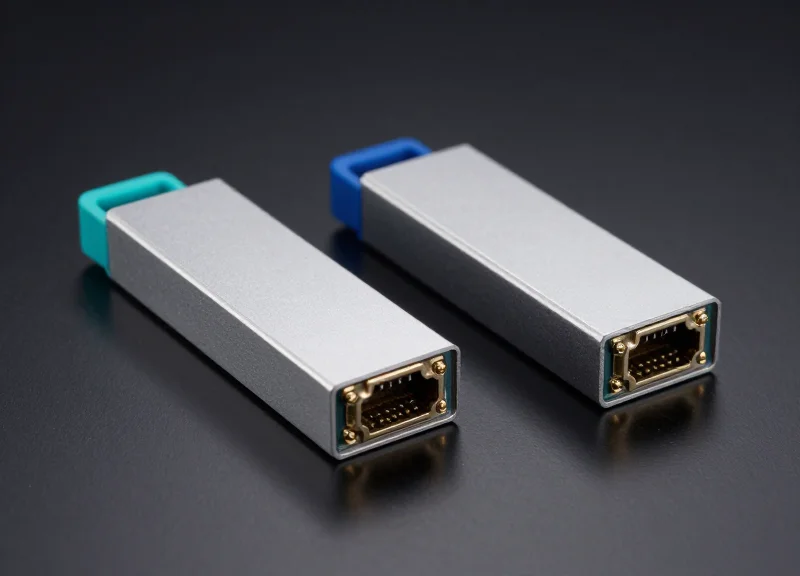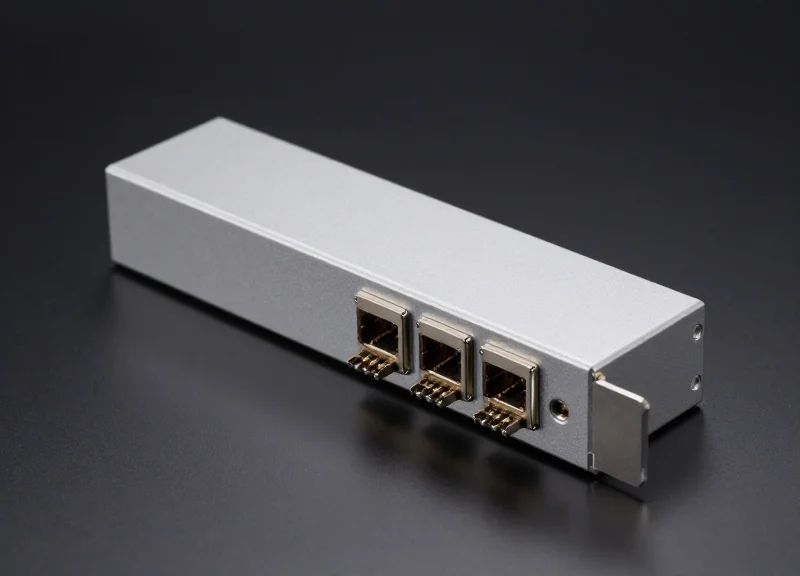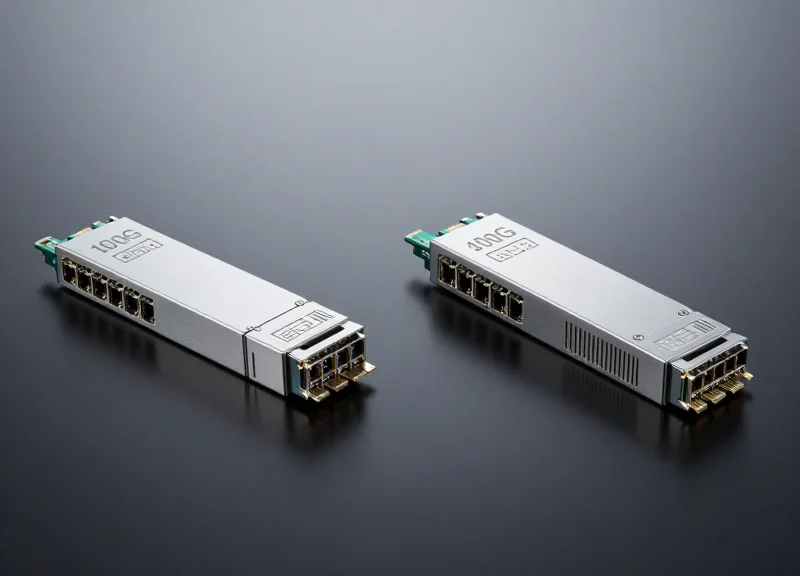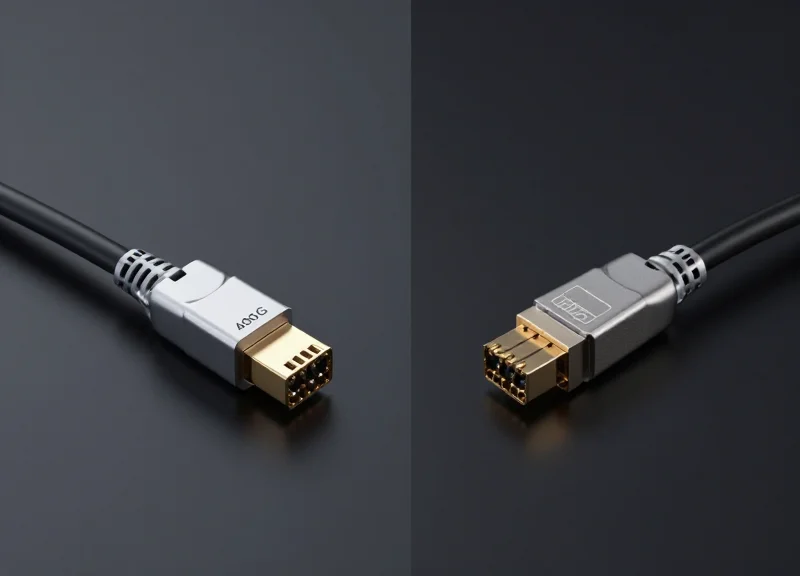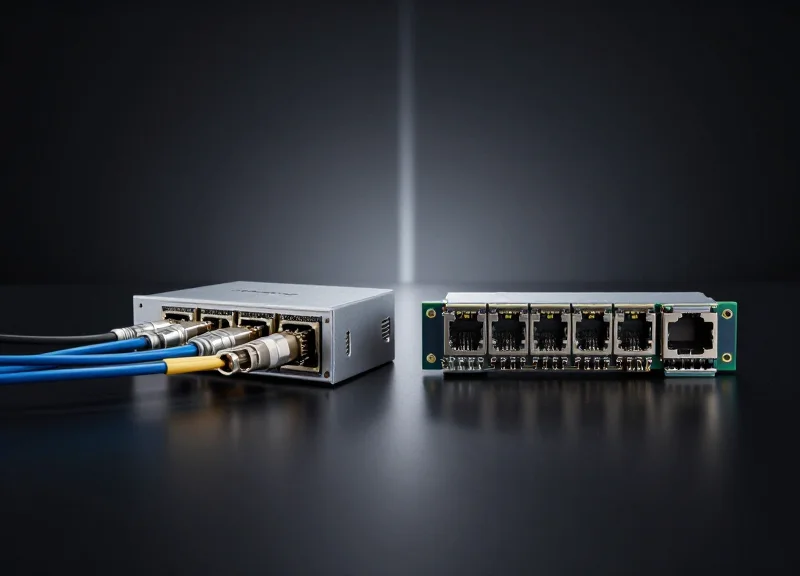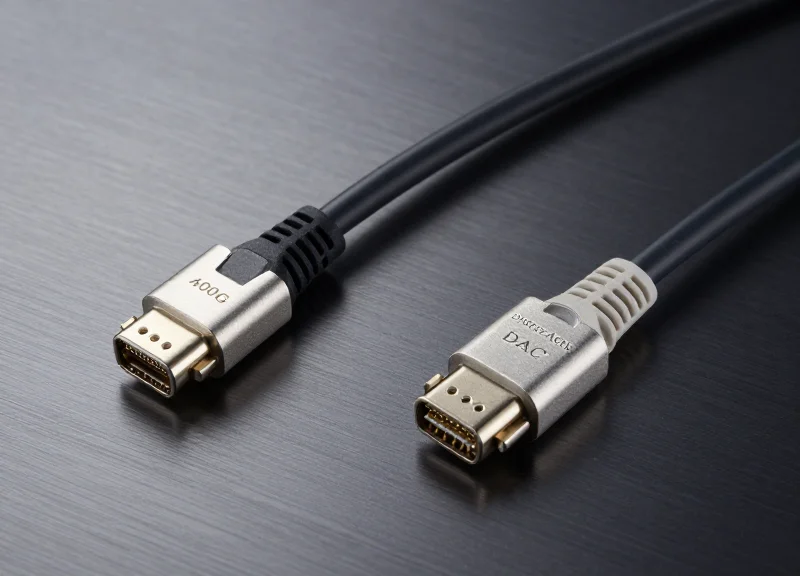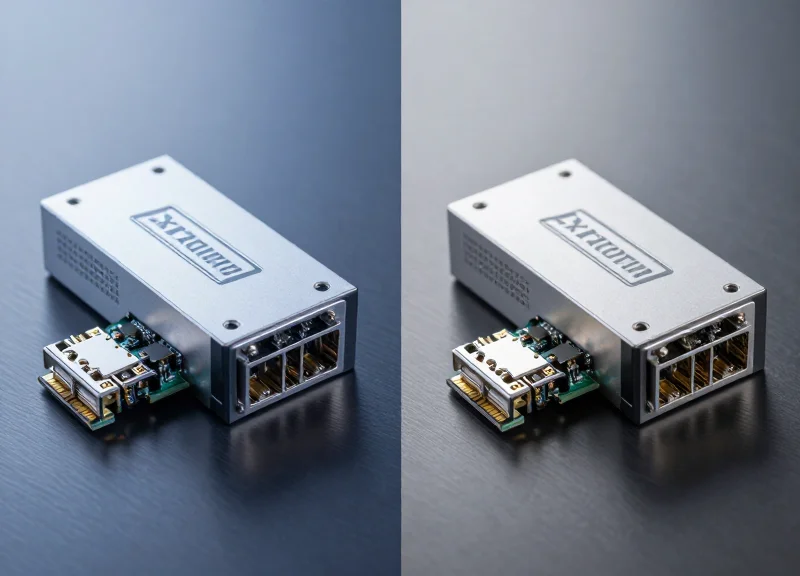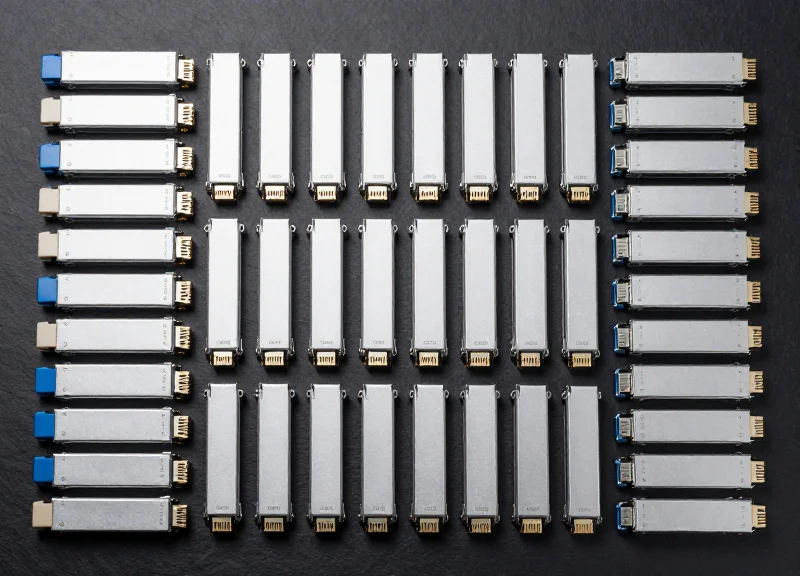
As hyperscale data centers and AI clusters push the limits of traditional pluggable optics, the industry is turning to Co-Packaged Optics (CPO) to solve power, density, and thermal constraints. Ubytelink is at the forefront of this transition, delivering CPO solutions designed for the most demanding mission-critical environments.
The Evolution of Optical Interconnects: Why CPO Matters Now

The Evolution of Optical Interconnects: Why CPO Matters Now
The shift toward Co-Packaged Optics (CPO) is driven by an inescapable physical reality: as data rates climb toward 51.2Tbps and 102.4Tbps, the electrical traces between the switch ASIC and traditional pluggable modules consume unsustainable levels of power. Ubytelink recognizes that CPO is no longer a futuristic concept but a necessary architectural evolution, bringing optical engines into the same package as the silicon to minimize signal loss and maximize efficiency.
The Limitation of Pluggable Form Factors
For decades, the industry relied on pluggable modules like SFP, QSFP, and OSFP for their flexibility and ease of maintenance. However, as link speeds increase, the 'reach' of electrical signals over standard PCB materials shrinks. This requires complex Retimers and high-power DSPs to maintain signal integrity, which significantly adds to the thermal envelope and cost of data center operations.
| Metric | Traditional Pluggable Optics | Co-Packaged Optics (CPO) |
|---|---|---|
| Signal Path Length | Longer (up to 10-12 inches) | Ultra-short (millimeter scale) |
| Power Consumption | High (due to DSP/Retimers) | 30-50% Reduction |
| Interconnect Density | Limited by front panel space | High-density silicon integration |
| Thermal Management | Challenging at 800G/1.6T | Optimized via direct cooling |
Critical Drivers for CPO Adoption
- Why is power efficiency the primary driver?
In hyperscale environments, cooling and powering the interconnects can account for a massive portion of the OPEX. CPO eliminates the power-hungry copper traces between the chip and the module, drastically reducing the energy required per bit. - How does CPO solve the density problem?
Traditional front-panel space is finite. By moving the optics onto the substrate with the ASIC, Ubytelink-supported architectures can accommodate significantly more bandwidth in a smaller physical footprint. - What role does signal integrity play?
At 112G and 224G SerDes speeds, electrical signals degrade almost instantly. CPO converts these signals to light closer to the source, ensuring high-fidelity data transmission without the need for aggressive equalization.
As we move into the era of AI and Large Language Models, the demand for low-latency, high-bandwidth interconnects has skyrocketed. Ubytelink is at the forefront of this transition, ensuring that the next generation of global networks is built on a foundation of premium CPO solutions that bypass the limitations of legacy hardware.
Ubytelink's Core Innovation: Bridging the Gap Between Silicon and Optics
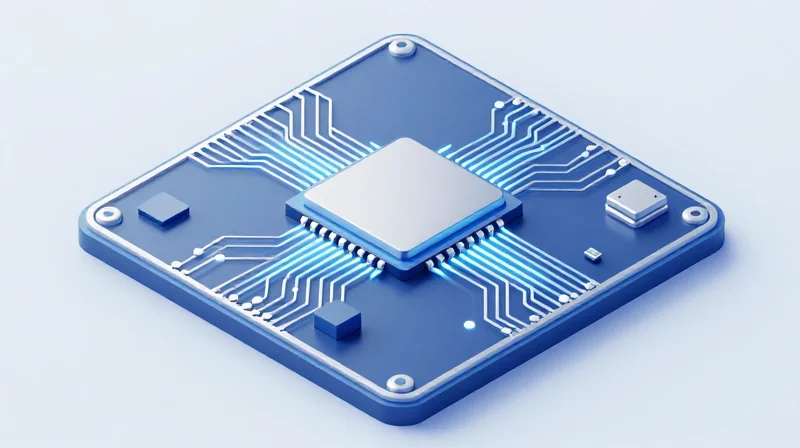
Ubytelink's core innovation lies in the physical and electronic unification of the optical transceiver and the switch silicon. By moving the optical engine from the front panel of the switch—the standard for traditional pluggable form factors—to a position immediately adjacent to the Application-Specific Integrated Circuit (ASIC), Ubytelink eliminates several inches of complex copper traces. This proximity effectively solves the 'last-inch' bottleneck that has historically compromised signal integrity and energy efficiency in high-speed global networks.
Engineering the Zero-Trace Advantage
In traditional network architectures, electrical signals must travel across long PCB paths and through multiple connectors before being converted into light. Ubytelink utilizes advanced 2.5D and 3.5D packaging technologies to mount silicon photonics engines directly onto the package substrate. This allows for the removal of power-hungry Retimers and Clock and Data Recovery (CDR) chips, as the short electrical path allows the ASIC’s SerDes to drive the optical modulators directly with minimal loss.
| Metric | Traditional Pluggable Modules | Ubytelink CPO Architecture |
|---|---|---|
| Electrical Trace Length | 150mm - 250mm | <10mm |
| Power Efficiency | High consumption (Requires Retimers) | Ultra-low (Direct Drive) |
| Bandwidth Density | Limited by front-panel space | 400% increase in escape density |
| Signal Latency | Higher due to multiple processing stages | Minimal; near-instant conversion |
The External Laser Source (ELS) Solution
A major challenge in co-packaging optics is managing the thermal load of the laser source near the heat-intensive switch silicon. Ubytelink innovates by decoupling the light source from the modulation engine. While the optical engine remains co-packaged with the silicon, the laser itself is housed in a remote, pluggable module (ELS) on the front panel. This hybrid approach ensures that sensitive optical components remain within optimal temperature ranges, significantly extending the Mean Time Between Failures (MTBF) of the entire system.
Technical FAQ: Bridging Silicon and Optics
- How does Ubytelink maintain signal integrity at 100G/200G per lane?
By shortening the electrical path to less than 10mm, Ubytelink minimizes the parasitic capacitance and inductance that usually degrade high-frequency signals, allowing for clean 112G and 224G SerDes operation. - Are Ubytelink CPO modules compatible with existing software stacks?
Yes. Ubytelink’s CPO engines are designed to be agnostic to the network operating system (NOS), interfacing with the switch ASIC through standard protocols to ensure seamless deployment. - What is the impact on data center cooling costs?
The removal of external retimers and the use of the ELS configuration can reduce the cooling requirements of a typical 51.2T switch by up to 30%, leading to a lower Total Cost of Ownership (TCO).
Solving the Power Wall: Energy Efficiency in Modern Networks

Solving the Power Wall: Energy Efficiency in Modern Networks
As data centers transition to 51.2T and 102.4T switching capacities, traditional pluggable optics encounter a 'Power Wall' where the energy cost of driving electrical signals across the PCB becomes unsustainable. Ubytelink solves this by integrating optics directly with the ASIC, slashing power consumption per bit and enabling green, scalable network growth. By shortening the distance signals must travel over copper traces, our CPO architecture minimizes signal degradation and the need for power-hungry re-timers.
The Physics of Efficiency: Reducing SerDes Power
In conventional architectures, the Serializer/Deserializer (SerDes) must compensate for significant signal loss across long traces between the switch chip and the edge-mounted pluggable module. This requires high-voltage swings and complex equalization. Ubytelink’s CPO architecture moves the optical engine onto the same substrate as the switch silicon, reducing trace lengths from several inches to mere millimeters. This shift allows for the use of low-power, short-reach (XSR/VSR) electrical interfaces, which consume a fraction of the energy required by standard long-reach interfaces.
| Metric | Traditional Pluggable (800G) | Ubytelink CPO Solution |
|---|---|---|
| Power Consumption (per 100G) | ~2.5W - 3.0W | ~1.5W - 1.8W |
| Electrical Interface | LR (Long Reach) / VSR | XSR (Extra Short Reach) |
| Signal Loss (PCB) | High (>20dB) | Minimal (<2dB) |
| Thermal Management | Edge-constrained airflow | Centralized liquid/advanced cooling |
Sustainable Scaling for AI and Cloud Infrastructures
With the explosion of generative AI and large-scale machine learning workloads, power density in racks is reaching its physical limit. Every watt saved at the interconnect level translates to more power available for compute cycles. By adopting Ubytelink’s premium CPO solutions, global network operators can reduce total system power consumption by up to 30%. This efficiency not only lowers operational expenditure (OpEx) but also significantly reduces the carbon footprint of hyperscale facilities, making 'The Future of Co-Packaged Optics' a cornerstone of sustainable digital transformation.
- How does CPO impact overall Power Usage Effectiveness (PUE)?
By lowering the heat dissipation at the switch level, CPO reduces the strain on data center cooling systems. This dual benefit of direct power savings and indirect cooling efficiency significantly improves the facility's PUE. - Is the power saving significant at lower network speeds?
While savings exist, they become most dramatic at 800G and 1.6T speeds. At these higher frequencies, the power required to drive signals over copper increases exponentially, making Ubytelink's CPO integration essential for performance. - Does Ubytelink use specific materials to improve efficiency?
Yes, we utilize advanced silicon photonics and low-loss substrates that optimize light coupling and electrical conduction, ensuring that every milliwatt is utilized effectively.
Ultimately, solving the Power Wall is not just about performance—it is about the economic and environmental viability of the next generation of the internet. Ubytelink remains committed to delivering premium quality components that define the new standard for efficiency.
Thermal Management Excellence: Ensuring Long-Term Reliability
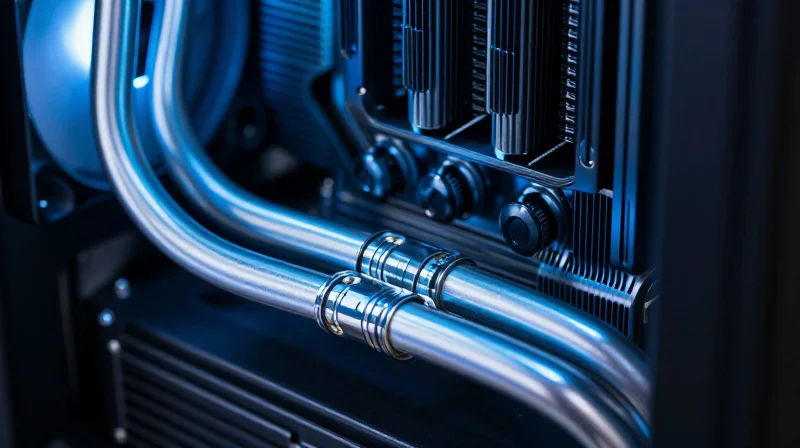
Ubytelink achieves long-term reliability in Co-Packaged Optics (CPO) by implementing a multi-layered thermal strategy that moves beyond traditional air cooling, utilizing advanced Thermal Interface Materials (TIMs) and integrated liquid-cooled cold plates to dissipate heat directly from the silicon-optical interface. As power density increases, Ubytelink's architecture ensures that the proximity of optical engines to the switch ASIC does not lead to thermal throttling or premature component failure, maintaining a stable temperature gradient across the entire module.
The Thermal Density Challenge in Co-Packaging
In traditional pluggable optics, heat is distributed across the faceplate of the switch. However, CPO concentrates both the high-speed switch silicon and multiple optical engines onto a single substrate. This results in a significant increase in local heat flux. Ubytelink addresses this 'thermal bottleneck' by re-engineering the physical layout, ensuring that the thermal path from the laser sources and the ASIC is optimized for rapid extraction to the external cooling infrastructure.
| Feature | Standard Pluggable Modules | Ubytelink CPO Solution |
|---|---|---|
| Heat Dissipation Method | Passive airflow / Faceplate sinks | Integrated Cold Plates / Advanced TIMs |
| Thermal Resistance | High (Air gap dependencies) | Ultra-Low (Direct contact silicon) |
| Component Lifespan | Vulnerable to airflow fluctuations | High stability via liquid cooling path |
| Max Power Density | Limited by physical surface area | Scalable via modular cooling loops |
Advanced Materials and Micro-Channel Cooling
Ubytelink employs next-generation Thermal Interface Materials with high thermal conductivity to bridge the gap between the optical engines and the cooling manifold. Furthermore, for the highest-tier deployments, Ubytelink incorporates micro-channel liquid cooling directly into the CPO assembly. This allows for the removal of heat at the source, preventing the 'heat soak' effect that can often degrade the performance of sensitive laser components over time.
Predictive Reliability via Thermal Simulation
Every Ubytelink CPO module undergoes rigorous Finite Element Analysis (FEA) and Computational Fluid Dynamics (CFD) modeling during the design phase. This ensures that even under peak load and high ambient data center temperatures, the internal junctions remain within optimal operating ranges. This scientific approach to thermal design is what allows Ubytelink to offer premium reliability for global mission-critical networks.
- How does Ubytelink prevent laser degradation from heat?
Ubytelink utilizes External Laser Sources (ELS) in its CPO architecture, moving the heat-sensitive laser components away from the high-temperature ASIC zone to cooler areas of the chassis. - Are Ubytelink CPO solutions compatible with liquid cooling?
Yes, Ubytelink's premium modules are designed to be compatible with both advanced air-cooled heat sinks and immersion or cold-plate liquid cooling systems. - What is the impact of thermal management on power efficiency?
By maintaining lower operating temperatures, Ubytelink reduces leakage current in the silicon, leading to an overall reduction in power consumption beyond just the optical savings.
Optimizing for AI and Machine Learning Workloads

Optimizing for AI and Machine Learning Workloads
As generative AI and Large Language Models (LLMs) reach unprecedented scales, the primary performance bottleneck has shifted from raw compute power to the interconnect fabric. Ubytelink's CPO solutions resolve this by integrating optical engines directly onto the same substrate as the switch silicon or GPU ASIC. This proximity significantly reduces the electrical path, allowing for massive data throughput with minimal signal degradation, which is a fundamental requirement for the synchronized processing tasks inherent in modern AI clusters.
The High-Bandwidth Imperative for LLMs
Training a model with billions of parameters requires constant communication between thousands of processing nodes. Traditional networking architectures struggle with the bandwidth density needed to prevent 'compute-starvation,' where GPUs sit idle waiting for data. Ubytelink’s CPO architecture enables higher faceplate density and aggregate bandwidth, facilitating the seamless flow of terabytes of data across the AI fabric without the thermal and physical constraints of legacy pluggable modules.
| Metric | Traditional Pluggable Optics | Ubytelink CPO Solutions |
|---|---|---|
| Bandwidth Density | Limited by physical faceplate space | Exponentially higher via silicon integration |
| Signal Latency | Higher due to long copper PCB traces | Ultra-low due to ASIC-adjacent optics |
| Energy Efficiency | High pJ/bit due to signal re-conditioning | Optimized low-power per bit for sustained AI runs |
| Cluster Scalability | Constrained by cabling and power walls | Designed for massive 'Scale-Out' architectures |
Reducing Latency in Distributed Training
In distributed machine learning, the time spent on gradient synchronization and All-Reduce operations is a direct drain on efficiency. By minimizing the distance between the switching silicon and the optical interface, Ubytelink CPO minimizes the 'time-of-flight' for data packets. This microsecond-level reduction in latency, when compounded across millions of operations, results in significantly faster model convergence and reduced training costs for enterprises and research institutions.
- How does Ubytelink CPO improve AI cluster reliability?
By reducing the number of electrical components and traces between the ASIC and the fiber, CPO simplifies the signal path, lowering the probability of bit errors during high-intensity ML workloads. - Why is low latency critical for Generative AI inference?
Inference requires rapid response times to maintain user experience; Ubytelink's low-latency interconnects ensure that data flows quickly between specialized memory and compute nodes. - Does CPO support existing AI software stacks?
Yes, Ubytelink's CPO solutions operate at the physical layer, making them transparent to and compatible with major AI frameworks like PyTorch and TensorFlow.
Mission-Critical Infrastructure: Testing and Quality Assurance
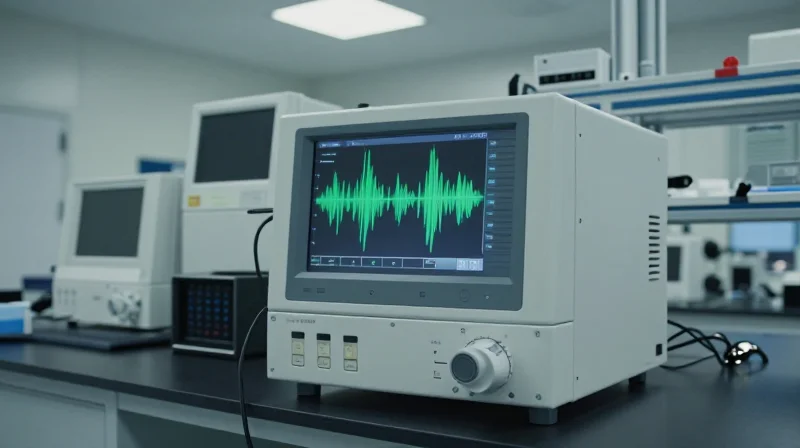
Mission-Critical Infrastructure: Testing and Quality Assurance
Ubytelink safeguards global network integrity by implementing a 'Zero-Defect' validation strategy, ensuring that every CPO solution meets the stringent uptime requirements of modern hyperscale data centers. Because Co-Packaged Optics integrate light engines directly onto the switch silicon, traditional pluggable replacement methods are no longer applicable; therefore, Ubytelink focuses on extreme pre-deployment stress testing and real-time telemetry to guarantee that its modules withstand the intense thermal and electrical demands of AI-driven traffic without degradation.
The Three Pillars of Ubytelink Quality Control
- Optical Signal Integrity (OSI) Mapping
Every module undergoes automated bit-error rate (BER) testing across various temperature ranges to ensure signal clarity remains within ultra-tight margins even during peak data bursts. - High-Temperature Operating Life (HTOL) Stressing
Ubytelink subjects its silicon photonics to accelerated aging processes, simulating years of operational heat in a matter of weeks to identify and eliminate potential infant mortality in components. - Automated Mechanical Alignment Validation
Using high-precision robotics, we verify the sub-micron alignment of fiber-to-chip interfaces, ensuring that vibration and physical shock during transport do not impact long-term performance.
Performance Comparison: Ubytelink vs. Industry Standards
| Metric | Industry Standard | Ubytelink CPO Benchmark |
|---|---|---|
| Target Uptime | 99.9% | 99.999% (Carrier-Grade) |
| Bit Error Rate (Pre-FEC) | 1E-4 | Less than 1E-6 |
| Operating Temp Tolerance | 0°C to 70°C | -5°C to 85°C (Extended Range) |
| Reliability Monitoring | Periodic Sampling | 24/7 Real-time Digital Telemetry |
Quality Assurance FAQ
- How does Ubytelink handle the 'serviceability' challenge of CPO?
By utilizing remote light sources (RLS) and highly redundant optical pathways, we ensure that the most vulnerable components are easily accessible, while the core CPO engine is built for a 10+ year service life. - Does Ubytelink comply with global environmental standards?
Yes, our QA process includes full compliance with RoHS, REACH, and Telcordia GR-468 standards, ensuring our optics are safe for global deployment and environmentally sustainable. - What role does AI play in your testing phase?
We use machine learning algorithms to analyze patterns in signal degradation during the testing phase, allowing us to predict and prevent failures before the product ever leaves the factory.
Scalability and Future-Proofing: Preparing for Terabit Networking

As global data traffic continues its exponential climb, driven by hyper-scale AI training and real-time data analytics, the leap to Terabit networking is no longer a distant theoretical—it is an imminent requirement. Ubytelink Co-Packaged Optics (CPO) solutions offer the only viable pathway to 1.6T and 3.2T speeds by eliminating the signal integrity bottlenecks inherent in traditional pluggable optics, effectively future-proofing infrastructure for the next decade of demand.
Breaking the Copper Barrier at 1.6T and 3.2T
In traditional architectures, the electrical traces between the switch ASIC and the pluggable module introduce significant signal degradation as clock speeds increase. For 1.6T networking, the power required to drive these signals over copper becomes prohibitive. Ubytelink CPO solves this by bringing the optical engine into the same package as the ASIC, drastically shortening the electrical path and allowing for clean, high-speed transitions to Terabit-level bandwidth without the thermal and power penalties of legacy systems.
| Network Speed | Pluggable Optics Challenge | Ubytelink CPO Advantage |
|---|---|---|
| 800G | High power consumption, manageable heat. | Optimized efficiency, lower latency. |
| 1.6T | Severe signal loss, complex DSP requirements. | Short electrical paths, high signal integrity. |
| 3.2T | Physical space and thermal limits reached. | Density-optimized, scalable architecture. |
Strategic Investment Protection
Adopting Ubytelink technology today is a strategic move to prevent 'forklift upgrades' tomorrow. By standardizing on a CPO-ready chassis and cooling infrastructure now, enterprises can scale their bandwidth density through simple modular updates rather than total hardware overhauls. This modularity ensures that as 3.2T standards are finalized, the underlying fabric of the network remains compatible and performant.
Future-Proofing FAQ
- Why can't I just wait for faster pluggable modules?
As speeds move toward 1.6T, the power consumption of the DSPs required to maintain signal integrity in pluggables becomes so high that it exceeds the cooling capacity of standard racks. CPO is required to stay within power and thermal envelopes. - How does Ubytelink ensure compatibility with future standards?
Ubytelink participates in major industry consortia to ensure our optical engines align with evolving OIF and IEEE standards for Terabit networking, ensuring long-term interoperability. - Is the transition to 3.2T possible with current cooling tech?
Only through CPO. By reducing power consumption per bit, Ubytelink CPO allows 3.2T densities to be cooled using advanced air or liquid immersion techniques that would fail under the heat load of legacy optics.
Seamless Integration: Compatibility and Standardization
Establishing a Unified Framework for CPO Adoption
For Co-Packaged Optics (CPO) to transition from niche innovation to mainstream infrastructure, compatibility is the primary prerequisite. Ubytelink’s CPO solutions are engineered with a "standards-first" philosophy, ensuring that our optical engines integrate seamlessly with industry-leading switch silicon and management software. By prioritizing interoperability, we provide global network operators with the flexibility to scale their infrastructure without the constraints of proprietary silos, fostering a competitive and resilient ecosystem that supports multi-vendor environments.
Standardization and Compliance Benchmarks
Ubytelink actively aligns its product development roadmap with the specifications defined by major industry bodies. This ensures that as data rates climb toward 1.6T and 3.2T, our components remain compatible with the broader physical and logical layers of the network.
| Standardization Body | Focus Area | Ubytelink Compliance |
|---|---|---|
| OIF (Optical Internetworking Forum) | CPO External Laser Sources (ELSFP) | Full adherence to ELSFP specifications for high-power laser modules. |
| IEEE 802.3 | Ethernet Connectivity Standards | Maintains signal integrity across all high-speed Ethernet iterations. |
| CPO Collaboration MSA | Common Architectural Frameworks | Supports multi-source agreements for footprint and thermal management. |
| PCIe / CXL | Chip-to-Chip Interconnects | Optimized for low-latency AI fabric and memory pooling applications. |
Compatibility and Ecosystem FAQ
- How does Ubytelink ensure interoperability with existing switch ASICs?
We utilize standardized electrical interfaces and open management protocols, allowing our CPO engines to communicate directly with major silicon providers' ASICs without custom middleware. - Does Ubytelink support plug-and-play integration for legacy systems?
While CPO represents a shift in architecture, Ubytelink provides transition modules and interface bridges that allow CPO-equipped switches to interact with legacy pluggable optics (QSFP/OSFP) in hybrid environments. - How are software-defined networking (SDN) protocols handled?
Our solutions include comprehensive register maps and APIs compliant with standard management interfaces, ensuring full visibility and control within SDN controllers like ONOS or OpenDaylight.
Future-Proofing Through Open Standards
As the industry moves toward hyper-scale AI clusters, Ubytelink remains committed to the 'Open Optical' movement. By avoiding proprietary lock-in, we empower our clients to build heterogeneous networks where Ubytelink CPO technology serves as a reliable, high-performance anchor. This commitment to standardization not only lowers the Total Cost of Ownership (TCO) but also accelerates the global deployment of next-generation bandwidth solutions by simplifying the qualification and integration phases for engineering teams.
Ubytelink is redefining the boundaries of optical performance, providing the premium CPO hardware necessary for the next generation of global networks. Contact our technical team today to learn how our Co-Packaged Optics can transform your infrastructure.