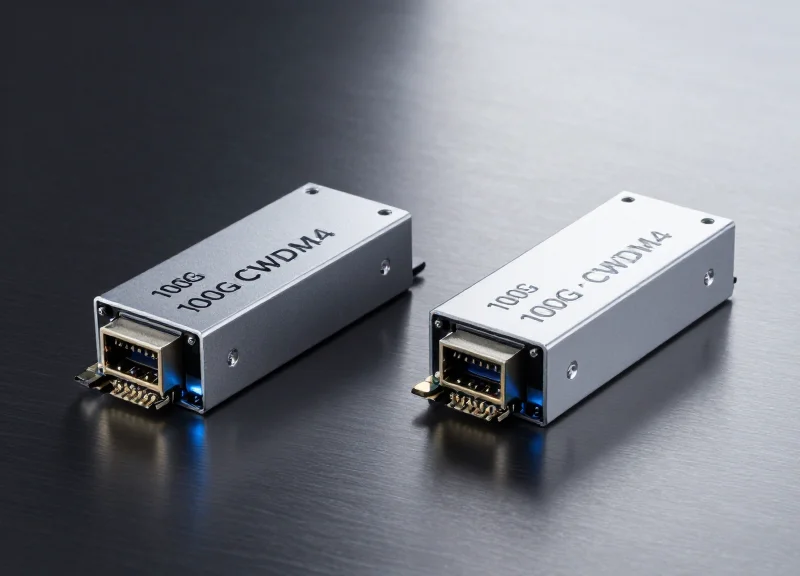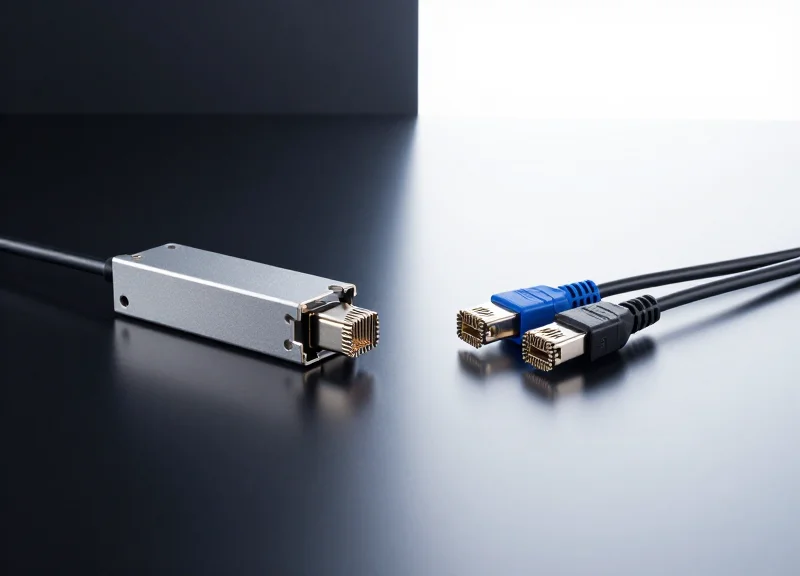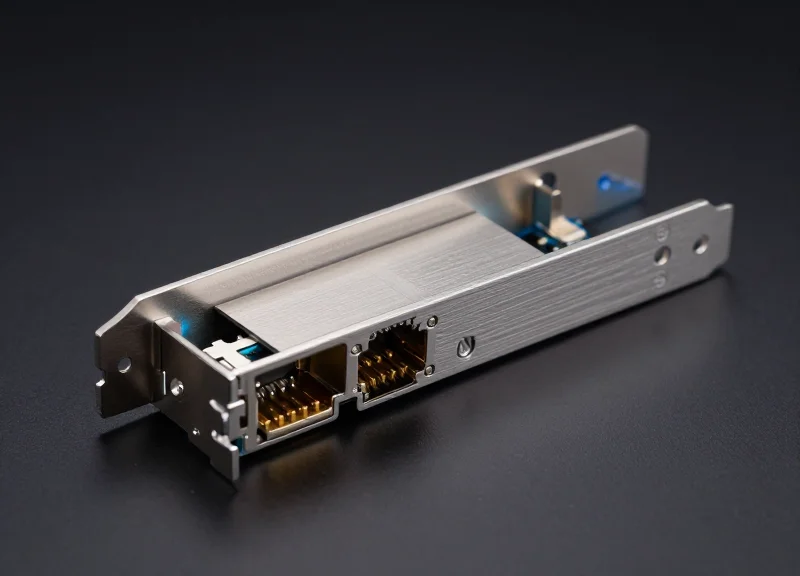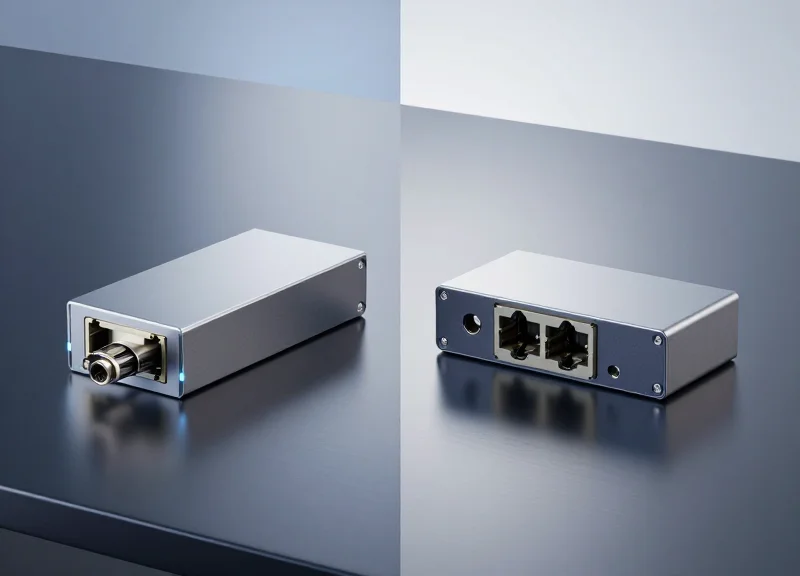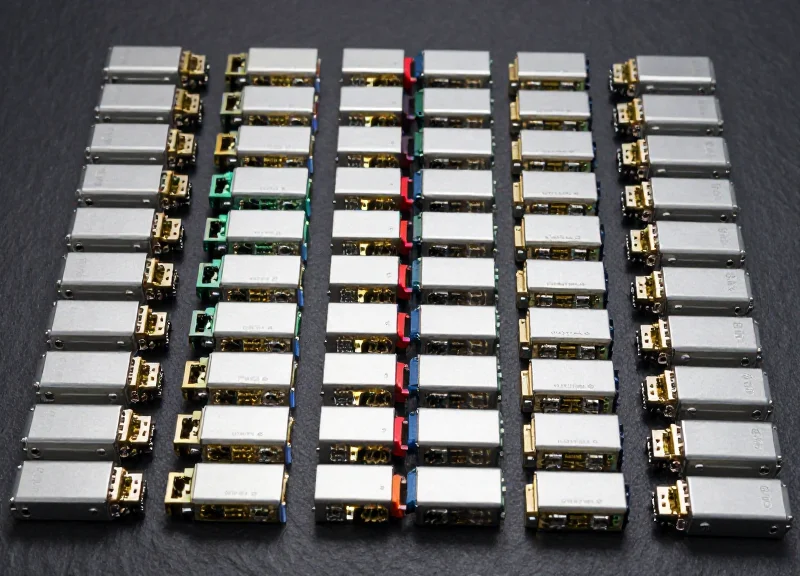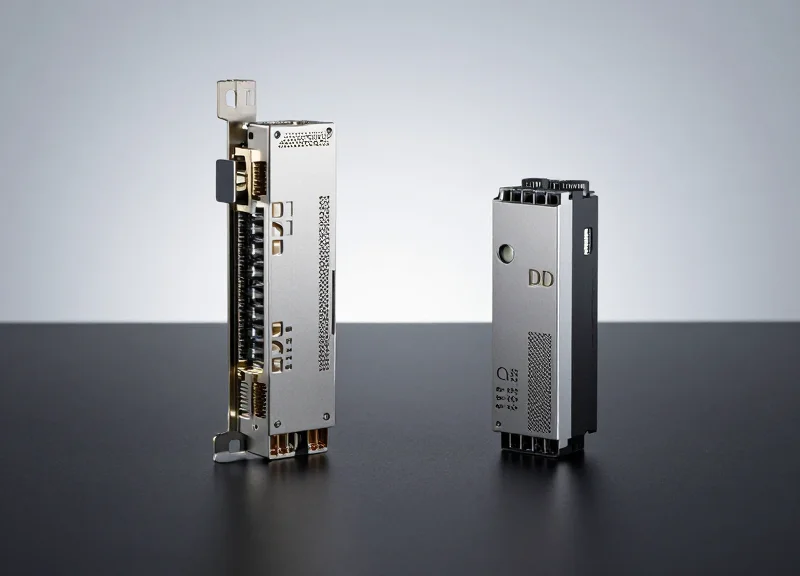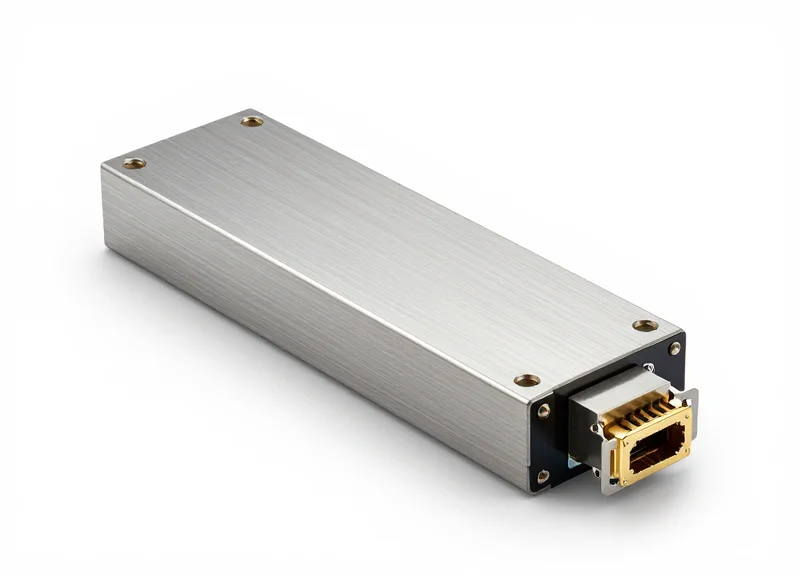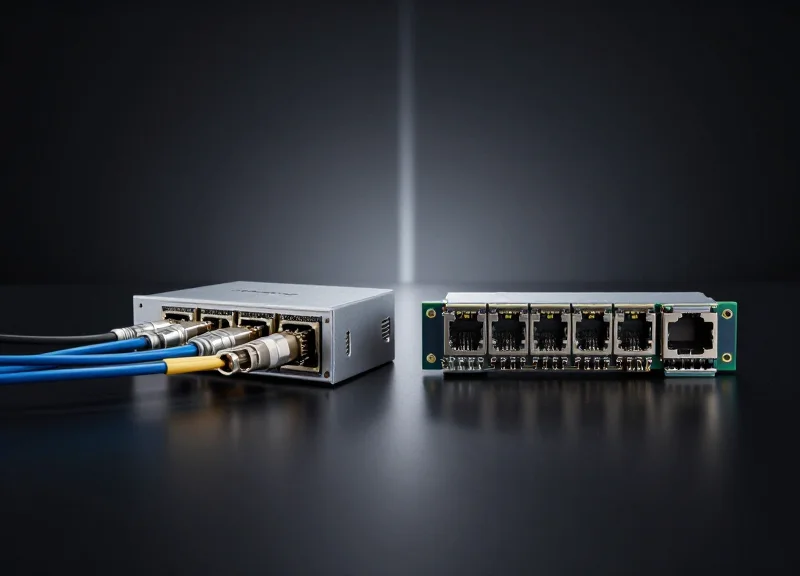
As data demands reach unprecedented heights in 2026, the ability to scale network infrastructure efficiently hinges on smart procurement. Managing optics inventory is no longer just a logistical task—it is a strategic advantage. For enterprises and data centers looking to optimize their supply chain, transitioning to wholesale optics inventory management modules offers a pathway to reduced overhead and enhanced technical flexibility.
The Evolution of Optics Inventory Management in 2026

The Shift Toward Strategic Wholesale Optical Procurement
In 2026, optics inventory management is no longer a secondary administrative concern; it has become a core strategic pillar for network operators facing the explosive growth of AI-driven data traffic and 800G infrastructure rollouts. The traditional 'just-in-time' procurement model is proving insufficient for the scale of modern deployments, leading organizations to embrace wholesale strategies that secure critical hardware through custom bulk quotes. This evolution ensures that transceivers, DACs, and AOCs are readily available, insulating projects from the volatility of global supply chains and fluctuating market prices.
Why Traditional Procurement Models are Failing in 2026
Legacy procurement methods often rely on fragmented vendor relationships and manual spreadsheet tracking, which cannot match the speed of modern network expansion. These outdated systems struggle with transparency and lead-time accuracy, often resulting in costly deployment delays. As the industry moves toward Multi-Source Agreement (MSA) compliant optics, the ability to manage a unified, high-volume inventory has become the primary differentiator between efficient scaling and operational stagnation.
| Feature | Legacy Procurement | Modern Wholesale Management (2026) |
|---|---|---|
| Procurement Logic | Reactive / Per-Project | Proactive / Strategic Bulk Buying |
| Pricing Structure | Standard Retail / Tiered | Dynamic Custom Quotes & Volume Discounts |
| Lead Times | Unpredictable (4-12 weeks) | Stabilized via Reserve Inventory |
| Inventory Visibility | Manual / Siloed | Digital / Integrated Platforms |
Key Drivers for Bulk Pricing and Custom Quotes
- Why is wholesale bulk pricing critical for 2026?
Bulk pricing allows operators to lower the total cost of ownership (TCO) per port, which is essential as networks transition to expensive 400G and 800G architectures. - How do custom quotes improve deployment speed?
Custom quotes allow for tailored delivery schedules and pre-staged inventory, ensuring that hardware arrives exactly when the site is ready for installation. - What role does interoperability play in inventory management?
Wholesale management focuses on MSA-compliant optics that work across multiple hardware brands, reducing the need for vendor-specific spare parts.
The integration of automated inventory tracking with wholesale purchasing platforms allows for real-time adjustments to stock levels based on upcoming project requirements. This synergy between procurement and operations is the hallmark of 2026's most resilient network infrastructures, allowing for a seamless transition from procurement to deployment without the friction of traditional supply chain bottlenecks.
Why Wholesale Procurement is Essential for Network Scaling

In the context of 2026’s rapid infrastructure expansion, wholesale procurement is no longer just a cost-saving measure; it is a critical operational necessity. As networks transition to 400G and 800G architectures, the financial strain of ad-hoc purchasing becomes unsustainable. Scaling effectively requires a procurement strategy that prioritizes long-term inventory availability and fixed-price contracts to ensure that network rollouts are not stalled by market fluctuations or component shortages.
The Economic Leverage of Bulk Pricing
The most immediate benefit of wholesale procurement is the reduction in Total Cost of Ownership (TCO). By committing to larger volumes, organizations can bypass the retail margins typically found in smaller distribution channels. This economic leverage allows for the allocation of budget toward high-capacity hardware and advanced testing, rather than overpaying for individual transceivers or fiber assemblies.
| Procurement Metric | Retail / Ad-hoc | Wholesale / Bulk |
|---|---|---|
| Per-Unit Cost | Market Premium | Volume Discounted (up to 40% less) |
| Inventory Reliability | Subject to Stock-outs | Reserved Allocated Stock |
| Customization (OEM Coding) | Rarely Available | Standardized/Custom Included |
| Price Stability | High Volatility | Contractually Locked |
Mitigating Global Supply Chain Volatility
Global logistics remain sensitive to geopolitical shifts and semiconductor manufacturing delays. A wholesale approach allows network architects to build 'strategic reserves' of essential optics. Instead of reacting to a shortage, companies that leverage bulk pricing can maintain a consistent deployment schedule, ensuring that phase-two and phase-three of a network build-out are supported by existing inventory.
- How does wholesale procurement impact CapEx forecasting?
Wholesale agreements provide fixed pricing over a set period, allowing finance teams to accurately project capital expenditures without worrying about the daily fluctuations of the optics market. - Does bulk purchasing increase the risk of technological obsolescence?
While inventory holding has risks, strategic wholesale contracts often include 'technology refresh' clauses or modular ordering, allowing firms to pivot to newer standards while maintaining bulk price advantages. - What is the typical minimum order quantity (MOQ) for custom optics quotes?
In 2026, MOQs for wholesale pricing generally begin at 50–100 units for high-end transceivers, though this varies based on the specific form factor (e.g., QSFP-DD vs. SFP28).
Ultimately, the shift toward wholesale optics inventory management is a shift toward predictability. In an era where bandwidth demand is exponential, the ability to secure inventory at scale determines which networks can expand instantly and which are left waiting for the next shipment.
Maximizing Flexibility with OEM and ODM Options

Maximizing Flexibility with OEM and ODM Options
In the complex landscape of 2026 network infrastructure, standard off-the-shelf optical components often fall short of meeting specific architectural demands or branding requirements. Maximizing flexibility through wholesale procurement involves choosing between OEM (Original Equipment Manufacturer) and ODM (Original Design Manufacturer) pathways, which allow enterprises to bypass the 'one-size-fits-all' limitation. These options enable the development of custom-coded transceivers, specialized form factors, and unique wavelength configurations that are precisely tuned to the nuances of proprietary hardware or legacy systems.
Comparing OEM and ODM Procurement Models
The choice between OEM and ODM dictates the level of control a company has over the final product's engineering and branding. While OEM focuses on manufacturing existing designs under a client's brand, ODM involves deeper collaboration on the design itself.
| Feature | OEM (Original Equipment Manufacturer) | ODM (Original Design Manufacturer) |
|---|---|---|
| Design Ownership | Manufacturer provides the design. | Client and Manufacturer co-develop or client specifies design. |
| Customization | Minor tweaks (Labeling, Firmware coding). | Significant (Hardware modifications, custom PCB layout). |
| Time to Market | Faster; based on existing inventory. | Slower; involves R&D and prototyping. |
| Cost Structure | Lower initial investment; volume-dependent. | Higher NRE (Non-Recurring Engineering) fees. |
| Ideal For | Resellers and ISPs needing branded basics. | Tech innovators with unique hardware specs. |
Solving Specialized Architectural Requirements
Custom-tailored optical modules are frequently the only solution for overcoming compatibility barriers in multi-vendor environments. In 2026, many hardware vendors have implemented stricter 'vendor locking' through EEPROM encryption. A wholesale ODM partner can provide modules with custom-coded firmware that mimics original manufacturer signatures, ensuring 100% compatibility across Cisco, Arista, Juniper, and other high-end switching platforms without triggering system warnings or port shutdowns.
Furthermore, ODM services allow for the creation of optics designed for extreme environments, such as industrial-grade temperature ranges or specific reach requirements (e.g., 100G-ER4 Lite) that are not widely available in the standard retail market. This bespoke approach ensures that the optics inventory perfectly matches the physical and logical constraints of the deployment site.
OEM/ODM Strategy FAQ
- Will custom-coded OEM optics void my switch warranty?
No. Under laws like the Magnuson-Moss Warranty Act in the US, manufacturers cannot void a warranty simply for using third-party components unless they can prove the component specifically caused the damage. - What is the typical Minimum Order Quantity (MOQ) for ODM services?
While it varies by vendor, custom hardware modifications typically require an MOQ of 100 to 500 units, whereas simple OEM private labeling may start as low as 50 units. - Can ODM partners help with custom packaging for wholesale distribution?
Yes, most wholesale ODM agreements include options for retail-ready packaging, custom serial numbering, and QR code integration for easier inventory management.
Critical Technical Specifications for Inventory Modules
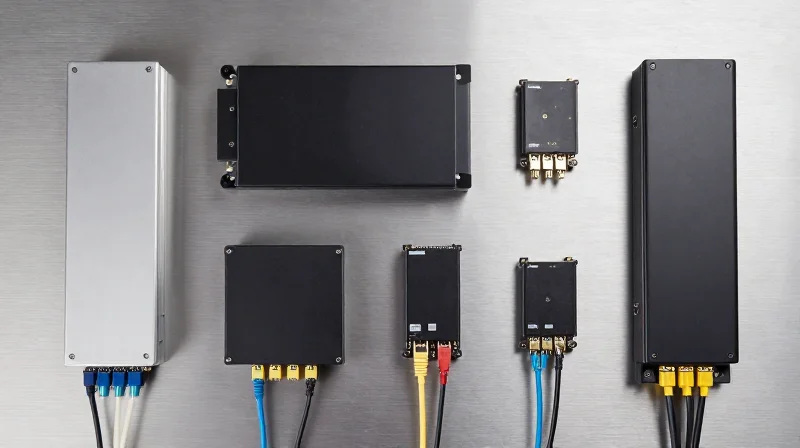
Selecting the right optics for bulk inventory requires a rigorous assessment of technical specifications to ensure that high-volume orders do not result in stranded assets. In the 2026 landscape, compatibility is no longer just about physical connectors; it encompasses firmware synchronization, thermal management, and adherence to evolving Multi-Source Agreements (MSAs). Procuring optics at scale demands a strategic balance between current network demands (10G/25G) and the inevitable transition toward 100G, 400G, and even 800G architectures.
Form Factor Evolution and Port Density
The physical footprint of an optical module determines the port density of your switching fabric. For wholesale buyers, standardizing on versatile form factors like SFP28 and QSFP28 offers the best ROI due to their broad compatibility across enterprise and data center hardware. As bandwidth requirements surge, inventory managers must also look toward QSFP-DD (Double Density) and OSFP modules, which utilize advanced modulation like PAM4 to achieve higher throughput without increasing the physical space required in the rack.
| Form Factor | Common Data Rates | Primary Use Case | Max Reach (Typical) |
|---|---|---|---|
| SFP+ | 10 Gbps | Enterprise Core/Aggregation | Up to 80km (ZR) |
| SFP28 | 25 Gbps | 5G Fronthaul / DC Server Access | Up to 10km (LR) |
| QSFP28 | 100 Gbps | Data Center Spine-Leaf | Up to 40km (ER4) |
| QSFP-DD | 400 Gbps | Hyperscale Cloud / AI Fabrics | Up to 10km (LR4) |
Interoperability and EEPROM Customization
The primary challenge in wholesale optics is vendor lock-in. Many Tier-1 equipment manufacturers program their ports to recognize only 'genuine' modules through specific EEPROM coding. To mitigate this risk, inventory modules should be sourced with flexible firmware that can be recoded for multi-vendor environments. This allows a single bulk order of 100G QSFP28 modules to be deployed across Cisco, Arista, and Juniper hardware interchangeably, significantly simplifying spare parts management and reducing capital expenditure.
Technical Specifications FAQ
- What is the importance of Digital Optical Monitoring (DOM)?
DOM allows real-time monitoring of module parameters such as temperature, laser bias current, and optical power. For bulk inventory, ensuring all modules support DOM is critical for proactive network maintenance and troubleshooting. - Why should I prioritize MSA-compliant modules?
Multi-Source Agreements ensure that modules from different vendors are physically and electronically compatible. Following MSA standards prevents proprietary lock-in and ensures that your wholesale stock remains liquid and usable across various hardware generations. - How does FEC (Forward Error Correction) affect module selection?
Higher speed modules (100G+) often rely on the host system's FEC to maintain link integrity over distance. When buying wholesale, you must verify that the modules' internal clocking and mapping match the FEC requirements of your specific switch environment.
Solving Common Pain Points in Optics Logistics

Navigating the complexities of modern network deployments in 2026 requires a shift from reactive procurement to a strategic logistics model that prioritizes availability and hardware interoperability over simple transactional buying. By addressing the bottlenecks of lead times and firmware restrictions, organizations can ensure their network infrastructure remains agile and cost-effective.
Eliminating Delivery Delays via Safety Stock and Staged Shipping
One of the most persistent issues in optics procurement is the unpredictability of global supply chains. By utilizing custom quotes for bulk pricing, enterprises can establish safety stock programs where a portion of their inventory is pre-allocated and stored in regional warehouses, effectively reducing lead times from several weeks to as little as 24-48 hours. This proactive approach ensures that urgent network expansions are never stalled by manufacturing backlogs.
Optimizing Last-Mile Logistics and Consolidation
Bulk orders allow for consolidated shipping, which significantly reduces the per-unit cost compared to frequent, smaller shipments. Logistics providers now offer split-shipment schedules, allowing buyers to secure 2026 wholesale rates while receiving inventory in increments that match specific project phases, thereby optimizing warehouse space and cash flow.
| Logistics Factor | Traditional Procurement | Strategic Wholesale Approach |
|---|---|---|
| Lead Time Management | Reactive/Just-in-Time | Proactive Safety Stock |
| Shipping Costs | High per-unit (Air Express) | Low per-unit (Consolidated) |
| Risk Mitigation | High (Stockouts common) | Low (Guaranteed Availability) |
Overcoming Compatibility and Firmware Fragmentation
The challenge of vendor lock-in often forces organizations to pay a 70-90% premium for OEM optics to ensure compatibility. Wholesale inventory management addresses this by providing high-quality third-party modules that are pre-coded and tested for specific environments—such as Cisco, Juniper, or Arista. This ensures seamless integration across a multi-vendor fabric while removing the logistical headache of managing disparate proprietary parts.
- How do wholesale agreements help with unexpected network expansions?
Wholesale agreements often include 'call-off' options, allowing firms to pull from a pre-negotiated pool of inventory instantly when demand spikes, bypassing standard lead times. - Can custom quotes include specialized technical testing?
Yes, bulk pricing for 2026 often includes value-added services like custom EEPROM coding and interoperability validation in simulated lab environments prior to dispatch. - What is the best way to handle evolving firmware requirements?
Strategic partners provide re-programmable modules and handheld coding kits, allowing on-site technicians to update optics as switch firmware changes, preventing hardware obsolescence.
Cost-Benefit Analysis: Bulk Pricing vs. On-Demand Sourcing
Transitioning from reactive on-demand sourcing to strategic bulk pricing for optics inventory management typically yields a 35% to 55% reduction in Total Cost of Ownership (TCO) over a 36-month lifecycle. In the 2026 landscape, where supply chain stability remains unpredictable, bulk procurement serves not just as a cost-saving measure but as a critical buffer against the premium pricing and shipping delays inherent in spot-market transactions. By securing custom quotes for high-density modules like QSFP28 and SFP56, enterprises can lock in lower margins that are inaccessible during emergency replacements.
Comparative Financial Metrics: Bulk vs. Spot Market
| Financial Metric | On-Demand Sourcing | Wholesale/Bulk Pricing |
|---|---|---|
| Average Unit Cost | MSRP (100%) | Discounted (60-75% of MSRP) |
| Shipping & Logistics | Expedited / High Frequency | Consolidated / Low Frequency |
| Lead Time Risk | High (Market Dependent) | Low (Safety Stock Available) |
| Procurement OpEx | High (Per-order processing) | Low (Quarterly/Annual quotes) |
| Network Downtime Cost | Potential for $5k+/hour | Minimized via on-site inventory |
Maximizing ROI Through Strategic Inventory Buffers
The primary driver of ROI in wholesale optics is the mitigation of 'indirect costs.' While the sticker price of a single SFP+ module may seem negligible, the administrative cost of processing 50 separate purchase orders throughout a year is significantly higher than a single bulk procurement cycle. Furthermore, wholesale inventory management allows for the standardization of firmware versions across the network, reducing technical debt and the labor hours required for troubleshooting heterogeneous hardware batches sourced from multiple spot vendors.
Custom Quotes: The Secret to Long-Term Budget Predictability
In 2026, custom quotes are essential for high-performance optics where specifications like industrial temperature ratings or specific wavelength tuning are required. These specialized modules often carry a 'rarity premium' on the spot market. Engaging in a custom wholesale quote allows organizations to forecast their capital expenditure (CapEx) with precision, ensuring that large-scale infrastructure refreshes do not suffer from mid-project price hikes or sudden stockouts of niche components.
- Is the upfront capital for bulk purchasing worth the storage costs?
Yes. Optical modules have a high value-to-size ratio. The storage cost for 500 SFP modules is negligible compared to the 40% savings achieved through a wholesale agreement and the elimination of expedited shipping fees. - How do custom quotes impact the lifecycle ROI of optics?
Custom quotes allow for the selection of forward-compatible hardware tailored to specific architecture. This prevents premature obsolescence and ensures the optics can be repurposed as network speeds evolve, effectively doubling the asset's lifespan. - What is the threshold for switching from on-demand to bulk?
Typically, if your organization replaces or installs more than 25 modules per quarter, the administrative and unit-cost savings of a wholesale contract will outweigh the flexibility of on-demand purchasing.
How to Vet a Wholesale Optics Partner
How to Vet a Wholesale Optics Partner
Selecting a wholesale optics partner in 2026 demands more than just comparing price per unit; it requires a deep dive into the provider's operational integrity and technical infrastructure. A reliable partner acts as an extension of your engineering team, offering rigorous quality assurance (QA) that mitigates the risk of network downtime caused by substandard components. By auditing a supplier's certifications and testing protocols, procurement managers can ensure that bulk-sourced modules meet or exceed Multi-Source Agreement (MSA) standards, providing the same reliability as Tier-1 OEM hardware at a fraction of the cost.
Core Comparison: Evaluating Supplier Reliability
| Evaluation Criterion | Strategic Importance | Minimum Requirement |
|---|---|---|
| QA Certifications | Ensures standardized manufacturing and operational processes. | ISO 9001:2015 and CE/FCC/RoHS compliance. |
| Compatibility Lab | Prevents 'invalid transceiver' errors and vendor lock-in. | Testing on actual Cisco, Arista, and Juniper host hardware. |
| Failure Rate (RMA) | Directly impacts long-term TCO and network reliability. | Documented failure rate below 0.1%. |
| Technical Support | Essential for rapid troubleshooting of complex optics issues. | Access to Level 3 engineers, not just sales reps. |
Verification of Testing Protocols
A world-class wholesale partner should provide transparency into their testing environment. This includes Bit Error Rate (BER) testing to ensure signal integrity over distance, and 'real-world' environment simulation where modules are tested under extreme temperature ranges. When requesting custom quotes, ask for a sample serialized test report. This document should prove the specific module was tested in the target switch environment (e.g., a QSFP28-100G-SR4 tested in a Nexus 9000 series switch) to guarantee seamless integration upon arrival.
Partner Vetting FAQ
- Do you own your own coding and testing facility?
Avoid 'paper-pushing' middleman vendors. A qualified partner should own their testing lab to flash custom firmware and verify compatibility in-house before shipping. - How do you handle firmware updates for future-proofing?
Ask if they provide field-programmable devices or 'coding boxes' that allow your team to re-program optics on-site if your network hardware changes. - What are your lead times for large-scale bulk orders?
A true wholesale partner maintains local inventory buffers. Ensure they can commit to 'just-in-time' delivery schedules to help you manage inventory carrying costs. - Can you provide references for large-scale deployments?
Look for partners who have successfully managed optics for Tier-2 ISPs or large enterprise data centers, as these environments demand the highest levels of performance.
Ubytelink's Edge in Optics Inventory Management

Ubytelink's Edge in Optics Inventory Management
Ubytelink's competitive advantage in the 2026 wholesale market is built on a foundation of technical precision and supply chain resilience. Unlike traditional distributors that merely facilitate transactions, Ubytelink operates as a strategic engineering partner. We solve the primary pain points of bulk optics procurement—compatibility risks, inconsistent quality, and lead-time volatility—by integrating a 'Quality-First' framework into every high-volume order. This approach ensures that every transceiver, DAC, and AOC meeting your inventory requirements is pre-validated for your specific network environment.
Precision Validation and Multi-Vendor Interoperability
At the core of Ubytelink's edge is our state-of-the-art testing laboratory. We recognize that wholesale buyers often operate heterogeneous environments involving Cisco, Arista, Juniper, and Mellanox hardware. Every batch of optics undergoes a rigorous EEPROM coding and physical layer validation process to guarantee 100% interoperability. This eliminates the 'vendor lock-in' tax and provides our clients with the flexibility to scale their inventory without worrying about firmware rejection or port-level errors.
| Feature | Ubytelink Wholesale Service | Standard Bulk Suppliers |
|---|---|---|
| Quality Control | 100% Individual Unit Testing | Batch/Statistical Sampling |
| Compatibility | Custom Multi-Vendor Coding | Generic Third-Party Coding |
| Technical Support | Direct Access to Field Engineers | General Customer Support |
| Supply Chain | Priority Buffer Stock for Clients | First-Come, First-Served |
Personalized Consultation for Complex Deployments
Modern data centers and enterprise backbones require more than just a list of SKUs. Ubytelink provides personalized consultation to help enterprise clients architect their inventory needs for long-term growth. Whether you are transitioning to 400G/800G infrastructures or managing a massive legacy 10G/25G footprint, our engineers provide insights into power consumption optimization, reach requirements, and thermal management. This consultative approach ensures that your wholesale investment is future-proofed against evolving industry standards.
Wholesale & Custom Quotes FAQ
- How does Ubytelink handle custom coding for legacy hardware?
We maintain an extensive library of hardware-specific firmware and can provide custom-coded optics that mimic the behavior of original equipment manufacturer (OEM) modules, ensuring full diagnostic support and performance monitoring in legacy ports. - What is the typical turnaround time for a custom wholesale quote?
For standard high-volume orders, we provide custom quotes within 24 hours. For complex, multi-site deployments requiring architectural review, our team typically delivers a comprehensive proposal within 2 to 3 business days. - Does Ubytelink offer tiered pricing for growing organizations?
Yes, we offer strategic volume-based pricing tiers. As your inventory needs scale over the fiscal year, your pricing structure can be adjusted to reflect your cumulative volume, maximizing your ROI.
Implementing a Future-Proof Inventory Strategy
Implementing a future-proof inventory strategy for 2026 requires a shift from reactive, ad-hoc purchasing to a structured, data-driven framework that integrates bulk procurement directly into your IT Asset Management (ITAM) ecosystem. By aligning custom wholesale quotes with predictive network expansion models, organizations can eliminate the 'just-in-time' bottleneck, ensuring that critical transceivers and fiber components are available exactly when deployment scales, without the risk of over-provisioning or technical obsolescence.
Step-by-Step Integration into ITAM Workflows
- Establish a Unified Asset Catalog
Consolidate all optics variants—SFP+, QSFP28, and beyond—into a single digital repository. Map each wholesale SKU to its specific network application and hardware compatibility list (HCL) to prevent deployment errors. - Implement Automated Buffer Thresholds
Define 'Safety Stock' levels within your ITAM tool. When bulk inventory drops below a pre-set percentage, trigger an automated request for a custom quote from your wholesale partner, leveraging current market pricing. - Serial-Level Tracking for Quality Assurance
Move beyond batch tracking. Assign unique identifiers to every wholesale module to track its performance lifecycle from the warehouse floor to the data center rack, enabling faster troubleshooting and RMA processes. - Financial Lifecycle Mapping
Link wholesale invoices to specific project CAPEX. By associating bulk pricing discounts with individual deployment phases, finance teams can accurately calculate the Total Cost of Ownership (TCO) per port.
Efficiency Comparison: Manual vs. Integrated Management
| Feature | Legacy Spreadsheet Method | Modern ITAM-Integrated Strategy |
|---|---|---|
| Procurement Speed | Manual negotiation (3-5 days) | API-driven custom quotes (Real-time) |
| Inventory Accuracy | 60-80% (Human error prone) | 99%+ (Barcoding & Automated Logs) |
| Scalability | Reactive to failures | Proactive capacity planning |
| Cost Savings | Retail or standard bulk | Optimized wholesale tier pricing |
Leveraging Data for Technical Scalability
To truly future-proof your strategy, utilize the reporting capabilities of your inventory software to identify failure rates and performance trends across different batches of wholesale optics. This data allows you to refine your technical specifications for future custom quotes, ensuring that your bulk orders evolve alongside your hardware upgrades, such as transitioning from 10G to 400G environments without wasting existing stock.
{
  "inventory_alert": {
    "sku": "QSFP-100G-LR4",
    "current_stock": 45,
    "threshold_min": 50,
    "action": "request_wholesale_quote",
    "preferred_partner": "Ubytelink"
  }
}
Frequently Asked Questions
- How do custom quotes differ from standard bulk pricing?
Custom quotes are tailored to specific project timelines and technical requirements, often offering better margins than static bulk pricing by accounting for current logistics and manufacturer-direct incentives. - Can I integrate my supplier’s inventory feed into my ITAM?
Yes, top-tier wholesale partners like Ubytelink support API integrations or automated CSV exports that allow your system to see real-time availability before you place an order. - How does wholesale procurement help with network standardization?
Buying in large, consistent batches ensures that all optics in a specific network segment share the same firmware and hardware revision, reducing interoperability issues.
Scaling your network shouldn't be restricted by inventory shortages or inflated retail costs. By leveraging Ubytelink's wholesale pricing and expert OEM/ODM services, you gain a partner dedicated to your infrastructure's success. Reach out to our team today for a custom quote and take the first step toward a more robust, cost-effective optics management strategy.