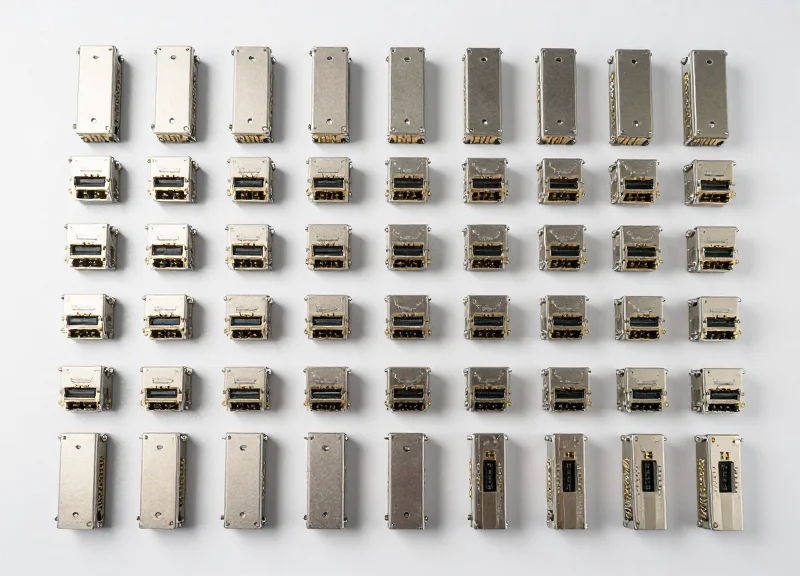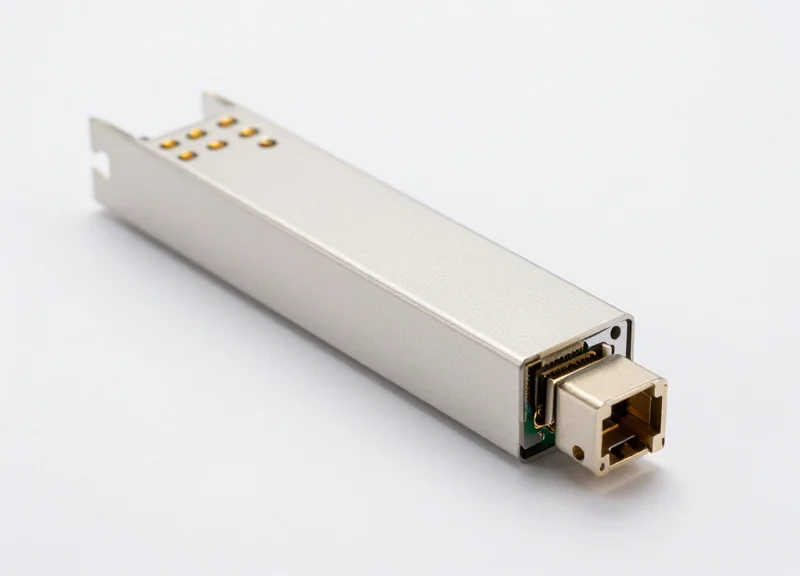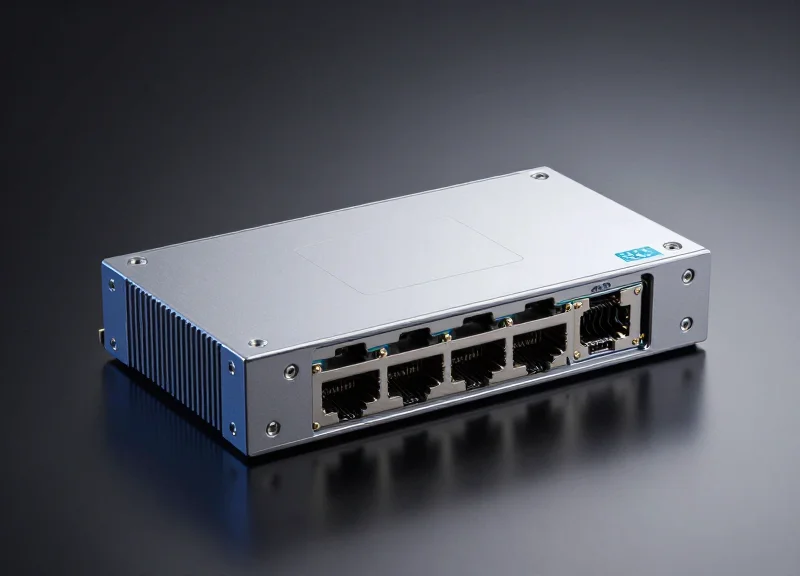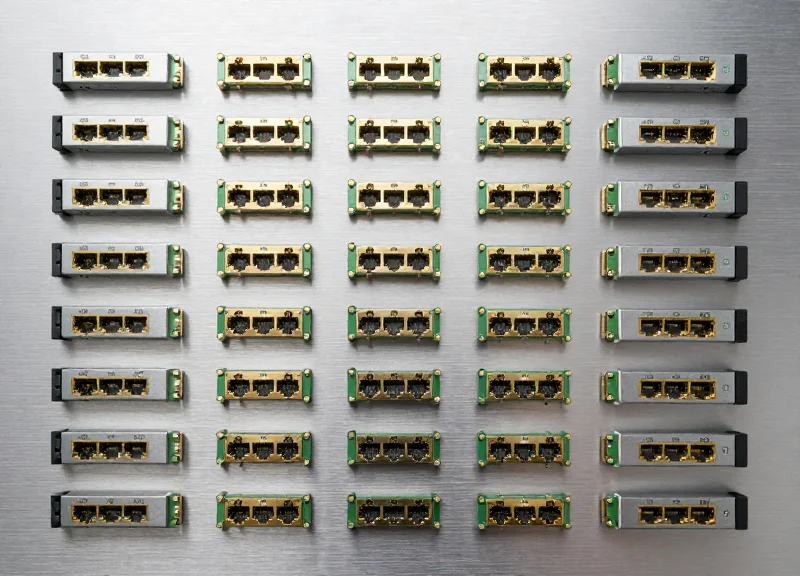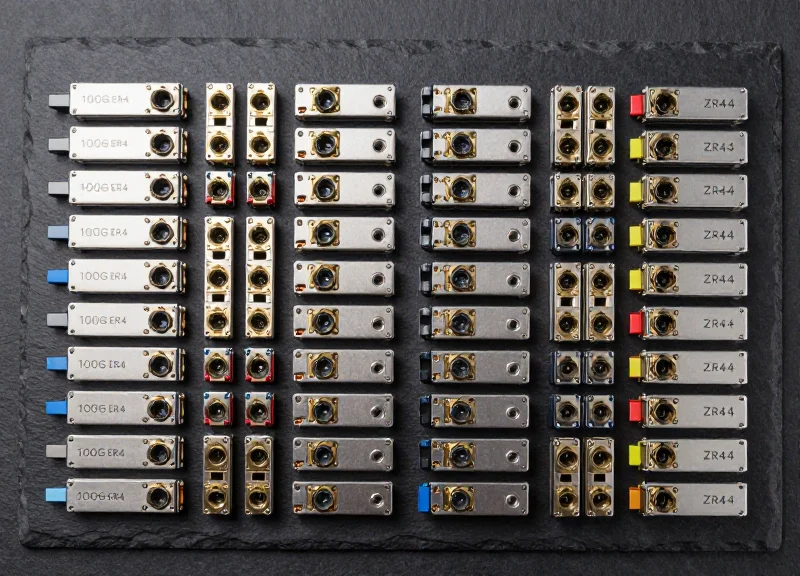
In an era of rapid digital transformation, the backbone of global connectivity relies on the integrity of optical components. Ubytelink addresses the critical need for a resilient, high-performance supply chain that bridges the gap between hardware demand and operational excellence for modern enterprises.
The Strategic Importance of a Resilient Optics Supply Chain

The Strategic Importance of a Resilient Optics Supply Chain
In an era defined by hyper-connectivity, the optics supply chain has transitioned from a backend logistical function to a critical strategic asset. For data centers, telecommunications providers, and large-scale enterprises, the availability of high-performance optical transceivers and fiber components is the lifeblood of network uptime. Ubytelink recognizes that disruptions—whether caused by raw material scarcity, trade restrictions, or logistical bottlenecks—can halt digital transformation. By building a supply chain centered on redundancy, rigorous quality standards, and global distribution, Ubytelink ensures that premium optics solutions are delivered with consistency, mitigating the risks inherent in today's unpredictable global market.
Evaluating Supply Chain Resilience Models
| Strategic Factor | Traditional Supply Chain | Ubytelink Resilient Model |
|---|---|---|
| Sourcing Strategy | High dependency on single-region manufacturing | Multi-regional sourcing with localized hubs |
| Inventory Management | Just-in-Time (JIT) focused; low safety stock | Proactive buffer management and strategic stockpiling |
| Risk Mitigation | Reactive to market shocks | Predictive analytics and early-warning systems |
| Quality Control | Sample-based testing | 100% component-level performance verification |
Securing Global Networks Against Disruption
Ubytelink addresses the vulnerabilities of global procurement by decentralizing its inventory and integrating vertical quality controls. Our approach moves beyond simple procurement to encompass a comprehensive ecosystem where supply chain integrity is as important as the hardware itself. By maintaining strategic reserves and utilizing optimized shipping lanes, we provide our global partners with a predictable roadmap for network expansion, ensuring that the latest innovations in 400G and 800G optics are available without the long lead times that currently plague the industry.
Frequently Asked Questions: Optics Supply Chain
- Why is supply chain resilience critical for optics?
Optics are precision instruments with complex manufacturing requirements; a resilient chain prevents project delays and maintains network stability by ensuring a steady flow of high-quality components. - How does Ubytelink mitigate the risk of component shortages?
Through long-standing partnerships with tier-1 raw material suppliers and a diversified manufacturing footprint, we minimize the impact of regional shortages on our global client base. - What is the relationship between quality and supply chain stability?
Stability is compromised when faulty products enter the chain. Ubytelink's 100% testing protocol ensures that logistical resources are never wasted on substandard hardware, reducing the rate of RMAs and field failures.
Ubytelink’s Quality-First Manufacturing Standards

The Foundation of Optical Excellence: Ubytelink’s Manufacturing Philosophy
Ubytelink’s manufacturing standards are built on the principle that optical components are the pulse of the digital economy, requiring zero-tolerance for defects and absolute adherence to Multi-Source Agreement (MSA) specifications. While many manufacturers prioritize volume, Ubytelink shifts the focus to precision engineering, utilizing state-of-the-art facilities that combine automated assembly with human expertise. This quality-first approach ensures that every transceiver, DAC, and AOC leaving our facility is capable of meeting the heavy traffic demands of modern data centers and telecommunications hubs.
Rigorous Testing Protocols
Every module undergoes a comprehensive battery of tests throughout the production cycle. This includes TDR (Time Domain Reflectometry) for signal integrity, thermal cycling to test performance in extreme environments, and rigorous BER (Bit Error Rate) testing to ensure data accuracy. By simulating real-world network stresses, we identify and rectify potential failures before the hardware ever reaches a client's site.
| Parameter | Standard Commercial Grade | Ubytelink Carrier-Grade |
|---|---|---|
| Testing Scope | Batch sampling (AQL) | 100% individual unit testing |
| Compliance | Basic CE/RoHS | Full MSA, IEEE, and NEBS compliance |
| Operating Temp Range | Standard 0°C to 70°C | Industrial-grade -40°C to 85°C available |
| Reliability (MTBF) | Standard lifecycle | Enhanced 2-million-hour MTBF rating |
Automation and Precision in Production
To minimize the risk of human error, Ubytelink leverages advanced robotic alignment systems for optical coupling. This automation ensures that fiber-to-chip alignment is precise to the sub-micron level, which is critical for the low insertion loss and high return loss required by 400G and 800G optics. Our commitment to Industry 4.0 standards allows for full traceability of components, ensuring that every laser and diode used in our modules is documented for quality assurance.
Manufacturing Quality FAQ
- What international certifications do Ubytelink products hold?
Our manufacturing facilities are ISO 9001 and ISO 14001 certified. Product-specific certifications include CE, FCC, RoHS, REACH, and TUV to ensure global regulatory compliance. - How does Ubytelink ensure compatibility with different OEM switches?
We maintain an extensive compatibility lab featuring the latest hardware from major vendors like Cisco, Juniper, Arista, and Dell. Every module is coded and tested in the target hardware environment to ensure 'plug-and-play' functionality. - What is the failure rate of Ubytelink optical modules?
Due to our 100% testing protocol, our field failure rate is among the lowest in the industry, consistently maintaining a rate of less than 0.03% across our entire global supply chain.
Ensuring Interoperability: Testing Across Multi-Vendor Environments

The true test of an optical solution lies in its ability to function flawlessly within a heterogeneous infrastructure. Ubytelink guarantees this interoperability by maintaining an expansive, in-house verification laboratory equipped with the latest hardware from industry giants like Cisco, Arista, Juniper, and Huawei. This rigorous approach moves beyond simple standards compliance, focusing on deep-level firmware synchronization and physical layer validation to eliminate the risk of vendor lock-in and unexpected downtime.
The Multi-Vendor Verification Ecosystem
Modern data centers and carrier networks rarely rely on a single hardware manufacturer. Consequently, optical modules must be 'multilingual,' capable of communicating with various operating systems and proprietary EEPROM requirements. Ubytelink’s supply chain integrates a testing phase where every batch of optics is cross-verified against a matrix of actual production-grade switches and routers.
| Vendor Category | Key Compatibility Metrics | Ubytelink Verification Standard |
|---|---|---|
| Enterprise (Cisco, HPE) | EEPROM Coding & ID Recognition | 100% recognition without 'unsupported transceiver' errors. |
| Cloud/DC (Arista, NVIDIA) | High-Speed Signal Integrity | Post-FEC Bit Error Rate (BER) monitoring under load. |
| Telecom (Juniper, Nokia) | DOM/DDM Accuracy | Real-time diagnostic parity with OEM management software. |
Our Four-Stage Interoperability Protocol
To ensure that premium quality is maintained across the global supply chain, Ubytelink employs a standardized four-stage protocol for every optical solution released to the market.
- Firmware Emulation
Writing and verifying custom EEPROM code to match specific vendor handshake requirements. - Port-Level Stress Testing
Cycling the modules through hundreds of insert/extract sequences and link flaps to ensure mechanical and logical durability. - Traffic Load Verification
Running 24-hour full-load traffic tests using Ixia or Spirent testers to verify zero packet loss in multi-vendor loops. - DOM Calibration
Ensuring Digital Optical Monitoring (DOM) data—such as temperature, voltage, and bias current—is reported accurately within the host OS.
Common Interoperability Questions
- Will Ubytelink optics void my switch warranty?
No. Legally, under the Magnuson-Moss Warranty Act in the US (and similar global protections), manufacturers cannot void a hardware warranty simply for using third-party peripherals. - How does Ubytelink handle new OS updates from vendors?
Our lab team continuously monitors and tests new firmware releases (like Cisco IOS-XE or Arista EOS) to update our coding libraries proactively. - Can one module be coded for two different brands?
Yes, we offer multi-code solutions where a single transceiver can be recognized by different vendors across its link partners, simplifying spare parts inventory.
Global Logistics Excellence: Overcoming Modern Bottlenecks

Navigating the Complexity of Global Distribution
Ubytelink overcomes modern logistics bottlenecks by integrating a decentralized warehouse model with sophisticated predictive analytics, ensuring that mission-critical optical components reach their destination without the delays common in traditional, centralized systems. By bypassing congested global hubs and utilizing a diversified carrier network, we maintain a resilient delivery pipeline that supports the continuous operation of high-bandwidth networks worldwide.
Strategic Regional Hubs and Inventory Positioning
To minimize transit times and mitigate the impact of international trade fluctuations, Ubytelink maintains a network of regional distribution centers across key markets. This 'Local-First' approach allows us to stage inventory closer to our clients, significantly reducing the 'Last-Mile' delivery window and insulating our supply chain from large-scale geopolitical or environmental disruptions that often paralyze single-source distributors.
| Logistics Feature | Conventional Supply Chains | Ubytelink Global Logistics |
|---|---|---|
| Inventory Model | Centralized (Single Point) | Decentralized (Global Hubs) |
| Customs Processing | Reactive/Traditional | Pre-clearance Protocols |
| Average Lead Time | 4 to 12 Weeks | 3 to 10 Days (In-stock) |
| Tracking Granularity | Milestone-based | Real-time IoT Monitoring |
Technological Integration for End-to-End Visibility
Modern logistics excellence is driven by data. Ubytelink employs a proprietary management system that provides real-time visibility into every stage of the shipping process. From the moment a batch of optical transceivers leaves our clean-room facilities to its arrival at a customer's facility, we monitor environmental conditions and transit milestones to guarantee that the premium quality of our products is maintained during transport.
- How does Ubytelink mitigate sudden shipping cost spikes?
We utilize long-term contracts with multi-modal transport providers, balancing air and sea freight to maintain price stability even during periods of extreme market volatility. - What measures ensure the safety of delicate optical components during transit?
All shipments use industrial-grade, anti-static, and shock-absorbent packaging, combined with climate-controlled shipping lanes for highly sensitive carrier-grade equipment. - Can Ubytelink handle emergency hardware replacements?
Yes, our 'Rapid Response' protocol allows for same-day dispatch from our regional hubs to support urgent data center maintenance and minimize network downtime.
Sustainability and Future-Proofing the Supply Chain
Ubytelink is committed to reducing the environmental impact of global trade. By optimizing shipping routes using AI-driven pathfinding and transitioning to biodegradable packaging materials, we align our logistics operations with the Environmental, Social, and Governance (ESG) goals of our enterprise partners. This sustainable approach ensures that our global supply chain remains both ethically responsible and operationally efficient for the long term.
Performance Metrics: Why Reliability Matters in Mission-Critical Infrastructure
In mission-critical environments such as data centers and telecommunications hubs, the cost of downtime far exceeds the initial hardware investment, making the technical specifications of optical modules—specifically Mean Time Between Failures (MTBF) and thermal efficiency—the ultimate differentiators between Ubytelink solutions and generic alternatives.
Engineered for Longevity: MTBF and Component Integrity
Mean Time Between Failures (MTBF) serves as a statistical benchmark for reliability. While generic optics often cut costs by utilizing sub-standard sub-assemblies, Ubytelink modules are built with premium lasers and IC drivers. This focus on component integrity ensures an MTBF that often exceeds 500,000 hours, significantly reducing the Total Cost of Ownership (TCO) by minimizing field failures and replacement labor.
Thermal Management: Staying Cool Under Load
As port densities increase, heat dissipation becomes a major failure vector. Ubytelink modules utilize advanced heat-sink designs and low-power consumption chipsets. By maintaining a lower operating temperature, our optics prevent the wavelength drift and laser degradation that commonly plague budget alternatives in high-density switches.
| Performance Metric | Ubytelink Premium Optics | Generic Alternatives |
|---|---|---|
| Mean Time Between Failures (MTBF) | >500,000 Hours | 100,000 - 200,000 Hours |
| Operating Temperature Range | Commercial to Industrial (-40C to +85C) | Standard Commercial Only |
| Power Consumption | Ultra-low (optimizes rack cooling) | Variable (higher heat generation) |
| Laser Source | Tier-1 Grade (DFB/EML) | Standard or Unrated components |
Performance & Reliability FAQ
- Why does thermal management matter for optics?
Excessive heat causes laser aging and increases Bit Error Rates (BER), leading to packet loss and eventual module failure in dense environments. - How does Ubytelink ensure high MTBF?
We employ 100% burn-in testing at maximum rated temperatures and use only high-grade semiconductor components to eliminate early-life failures.
Scalability and Customization for Growing Data Centers

Scalability and customization are the cornerstones of the Ubytelink Global Supply Chain for Optics Solutions: Premium Quality for Global Networks, ensuring that as data centers transition to 400G and 800G architectures, the physical layer remains a robust, adaptable foundation. By integrating agile manufacturing with deep technical expertise, we provide hyperscale operators the ability to increase port density and bandwidth instantaneously while maintaining strict adherence to custom firmware and mechanical specifications required for diverse networking environments.
Future-Proofing for 400G and 800G Deployments
As the industry accelerates toward 800G and eventually 1.6T, the Ubytelink supply chain prioritizes early-access silicon and advanced silicon photonics integration. Our infrastructure is designed to handle the increased complexity of DR4, FR4, and SR8 modules, providing the high-volume throughput required for massive leaf-and-spine upgrades. We mitigate the risks of technology shifts by maintaining strategic buffer stocks of critical sub-components, allowing for seamless transitions without the lead-time spikes typically associated with next-generation optical hardware.
Tailored Engineering: Beyond Off-the-Shelf Solutions
Unlike generic providers, Ubytelink recognizes that every hyperscale environment has unique power, thermal, and software requirements. Our customization process includes bespoke EEPROM coding to ensure seamless multi-vendor compatibility and hardware modifications to meet specific airflow constraints in high-density racks. This 'engineered-to-order' approach ensures that our optics do not just fit the slot, but optimize the entire system's performance.
| Feature | Standard Supply Chain | Ubytelink Scalable Model |
|---|---|---|
| Volume Elasticity | Fixed batch ordering with rigid timelines | Dynamic scaling based on project milestones |
| Interoperability | Basic MSA compliance | Custom firmware for complex multi-vendor fabrics |
| Technology Roadmap | Reactive to market availability | Proactive 800G/1.6T development and sampling |
| Thermal Management | Generic heat sink designs | Customized thermal profiles for high-density AI clusters |
Frequently Asked Questions: Scalability & Growth
- How does Ubytelink handle sudden spikes in demand for 400G modules?
We utilize a rolling inventory system and prioritized manufacturing slots with our fabrication partners to ensure rapid fulfillment during peak upgrade cycles, even when global raw material supplies are tight. - Can optics be customized for proprietary or legacy hardware?
Yes, our engineering team specializes in custom coding and hardware revisions to ensure 100% compatibility with both state-of-the-art 800G switches and legacy networking equipment that may require specific signaling. - What measures ensure quality when scaling to thousands of units?
Every customized unit undergoes automated high-temperature stress testing and bit-error rate (BER) validation, ensuring that the same premium quality is maintained from the first unit to the ten-thousandth.
Sustainability and Ethics in Optical Component Sourcing

In an era where digital infrastructure accounts for a significant portion of global energy consumption, Ubytelink recognizes that a truly premium supply chain must be built on the pillars of sustainability and ethical integrity. Our commitment to 'Premium Quality for Global Networks' extends beyond technical specifications to encompass the environmental and social footprint of every transceiver, cable, and component we deliver. By aligning our procurement strategies with global ESG (Environmental, Social, and Governance) benchmarks, we ensure that our clients can scale their networks with a clear conscience and compliant hardware.
Ethical Sourcing and Human Rights Advocacy
The complexity of optical component manufacturing—involving rare earth metals and intricate assembly—demands rigorous oversight. Ubytelink enforces a strict Conflict Minerals Policy, requiring all vendors in our supply chain to provide traceability for tin, tantalum, tungsten, and gold (3TG). We utilize the Responsible Minerals Initiative (RMI) frameworks to ensure our sourcing does not fund armed conflict or exploit vulnerable populations. Furthermore, our supplier audits include mandatory adherence to the Responsible Business Alliance (RBA) Code of Conduct, safeguarding labor rights and worker safety throughout the production lifecycle.
Environmental Stewardship and Waste Reduction
Ubytelink actively mitigates the environmental impact of electronic waste through a multi-faceted approach. We focus on 'Green Design' principles, prioritizing energy-efficient transceivers that lower the total power consumption of the data center. Additionally, our packaging solutions have been transitioned to recyclable materials to minimize the carbon footprint associated with global shipping and logistics.
| Sustainability Focus | Ubytelink Standard | Environmental/Social Impact |
|---|---|---|
| Material Compliance | Full RoHS & REACH Adherence | Elimination of hazardous substances from landfills. |
| Power Efficiency | Low-Wattage Transceiver Architecture | Reduced operational CO2 emissions for hyperscalers. |
| Logistics Optimization | Consolidated Regional Hub Shipping | Reduction in aviation fuel consumption per unit. |
| Ethical Sourcing | Conflict-Free 3TG Certification | Prevention of human rights abuses in mining regions. |
Sustainability FAQ: Responsible Optics
- Does Ubytelink comply with WEEE regulations?
Yes, Ubytelink fully complies with the Waste Electrical and Electronic Equipment (WEEE) Directive, providing clear guidelines for the end-of-life recycling of our optical hardware. - How does Ubytelink verify supplier ethics?
We conduct periodic third-party audits and require signed attestations regarding labor practices, ensuring no forced or child labor is present in our upstream supply chain. - Are high-performance 400G/800G optics eco-friendly?
Our latest generation optics focus on maximizing data throughput per watt. By increasing efficiency, we help data centers reduce the cooling and power required for massive bandwidth upgrades.
Technical Support and Post-Sales Reliability
The Strategic Importance of Post-Sales Reliability in Optics
Post-sales reliability is the definitive benchmark of a premium supply chain, transforming a simple hardware transaction into a long-term operational partnership. At Ubytelink, we recognize that optical modules are the nervous system of the modern data center; therefore, our support infrastructure is engineered to prevent downtime, optimize signal integrity, and provide immediate resolution to complex integration challenges. By prioritizing technical assistance and hardware longevity, we empower network architects to deploy high-density solutions with the confidence that their infrastructure is backed by global expertise.
Specialized Engineering and Interoperability Support
Unlike generic suppliers, Ubytelink provides direct access to senior optical engineers who understand the nuances of multi-vendor environments. Our team assists with custom firmware coding, link budget calculations, and real-time troubleshooting for high-speed 400G and 800G deployments. This hands-on approach ensures that our solutions integrate seamlessly with existing OEM hardware from Cisco, Arista, and Juniper without the risk of port-locking or performance throttling, maintaining peak network health and efficiency.
| Service Feature | Generic Market Optics | Ubytelink Global Solutions |
|---|---|---|
| Technical Support Access | Email-based ticketing with long delays | Direct access to senior optical engineers |
| Interoperability Guarantee | Trial-and-error compatibility | System-specific firmware verification |
| Response SLA | Standard 48-72 hours | Priority response < 24 hours |
| Warranty Coverage | Limited 1-year warranty | Extended lifetime warranty options |
| Lifecycle Management | None (Reactive) | Proactive roadmap and migration planning |
Warranty Protection and Lifecycle Continuity
Ubytelink optics are backed by industry-leading warranty programs that reflect our high confidence in the Mean Time Between Failures (MTBF) of our components. We move beyond reactive support by offering proactive lifecycle management, identifying potential obsolescence risks before they impact the network. This ensures that as your data center evolves, your optical layer remains robust, scalable, and fully supported, significantly reducing the Total Cost of Ownership (TCO) by minimizing replacement cycles and emergency outages.
- How does Ubytelink handle hardware replacements?
We utilize an expedited RMA process with regional stocking points across the globe to minimize lead times for critical replacement parts, ensuring minimal network interruption. - Is technical support available for multi-vendor environments?
Yes, our engineers specialize in interoperability, ensuring our optics function flawlessly across Cisco, Arista, Juniper, and other major platforms through rigorous laboratory testing. - What does the Ubytelink warranty cover?
Our comprehensive warranty covers manufacturing defects, performance degradation, and firmware compatibility issues for the duration of the product's operational life.
Ubytelink is more than just a supplier; we are a strategic partner dedicated to your network’s longevity and performance. Our global supply chain is engineered to provide peace of mind through every fiber. Contact our technical team today to optimize your mission-critical infrastructure with premium optics.