As global data traffic surges, driven by AI workloads and cloud expansion, legacy 400G infrastructures are hitting capacity and thermal ceilings. Upgrading to 800G is more than a speed increase; it is a critical pivot toward lowering the cost per bit and achieving sustainable network growth. This guide breaks down the technical and financial variables that define the Return on Investment for the 800G transition.
The Strategic Shift: Why the Industry is Moving to 800G

The Strategic Shift: Why the Industry is Moving to 800G
The migration to 800G Ethernet represents a fundamental shift in data center architecture, necessitated by the intersection of 112G SerDes maturity and the insatiable bandwidth demands of Generative AI. While 400G served as a reliable workhorse for cloud scaling, it has reached a critical bottleneck in faceplate density and power-per-bit efficiency. Moving to 800G allows operators to double their throughput in the same physical footprint, effectively future-proofing infrastructure against the exponential growth of East-West traffic within hyperscale environments.
The AI/ML Catalyst and Data Throughput
AI and Machine Learning clusters are the primary engines behind this acceleration. These workloads require massive collective communication operations, such as All-Reduce, which demand ultra-low latency and high-radix switch fabrics. 800G networking, leveraging the latest 25.6T and 51.2T switching silicon, minimizes the number of hops required in a leaf-spine architecture, thereby reducing the 'tail latency' that often bottlenecks AI training performance.
| Feature | 400G Ecosystem | 800G Ecosystem |
|---|---|---|
| Standard SerDes | 56G / 112G | 112G (Native) |
| Typical Form Factor | QSFP-DD / OSFP | OSFP / QSFP-DD800 |
| Power Efficiency | Baseline | ~25% Reduction per Bit |
| Switch Silicon | 12.8T / 25.6T | 25.6T / 51.2T |
Overcoming the 400G Density Wall
Physical space in the data center is a finite resource. Current 400G implementations are hitting a 'density wall' where increasing total bandwidth requires more racks, more cabling, and more power-hungry cooling. 800G optics solve this by doubling the capacity of a single port. By utilizing 8 lanes of 112G PAM4 signaling, 800G modules provide the necessary bandwidth density to keep pace with the 51.2T switches now entering production, ensuring that networking hardware does not become the weak link in the compute chain.
- Why is 800G more cost-effective than 400G in the long run?
800G reduces the total cost of ownership (TCO) by decreasing the number of required optical modules, fibers, and switch ports for the same aggregate bandwidth, while also lowering the power consumption per gigabit. - How does 112G SerDes technology impact 800G adoption?
The transition to 112G SerDes allows for a direct electrical-to-optical mapping in 800G modules (8x112G), eliminating the complexity and power overhead of gearboxes required in earlier 400G designs. - What role does GenAI play in this upgrade cycle?
Generative AI models require massive datasets and frequent weight updates across thousands of GPUs; 800G provides the necessary fat-tree fabric to prevent interconnect congestion during these intensive training cycles.
Technical Foundations: Form Factors and Interface Standards
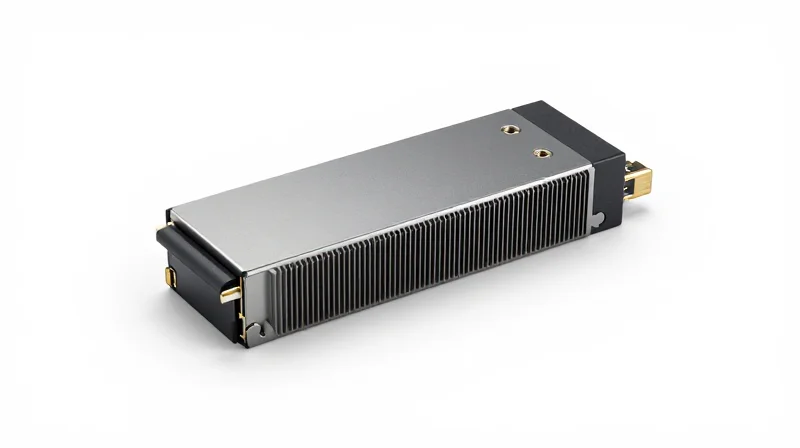
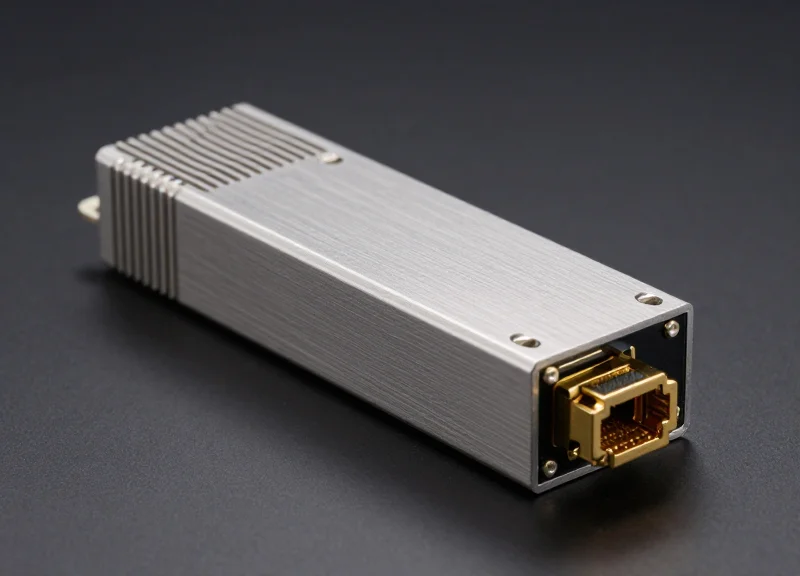
The transition to 800G is defined by the evolution of the pluggable form factor, where the primary objective is to double bandwidth density without proportionally increasing power consumption or physical footprint. The industry has converged on two primary standards: OSFP (Octal Small Form-factor Pluggable) and QSFP-DD800 (Double Density). These standards are not merely mechanical housings; they represent the electrical and thermal engineering boundaries that determine the operational expenditure (OpEx) of the network. Choosing between them involves balancing immediate backward compatibility with long-term thermal headroom for future 1.6T migrations.
OSFP vs. QSFP-DD800: Architectural Divergence
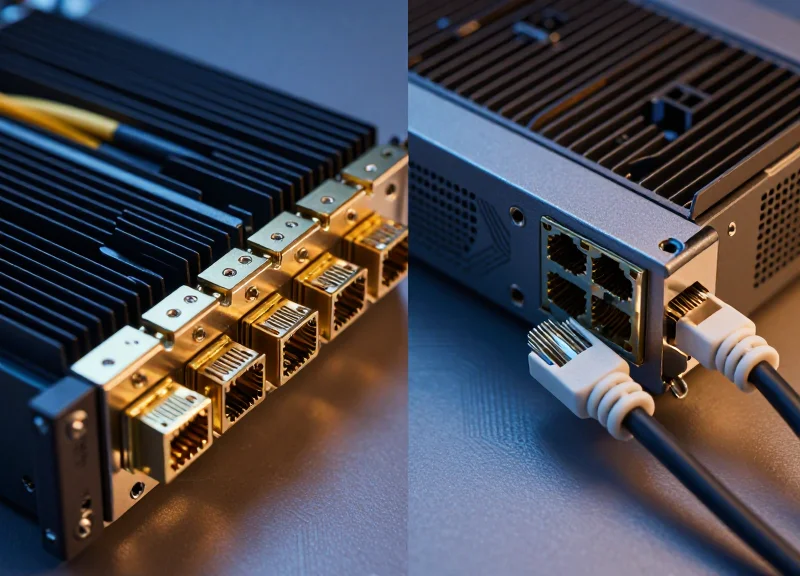
While both standards support 800Gbps using 8 lanes of 112G SerDes, their physical designs offer different advantages for data center operators. OSFP was designed from the ground up for higher power applications, whereas QSFP-DD800 focuses on maintaining the legacy of the widely adopted QSFP ecosystem.
| Feature | OSFP (Octal Small Form-factor) | QSFP-DD800 (Double Density) |
|---|---|---|
| Maximum Power Class | Up to 30W (Designed for 1.6T) | Up to 25W (Focus on efficiency) |
| Thermal Solution | Integrated heatsink on the module | Relies on system-side cage/heatsink |
| Backward Compatibility | Requires mechanical adapter for QSFP | Native electrical compatibility with QSFP |
| Width/Size | Wider (Allows for more internal components) | Narrower (High density 1U 32-port configs) |
Thermal Management and Power Efficiency
As port speeds increase, heat dissipation becomes the primary bottleneck for reliability. OSFP modules feature an integrated heatsink that significantly improves thermal transfer efficiency. This design allows for higher power envelopes, which is critical for long-reach coherent optics or AI-specific DSPs. In contrast, QSFP-DD800 relies on the cooling capacity of the switch chassis and cage. While this allows for a higher density of ports in a single rack unit, it requires more aggressive airflow and sophisticated cooling strategies, which can increase the total cost of ownership (TCO) in warm-aisle containment environments.
Backward Compatibility and Migration Strategy
For many enterprises, the ROI of 800G is tied to the utility of existing 400G hardware. QSFP-DD800 provides a seamless path because it is physically compatible with older QSFP28 and QSFP56 modules. This allows for a 'pay-as-you-grow' model where legacy 400G optics can reside in 800G ports during the transition phase. OSFP, while requiring adapters for legacy support, offers a physical design that is already standardized for the next leap to 1.6T, potentially offering a longer lifecycle for the physical infrastructure investment.
- Which form factor is best for AI/ML clusters?
OSFP is generally preferred for AI clusters due to its superior thermal performance, which is necessary for the high-duty cycles of GPU-to-GPU communication. - Does 800G require new cabling?
While 800G can use existing MPO-16 fiber for 8-lane configurations, the shift to 112G SerDes means shorter reach for copper DACs, often necessitating a move to Active Electrical Cables (AECs) or Optical cables. - How does power consumption per bit compare to 400G?
800G modules typically offer a 15-25 percent reduction in power consumption per bit compared to two 400G modules, a key driver for ROI in large-scale deployments.
The Economics of Bandwidth: Drastically Reducing Cost per Bit

The Economics of Bandwidth: Drastically Reducing Cost per Bit
Upgrading to 800G provides a massive reduction in the cost per bit of data transmission by allowing network operators to double their capacity without doubling their physical footprint or power consumption. While the initial transceiver cost for 800G is higher than 400G, the price-per-gigabit is significantly lower because a single 800G module replaces the hardware overhead of two 400G modules, effectively streamlining the bill of materials for switches and the complexity of high-density fiber management.
Cost and Efficiency Comparison: 400G vs. 800G
| Metric | 2x 400G QSFP-DD Setup | 1x 800G OSFP/QSFP-DD800 Setup |
|---|---|---|
| Switch Port Utilization | 2 Ports | 1 Port |
| Power Consumption (Relative) | 100% (Baseline) | ~75-82% per Gigabit |
| Cabling Density | Standard | 2x Density per Rack Unit |
| DSP Architecture | 7nm Process | 5nm / 3nm Process |
Capex Savings through Hardware Density
The primary driver for 800G Capex reduction is the density afforded by 112G SerDes lanes. By utilizing eight channels of 112G, 800G optics align natively with the latest high-capacity switch ASICs, such as the 51.2 Tbps generation. This alignment eliminates the need for 'gearbox' chips that were often required in early 400G transitions to translate between different lane speeds, directly lowering the internal hardware cost of the network interface. Consequently, data centers can achieve the same throughput with half the number of optical modules and patch cables, significantly reducing the total cost of ownership (TCO).
Opex Optimization and Power Efficiency
Operating expenses are optimized through the transition to advanced Digital Signal Processors (DSPs) and silicon photonics integration. 800G modules leverage 5nm and 3nm lithography, which drastically reduces the heat generated per gigabit of data moved. In a hyperscale facility, a 20% reduction in power-per-bit does more than just lower the electricity bill; it reduces the thermal load on the cooling infrastructure, allowing for higher rack densities and deferred facility expansion costs.
- At what point does 800G become more cost-effective than 400G?
The economic 'tipping point' typically occurs when the market price of a single 800G module falls below 1.6x the price of a 400G module. At this ratio, the savings in port density and power consumption make 800G the superior ROI choice. - Does 800G reduce the cost of fiber infrastructure?
Yes. By using breakout cables (e.g., 1x800G to 2x400G), operators can support more downstream devices with fewer switch ports and less trunk cabling, reducing both material costs and labor for cable management. - What is the impact of 800G on cooling costs?
Because 800G transceivers are more energy-efficient per bit, they generate less waste heat for the same amount of traffic. This allows for a more efficient PUE (Power Usage Effectiveness) ratio within the data center.
Power Consumption and Sustainability: The Watts/Gbps Advantage

The transition to 800G architectures represents a pivotal shift in data center economics where power efficiency becomes as critical as raw throughput. By utilizing 800G modules, network operators can achieve a significantly lower Watts per Gbps (W/Gbps) ratio, often realizing a 20% to 40% improvement in power efficiency over legacy 400G deployments. This efficiency is primarily driven by the consolidation of optical components and the integration of highly efficient 5nm and 7nm Digital Signal Processors (DSPs), which allow for higher data density without a linear increase in power draw.
The Efficiency Gains of Next-Generation DSPs
The heart of the 800G power advantage lies in the semiconductor process nodes used for the DSP. While early 400G modules relied heavily on 16nm or 7nm processes, 800G transceivers are built on state-of-the-art 5nm CMOS technology. This transition allows for more transistors in a smaller area with lower leakage current and lower operating voltages. Consequently, the DSP—which accounts for a significant portion of a module's power profile—can process 800Gbps of traffic with only a marginal increase in total power consumption compared to a 400G module.
| Module Type | Typical Power Consumption | Bandwidth | Efficiency (Watts/Gbps) |
|---|---|---|---|
| 400G QSFP-DD (DR4) | 12W | 400 Gbps | 0.030 W/Gbps |
| 800G QSFP-DD800 (DR8) | 16W | 800 Gbps | 0.020 W/Gbps |
| 800G OSFP (2xDR4) | 17W | 800 Gbps | 0.021 W/Gbps |
Operational Impact and Sustainability
Reducing the power footprint per bit has a compounding effect on data center OPEX. Lower power consumption at the module level translates to reduced heat dissipation requirements. For every watt saved at the transceiver level, additional savings are realized in the cooling infrastructure (fans, CRAC units, and liquid cooling systems). In hyper-scale environments, this thermal relief allows for higher rack density, enabling operators to pack more compute and storage into the same physical footprint without exceeding the facility's power envelope or thermal limits.
Sustainability and ROI FAQs
- How does 800G contribute to ESG goals?
By lowering the energy required to move a terabit of data, 800G reduces the overall carbon footprint of the network, helping organizations meet Environmental, Social, and Governance (ESG) targets and regulatory energy standards. - Does higher power per module increase failure rates?
While an 800G module consumes more total power than a 400G module, modern form factors like OSFP are designed with superior thermal fins and heat sinks to maintain optimal operating temperatures, ensuring long-term reliability. - What is the typical ROI period for energy savings alone?
While hardware costs are higher upfront, the combination of lower W/Gbps and reduced cooling overhead can result in energy-driven ROI within 18 to 36 months, depending on local utility rates and facility efficiency (PUE).
Network Density and Scalability in the Data Center
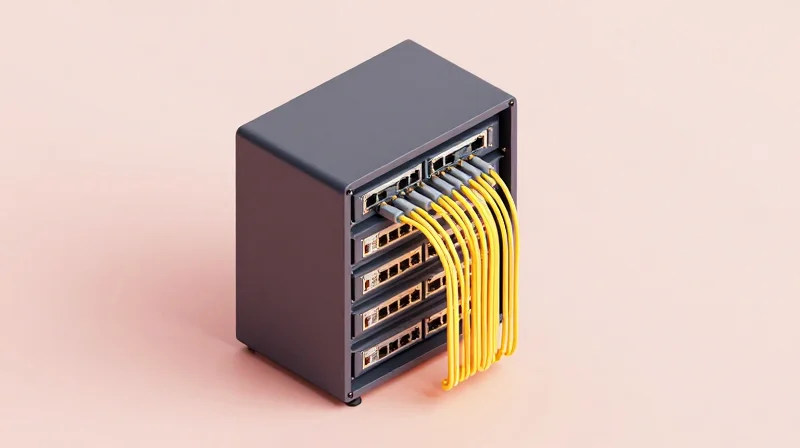
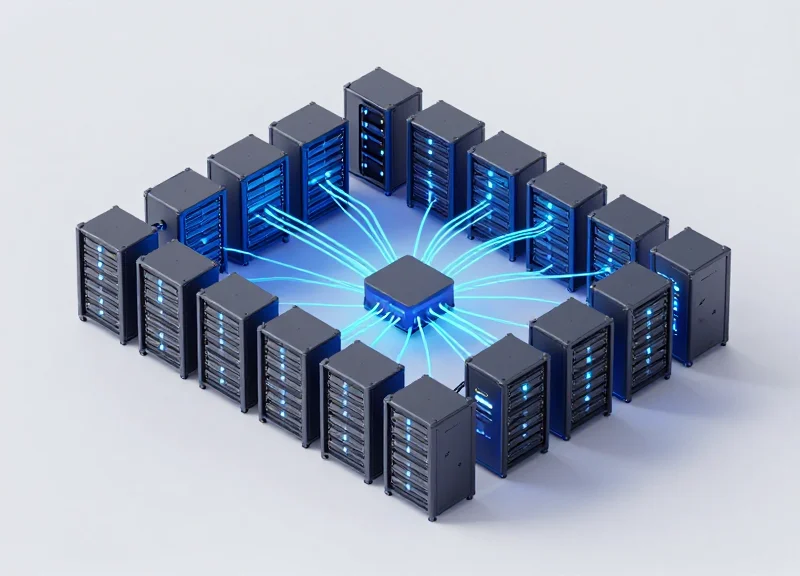
Upgrading to 800G directly addresses the physical constraints of the modern data center by providing a massive leap in bandwidth density. By utilizing high-radix switches powered by 51.2T ASICs, operators can achieve four times the throughput of traditional 12.8T systems within the same 1RU (Rack Unit) form factor. This consolidation allows for fewer switches, lower power-per-port, and a significant reduction in the amount of rack space required to support hyper-scale traffic, providing a clear path to scaling AI and machine learning clusters without expanding the physical data center floor.
Spatial Efficiency: From 400G to 800G Consolidation
In a 400G-centric architecture, reaching 51.2 Tbps of aggregate bandwidth would typically require four separate 12.8T switches, occupying 4RU of space and requiring complex leaf-spine interconnects. With 800G, this entire capacity is condensed into a single 1RU chassis. This reduction in the 'hardware footprint' not only saves on real estate costs but also simplifies the cooling and power distribution architecture at the rack level.
| Metric | 400G Era (12.8T ASIC) | 800G Era (51.2T ASIC) |
|---|---|---|
| Switch Capacity (1RU) | 12.8 Tbps | 51.2 Tbps |
| Max Port Density | 32 x 400G | 64 x 800G |
| Relative Rack Space | 400% | 100% |
| Cabling Volume | High (Discrete) | Low (Consolidated/Breakout) |
Cabling Complexity and Fiber Management
Managing fiber infrastructure is one of the most significant hidden costs in data center operations. 800G modules, such as those using OSFP or QSFP-DD800 form factors, allow for sophisticated breakout configurations (e.g., 2x400G or 8x100G) using high-density MPO-16 or dual MPO-12 connectors. This consolidation reduces the total cable count by 50% or more compared to equivalent 400G-only deployments. Fewer cables result in better airflow through the back of the rack, reducing the risk of thermal hotspots and lowering the energy required for fan cooling.
Density and Scalability FAQ
- How does 800G improve data center scalability?
It allows for higher radix switches (more ports per switch), which means networks can scale to support more servers or nodes with fewer layers of switching, reducing latency and cost. - Does 800G require new fiber cabling?
While 800G can run on existing Single Mode Fiber (SMF), the use of MPO-16 or specialized breakout cables is often required to maximize the density of the 8-lane electrical interface. - What is the impact of density on thermal management?
While 800G modules generate more heat individually, the reduction in total equipment count and cable bulk improves overall cabinet airflow and cooling efficiency per gigabit.
Signal Integrity and FEC: Overcoming Technical Barriers

Overcoming Signal Degradation in the 112G Era
The shift to 800G is underpinned by the transition from 56G to 112G SerDes (Serializer/Deserializer) per lane, a jump that doubles the Nyquist frequency to approximately 28 GHz. This increase makes electrical signals significantly more susceptible to insertion loss, crosstalk, and electromagnetic interference (EMI). To achieve a positive ROI, operators must ensure that their infrastructure can handle these tighter electrical tolerances, leveraging advanced Forward Error Correction (FEC) to bridge the gap between raw physical layer performance and the error-free transmission required by high-level protocols.
Technical Comparison: Electrical Lane Scaling and Constraints
| Parameter | 400G (56G SerDes) | 800G (112G SerDes) |
|---|---|---|
| Nyquist Frequency | 14 GHz | 28 GHz |
| Modulation Scheme | PAM4 | PAM4 |
| Insertion Loss (at Nyquist) | ~30 dB | ~35-40 dB |
| Pre-FEC BER Threshold | 1e-4 | 1e-3 |
| DSP Process Node | 7nm | 5nm / 3nm |
The Critical Role of FEC in 800G Link Reliability
In 800G systems, the signal-to-noise ratio (SNR) at 112G is often insufficient for error-free raw transmission. Digital Signal Processors (DSPs) now incorporate more aggressive FEC algorithms to correct bit errors before they impact the network layer. While these algorithms introduce a marginal latency penalty, they are essential for maintaining the post-FEC Bit Error Rate (BER) of 1e-15. This balance is critical for ROI, as failing to optimize FEC can lead to 'flapping' links and increased retransmissions that degrade overall network throughput and increase operational overhead.
Technical FAQ: Signal Integrity and FEC Implementation
- Why is 112G SerDes harder to implement than 56G?
Higher frequencies lead to greater signal attenuation over copper traces and connectors, requiring higher-quality PCB materials and more precise equalization techniques. - Does 800G FEC significantly increase latency?
Advanced FEC adds microsecond-level latency. While negligible for most data center traffic, it is a key consideration for ultra-low-latency financial or high-performance computing (HPC) applications. - Can 800G operate without FEC?
No. The electrical noise and signal degradation at 112G speeds make it mathematically impossible to achieve the required data integrity without the parity and correction provided by FEC. - How does the DSP process node affect signal integrity?
Moving to 5nm or 3nm nodes allows for more complex signal processing and equalization algorithms within the same power envelope, improving the ability to recover 'dirty' signals at 112G.
TCO Analysis: Balancing CapEx and OpEx
[生成失败] PermissionDeniedError: Error code: 403 - {'error': {'message': 'user quota is not enough (request id: 2026051410132959587260BMNsKibv)', 'type': 'new_api_error', 'param': '', 'code': 'local:insufficient_quota'}}
Future-Proofing Your Infrastructure for the 1.6T Era
[生成失败] PermissionDeniedError: Error code: 403 - {'error': {'message': 'user quota is not enough (request id: 20260514101338176107821coTo3IY0)', 'type': 'new_api_error', 'param': '', 'code': 'local:insufficient_quota'}}
Upgrading to 800G represents a pivotal investment that pays for itself through improved power metrics, reduced space requirements, and a lower total cost per bit. For enterprises and hyperscalers looking to remain competitive in the AI era, the transition is a matter of 'when,' not 'if.' Contact our technical experts today to design a cost-effective 800G migration roadmap for your facility.