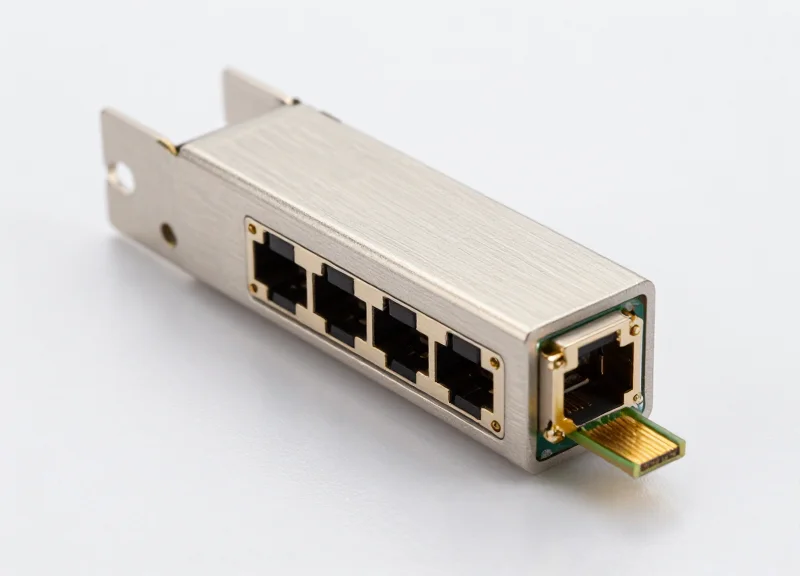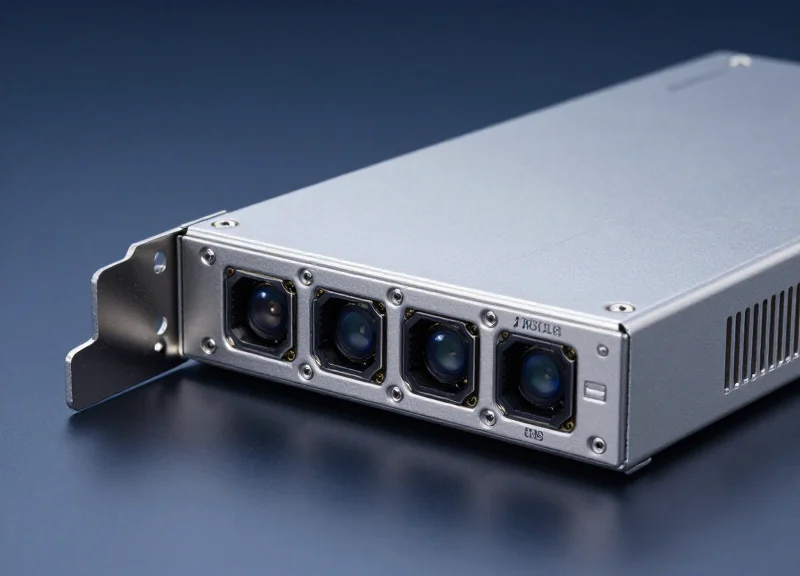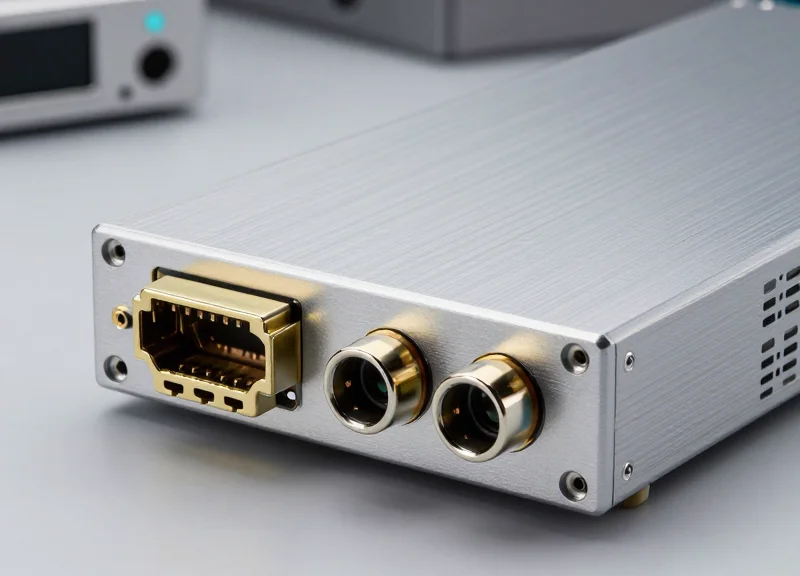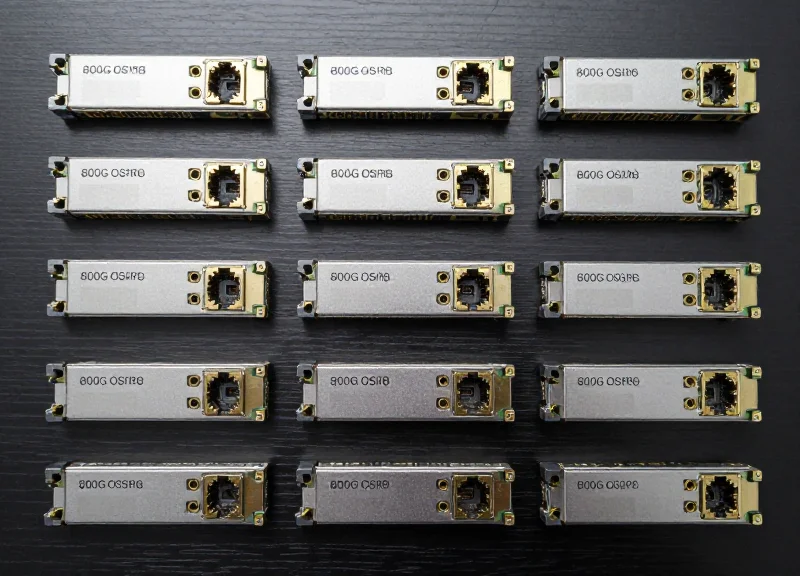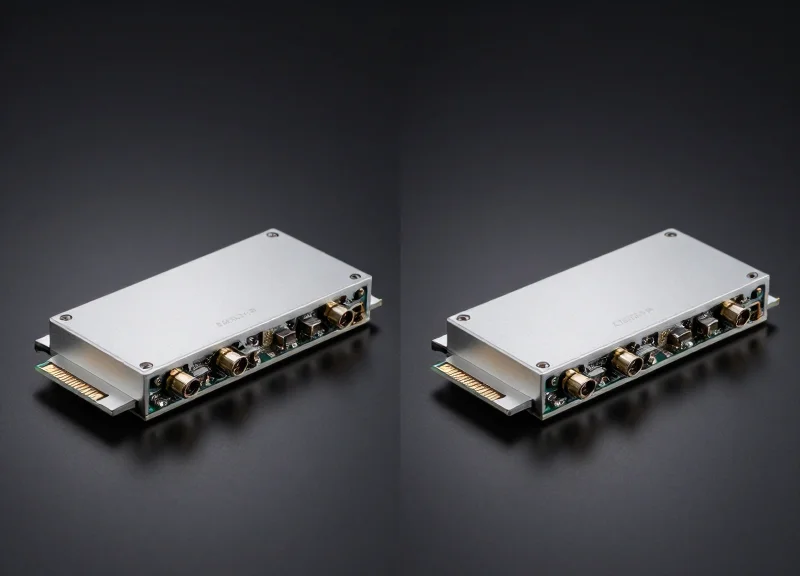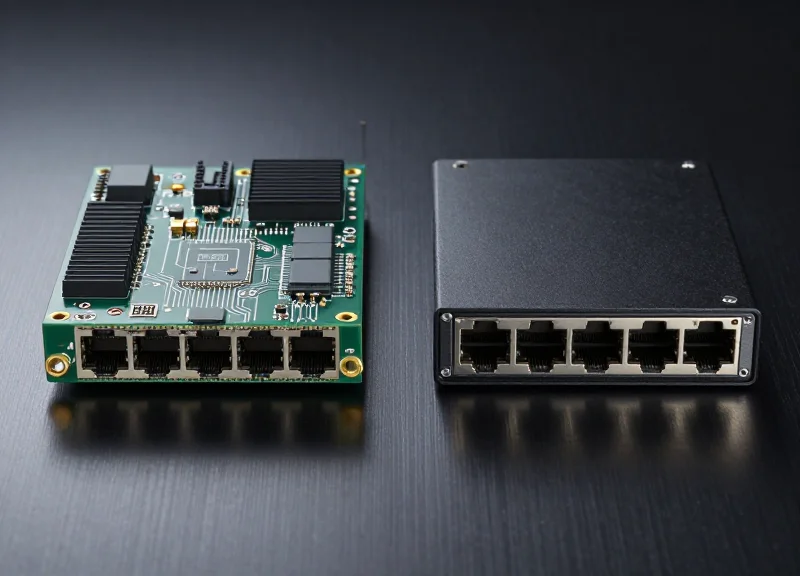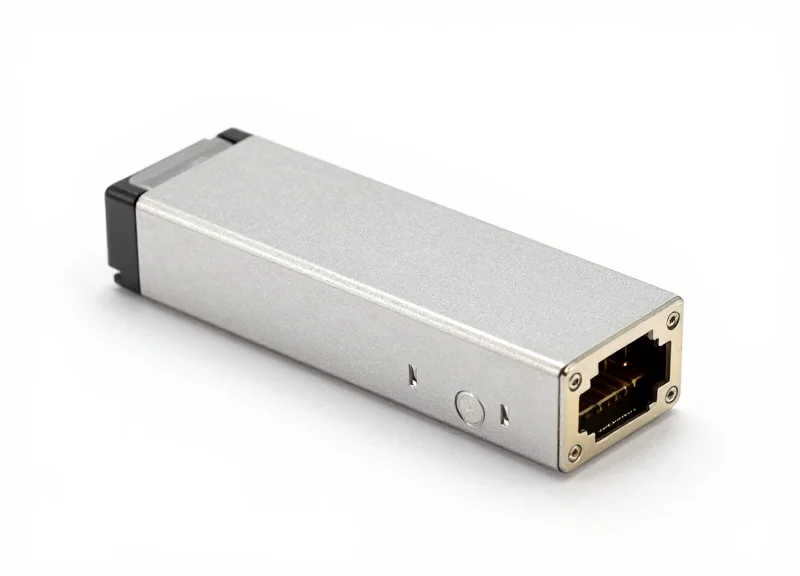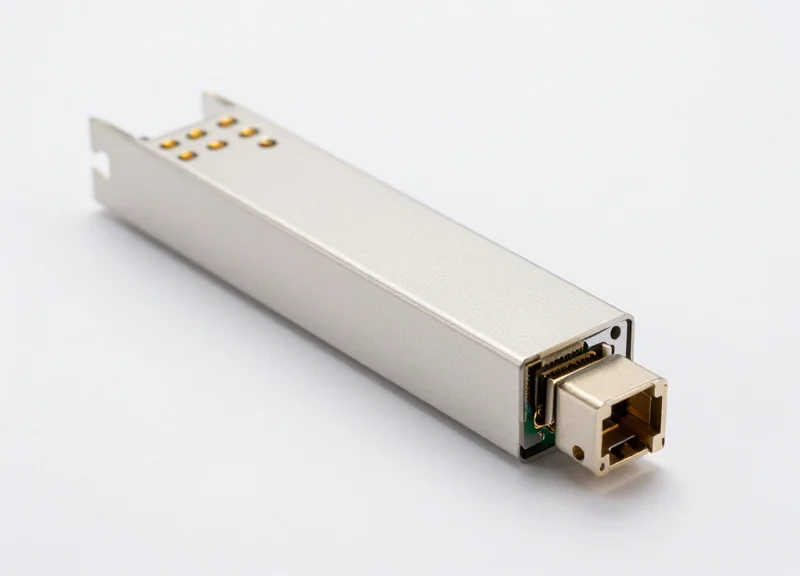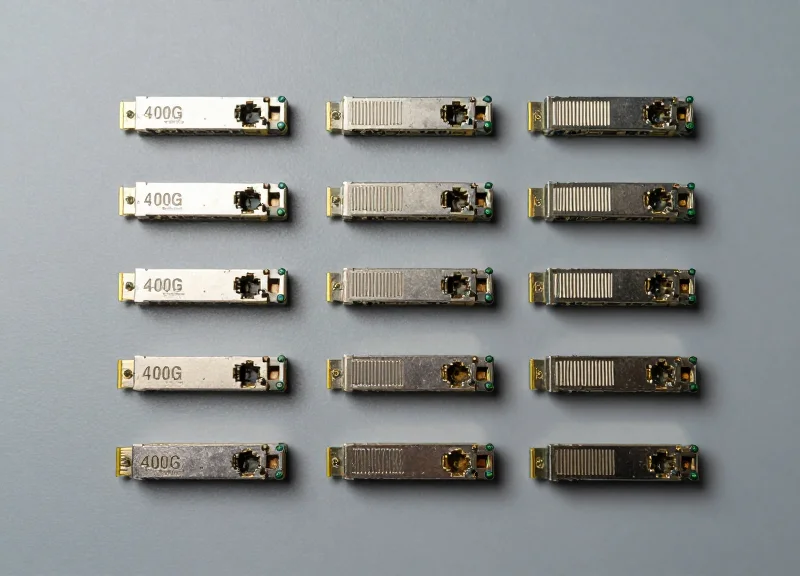
As global data traffic surges, 400G networking has shifted from a luxury to a necessity for modern data centers. However, the prohibitive costs of OEM hardware often limit expansion. This article breaks down how Arista-compatible 400G optics provide the perfect balance of enterprise-grade reliability and wholesale affordability.
The Rise of 400G in Arista-Based Network Architectures

The Shift to 400G: A New Benchmark for Scalability
The transition to 400G Ethernet within Arista-based architectures is no longer a future-proofing strategy but a current necessity driven by the explosive growth of Artificial Intelligence (AI), Machine Learning (ML), and hyperscale cloud services. By leveraging Arista's high-radix switching platforms, organizations are transitioning to 400G to eliminate bandwidth bottlenecks and optimize the performance of power-hungry workloads that demand lower latency and higher radix configurations.
Comparative Efficiency: 100G vs. 400G in Arista Environments
Moving from 100G to 400G provides more than just a 4x increase in speed; it introduces significant improvements in bits-per-watt efficiency and rack space utilization. Arista’s support for QSFP-DD and OSFP form factors allows for backward compatibility while paving the way for 800G and beyond.
| Feature | Arista 100G (QSFP28) | Arista 400G (QSFP-DD/OSFP) |
|---|---|---|
| Max Throughput | 100 Gbps | 400 Gbps |
| Modulation | NRZ | PAM4 |
| Power Efficiency | Baseline | Significantly Higher Per-Gigabit |
| Typical Application | Standard Data Center | AI Clusters & Hyperscale Cloud |
Arista’s Strategic Role in 400G Adoption
Arista Networks has solidified its leadership through platforms like the 7060X4 and 7280R3 series, which are engineered specifically for high-density 400G deployments. The Arista Extensible Operating System (EOS) provides the programmable foundation necessary to manage these massive data flows, offering advanced telemetry and automation that ensure network reliability as throughput scales. For wholesale buyers, sourcing compatible 400G optics for these specific Arista platforms is the most cost-effective way to achieve high-performance parity with OEM hardware.
Common Questions on 400G Transition
- Why is PAM4 modulation critical for Arista 400G?
PAM4 (Pulse Amplitude Modulation 4-level) doubles the bit rate compared to traditional NRZ by carrying two bits per symbol, which is essential for reaching 400G speeds within existing fiber constraints. - Is Arista 400G hardware backward compatible?
Yes, most Arista 400G QSFP-DD ports are backward compatible with 100G QSFP28 modules, allowing for a phased migration strategy. - What are the primary cost drivers for 400G wholesale procurement?
The main drivers include the choice between copper DACs for short reaches and optical transceivers for longer distances, as well as the volume of the bulk order which dictates the level of custom pricing available.
The Economics of Compatible Optics: OEM vs. Third-Party
The Economics of Compatible Optics: OEM vs. Third-Party
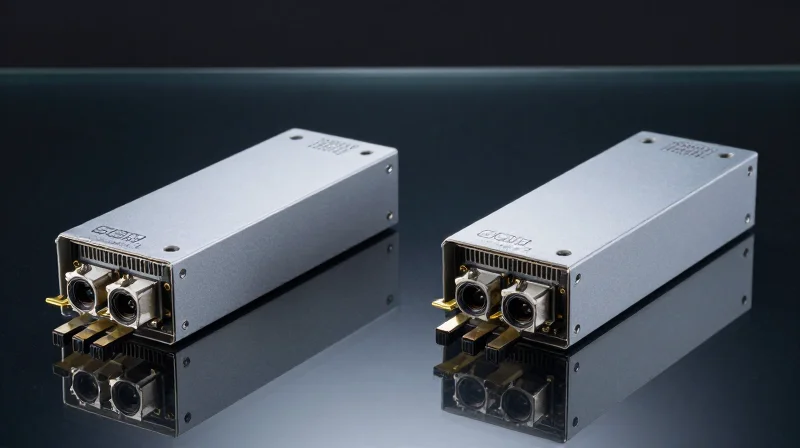
The primary driver for shifting to compatible 400G optics is the radical disparity in pricing, often reaching 70% to 90% savings compared to OEM-labeled gear. These savings are achieved not by compromising on component quality, but by bypassing the significant brand premiums and administrative overhead associated with tier-one networking vendors.
Understanding the OEM Branding Premium
It is a common industry secret that major networking manufacturers do not produce their own optical transceivers. Instead, they source hardware from the same contract manufacturers and component suppliers—such as Broadcom, Marvell, and Lumentum—as reputable third-party vendors. When you purchase an Arista-branded 400G module, a substantial portion of the invoice covers the 'Arista Approved' software handshake and the company's marketing margins, rather than hardware innovation.
| Comparison Metric | Arista OEM 400G | Certified Compatible 400G |
|---|---|---|
| Typical Unit Price | $2,500 - $6,000+ | $450 - $1,200 |
| Supply Chain Lead Time | 8-16 Weeks | In Stock / 1-2 Weeks |
| Hardware Components | Standard MSA Compliant | Standard MSA Compliant |
| Warranty Support | Standard 1-Year | Lifetime Replacement |
Wholesale Procurement and Bulk Savings in 2026
For enterprise data centers and ISPs scaling to 400G, the economic benefit of compatible optics compounds at scale. Custom quotes for bulk orders in 2026 allow organizations to allocate their budgets toward higher-density switches or redundant infrastructure rather than inflated transceiver costs. Furthermore, high-quality third-party vendors provide EEPROM coding tailored to specific Arista EOS versions, ensuring seamless integration without the 'Unsupported Transceiver' warnings.
- Will using compatible optics void my Arista warranty?
No. Under the Magnuson-Moss Warranty Act in the US, manufacturers cannot void a hardware warranty simply for using third-party peripherals, provided the optics do not cause direct damage. - How do failure rates compare between OEM and compatible 400G?
Reputable third-party modules undergo rigorous Bit Error Rate (BER) and temperature cycle testing, often resulting in failure rates below 0.1%, matching or exceeding OEM-branded modules. - Why is bulk pricing so much lower for 400G optics?
Wholesale providers operate on high-volume, low-margin models, passing the direct-from-factory savings to the buyer without the 300%+ markups standard in the OEM tier.
Technical Standards: Decoding QSFP-DD and OSFP Form Factors
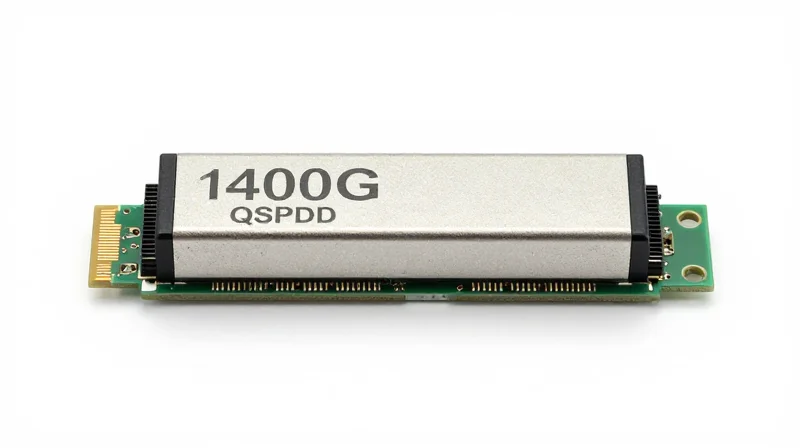
The selection between QSFP-DD and OSFP form factors is the most critical technical decision when architecting an Arista-based 400G network. While both interfaces support 400Gbps speeds using 8 lanes of 50G PAM4 signaling, they differ significantly in physical dimensions, thermal management capabilities, and backward compatibility. Arista utilizes both standards across its product portfolio, necessitating a precise match between the switch's physical port and the compatible optic to ensure operational stability and investment protection.
QSFP-DD: The Evolution of the QSFP Standard
The Quad Small Form-factor Pluggable Double Density (QSFP-DD) is the industry's most popular 400G interface due to its native backward compatibility. By adding a second row of electrical contacts, it doubles the lane count of the previous QSFP28 standard while maintaining a similar footprint. For Arista users, this means that a 400G QSFP-DD port can typically accept 100G QSFP28 and 40G QSFP+ modules without the need for complex adapters, making it ideal for leaf-spine architectures undergoing incremental upgrades.
OSFP: Designed for Maximum Thermal Efficiency
The Octal Small Form-factor Pluggable (OSFP) was engineered to address the heat challenges of high-density 400G and future 800G deployments. It is physically larger than the QSFP-DD and features an integrated heat sink directly on the module. This design allows for a higher power envelope (up to 15W or more), which is essential for long-range coherent optics used in Arista's 7500 and 7800 series platforms. While OSFP requires a mechanical adapter to support 100G QSFP28 modules, its superior cooling makes it a robust choice for data center cores.
| Specification | QSFP-DD | OSFP |
|---|---|---|
| Electrical Lanes | 8 Lanes (PAM4) | 8 Lanes (PAM4) |
| Backward Compatibility | Native QSFP+/QSFP28 | Requires Mechanical Adapter |
| Thermal Capacity | ~12 Watts | 15-20+ Watts |
| Physical Width | 18.35 mm | 22.58 mm |
| Typical Arista Series | 7060X4, 7280R3 | 7388X5, 7800R3 |
Strategic Wholesale Sourcing for 2026
When requesting custom quotes for Arista-compatible 400G wholesale, technical due diligence on form factors prevents costly procurement errors. Bulk pricing for QSFP-DD is currently more competitive due to higher manufacturing volumes, but OSFP is increasingly required for high-density AI and HPC clusters where thermal throttling is a risk. Buyers should audit their Arista line cards to determine the exact mix of 'DD' versus 'OSFP' modules needed for their 2026 budget cycle.
Technical FAQ: Arista 400G Standards
- Are QSFP-DD and OSFP modules cross-compatible?
No. They have different physical dimensions and connector shapes. You must match the optic to the specific port type on your Arista switch. - Which form factor is better for 400G ZR/ZR+ applications?
OSFP is often preferred for 400G ZR/ZR+ (coherent) optics because these modules generate significant heat, and OSFP's integrated heatsink provides better thermal dissipation. - Does Arista support 'Belly-to-Belly' QSFP-DD mounting?
Yes, many Arista 7060 series switches use 'Belly-to-Belly' mounting for QSFP-DD to maximize port density while maintaining sufficient airflow.
Ensuring Zero Downtime: Testing and Compatibility Verification

Ensuring Zero Downtime: Testing and Compatibility Verification
To achieve zero downtime in high-density 400G environments, professional vendors must move beyond generic testing and implement a 'Test-on-Box' methodology using actual Arista hardware. Compatibility is not merely about the physical form factor; it requires the precise replication of Arista’s proprietary EEPROM coding to ensure that the Extensible Operating System (EOS) recognizes the module as a native component. By verifying every transceiver on Arista 7060X or 7800 series switches, wholesale providers guarantee that signal integrity, power consumption, and Digital Optical Monitoring (DOM) features function identically to OEM parts.
The Arista Testing Matrix: Beyond Basic Connectivity
Reliability at 400G speeds is significantly more sensitive to signal noise and thermal fluctuations than previous generations. Professional-grade compatible optics undergo a multi-stage validation process to ensure they can handle the rigorous demands of hyperscale networking without triggering port flaps or CRC errors.
| Test Category | Verification Metric | Arista-Specific Requirement |
|---|---|---|
| EEPROM Coding | Vendor ID & Signature | Must pass EOS whitelist without 'service unsupported-transceiver' commands. |
| Signal Integrity | Bit Error Rate (BER) | Maintain Pre-FEC BER levels below 1E-15 for stable 400G throughput. |
| Thermal Load | Power Consumption (W) | Must remain within the 10W-12W range for QSFP-DD to prevent switch overheating. |
| DOM/DDM Accuracy | Real-time Telemetry | Full visibility of TX/RX power levels within the Arista CLI/CloudVision. |
Software Resilience and EOS Updates
A common concern for network engineers is whether a future Arista EOS update will 'lock out' third-party optics. Top-tier wholesale vendors mitigate this risk by maintaining an active lab of Arista switches running the latest 'M' (Maintenance) and 'F' (Feature) releases. This allows for proactive firmware adjustments to compatible modules, ensuring that when you upgrade your switch operating system, your 400G fabric remains online and fully supported.
- Will using compatible 400G optics void my Arista hardware warranty?
No. Under the Magnuson-Moss Warranty Act, Arista cannot void your hardware warranty simply for using third-party components. Support remains intact for the switch itself, and the optic vendor provides the warranty for the transceiver. - Why is 'Test-on-Box' better than 'Generic' testing?
Generic testers only check if light passes through the fiber. Test-on-Box verification ensures the Arista EOS software correctly identifies the module, reads its diagnostics, and manages its power profile, which is essential for 400G stability. - How do you handle firmware failures in bulk orders?
Leading wholesale providers offer a lifetime replacement warranty and provide remote coding tools that allow engineers to update the transceiver firmware on-site if an unexpected EOS compatibility issue arises.
Wholesale Strategies for Large-Scale Network Deployment
Strategic Bulk Procurement for 400G Infrastructure
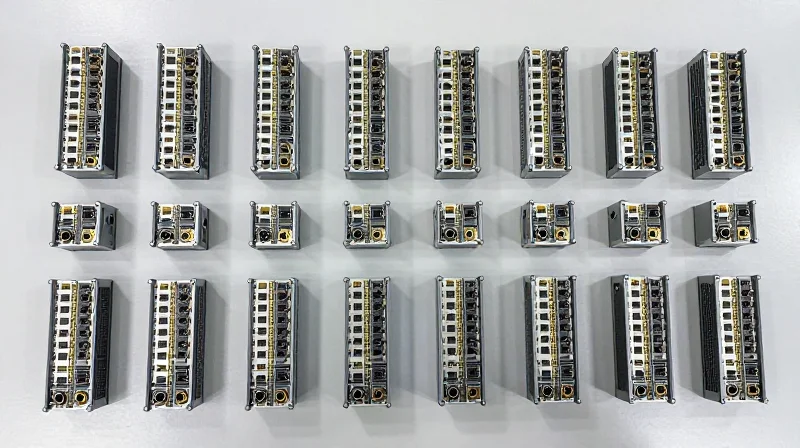
In the context of 400G network evolution, wholesale procurement is no longer just about unit price reduction; it is a strategic lever for maintaining network agility and financial predictability. By shifting from transactional purchasing to bulk wholesale models, enterprise data centers and ISPs can secure Arista-compatible QSFP-DD and OSFP modules at a fraction of OEM costs—often realizing savings between 70% and 85%—which allows for the immediate reallocation of budget toward high-capacity switching fabric or advanced security layers.
Optimizing ROI Through Tiered Wholesale Pricing
Wholesale strategies succeed when they align with the deployment roadmap. For many operators, this means moving beyond 'off-the-shelf' pricing into tiered structures that reward volume and long-term commitment. A well-structured wholesale agreement ensures that the cost per gigabit drops as the network footprint expands, directly shortening the time-to-value for new 400G clusters.
| Procurement Tier | Volume Range | Pricing Advantage | Primary Benefit |
|---|---|---|---|
| Standard Project | 10 - 50 Units | 15-20% off MSRP | Immediate stock availability |
| Infrastructure Expansion | 51 - 250 Units | 30-45% off MSRP | Customized batch testing |
| Hyper-Scale Wholesale | 250+ Units | Deep Custom Quotes | Locked-in pricing & staged delivery |
Custom Quotes and Staged Deployment Logistics
For massive rollouts, receiving a one-time shipment of thousands of optics can create an inventory management bottleneck. Modern wholesale strategies involve custom quotes that include 'staged delivery' schedules. This approach allows organizations to lock in 2026 bulk pricing while receiving hardware in monthly or quarterly increments, ensuring that the optics arrive just-in-time for switch installation while insulating the budget from market price fluctuations or supply chain disruptions.
Wholesale Deployment FAQ
- How do custom quotes impact the warranty on bulk orders?
Wholesale agreements typically include enhanced warranty terms, such as lifetime replacement and advanced hardware replacement (AHR), ensuring that large-scale deployments remain operational without additional maintenance overhead. - Can wholesale pricing be applied to a mix of 400G module types?
Yes. Most strategic vendors allow 'blended volume' pricing, where the total quantity of DR4, FR4, and SR8 modules is aggregated to reach the highest possible discount tier. - What is the typical lead time for a wholesale 400G order?
While retail orders are usually immediate, wholesale orders of several hundred units typically carry a lead time of 2-4 weeks to allow for synchronized batch coding and rigorous compatibility verification on specific Arista EOS versions. - Is on-site testing support available for bulk deployments?
For strategic wholesale partners, vendors often provide remote or on-site engineering support to ensure seamless integration with Arista’s 7060X and 7280R3 series platforms.
Ultimately, the transition to 400G is a capital-intensive journey. Leveraging professional Arista-compatible wholesale channels provides the financial breathing room necessary to scale modern infrastructure without compromising on technical excellence or hardware reliability.
Unlocking Innovation with OEM/ODM Customization Options
Purchasing Arista-compatible 400G modules at a wholesale level unlocks the potential for deep OEM/ODM customization, allowing organizations to resolve specific architectural bottlenecks and maintain brand consistency across sprawling data center environments. By leveraging customized EEPROM coding and tailored physical designs, enterprises can ensure their high-density 400G infrastructure performs with the precision of original equipment while meeting unique internal operational standards.
Strategic Firmware and EEPROM Coding
One of the most critical aspects of Arista compatibility is the transceiver’s EEPROM coding. Custom firmware allows for the modification of identification strings, vendor names, and part numbers, ensuring that the Arista EOS (Extensible Operating System) recognizes the hardware without generating 'unsupported hardware' warnings. Beyond simple recognition, specialized coding can optimize Digital Optical Monitoring (DOM) thresholds to better suit specific fiber environments or high-latency long-haul connections.
Physical and Operational Customization Options
| Feature | Standard Compatible | Custom OEM/ODM Solution |
|---|---|---|
| Labeling | Generic vendor branding | Private labeling with custom serial sequences |
| Firmware | Standard Arista coding | Bespoke code for legacy EOS versions |
| Packaging | Standard bulk boxes | Custom kits for rapid onsite deployment |
| Form Factor | Strict MSA compliance | Modified heatsinks for specific rack airflow |
Branding and Asset Management Logic
For large-scale ISPs and cloud service providers, private labeling and custom serial numbering are more than just aesthetic choices; they are essential for inventory management and automated deployment scripts. Custom-serialized modules allow for precise tracking through the hardware lifecycle, simplifying troubleshooting and the RMA process in environments housing tens of thousands of active ports.
- Can custom firmware resolve compatibility with older Arista switches?
Yes, OEM providers can develop firmware specifically tuned for older EOS versions that may not natively support the newest 400G MSA standards, ensuring backward compatibility. - What is the typical lead time for customized wholesale orders?
While standard orders ship immediately, custom firmware or physical branding typically adds 5-10 business days to the production cycle, depending on the volume. - Does physical customization impact heat dissipation?
Custom heatsinks are often requested to improve thermal management in high-density Arista racks, frequently exceeding standard MSA cooling specifications to prevent throttling.
Navigating the Supply Chain: Lead Times and Availability in 2026

As data centers transition to 400G and 800G architectures, the bottleneck for network deployment has shifted from budgetary constraints to hardware availability. In 2026, securing Arista-compatible 400G modules requires more than just a purchase order; it demands a sophisticated understanding of global semiconductor cycles and a partnership with vendors who maintain aggressive inventory buffers to circumvent the 24-plus week lead times often cited by original equipment manufacturers (OEMs).
The 2026 Supply Chain Landscape for High-Speed Optics
The global semiconductor market remains in a state of 'rebalancing' in 2026. While the extreme shortages of previous years have subsided for legacy components, high-performance ASICs and laser diodes required for 400G OSFP and QSFP-DD modules remain under supply pressure. This is largely driven by the explosive growth of AI/ML clusters, which consume the same manufacturing capacity used for high-speed networking transceivers.
| Component Type | OEM Lead Times (Est.) | Compatible Wholesale Lead Times | Primary Constraint |
|---|---|---|---|
| 400G QSFP-DD (SR8/DR4) | 16 - 24 Weeks | 2 - 4 Weeks | Laser Diode Availability |
| 400G OSFP (FR4/LR4) | 20 - 32 Weeks | 3 - 6 Weeks | DSP Yield Rates |
| Active Optical Cables (AOC) | 12 - 18 Weeks | 1 - 2 Weeks | Assembly Throughput |
How Compatible Partners Mitigate Global Delays
Wholesale partners specializing in Arista-compatible solutions offer a 'buffer' against market volatility. Unlike OEMs that often manufacture to order (MTO), professional compatible vendors utilize forecasting models to maintain a baseline of ready-to-ship stock. By diversifying their raw material sources across multiple foundries and assembly houses, these vendors avoid the single-point-of-failure risks inherent in OEM supply chains.
- Why are compatible lead times so much shorter than Arista's?
Compatible vendors focus exclusively on optics and frequently maintain 'Safety Stock' in localized hubs. While an OEM manages thousands of product lines, a specialized optics partner focuses on high-velocity items like 400G transceivers, allowing for rapid fulfillment. - How does wholesale purchasing affect my priority in the queue?
Bulk and wholesale agreements often include 'first-right-of-refusal' on incoming shipments. By locking in annual volume forecasts, enterprises ensure they are at the front of the line when new batches of DSPs or optics arrive from the foundry. - Can I get custom firmware during supply shortages?
Yes. Leading compatible vendors perform firmware coding and QA in-house. This means that even if raw hardware is in high demand, the specific Arista-matching configuration is done at the point of shipment, adding zero delay to the process.
Strategic Stocking and Just-in-Time Delivery
For enterprise data centers and ISPs, the ideal strategy for 2026 is a hybrid procurement model. By leveraging custom quotes for bulk 400G orders early in the fiscal year, organizations can establish a staggered delivery schedule. This ensures that as each phase of a network rollout begins, the compatible hardware is already on-site, regardless of the current state of the global semiconductor market.
The Environmental Impact of Choosing Compatible Optical Solutions
The transition to 400G networking is a critical juncture for environmental responsibility in the data center. High-quality Arista-compatible transceivers leverage state-of-the-art silicon photonics and Multi-Source Agreement (MSA) standards to deliver optimized power-to-performance ratios. By sourcing these components wholesale, organizations can implement large-scale infrastructure that aligns with Environmental, Social, and Governance (ESG) targets, ensuring that increased bandwidth does not lead to a linear increase in energy consumption or carbon footprint.
Energy Efficiency and MSA Compliance
Modern 400G compatible optics are designed with power efficiency as a core requirement. Because they adhere to strict MSA specifications, they utilize low-power Digital Signal Processors (DSPs) and optimized laser drivers. This standardization prevents the vendor lock-in that often leads to inefficient hardware cycles, allowing network architects to select the most energy-efficient modules available on the market without being restricted by proprietary software hurdles.
Sustainability Comparison: OEM vs. Compatible Optics
| Sustainability Factor | OEM Traditional Model | Compatible Wholesale Model |
|---|---|---|
| Manufacturing Standard | Proprietary and Closed | Open MSA Standard |
| Packaging Waste | High Brand-Specific Packaging | Minimalist and Bulk Sustainable |
| Power Consumption | Standardized per Brand | Optimized for Efficiency |
| Hardware Lifespan | Limited by Software Updates | Extended Multi-Platform Compatibility |
Reducing Electronic Waste Through Lifecycle Management
Wholesale procurement of compatible optics facilitates a circular economy approach. Instead of discarding functional networking hardware due to proprietary transceiver incompatibility, compatible modules allow legacy and modern systems to coexist efficiently. This significantly reduces electronic waste (e-waste), as the need for wholesale chassis replacements is deferred by the ability to mix and match modular optical components across various hardware generations.
- Do compatible 400G optics consume more power?
No. In most cases, compatible 400G transceivers use the same or more efficient chipsets as OEM versions, adhering to the same wattage specifications defined by MSA standards. - How does bulk purchasing affect the carbon footprint?
Bulk and wholesale purchasing reduces the frequency of shipments and minimizes individual packaging materials, leading to lower logistics-related CO2 emissions per unit. - Can compatible optics help with green certifications?
Yes, by optimizing the Power Usage Effectiveness (PUE) of the data center and reducing e-waste, compatible optics contribute to achieving LEED or other green building certifications.
Scaling your network to 400G is a strategic move that requires a partner who understands both the technology and the bottom line. Ubytelink provides the industry's best Arista-compatible solutions with the flexibility of OEM/ODM options. Don't let high costs stall your growth—contact Ubytelink today for a custom wholesale quote and take your network to the next level.