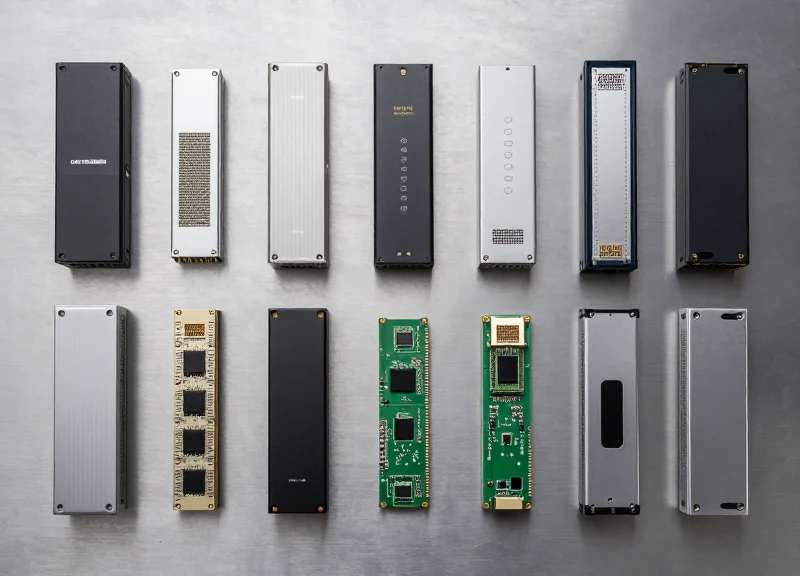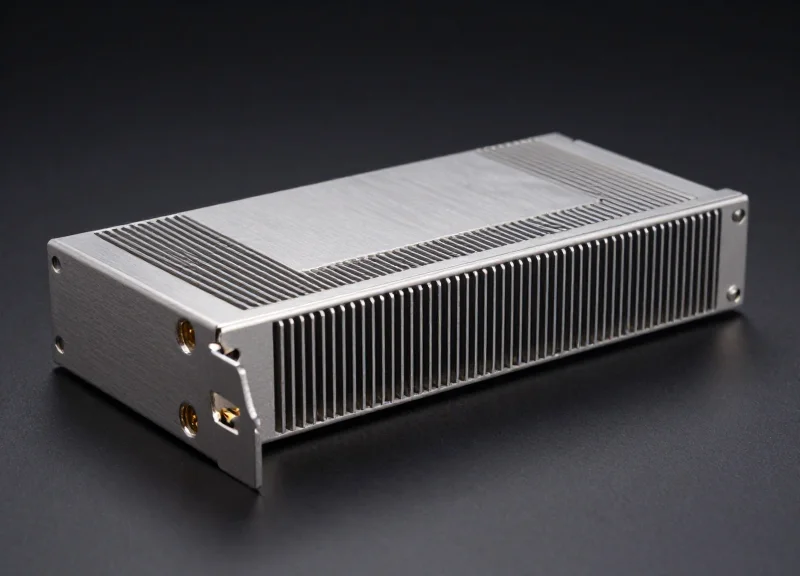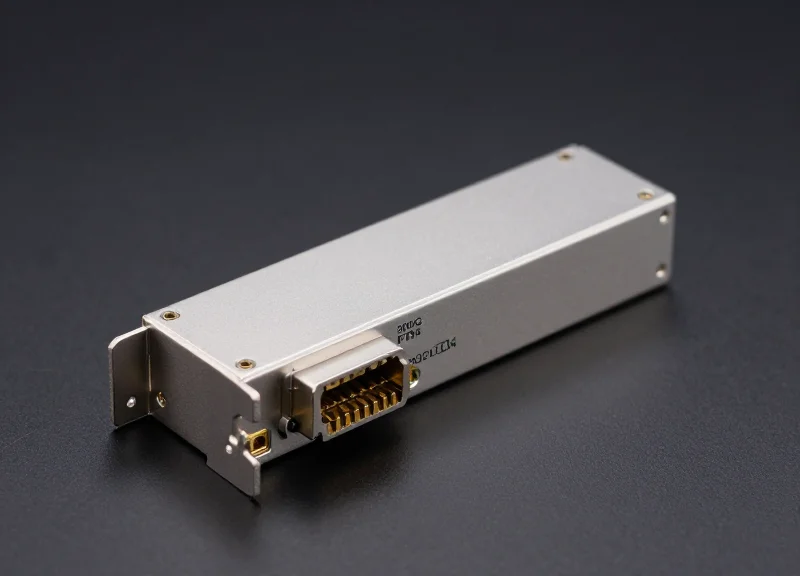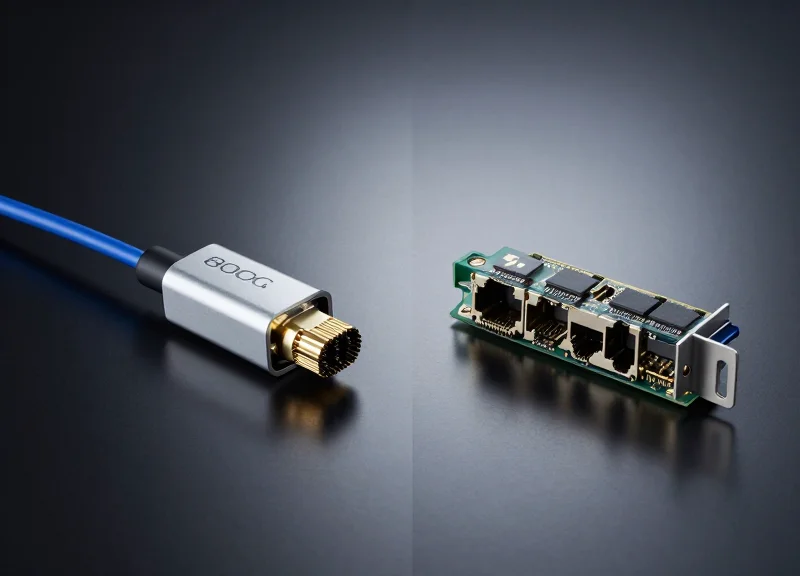
As data consumption reaches unprecedented levels, the shift toward 100G and 400G architectures is no longer optional for global infrastructure providers. However, purchasing at scale introduces complex risks regarding performance consistency, vendor reliability, and long-term interoperability. This guide leverages decades of Silicon Valley expertise to navigate the intricacies of bulk transceiver procurement with Ubytelink.
The Strategic Importance of 100G and 400G in Modern Infrastructure

The Shift to High-Density Connectivity
The transition to 100G and 400G ethernet standards represents a fundamental shift in network architecture, moving away from legacy 10G/40G setups to support the unprecedented data demands of artificial intelligence, hyperscale cloud environments, and the global rollout of 5G. For enterprises and service providers, migrating to these speeds is no longer an optional performance boost but a strategic requirement to avoid bandwidth bottlenecks and maintain competitive latency in an increasingly data-centric world.
Comparative Advantages of High-Speed Infrastructure
| Feature | Legacy (10G/40G) | Modern (100G/400G) |
|---|---|---|
| Data Throughput | Low to Moderate | High to Ultra-High |
| Power Efficiency | High Watts per Gbps | Optimized Low Watts per Gbps |
| Physical Density | High Rack Space Requirements | Ultra-High Density via QSFP-DD/OSFP |
| Primary Use Case | Standard Office Networks | AI, Cloud, and Edge Computing |
By utilizing advanced modulation techniques like PAM4 and high-density form factors such as QSFP28 and QSFP-DD, 400G solutions significantly reduce the cost-per-bit while maximizing existing rack space. This efficiency is critical for modern infrastructure providers who must balance the need for massive capacity with strict power and cooling constraints. Ubytelink's focus on premium optical quality ensures that these high-density links remain stable across global fiber spans.
Strategic FAQ for Network Infrastructure Upgrades
- Why is 400G becoming the preferred standard for new data centers?
400G offers four times the bandwidth of 100G in a similar physical footprint, significantly reducing the complexity of cable management and lowering the total cost of ownership per gigabit. - Can 100G and 400G hardware coexist within the same architecture?
Yes, most modern networking platforms support backward compatibility through multi-rate ports and breakout cables, allowing for a phased migration strategy. - What are the primary drivers for 400G adoption in 2026?
The exponential growth of generative AI training models, 8K video streaming, and the densification of 5G small cells are the primary catalysts for the 400G transition.
Key Selection Criteria for Bulk Optical Transceiver Procurement
Key Selection Criteria for Bulk Optical Transceiver Procurement
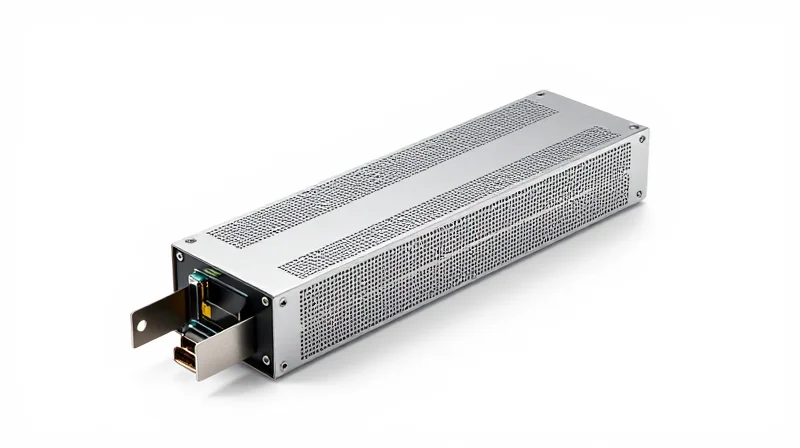
Selecting optical transceivers for large-scale deployment requires a rigorous evaluation of technical specifications that extend far beyond initial unit costs. To ensure long-term network stability and high ROI, procurement teams must prioritize hardware that aligns precisely with specific link distances, fiber types, and power budgets, particularly as 400G architectures introduce tighter thermal tolerances and more complex modulation schemes like PAM4.
Reach, Wavelength, and Media Compatibility
The choice between 100G and 400G optics depends heavily on the existing cabling infrastructure and the required transmission distance. For short-reach intra-rack connections, Multi-Mode Fiber (MMF) using 850nm wavelengths remains standard, whereas long-haul inter-building links necessitate Single-Mode Fiber (SMF) and 1310nm or CWDM wavelengths to maintain signal integrity over kilometers.
| Standard | Form Factor | Reach | Wavelength | Fiber Type |
|---|---|---|---|---|
| 100G SR4 | QSFP28 | 100m | 850nm | Multi-Mode (OM4) |
| 100G LR4 | QSFP28 | 10m | 1310nm | Single-Mode (OS2) |
| 400G DR4 | QSFP-DD | 500m | 1310nm | Single-Mode (OS2) |
| 400G FR4 | QSFP-DD | 2km | CWDM | Single-Mode (OS2) |
Power Consumption and Thermal Efficiency
In high-density environments, power consumption is a critical metric for bulk procurement. Excessive heat generated by transceivers can lead to hardware failure and increased cooling costs. 400G modules, especially those utilizing Digital Signal Processing (DSP), typically consume between 10W and 14W; selecting energy-efficient designs can significantly reduce the Total Cost of Ownership (TCO) across a massive deployment.
Strategic Procurement FAQs
- Why is 'Reach' more critical in 400G than 100G?
400G signals are more susceptible to attenuation and dispersion due to PAM4 modulation, making it vital to choose the exact reach (DR4 vs FR4) to avoid the need for expensive amplification. - How does wavelength affect bulk procurement costs?
Wavelengths requiring Coarse Wavelength Division Multiplexing (CWDM) or Dense Wavelength Division Multiplexing (DWDM) filters are generally more expensive but allow for higher capacity over fewer fiber strands, reducing long-term cabling costs. - What role does Digital Optical Monitoring (DOM) play?
DOM allows network administrators to monitor real-time parameters like temperature, laser bias current, and optical power, which is essential for proactive maintenance in large-scale global networks.
Ubytelink’s Quality Assurance: Beyond Standard Industry Benchmarks
Ubytelink’s Quality Assurance: Beyond Standard Industry Benchmarks
Ubytelink differentiates its bulk 100G and 400G offerings by moving away from statistical batch sampling toward a 100% individual component verification protocol. In large-scale infrastructure projects, even a 1% failure rate can result in significant downtime and operational expense; therefore, Ubytelink’s QA process is designed to exceed MSA (Multi-Source Agreement) standards by integrating real-world environment simulation and long-term thermal stress testing before any unit is cleared for shipment.
Comparative Analysis: Standard vs. Ubytelink QA
| Quality Metric | Industry Benchmark | Ubytelink Protocol |
|---|---|---|
| Testing Sample Rate | 5% - 15% per batch | 100% Individual Testing |
| Burn-in Duration | 12 - 24 Hours | 48 - 72 Hours (Accelerated Aging) |
| Compatibility Verification | Generic Software Emulation | Physical Lab Testing on OEM Hardware |
| Optical Eye Diagram | Standard Compliance Only | Zero-Margin Tolerance Thresholds |
Multistage Verification and Failure Mitigation
To mitigate risk in 100G/400G deployments, Ubytelink employs a three-tier testing architecture. First, the Physical Layer Audit confirms that laser power and receiver sensitivity meet narrow-band performance targets. Second, the Compatibility Matrix Validation ensures the EEPROM coding is precisely matched to the target vendor ecosystem (e.g., Cisco, Arista, or Juniper). Finally, the Traffic Stress Test subjects the modules to full-throttle data loads under varying temperature ranges to identify potential intermittent signal loss or packet drops before they occur in a production environment.
Bulk Buying Quality FAQ
- How does Ubytelink ensure consistency across thousands of units?
We utilize automated robotic testing stations that eliminate human error, ensuring that every module in a 400G bulk order undergoes the exact same rigorous calibration and performance check. - What is the expected failure rate (AFR) for Ubytelink optics?
By implementing extended burn-in periods, we achieve an Annualized Failure Rate (AFR) of less than 0.1%, significantly lower than the industry average for high-speed optics. - Are the test reports available for bulk orders?
Yes, Ubytelink provides comprehensive serialized test reports for every module, detailing optical power, wavelength accuracy, and compatibility logs for full transparency.
By prioritizing these advanced QA measures, Ubytelink ensures that global enterprises can scale their 100G and 400G networks with the confidence that their bulk procurement will deliver sustained performance without the hidden costs of premature hardware failure.
Understanding Form Factors: Navigating QSFP28, QSFP-DD, and OSFP
Understanding Form Factors: Navigating QSFP28, QSFP-DD, and OSFP
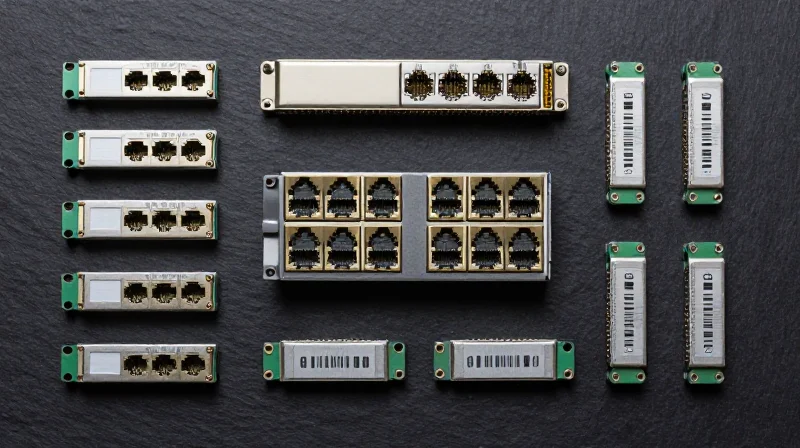
Navigating the landscape of optical form factors requires a strategic understanding of how physical interfaces dictate port density, thermal management, and backward compatibility across high-capacity network switches. For bulk buyers, selecting the wrong interface can lead to costly hardware mismatches or premature infrastructure obsolescence as speeds transition from 100G to 400G and 800G.
QSFP28: The 100G Industrial Standard
The QSFP28 (Quad Small Form-factor Pluggable 28) remains the global standard for 100G Ethernet. It utilizes four lanes of 25Gbps electrical signaling. Its primary advantage in bulk procurement is its maturity; it offers the lowest cost-per-bit for 100G and is supported by almost every modern data center switch. For organizations focusing on standard cloud workloads and enterprise backbones, QSFP28 provides the optimal balance of power efficiency and port density.
QSFP-DD vs. OSFP: The 400G Evolution
As networks scale to 400G, two dominant form factors have emerged: QSFP-DD (Double Density) and OSFP (Octal Small Form-factor Pluggable). While both support eight lanes of 50Gbps PAM4 signaling, their physical architectures serve different operational goals. QSFP-DD's greatest strength is backward compatibility, whereas OSFP is designed with an eye toward the extreme thermal demands of 800G and AI-driven compute clusters.
| Feature | QSFP28 | QSFP-DD | OSFP |
|---|---|---|---|
| Max Data Rate | 100G | 400G / 800G | 400G / 800G |
| Backward Compatibility | N/A | Native (QSFP28/QSFP56) | Requires Adapter |
| Power Consumption | 3.5W - 5W | 12W - 15W | 15W - 20W+ |
| Thermal Management | Standard | Internal Heat Sink | Integrated Heat Sink |
| Main Application | General 100G DC | 400G DC Switching | AI/ML & HPC Clusters |
Selection Strategy for Bulk Procurement
- Audit Existing Switch Hardware
Before ordering in bulk, verify if your switches utilize OSFP or QSFP-DD ports. While some vendors support both via different line cards, they are physically incompatible. - Assess Cooling Capacity
400G modules generate significantly more heat. If your data center has limited airflow, OSFP modules with integrated heat sinks may offer better long-term reliability than QSFP-DD. - Future-Proof for 800G
If you anticipate a move to 800G within the next 24 months, prioritize OSFP infrastructure now, as it is widely considered the superior thermal platform for speeds exceeding 400G.
Common Form Factor Compatibility Questions
- Can I plug a QSFP28 module into a QSFP-DD port?
Yes. QSFP-DD ports are designed to be mechanically and electrically backward compatible with QSFP28. This allows you to use existing 100G optics in new 400G switches. - Why is OSFP physically larger than QSFP-DD?
The larger size and integrated fins allow for superior heat dissipation. This is necessary for the high-power lasers used in long-reach 400G and future 800G/1.6T optics. - Are adapters available for OSFP ports?
Yes, OSFP-to-QSFP adapters exist, allowing you to use 100G QSFP28 modules in OSFP-based 400G switches, though this adds complexity to the physical layer.
Total Cost of Ownership (TCO) Analysis for Volume Buyers
Total Cost of Ownership (TCO) Analysis for Volume Buyers
For high-capacity networks utilizing 100G and 400G architectures, the initial acquisition cost of optical transceivers typically represents less than 30% of the total lifecycle expense. A strategic TCO analysis reveals that premium modules, such as those provided by Ubytelink, generate significant savings by minimizing the 'hidden costs' of network ownership: power consumption, heat dissipation requirements, and the high logistical price of hardware failure in a live production environment.
Premium Quality vs. Low-Cost Alternatives: A 5-Year Projection
When purchasing in bulk, a price difference of 10-15% per unit can seem substantial on a purchase order. However, if a low-cost module has a failure rate just 1% higher than a premium alternative, the cost of a single truck roll or emergency maintenance window can erase those initial savings across the entire batch.
| Cost Factor | Budget Generic Modules | Ubytelink Premium Modules |
|---|---|---|
| Average Annual Failure Rate (AFR) | 1.5% - 3.0% | < 0.1% (Carrier-Grade) |
| Power Consumption (400G QSFP-DD) | 12W - 14W (Higher Heat) | 8.5W - 10W (Ultra-Low) |
| Maintenance & Logistics | High (Frequent RMAs) | Minimal (Set-and-Forget) |
| Downtime Risk | Significant Revenue Impact | Negligible |
| 5-Year Projected TCO | 145% of Purchase Price | 110% of Purchase Price |
The Multiplier Effect of Energy Efficiency
In large-scale data centers, 400G modules are deployed by the thousands. Ubytelink’s focus on low-power silicon photonics and optimized internal circuitry results in modules that run cooler. This creates a 'multiplier effect' on TCO: lower power consumption per port leads to lower electricity bills and, more importantly, reduced demand on the facility's cooling infrastructure, extending the lifespan of the switches themselves.
TCO and Bulk Procurement FAQ
- How does Ubytelink justify a higher initial price point?
Our price reflects superior component selection and 100% application-specific testing. We eliminate the 'infant mortality' phase of hardware failures, ensuring that the module you install today will remain operational for its full 5-to-10-year service life. - What is the cost of a single 400G link failure?
Beyond the hardware cost, a link failure involves labor (technician time), potential SLA penalties for downtime, and the administrative cost of the RMA process. In enterprise environments, this can range from $500 to $5,000 per incident. - Can lower power consumption really impact the bottom line?
Yes. A reduction of 2-3 watts per module across 1,000 ports saves approximately 26,000 kWh annually. When factored into a multi-year budget, the energy savings alone often pay for the price difference between generic and premium modules.
Solving Supply Chain Volatility: The Ubytelink Advantage

The transition to 400G infrastructure has introduced unprecedented supply chain complexities, characterized by component shortages and fluctuating lead times. Ubytelink addresses these challenges by transforming the traditional transactional model into a strategic partnership, ensuring that bulk buyers are not left vulnerable to market spikes or production delays. By integrating deep market intelligence with a global logistics footprint, we provide a reliable flow of high-performance optics even during periods of peak demand.
Mitigating Delays Through Strategic Stocking
Unlike traditional vendors who rely on back-to-back ordering, Ubytelink maintains a continuous buffer of 100G and 400G modules in key global hubs. This proactive approach allows us to reduce typical industry lead times from months to days, providing a critical safety net for large-scale data center expansions and ISP upgrades.
| Supply Chain Metric | Traditional Sourcing Model | Ubytelink Strategic Advantage |
|---|---|---|
| Average Lead Times | 8 to 14 weeks for 400G units | Ships within 24-48 hours from stock |
| Inventory Risk | Buyer carries the burden of delays | Buffered stock maintained by Ubytelink |
| Price Volatility | Subject to spot market fluctuations | Stable pricing through volume commitments |
| Logistics Support | Standard freight with limited tracking | White-glove global delivery and customs management |
Operational Resilience and Forecasting
We work closely with our clients to develop rolling 12-month forecasts. This collaboration allows us to pre-allocate manufacturing capacity for specific form factors like QSFP-DD and OSFP, ensuring that hardware is ready before the project deadline arrives. This level of transparency is essential for maintaining the uptime and deployment schedules of mission-critical networks.
Supply Chain FAQ
- How does Ubytelink maintain quality during supply shortages?
We never compromise on testing. Every batch, regardless of market pressure, undergoes the same rigorous 100% compatibility and performance testing in our labs before shipment. - Can we schedule staggered deliveries for multi-phase projects?
Absolutely. We offer customized delivery schedules where we hold your bulk purchase in our secure climate-controlled warehouses and release batches according to your installation timeline. - How is global shipping handled to avoid customs delays?
Our logistics team manages all export documentation and partners with premium couriers to ensure that high-value 400G shipments clear customs efficiently and reach their destination without technical hold-ups.
Ensuring Multi-Vendor Interoperability for Global Networks
Achieving seamless interoperability in a global network requires more than just physical compliance with Multi-Source Agreements (MSAs); it demands precise digital handshaking where the transceiver firmware communicates perfectly with the host switch's operating system. For volume buyers, the challenge lies in ensuring that a single batch of 100G QSFP28 or 400G QSFP-DD modules can be deployed across Cisco, Arista, and Juniper environments without triggering 'unsupported transceiver' errors or performance degradation.
The Role of EEPROM Coding and Firmware Customization
The primary barrier to interoperability is the proprietary identification logic used by major OEMs. Each vendor expects specific data in the module's EEPROM, including vendor name, part number, and serial number formatted to their internal standards. Ubytelink solutions address this by utilizing a sophisticated multi-coding architecture. This allows the modules to emulate the specific signature required by the host device, ensuring that Digital Diagnostic Monitoring (DDM) and link-state protocols function as if the module were an original OEM component.
| Interoperability Feature | Generic MSA Module | Ubytelink Premium Module | OEM Original Module |
|---|---|---|---|
| Host Recognition | High failure rate on locked ports | 99.9% Success rate across vendors | Locked to single vendor |
| DDM/DOM Support | Limited or inaccurate data | Full real-time monitoring parity | Full support |
| Firmware Flexibility | Fixed at manufacture | Field-reprogrammable | Fixed |
| Cost Efficiency | Highest (but risky) | Optimal Balance | Lowest (high markup) |
Strategic Testing for Global Deployment
Interoperability must be verified through rigorous testing that simulates real-world high-traffic conditions. This includes testing 'hot-swapping' capabilities, verifying forward error correction (FEC) settings between different vendor platforms, and ensuring that power consumption remains within the thermal envelopes defined by each hardware manufacturer. By prioritizing modules that have been pre-validated in a multi-vendor lab, global enterprises can significantly reduce deployment timelines.
- Will these modules trigger 'unsupported transceiver' warnings?
No. When correctly coded for the specific target environment, Ubytelink modules are recognized as native by the OS, though some platforms may require a one-time 'service unsupported-transceiver' command depending on the software version. - Can I mix different vendor modules on the same 400G link?
Yes, provided both ends adhere to the same IEEE and MSA standards (such as 400G-DR4 or FR4). The physical layer remains standardized even if the host interfaces are from different manufacturers. - How does Ubytelink handle future OS updates from OEMs?
We maintain a library of the latest firmware revisions to ensure that even after a switch OS update, our modules continue to be recognized and supported through our field-reprogrammable capabilities.
Future-Proofing Your Network: Preparing for the 800G Horizon
Future-proofing a network is not about bypassing current technology for the next, but about deploying 400G infrastructure that shares the same power, cooling, and form-factor DNA as the 800G standard. By investing in premium-quality 100G and 400G modules through Ubytelink today, enterprises establish a stable physical layer and control plane capable of supporting high-density upgrades without the need for a total hardware overhaul. This strategic approach minimizes future capital expenditure while maintaining current performance benchmarks.
The Convergence of 400G and 800G Architectures
The transition to 800G is largely facilitated by the evolution of SerDes (Serializer/Deserializer) technology. High-end 400G deployments utilizing 112G electrical lanes are already bridging the technical gap, allowing for a seamless shift when 800G optics—which aggregate eight of these 112G lanes—become the primary requirement for backbone links. Procurement teams must look for 400G modules that adhere to the latest MSA standards to ensure this future compatibility.
| Feature | 400G Standard | 800G Horizon (Target) |
|---|---|---|
| Form Factor | QSFP-DD / OSFP | OSFP800 / QSFP-DD800 |
| Electrical Lane Speed | 56G or 112G SerDes | 112G (or 224G future) |
| Modulation | PAM4 | PAM4 (Coherent for long-reach) |
| Primary Use Case | Leaf-Spine / DCI | Hyperscale Core / AI Clusters |
Strategic Bulk Acquisition for Hybrid Networks
As networks evolve, they will likely operate in a hybrid state where 100G, 400G, and 800G coexist. Ubytelink’s bulk buying solutions address this by providing consistent, interoperable hardware that stabilizes the network environment. Standardizing on OSFP or QSFP-DD form factors during current 400G cycles ensures that the underlying cabling infrastructure, such as MPO-16 or LC duplex single-mode fiber, remains compatible with the next generation of transceivers.
- When should we begin the 800G transition?
Most enterprises should finalize 400G maturity first. The transition to 800G is currently prioritized for AI-intensive workloads and hyperscale backbones, with broader adoption expected as the cost-per-bit for 800G optics plateaus. - Will 400G investments be rendered obsolete?
No. Due to backwards compatibility in many QSFP-DD and OSFP ports, 400G modules will continue to serve as the standard for leaf-to-spine connections even as the core moves to 800G. - How does Ubytelink assist in future-proofing?
We provide technical consulting to ensure your current bulk purchases align with future port densities and thermal management requirements, preventing technical debt.
In conclusion, the path to 800G is paved with high-quality 400G components. By focusing on premium build quality and standards compliance now, organizations can scale their bandwidth without the friction of proprietary lock-ins or physical layer incompatibilities.
Navigating the complexities of high-speed optical networking requires a partner that prioritizes engineering excellence and supply chain stability. By following these strategic tips, you can ensure your 100G and 400G deployments remain the backbone of your organization's digital success. Contact Ubytelink today to consult with our experts on your next bulk procurement project.