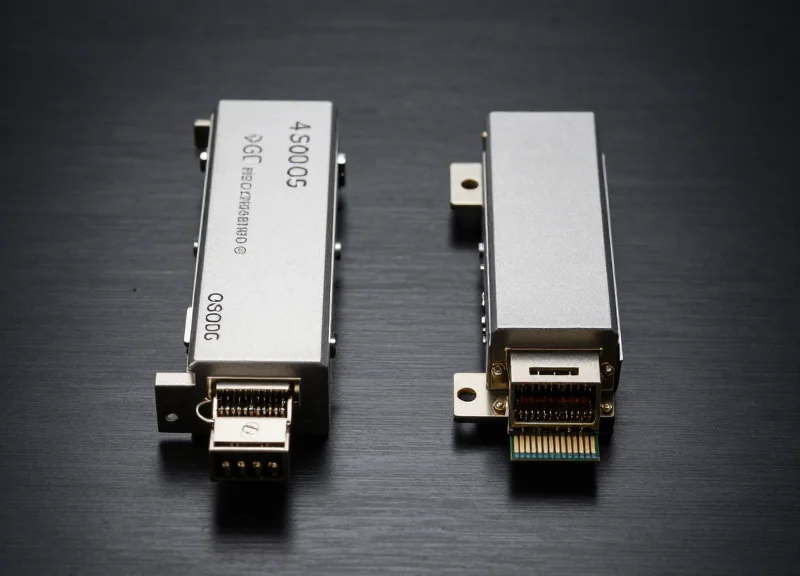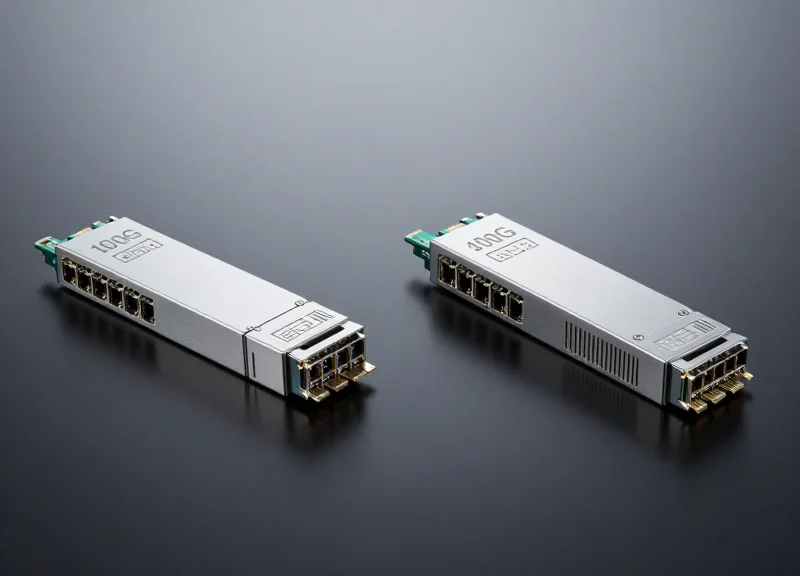
In the modern era of AI and hyper-scale data centers, the transition from 100G to 400G represents a critical crossroads for IT infrastructure. This guide provides a veteran's perspective on why bulk procurement strategies often outperform traditional transactional buying, specifically when evaluating the hard metrics of performance and cost.
The Strategic Shift: Why Bulk 100G/400G Procurement Matters Now

The strategic shift toward bulk 100G and 400G procurement is a direct response to the massive data throughput demands of generative AI, high-performance computing (HPC), and cloud-native architectures. By moving away from reactive, piecemeal purchasing, organizations can lock in lower unit prices and guarantee hardware availability, effectively insulating their infrastructure projects from the volatility of the global semiconductor supply chain.
Market Dynamics: Why Volume Matters in the 400G Era
As the industry moves toward 400G and even 800G standards, the complexity of optical transceivers and active optical cables (AOCs) has increased. This complexity often leads to longer manufacturing lead times. Bulk buying allows enterprises to establish 'buffer stocks,' ensuring that network expansions are not delayed by the absence of a few critical interconnects. Furthermore, volume purchasing facilitates deeper technical validation, as testing a single large batch for compatibility is more efficient than verifying multiple smaller, disparate shipments.
| Criteria | Bulk Procurement (100G/400G) | On-Demand / Alternatives |
|---|---|---|
| Unit Cost Efficiency | Significant (15-25% volume discounts typical) | Standard market pricing (Premium) |
| Lead Time Management | Predictable; stocks managed in-house | Unpredictable; subject to market spikes |
| Testing & Integration | Uniform firmware across identical batches | Risk of firmware variance between lots |
| Capital Allocation | Higher upfront CAPEX | Spread out OPEX / Variable costs |
Strategic Advantages Beyond Cost
While the 'Price per Port' is a primary motivator, the strategic shift also encompasses operational reliability. In high-density environments, having a consistent hardware revision for all 100G QSFP28 or 400G QSFP-DD modules simplifies troubleshooting and reduces the risk of intermittent link failures caused by subtle differences in manufacturing tolerances or laser calibration across different vendors.
- Is bulk buying better than leasing for 400G hardware?
Bulk buying typically offers a lower Total Cost of Ownership (TCO) for organizations with steady growth, whereas leasing or 'pay-as-you-grow' models are better for highly speculative or short-term projects despite higher long-term costs. - How does bulk procurement impact 100G legacy systems?
It allows organizations to maintain legacy 100G infrastructure at a fraction of the original cost as manufacturers clear inventory to make room for 400G/800G production lines. - What are the risks of over-provisioning via bulk purchases?
The primary risk is technology obsolescence; however, the long lifecycle of the 100G/400G standards suggests that high-quality optics will remain relevant for 5-7 years.
Latency Benchmarks: 100G vs. 400G in High-Performance Computing
Latency Benchmarks: 100G vs. 400G in High-Performance Computing
In High-Performance Computing (HPC) environments, the transition from 100G to 400G Ethernet involves a sophisticated trade-off between raw throughput and signal processing delays. While 400G drastically reduces serialization latency due to higher clock speeds, it introduces specific overhead through advanced modulation and error correction. For architects, the goal of bulk procurement is not just cost savings, but ensuring a 'deterministic fabric' where every port across the data center exhibits identical latency characteristics.
The Impact of PAM4 and FEC on Processing Delay
The shift from 100G NRZ (Non-Return-to-Zero) to 400G PAM4 (Pulse Amplitude Modulation 4-level) is the primary driver of modern latency profiles. While PAM4 doubles the bits per symbol, it is more sensitive to signal-to-noise ratio issues, requiring mandatory Forward Error Correction (FEC). This FEC layer adds a fixed processing delay—typically ranging from 100ns to 150ns—which can be a critical factor in ultra-low latency applications like high-frequency trading or real-time AI inference.
| Metric | 100G (NRZ) | 400G (PAM4) |
|---|---|---|
| Serialization Delay (64B Packet) | 5.12 ns | 1.28 ns |
| Signal Modulation | NRZ (2-level) | PAM4 (4-level) |
| Forward Error Correction (FEC) | Optional / Low Latency | Mandatory (KP4/RS-FEC) |
| Typical Port-to-Port Latency | ~600ns - 800ns | ~400ns - 700ns (with FEC) |
Bulk Consistency: Eliminating Jitter Across the Fabric
One of the primary advantages of bulk-buying 100G or 400G hardware is the ability to secure 'homogeneous silicon.' In a distributed computing cluster, the speed of a task is often limited by the slowest node (the 'long tail' problem). If a network fabric consists of mixed-vendor transceivers or different chip revisions acquired through fragmented purchasing, the resulting micro-jitter can cause synchronization delays. Consistent bulk procurement ensures that every switch and optic uses identical DSP (Digital Signal Processing) algorithms and firmware, providing the uniform latency required for multi-node MPI (Message Passing Interface) jobs.
- Does 400G always provide lower latency than 100G?
Not necessarily for small packets. While 400G has faster serialization, the mandatory FEC adds a fixed overhead. For very small, latency-sensitive packets, 100G NRZ with FEC disabled may occasionally show lower total transit time, though 400G is superior for throughput-heavy HPC workloads. - How does cable length affect 400G latency benchmarks?
Physical distance remains constant (approx. 5ns per meter), but at 400G, the relative impact of the cable is higher because the electronic processing is so much faster. For optimal HPC performance, maintaining consistent DAC or AOC lengths across the rack is essential when bulk-buying. - Can firmware updates reduce 400G latency?
Yes. Manufacturers often release firmware optimizations for the DSPs in 400G transceivers to refine FEC decoding speeds. Bulk-purchased batches should always be flashed to the same firmware version to prevent latency discrepancies.
Power Consumption Analysis: Efficiency at Scale

Power Consumption Analysis: Efficiency at Scale
Transitioning to 400G optics represents a fundamental shift in energy efficiency, as these modules provide a significantly lower power-per-bit footprint compared to aggregating multiple 100G links. While a single 400G QSFP-DD module consumes more absolute power than a 100G QSFP28, the consolidation of four 100G channels into a single interface reduces overall thermal dissipation and electrical overhead across the network fabric, making bulk 400G adoption a primary strategy for sustainable scaling.
The Watts-per-Gigabit Advantage
In high-density data centers, the metric that defines long-term profitability is Watts-per-Gigabit (W/Gbps). Current 100G QSFP28 modules typically consume between 3.5W and 4.5W depending on reach and DSP requirements. To reach 400G capacity using these 100G alternatives, a system would require four discrete modules, totaling roughly 14W to 18W. Conversely, a state-of-the-art 400G QSFP-DD module generally operates within a 10W to 12W envelope, yielding a 30% to 40% reduction in power consumption per unit of bandwidth.
| Module Type | Typical Power (W) | Capacity (Gbps) | Watts per Gbps |
|---|---|---|---|
| 100G QSFP28 (SR4/LR4) | 3.5W - 4.5W | 100 | 0.035 - 0.045 |
| 400G QSFP-DD (DR4/FR4) | 10.0W - 12.0W | 400 | 0.025 - 0.030 |
| 4x 100G (Aggregated) | 14.0W - 18.0W | 400 | 0.035 - 0.045 |
Thermal Management and Cooling Optimization
Beyond direct electricity usage, bulk procurement of 400G hardware simplifies thermal management strategies. Reducing the number of active ports needed to achieve specific throughput targets minimizes 'hot spots' within the chassis and lowers the cubic feet per minute (CFM) requirement for cooling fans. When deploying hundreds of units, the reduction in fan speed alone can account for significant OpEx savings, as fan power consumption often scales cubically with airflow requirements.
- How does 400G impact UPS and PDU requirements?
By reducing the total power draw per Tbps, 400G allows for more bandwidth per rack without exceeding PDU limits or requiring expensive UPS infrastructure upgrades. - What is the impact of Silicon Photonics on power?
Modules utilizing Silicon Photonics (SiPh) generally offer more stable thermal performance and lower power consumption at scale compared to traditional EML-based optics. - Does bulk consistency matter for power?
Yes; utilizing the same firmware and hardware revision across a bulk order ensures predictable power profiles, making it easier for automated DCIM tools to manage thermal loads.
Total Cost of Ownership (TCO): More Than Just the Price Tag
Total Cost of Ownership (TCO): More Than Just the Price Tag
The true economic value of 100G and 400G optical networking is not found in the initial invoice, but in the operational savings realized over a three-to-five-year deployment cycle. While bulk purchasing significantly reduces the Capital Expenditure (CAPEX) per unit, the Total Cost of Ownership (TCO) is heavily influenced by the 'soft costs' of infrastructure: power consumption, thermal management, and physical layer complexity. In high-density environments, 400G modules often provide a lower TCO than 100G alternatives because they consolidate four times the bandwidth into the same rack space, drastically reducing the cost-per-bit in terms of both energy and administrative overhead.
CAPEX vs. OPEX: A Comparative Breakdown
When evaluating bulk procurement options, organizations must weigh the immediate savings of 100G hardware against the long-term efficiency of 400G systems. The following table highlights how these costs shift over the hardware lifecycle.
| Cost Factor | 100G Bulk Deployment | 400G Bulk Deployment | |||
|---|---|---|---|---|---|
| Unit Price (CAPEX) | Lower per module, higher per Gbps | Higher per module, lower per Gbps | |||
| Power/Cooling (OPEX) | High (Higher Watts per Gbps) | Low (Optimized efficiency) | Cabling Density | Requires 4x the fiber for same capacity | Significant reduction in cable volume |
| Maintenance Labor | Higher (More failure points) | Lower (Simplified fabric) |
The Lifecycle Value of High-Density Interconnects
Cabling complexity is a frequently overlooked component of TCO. A massive 100G deployment requires extensive fiber management, labeling, and troubleshooting time. By transitioning to 400G via bulk purchasing, data center managers can reduce the physical footprint of their interconnects, which directly translates to better airflow and lower cooling costs. Furthermore, 400G optics typically utilize newer silicon photonics technology that offers better MTBF (Mean Time Between Failures) ratings, reducing the frequency of technician intervention and replacement cycles.
TCO Strategy FAQ
- Does bulk buying affect the warranty or support TCO?
Yes, purchasing in bulk from a single vendor ensures uniform firmware versions and simplifies support contracts, reducing the administrative time required to manage RMAs or technical issues. - How does 400G impact the cost of power over time?
400G optics generally consume less power per gigabit than 100G optics. Over a 5-year lifecycle, this energy efficiency can save thousands of dollars in utility and cooling costs in large-scale deployments. - When are 100G alternatives more cost-effective?
100G remains the TCO leader for short-reach, low-density edge applications where the existing switch infrastructure does not yet support 400G, avoiding the need for an expensive 'forklift upgrade' of the entire network fabric.
Bulk Buying Tips vs. Traditional Industry Alternatives
Choosing between direct bulk contracts and traditional alternatives requires balancing immediate CAPEX savings with long-term network reliability. While third-party resellers offer lower entry prices, bulk-direct procurement ensures hardware homogeneity, which is critical for maintaining signal integrity and minimizing latency across 400G fabrics.
Comparative Analysis: Bulk vs. Alternative Sourcing
| Metric | Bulk Direct Contract | Third-Party Resellers | Just-In-Time (JIT) |
|---|---|---|---|
| Unit Cost | Lowest (Volume Discount) | Moderate | High (Market Driven) |
| Hardware Consistency | Guaranteed Identical | Mixed Batches | Highly Variable |
| Lead Time Predictability | High (Priority) | Variable | Low / Risk-Heavy |
| Technical Support | Direct Tier-1 Access | Limited / Third-Party | None / Generic |
The Performance Cost of Fragmented Procurement
The most overlooked risk in traditional JIT or multi-vendor sourcing is the 'firmware drift.' In a 400G environment, even slight variations in Digital Diagnostics Monitoring (DDM) thresholds or laser tuning parameters between different batches can cause intermittent link flapping. Bulk buying mitigates this by securing transceivers from the same production lot, ensuring that every module in the spine-leaf architecture behaves identically under thermal stress.
Procurement Strategy FAQs
- Why is JIT procurement risky for 400G deployments?
JIT models rely on immediate availability, which is often compromised during global semiconductor shortages, potentially stalling multi-million dollar data center expansions over a few missing interconnects. - Do third-party optics offer the same reliability as bulk OEM modules?
While third-party optics are cost-effective for 10G or 25G, the tight tolerances of 100G/400G PAM4 signaling mean that bulk OEM modules often provide better forward error correction (FEC) performance and lower bit-error rates (BER). - Can bulk contracts include future-proofing clauses?
Yes, many enterprise bulk agreements allow for 'technology refreshes' or price-lock guarantees that protect against market volatility while ensuring access to the latest optical revisions.
Interoperability and Reliability: The Risks of Mixed Procurement

The Hidden Performance Penalties of Mixed Procurement
While piecemeal purchasing might seem to capture lower prices on individual units, mixing different batches or brands within high-speed 100G and 400G deployments introduces substantial risks to link stability and operational reliability. Modern high-density interconnects rely on incredibly tight tolerances for signal-to-noise ratios and timing; even minor variances in laser quality or internal componentry between different manufacturers can lead to intermittent 'soft failures' that are notoriously difficult to diagnose. Bulk buying ensures hardware uniformity, which is the most effective safeguard against the unpredictable behavior of heterogeneous optical layers.
Technical Comparison: Uniform vs. Fragmented Infrastructure
| Risk Factor | Uniform Bulk Procurement | Fragmented/Mixed Procurement |
|---|---|---|
| Signal Consistency | High: Identical optical characteristics across all links. | Variable: Increased Bit Error Rate (BER) due to mismatched tolerances. |
| Firmware Management | Simplified: Single firmware version across the entire fleet. | Complex: Multiple EEPROM profiles and driver compatibility issues. |
| Troubleshooting Speed | Rapid: Performance baselines are consistent. | Slow: Difficulty isolating brand-specific versus network-specific faults. |
| Inventory & Spares | Efficient: Standardized spares for all ports. | Inefficient: Need for multiple spare types to match various brands. |
Firmware and EEPROM Disparities
A major technical hurdle in mixed environments is the variation in EEPROM coding. Different vendors may use proprietary fields or interpret MSA (Multi-Source Agreement) standards slightly differently. This can cause 'silent' errors where a 400G module is recognized by a switch but fails to negotiate at the correct power level or FEC (Forward Error Correction) mode. Bulk deployments from a single source guarantee that every module shares the same digital diagnostic monitoring (DDM) parameters, ensuring that the network management system receives accurate and consistent telemetry across the entire fabric.
- Why does mixing brands affect 400G stability specifically?
At 400G speeds, PAM4 signaling is highly sensitive. Slight differences in the internal DSP (Digital Signal Processor) tuning between brands can result in increased latency or synchronization loss. - How does bulk buying improve the RMA process?
Bulk contracts typically include consolidated warranty support and a single point of contact, preventing the 'finger-pointing' that occurs when multiple vendors blame each other for interoperability issues. - Can firmware updates fix mixed-procurement issues?
Firmware updates can resolve some logical incompatibilities, but they cannot fix physical layer differences in laser quality or heat dissipation characteristics between different hardware batches.
Ultimately, the reliability benefits of bulk-sourced uniform hardware extend the lifecycle of the infrastructure. By reducing the physical stress on switch ports and minimizing the need for manual port tuning, organizations can maintain a stable 100G/400G environment with significantly lower operational overhead and higher overall uptime.
Supply Chain Resilience: Navigating Lead Times with Volume Orders
The Strategic Advantage of Volume Commitments in 100G/400G Cycles
Navigating the procurement of 100G and 400G optics requires a shift from reactive purchasing to strategic volume planning to insulate projects from the inherent volatility of the semiconductor market. By consolidating demand into bulk orders, enterprises and data centers move from the mercy of spot-market availability to a prioritized status within the manufacturer's supply chain, effectively locking in delivery windows that smaller, fragmented orders cannot guarantee during peak demand.
Bypassing the First-Come, First-Served Bottleneck
In periods of high demand—often triggered by AI cluster expansions or hyperscale upgrades—Tier 1 manufacturers prioritize large-scale contract fulfillments over opportunistic buyers. Organizations relying on just-in-time (JIT) procurement models frequently face lead times extending from weeks to months when component shortages strike. Bulk buying allows for 'staged deliveries,' where the total volume is secured upfront but shipped in phases, providing a steady flow of components while hedging against sudden material shortages or logistics bottlenecks.
| Procurement Model | Average Lead Time (Stable) | Lead Time (Volatile Market) | Project Risk Level |
|---|---|---|---|
| Bulk Volume Order | 2-4 Weeks | 4-8 Weeks | Low |
| Just-In-Time (JIT) | 2-4 Weeks | 12-24+ Weeks | High |
| Spot Market / Third-Party | 1-2 Weeks | Unknown/Unreliable | Extreme |
Predictability in Budgeting and Deployment
Beyond physical availability, volume orders provide essential price stability. In a volatile market, the cost of raw materials for high-speed transceivers, such as specialized laser diodes, can fluctuate significantly. A bulk agreement typically includes price protection or fixed-rate structures, ensuring that a data center project started today isn't derailed by a 20% price hike on 400G optics midway through the deployment phase.
- How does volume ordering reduce 'dead time' in data center builds?
It ensures that all necessary components, including transceivers and cabling, arrive in synchronization with active hardware, preventing scenarios where expensive switch ports sit idle waiting for delayed optics. - Can bulk buying protect against 'End of Life' (EOL) hardware surprises?
Yes, volume contracts often include advanced notification and 'last-time buy' opportunities, allowing for a strategic transition to newer generations like 800G without service gaps or compatibility issues. - What is the primary risk of over-provisioning via bulk orders?
While there is a higher initial capital outlay, the risk is mitigated by the high liquidity and long lifecycle of 100G and 400G standards, which are expected to remain relevant for 5-7 year cycles.
Future-Proofing Your Fabric: When to Choose 400G Over 100G

Choosing 400G over 100G is a strategic pivot that should be triggered when your projected bandwidth demand exceeds 40% year-over-year growth or when data center cooling and rack space reach 80% capacity. While 100G remains the workhorse for enterprise campus networks and edge deployments, 400G is the mandatory baseline for high-performance computing (HPC), AI-driven workloads, and core service provider backbones where the total cost per bit and power efficiency are the primary drivers of ROI.
The Economic and Technical Inflection Point
The decision to leapfrog 100G is often dictated by the 'Power-to-Performance' ratio. 400G optics and switches utilize advanced PAM4 signaling and 7nm silicon, which significantly reduces the energy consumed per gigabit of data transferred compared to legacy NRZ-based 100G systems. When bulk buying, the initial hardware premium for 400G is frequently offset within 24 months through reduced OpEx in power and cooling alone.
| Metric | 100G (QSFP28) | 400G (QSFP-DD) |
|---|---|---|
| Max Throughput | 100 Gbps | 400 Gbps |
| Typical Power Draw | 3.5W - 4.5W | 10W - 12W |
| Power per Gbps | ~0.04W | ~0.025W |
| Relative Cost per Bit | Baseline | 20-30% Lower (at scale) |
| Cable Complexity | High (4x fibers/lanes) | Low (Integrated density) |
Decision Drivers for 400G Adoption
Infrastructure leads must look beyond the sticker price of the transceivers. The true value of 400G lies in port consolidation. A single 400G port can replace four 100G ports using breakout cables, allowing for massive increases in radix (port count) without expanding the physical footprint of the switch fabric. This is critical for organizations facing 'rack-lock'—the inability to add new hardware due to physical space constraints.
Future-Proofing FAQ
- Is 400G backward compatible with my existing 100G infrastructure?
Yes, most 400G QSFP-DD ports are backward compatible with QSFP28 (100G) modules. Additionally, 400G ports can be 'broken out' into 4x100G or 2x200G links, allowing for a phased migration where the core is upgraded first while the edge remains at 100G. - At what scale does bulk buying 400G become more cost-effective than 100G?
The crossover point typically occurs at the 128-port threshold. When procuring fabric for more than two full racks, the savings in cabling, transceivers, and switch-port density make 400G the more economical choice over a five-year lifecycle. - What are the hidden risks of sticking with 100G today?
The primary risk is technical obsolescence. As vendors shift R&D toward 800G and 1.6T, 100G components may enter 'End of Life' (EOL) status sooner than expected, leading to higher maintenance costs and difficulty in sourcing compatible spares in the future.
Negotiation Strategies for Large-Scale Optical Deployments
Negotiation Strategies for Large-Scale Optical Deployments
Negotiating for high-volume 100G and 400G optical hardware demands an authoritative approach that looks beyond the initial quote. To secure the most favorable terms, procurement teams must leverage the scale of the deployment to extract value in technical support, logistics flexibility, and hardware lifecycle management. The goal is to transform a transactional vendor relationship into a partnership where the supplier shares the risk of network scaling and technological transitions.
Leveraging TCO and Commercial Levers
In large-scale deployments, the unit price is often the most visible but least flexible variable. Buyers should pivot toward negotiating 'soft costs' that significantly impact the bottom line over a 3-to-5-year horizon. This includes seeking 'Price Protection' clauses, which ensure that if the market price for 400G optics drops within 12 months of a bulk commitment, the vendor provides rebates or credits for future orders.
| Negotiation Lever | Strategic Objective | Long-term Impact |
|---|---|---|
| Tiered Volume Rebates | Retroactive discounts based on annual spend milestones. | Lowers average cost per unit as the network expands. |
| Extended Warranty/RMA | Negotiate for 5-year hardware replacement cycles. | Reduces OPEX by eliminating mid-cycle maintenance costs. |
| Vendor-Managed Inventory | Supplier maintains local buffer stock for the buyer. | Eliminates lead-time risk and reduces on-site warehousing costs. |
| FAE Access | Dedicated Field Application Engineer for troubleshooting. | Accelerates deployment timelines and reduces MTTR. |
Securing Technical Integrity and Service Level Agreements
Technical support for bulk 100G/400G orders should be codified through Service Level Agreements (SLAs) that go beyond standard consumer-grade support. Negotiate for Next Business Day (NBD) replacement for failed modules and insist on a 'Zero-Dead-on-Arrival' (Z-DOA) policy. This ensures that the vendor pre-tests each batch specifically for your environment's switch/router configurations before shipping, significantly reducing deployment friction.
- How do I mitigate vendor lock-in when buying in bulk?
Demand MSA (Multi-Source Agreement) compliance and ensure the vendor provides firmware that allows interoperability with third-party hardware. Use your volume to force a commitment to open standards. - Is it better to negotiate for free shipping or lower unit prices?
With high-value 400G optics, always prioritize unit price reductions. Shipping costs represent a tiny fraction of the total investment compared to the potential savings from a 5-10% hardware discount. - Should I negotiate for spare parts in the bulk deal?
Yes. A standard negotiation tactic is to request a 2-3% 'overage' of optics at no additional cost to serve as immediate on-site spares for critical links.
Ultimately, the most successful negotiations are those that establish a clear roadmap for future technology migrations. By securing favorable terms today for 100G, you can bake in 'Right of First Refusal' or preferential pricing for the eventual transition to 800G or 1.6T, ensuring your infrastructure strategy remains agile and cost-effective as demand evolves.
Selecting between 100G and 400G through bulk procurement is a strategic decision that impacts the technical and financial health of your data center for years. By focusing on TCO and performance metrics rather than just unit price, you ensure a scalable, efficient network. Ready to optimize your infrastructure? Contact our specialists for a tailored TCO analysis.