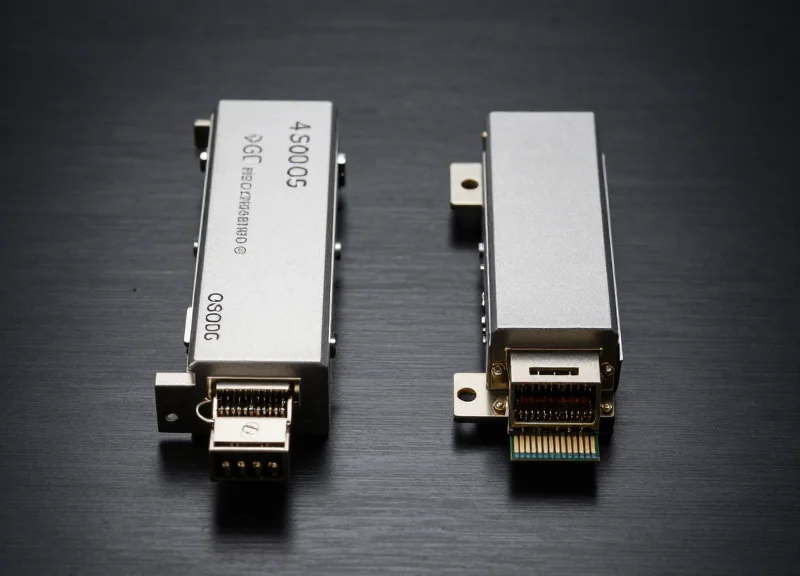
As hyperscale demands and AI workloads surge, legacy 100G interconnects are hitting a performance ceiling. Understanding the transition to 400G DCI is critical for maintaining competitive edge and operational efficiency.
The Evolution of DCI: From 100G to the 400G Era

The Evolution of DCI: From 100G to the 400G Era
The progression from 100G to 400G in Data Center Interconnects marks a transformative period in optical networking, driven by the need to support massive data throughput with improved power and space efficiency. While 100G was the cornerstone of the last decade, 400G has emerged as the critical pivot point because it provides the density required to handle the explosion of AI-driven traffic and hyper-scale cloud expansion. This evolution has been facilitated by significant advancements in Silicon Photonics and Digital Signal Processing (DSP), enabling higher-order modulation like PAM4 and coherent technologies in much smaller form factors.
The Legacy Limits of 100G and 200G Architecture
Initially, 100G (QSFP28) served as the standard for high-speed interconnects, relying on NRZ or basic PAM4 modulation. As bandwidth demands accelerated, the industry introduced 200G (QSFP56) as a stepping stone. However, 200G faced limited adoption because it did not offer the same quantum leap in efficiency and port density that 400G promised. The scaling challenges of 100G and 200G primarily involved high power consumption per gigabit and the physical space required for the necessary fiber infrastructure to keep pace with modern data throughput needs.
| Specification | 100G (Legacy) | 200G (Transition) | 400G (Modern) |
|---|---|---|---|
| Form Factor | QSFP28 | QSFP56 / QSFP-DD | QSFP-DD / OSFP |
| Modulation Type | NRZ / PAM4 | PAM4 | PAM4 / Coherent |
| Avg Power per 100G | ~4W | ~3.5W | ~3W |
| Relative Port Density | 1x | 2x | 4x |
| Typical DCI Distance | Up to 40km | Up to 10km | Up to 120km+ (ZR/ZR+) |
400G: The Critical Pivot Point for Modern DCI
The true era of modern DCI began with the development of 400G ZR and ZR+. By incorporating coherent optical technology into pluggable modules, network operators can now bridge distances exceeding 100km without requiring separate transponder equipment. This shift has simplified the 'IP-over-DWDM' architecture, drastically reducing both Capital Expenditure (CAPEX) and Operational Expenditure (OPEX) while providing the massive throughput required for hyperscale interconnects. This consolidation of functions is why 400G is viewed as the definitive standard for the next generation of data center growth.
- Why has 400G become the preferred standard over 100G?
400G offers four times the capacity of 100G in the same rack unit space, significantly reducing the cost-per-bit and total power consumption for high-bandwidth applications. - What role did 400G ZR play in this evolution?
400G ZR revolutionized DCI by allowing routers to connect directly over DWDM systems using small-form-factor pluggables, eliminating the need for complex and expensive external transponder hardware. - Is the transition to 400G suitable for smaller data centers?
Yes, because 400G hardware is often backwards compatible with 100G, smaller centers can future-proof their infrastructure while still supporting legacy devices during the migration phase.
400G ZR and ZR+: The New Gold Standard for Interoperability
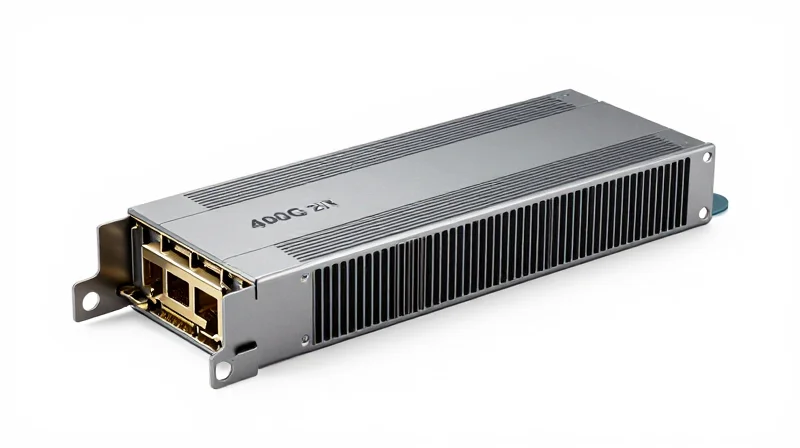
400G ZR and ZR+: The New Gold Standard for Interoperability
The emergence of 400G ZR and ZR+ marks a fundamental departure from the historical reliance on closed, proprietary long-haul optical systems. By shrinking coherent technology into pluggable modules like the QSFP-DD and OSFP, these standards allow high-capacity DWDM links to be plugged directly into IP switches and routers. This 'IP over DWDM' (IPoDWDM) approach simplifies network architecture by eliminating the need for intermediate transponders, thereby streamlining the Data Center Interconnect (DCI) ecosystem.
Defining the Standards: ZR vs. ZR+
While both standards utilize coherent modulation, they are designed for different operational requirements. 400G ZR, defined by the Optical Internetworking Forum (OIF), is optimized for point-to-point edge DCI applications with reaches up to 120 kilometers. In contrast, 400G ZR+ is an umbrella term for enhanced specifications—drawing from Open ROADM and OpenZR+ MSAs—that support longer distances, multi-rate transmissions (100G/200G/300G/400G), and the ability to traverse ROADM-based networks with higher optical performance.
| Feature | 400G ZR (OIF) | 400G ZR+ (OpenZR+) | Proprietary Long-Haul | ||||
|---|---|---|---|---|---|---|---|
| Target Reach | Up to 120 km | 400 km to 1000+ km | 2500+ km | ||||
| Form Factor | QSFP-DD / OSFP | QSFP-DD / OSFP | Custom Line Cards | ||||
| Interoperability | High (Multi-vendor) | Medium (Standard-based) | Low (Single Vendor) | Power Efficiency | ~15W per module | ~15W - 22W per module | >30W per port |
Breaking Vendor Lock-in
Before these standards, network operators were often forced into a single-vendor lifecycle, where the optics, transponders, and management software had to originate from the same manufacturer. 400G ZR breaks this cycle by providing a common set of parameters for Forward Error Correction (FEC) and modulation (16QAM). This ensures that a module from Vendor A can successfully terminate a signal on a switch from Vendor B, fostering a more competitive marketplace and significantly lowering the total cost of ownership (TCO) for hyperscale and enterprise data centers alike.
- Can 400G ZR+ modules work in standard 400G ZR ports?
Yes, most ZR+ modules are backward compatible with the OIF ZR specification, though power consumption may be slightly higher due to the more complex DSP requirements. - What is the primary benefit of 'ZR' for smaller enterprises?
The primary benefit is the reduction in rack space and power consumption; by eliminating the external optical shelf, small enterprises can run high-capacity DCI directly from their existing switch infrastructure. - Does ZR+ replace traditional transponders?
For many metro and regional applications, yes. However, for ultra-long-haul terrestrial or subsea routes requiring maximum spectral efficiency and Raman amplification, proprietary transponders still hold the performance edge.
Latency Benchmarks: Speed Beyond Throughput

While throughput is often the primary metric for Data Center Interconnect (DCI) upgrades, latency remains the critical performance bottleneck for real-time applications and synchronous data replication. 400G systems, specifically those utilizing ZR and ZR+ standards, introduce sophisticated Forward Error Correction (FEC) and higher-order modulation (16QAM) that actually reduce the per-bit processing delay compared to legacy 100G/200G systems. By optimizing the digital signal processing (DSP) pipeline, 400G enables faster state synchronization for distributed databases and AI training clusters that are sensitive to nanosecond-level fluctuations.
FEC and Digital Signal Processing (DSP) Latency
The primary source of latency in modern optical transceivers is the Forward Error Correction (FEC) algorithm. Legacy 100G systems often utilized Hard-Decision FEC (HD-FEC), which had lower complexity but required higher signal-to-noise ratios. 400G ZR/ZR+ standards utilize OpenFEC (oFEC) or Concatenated FEC (cFEC). While these are mathematically more intensive, the advancements in 7nm and 5nm DSP silicon have allowed 400G modules to keep processing latency nearly identical to, or in some cases lower than, older 200G Soft-Decision FEC implementations.
| Metric | 100G (Standard) | 200G (16QAM) | 400G ZR (cFEC) | 400G ZR+ (oFEC) |
|---|---|---|---|---|
| Typical DSP Latency | ~5-10 μs | ~15-20 μs | ~12-15 μs | ~15-22 μs |
| Modulation Efficiency | DP-QPSK (Low) | 16QAM (Medium) | 16QAM (High) | 16QAM/64QAM (V. High) |
| Bit-to-Symbol Delay | Moderate | Moderate | Low | Low |
| Net Coding Gain | ~9 dB | ~11 dB | ~10.8 dB | ~11.6 dB |
Propagation vs. Processing: The 400G Edge
In a DCI environment, total latency is the sum of propagation delay (fiber distance) and equipment latency (DSP/FEC). Since the speed of light in fiber is constant, the only variables are the electronics. 400G technology reduces the 'serialization delay'—the time it takes to transmit a block of data—which becomes significant in high-frequency trading and high-performance computing (HPC) environments. By moving to 400G, operators effectively shrink the 'electronic distance' between sites, even if the physical fiber length remains unchanged.
Common Latency Questions in 400G Migration
- Does 400G ZR+ have higher latency than 400G ZR?
Generally, yes. 400G ZR+ uses oFEC to achieve longer reach, which involves more complex processing and iterative decoding, adding a few microseconds of latency compared to the cFEC used in standard ZR modules. - How does 400G impact tail latency in AI workloads?
400G significantly reduces tail latency by providing higher headroom, which prevents queuing delays during 'incast' traffic patterns common in AI training synchronizations. - Can I trade distance for latency in 400G systems?
Yes. By utilizing simpler modulation schemes or disabling certain DSP features (if supported by the vendor), users can theoretically shave off processing time, though most fixed-form-factor 400G ZR modules are optimized for a specific latency/distance balance.
Power Consumption: The Sustainability Factor

Power consumption in Data Center Interconnects (DCI) is no longer just a line item in an operational budget; it is a critical benchmark for environmental sustainability and physical space optimization. By leveraging advanced Digital Signal Processors (DSPs) manufactured on 7nm and 5nm process nodes, 400G coherent optics deliver a substantial improvement in energy efficiency compared to legacy 100G and 200G systems. The core advantage lies in the 'Watts-per-Gigabit' metric, where 400G solutions can achieve up to a 75% reduction in power draw per unit of data transferred, directly addressing the thermal challenges of high-density networking.
Efficiency Metrics: Watts per Gigabit Comparison
To understand the sustainability impact, one must compare the cumulative power requirements of multiple 100G links against a single 400G link. While a 400G transceiver consumes more absolute power than a 100G module, its ability to carry four times the traffic results in a significantly lower energy footprint for the total bandwidth processed.
| Technology Generation | Typical Module Power (W) | Bandwidth (Gbps) | Power per Gbps (W/G) |
|---|---|---|---|
| 100G QSFP28 (LR4) | 4.5W | 100 | 0.045W |
| 100G Coherent (Metro) | 15W | 100 | 0.150W |
| 200G Coherent | 18W | 200 | 0.090W |
| 400G ZR (QSFP-DD) | 15W - 20W | 400 | 0.037W - 0.050W |
| 400G ZR+ (High Power) | 20W - 25W | 400 | 0.050W - 0.062W |
Thermal Management and Infrastructure Impact
Higher energy efficiency translates directly into lower heat dissipation. For hyperscale facilities, the reduction in heat generation at the optical layer simplifies cooling requirements, allowing for higher rack density without exceeding the thermal envelope of the data center. This 'ripple effect' reduces the Power Usage Effectiveness (PUE) ratio by decreasing the secondary energy spent on fans and liquid cooling systems needed to manage the thermal output of the interconnect hardware.
Sustainability and ESG Goals
- How does 400G support ESG (Environmental, Social, and Governance) initiatives?
By reducing the total kilowatt-hours required to move petabytes of data, 400G helps organizations lower their Scope 2 emissions and align with global carbon neutrality targets. - Why is the 7nm DSP critical for 400G power savings?
Smaller silicon process nodes allow for more transistors in a smaller area with lower voltage requirements, enabling complex coherent signal processing at a fraction of the power used by older 16nm or 28nm chips. - Does 400G ZR+ always consume more power than 400G ZR?
Generally, yes. 400G ZR+ includes additional amplification and signal processing to reach longer distances, which typically increases the power draw by 2-5 Watts per module compared to standard ZR.
Total Cost of Ownership (TCO) Deep Dive
Total Cost of Ownership (TCO) Deep Dive
The transition to 400G Data Center Interconnect (DCI) architectures represents a fundamental shift in network economics where the higher density of 400G ZR and ZR+ optics offsets hardware premiums through a drastic reduction in operational overhead. By consolidating multiple 100G or 200G lanes into a single 400G port, operators can achieve up to a 40% reduction in the total cost of ownership over a standard three-year hardware lifecycle. This economic advantage is primarily driven by the 'IP-over-DWDM' (IPoDWDM) model, which eliminates the need for external transponder shelves and simplifies the network fabric.
CAPEX Analysis: Transceivers and Port Density
Capital expenditure for 400G is no longer dominated solely by the cost of the optical engine. Instead, the focus has shifted to port efficiency. A single 400G QSFP-DD ZR module replaces four 100G transceivers and their associated cabling, significantly reducing the cost of the switching fabric. While the individual unit price of a 400G ZR module is higher than a 100G module, the cost-per-bit is typically 20-30% lower when factoring in the reduced number of switch ports required to support the same aggregate bandwidth.
| Cost Metric | Legacy 100G/200G Stack | Integrated 400G ZR/ZR+ |
|---|---|---|
| Relative Hardware Cost (per Gbps) | 1.0x (Baseline) | 0.70x - 0.85x |
| Rack Units (per 1.6 Tbps) | 4RU to 6RU | 1RU |
| Fiber Utilization | 4-8 Fiber Pairs | 1 Fiber Pair |
| Transponder Dependency | Required High-Cost Shelves | None (Direct-to-Switch) |
OPEX Breakdown: The Efficiency Dividend
Operating expenses (OPEX) provide the most compelling argument for 400G migration. Power consumption is the primary variable; 400G ZR optics consume approximately 15-20 Watts, which translates to roughly 0.04 Watts per Gigabit. In contrast, older 100G systems often consume 0.12 Watts per Gigabit or more. Over thousands of ports, this efficiency reduces electricity and cooling costs by more than 60%. Furthermore, reducing the cable count by 75% significantly lowers the labor costs associated with deployment, troubleshooting, and physical layer management.
- When is the economic tipping point for 400G?
The tipping point generally occurs when aggregate DCI traffic exceeds 800 Gbps. At this scale, the savings in switch port consumption and fiber management outweigh the early-adopter premium of 400G hardware. - How does 400G impact long-term scalability costs?
400G provides a 'pay-as-you-grow' path to 800G and 1.6T. By investing in 400G-capable switching fabric now, operators avoid forklift upgrades when higher-speed optics become the standard. - Does 400G ZR+ reduce the need for optical amplifiers?
Yes, in metro-regional distances up to 120km, the high output power of modern 400G ZR+ modules can often eliminate the need for intermediate amplification, further reducing both CAPEX and maintenance OPEX.
In conclusion, the ROI for 400G DCI is realized through the intersection of hardware consolidation and energy efficiency. While the initial procurement phase requires careful budget allocation for high-performance optics, the long-term trajectory points toward a leaner, more sustainable cost model that is essential for handling the exponential growth of data center traffic.
Form Factors and Flexibility: QSFP-DD vs. OSFP
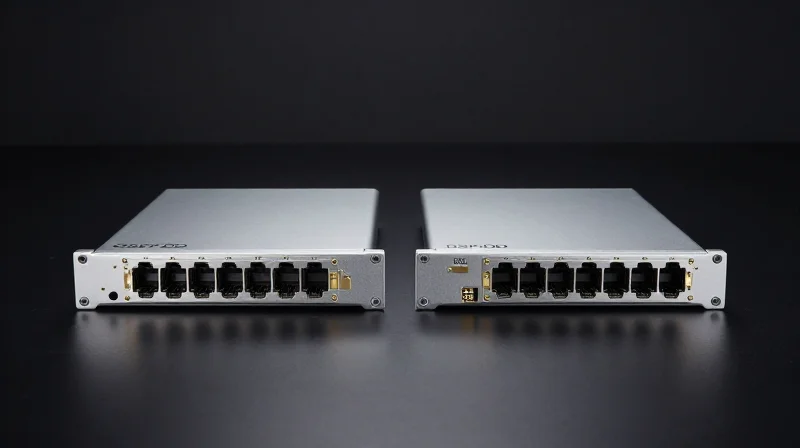
Physical Form Factors: Defining the Edge of 400G DCI
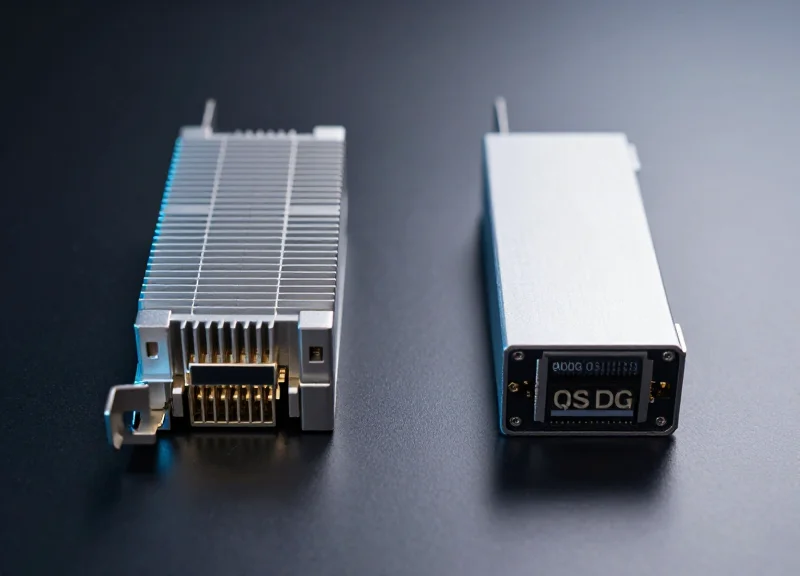
The choice between QSFP-DD and OSFP is not merely a mechanical preference but a strategic decision that dictates the thermal management, port density, and future-proofing of a Data Center Interconnect (DCI) architecture. While both support 400G throughput via 8 lanes of 50G PAM4, they diverge sharply in how they handle backward compatibility and heat dissipation. For operators transitioning from 100G/200G alternatives, selecting the wrong form factor can lead to premature hardware obsolescence or cooling bottlenecks in high-density racks.
| Feature | QSFP-DD | OSFP | |||
|---|---|---|---|---|---|
| Backward Compatibility | Native (QSFP+/QSFP28) | Requires Adapter | Size | Slightly Smaller | Slightly Larger / Wider |
| Max Power Envelope | Approx. 12W - 14W | Up to 15W+ (Superior) | |||
| Thermal Management | Relies on Chassis Airflow | Integrated Heat Sinks | |||
| Future-Proofing | Limited at 800G+ Transitions | Strong Path to 800G/1.6T |
QSFP-DD: Prioritizing Density and Legacy Support
The Quad Small Form Factor Pluggable Double Density (QSFP-DD) has emerged as the market leader for enterprise and cloud data centers. Its primary advantage is backward compatibility; a QSFP-DD port can accept legacy QSFP28 modules, allowing for a phased migration from 100G to 400G without replacing all interface hardware. This minimizes CAPEX during the transition period. However, because the modules are smaller, they face 'thermal density' challenges when used with high-power ZR/ZR+ optics required for long-distance DCI.
OSFP: Designed for Maximum Thermal Performance
The Octal Small Form Factor Pluggable (OSFP) was designed with the future in mind. By being slightly wider and deeper than QSFP-DD, and by incorporating integrated heat sinks directly onto the module, OSFP can dissipate significantly more heat. For DCI applications where 400G optics must travel 80km to 120km (ZR/ZR+), the power consumption of the Digital Signal Processor (DSP) is substantial. OSFP handles these thermal loads more efficiently, making it the preferred choice for hyperscale operators who prioritize long-term 800G and 1.6T scalability over immediate backward compatibility.
Operational Considerations and FAQs
- Which form factor provides the highest port density?
QSFP-DD currently offers the highest density for standard rack units, allowing up to 36 ports in a 1U switch, though OSFP is closing the gap in newer chassis designs. - Can I mix QSFP-DD and OSFP in the same network?
Yes, via fiber cabling and patch panels, but the switch hardware must support the specific physical cage of the transceiver. They are not mechanically interchangeable. - Why does heat dissipation matter for DCI?
DCI transceivers (like 400G ZR) use complex DSPs that generate more heat than standard short-reach optics. Inadequate cooling leads to signal degradation and hardware failure.
In conclusion, while QSFP-DD is the ideal choice for those requiring backward compatibility and standard density, OSFP is the superior architectural choice for high-power, long-distance DCI links that require a robust path to 800G.
Deployment Scenarios: When to Choose 400G vs. Legacy Standards
Strategic Decision Framework for 400G Adoption
The transition to 400G is not a universal mandate but a calculated architectural shift driven by the exhaustion of existing 100G link capacities and the need for greater spectral efficiency. For organizations managing massive data flows between metro-distributed sites, 400G (specifically 400ZR) provides the most cost-effective path to scaling bandwidth without requiring complex transponder equipment. Conversely, legacy 100G standards continue to serve as a reliable backbone for smaller enterprise environments or edge locations where the capital expenditure of a 400G hardware refresh cannot yet be justified by current throughput demands.
Metro vs. Regional Connectivity Considerations
Distance is a primary determinant in the 400G vs. legacy debate. In metro DCI scenarios (typically under 80km-120km), 400G technologies like 400ZR allow for direct switch-to-switch connectivity, effectively removing the need for a separate optical transport layer. In regional or long-haul scenarios, legacy standards or coherent 200G/100G might still be utilized if the fiber quality is poor, as 400G requires higher Signal-to-Noise Ratios (SNR) and may necessitate more frequent regeneration or amplification across extended spans.
| Scenario | Recommended Standard | Primary Drivers |
|---|---|---|
| Hyperscale Metro DCI | 400G (400ZR/ZR+) | High port density, power efficiency, fiber exhaustion. |
| Enterprise Campus Interconnect | Legacy 100G (QSFP28) | Lower initial CAPEX, sufficient bandwidth for existing apps. |
| Regional Long-Haul (>500km) | Legacy 100G/200G Coherent | Better reach on aged fiber, lower SNR requirements. |
| AI/ML Training Clusters | 400G (DR4/FR4) | Ultra-low latency and massive throughput demands. |
Density and Capacity: High-Density Environments
In environments where rack space is at a premium, such as multi-tenant data centers (MTDCs) or colocation facilities, the 400G standard is the clear winner. By consolidating four 100G links into a single 400G port, operators can reduce their physical footprint by 75% while simultaneously decreasing the number of managed cables. This density advantage is critical for future-proofing networks against the exponential traffic growth driven by AI and 5G applications.
- When should an enterprise stick with 100G?
An enterprise should maintain 100G if their current link utilization is below 50% and they have no plans for high-bandwidth AI or video processing workloads in the next 24 months. - Is 400G always more cost-effective for metro spans?
Generally, yes. 400ZR modules eliminate the need for expensive transponder shelves, significantly reducing the Total Cost of Ownership (TCO) for metro links under 120km. - How does fiber quality affect the choice?
400G signals are more sensitive to dispersion and attenuation. If the existing dark fiber lease involves high-loss legacy fiber, 100G or 200G coherent solutions may offer better stability.
Future-Proofing: The Roadmap to 800G and 1.6T
Future-Proofing: The Roadmap to 800G and 1.6T
Adopting 400G DCI technology is a strategic alignment with the long-term roadmap toward 800G and 1.6T ecosystems rather than just a temporary capacity increase. By standardizing on 112G SerDes (Serializer/Deserializer) lanes and PAM4 modulation within 400G deployments, organizations establish the electrical and physical framework required for a seamless transition to terabit networking. This foundation ensures that the switch silicon and optical form factors deployed today are forward-compatible with the burgeoning 800G standard, minimizing the need for expensive infrastructure overhauls in the near future.
The 112G SerDes Foundation and the Path to 1.6T
The leap to 800G is primarily driven by the maturation of 112G SerDes technology. While early 400G systems utilized 56G lanes (8x50G), newer 400G platforms use 4x112G configurations. This evolution is critical because 800G transceivers utilize 8 lanes of 112G SerDes. As the industry looks toward 1.6T, the focus shifts to 224G SerDes, which will double the density again, allowing for 1.6T throughput in the same physical footprint currently occupied by 800G hardware.
| Specification | 400G (Standard) | 800G (Emerging) | 1.6T (Development) |
|---|---|---|---|
| Modulation | PAM4 | PAM4 / Probabilistic | PAM4 / PAM6 / Coherent |
| Lane Configuration | 4 x 112G or 8 x 56G | 8 x 112G | 8 x 224G |
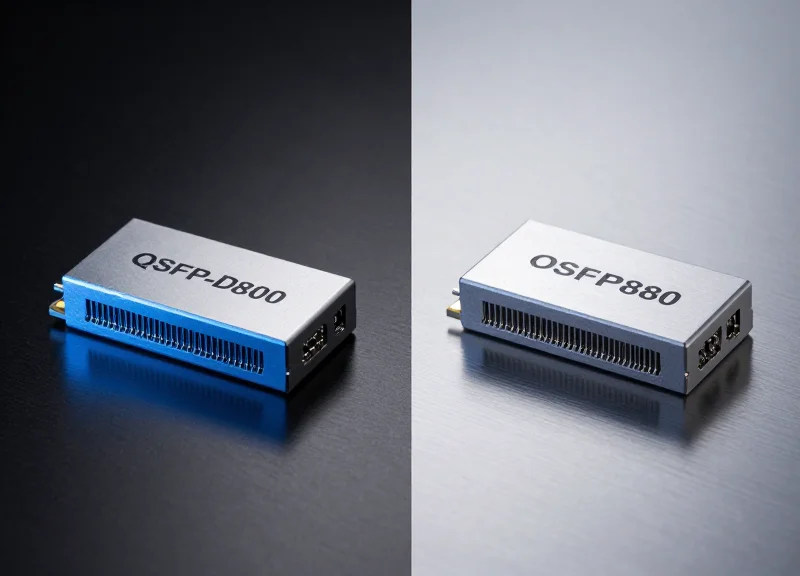
| Form Factor | QSFP-DD / OSFP | OSFP800 / QSFP-DD800 | OSFP-XD / CPO |
| Relative Power Efficiency | Baseline | ~25% Improvement per bit | ~40% Improvement via CPO |
Optical Innovations: Pluggables vs. Co-Packaged Optics
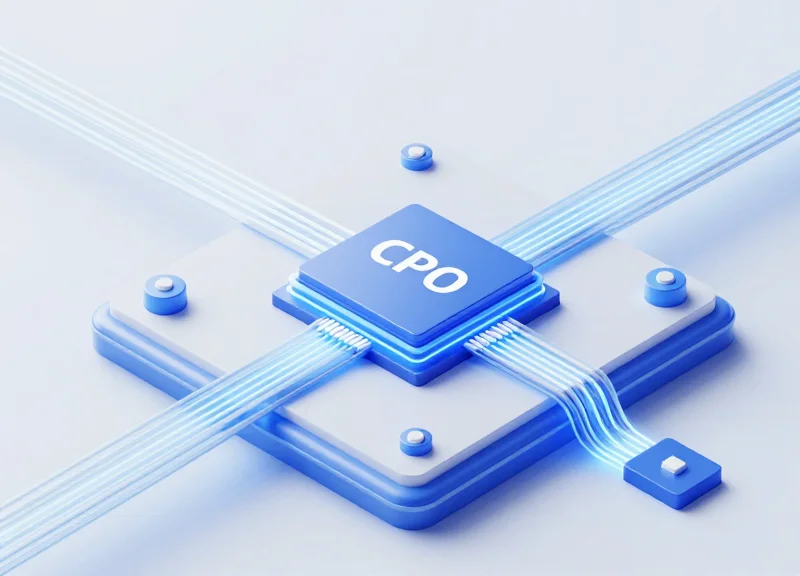
As speeds exceed 800G, the industry faces a 'thermal wall' where traditional pluggable transceivers struggle to dissipate heat effectively. While OSFP-XD (Extra Density) will likely support the first generation of 1.6T pluggables, the roadmap increasingly points toward Co-Packaged Optics (CPO). CPO integrates the optical engine directly onto the switch package, reducing the electrical trace length between the ASIC and the laser. This transition is expected to drastically lower the power consumption per gigabit, a necessity for sustainable AI-driven data center growth.
- Is 400G cabling compatible with 800G transceivers?
Yes, many 800G transceivers use the same MPO-16 or dual MPO-12 fiber interfaces found in current 400G deployments, though link budget requirements are stricter for higher speeds. - When will 1.6T reach the mainstream DCI market?
Initial 1.6T deployments are expected in hyperscale AI clusters by late 2025, with broader enterprise DCI adoption likely following in 2027 as the 224G SerDes ecosystem matures. - How does the 400G ZR standard impact the 800G roadmap?
The success of 400G ZR/ZR+ has paved the way for 800G-ZR. These standards allow for high-speed, vendor-interoperable coherent links over regional distances without standalone transport hardware.
While the transition to 400G DCI requires initial investment, the gains in latency, power efficiency, and scalability offer a clear path to long-term profitability. Ready to optimize your infrastructure? Contact our engineering team for a custom performance audit.